
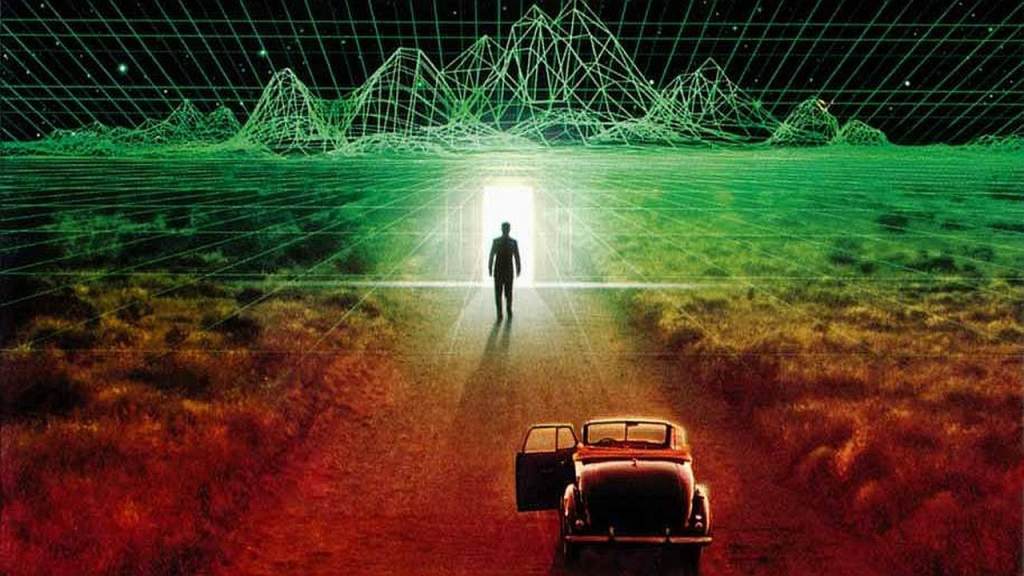
Written and collected by by Zia H Shah MD, Chief Editor of the Muslim Times
Understanding the Simulation Hypothesis
Definition and Origins: The simulation hypothesis is the proposition that what we experience as “reality” is actually an artificial simulation (often envisioned as a computer-generated world) and that we ourselves may be virtual beings within it en.wikipedia.org. While this idea entered popular culture through science fiction like The Matrix (1999), its philosophical roots are much older. Thinkers throughout history pondered whether the world is an illusion: Plato’s Allegory of the Cave likened us to prisoners mistaking shadows for reality, and René Descartes in the 17th century imagined an “evil demon” deceiving our senses wired.com. These earlier musings set the stage, but the hypothesis was crystallized in modern form by philosopher Nick Bostrom in 2003.
Nick Bostrom’s Simulation Argument: Bostrom’s famous paper “Are You Living in a Computer Simulation?” proposes a logical trilemma about advanced civilizations and simulated worlds en.wikipedia.org. In essence, if it’s possible for a civilization to develop immense computing power and create conscious virtual beings, then one of three outcomes must be true thequran.love:
- Extinction or Technological Limits: Almost no civilization reaches a “posthuman” stage capable of running such simulations (e.g. they destroy themselves or never acquire the required technology).
- No Interest in Simulation: Advanced civilizations that do attain this capability choose not to run ancestor-simulations (perhaps due to ethical reasons or lack of interest).
- We’re Simulated: If the first two propositions are false, then it is overwhelmingly likely that we are living in a simulation, because advanced beings would create a huge number of simulated minds – so many that any given conscious entity (like you or me) is far more likely to be inside a simulation than in the one “base” physical reality en.wikipedia.org thequran.love.
Bostrom’s argument implies that unless all advanced civilizations abstain or fail, the sheer number of simulated worlds would vastly exceed one original universe, making our reality “virtual” by probability. This hinges on an assumption that consciousness can arise from computation (i.e. a simulated brain could be conscious) en.wikipedia.org. Bostrom himself doesn’t claim to know which of the three is true, but he notes that if advanced simulations are possible and popular, we likely inhabit one.
Elon Musk and Popularization: Tech entrepreneur Elon Musk gave the simulation idea wide publicity. Musk argued that given the rapid improvement in video games and virtual reality, it’s “one in billions” that we are in base reality theverge.com. In other words, he believes it’s vastly more likely we’re in a simulated world than in the original physical world. Musk points out that 40 years ago we had primitive games like Pong, and now we have photorealistic 3D simulations with millions of people online; projecting this trend forward (even at slower rates), at some point future civilizations could create “indistinguishable from reality” simulations with conscious characters theverge.com. If even one such civilization runs many simulations, the odds of any given person being “real” are astronomically low – hence his remark that we’re probably virtual beings in someone’s cosmic computer.
Modern Physics and Philosophical Arguments: A number of arguments from science and philosophy have been enlisted to support (or question) the simulation hypothesis:
- Computational Limits and Physics: Some scientists suggest that if our universe is simulated, we might find “glitches” or evidence of an underlying computational grid. For example, a research team (Silas Beane and colleagues) pointed out that if spacetime were discrete (like the pixels of a simulation), ultra-high-energy cosmic rays might behave oddly at the edges of our observable universe. Indeed, there is an observed cutoff in cosmic ray energy, and they argued it’s consistent with the idea of a lattice underpinning space–time wired.com. In other words, nature may have a maximum resolution, hinting at digital physics. While this is far from conclusive, it shows how physicists are devising tests for “evidence of the simulator.”
- Quantum Physics and Code: Interestingly, theoretical physicist James Gates discovered that certain supersymmetry equations (related to string theory) contain patterns identical to error-correcting codes – the same digital codes that computers use to detect and fix data errors space.com. He found “something like computer code” woven into the fundamental math of physical laws. Gates was stunned by this finding, which raises eyebrows: if our universe were a programmed simulation, one might indeed expect to find code-like structures in the equations governing reality. (This doesn’t prove the simulation hypothesis – but it’s an intriguing consonance between physics and the idea of underlying software.)
- Mathematical Universe: Some experts like cosmologist Max Tegmark note that the universe operates with elegant mathematical rules. All the particles and forces we observe can be described in rigid mathematical terms, much like the ruleset of a software programspace.com. Tegmark argues that if he were a character in a video game, the world would appear precisely as ours does: governed by consistent mathematical laws. This suggests that there’s no obvious “fuzziness” in reality – it’s as if everything is following a predetermined code. Proponents say this mathematical nature of the cosmos could be expected if it was generated by a computational process.
- Philosophy of Mind: Philosophically, the simulation hypothesis raises classic questions of epistemology (what can we really know?) and ontology (what is the nature of being). David Chalmers, a prominent philosopher, has discussed that if we are in a perfect simulation, we might never empirically prove it because any evidence could itself be part of the simulationspace.com. However, Chalmers also argues this wouldn’t negate the reality of our experiences – it would simply mean the “bottom level” of reality is computational. In his view, even if our world is virtual, it’s still real to us; the simulation hypothesis just tells us what type of reality it is (akin to living in a high-level “matrix” while a deeper level of reality exists outside).
- Likelihood and “Fermi Paradox” of Sims: Some point to the sheer size of the universe and the possibility of many advanced extraterrestrial civilizations. If even a few achieved the ability to simulate universes, there could be a vast “multiverse” of simulated worlds. This line of thinking dovetails with the Fermi Paradox (why we haven’t encountered aliens): if we’re in a simulation, perhaps it was designed with no other advanced civilizations in our observable space, or our simulators are avoiding obvious contact. Such speculation is highly theoretical, but it shows how the hypothesis spurs creative re-interpretations of scientific puzzles.
Key Proponents and Skeptics: Aside from Bostrom and Musk, others have weighed in. Astrophysicist Neil deGrasse Tyson has said he considers the odds of us being in a simulation as quite high (he once guessed better than 50-50). Physicist Lisa Randall is more skeptical, calling the hypothesis basically unfalsifiable and not useful scientifically. Meanwhile, Rizwan Virk (author of The Simulation Hypothesis) and philosopher David Chalmers (author of Reality+) have published works exploring the idea seriously. The discussion has even reached mainstream science forums – a 2016 debate at the American Museum of Natural History featured physicists and philosophers hashing out “Is the Universe a Simulation?”space.comspace.com. No consensus emerged, but the very fact such debates occur underscores the hypothesis’ cross-disciplinary intrigue.
Summary: In sum, the simulation hypothesis posits that an intelligent creator (not unlike a programmer) could be behind our perceived reality, making our lives a kind of “virtual environment.” It challenges us to consider that everything we experience – from physical laws to consciousness itself – might be artificial constructs. This notion, radical as it sounds, gains some credibility from modern technology’s trajectory and hints from physics that reality might be information-based. It remains unproven, but it serves as a profound thought experiment: it forces us to ask what “reality” ultimately means.
Illusory World and Reality in the Qur’an
Qur’anic View of Dunya (This World): The Qur’an often describes the life of this world (Arabic: al-dunyā) as fleeting, deceptive, or illusory in comparison to the ultimate reality of the Hereafter. Far from a permanent or fundamentally solid existence, the Qur’anic dunya is portrayed as a temporary stage – a kind of elaborate play or test. For example, the Qur’an declares:
- “The life of this world is nothing but play and amusement. But the Home of the Hereafter – that is real life indeed, if only they knew.” (Qur’an 29:64)islamicstudies.info. Here the scripture explicitly contrasts worldly life, calling it mere diversion, with the afterlife, calling the latter al-ḥayawān (true life). Classical commentators like Al-Qurṭubi note that al-ḥayawān means a life that is lasting and real, as opposed to the transient ‘play’ of this worldquran.comquran.com. In other words, our current existence is like a game that will end, whereas the life to come is the genuine, enduring reality.
- “The life of this world is only the enjoyment of deception.” (Qur’an 3:185)themuslimvibe.com. This verse comes after reminding us that every soul shall taste death and true recompense comes in the Hereafter. The phrase mataaʿ al-ghurūr (deceptive enjoyment) implies that worldly pleasures and appearances easily fool people – they seem significant, but are ultimately a mirage. A modern Muslim writer reflected on this verse by saying “the world we see, feel, and perceive is actually a mind’s play”themuslimvibe.com. We experience an external world through our senses and mind, yet what we perceive can be very different from the ultimate reality. The author muses that the world “could be a blank space, yet Allah programmed our mind in such a way that it perceives as though it is real.”themuslimvibe.com. This astonishing statement sounds akin to the simulation idea: it suggests that God has “programmed” our consciousness to interact with a constructed world, which only seems independent and solid. The real reality, in this view, belongs to God alone, and will be unveiled in the next lifethemuslimvibe.com.
- “Know that the life of this world is but amusement and diversion and adornment and boasting to one another and competition in wealth and children… And the worldly life is nothing but a deceiving enjoyment.” (Qur’an 57:20, in summary). This verse piles up terms to diminish the profundity of worldly pursuits – likening them to games and show – and concludes with the same phrase as 3:185 that this is mataaʿ al-ghurūr, an enjoyment that deludes quran.com. The classical scholar Ibn Kathīr, commenting on such verses, said “the life of this world is laʿib (play) and lahw (amusement)” – like a quick illusion – whereas the Hereafter is “the life that will never end” abdurrahman.org. Just as a game or a theatrical performance is over in a night, the glitter of dunya vanishes, and only the results (one’s moral and spiritual “score,” so to speak) carry over into the true life to come.
These teachings strongly resonate with the spirit of the simulation paradigm. They imply that what we currently take as concrete reality is more like a virtual show – a test environment set up for a purpose – and that an ultimate reality lies beyond it. The Qur’an uses terms like “illusion,” “play,” “pastime,” “deception” for worldly life not to suggest it is literally fake, but to drive home how transient and insubstantial it is compared to God’s eternal realm. Muslims are reminded not to be too attached to this “Matrix” of dunya, because a far more important reality awaits.
Life as a Test or Constructed Experience: In the Qur’anic worldview, the reason this worldly life feels real and engaging – despite being temporary – is that it is deliberately designed as a test. God created this entire cosmos as an examination for humanity. The Qur’an states: “He who created death and life in order to test you (to see) which of you is best in deeds” (67:2). So, just as a simulation in science or gaming might be set up to observe how subjects behave under certain conditions, the Islamic narrative is that Allah (God) created the worldly life as a controlled environment to probe our choices, faith, and character. Another verse says similarly: “Indeed, We have made whatever is on the earth as an adornment for it, so that We may test them as to which of them is best in deeds.” (18:7). The consistent theme is that life has a purpose – trial (ibtilā’) – and once the test period is over, the “simulation” is ended and the soul faces the results.
Importantly, this test is moral and spiritual. The Qur’an emphasizes that the deceptively alluring nature of the world itself is part of the test. Will we remember our Creator and the greater reality, or will we be so absorbed in the play of life that we “forget” it’s just a test? In a sense, one can compare it to someone in a very immersive virtual reality game: do they maintain awareness that it’s a game with objectives, or do they lose themselves entirely in the role, forgetting the outside world? The Qur’an warns against getting “deluded” by dunya. It says, “Let not the life of this world deceive you, and do not let the Deceiver (Satan) deceive you about God.” (31:33, similar in 35:5). The Arabic implies that the glamour of worldly life can be a deceiver in itself. Many classical tafsir (exegesis) works, such as that of Ibn Kathīr, comment that the world dazzles like a beautiful object that has no enduring value – it deceives those who chase it, the way a mirage deceives a thirsty personabdurrahman.org.
Thus, the idea of life as a purposeful simulation-like scenario is quite consonant with Islamic theology: God set up a temporary world, with its own internal laws and causality, as a testing ground. Once the purpose is fulfilled, the Qur’an says the world will be dismantled in the apocalypse (Qiyamah) and replaced by an everlasting world of truth. This has interesting parallels with simulation theory’s notion that a simulation can be turned off or restarted by its creators. In the Qur’anic view, God will indeed “terminate” the world at an appointed time, and at that point, the illusory nature of worldly life will become evident to all who were too invested in it. The Qur’an describes disbelievers on that Day saying things like, “We were not in the right mind!” and the response will be, “You were deluded [by false hopes] till the command of Allah came…” (57:14). Such verses reinforce that many people will only realize how unreal or insubstantial their worldly obsessions were when they encounter the ultimate reality of the afterlife.
Divine Control over Perception and Reality: In a computer simulation, every aspect of the environment ultimately comes under the control of the programmer. Similarly, the Qur’an depicts Allah as actively controlling and sustaining every aspect of our reality at all times. This goes beyond just setting an initial creation in motion – it implies moment-to-moment governance. For instance, the Qur’an says, “Allah has created you and your handiwork (everything you do)” (37:96)alhakam.org. This brief verse, addressed to those who sculpt idols, can be read in a broader metaphysical sense: not only did God create the human being, He even created the acts that human performs. In Islamic theology, this relates to the concept of qadar (divine decree) and occasionalism – nothing occurs without God willing and creating it. Reality is not independent; it’s more like a divinely maintained program, and we are always within God’s power. Islamic philosophers like Al-Ghazāli emphasized this idea of constant divine causation – akin to saying that at each moment, the “simulation” continues because God’s will is computing it, so to speak. If He withdrew His sustenance for an instant, reality would collapse.
The Qur’an also contains imagery of God manipulating human perception, which is fascinating to consider in light of the simulation paradigm. For example, Quran 8:24 says, “Know that Allah comes in between a person and his heart,” indicating God can intervene in our very consciousness. Quran 17:46 says that when disbelievers listen to the revelation, God puts coverings over their hearts and a veil so they do not understand it. Similarly, 2:7 says Allah has sealed their eyes and hearing. These descriptions show God’s absolute control – He can literally alter what people perceive or comprehend. In a supernatural context, the Quran relates incidents that sound like “admin commands” in a simulation: such as rendering enemies temporarily blind or making someone appear as someone else. One striking story is how God made the Prophet Muhammad’s persecutors at one point unable to see him leave his house by placing an invisible barrier (reported in Qur’an 36:9). Another is how Allah made it seem to the crucifiers of Jesus that they had crucified him, when in reality (according to Islamic interpretation) they did not – “but it was made to appear to them” (Qur’an 4:157). This phrase “made to appear to them” (shubbiha lahum) is almost like saying the perception of the event was changed by the controller. These theological narratives underscore that the created world is subject to God’s direct control – human beings ultimately see and experience only what God allows.
Such ideas draw a parallel with the concept that a simulated reality’s code can be altered by the system operator. Miracles in religion can be viewed, metaphorically, as “the programmer tweaking the rules” for a moment. For example, when the sea splits for Moses or the fire doesn’t burn Abraham, the normal physical laws (the physics of the simulation, if you will) are suspended by the will of the divine Programmer.
On a more everyday level, the Qur’an repeatedly says that guidance or misguidance is in God’s hands – He “leads astray whom He wills and guides whom He wills” (Qur’an 14:4, 16:93, etc.). Humans have choice (within the game), but God’s overarching control is never absent. Classical scholars like Fakhr al-Dīn al-Rāzī discussed how causes in this world are just superficial; in reality, every instance of cause and effect reflects the constant agency of God. This view (known as occasionalism) essentially posits that the universe is being continuously “rendered” by God’s command. The apple falls not because gravity is an independent force, but because each moment Allah creates it falling according to a pattern He chose. Again, we see a resonance: this is analogous to how, in a simulation, the physics engine isn’t an independent law of nature; it’s a set of rules enforced every microsecond by the underlying program.
The Unseen Reality (Al-Ghayb): The Qur’an strongly emphasizes that not all of reality is visible or perceptible to us. In fact, acknowledging the ghayb (unseen) is a prerequisite of true faith: “This is the Book… a guidance for the God-conscious who believe in the Unseen.” (Qur’an 2:2-3)quranproject.org. Ghayb in Islamic terminology includes things like angels, souls, Heaven and Hell, destiny – essentially, all aspects of existence that are hidden from our normal senses. The concept of ghayb aligns well with the idea that our experiential world is just a subset of a larger reality. Just as in simulation theory one might imagine a whole “outer world” (the world of the simulators) which the simulated characters cannot directly access, in Islam the seen world (shahādah) and the unseen worlds are both real, but humans in dunya only perceive the seen. The Qur’an often contrasts these two: “Allah is the Knower of the Unseen and the seen” (59:22). Our physical universe and what we observe is al-ʿālam ash-shahādah (the witnessed realm), but beyond it is ʿālam al-ghayb (the realm of the unseen) where angels, jinn, and other metaphysical entities exist, and of course where God’s presence is manifest.
This dichotomy is strikingly similar to the “simulation vs. base reality” split in the hypothesis. We could say, metaphorically, that the Qur’an teaches we live in a “veiled reality” – an environment fully under God’s control, where we do not see the higher realities unless God lifts the veil. Notably, the Qur’an calls the Day of Resurrection “Yawmu’l-Qiyāmah” a Day when “the cover is removed” and truth is seen clearly. In 50:22 it says to the human, “Now We have removed from you your veil, so your sight today is sharp.” This indicates that at death or resurrection, human perception will be drastically expanded; the illusions or limitations that constrained our understanding in worldly life will fall away. Many Islamic scholars have likened our worldly life to a dream and the afterlife to waking up. There is even a famous saying (attributed to the Companion Ali ibn Abi Talib) that “People are asleep; when they die, they wake up.” In other words, what we call reality now is akin to a dream-like state of limited awareness, and only upon death does the soul awaken to the fuller reality (much as Neo “wakes up” from the Matrix to see the real world). This saying encapsulates the Qur’anic metaphysics: the life of this world is not the ultimate Reality, it’s a lower, dimmer realm meant for a purpose. The “realest” things – God, the hereafter, ultimate justice – are unseen during the test, but they are the truth that will eventually confront every soul.
In summary, the Qur’an lays out a worldview where our current life is transient, staged, and not the full picture. It is created intentionally by a supreme Intelligence (God) as a testing ground. It charms and occupies us, but it is repeatedly called an illusion or pastime, warning us that it’s not the end goal. A far greater reality lies beyond – which one can loosely analogize to the “outside of the simulation.” Believers are urged to be cognizant of that unseen reality even as they live within this world. This attitude is somewhat similar to a gamer remembering the world outside the game: you carry out your mission in-game, but you know that the real you exists outside it, and the game’s outcomes affect your outside status (for example, a training simulation affects your real life grade – likewise, Islamic teaching is that how you live in dunya affects your soul’s fate in eternity).
Classical and Modern Insights Bridging the Concepts
It’s fascinating to note that long before computers or modern science, Islamic scholars and philosophers were already employing analogies that compare worldly life to an illusion or lower-level reality. They didn’t speak of “simulation” in the modern sense, but they often used dreams and shadows as metaphors.
Al-Ghazālī’s “Dream within a Dream” Analogy: Abū Ḥamid al-Ghazālī, an influential 11th-century theologian, went through a famous episode of doubt regarding what can truly be known. In his autobiography Deliverance from Error, he describes questioning his sensory and rational knowledge. He reflects that sensory experience can deceive (as with optical illusions), so he turns to reason. But then he has a profound insight: when we dream, we usually don’t realize it’s a dream – we have “false” experiences that we accept as real until we awaken. So, he asks, how can we be sure that our entire waking life is not itself a kind of dream? He writes: “Don’t you see? When asleep you assume things and believe certain circumstances, perceiving them as absolute, with no doubt about their reality – until you wake up, and realize it was all just imaginary. Likewise, in your current state (wakefulness), what assurance do you have that there is not a higher state that will make your present life seem unreal? Could it be that this worldly life, in relation to the true state, is just like a dream is to waking?”blog.kennypearce.net. Ghazālī goes on to suggest that indeed the only fully real state is when God illuminates the truth – in the afterlife or through spiritual unveiling. This remarkably presages the simulation idea: he basically posited a “nested reality” model, where our life could be a lower-order reality and there’s a higher-order reality (the hereafter or divine presence) in which our current existence is seen as illusory. Ghazālī ultimately resolved his doubt by trusting divine revelation as the key to knowing that higher reality. But his thought experiment mirrors what a simulation skeptic might say today (“we could be in a simulation and not know until we ‘wake up’ from it”). It’s a powerful convergence of ideas: an Islamic philosopher used a dream metaphor in almost exactly the way modern philosophers use the simulation hypothesis – to illustrate radical uncertainty about perceived reality.
Sufi Perspectives: Islamic mystics (Sufis) frequently use language that diminishes the solidity of the material world. They often call the world a “veil” that hides God, or a “dream” from which only death wakes us fully. Rumi, for instance, writes poetry about how this world is like a hallucination and only God is truly real (a concept known as al-Ḥaqq, The Real). There is a famous anecdote of a Sufi who was invited to a king’s palace. The Sufi found it empty and dark, until suddenly the lights came on and the court filled with people, only to vanish again – all an elaborate trick by the king. The king asked, “Did you not think it was real?” and the Sufi replied, “I consider everything in this world as that trick.” This story (apocryphal or not) shows the internalized awareness that the world is not as it appears – a mindset very much in line with viewing it as a kind of simulation orchestrated by God.
Modern Muslim Thinkers: In today’s context, scholars and writers have started explicitly drawing parallels between the simulation hypothesis and Islamic concepts. For example, Ziauddin Sardar and others have commented that the Quranic description of dunyā as a play or test could be analogized to a virtual reality created by God. The author of The Simulation Hypothesis and Its Bearing on Afterlife (Zia Shah) notes that believing in an unseen divine realm while living in a temporal test-world is essentially “to live in a designed simulation run by God – with the promise of a vastly realer world to follow.” As we saw, popular Muslim essayists have even used the language “programmed our minds”themuslimvibe.com to describe how God enables us to perceive the world. This shows a comfort in mixing scientific-philosophical metaphors with spiritual truths: Muslims today might say, “Look, if tech gurus think advanced beings could simulate worlds, we have always believed an All-Powerful Being did create our world and could make it as immersive and deceiving as He wants. The difference is, in our doctrine, the purpose is moral and benevolent – it’s a test and training, not a whim.”
Tafsīr (Exegesis) Notes: Classical tafsīrs on “illusory world” verses reinforce the idea of relative reality. For instance, in explaining Qur’an 57:20, Ibn Kathīr cites a parable: life’s enjoyment is like rain that produces lush plants, delighting the farmer, “then it dries up and turns yellow, crumbling away”. In a short time, all that’s left of what seemed so splendid is dust. The Qur’an itself uses this parable in 57:20. The point made by commentators is that worldly appearances are transient by design – much like how a simulation might generate a beautiful scene that disappears once you exit the program. In contrast, the afterlife is often called dār al-ḥaq (the abode of truth/reality). Another interesting term: the Quran calls the Day of Judgment “Yaum al-Taghābun”, the Day of Mutual Disillusion or the Day of Realization of Loss – because that day people realize the truth and see how they were deluded in worldly life, as if coming out of delusion.
One classical scholar, Imam al-Ḥaddād, wrote: “This world is a shadow – God is the sun. When you turn towards the sun, the shadow falls behind you. Chase the shadow, and you’ll never catch it.” Although metaphorical, this sums up the Islamic attitude: focus on God (the ultimate reality) and worldly illusions won’t trick you; but chase worldly gains (the shadow) and you gain nothing real. Again, the imagery of shadow vs. light could be likened to simulation vs. reality outside it.
In short, there is a rich vein of Islamic thought that regards our worldly experience as less real or a mere reflection of the absolute Reality (which is God and His domain). This is not to say traditional scholars thought we live in a “computer program,” of course – but functionally, they encouraged seeing dunya as if it’s a passing illusion, and treating the unseen future life as the solid truth.
Parallels Between the Simulation Hypothesis and Qur’anic Metaphysics
Given the above, we can draw several conceptual parallels:
- Creator vs. Programmer: In simulation theory, a higher intelligence (perhaps humans in the future, or aliens) intentionally creates a simulated universe. In Islam, Allah is the Creator of our universe, with intent and purpose. The role is analogous – everything inside the “simulation” obeys the rules set by the creator. One key difference: the hypothesized simulator beings in the secular theory are finite and maybe even fallible, whereas the Qur’anic Creator is omnipotent, infallible, and singular. But at a structural level, both scenarios involve a designed world. The simulation hypothesis even raises the question “Could the simulator be considered God-like to us?” – Bostrom himself noted the philosophical repercussions, like “Does this mean there is a God (our creator) in the form of the simulator?”thecollector.com. Some have pointed out that if we are in a simulation, the simulator has total knowledge and control of our world – attributes traditionally ascribed to God. In Islam, God’s knowledge encompasses all events (past, present, future), and His power can intervene anywhere. This is akin to an absolute programmer overseeing every bit of the program’s state.
- Contingent Reality: Both views hold that the world we experience is not the ultimate reality. In simulationism, the ultimate reality is the universe of whoever built the simulation (e.g., the “base reality” with real planets and real bodies of the simulators). In Islam, the ultimate reality is God’s level of existence – the eternal Hereafter and the spiritual realm. Our physical universe is a subset of that larger reality, created within it. The notion that our reality’s fundamentals (time, space, physics) could be adjustable or have a beginning and end is common to both. The Quran says, for instance, that God can “fold up the heavens like a scroll” (21:104) when the time comes – an evocative image of a simulation being closed. Muslims believe time itself will cease in the way it works now, and a new type of existence will commence (the eternal life), which suggests the “rules of the game” are not absolute; they were temporary.
- Illusion vs. Truth: Both emphasize that what we normally take as real might be an illusion relative to a higher truth. Qur’anic verses about the world as ghurūr (deception) map to the idea that our lives could be a kind of virtual reality experience. The difference is the Quran frames it as a deliberate test with moral significance, whereas simulation theory doesn’t inherently include moral purpose (the simulators’ purpose could be scientific curiosity, entertainment, etc.). Nevertheless, it’s striking that both lead us to question the ontological status of our everyday life. A believer reading about simulation arguments might nod and say, “We’ve been told this – not that it’s a computer simulation, but that this world is ghayr haqq (not the ultimate truth).” Both worldviews encourage a form of skepticism about appearances.
- The Unseen Operator: In a simulated environment, the creator could potentially communicate or interfere from outside, but the simulated beings might not comprehend it. In Islam, God is unseen and beyond our physical realm, yet He communicates via revelation and sends guidance through prophets – analogous to a simulator sending messages into the simulation. Miracles are “insider hints” of an outside power. One might even whimsically compare angels to “NPCs” (non-player characters) sent by the creator into the world to perform tasks (though in Islamic belief angels are very real agents, not just subroutines, the comparison is just for illustration). The Qur’an’s insistence on belief in angels, jinn, and other unseen beings highlights that the cosmos is more populated and complex than our senses detect – similar to how a simulation might have hidden layers or background processes that aren’t obvious to the characters.
- Temporality and Test vs. Experiment: The simulation idea usually implies that the simulation might be temporary or repeatable. Similarly, the Qur’an makes it clear this world is temporary and will be dismantled. Our one life is like a single run of a simulation scenario (Islam generally doesn’t have reincarnation – so each soul has one run). However, interestingly the Qur’an does mention the idea that God could repeat creation in cycles or create countless other worlds if He wished: “If He wills, He can do away with you and bring (replace you with) a new creation. And that is not difficult for Allah.” (14:19-20). This can be analogized to a programmer scrapping one simulation and starting another – for God it’s trivial to create or recreate worlds. In fact, the Qur’an (2:259) narrates a story of a man whom God caused to die for 100 years then revived, to show how resurrection is possible – essentially a save-state and restore! The man’s food miraculously hadn’t spoiled, as if time stood still for it, whereas his donkey had turned to bones. These kinds of accounts feed the idea of a reality that is at God’s command to accelerate, pause, or reverse – much like simulation controllers.
- “No Flaw in the System”: A subtle parallel – the Qur’an challenges readers to find any inconsistency in the creation: “(He) Who created seven heavens in layers. You do not see in the creation of the Most Merciful any inconsistency. So look again – do you see any flaws?” (67:3-4)alhakam.org. This is almost poetically analogous to someone scrutinizing a simulation for glitches. The Qur’an asserts you won’t find any, because God’s creation is perfect and seamless. Believers take it as a sign of the truth of God, whereas a scientist might say, “If this is a simulation, it’s a darn good one – no obvious pixelation even at the smallest scale.” (Though physics is now finding that at quantum levels, classical reality blurs – perhaps one could whimsically call that the pixel size of reality). In our earlier mention, scientists like Davoudi suggested looking for an unzoomable region or lattice artifactalhakam.org, but none has been conclusively found. The Quran’s verse, read metaphorically, implies exactly that: the “simulation” (creation) is so consistently designed that one can’t find a fault or break in its internal logic. It’s smooth to the core – until God decides to unravel it.
Despite these parallels, there are also important distinctions and cautions:
- Moral Framework: The simulation hypothesis by itself doesn’t incorporate a moral framework or afterlife. It’s a descriptive idea (we might be in a sim) rather than a prescriptive one. The Qur’anic worldview is heavily action-oriented: because this life is a test, what you do matters immensely for your ultimate fate. One might ask: if life is “just a simulation,” does it risk making someone feel nihilistic or that consequences aren’t real? Islam would respond that the consequences (in the next life) are absolutely real – just as a student’s performance in a simulation training can determine whether they get a job in reality. The Quranic paradigm ensures that life is meaningful, even if it’s compared to a game or illusion in some aspects. It’s a game with real stakes. The concept of akhirah (hereafter) guarantees that justice and meaning transcend the ephemeral world. So, a Muslim interpretation of simulation language would stress: We are indeed in a “designed world” – but not a meaningless one. It’s more like a sophisticated exam hall than a trivial video game.
- Nature of the Creator: In simulation discussions, the conjectured creators could have limitations, could even be unethical (maybe we’re a simulation run by bored teenagers in some super-advanced civilization, as some half-joke goes). The Qur’anic view of the Creator is very different: God is Merciful, Just, and does not create out of boredom or malice. “We did not create the heavens and earth and all that is between them in play (vainly),” says the Quran (21:16). This is a direct rejection of the idea that God made the world for idle sport. Rather, “We created them for a wise purpose” (44:38-39). So, if one equates God with a “simulator,” He is not capricious or doing it for entertainment – He is doing it out of a wise, serious purpose (testing and educating the soul). This is a key divergence from many simulation scenarios where the motives of simulators might be random or trivial. In Islam, the motive of the Creator is fundamentally moral and compassionate (to guide us to our potential, then bring us to eternal life).
- Reality of Suffering and Significance: One sensitive point – if life is a kind of simulation, some might worry it diminishes the reality of suffering or joy here (“it’s all just a simulation, so why hurt when you lose a loved one?” etc.). The Qur’an, while calling the world a trial and transient, does not dismiss our feelings or experiences as insignificant. In fact, compassion, patience, and striving against hardship are all meritorious precisely because the experiences feel very real to us. It could be said that in a theistic view, God’s simulation is so perfect that it accomplishes genuine growth of the soul. Just as a realistic medical simulator can truly train a doctor (even though the patient in the sim isn’t “real,” the skills and reactions developed are very real), the experiences we go through shape our souls in preparation for the next life. So pain and happiness here do matter – they are the curriculum of the test. The Prophet Muhammad even wept at the death of his son, saying tears are natural even though he fully knew the child would go to Paradise. Thus, Islam doesn’t encourage seeing life as a trivial illusion that leaves one detached from all emotion; rather, we are encouraged to engage with life’s trials with patience and faith, remembering the temporary nature of it.
- One or Multiple Runs?: Simulation theory allows for the idea that simulations can be rerun, whereas Islam teaches a linear timeline: one life, then resurrection and eternity. There is no suggestion in Islamic doctrine that God will “re-simulate” the exact same world or give the same individuals multiple test runs (aside from the concept of repeating patterns of history with new people perhaps). So in that sense, the Quranic worldview is that the “simulation” of dunya is a one-shot experience for each soul. This makes it more serious in a way – there are no extra lives or save points. Interestingly, some atheist proponents of simulation have mused about the possibility of “resurrection” within a simulation – e.g., if we are programs, maybe the simulators could reinstantiate us or we might already be in a loop. Islam affirms resurrection, but not as a reloading of the same scenario – it’s a transfer of the soul to a new plane.
Ultimately, could the Qur’anic worldview be seen as compatible with aspects of simulation theory? Metaphorically and philosophically, yes, to a surprising extent. Islam essentially says: This world is a created illusion, a lower reality, governed by an intelligent being (God) who is outside of it, and our purpose is to navigate this test so we can return to the realer world. That sentence could easily describe the simulation hypothesis, except that the “intelligent being” is not a teenager at a computer – it is the Almighty, and the “return to the real world” is not escaping a computer, but passing into the metaphysical realm of the hereafter.
If one takes the simulation hypothesis as a literal scientific possibility (i.e., maybe we’re in a computer simulation made by aliens or future humans), that’s a different claim than the theological one. But at a conceptual level, many Muslims feel it’s a neat analogy: We are in a carefully designed environment, and there is an ultimate reality beyond it. One might even argue the simulation idea is a materialist culture’s way of grasping for a higher power – essentially positing engineers in place of God.
From an Islamic perspective: God’s “simulation” would be perfect, purposeful, and not ultimately deceiving – because He sends guidance internally to help us realize the truth of our condition. The Qur’an, in this analogy, is like the “message from outside” explaining the rules and end-goal of the simulation to the players who are born inside it. It’s as if the programmer wrote a manual for the AI characters to discover, so they can understand what’s happening and why. The Quran repeatedly says this life is “but a brief enjoyment” and the hereafter is “better and more lasting” (87:17). If we phrase that in simulation terms: the simulation is short and not the real deal; the real deal is the world outside the simulation which lasts forever.
One can appreciate how, in a metaphorical sense, the simulation hypothesis and Islamic teachings point to a common intuition: the tangible world might not be all that exists – in fact, it might be a kind of construct – and a greater reality surrounds us. For believers, that greater reality is God’s domain. For simulation theorists, it might be a higher-dimensional physical universe. Could they both be true, in a layered sense? Some have playfully suggested that perhaps the simulators (if they exist) themselves were created by God, so ultimately it just pushes the question one step back: who created the creators? The Quran asks this exact question of skeptics: “Were they created from nothing, or are they themselves the creators [of everything]?” (52:35) alhakam.org. From an Islamic view, even if we found out our universe is a simulation by advanced creatures, those creatures and their universe would still fall under the sovereignty of Allah, the Absolute Creator.
Conclusion
In conclusion, exploring the simulation hypothesis alongside Qur’anic metaphysics yields insightful parallels. Both frameworks invite us to question the nature of reality and not take the material world at face value. The simulation argument, born of contemporary science and philosophy, astonishingly echoes certain Qur’anic themes: the idea of a created world orchestrated by an intelligent agent, the notion that our perceived reality could be “fake” or temporary, and that a more fundamental existence lies beyond our perception. The Qur’an articulated these ideas in a spiritual and moral context – describing life as a test, a diversion, an illusion – long before digital technology gave us a new vocabulary to describe a possible virtual reality.
While the language differs, the core message has resonance: this world is not the Ultimate Reality. For a Muslim, the hypothesis that we live in a designed simulation can be seen as a materialistic parlance for describing the condition of dunya under divine design. It’s a case where modern thinkers, pondering if we’re in a “Matrix,” are grappling with questions their ancestors answered through theology: What is the nature of our world? Who (or what) set it up? Why are we here?
Of course, there are differences in emphasis. The simulation hypothesis is a tentative metaphysical speculation without moral guidance, whereas the Qur’an provides a complete worldview with clear ethical directives and the promise of eternal life beyond this transient world. The Qur’an doesn’t tell us we’re zeros and ones in a computer – rather, it tells us we’re souls going through a training ground. But in a big-picture sense, the concept of a contingent, ephemeral world crafted by a higher power is central to Islam.
So, could a Qur’anic worldview be compatible with the idea that our universe is, say, a programmed simulation? If we speak philosophically or metaphorically, yes – Islam already considers the universe a crafted environment run by an ultimate intelligence. Whether the technical mechanism is “computer code” or “let there be Light” makes no difference to God’s ability. The important point for a believer is that our reality is intentionally created and has a purpose. In fact, some Muslims argue that the simulation hypothesis, if ever evidenced, would not undermine God at all – it would simply push the question to who designed the simulators and endowed rational souls, thereby reinforcing the need for a Prime Creator.
In any case, the exercise of comparing these perspectives enriches our understanding. It shows that modern science-fiction-like ideas can sometimes mirror very old spiritual truths in new guises. The Qur’an’s insight that life in this world is like a passing illusion or dream finds an unexpected ally in cutting-edge discussions about virtual worlds. For those steeped in scripture, this merely reaffirms that the physical realm – astonishing and immersive as it is – is not the be-all and end-all. Whether one uses the language of religion or simulation theory, one arrives at a humbling notion: there is a Reality capital-R that transcends what we see, and our lives here are a preparation for confronting that Reality.
In the end, the value of such parallels is in prompting deeper reflection. As the Qur’an says: “And you will surely know the truth of it all after a time” (38:88). One day, when we “wake up” – be it by scientific discovery or, as Muslims believe, by leaving this world in death – we will see the full picture that now lies beyond our senses. Until then, viewing life as a kind of simulation (with God as the Designer) can be a useful metaphor to remain mindful that the world as we experience it is not the ultimate truth, but a means to attain insight, virtue, and nearness to the One who is Truth.




 The Glorious Quran and Science
Leave a reply to A Scientific, Philosophical, and Theological Commentary on Qur’an 31:27–28 – The Glorious Quran and Science Cancel reply