

Ahl al-Bayt in Shia Theology
In Islam, Ahl al-Bayt (Arabic for “People of the House”) refers to the family of the Prophet Muhammad – especially his closest kin. Shia Muslims place profound theological emphasis on the Ahl al-Bayt, viewing them as the rightful spiritual and temporal successors to Muhammad. This belief stems from both Quranic interpretation and Hadith traditions. For example, Shia accounts relate that the Prophet once gathered his daughter Fatimah, her husband Ali ibn Abi Talib, and their sons Hasan and Husayn under a cloak and declared them his Ahl al-Bayt insideindonesia.org. Love and devotion toward these family members became a cornerstone of Shia piety. Indeed, many Shia cite the Prophet’s reported instruction that he leaves behind “the Quran and my Ahl al-Bayt” as twin guides, elevating the Prophet’s family as custodians of his teachings al-islam.org.
Twelver (Imami) Shia: The largest Shia branch, Twelvers, believe that leadership of the Muslim community was divinely ordained to remain within the Prophet’s family through a line of twelve Imams en.wikipedia.org. These Twelve Imams – from Ali (the Prophet’s cousin/son-in-law) through Husayn and down to Muhammad al-Mahdi – are believed to be infallible and specially guided. Twelver theology holds that the Imams were chosen by divine decree (nass) and inherited the Prophet’s spiritual authority and knowledge en.wikipedia.org. The twelfth Imam is said to have gone into occultation (hiddenness) in the 9th century and is expected to return as the Mahdi (guided one). In Twelver belief, the Ahl al-Bayt (specifically these Imams and a few holy women like Fatimah) are models of purity and the most authentic source of Islam’s interpretation en.wikipedia.org. This doctrine of Imamate makes devotion to Ahl al-Bayt an integral part of Twelver religious life – from invoking their names in daily prayers to mourning their martyrs in annual commemorations.
Ismaili Shia: Ismaili Shias share with Twelvers the initial reverence for the Ahl al-Bayt and the Imamate, but differ on the line of succession. They accepted Isma’il ibn Ja’far as the 7th Imam instead of his brother Musa (whom the Twelvers followed)en.wikipedia.org. Thus, the Ismaili Imamate continued through a different branch of the Prophet’s lineage. Ismailis believe in a living Imam as a present spiritual guide – for Nizari Ismailis today, this is the Aga Khan, believed to be the 49th hereditary Imam descended from Ali and Fatimahen.wikipedia.org. Ismaili theology places a strong emphasis on the batin (esoteric) meaning of scripture, with the Imam of the Time elucidating inner truthsen.wikipedia.org. The Ahl al-Bayt, in Ismaili thought, are not only to be loved but also obeyed as holders of a continuing divine light in each generation. This gives the Ismaili Imam a charismatic authority as the living embodiment of the Prophet’s family in the modern age, even as Ismaili communities have tended to stress education and charity as expressions of that devotion.
Zaydi Shia: Zaydi Shias (often called “Fivers”) focus on the Prophet’s family in a way that emphasizes political leadership and justice. They do not believe in a fixed line of divine Imams or in the infallibility of those leadersen.wikipedia.org. Instead, the Zaydis hold that any suitably pious and learned descendant of Ali and Fatimah – typically through Hasan or Husayn – can claim the Imamate provided he rises up to defend Islam and fight tyrannyen.wikipedia.org. This view originates from Zayd ibn Ali, a grandson of Husayn, who led an uprising in 740 CE. Unlike Twelvers and Ismailis, Zaydis reject the idea of nass (explicit designation of one Imam by the previous) and do not consider the Imams free from erroren.wikipedia.org. They still deeply revere the Ahl al-Bayt as the Prophet’s blessed lineage and believe leadership should stay within this holy family, but in a more open-ended way. In practice, throughout history, Zaydi communities (notably in Yemen) often recognized multiple Imams over time – each a Sayyid (Prophet’s descendant) who earned leadership by merit and revolt rather than by automatic succession.
Sunni and Shia Views Compared
All Muslims, Sunni and Shia alike, hold the family of Prophet Muhammad in high regard – but their perspectives on the Ahl al-Bayt’s role diverge in significant ways. Sunni Islam certainly honors figures like Ali, Fatimah, Hasan, and Husayn (and many Sunnis include the Prophet’s wives among “Ahl al-Bayt”). However, Sunnis generally do not accord the Prophet’s family a unique authority over Islamic doctrine or political leadership. In Sunni history, leadership of the Muslim community (the Caliphate) passed to elected or selected companions of the Prophet (Abu Bakr, Umar, Uthman, then Ali), rather than staying exclusively with his bloodline. Sunnis often emphasize that the Prophet did not explicitly appoint a family member as successor in their view, and that the first four caliphs – including but not limited to the Ahl al-Bayt – were all “Rightly Guided.” By contrast, Shia from the earliest times believed the Prophet had designated Ali (his cousin and son-in-law) to lead, thus instituting a family line of successional-islam.org.
From a Shia standpoint, the Sunnah (Prophetic tradition) is best preserved and transmitted through the Ahl al-Bayt. Shia scholars often quote the Prophet’s instruction (found in certain Hadith collections) that Muslims should “hold fast to the Quran and my Ahlul-Bayt”al-islam.org. In practical terms, this meant Shia Muslims sought religious guidance from the Imams of the Prophet’s family, rather than from the caliphs or other companions favored by the Sunni majority. Sunnis, on the other hand, traditionally take the view that the Prophet’s companions broadly (including family members among them) collectively preserved Islam, and they do not recognize a continuing divine leadership in any one bloodline after the Prophet. Love for the Prophet’s family is encouraged in Sunni piety – for instance, it’s common for Sunnis to name children Ali or Fatimah, or to revere the descendants of Muhammad known as Sharifs or Sayyids. But this reverence stops short of the Shia-style veneration of Imams. There is no concept of infallible Imams in Sunni theology, and no shrine or mourning rites comparable to those in Shia practice. In summary, Shia invest the Ahl al-Bayt with a singular theological and political significance, seeing them as the rightful heirs of the Prophet’s authority, whereas Sunnis regard the Ahl al-Bayt with deep respect but not as exclusive guides. This fundamental difference underlies many of the historical and doctrinal disputes between the two sects while both agree on the love of the Prophet’s family as virtuous.
Early History and Devotional Origins
The special status of the Prophet’s household emerged as a defining issue in the very first generation of Islam. After Prophet Muhammad’s death in 632 CE, the question of succession split the community. Those who became known as Shia (“the party of Ali”) upheld that Ali ibn Abi Talib – the Prophet’s cousin, adopted son, and son-in-law – was chosen by Muhammad to lead. Ali did eventually become the fourth caliph, but only after others ruled before him. The early Shia felt the leadership of the Muslim Ummah should have stayed within the Prophet’s family from the start, and that the moral and spiritual qualities of Ali and his descendants were divinely ordained for guiding the communityal-islam.org. This conviction turned into tragedy when Ali’s son, Imam Husayn, faced the caliph Yazid in 680 CE. Husayn, the beloved grandson of Muhammad, was massacred along with his small band of family and supporters at the Battle of Karbala. This event – the martyrdom of Husayn and many of the Prophet’s own kin – became the seminal moment in Shia history. It crystallized the Shia ideal of suffering and sacrifice in loyalty to Ahl al-Bayt. For Shia Muslims, Karbala proved that the Prophet’s family had not only been denied their right to rule, but had paid the ultimate price at the hands of an unjust regime. Over time, the memory of Karbala and other injustices against the Ahl al-Bayt gave rise to distinctive devotional practices. As early as the late 7th and 8th centuries, groups of Muslims were holding gatherings to remember Ali, Fatimah, Hasan, Husayn and their trialsinsideindonesia.org. This predates the formal codification of Shi’ism as a separate school – indicating that “Alid piety” (devotion to Ali and his family) was a grassroots sentiment that spread among parts of the Muslim community.
Crucially, the love of Ahl al-Bayt was not purely emotional but took on a theological dimension: Shia teachings elevated these family members as models of virtue and repositories of the Prophet’s true teachings. Each Imam in the lineage of Ali and Fatimah was revered not only as a leader but as a sanctified figure. Narratives about their wisdom, piety, and miracles began to circulate, further enhancing their spiritual status among devotees. For example, stories of Ali’s extraordinary knowledge and justice, or of Husayn’s infant son miraculously speaking in Karbala, filled early Shia literature – all aimed at showing the almost superhuman purity of the Prophet’s house. While Sunnis also respected Ali and Husayn, they did not sacralize this history in the same way. For Shia, remembering the tragedies that befell the Ahl al-Bayt became an act of worship itself, intertwining sorrow with steadfast commitment to justice. This is epitomized in the annual commemoration of Ashura (the 10th day of Muharram, the day Husayn was killed), which has been observed by Shia Muslims with mourning rituals for centuries. By mourning Husayn, Shia communities reinforced their spiritual bond with the Prophet’s family and their dissent from those who wronged them.
Politically, the early centuries of Islam saw several rebellions led by members of the Prophet’s family or their descendants, fueled by these ideals. Zayd ibn Ali’s revolt in Kufa (740 CE) is one example, reflecting the Zaydi Shia principle that an Imam must stand against tyrannyen.wikipedia.org. Though such uprisings often failed militarily, they kept alive the notion that the Ahl al-Bayt were the true champions of Islam. In many parts of the Islamic world, the descendants of the Prophet (honored with titles like Sayyid or Sharif) were accorded respect and occasionally political allegiance by the populace. The Abbasid dynasty itself (which took power in 750 CE) originally rode to revolution under the banner of “restoring the Prophet’s family” – although once in power the Abbasids (descended from the Prophet’s uncle) sidelined the line of Ali. This indicates that by the 8th century, devotion to Ahl al-Bayt had become a potent social force that even mainstream (Sunni) rulers could not ignore. Abbasid-era Baghdad saw public rituals where the names of Ali and the Ahl al-Bayt were invoked for blessings, and some Abbasid caliphs tried to cultivate the Prophet’s descendants to bolster their legitimacy.
Medieval Developments and Regional Cultures
During the medieval period, the Shia emphasis on Ahl al-Bayt evolved under varying circumstances across the Muslim world. In the central Islamic lands (Iraq, Iran, Arabia) where Twelver Shi’ism gradually spread, the Imams of the Ahl al-Bayt lived under the shadow of Sunni caliphates. Most of the Twelve Imams (after Ali) led quite private lives as scholars or spiritual guides in Medina, Iraq, or Iran, while outward political power remained with the Umayyad and Abbasid caliphs. Yet, reverence for these Imams only grew with time. Pilgrims began visiting their graves (for instance, Ali’s tomb in Najaf and Husayn’s tomb in Karbala, Iraq, and later the tomb of the 8th Imam Ali al-Rida in Mashhad, Iran). By venerating these shrines, Shia Muslims kept the memory of the Prophet’s family central to their community identity. Notably, even some Sunni Muslims participated in visiting the tombs of revered figures from the Prophet’s family – a reflection of cross-sect respect, though Sunni theology generally did not encourage tomb veneration as much as Shia practice did.
Meanwhile, Ismaili Shia achieved a remarkable historical high point with the establishment of the Fatimid Caliphate in North Africa and Egypt (909–1171 CE). The Fatimid dynasty, claiming descent from the Prophet’s daughter Fatimah (hence “Fatimid”), created a Shia Ismaili state where the Imam was also the Caliph. Under the Fatimids, devotion to Ahl al-Bayt was propagated as state ideology. They founded the city of Cairo and built great mosques and universities (Al-Azhar in Cairo was originally an Ismaili establishment) to promote Shia teachings. The birthday of Ali, the Ghadir Khumm event (where Shia believe Prophet appointed Ali), and Ashura were officially commemorated. Paradoxically, when the Sunni leader Saladin later overthrew the Fatimids, Egypt remained culturally attached to the Ahl al-Bayt in many ways – to this day, Cairo hosts the shrines of Sayyida Zaynab (a granddaughter of the Prophet) and others, and many Egyptian Sunnis revere them. This underscores that the sociocultural influence of Ahl al-Bayt devotion spread beyond doctrinal Shia communities. In places like Syria and Egypt, Sunni Sufi orders often claimed spiritual lineage from the Prophet’s family and encouraged love for the Ahl al-Bayt as part of a Muslim’s piety. A famous example in the Sunni world is the reverence for the Qadiriyya Sufi chain, which traces back to Imam Hasan and Imam Husayn, illustrating how “Alid” lineage carried spiritual prestige broadly.
In Persia (Iran) and adjacent regions, Shia presence grew more gradually. By the 10th–11th centuries, Twelver Shia scholars had compiled foundational texts of Hadith and law based on the Imams’ teachings, solidifying the theological centrality of Ahl al-Bayt. During this time, a Shia dynasty called the Buyids (or Buwayhids) gained control of Baghdad (945–1055 CE) while nominally recognizing the Abbasid caliph. The Buyids were sympathetic to Twelver Shi’ism, and under their rule, public observances of Ashura in Baghdad were permitted for the first time. It is recorded that during Buyid rule, processions mourned Husayn’s martyrdom in the capital, signaling the integration of Ahl al-Bayt devotion into public urban life in a way not seen beforeinsideindonesia.org. This was a turning point that allowed Shia rituals to emerge from private spheres into communal expression.
Farther east in Central Asia and South Asia, elements of devotion to the Prophet’s family also took root, even where Shia Islam was not formally established. Some historians speak of “proto-Shi’ism” in regions like Central Asia, India, and Southeast Asia – by which they mean local Muslims adopted aspects of Ahl al-Bayt veneration without formally breaking from Sunni traditioninsideindonesia.org. For instance, in the Indian subcontinent, many early Sufi saints (who were Sunni) traced their ancestry to the Prophet and inspired love for his family among their followers. One vivid example is the 18th-century ruler of Mysore, Tipu Sultan, a Sunni Muslim who nonetheless showed extraordinary reverence for Imam Ali. Tipu Sultan commemorated Muharram, the month of Husayn’s tragedy, and even inscribed “Asadullah al-Ghalib” (one of Ali’s titles, meaning “The Victorious Lion of God”) on his swordsen.wikipedia.org. Similarly, throughout the subcontinent, the practice of Muharram processions and the building of replica tombs (taziyas) of Husayn became common among Shia communities – and Sunnis often respectfully participated. The Punjab Gazetteer of 1923 observed that in Multan, “Sunnis join freely in tazia processions… Generally speaking, there is very little bitterness between the Sunni and Shia sect[s],” noting that in day-to-day life it was hard to distinguish them except during special observancesen.wikipedia.org. This historical anecdote highlights that the cultural power of Ahl al-Bayt devotion sometimes bridged sectarian divides – the emotional appeal of honoring the Prophet’s grandchildren could unite Muslims, at least temporarily, in shared reverence.

An 1857 illustration of a Muharram observance in Lahore, India (present-day Pakistan). Such public commemorations of Imam Husayn’s martyrdom, including recitations and symbolic representations, became integral to Shia culture in South Asia and were often attended by local Sunnis as well. Over time, these rituals blended into the region’s cultural fabric en.wikipedia.org
Safavid Iran: State Patronage of Ahl al-Bayt Devotion
A watershed in the history of Shia Islam came in the early 16th century, when the Safavid dynasty established Twelver Shi’ism as the official religion of Iranbritannica.com. Before this, Shia Muslims – though present in Iran – had been one group among a Sunni majority. Shah Isma’il I, the Safavid king, changed that dramatically. The Safavids themselves claimed (or at least advertised) descent from the Prophet’s family and leveraged messianic charisma; whether or not the claim was factual, it aided their legitimacy. Under Safavid rule (1501–1736), veneration of the Imams and Ahl al-Bayt was actively state-sponsored. They imported learned Shia scholars from Arab lands to educate the populace and aggressively converted the Iranian population to Shi’ism. This often meant re-purposing existing religious sites: pre-Safavid Iran had many shrines of Sufi saints, which the Safavid regime “converted” into shrines of the Ahl al-Bayt’s descendants (imamzadehs) by minor tweaks or claimsthicketandthorp.com. For example, a tomb of an obscure holy man might be redesignated as the tomb of a son of the 7th Imam, thereby incorporating local devotions into the Shia foldthicketandthorp.com. The Safavid monarchs and nobility poured resources into building magnificent mosques and shrine domes, encouraging pilgrimage (ziyarat) to the tombs of the Imams and their kin. This era saw the institutionalization of rituals like the Ta’ziyeh (passion plays reenacting Karbala) and the formal majlis (mourning assembly) culture. By the 17th century, the ethos of devotion to Ahl al-Bayt became deeply ingrained in Iranian identity – to the extent that being Iranian started to be almost synonymous with being a lover of the Prophet’s family, in conscious distinction to the Sunni Ottoman neighbors.
Under the Safavids, major Shia shrine centers like Karbala and Najaf in Iraq (where Imam Husayn and Imam Ali are buried, respectively) also received patronage, even though those cities were under alternating influence of Safavid and Ottoman control. Iranian pilgrims frequented them in large numbers, forging a lasting Iran-Iraq Shia connection. The British traveler Thomas Herbert in the 1620s noted streams of Persian pilgrims in the Iraqi shrine cities. This pattern persisted, and indeed has intensified in the modern era with millions of Iranians visiting Iraq’s shrines each yearpewresearch.org. The Safavid state also formalized the Shia clergy’s power, giving high-ranking mujtahids (scholars) authority and land, thereby creating an educated class that further entrenched Ahl al-Bayt devotion through preaching and issuing of legal rulings aligned with Shia doctrine.
The impact of Safavid patronage cannot be overstated: it ensured that Shia devotion was not just a marginal or private affair but part of the public and political life of a major kingdom. The Imams’ anniversaries were commemorated with pomp; poetry in Persian glorified Ali and Fatimah; and entire communities that had been Sunni slowly adopted Shia practices. This top-down enforcement did have some resistance and caused fissures (some Persian Sunnis fled or were coerced), but ultimately it succeeded in making Iran the demographic heartland of Twelver Shi’ism. The “cult of imams,” as some historians term it, meant that an average Iranian villager by the 18th century might know the stories of Karbala as well as he knew the stories of the Quran’s prophets.
It’s worth noting that during roughly the same era, Shia Islam in South Asia also blossomed under different circumstances. In the Deccan region of India, Shia-ruled sultanates like Bijapur and Golconda (16th–17th centuries) patronized Shia scholars and built grand Imambaras (shrines/ceremonial halls for Imam Husayn). And later, in the 18th–19th centuries, the province of Awadh (Oudh) in north India, under a Shia Nawab, became famed for its Muharram observances. The city of Lucknow in Awadh saw the construction of the monumental Bara Imambara and an entire culture of Marsiya (elegiac poetry for Husayn) flourish under rulers who took pride in being devotees of the Ahl al-Bayt. This was a parallel to Safavid Iran’s developments – though on a smaller scale – and it created lasting traditions among Indian Shia that survived even after those Shia dynasties fell.
Shia in South Asia: Syncretism and Community Identity
Shia Islam has a minority but venerable presence in South Asia (the Indian subcontinent). Over centuries, a unique Indo-Shia culture emerged, blending Persian, Arab, and local Indian elements, all revolving around devotion to the Prophet’s family. By and large, South Asian Shias (whether Twelver or Ismaili, such as the Bohra community) lived under Sunni rulers or in mixed societies, so their expression of Ahl al-Bayt veneration often took on a communal and cultural flavor rather than a state-driven one. They developed rituals like the Majlis – a gathering often held in Muharram where the tragedy of Karbala is recounted with great emotion – and the Azadari processions – where mourners parade on the streets beating their chests in grief and carrying symbolic coffins or standards for Imam Husayn. These practices became hallmarks of Shia identity in India, Pakistan, and Bangladesh.
One striking aspect of South Asian Shia tradition is how it interacted with the broader multi-religious environment. In many towns and villages, Hindus and Sunnis would observe the Muharram processions with respect. Some Hindu families in Lucknow, for example, historically sponsored taziyas (replicas of Husayn’s shrine) and participated in feeding Shia mourners – seeing Imam Husayn as a symbol of righteous sacrifice transcending religion. Similarly, Sufi mystics often preached the message of Karbala as one of love conquering power, which resonated with Muslim masses regardless of sect. For a long period, Shia practices in South Asia were so ingrained in the local culture that they did not always appear as sectarian markers. As cited earlier, British colonial records from the 19th–early 20th century describe Sunni and Shia communities in places like Punjab living in relative harmony, with Sunnis even joining the Shia in certain Ashura rites “freely… and generally speaking, very little bitterness between” themen.wikipedia.org.
However, the situation evolved under various historical pressures. The loss of Shia-ruled states (like Awadh, which was annexed by the British in 1856) deprived Shias of royal patronage for their religious observances. In the absence of state support, these rituals continued at the community level, sometimes facing challenges. The 19th century also saw reformist and puritan movements in Sunni Islam (such as the followers of Shah Waliullah in India) that were critical of Shia practices, considering some of them as un-Islamic innovations. British colonial governance at times exacerbated communal identities by classifying populations by religion. By the mid-20th century, when India and Pakistan became independent, Shias found themselves minorities in new nation-states, having to assert their religious rights. In Pakistan, especially from the late 20th century onward, sectarian tensions have led to sporadic violence against Shias. Movements influenced by extremist interpretations (like certain groups identifying as Wahhabis or Salafis) view the Shia emphasis on Imam saints and mourning ceremonies with hostility. Organised anti-Shia violence sadly “became a part of Shia life in the Indian subcontinent, especially Pakistan” by the late 1900sen.wikipedia.org. This made the public display of Ahl al-Bayt devotion sometimes a risky endeavor in those areas.
Despite these challenges, South Asian Shias remain deeply attached to Ahl al-Bayt devotion. Cities like Lucknow, Hyderabad, Lahore, and Karachi still see sizable Ashura processions and passion plays. The poetry of Mir Babar Ali Anis and Mirza Dabeer (legendary Urdu poets of Lucknow) retelling the Karbala story is still recited with fervor. Additionally, Shia and Sunni communities in South Asia have also found common cause in venerating saints who are often descendants of the Prophet – such as the widespread honor for pirs and sayyids (for example, the shrine of Abdullah Shah Ghazi in Karachi is revered by all, and he was considered a descendant of the Prophet). Thus, while sectarian lines became more pronounced in modern times, the cultural legacy of Ahl al-Bayt devotion in South Asia continues to be rich and, in many places, shared across communities.
Modern Transformations and Changing Relevance
In the contemporary era (20th and 21st centuries), the emphasis on the Prophet’s family within Shia Islam has both persisted robustly and, in some contexts, seen a shift in form and relevance. The world that Shia Muslims live in today – one of nation-states, modern education, and pluralistic societies – is very different from the medieval milieu in which many of the traditional devotions originated. As a result, devotion to Ahl al-Bayt has been reinterpreted and rebalanced in various ways, though it remains a core part of Shia identity.
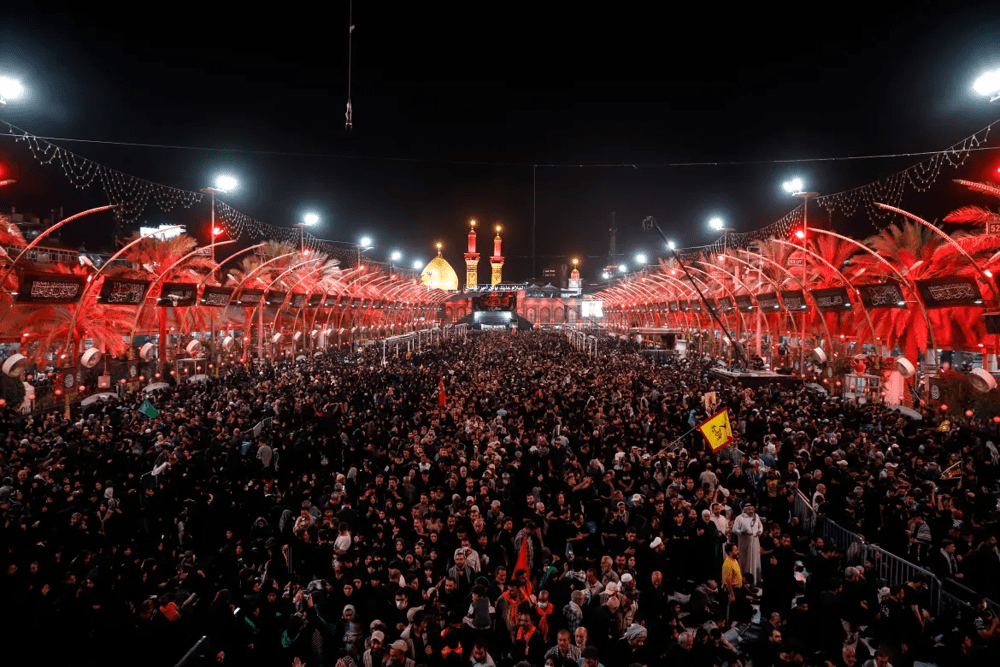
On one hand, Shia communities have demonstrated continuity and even revival of Ahl al-Bayt centric practices. A vivid example is the annual Arbaeen pilgrimage in Iraq. Arbaeen (the 40th day after Ashura) commemorates the end of the mourning period for Imam Husayn. In recent years, it has grown into one of the world’s largest religious gatherings. Millions of Shia pilgrims from Iran, Iraq, Lebanon, Pakistan, India, and around the globe march on foot to Karbala, converging on Husayn’s shrine in a phenomenal display of devotionaljazeera.comaljazeera.com. In 2023, a record was set with over 22 million pilgrims visiting Karbala for Arbaeenaljazeera.com – a number that underscores how central the love of Ahl al-Bayt remains for Shia masses. Such events show little sign of decline in the emotional or spiritual investment in the Prophet’s family. Likewise, the month of Muharram is still observed passionately wherever Shias reside – whether in Iran or Iraq where it is a public affair, or in the Western diaspora where Shia immigrants organize processions in cities like London and Toronto (sometimes even non-Muslim onlookers join out of respect or curiosity). The imagery of Imam Husayn as a symbol of resistance to oppression has, if anything, gained global resonance – often being invoked in political contexts (for example, posters of Husayn are not uncommon in protests in Shia-majority regions, equating modern injustices to the battle of Karbala).
At the same time, the nature of leadership and authority in Shia communities has undergone a transformation that arguably lessens the direct, practical role of Ahl al-Bayt descendants. In Twelver Shia Islam, because the 12th Imam is in occultation, religious scholars (the ulema) took on an increasingly important role over the centuries. By the modern period, a system of clerical authority called Marja’iyyat had developed, where top jurists (Ayatollahs) guide lay Shia in matters of law and even social issues. This culminated in the unique experiment of Iran’s Islamic Republic (est. 1979), where Ayatollah Ruhollah Khomeini instituted the doctrine of Wilayat al-Faqih (Guardianship of the Jurist). Under this doctrine, a senior cleric (himself ideally a just and learned man, often also a sayyid by lineage) can rule in the Imam’s stead, to ensure governance accords with Shia Islam until the Hidden Imam returns. Notably, this represented a shift from waiting for a literal descendant of the Prophet to lead, to entrusting leadership to qualified scholars. In Iran’s case, the Supreme Leaders Khomeini and his successor Khamenei both happen to be from the Prophet’s lineage (they carry the title Sayyid and wear black turbans), but it is their scholarly credentials that justify their rule, not simply their bloodline. In fact, this system was somewhat controversial among Shia when introduced, precisely because classical Shia thought reserved governance for the infallible Imam. Khomeini’s revolutionary ideology, however, linked the spirit of Karbala (martyrdom and justice) with modern anti-colonial and anti-authoritarian struggle, thus repurposing Ahl al-Bayt devotion in a political idiom. Iranian propaganda during the 1980s war with Iraq, for instance, frequently likened Khomeini to Husayn and Saddam Hussein (Iraq’s then-dictator) to Yazid. The cry “Ya Husayn!” resounded on the battlefield as a motivator. In this way, devotion remained very relevant, but its expression was channeled through contemporary political leadership and events.
However, in more recent years, there are signs that societal secularization and new priorities have somewhat eroded the ubiquitous influence of Ahl al-Bayt devotion in daily life, especially among younger Shia in certain countries. Iran is a prime example: after over four decades of theocratic rule, many in the public have become disillusioned with the mixing of religion and politics. Surveys (including a large national survey leaked in 2020) indicate a significant rise in irreligiosity among Iranians – with perhaps less than half the population identifying as religious, and a strong 72.9% majority favoring separation of religion from state affairsagsiw.org. Moreover, 85% of respondents in one poll believed religiosity in Iran was decreasing compared to five years prioragsiw.org. Such statistics suggest that the traditional reverence for clerical authority and by extension for religious symbols like the Imams may be losing ground in the face of modern valuesagsiw.org. While Iranians still widely respect the figure of Imam Husayn (who is seen as a national cultural hero as well as a religious one), the intense observance of all religious rituals is no longer a given. For instance, certain urban, educated segments in Tehran or Shiraz might not attend Muharram ceremonies as diligently as their grandparents did, or they might prefer more intellectual discussions of Karbala’s significance over the old-style chest-beating rituals. The devotion is often taking a more intellectual or ethical shape – focusing on justice, freedom, and speaking truth to power (values epitomized by the Ahl al-Bayt) – rather than purely ritual mourning. In addition, other identity factors, like ethnic or national identity, compete with sectarian identity. An Azerbaijani Shia might feel more commonality with a Sunni Azerbaijani than with an Arab Shia, for example, which can dilute the singular focus on Ahl al-Bayt as a unifying identity across all contexts.
It is important to stress that these changes are uneven across regions. In Iraq, for example, after the fall of Saddam Hussein (who had suppressed Shia public rites), there has been a renaissance of traditional devotion. Processions in Karbala and Najaf are as massive as ever, and the top Shia cleric Ayatollah Ali al-Sistani – while politically quietist – remains an enormously respected figure because he is seen as a representative of the Imams’ values of wisdom and justice. In Lebanon, the Shia militant-political group Hezbollah has effectively melded Ahl al-Bayt devotion with its ideology; images of Imam Ali and Imam Husayn adorn Hezbollah rallies, and their leader Hassan Nasrallah frequently invokes the ethos of the Ahl al-Bayt in speeches. In Pakistan and India, despite periods of sectarian strife, Shia communities still organize large Muharram events. In cities like Karachi and Lahore, one finds neighborhoods where life still revolves around the Imambargah (Shia congregation hall) during Muharram. That said, globalization has brought new challenges and adaptations: South Asian Shia youth, for instance, sometimes opt to hold “Interfaith Husayn Day” seminars to explain Ashura’s message to non-Muslims, rather than only doing the traditional Urdu elegies their ancestors did. This shows an evolution in how the devotion is expressed and communicated to keep it relevant in multicultural settings.
Another modern development has been attempts at Sunni-Shia rapprochement, which often emphasize common respect for the Prophet and his family. Initiatives like the Amman Message (2005) brought together Sunni and Shia scholars to affirm each other’s legitimacy. These have highlighted that loving the Ahl al-Bayt is actually part of Sunni belief too (citing Hadiths where the Prophet said “whoever loves my family loves me”). Such efforts can, in a sense, universalize the Ahl al-Bayt beyond Shia alone – perhaps diluting the exclusivity of Shia devotion but spreading its underlying message. In Indonesia, for example, elements of Shia “Alid piety” that had long been absorbed in Sunni practice (such as celebrating the Prophet’s grandson’s birthday) are being reexamined and sometimes reintroduced by emerging Shia communitiesinsideindonesia.org.
Ismaili Shias in the modern age present a distinct picture. The Nizari Ismailis under the Aga Khan have deemphasized overt sectarian rituals and instead highlight the humanitarian and educational mission guided by the Imam. Devotion to the Aga Khan (a direct Ahl al-Bayt descendant) remains strong – Ismailis contribute financially (through the concept of dasond, a tithe) and follow his guidance in matters of community life – but this devotion is rarely displayed in public religious ceremonies as in Twelver Shi’ism. Instead, it might be expressed by participating in development projects, cultural centers, and intellectual endeavors patronized by the Imam. In a way, Ismaili communities demonstrate how emphasis on Ahl al-Bayt can transform into a modern, almost secular-friendly form: the Imam is honored as a philanthropist, a guide in worldly and spiritual matters, rather than a martyr to weep for. This evolution has kept the Ismaili emphasis on the Prophet’s family very relevant within the community, though largely invisible to outsiders.
For the Zaydi Shias of Yemen, the modern era brought a sharp break in continuity: the Zaydi Imamate, which had ruled parts of Yemen for a millennium, was abolished in 1962 when a republican revolution took place. For a few decades, Zaydi religious influence became more private as Yemen was governed by secular-leaning or pan-Arabist regimes. Yet, even in republican Yemen, Zaydi sayyid families (sometimes called Hashemites) retained social prestige. In recent times, a movement with Zaydi roots – the Houthi movement (Ansar Allah) – rose to prominence, championing the rights of the Zaidi/Shia minority and opposing foreign intervention. The Houthi leaders are from the Houthi family, who are sayyids, and they have invoked Zaydi religious heritage. Although they do not claim an Imamate title, the symbolism of the Prophet’s lineage still bolsters their legitimacy. The Zaydi case thus shows both the decline in formal political role of Ahl al-Bayt (no more Imams claiming to rule by divine right) and the lingering informal influence (religious charisma and communal leadership still often flows through respected Ahl al-Bayt-descended families).
In summary, the modern period has seen the emphasis on Ahl al-Bayt take on new dimensions. In many Shia-majority societies, it has been woven into national and political narratives (as in Iran and Iraq). In diaspora communities, it is maintained as a vital link to heritage and identity. And yet, there is also a subtle trend of moving from literal to metaphorical: where once devotion meant obeying an Imam unconditionally, today it might manifest as upholding the principles the Ahl al-Bayt stood for – justice, knowledge, compassion – in secular arenas. In some places, reverence for the Ahl al-Bayt has become more personal and less public, adapting to the pressures of a globalized world, while in others it has burst forth on the world stage (Karbala’s gatherings now rival any on earth). This dual reality – of both transformation and continuity – characterizes the Shia relationship with the Prophet’s family in our times.
Conclusion
Throughout Islamic history, the family of Prophet Muhammad – the Ahl al-Bayt – has been at the heart of Shia Islam’s devotional and doctrinal universe. From the earliest years after the Prophet’s passing, Shia Muslims upheld the Prophet’s household as the rightful leaders and the purest source of Islamic guidance. This conviction gave rise to rich theological doctrines (like the Imamate of Twelvers and Ismailis) and heartfelt rituals that have sustained Shia communities through centuries of triumph and tragedy. Historically, the Ahl al-Bayt’s centrality was absolute: they were the Imams in religion and often the rallying banner in politics. Twelver, Ismaili, and Zaydi Shia alike, despite their differences, shared a foundational belief that fidelity to Islam is measured by fidelity to the Prophet’s family. In contrast, Sunni Islam honored the Ahl al-Bayt but did not vest authority in them, leading to a different trajectory where the family of the Prophet became revered figures, but not the singular focus of religious life.
Over time, the emphasis on Ahl al-Bayt has experienced both continuity and change. In Shia-majority regions like Iran and Iraq, the love of the Prophet’s family remains deeply ingrained – visible in massive pilgrimages, vibrant holy day commemorations, and the cultural ethos at largealjazeera.com. Yet even there, modern state structures and diverse social currents have meant that direct governance by Ahl al-Bayt (in the person of an Imam) is no longer present, and new forms of leadership have taken shape. In more religiously mixed or secular societies, the devotion has sometimes lost its overt political relevance, becoming one identity marker among many, or a personal matter of faith rather than a public rallying cryagsiw.org. The rituals that once openly challenged empires have in some places become more subdued or been repackaged to resonate with contemporary values.
Crucially, losing direct political relevance is not the same as losing meaning. The legacy of the Ahl al-Bayt continues to inspire millions of people. In many contexts it has been transformed: from a call for the Imam’s rule to a call for social justice and moral integrity, from allegiance to a person to allegiance to an ideal those persons represent. The balance between historical centrality and modern reinterpretation is delicate. Shia communities strive to keep the flame of devotion alive – whether through mourning ceremonies that connect them to centuries of tradition, or through educational initiatives that teach Imam Ali’s wisdom to new generations in new languages. Even some Sunni Muslims today revisit the examples of Ali, Fatimah, and Husayn to find common Islamic values of piety and resistance to oppression, demonstrating that the Prophet’s family still has a unifying potential.
In conclusion, the Ahl al-Bayt remain a symbol of guidance, identity, and devotion for Shia Islam, even as the form and intensity of that emphasis have evolved over time and place. The physical lineage of the Prophet may no longer command the temporal power it once sought, but the spiritual and emotional bond between the Shia and the House of Muhammad endures. It endures in the tears of Ashura, in the cheers of pilgrims reaching Karbala, in the quiet prayers for the Mahdi’s return, and in the everyday effort of Shia believers to embody the teachings of their Imams. Thus, while modernity has in some respects moderated the outward role of Ahl al-Bayt devotion, it has not erased the profound reverence that defines Shi’a faith – a reverence that links the past to the present, and the devout to their Prophet, through the love of his family. Such is the lasting legacy of the Ahl al-Bayt in Shia Islam: central in history, and still very much alive in meaning, though expressed in ever-changing ways. aljazeera.com agsiw.org
Sources: Historical accounts and scholarly analyses have been referenced throughout, including Shia and Sunni historical narratives insideindonesia.org al-islam.org, theological expositions on Twelver, Ismaili, and Zaydi doctrines en.wikipedia.org, as well as modern studies of Shia practices across regions en.wikipedia.org and contemporary surveys of religiosity agsiw.org. These sources testify to the deep roots and dynamic evolution of the devotion to Ahl al-Bayt in Shia Islam.
 The Glorious Quran and Science
Leave a comment