
Written and collected by Zia H Shah MD, Chief Editor of the Muslim Times
PVV and its Anti-Islam Stance
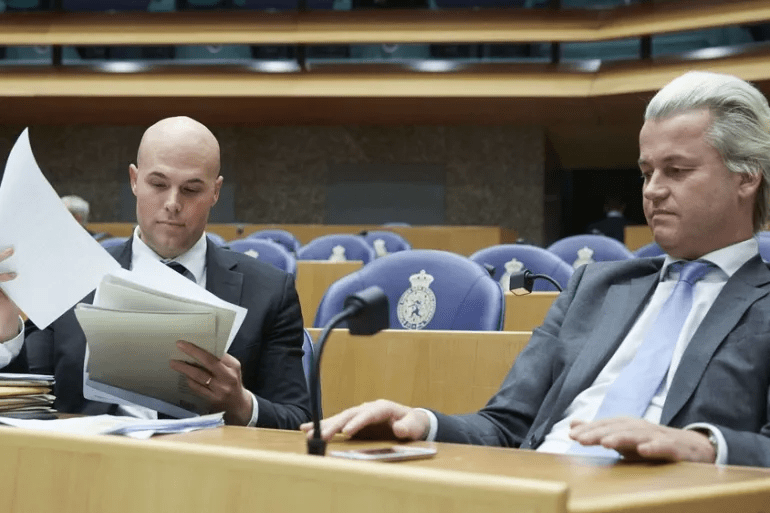
The Party for Freedom (PVV) in the Netherlands, led by Geert Wilders, is known for its strident anti-Islam platform. Founded in 2006, the far-right PVV has consistently portrayed Islam as a threat to Dutch values. Wilders and his party have at times called for extreme measures against Islam – for example, banning the Quran and closing all mosques in the Netherlandsreuters.com. PVV politicians have campaigned to ban Islamic symbols like the burqa and minarets, arguing “we don’t want any Islam, or at least as little as possible in the Netherlands”aljazeera.com. This hardline rhetoric against Islam is a core element of the PVV’s identity. Given this stance, it came as a surprise to many when a few high-profile PVV members later embraced Islam themselves. In particular, Arnoud van Doorn and Joram van Klaveren – both once ardent critics of Islam – eventually converted to the religion, making headlines worldwide. Below, we explore their backgrounds, conversions, and the reactions to their ideological about-face.
Arnoud van Doorn: From PVV Member to Muslim
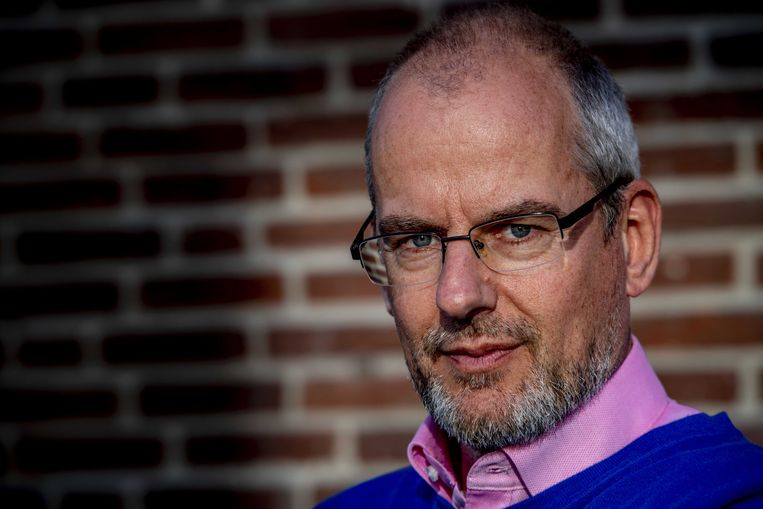
Arnoud van Doorn was a PVV politician in The Hague, serving as a city councilor and confidant in Wilders’ party. He parted ways with the PVV in late 2011 amid controversy (reports say he was expelled over “financial irregularities”)dutchnews.nl. Only a few months later, van Doorn decided to convert to Islam, publicly announcing his new faith by April 2012en.wikipedia.org. This made him the first PVV office-holder to undergo such a conversion.
Van Doorn’s journey to Islam was driven by a dramatic change in perspective. Notably, he had been involved in distributing the PVV’s anti-Islam short film “Fitna” (2008), which vilified Islam and sparked worldwide Muslim outragearabnews.com. Van Doorn later explained that the strong Muslim reactions to that film prompted him to start learning about Islam rather than just fearing itarabnews.com. Through independent study of the Quran and interactions with Muslim communities, his views softened. He soon came to regret his role in spreading anti-Islam propaganda. “I was only responsible for distributing the movie. Today, it is something that I deeply regret,” van Doorn admitted regarding Fitnaarabnews.com. He felt a moral responsibility to “correct the mistakes” of his past and show Islam in a more truthful lightarabnews.com. This introspection ultimately led to his shahada (Islamic declaration of faith) and conversion in 2012.
Publicly, van Doorn’s conversion was met with mixed reactions. Coming from a party notorious for Islamophobia, his embrace of Islam was startling. “According to some people I am a traitor,” van Doorn acknowledged, “but according to most others I have actually made a very good decision.”theguardian.com Many former PVV colleagues were incredulous at his about-face, while members of the Muslim community welcomed his change of heart. Van Doorn himself appeared happy and at peace with his decision – just a year later, in October 2013, he even performed the Hajj pilgrimage to Mecca, sharing his journey on social mediatheguardian.comtheguardian.com.
After converting, Arnoud van Doorn continued a career in public life, now on an Islamic platform. He co-founded a local Islamic political party in The Hague (the Unity Party, PvdE) and served on the city council through 2014 as its representativeen.wikipedia.org. He also became involved in Islamic outreach: for example, he was reported to be president of the European Da’wah Foundation and affiliated with the Canadian Dawah Association’s European branchen.wikipedia.org. Van Doorn expressed a desire to use his skills to promote a positive understanding of Islam, in contrast to his earlier PVV messagingarabnews.com. He even announced plans to collaborate on a film showcasing the life and teachings of Prophet Muhammad as a form of atonement and educationarabnews.com. In a symbolic postscript to his own conversion, van Doorn’s eldest son Iskander also accepted Islam in 2014 after, like his father, studying the Quran and being inspired by the changes he saw in his fatherarabnews.comarabnews.com. Van Doorn’s personal transformation – from helping produce anti-Islam content to becoming a Muslim activist – stands as a remarkable reversal of his earlier convictions.
Joram van Klaveren: From Anti-Islam MP to Convert
Joram van Klaveren is another prominent ex-PVV figure who made the leap to Islam. Van Klaveren served as a Member of Parliament (MP) for the PVV from 2010 until 2014, and was known as one of the party’s most outspoken anti-Islam voicespolitico.eudutchnews.nl. During his tenure, he regularly denounced Islam in harsh terms – he once stated publicly that “Islam is a lie” and “the Quran is poison,” toeing the PVV line that blamed Islam for many of society’s illspolitico.eu. Van Klaveren pushed for policies like banning mosques and Islamic schools, insisting at the time that Islam did not belong in the Netherlandsaljazeera.com. As a high-profile protégé of Wilders, he helped shape the PVV’s anti-Islam rhetoric.
In March 2014, however, van Klaveren broke with Geert Wilders. The immediate trigger was Wilders leading supporters in an infamous chant asking if they wanted “fewer Moroccans” in the country – a rally that van Klaveren felt “was a step too far,” crossing from anti-Islam into outright ethnic hostilitytheguardian.com. Disillusioned, he left the PVV that yearpolitico.eu. Van Klaveren subsequently co-founded his own conservative party called VoorNederland (VNL), but it failed to win any seats in the 2017 elections, and he quit politics shortly thereafterpolitico.eualjazeera.com.
Ironically, it was after leaving politics that van Klaveren’s views on Islam underwent a profound change. In 2018, he set out to write a book critical of Islam – essentially an anti-Islam polemic – which he hoped would solidify the case against the religionaljazeera.comaljazeera.com. But as he delved into Islamic theology and history for research, his preconceived notions began to falter. “During [the] writing I came across more and more things that made my view on Islam falter,” he explained of his gradual about-facepolitico.eu. The deeper he got into the subject matter, the more his perspective shifted. What started as a manuscript meant to attack Islam transformed into a refutation of anti-Islam argumentsaljazeera.com. Van Klaveren found that many of his former criticisms were based on misinformation or misunderstandings. In interviews, he described a pivotal realization: “If everything I wrote up to that point is true, and I believe that, then I am a de facto Muslim,” he recalled thinking, upon finding that his research was validating Islam rather than debunking italjazeera.com.
Thus, in a turn of events few could have predicted, Joram van Klaveren decided to embrace the faith he once demonized. He formally converted to Islam on 26 October 2018, while still in the process of writing his bookaljazeera.com. A local imam who learned of van Klaveren’s change of heart urged him to go public, suggesting it would be an important chance to make amends for his past rhetorictheguardian.com. Van Klaveren agreed. In February 2019, he announced his conversion on a Dutch radio program, sending shockwaves through the political and media landscapealjazeera.com. The news made headlines nationwide – after all, here was a man who had been Wilders’ right-hand parliamentarian now declaring himself a Muslim. (Notably, van Klaveren became the second ex-PVV politician to convert, following Arnoud van Doorn’s example six years earlierdawn.com.) Van Klaveren, who was 40 at the time, said he had been “searching for a long time” spiritually and called his move a “religious homecoming” given his Protestant Christian upbringingaljazeera.com. The book he was writing was published as “Apostate: From Christianity to Islam in the Time of Secular Terror”, reflecting the intellectual and spiritual journey he underwentaljazeera.com.
The reaction to Joram van Klaveren’s conversion was intense. The revelation came as a genuine surprise even to his closest colleagues. (“I expect a lot but I didn’t see this coming,” admitted Wilders when pressed by reporters for commenttheguardian.com.) Geert Wilders responded with open disbelief and a touch of characteristic scorn – he quipped that van Klaveren’s switch was “like a vegetarian going to work in a slaughterhouse”aljazeera.com. Other right-wing figures were similarly taken aback. A former VNL co-founder, Jan Roos, mused that “if this really isn’t a PR stunt to promote his book, then it really is an extraordinary choice for somebody who had a lot to say about Islam”aljazeera.com. Indeed, some sceptics questioned van Klaveren’s motives, calling the conversion a publicity stuntaljazeera.comaljazeera.com. However, van Klaveren insisted his change of heart was genuine and borne of long reflection, not a ploy.
On the other side, many in the Dutch Muslim community welcomed van Klaveren with open arms. He received congratulations from fellow converts – notably Arnoud van Doorn, who cheered him via Twitter by joking, “I never thought that the PVV would become a breeding ground for converts.”theguardian.com Van Klaveren also earned praise from Muslim organizations; for example, representatives of Moroccan-Dutch mosques said it was courageous of him to publicly rectify his viewsaljazeera.com. At the same time, van Klaveren’s former supporters in far-right circles felt betrayed by his ideological U-turn. Van Klaveren has disclosed that he was inundated with hate mail and even death threats after his announcement – over 2,000 threats, including disturbing messages vowing to harm his family, came in from enraged extremiststheguardian.com. This backlash eventually subsided, and van Klaveren has since said he understands the shock: “I have contributed to creating and maintaining that bad image of Islam, but you cannot imagine how preconceptions work until you have to deal with them yourself,” he reflected, now finding himself on the receiving end of the kind of prejudice he once propagateddutchnews.nl.
Since converting, Joram van Klaveren has dedicated himself to bridge-building and education. In 2020, he joined several other Dutch Muslims in launching a foundation to introduce people to Islam’s history and practices, in hopes of fostering understandingtheguardian.com. This initiative led to the opening of the Islam Experience Centre in Rotterdam – an interactive exhibit space aimed at dispelling misconceptions about Islam and promoting interfaith empathytheguardian.com. “The main goal is to take away misconceptions and promote empathy,” van Klaveren said of this project, noting the irony that he once helped spread those very misconceptionstheguardian.com. He has also been candid in media interviews about his remorse for past statements. When asked if he feels guilty for his PVV-era rhetoric, he responded that he had been “simply wrong,” explaining that at the time “it was PVV policy: everything that was wrong had to be linked to Islam in one way or another.”politico.eu Now, he says, he feels ashamed of his former actions and believes it is partly his duty to “set the record straight” about Islamtheguardian.comtheguardian.com. Van Klaveren frequently emphasizes that his life took an unexpected turn – “I had plans, but Allah is the best of planners,” he remarked, expressing humility about his transformationtheguardian.com.
Public and Political Reactions
The high-profile conversions of these ex-PVV politicians spurred wide discussion and a spectrum of reactions in the Netherlands and beyond. PVV leader Geert Wilders remained staunchly critical. When van Klaveren’s news broke (with TV cameras rolling as Wilders was asked for comment), Wilders was visibly stunned and repeated his now-famous analogy that such a conversion was like a devout vegetarian taking a job in an abattoiraljazeera.com. Wilders admitted he “had no words” and “didn’t see this coming”theguardian.comaljazeera.com. Within PVV circles, there was a sense of embarrassment and denial – these men, once colleagues, had effectively defected to the side of the PVV’s ideological adversary. Some PVV supporters angrily accused the converts of betrayal or opportunism. As noted, van Klaveren was bombarded with hostile messages and threats from far-right sympathizers who felt “a deep sense of betrayal” at his change of allegiancetheguardian.com. Similarly, van Doorn faced insults of being a “traitor” to his cause when he convertedtheguardian.com.
Many critics in the media questioned the sincerity of these conversions. Right-leaning commentators speculated whether van Doorn and van Klaveren truly had a spiritual awakening or whether they were seeking attention. The timing of van Klaveren’s announcement, just ahead of his book release, fueled cynics who labeled it a “stunt” to boost publicityaljazeera.comaljazeera.com. However, those who knew the men personally noted that such a profound and potentially costly decision (in terms of reputation and personal safety) was unlikely to be made lightly. In van Klaveren’s case, a former colleague acknowledged that if it wasn’t a PR stunt, “it really is an extraordinary choice”, underscoring how unexpected it was for someone who had “a lot to say about Islam” in the pastaljazeera.com.
On the other side of public opinion, many observers praised the converts for their courage and open-mindedness. Prominent Muslims voiced hope that these very public transformations could help ease Dutch societal tensions. Arnoud van Doorn’s successful Hajj pilgrimage and his continued goodwill towards his former critics earned him respect in Muslim communities. When Joram van Klaveren converted, Muslim leaders in the Netherlands welcomed him. “Everyone can change,” said one spokesperson, noting that van Klaveren’s insider knowledge of anti-Islam politics could become an asset in countering hatealjazeera.com. Van Doorn’s supportive tweet calling the PVV a “breeding ground for converts” also lightened the mood and showed a sense of irony not lost on the publictheguardian.com. International media picked up on these stories as well, often highlighting the ideological irony and human-interest angle of former Islamophobes finding guidance in Islam. Overall, the reactions ranged from extreme skepticism and anger on one end, to admiration and optimism on the other, reflecting the polarized views on Islam in Dutch society.
Ideological Contrast and Irony
These cases highlight a striking ideological contrast: individuals who once vehemently opposed Islam eventually embraced it as their personal faith. The PVV’s rhetoric has long painted Islam as fundamentally incompatible with Dutch culture and security – Wilders even sought to legally ban Islam’s holy book and shutter Islamic institutionsreuters.com. Van Doorn and van Klaveren were themselves instrumental in propagating that message. Van Klaveren admits that as a PVV member he was trained to link virtually any social problem to Islampolitico.eu. The about-face of these men – from demonizing Islam to declaring “There is no god but Allah, and Muhammad is His Messenger” – is thus rich with irony. It challenges the simplistic “us vs. them” narrative often found in far-right discourse. As one journalist wryly noted, “quite a conversion then”theguardian.com – indeed, the shift of worldview is profound.
Even the converts themselves have recognized the irony of their journeys. Arnoud van Doorn’s lighthearted remark about the PVV inadvertently becoming a “breeding ground for converts” acknowledges the unexpected nature of these developmentstheguardian.com. Their stories suggest that exposure to the substance of Islam – whether through reading the Quran or engaging with Muslims – had the opposite effect of what PVV hardliners might assume. Instead of confirming their fears, deeper exposure led them to appreciate the religion. In a sense, the PVV’s intense focus on Islam kept the topic in front of these politicians’ eyes constantly; once they approached it with an open mind, curiosity replaced fear. It is often said that some of the strongest critics can become the strongest adherents – van Doorn and van Klaveren exemplify this adage. Their conversions have been cited in debates about Islamophobia, suggesting that hate and ignorance can sometimes transform into understanding when confronted with knowledge and personal experience. The ideological U-turn of PVV alumni embracing Islam stands as a powerful symbolic rebuttal to the party’s narrative, even as Wilders and his followers dismiss these instances as anomalies or betrayals.
Life After Conversion: New Roles and Reflections
In the aftermath of their conversions, both Arnoud van Doorn and Joram van Klaveren have embarked on new paths that contrast sharply with their old roles, yet they share a common theme of seeking redemption and building bridges.
- Arnoud van Doorn (Post-2012): After becoming Muslim, van Doorn devoted himself to supporting the Muslim community and correcting misconceptions he once spread. He helped establish the Party of Unity (PvdE), an Islamic-oriented political party, and served on The Hague’s city council as a member of this party until 2014en.wikipedia.org. Van Doorn also took on advocacy and educational work. He became involved with organizations focused on Da’wah (Islamic outreach) in Europe and North Americaen.wikipedia.org. In interviews, he expressed an “urge and responsibility to correct the mistakes” of his past, using his public voice now to “spread the truth about Islam”arabnews.comarabnews.com. True to this mission, he announced plans to co-produce a film highlighting the Prophet Muhammad’s life and message (in cooperation with a Canadian Islamic group that had invited him to Hajj)arabnews.com. This project, titled “Muhammad: Master of Human Beings,” was envisioned as an attempt to show a Western audience the positive example of the Prophet – a direct counter to the narrative of Fitna. Van Doorn’s activities reflect a complete reorientation: from rallying against Islam, he moved to working from within Islam to foster understanding. He often remarks that he has found peace in his new faith and wishes to be remembered for the good he contributes going forward, rather than for the divisive politics of his past.
- Joram van Klaveren (Post-2019): In the years since his conversion, van Klaveren has similarly reinvented himself as a voice for interfaith dialogue and education. Along with a group of other Muslim converts and lifelong Muslims, he co-founded the Islam Experience Centre in 2020 – a project that traveled to schools and later opened a permanent exhibit in Rotterdamtheguardian.com. This center allows visitors (often non-Muslim students) to learn about Islamic beliefs, history, and cultures in an immersive way. Van Klaveren explained that the goal is to “take away misconceptions and promote empathy” about Islam, especially among Dutch youththeguardian.com. In addition to this initiative, van Klaveren has been active in media and public forums, where he speaks about his personal journey and the insights he gained. He has openly apologized to the Muslim community for his past harsh remarks, and he emphasizes that he wants to prevent others from falling into the same fear-driven bigotry that he once engaged in. As a former insider of the anti-Islam movement, van Klaveren offers a unique perspective in debunking its claims. For example, he now counters the idea (which he once promoted) that Islam is inherently at odds with Dutch society, pointing out historical examples of Islamic presence in Europe and the contributions of Dutch Muslims. In essence, van Klaveren has taken on the role of a public educator and bridge-builder – a far cry from his days as a firebrand PVV legislator. He remains a practicing Muslim and often notes that his family and friends gradually came to accept and support his choice. Over time, the controversy of his conversion has cooled, allowing him to work constructively on what he calls “countering the narrative” he once helped spreadtheguardian.comtheguardian.com.
Both men’s post-conversion activities underscore a desire to reconcile with the past and promote mutual understanding. They have used their public profiles to speak out against hatred and to highlight the peaceful, compassionate aspects of Islam that they discovered. While van Doorn and van Klaveren traveled different paths into the PVV and out of it, they arrived at a similar conclusion: that the anti-Islam ideology they once championed did not hold up to scrutiny, and that engaging positively with the Muslim community was a more fulfilling course. Their stories continue to be cited in discussions about tolerance, the possibility of change, and the complexities of identity in modern Europe. As such, these former PVV members-turned-Muslims remain figures of interest – viewed as traitors by some, and as bridges between cultures by others – in the ongoing dialogue about Islam and politics in the West.
Sources: The information above is drawn from reporting by international news outlets and interviews with the individuals involved. Key sources include Reuters (for PVV’s anti-Islam proposals)reuters.com, Al Jazeera and Dawn (on van Klaveren’s conversion and Wilders’ reaction) aljazeera.com, Politico Europe (on van Klaveren’s PVV tenure and statements) politico.eu, DutchNews.nl (on both conversions and their context) dutchnews.nl, and feature articles in The Guardian (detailing van Klaveren’s journey and van Doorn’s reflections) theguardian.com. These accounts provide a balanced overview of the remarkable transitions of Arnoud van Doorn and Joram van Klaveren from PVV insiders to members of the Islamic faith.

 The Glorious Quran and Science
Leave a comment