
By Zia H Shah MD, Chief Editor of the Muslim Times
Verses 21:30–33 (Translation): “Did the unbelievers not realize that the heavens and the earth were one solid mass, then We tore them apart, and We made every living being out of water? Will they not then believe? And We placed firm mountains on earth lest it should sway with them, and We made broad paths therein so that they might find their way. And We made the sky a secure canopy; yet they turn away from its signs. It is He who created the night and the day, and the sun and the moon. Each of them is floating in its orbit.”
Cosmic Origin: Big Bang and Creation
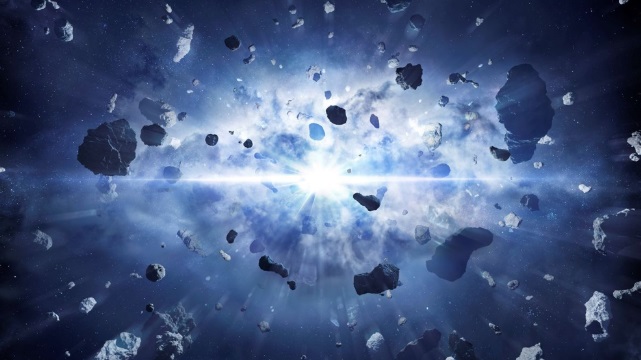
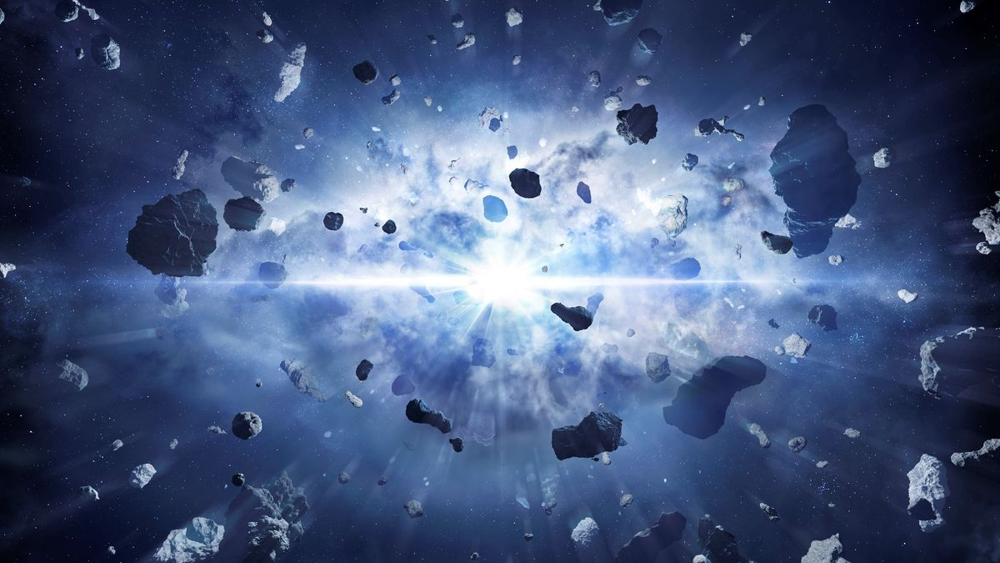
Qur’an 21:30 opens by alluding to a common origin of the heavens and earth, which modern readers often compare to the Big Bang. In fact, this verse “mirrors the Big Bang theory, describing a primordial singularity (‘closed-up mass’) that was ‘split apart’ to form the cosmos” thequran.love. Such an interpretation not only connects scripture with contemporary cosmology, but also supports the Kalam cosmological argument by affirming that the universe had a beginning and therefore a transcendent cause thequran.love. The Qur’an thus emphasizes God as the initiator of creation, resonating with philosophical arguments for a necessary, uncaused Creator of the universe.
Life Originating from Water

The same verse (21:30) immediately pivots to life’s origins, stating that every living thing was made from water. This underscores water’s fundamental role in biology, a fact confirmed by science as we recognize that liquid water is essential for life as we know it. As one commentary observes, it is “no wonder the holy Quran describes water as the most fundamental ingredient for life”, given that whenever we search for life on other planets “the first question is: does the planet have water?” thequran.love. In a 7th-century context, such an insight – “all life forms were created from water” (21:30) – remarkably anticipates what modern biology and astrobiology have established about water’s centrality to life thequran.love.
Mountains as Earth’s Stabilizers
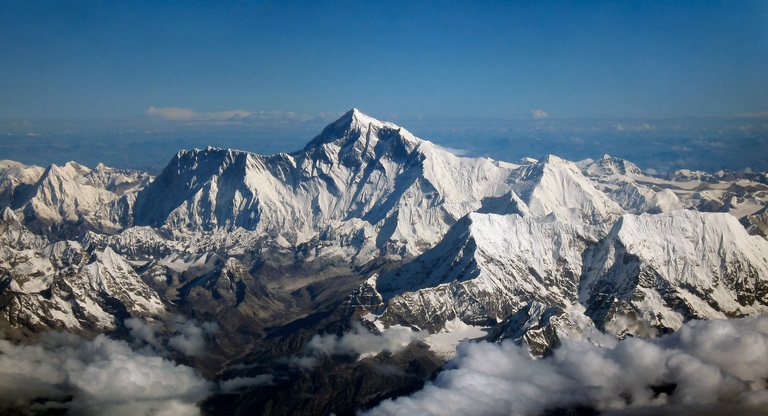
Qur’an 21:31 highlights the purpose of mountains, saying they are set firmly in the earth to prevent it from shaking under us. Centuries before the theory of plate tectonics, the Qur’an described mountains in a way that suggests a stabilizing function. Geology today shows that mountains have deep “roots” and can stabilize the earth’s crust, and the Qur’an uses striking imagery that aligns with this reality. “Centuries before plate tectonics, the Quran described mountains as stabilizers: ‘And We have placed within the earth firmly set mountains, lest it should shift with them…’ (Quran 21:31),” noting in another verse that mountains are like “stakes” or pegs thequran.love. These metaphors “align with modern geology—mountains as shock absorbers that ‘peg’ the crust, preventing destabilization” thequran.love. In an era long before scientific geology, such descriptions broaden the commentary on how divine providence made the earth suitable for life.
Sky as a Protective Canopy

Surah 21:32 continues with a reference to the sky as “a roof, well-protected.” This conveys the idea that the atmosphere or heavens serve as a shield for life on earth – a notion strongly supported by modern science. Earth’s atmosphere indeed protects us by filtering harmful radiation, burning up meteoroids, and maintaining climate balance. One analysis notes that this verse “underscores the sky’s role as a safeguard for Earth, a concept that aligns with modern scientific understanding of the atmosphere’s protective functions” thequran.love. In theological terms, the Qur’an is highlighting a divinely placed system of protection enveloping our planet, an elegant example of the harmony between religious scripture and scientific observation.
Celestial Orbits and Cosmic Order
Finally, Qur’an 21:33 mentions the night and day and the sun and moon – “each gliding freely in its orbit.” This expresses a view of an orderly cosmos, where celestial bodies move in regulated paths. Such phrasing avoids the ancient geocentric pitfall and is consistent with what we know today: the earth’s rotation brings night and day, the moon orbits the earth, and the earth orbits the sun – indeed, “literally, everything is in orbit.” Notably, the Qur’an “doesn’t delve into what each is orbiting, just that they have orbits – which is true… the Qur’an doesn’t fall into the trap of geocentrism; it just says they all move in orbits” in a manner completely “consistent with our current understanding” thequran.love. Such verses portraying a cosmos governed by precise laws inspired early Muslim scientists; seeing that “the sun and the moon each [float] in its orbit” (21:33) helped convince them that the universe operates on knowable principles, motivating the study of astronomy with mathematical rigor thequran.love. In sum, the orbital motion verse adds to the Qur’anic theme of an intelligible design in nature.
Conclusion: Convergence of Scripture and Science
Taken together, Qur’an 21:30–33 presents a remarkably cohesive blend of theological message and scientific foresight. As one scholar writes, these four verses read “like a summary of cosmological and biological knowledge in four short verses: universe’s beginning, water-based life, geological features aiding life, atmospheric protection, and cosmic mechanics” thequran.love. For believers, this alignment is a “powerful sign that the Qur’an, while not a science book, aligns with scientific reality in profound ways” thequran.love, reinforcing faith in the divine origin of the text. Even for skeptics or scientists, the parallels between the Qur’an’s wording and modern scientific understandings offer, at the very least, an intriguing point of reflection on how such knowledge appears in a 7th-century scripture. These insights enrich an academic commentary on Surah 21:30–33 by illustrating how its themes of creation, life, and cosmic order resonate with contemporary scientific concepts and enduring philosophical arguments for the existence of a purposeful Creator.



 The Glorious Quran and Science
Leave a reply to The Glorious Quran and the Mountain Range Formation: Timescales and Geological History – The Glorious Quran and Science Cancel reply