
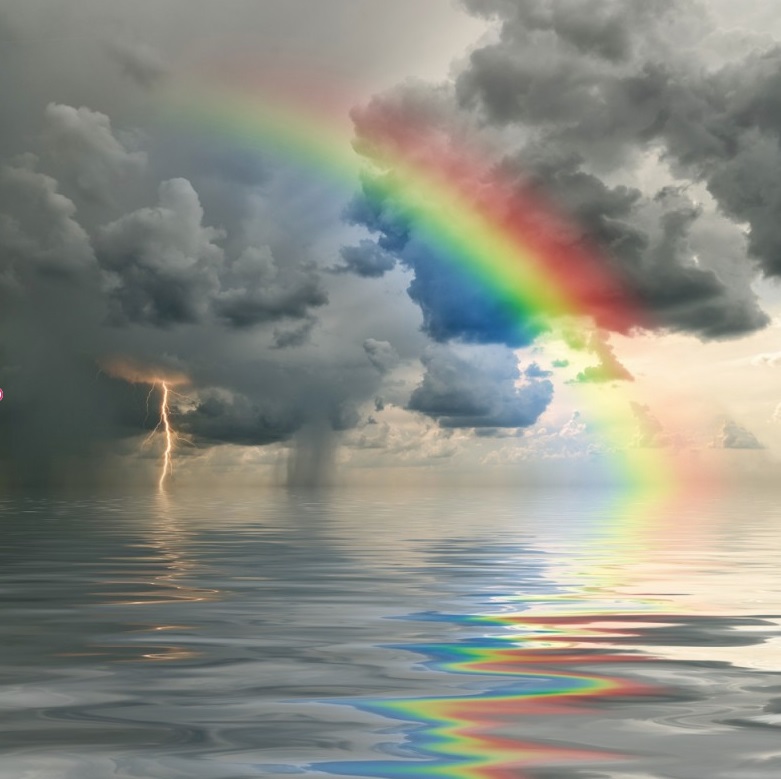
Epigraph
وَاخْتِلَافِ اللَّيْلِ وَالنَّهَارِ وَمَا أَنزَلَ اللَّهُ مِنَ السَّمَاءِ مِن رِّزْقٍ فَأَحْيَا بِهِ الْأَرْضَ بَعْدَ مَوْتِهَا وَتَصْرِيفِ الرِّيَاحِ آيَاتٌ لِّقَوْمٍ يَعْقِلُونَ
And in the alternation of night and day, and the provision God sends down from heaven, and therewith revives the earth after it is dead, and the turning about of the winds, there are signs for a people who understand. (Al Quran 45:5, translated by AJ Arberry)
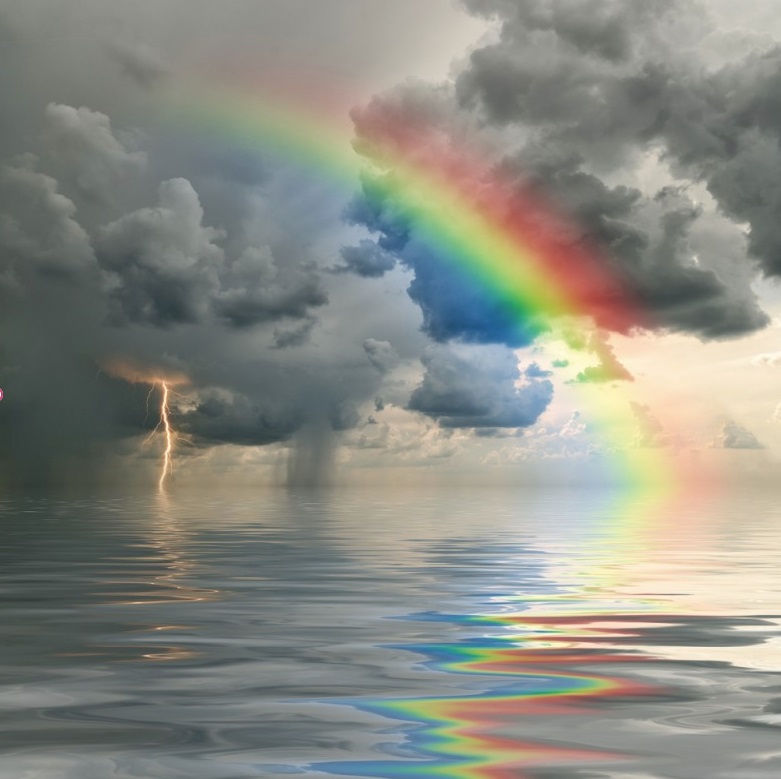
Written and collected by Zia H Shah MD, Chief Editor of the Muslim Times
Abstract
The seventh century Arabs saw water coming from the sky during rain. There are more than two dozen verses quoted in references below that talk about water descending from the clouds or skies. But, the verse quoted in epigraph above was an epiphany to me today. It does not say water, rather it uses the word رِّزْقٍ or provision coming from the sky and this in turn gives new life to the dead earth.
Why the choice of this different word in just one verse instead of water?
Rain and lightning are commonly appreciated as sources of water and energy, but they also play critical roles in delivering a suite of chemical constituents and nutrients to Earth’s surface. This article reviews the scientific processes by which thunderstorms and precipitation contribute far more than water alone. Lightning discharges fix atmospheric nitrogen into bioavailable forms, generating nitrates that fertilize ecosystems. Rainfall scavenges minerals, aerosols, and trace elements from the atmosphere – from desert dust rich in phosphorus and iron to sea salts and even biological particles – depositing these materials onto land and oceans. These inputs have significant ecological and agricultural impacts, nourishing plant growth, sustaining remote ecosystems, and driving biogeochemical cycles on regional and global scales. The interconnected nature of atmospheric and terrestrial systems is highlighted, illustrating how natural phenomena like rain and lightning subtly sustain life on Earth. We maintain an academic tone throughout, drawing on peer-reviewed studies and scientific reviews to document these processes and their broader environmental significance.
Introduction
Precipitation is a key component of the water cycle, but raindrops are not chemically pure. As water condenses and falls through the atmosphere, it interacts with gases and particles, becoming a vehicle for transferring nutrients and chemicals from the sky to the Earth. Likewise, lightning – a dramatic atmospheric event often associated only with thunder and fire – initiates chemical reactions that yield plant-accessible nutrients. Together, rain and lightning serve as atmospheric delivery mechanisms, supplying essential elements beyond H₂O. This coupling of atmospheric processes with terrestrial and aquatic chemistry exemplifies the interconnectedness of Earth’s systems. Through rainfall and lightning, the atmosphere actively participates in biogeochemical cycles, linking distant ecosystems and helping to sustain life in subtle but profound ways. In this article, we explore the scientific aspects of what rain and lightning provide beyond water, focusing on nutrient fixation and deposition, atmospheric chemistry interactions, and the ecological implications of these natural inputs. We also reflect on the broader environmental significance of these processes, emphasizing how they illustrate the delicate interdependence of Earth’s atmosphere, biosphere, and geosphere.
Lightning and Atmospheric Nitrogen Fixation
Thunderstorms do more than produce rain; lightning flashes also trigger important chemical transformations in the air. The intense energy of a lightning strike (with temperatures briefly hotter than the surface of the Sun) splits nitrogen (N₂) and oxygen (O₂) molecules in the atmosphere. This produces nitrogen oxides (primarily nitric oxide, NO, which then oxidizes to nitrogen dioxide, NO₂) pmc.ncbi.nlm.nih.gov. These reactive gases further convert into nitric acid (HNO₃) vapor, which is highly soluble in water. As a result, nitric acid and other nitrate (NO₃⁻) compounds are absorbed by rain droplets and delivered to the surface as dilute nitric acid or nitrate salts. In essence, each lightning storm creates a natural pulse of fertilizer: fixed nitrogen that plants and ecosystems can use.
Lightning-driven nitrogen fixation is a significant natural source of reactive nitrogen on Earth. Estimates suggest that lightning produces on the order of 3–10 teragrams of fixed nitrogen per year globally pmc.ncbi.nlm.nih.gov. (One teragram is 10¹² grams, or about 1 billion kilograms.) While this contribution is small relative to biological nitrogen fixation by microbes, it was crucial in pre-industrial times and in areas lacking nitrogen-fixing organisms. The deposited nitrate enriches soils and surface waters with a nutrient often limiting to plant growth. Within days after a thunderstorm, nitrates formed by lightning are washed out by rain and integrated into the soil, where they can be taken up by plant roots pmc.ncbi.nlm.nih.gov. In regions with low soil nitrogen or sparse leguminous plants, lightning-derived nitrates can measurably enhance soil fertility and promote vegetation growth pmc.ncbi.nlm.nih.gov. This phenomenon has led to the adage of lightning acting as “nature’s fertilizer,” corroborated by scientific observation of increased nitrate levels in rainwater following electrical storms.
It is worth noting that human activities now generate far more fixed nitrogen (via industrial fertilizer production and fossil fuel combustion) than lightning does pmc.ncbi.nlm.nih.gov. Nonetheless, lightning remains an important component of the natural nitrogen cycle. It provides a baseline input of new nitrogen to ecosystems, especially during the growing season when convective storms are frequent. For example, agricultural producers have long noticed that crops often appear greener after thunderstorms compared to irrigation with plain water – a tangible sign of the nitrates and other nutrients delivered by rain. In summary, lightning enables atmospheric nitrogen to become part of the biosphere by creating nitrates that rain brings to Earth’s surface, thereby coupling atmospheric electricity with the nutrient needs of living organisms.
Mineral and Nutrient Deposition by Rainfall
Rainfall serves as a conduit for transferring not only water but also mineral nutrients and particulate matter from the atmosphere to the Earth. One of the most important pathways is through the transport and deposition of dust. In arid regions, winds lift immense quantities of soil and mineral particles into the atmosphere, which can be carried across continents and oceans. When rain occurs, it scavenges and deposits this dust onto ecosystems far from its origin. These dust particles often contain essential nutrients such as phosphorus (P), calcium, potassium, and iron.
A striking example is the transoceanic journey of Saharan desert dust to the Amazon rainforest. Each year, around 182 million tons of dust from North Africa are lofted into the air, and roughly 28 million tons (about 28 teragrams) are deposited over the Amazon Basin via rainfall science.nasa.gov. This dust is derived in part from ancient dried lake beds and is exceptionally rich in phosphorus from the remains of long-dead organisms in the Sahara science.nasa.gov. The Amazon’s highly weathered tropical soils are naturally low in phosphorus, which is a limiting nutrient for plant growth. The influx of Saharan dust each year delivers on the order of tens of thousands of tons of phosphorus, helping to replenish what heavy rains and intense biological uptake in the rainforest continuously deplete science.nasa.gov. In this way, an atmospheric river of dust and rain connects two distant ecosystems: the African desert and the South American jungle. Scientific observations confirm that this process provides “crucial nutrients” to the Amazon’s flora, diminishing nutrient deficits and sustaining the rainforest’s productivity science.nasa.gov.
Dust-borne mineral delivery is not only important for rainforests; it also plays a vital role in marine ecosystems. Many regions of the open ocean are low in nutrients, and iron in particular is often in short supply for phytoplankton (microscopic marine plants). Dust from deserts serves as a natural fertilizer for these oceanic regions. For instance, winds transport dust from the Sahara, Australia, Patagonia, and other deserts out over the oceans, where rains deposit the particles into the sea. The iron and other minerals in this dust fertilize phytoplankton blooms, boosting marine productivity nasa.govnasa.gov. A recent study in the Southern Ocean – a vast oceanic zone around Antarctica – found that atmospheric dust supports roughly one-third of the phytoplankton growth in that region e360.yale.edu. These phytoplankton form the base of the marine food web and also sequester carbon dioxide via photosynthesis, thus dust-mediated nutrient input has climate implications by enhancing carbon uptake in the ocean. Globally, it is estimated that mineral dust deposition onto the oceans supports about 4–5% of the yearly carbon export production (a measure of biological activity), with much higher contributions (20–40%) in certain nutrient-poor oceanic areas nasa.gov. The nutrients in dust are not limited to iron; analyses show that dust contains phosphorus and even some nitrogen compounds that plankton and plants can use nasa.gov.
Beyond deserts, other sources contribute nutrients to rain. Volcanic eruptions inject ash and mineral aerosols into the atmosphere, which later settle out via precipitation, delivering elements like sulfur (as sulfate) and trace metals to ecosystems. Sea spray from ocean waves produces salt particles (containing sodium, magnesium, chloride, etc.) that become nuclei for cloud droplets; when rain falls, these marine aerosols can deposit essential cations like magnesium and calcium onto coastal lands. Even smoke and soot from wildfires can carry nutrients (such as potassium or phosphorus from burnt biomass) that eventually wash down in rain. In each case, rainfall acts as the vehicle that deposits these mineral and nutrient particles onto ecosystems. Over long timescales, such wet deposition can significantly influence soil chemistry – for example, helping to neutralize acidic soils by adding calcium carbonate from dust, or providing micronutrients to soils that lack them. In island and mountain ecosystems isolated from other nutrient sources, rain-borne inputs can be especially crucial. Studies of tropical islands (like Hawaii) and high alpine environments have shown that atmospheric nutrient deposition from dust and sea aerosols is fundamental to maintaining soil fertility where rock weathering alone cannot meet biotic demand.
Aerosols and Trace Elements in Precipitation
As raindrops fall, they scavenge a wide variety of aerosols – tiny particles suspended in the air – and trace chemical elements, effectively cleaning the atmosphere. Raindrops form around microscopic condensation nuclei (which can be dust motes, salt crystals, pollen, or smoke particles), and during their descent they collide with additional particles. This process, known as precipitation scavenging, means that rainwater typically contains numerous dissolved ions and particulate matter besides H₂O. Studies indicate that rain scavenging can remove a large fraction of airborne particles; often 50–80% of below-cloud aerosols are washed out during a rain event sciencedirect.com. In other words, rainfall is one of nature’s most efficient air purification mechanisms, scrubbing the sky of pollutants and particulates and bringing them to the surface.
The chemical composition of rainwater thus reflects both natural and anthropogenic substances present in the atmosphere. Major constituents of typical rainwater include:
- Nitrogen compounds: nitrate (NO₃⁻) from lightning and combustion sources, and ammonium (NH₄⁺) from agricultural ammonia emissions. These provide bioavailable nitrogen to soils and waters upon deposition.
- Sulfur compounds: sulfate (SO₄²⁻) from volcanic gases (e.g., SO₂) and fossil fuel burning, as well as marine dimethyl sulfide emissions. Sulfate in rain contributes to soil sulfur nutrition but in excess leads to acid rain.
- Mineral cations: calcium (Ca²⁺), magnesium (Mg²⁺), potassium (K⁺), and sodium (Na⁺) originating from soil dust and sea salt. These cations can enrich soils with essential nutrients and also help buffer soil acidity.
- Trace metals: iron (Fe), manganese (Mn), zinc (Zn), and others, often delivered via dust or anthropogenic aerosols. Though present in trace amounts, elements like iron are crucial micronutrients for plants and phytoplankton, whereas some heavy metals (lead, mercury, cadmium) can be toxic.
- Organic matter and microbes: Rain can carry dissolved organic carbon and wash out pollen, fungal spores, bacteria, and viruses from the atmosphere. Precipitation facilitates the deposition of airborne microbes into new habitats, as many cells in the air or clouds are “washed out” together pmc.ncbi.nlm.nih.gov. This means that rainfall not only transports inorganic nutrients but also disperses living organisms and organic materials across the Earth’s surface.
Some of these atmospheric additions are beneficial or even essential to ecosystems, while others can be harmful. For instance, moderate deposition of nutrients like nitrates and calcium can stimulate plant growth and replenish soils. In contrast, deposition of toxic trace elements (such as mercury or lead from industrial pollution) can contaminate ecosystems. Environmental monitoring has shown that heavy metals and other pollutants do descend in rain and snow; such atmospheric deposition of toxins can accumulate in food webs or acidify soils and water bodies. Indeed, research on trace element deposition warns that certain metals in rain can cause damage to vegetation, soil biota, and even human health if they enter drinking water supplies acp.copernicus.org. The phenomenon of acid rain, in which excess sulfuric and nitric acids from air pollution fall with rain, historically illustrated how atmospheric chemistry changes can negatively impact forests, soils, and aquatic life. Thanks to emission controls, acid rain has abated in many regions, but the episode underscored the powerful role of rain as a deliverer of chemicals – for better or worse – to the Earth’s surface.
In natural contexts, however, the mix of aerosols and trace elements in rain is often a boon for ecosystems. It represents a continual gentle influx of mineral matter and nutrients. Even remote oceans and rainforests receive “gifts” from the sky in the form of dust, salt, and nutrient-laden droplets. Over ecological timescales, this atmospheric delivery can shape nutrient cycles and influence which regions are productive or nutrient-limited. For example, the micronutrients and macronutrients deposited via rain can determine the rate of plant growth in otherwise nutrient-poor environments. Thus, rainfall chemistry is a key connector in Earth’s system, linking the air with the land and sea through the transfer of varied chemical constituents.
Ecological and Agricultural Impacts
The nutrients and elements supplied by rain and lightning have tangible impacts on ecosystems and agriculture. Perhaps the most direct effect is the fertilization of soils and plants. Nitrate produced by lightning and delivered in rain provides a source of nitrogen that can be taken up by plant roots to synthesize proteins and DNA. Although the global amount of lightning-fixed nitrogen (a few teragrams per year) is small compared to modern fertilizer use, it can be regionally important during growing seasons or in natural ecosystems that lack other nitrogen inputs pmc.ncbi.nlm.nih.gov. Grasslands, forests, and crop fields all receive some background level of nitrogen via rainfall. In agriculture, farmers have observed improved greening of crops after thunderstorms – a result of not just water but also the nitrogen and other nutrients in rain. Over a season, the cumulative input of a few kilograms of nitrogen per hectare from rain can supplement soil fertility modestly. In unmanaged ecosystems, this input might be critical: for example, in high mountain meadows or tundra with no nearby pollution or nitrogen-fixing plants, lightning-derived nitrate can support algae and nitrogen-limited plants in otherwise barren soils.
Beyond nitrogen, the deposition of phosphorus and other nutrients has major ecological significance. The Amazon case mentioned earlier is illustrative: without the annual phosphorus replenishment from Saharan dust, the rainforest’s soil nutrient capital would slowly dwindle, potentially reducing its lush productivity science.nasa.gov. Likewise, in ocean environments, the growth of phytoplankton (which forms the base of aquatic food chains) is often limited by iron or other micronutrients. Dust delivered by rain relieves these limitations and triggers plankton blooms nasa.gove360.yale.edu, which in turn feed fish and marine ecosystems. Scientific measurements in the Pacific and Atlantic Oceans have shown that after dust deposition events, there is a surge in biological activity as marine algae capitalize on the new nutrients nasa.govnasa.gov. In this way, rain-mediated nutrient inputs influence fisheries and global carbon cycling (since more phytoplankton growth means more carbon dioxide uptake).
In terrestrial ecosystems, nutrient deposition from precipitation can affect species composition and productivity. Plants adapted to low-nutrient conditions can be out-competed if nutrient inputs increase (a phenomenon observed with anthropogenic nitrogen deposition in some temperate forests and grasslands). Conversely, in deserts or extremely nutrient-poor regions, pulses of nutrients from rain (including things like dissolved organic carbon or nitrogen compounds) can spur brief but vital bursts of biological activity – desert blooms and microbial growth triggered by rainfall chemistry as much as by water itself. Even the microbial life delivered by rain can seed new ecosystems: for example, bacteria washed out of the atmosphere may colonize leaf surfaces or bodies of water, influencing local microbial ecology pmc.ncbi.nlm.nih.gov. The movement of microorganisms and spores via rain contributes to the biogeographical distribution of species, effectively allowing life to hitchhike on weather systems.
From an agricultural perspective, rainfall is generally beneficial beyond hydration. Rainwater typically lacks the salts found in groundwater or irrigation water and instead carries dilute nutrients, making it ideal for crops. Farmers historically relied on “rain-fed agriculture,” implicitly also relying on the nutrient deposition that comes with it. However, it is also possible for rain to deliver unwelcome substances to farms: for instance, acid rain can leach nutrients from soil and damage crops, or polluted rain can introduce heavy metals to fields. Thus, the net impact of rain-borne inputs depends on the context – natural nutrient cycling versus polluted deposition. In modern times, many agricultural regions receive substantial atmospheric nitrogen deposition downwind of industrial or livestock areas, sometimes exceeding 10–20 kg N/ha/yr, which can act as unplanned fertilizer but also cause imbalances or water pollution. Understanding the balance is part of managing ecosystems and croplands in the face of both natural and anthropogenic atmospheric inputs.
Overall, the ecological and agricultural impacts of what rain and lightning deliver are intertwined with the broader biogeochemical cycles. These cycles (of nitrogen, carbon, phosphorus, etc.) rely on transfers between the atmosphere and Earth’s surface. Rain and lightning facilitate those transfers: they ensure that nutrients circulate globally, that remote areas are not isolated from life’s chemical inventory, and that soils and waters receive the ingredients necessary for life. The productive Amazon forest, the vast plankton blooms of the oceans, and the verdant growth of crops under natural rainfall all attest to the significance of these atmospheric contributions.
Interconnection of Atmospheric and Terrestrial Systems
The phenomena of nutrient-laden rain and lightning-generated fertilizer highlight a fundamental principle of Earth science: the interconnectedness of atmospheric and terrestrial systems. The atmosphere is not an isolated realm but is in constant dialogue with the land and oceans. Every lightning flash and raindrop is part of a larger exchange, cycling elements and sustaining ecosystems across the planet. Through these processes, distant regions become linked — a desert in Africa can nourish a rainforest in South America, or a volcano in one hemisphere can influence soil nutrients in another via its aerosol fallout.
This interconnection carries a profound environmental and almost philosophical significance. It underscores that life on Earth is supported by a planet-wide network of physical and chemical interactions. The traditional view of rain as just “water from the sky” is expanded when we recognize rain as a carrier of life’s building blocks. In the poetry of science, rain can be seen as Earth’s delivery system, bringing not only renewal through moisture but also the “food” for forests, fields, and fisheries in the form of vital nutrients. Lightning, often feared for its destructive power, emerges as a creative force in the biosphere – forging the nitrates that feed microbes and plants, a reminder that what seems fierce in nature can also be fundamentally life-giving.
Moreover, these natural processes operate on a backdrop of larger biogeochemical cycles that connect the atmosphere, lithosphere, hydrosphere, and biosphere into one integrated system. For example, the nitrogen cycle involves atmospheric steps (lightning, ammonia volatilization, nitrogen oxides) and terrestrial/aquatic steps (biological uptake, decomposition), all tightly coupled. Rain and lightning serve as connectors in these cycles, ensuring continuity and balance. This perspective prompts reflection on how delicately balanced our planet is – small changes in atmospheric chemistry or climate can alter these nutrient rainfalls and thus influence ecosystems far away. Climate change, for instance, may modify thunderstorm patterns or dust transport routes, potentially reducing or redistributing the natural delivery of nutrients that many regions rely on science.nasa.govscience.nasa.gov. Humans are also now an inextricable part of this interconnected system, emitting pollutants that become part of the atmospheric rain of chemicals. Recognizing the interdependence of Earth’s systems is essential for managing our impact and preserving the subtle mechanisms by which the planet sustains life.
In a broader philosophical context, the fact that rain and lightning help “sustain life” reinforces an ancient intuition: that the heavens and the Earth are intimately linked. Scientific research has unveiled the precise chemical and ecological truth behind this linkage. It teaches us that something as ephemeral as a storm can have lasting nourishing effects, and that the atmosphere continually provides silent services to the biosphere. This holistic understanding invites a sense of respect for natural phenomena — appreciating that the value of a rainstorm is not only in the water it delivers but also in the invisible nutrients and connections it forges across our world.
Conclusion
Rain and lightning deliver far more to the Earth than just water. They are agents of nutrient cycling and chemical transport that have shaped ecosystems and sustained life for eons. Lightning discharges fix atmospheric nitrogen into forms that fertilize plants, contributing a natural source of this critical nutrient to soils and waters. Rainfall scavenges and deposits a diverse array of materials: from mineral-rich dust that supplies phosphorus, iron, and other nutrients to distant forests and oceans, to trace elements and compounds that influence soil chemistry and biological productivity. Through these processes, the atmosphere and the terrestrial environment remain tightly coupled. The scientific evidence, as reviewed in this article, shows that precipitation is a key pathway by which essential elements (nitrogen, sulfur, phosphorus, trace metals, and more) move through Earth’s systems nasa.govpmc.ncbi.nlm.nih.gov. The ecological and agricultural ramifications are significant – enhanced plant growth, maintained fertility of ecosystems, and even modulation of climate via carbon uptake can be traced back to what falls from the sky.
Beyond the scientific details, there is a broader realization that emerges: natural phenomena such as rainstorms and lightning strikes are integral to the planet’s life-support network. They exemplify the subtle ways in which Earth’s interconnected systems sustain life continuously and globally. An academic understanding of these processes enriches our appreciation of rain and lightning not as isolated meteorological events, but as vital cogs in the engine of the biosphere. As we continue to study and monitor what comes down with the rain, we deepen our insight into the delicate balance of nutrients and elements that makes Earth habitable. In the end, recognizing what rain and lightning deliver beyond water – the nitrogen that greens the landscape, the dust that feeds jungles and plankton, the myriad trace substances that quietly nurture life – reminds us of the intricate and marvelous web of connections that define our planet.
There is no human explanation for the use of the word رِّزْقٍ or provision coming from the sky and this in turn giving new life to the dead earth in seventh century Arabia. The Glorious Quran is not word of Muhammad, may peace be on him, rather of the All-Knowing God!
References
The Quranic verses talking about water coming from clouds or skies:
2:22, 2:164, 6:99, 7:57, 8:11, 10:24, 13:17, 14:32, 15:22, 16:10, 16:65, 18,45, 20:53, 22:5, 22:63, 23:18, 25:48, 27:60, 29:63, 30:24, 31:10, 32:27, 35:27, 39:21, 41:39, 43:11, 50:9, 54:11, 78:14, and 80:25.




 The Glorious Quran and Science
Leave a comment