

Verse 61:1 – Universal Praise in the Heavens and Earth
Translation: “Whatever is in the heavens and whatever is on the earth glorifies Allah; and He is the Mighty, the Wise.”thequran.love
Scientific Insights: The Qur’an asserts that everything in the cosmos praises God. Modern physics reveals a profound unity underlying “whatever is in the heavens and earth.” For example, quantum field theory teaches that all elementary particles are actually excitations or “vibrations” of underlying fields pervading the universe curiousavenger.net. In a poetic sense, one might liken the universe to a symphony of quantum waves – a physical metaphor for all creation “vibrating” in praise. Moreover, phenomena like quantum entanglement show that even particles separated by vast distances remain mysteriously interconnected themuslimtimes.info. Such findings underscore the interdependence of the cosmos at fundamental levels, hinting that nothing exists in isolation. This scientific sense of holistic unity in nature resonates with the Quranic idea that the entire universe, as one, is engaged in glorifying its Creator. The verse also calls God “the Mighty, the Wise,” which invites reflection on the fine-tuned robustness and wisdom in physical laws. The strength of gravity, the charge of electrons – all these constants are calibrated precisely to permit a stable, life-supporting universe. Modern cosmologists often remark how our universe appears “just right” for life, as if tailored by a wise hand thequran.love. Instead of finding chaos, deeper scientific “gazes” have found elegant mathematical order and delicate balance. In short, physics today provides a new lens to appreciate how every atom and galaxy participates in a grand, orderly system – a system that, through its coherence, “glorifies” the intelligence behind it.
Philosophical Reflections: Islamic philosophers like al-Fārābī and Ibn Sīnā (Avicenna) understood the cosmos as a highly ordered, unified hierarchy of being emanating from the One Necessary Being. Al-Fārābī, for instance, describes God as the Cause of all causes who grants existence to the world out of infinite mercy dailysabah.com. Existence itself is thus a gift – a continuous dependence of all things on the ultimate Source. In this light, all creatures “praise” God simply by existing, since their existence manifests the Beneficence and wisdom of the Necessary Being. Avicenna similarly held that all contingent beings reflect, in their limited perfections, the absolute perfection of God. Their order and intelligibility are a testament to the Wise principle from which they flow. Western philosophers too have marveled at the cosmos’s order. Isaac Newton, for example, famously wrote: “This most beautiful system of the sun, planets and comets, could only proceed from the counsel and dominion of an intelligent and powerful Being.” goodreads.com His recognition of a “beautiful system” echoes the Quranic emphasis on the heavens and earth together declaring God’s glory. Even Enlightenment thinkers like Immanuel Kant – who was cautious about metaphysical claims – acknowledged the special purposiveness in nature. Kant noted that we may regard nature “as a system of purposes” in which every part works towards beneficial ends for others plato.stanford.edu. While he saw this teleological view as a regulative idea rather than a proven fact, it aligns with the Quranic portrayal of a wisely ordered universe under one sovereign will. In our times, philosophers exploring panpsychism (the idea that mentality or consciousness is a fundamental, ubiquitous aspect of matter) offer a provocative parallel: they posit that even elementary particles may have rudimentary “experience” plato.stanford.edu. If even a hint of consciousness pervades the fabric of reality, one could philosophically imagine every entity literally aware of and extolling its Creator – an intriguing (though not required) interpretation of “whatever is in the earth” glorifying God.
Theological Understanding: Classical Islamic exegesis asks in what manner inanimate things perform tasbīḥ (glorification). Many scholars, past and present, affirm that this glorification is real and literal, though in a mode beyond human comprehension quran.com. The Qur’an itself in this verse (and in 17:44) stresses, “but you do not understand their glorification.” According to commentators like Imam al-Qurṭubī, God has instilled in every particle of the universe a mode of praising Him, “cast[ing] every particle… into the mold of a chanter of His glory,” even if our ears do not hear it. This means the obedience of each thing to the natural law God set for it is itself a form of worship. A stone, by being perfectly a stone, follows God’s command and thus “glorifies” Him by its very state. Similarly, the stars in their courses, the cells in our bodies, and electrons in their orbits all function in perfect submission to His laws – a cosmic “Islam” (submission) that is equivalent to constant praise. Some theologians did interpret the glorification of inanimates metaphorically – as their being signs that point to God’s perfection (their very existence and order testify to His glory) islamicstudies.info. But many, citing reports of the Prophet Muhammad hearing the literal praise of pebbles in his hand quran.com, favored a more literal understanding: that these creations possess an awareness or quality known to God by which they extol Him. In contemporary Islamic thought, this verse inspires a spiritual ecology: all creation is a vast choir, and humankind is invited to consciously join this universal chorus rather than remain a dissonant note. The refrain “He is the Mighty, the Wise” reminds us that the cosmos’s grandeur and wisdom derive from God’s attributes. To the believer, studying nature becomes a double revelation – empirical and spiritual. Every new scientific discovery is, as one Muslim scientist put it, a new “beauty or miracle” to celebrate God for themuslimtimes.info. In summary, 61:1 conveys that from quarks to galaxies, from angels to animals, existence is praise. All might and wisdom manifest in the universe ultimately belong to its Source, and recognizing this fact is at the heart of the Quranic worldview.

Verse 62:1 – The Sovereign, Holy King and the Chorus of Creation
Translation: “Whatever is in the heavens and whatever is on the earth glorifies Allah, the King, the Most Holy, the All-Mighty, the All-Wise.”
Scientific Insights: This verse repeats the theme of universal glorification but prominently mentions God’s titles “al-Malik” (The King, Sovereign) and “al-Quddūs” (The Most Holy, Absolutely Pure). In scientific terms, one can reflect on the sovereignty of natural law in the universe. Just as a king’s decree holds sway in his realm, the Creator’s laws of physics govern all things in the heavens and earth. Modern cosmology shows that the same fundamental laws apply throughout the observable universe – from the rotation of distant galaxies to the fusion in our sun. This uniformity is remarkable: the cosmos behaves like a kingdom under one rule, obeying consistent principles (gravity, electromagnetism, quantum mechanics) with no region exempt. Scientists like to speak of “universal constants” and “universal laws,” and indeed the Quranic term “King” aptly captures the way all of nature is ruled by one set of ordinances. Moreover, the description of God as “Most Holy” – free of all imperfection – resonates with the scientific observation that nature, at large scales, exhibits no arbitrarily broken laws or deviations. When we examine the heavens, we find no chaos or incoherence in the cosmos’s structure (as 67:3–4 also notes). This is exemplified in the elegant dance of celestial mechanics: planets follow orbits with clockwork precision, stars undergo orderly cycles of birth and death. Such order reflects a kind of purity or integrity in how the universe operates. If there were competing “gods” or conflicting decrees in nature, we would expect disorder; instead, nature behaves as a unified, harmonious system, just as the verse implies by attributing all sovereignty to One. In biology, one might think of ecosystems as “kingdoms” governed by balance – every species has a role and limits, maintaining environmental purity and stability. Pollution and ecological disruption (often human-caused) illustrate by contrast what happens when this inherent qudus (holiness or purity) of natural balance is violated. Thus, scientifically, 62:1 inspires us to see the natural world as a law-abiding kingdom where every creature’s submission to physical and biological law is an act of praise to the cosmic King.
Philosophical Reflections: The verse’s invocation of God’s kingship and holiness invites philosophical discussion on cosmic order and goodness. Al-Fārābī and Ibn Sīnā envisioned God as a perfect ruler whose emanating goodness gives order to everything beneath. In their metaphysics, the heavenly bodies (the spheres and stars) were often described as intelligences or angels obeying and adoring the One – essentially acting as loyal subjects of the divine King. Al-Fārābī, in his “Supreme Prayer,” addresses God as the one “who grants existence to the world of creation out of His infinite mercy” dailysabah.com. This notion implies that the sheer existence and order of the world is a merciful act of governance – God sustaining the universe at each moment. Philosophically, a perfect king would rule with justice and wisdom, not caprice. The constancy of nature’s laws impressed even deists and Enlightenment thinkers; Voltaire quipped that “God does not act like a capricious tyrant in the heavens.” Immanuel Kant highlighted that the reliability of nature’s order is what makes science possible at all – a chaotic world could not be rationally understood. Kant also spoke of the “moral law within” and the “starry heavens above” as two realms that fill us with awe. We might say 62:1 bridges those realms: God is the Sovereign of nature (starry heavens) and the Holy source of moral order (the notion of Quddūs implies moral perfection, purity). In Islamic philosophy, al-Ghazālī emphasized God’s active lordship in nature, famously arguing that what we call natural causation is really God’s habitual custom. Thus every occurrence (the falling of a leaf, the blowing of the wind) is like the direct command of a king being executed in real time. Ghazālī’s view (occasionally termed “occasionalism”) makes each event in nature an immediate glorification of God’s will – nothing has power or independence apart from Him. On the other hand, philosophers like Ibn Rushd (Averroes) stressed that God’s wisdom endowed creation with consistent laws, reflecting His holiness by not acting arbitrarily. Both perspectives affirm the key idea: the seamless governance of the universe points to a single, wise ruler. Martin Heidegger, in a very different vein, critiqued the modern “technological” mindset for viewing nature as mere “standing-reserve”, raw material at our disposal jstor.org. He urged a return to a more reverential stance of “letting things be,” which aligns with recognizing nature as something sacred (holy) in its own right – because it ultimately belongs to God, not us. In effect, Heidegger indirectly invites us to see what the Qur’an here states: the world is a domain of sacred order, not just a random assortment of exploitable stuff. It has a King, and thus demands respect. Philosophically, then, 62:1 reinforces the view that there is one transcendent Source of all order (metaphysical monotheism) and that the character of that source is Goodness and Perfection (holiness). Beauty and order in nature are not accidental; they reflect an underlying reality that is supremely wise and good – a notion shared by thinkers from Plato’s concept of the Good, to Plotinus’ One, to the Islamic Al-Ḥaqq (the True/Real).
Theological Understanding: In classical tafsīr, scholars point out the nuance in this verse’s choice of divine names. “The King” (al-Malik) and “the Holy” (al-Quddūs) appearing together signify that God’s kingdom is utterly unlike worldly kingdoms. Earthly kings often commit injustice or fail – their reigns are tainted by human flaws. By contrast, God’s reign over creation is quddūs – perfectly just, pure, and unblemished al-islam.org. Thus, everything under His dominion glorifies Him willingly, as there is no oppression in His rule. Fakhr al-Dīn al-Rāzī and others note that all creatures recognize, in their own manner, God’s sovereignty. The phrase “whatever is in the heavens and earth” again means all entities – animate and inanimate, believer and unbeliever – are part of this glorification. Some later scholars explained that even those who do not consciously praise God (like non-believers or animals) nonetheless glorify Him “by their state.” Their very existence, governed by God-given properties, is a testament to Him quran.com. This verse was often linked with others (like 59:24) to elaborate a doctrine of “cosmic tasbīḥ.” For instance, Qur’an 59:1 and 61:1 begin similarly. In fact, a group of chapters (57, 59, 61, 62, 64) all open with this declaration of universal praise, so much so that they are collectively called Al-Musabbiḥāt (“The Glorifiers”). Islamic tradition holds that reciting these verses reminds the believer that he or she lives in a worshipful universe. Contemporary interpretations emphasize an ecological and ethical dimension: If all creation is in a state of glorifying God, then abusing creation is an offense against that continuous praise. One scholar writes, “The entire universe praises and glorifies Allah…This should instill in us a sense of awe and responsibility towards nature.” The title “Holy” in reference to God also means “All-Pure”, hinting that creation’s glorification involves acknowledging God’s freedom from any defect. When we observe the flawless functioning of the cosmos, we too are prompted to say “Subḥān Allāh” – Glory be to God, who is far above any imperfection. In daily life, Muslims echo this when they admire natural beauty or precision, fulfilling the Quranic call to join creation’s chorus. In summary, 62:1 deepens the portrait of tasbīḥ: it is not only universal, but it is directed to the one perfect King. Creation glorifies its sovereign Lord who rules with unblemished justice and wisdom. And by contemplating this, we are invited to become conscious participants in that glorification, living in harmony with the sacred order rather than at odds with it.
Verse 64:1 – Dominion and Praise Belong to God Alone
Translation: “Whatever is in the heavens and whatever is on the earth glorifies Allah. To Him belongs the dominion, and to Him belongs all praise, and He is Able to do all things.”
Scientific Insights: Here the emphasis is on God’s mulk (dominion, kingdom) and that ultimately all praise (ḥamd) is due to Him. From a scientific perspective, this can be related to the idea that every benefit and beauty we observe in nature is traceable back to a single source. The verse reminds us that however much various creatures and natural forces may impress us, they are all part of God’s dominion – He owns them and empowers them. For instance, consider the life-giving properties of water, the energy of the sun, the fertility of soil. Science explains these in terms of physical processes (water’s molecular structure, solar nuclear fusion, nutrient cycles), but the Qur’an would say these processes are all under God’s dominion and design. Therefore, the praise we might give to nature’s bounties truly belongs to God. In practical terms, when a physician marvels at the body’s immune system fighting disease, or an environmentalist marvels at a forest’s capacity to regenerate after a fire, they are witnessing processes within God’s dominion – processes that ultimately reflect credit back to the Creator’s ingenious design. This aligns with the idea of fine-tuning as well: the universe provides just the right conditions for life (proper range of temperatures, elements, forces) which warrants praise. Scientists often express admiration or a sense of awe at nature – effectively giving “praise” to the wonders of the cosmos. Verse 64:1 would encourage directing that praise to the Source behind the cosmos. Additionally, the phrase “He is Able to do all things” underscores omnipotence: in scientific contemplation, this might correspond to the fact that no physical phenomenon is outside God’s capability. The laws of nature themselves are subject to His power. This humbles the scientific perspective: however much we discover the mechanisms of things, those mechanisms exist only by God’s enablement. The dominion (ownership) of God means humans, though able to manipulate nature through technology, are never truly owners—only stewards. We harness wind for ships or electricity for power, but “To Him belongs the dominion” serves as a reality-check that every atom we harness remains God’s property and under His command. In sum, science can catalog the interconnectedness and dependency of every part of nature, and this verse provides the theological interpretation: all parts are under one Dominion, so the credit for their existence and cooperation returns to that one Authority. Thus, the glorification by all creatures includes the fact that their very existence and any good resulting from them reflect God’s praiseworthy attributes.
Philosophical Reflections: The concept that all praise (all value, goodness, and credit) is ultimately God’s has parallels in philosophy, especially in discussions of participation (in Neoplatonic thought) and the good. Plotinus and, later, Augustine and Aquinas taught that whatever goodness, beauty, or perfection is found in creatures is a participation in the absolute Good (i.e. God). In Islamic philosophy, Ibn Sīnā held that God is the source of all existence and all perfections; creatures possess perfections (life, knowledge, power, beauty) only in limited, borrowed ways. Thus, all ḥamd (praise for any perfection) really belongs to God by whom those perfections exist. This is exactly what 64:1 is stating in religious terms. Philosophically, this counters any notion of independent existent goodness. For example, when we praise a genius for her intellect, an Islamic perspective would add: that intellect is a mere spark of the all-knowing God’s knowledge, so praise be to God who bestowed it. Thomas Aquinas, echoing Aristotle, said that God is not in competition with creatures for glory, because creatures glorify God by being fully themselves. This is akin to the Quranic notion that every creature glorifies God by doing what it was created to do. If “to Him belongs all praise,” then a flower’s beauty praises God by manifesting a fraction of divine Beauty, an eagle’s strength praises God by exhibiting a portion of divine Power, etc. In Kantian terms, while Kant did not explicitly say “all praise belongs to God,” he did contend that the moral law within us and the order of nature above us point to a highest good wherein virtue and happiness are united – effectively requiring God. One could say that every moral praise (e.g. calling an action good or a person virtuous) implicitly references the standard of absolute Good (which, in monotheistic philosophy, is God). Therefore all moral praise, too, “belongs” ultimately to God. The phrase “He is Able to do all things” may raise philosophical questions of omnipotence (Can God do the logically impossible? etc.), but the spirit of the verse is to assert that nothing in reality falls outside the scope of the One’s power. Philosophers like Leibniz believed we live in “the best of all possible worlds” chosen by God’s wisdom and omnipotence – a notion debatable after the advent of natural evil discussions, but it underscores that God could have created otherwise yet chose this world. If everything glorifies Him, this world’s structure must maximize the manifestation of His names (power, wisdom, mercy, etc.), and hence maximize opportunities for praise. Heidegger, to bring him again, spoke of how beings “present” themselves because Being grants them that presence – a secular way of saying creatures have no existence or merit of their own; it is given. One could extrapolate: if all being is given (contingent), then all praise for being should revert to the giver. Thus, from a philosophical angle, verse 64:1 reinforces the radical dependence of all reality on the Absolute, and therefore an ontological humility: however high or praiseworthy a thing appears, its essence is to point beyond itself to the One who is truly praiseworthy.
Theological Understanding: In exegesis, “to Him belongs the dominion and to Him belongs all praise” is understood as a direct refutation of shirk (associating partners with God). All dominion means no aspect of creation is under the control of another deity, and all praise means no creature deserves to be exalted in the way God is. This has practical spiritual implications: a believer should not overly extol worldly powers or be in awe of worldly kings, for all their might is illusory next to God’s. Qur’anic commentators often connect this verse to the attitude of gratitude: since all praise is God’s, one should ultimately thank God for every blessing received via any creature. For example, when we eat food, we may thank the farmer or the cook, but ultimately we say “al-ḥamdu lillāh” (all praise is to Allah) because He is the true provider behind all means. Theologically, this verse is tied to the name Al-Ḥamīd (The Praiseworthy). The universe is depicted as a grand doxology (expression of praise). Every creature sings God’s names by its very existence, but human beings are tasked with doing so consciously. Classical scholars note that humans often fail in offering due praise – yet God’s praise is still complete because, as this verse indicates, creation itself praises Him continuously. The sun glorifies God by shining, the rain by nourishing, and so on, whether or not humans acknowledge this islamicstudies.info. The phrase “He is Able to do all things” also reassures the faithful that God can bring about the resurrection and accountability (a frequent theme in Surah 64). Some contemporary Muslim theologians reflect on how this dominion and praise relate to scientific progress: as humans extend their reach (e.g. space exploration, genetic engineering), it’s easy to fall into a Promethean mindset. Verse 64:1 serves as a reminder that no matter how much dominion we think we gain over nature, absolute dominion remains God’s. Every scientific achievement should lead to tahmīd (saying “Alhamdulillah”), not to arrogance. In devotional literature, one finds statements that creation praises God perpetually in countless tongues; it is said the angels translate the silent glorification of things into celestial hymns. While metaphorical, this imagery reinforces that “to Him belongs all praise” – none of it is lost or misattributed in the divine perspective. In summary, 64:1 teaches that the whole cosmos is under God’s perfect rule and ceaselessly praises Him. The believer is invited to align with this reality: to see through the apparent autonomy of things and recognize their total dependence on God (dominion), and to add his or her conscious praise to the chorus of creation (all praise is His). This engenders profound humility and gratitude, hallmarks of Islamic spirituality.
Verse 17:44 – The Mystery of Unheard Glorification
Translation: “The seven heavens and the earth, and all those in them, glorify Him. There is not a thing except that it exalts [Allah] by His praise; but you do not understand their hymns of praise. Indeed, He is Most Forbearing, Oft-Forgiving.”
Scientific Insights: This powerful verse extends glorification to literally every single thing and explicitly states that human beings lack the faculty to comprehend how these myriad voices praise God. It encourages an attitude of humility in our scientific understanding: no matter how much we learn about nature, there may always be dimensions of reality (such as spiritual or conscious aspects of other creatures) that elude our measuring instruments. Modern science has uncovered layers of communication and response in nature that ancient people might never have imagined. For example, plants, once thought passive, have been shown to communicate via chemical signals and even electrical signals in their roots. The soil teems with microbial life signaling and interacting in complex networks (sometimes dubbed the “wood-wide web” in forests). One could whimsically see in these discoveries an analogy: creatures “speak” in ways we had not understood – perhaps their praise of God is similarly in modalities we have not understood. The verse also mentions “seven heavens,” which in classical Islamic cosmology indicates the full extent of the skies/universe. Today, we might think in terms of multiple levels of the cosmos – perhaps parallel universes or higher dimensions as some theories propose. If such exist, the verse would include them in “and all those in them glorify Him,” suggesting even beyond our observable universe, everything is engaged in praise. Notably, 17:44 has a phrasing “bi-ḥamdihī” (by His praise), implying each thing’s glorification is a praise of God in itself. From a scientific stance, one might consider how every entity “being itself” contributes to a larger good. In ecology, every organism – from the tiniest bacterium to the largest whale – plays a role in sustaining life systems. There is nothing superfluous. This interlocked economy of nature can be seen as each thing’s way of expressing its purpose, which in religious language is its way of praising the Creator. For example, even a virus has a role in regulating ecosystems (marine viruses control bacterial populations, thus supporting ocean life). While we often view viruses negatively, from a holistic perspective they are part of the balanced whole. This verse tells us nothing is truly purposeless or godless, even if we fail to see its purpose. Scientifically, this resonates with the search for purpose in biology – the recognition that traits and species exist because they fit into an environment (nothing is “not a thing except that it [fulfills some role]”). Of course, science doesn’t conclude “therefore it praises God,” but the believer-scientist can make that connection: fulfilling an ecological or biological role is akin to doing the task one was created for, which is glorification. Furthermore, as human knowledge expands, what we once thought inanimate sometimes blurs into life – for instance, viruses occupy a gray area between life and non-life, and we find complex order even in prions or crystalline growth. The more we peer into matter, the more activity and “communication” we find (down to quarks exchanging gluons!). It is as if everything is indeed busy with something non-random. The Quran says that “something” is the praise of God, even if at a level of reality we cannot analyze. Thus, this verse gently challenges scientists to acknowledge the limits of human perception. We may decipher the chemical language of dolphins or decipher radio signals from pulsars, but the metaphysical song each creature sings is beyond laboratory detection. This in no way negates scientific inquiry; rather, it imbues it with wonder. Each new discovery of interconnectedness or surprising capability in nature (such as quantum entanglement again, or animal cognition feats) can be seen as uncovering a bit of the “hymn” that all things are singing – a hymn whose full harmony we’ll never completely grasp.
Philosophical Reflections: Philosophically, 17:44 touches on the age-old question of panpsychism or universal consciousness. The idea that every “thing” glorifies God suggests that every entity has some inner aspect oriented toward the divine. This is not far from the notion in some philosophies that every particle has a mind-side (Leibniz’s monads, for example, each mirror the universe and ultimately God in their own way). Leibniz asserted that “monads” – basic substances – perceive in their own degrees; one could analogize that perception to each monad giving a continuous praise of the ultimate Monas (God). Likewise, the Islamic philosopher Ikhwān al-Ṣafā’ (Brethren of Purity) in their epistles mused that the entire cosmos is like a living being, with each part praising God in concord, much like organs in a body work in harmony for a higher life. Ibn al-ʿArabī, the Sufi philosopher, explicitly wrote that every creature has a mode of worship (ʿibāda) and glorification appropriate to its ontological status; even stones and trees have spirits (or “barzakh” lives) in which they know and praise God. He interpreted “you do not understand their tasbīḥ” to mean not only auditory or linguistic comprehension, but that humans cannot fathom the state of a thing that glorifies God constantly without distraction – a state perhaps more pure than human consciousness. Western philosophy too has contended with the subjectivity of non-humans. Thomas Nagel famously asked, “What is it like to be a bat?” – pointing out that there is an interior experience to a bat’s life we cannot fully share. Verse 17:44 extends that idea: What is it like to be a rock praising God? It asserts there is something it’s like, but we don’t know. This invites an attitude of respect toward even the seemingly “insentient.” Environmental philosophy in the West has trended toward recognizing intrinsic value in nature (Aldo Leopold’s land ethic, Deep Ecology, etc.). One might philosophically ground that in the idea that since everything glorifies the Absolute, everything has a relation to the Absolute and thus a dignity. Heidegger (again) talked about letting beings speak or unconceal themselves instead of just categorizing them; perhaps here we can say letting beings praise in their own way, rather than projecting our purposes on them. On a more analytical front, the statement “you do not understand their hymns” acknowledges human epistemic limits, a theme in Skepticism and Phenomenology – we only grasp the phenomena as they appear to us. The noumenal reality (Kant’s ding-an-sich) of what a thing is to itself, or to God, remains hidden. For a believer, one aspect of that hidden reality is the thing’s orientation toward its Creator. Interestingly, Whitehead’s process philosophy views every actual occasion in nature as having a mental pole (prehensions, feelings) – a very similar concept that everything “feels” in some way and thereby relates to God (the ultimate companion of all experience). If one adopts that scheme, it’s not hard to imagine each entity’s experience is a tiny spark of awareness that could be inherently a praise of God’s sustaining presence. In summary, philosophy finds itself intriguingly convergent with 17:44 when it entertains ideas of universal mind, inherent teleology, or intrinsic value. Even if one doesn’t assume literally that “stones think,” this verse forces a reflection on the hidden depths of existence – a fertile ground for philosophy. It humbles rationalism’s claim that what cannot be quantified doesn’t exist. As Pascal said, “the heart has its reasons which reason knows not” – perhaps here every atom has its glorification which human reason knows not.
Theological Understanding: This verse has been extensively commented upon by theologians and Sufis. In classical tafsīr, two broad interpretations emerged, as mentioned earlier: one, that every single thing actually performs dhikr (remembrance of God) in a literal sense (even if silently or in a spiritual realm); two, that every thing’s very being is a testimony to God’s praise (a more metaphorical or evidential view). Al-Qurṭubī cites narrations of the Prophet hearing the gravel in his hand glorifying God and of companions hearing food glorify God while eating quran.com. These are taken as miraculous occasions where God allowed human ears to momentarily “understand” the otherwise imperceptible tasbīḥ of objects. Such reports bolster the literal view. Meanwhile, other scholars like al-Ṭabarī were open to the idea that “glorifying by praise” could describe how the order and design of creatures reflect God’s perfection (i.e. by their state they say “Subḥānallāh”). Many reconciled the two by saying: everything does glorify by its state and most likely by a tongue of its own, and that state itself is due to a God-given awareness in the thing. The verse’s ending, “Indeed He is Forbearing, Forgiving,” is interpreted by commentators such as Maudūdī as subtly chastising humans. The context suggests: all creation obeys and praises God faultlessly, yet you, O humans, often do not. God is ḥalīm (forbearing) – He does not punish us immediately for our neglect of glorification, and ghafūr (forgiving) – He pardons and still provides for us despite our being out-of-tune with the rest of creation islamicstudies.info. This adds a moral dimension: humans, endowed with intellect and language, should be leading the universal praise, but instead often ignore it. Still, God is patient with us. Sufi commentators went even further. They see in this verse an invitation to “hear the dhikr of everything.” There are accounts of saints who reported experiencing the spiritual state where they perceived the glorification of plants or stones. True or not, the message is that deep spiritual unveiling (kashf) is to sense the living vibrancy of the cosmos in remembrance of God. Jalāl al-Dīn Rūmī alludes to this in one poem: “Everyone is busy with God – plants, animals, atoms – but we don’t understand their state, alas for us.” Sufis often quote the line “you do not understand their praise” with a sense of lament, aiming to purify themselves until perhaps they do understand in the heart what the intellect cannot. Some contemporary scholars draw a connection between this concept and the idea of environmental harmony. Since everything praises God, harming creatures or nature is not just an economic or health sin, but a spiritual one – it’s like silencing voices in a cosmic choir. A modern Muslim writer, reflecting on quantum physics and this verse, said: “we can celebrate God for every beauty or miracle that we discover in physics, chemistry and biology” themuslimtimes.info because each discovery is essentially uncovering another note in that grand song of glorification. In summary, 17:44 is perhaps the clearest Quranic statement of universal worship. Theologically it means: the universe is not spiritually inert; it is actively engaged in acknowledging God. Humans are the ones who need to tune in. The verse humbles us before the possibility that a bird’s chirp at dawn or the crackling of a fire, in ways unknown to us, might be more spiritually significant than all our eloquent sermons if those sounds are their innate praise of the Almighty. It ultimately underscores that worship is woven into the fabric of existence, and God’s compassion tolerates our obliviousness, giving us time to learn from the faithful devotion of the rest of creation.
Verse 67:3–4 – No Flaw in the Merciful’s Creation: An Invitation to Look
Translation: “[He] who created seven heavens in layers. You do not see in the creation of the Most Merciful any inconsistency. So return your vision to the sky; do you see any flaws? Then return your vision twice again – your gaze will come back to you dazzled and exhausted (having found no defects).”
Scientific Insights: These verses challenge the reader to critically examine the cosmos and note its seamless order. Remarkably, the Qur’an invites a form of empirical inquiry: “look again… and again” at the heavens. This almost anticipates the scientific method of repeated observation and scrutiny of nature thequran.love. The promise is that one will find no “fuṭūr” – a term meaning break, rift, inconsistency – in creation. Modern astronomy and physics indeed have revealed a striking uniformity and coherence in the universe’s structure. No matter where we point our telescopes, the same laws of physics apply. The large-scale structure of the universe, though clumpy (galaxies and clusters), follows consistent patterns (e.g. roughly isotropic distribution on the grandest scales). This corresponds to finding “no cracks” in the sky. Moreover, the verse implies perfection in design, prompting reflections on the fine-tuning of cosmic parameters. Over the last few decades, scientists have been astounded by how finely balanced many fundamental constants are – if the strength of the electromagnetic force or the value of the cosmological constant were even slightly different, stars and galaxies (and thus life) might not form. This is often termed the “fine-tuning problem” or the “Goldilocks universe.” It echoes the Quranic assertion: “no inconsistency in the Merciful’s creation” – the cosmos appears finely adjusted, with all forces and constants harmoniously set for stability and complexity to emerge. Astrophysicists have indeed “returned their vision” again and again with ever more powerful instruments (from Galileo’s telescope to Hubble Space Telescope to the new James Webb), yet each time they’ve been met not with chaos but with deeper layers of order: galaxies organized into clusters, clusters into superclusters, stars with planets in habitable zones, etc. As one analysis put it, “Every time we look closer or farther, we uncover deeper layers of order – a universe governed by precise physical laws and constants… a universe that appears remarkably ‘just right’ in many ways for life.” thequran.love. The Quran calls God “the Most Merciful” in this context, perhaps to hint that this precise order is an expression of divine mercy – only a merciful God would create a stable, life-friendly cosmos for His creatures to thrive in. From a cosmological view, the mercy is evident in things like the abundance of carbon (from supernovae) or the properties of water – all “coincidences” that benefit life. Scientists who are theists often respond to 67:3–4 with the design argument: the more we scrutinize the heavens, the more we see evidence of intentional calibration. Even secular scientists acknowledge the Anthropic Principle: we observe the universe to be suited for life because if it weren’t, we wouldn’t be here to notice – yet this principle underscores how special the observed conditions are thequran.love. Some propose a multiverse to explain fine-tuning without God – the idea that if countless universes exist, ours might just be a lucky one thequran.love. However, as verse 4 suggests, even if one imagines multiple attempts (look “twice again”), the result is the same: no fundamental flaws. The scientific community remains divided on multiverse theory; it’s speculative and arguably not empirically testable thequran.love. In fact, one could interpret “return the gaze twice” as: even after exhausting inquiry, the universe’s order still stands – hinting that chance alone is an unsatisfying explanation, leaving one’s “eyes weary” without cracking the deeper mystery. In any case, these verses clearly encourage a confident engagement with science. They imply that true empirical discovery will not contradict God’s perfection; instead, it will highlight the absence of absurdity in creation. Historically, this inspired Muslims to study astronomy vigorously (classical scholars often quoted 67:3–4 when discussing the spheres and orbits, noting how predictably they run). Today, a Muslim astronomer reading these lines might feel a kinship with their work: scanning for any irregularities in cosmic background radiation, or any gap in physical law, they continue a Qur’anic quest – and none has been found that undermines the fundamental unity of natural law. Indeed, when errors or noise are found in data, scientists often assume we must have erred, not that nature erred, because we expect nature to be consistent. This expectation is met with success time and again (e.g. each time we test gravity or quantum theory under new conditions, the laws hold). Thus, 67:3–4 beautifully aligns with the confidence that the universe is intelligible and ordered, which underlies all scientific endeavor. And it takes it a step further: that very intelligibility and order are signs of a merciful Creator’s handiwork, worthy of praise.
Philosophical Reflections: The invitation to examine the cosmos for flaws touches on the teleological argument and the question of whether the universe has a purpose or end (telos). Philosophers since the ancient Greeks have pondered the apparent order in the heavens. Aristotle believed in an unmoved mover in part because of the eternal, regular motion of celestial spheres – he found no disorder in the “first heaven.” The Quranic assertion that no disparity exists in creation mirrors Aristotle’s idea of a well-ordered cosmos, though Aristotle didn’t attribute that to mercy or a personal God. Later, medieval philosophers (Muslim, Christian, Jewish) honed design arguments. Thomas Aquinas’ Fifth Way argued from the governance of the world: the fact that unintelligent things act towards beneficial ends consistently implies a guiding intelligence. Verse 67:3–4 could be seen as a scriptural formulation of that intuition: unintelligent stars and atoms act in such concert that one finds no misdirection – a compelling indication of providence. David Hume famously critiqued the design argument by pointing out perceived flaws and evils, and by arguing that order doesn’t necessarily imply a designer (it could be inherent or necessary). Interestingly, 67:3–4 pre-empts the “flaws” objection: it claims there aren’t any fundamental ones. But what about evils or imperfections like disease, earthquakes, etc.? Philosophers and theologians reconcile those by noting this verse speaks on a cosmic, structural level. The structure of reality is perfect for its purpose (often, they say, to facilitate moral and spiritual development), even if not every part of reality is pleasant to us. Also, any instance of suffering or chaos is local and constrained – the overall system still tends toward life and renewal (e.g. earthquakes result from tectonic recycling that also maintains Earth’s habitability). Some thinkers like Leibniz argued that even apparent evils have their place in the optimal design of the world. In his terms, “all is for the best in the best of all possible worlds,” given the world’s goals. The Quran similarly elsewhere asserts God did not create heaven and earth “in vain” or “for mere play” (e.g. 3:191, 44:38), reinforcing that there is an underlying wise purpose. Kant, while critiquing the inference from design to God in Critique of Pure Reason, nonetheless called the design argument “the oldest, clearest and most accordant with the common reason of mankind.” He effectively conceded that the starry heavens strongly suggest a rational author. He personally felt a profound awe at the “moral law within and starry heavens above,” linking the two in a way that implies a moral-philosophical significance to cosmic order. Heideggerian thought might add that the sheer meaningfulness of being able to perceive an ordered cosmos is itself ground for metaphysical wonder – the fact that our ratio can grasp the ratio-nality out there hints that mind and world share an origin (in Logos or the divine Word, one might say). Also, these verses emphasize repeated observation leading to awe, which is a deeply philosophical experience: it’s essentially the attitude of wonder (thaumazein), which Aristotle said is the beginning of philosophy. By describing one’s gaze returning “dazzled (hasiir) and exhausted,” the Quran captures the sense of sublime that one gets from contemplating the infinite heavens – much as philosophers like Burke or Kant described the sublime feeling of being overwhelmed by the magnitude and perfection of nature. That exhaustion of the eye could symbolize the limits of human reason; we can probe far, but ultimately we must admit a point at which we simply marvel and cannot critique. In a way, it philosophically suggests that while reason will not find contra-evidence of God in nature, it also will come to a point of speechless admiration where intuition and perhaps faith take over. The demand to look twice, thrice also resonates with critical thinking in philosophy: do not accept first impressions (which might see chaos in, say, a thunderstorm or quantum randomness), but investigate deeper – patterns of order emerge at deeper levels (chaos theory reveals hidden order in chaotic systems, quantum probabilities follow strict statistical laws, etc.). Thus, one could say the Quran encourages a philosophy of nature that is both empirical and metaphysical: empirical in method (examine nature carefully) and metaphysical in conclusion (the coherence of nature points beyond itself). Finally, the label of God as “Most Merciful” is philosophically significant: it implies teleology is benevolent. The universe’s order is not cold or indifferent but merciful – it tends towards good outcomes, life, beauty. This is a metaphysical optimism akin to Leibniz, but grounded in God’s attribute of mercy (raḥma). It aligns with the Islamic belief that “My Mercy encompasses all things” (Qur’an 7:156), hence all things in existence are ultimately a manifestation of mercy. A philosopher might question if natural disasters are merciful; Islamic theology would answer that mercy can be manifest or hidden, immediate or eventual. The overall creation’s stability is a mercy that allows any goods (including moral good) to flourish, whereas the disruptive events are part of a larger balance we partly comprehend (like forest fires leading to new growth). In any event, 67:3–4 has generated a rich philosophical admiration for the intelligibility and perfection of the cosmos, and it offers a rejoinder to materialistic or chaotic worldviews by insisting that if one truly looks, the impression of randomness gives way to recognition of profound order.
Theological Understanding: Muslim theologians often cite these verses in discussions about tawḥīd (God’s oneness) and ʿilm (knowledge). The classical exegete Imam Fakhr al-Dīn al-Rāzī wrote at length that if there had been multiple gods, one would see incoherence or competition in the cosmos – one deity’s creations clashing with another’s islamicstudies.info. But since “no incongruity” is observed in the heavens, it attests to One Merciful Creator. He ties it directly to the Quranic argument: if there were other gods, “each god would have gone off with what it created” (23:91) – essentially, the unity of natural law betrays the unity of the Lawgiver. This forms part of the Quran’s internal proof of monotheism drawn from nature’s uniformity. Another theological theme is God’s perfection (tanzīh). “No flaw in the creation” is taken to mean creation reflects God’s perfect attribute of wisdom; God does nothing in vain or imperfectly. Al-Ṭabarī comments that after studying the heavens, a person will realize the excellence of God’s work and exclaim “Subḥānallāh!” (Glory be to God) – effectively joining in creation’s glorification. The mention of “seven heavens” in layers has been variously interpreted (some took it literally as seven firmaments, others metaphorically as many levels of the universe). Regardless, theologians agree it indicates vastness and complexity in creation – yet still without defect. This gives a sense that no matter how high or far our knowledge goes, from subatomic particles to the furthest galaxy, the same hallmark of design is present. The command “look again…turn thy vision…” has often been quoted by Muslim scientists and scholars to argue that Islam encourages observation and even doubt in the pursuit of truth – doubt in the sense of checking and verifying, not doubt in God but doubt in facile assumptions. Ibn al-Haytham (Alhazen), the great physicist, cited verses like this to justify his empirical approach. In a theological context, it reassures that true inquiry will strengthen faith. Indeed, these verses have been known to convert some skeptics: they read almost like God’s falsification test – “find a flaw if you think there is no God.” As one recent commentary noted, after centuries of astronomy, “the reader’s gaze, after such diligent inspection, is described as ‘humbled and fatigued’ – overwhelmed by the immensity and perfection of it all.” thequran.love. This is exactly what many astronauts and cosmologists describe – a kind of reverential awe (often termed the “Overview Effect” for astronauts seeing Earth from space). Theological works also emphasize “the creation of the Most Merciful” phrase: pairing mercy with creation means everything created is ultimately for a merciful purpose. The problem of evil is tackled by asserting that what we perceive as flaws are either due to human misuse (moral evil) or are smaller parts of a greater good (natural evils leading to other goods, or serving as tests that bring out virtues, etc.). The verse assures the believer that God’s creation is not fundamentally marred. Many classical scholars, like Al-Ghazālī, used such verses to cultivate yaqīn (certainty) in God’s wise governance – even if something appears “wrong” at first glance, further “looking again” (reflection, study) will show wisdom. If not in this life, then the afterlife (where our vision will be clearer) will reveal the merciful pattern we couldn’t see. On a more mystical note, some Sufis see “seven heavens” as seven levels of the self or reality and “look again” as introspection: find if your soul has any path or goal other than God – ideally, the seeker finds no contradiction in his inner world either, becoming fully aligned and “without fissure” in devotion. The text, however, plainly addresses the external heavens, so mainstream theology sticks to the cosmological reading. Contemporary Muslim thinkers often cite 67:3–4 when engaging with atheists or scientists, pointing to fine-tuning as a modern confirmation. They argue that while atheists may posit a multiverse to avoid design, that merely shifts the question: even a multiverse would require rules or a generator – and the elegance of string theory or inflationary cosmology is itself something that begs the question of why mathematics aligns so well with reality (the old Eulerian question: why does nature follow math?). The “no flaw” concept can be extended to “the laws of mathematics and physics themselves have no flaw” – which suggests a transcendent origin. In Islamic creed classes, teachers often use an analogy: if you threw paint randomly and it splattered into a perfect map or a meaningful text, you’d assume intent. The cosmos is far more ordered than a map – it’s more like an encyclopedia of laws – so how could it be random? This didactic approach is straight from 67:3–4. In sum, these verses fortify faith through reflection. They merge devotion with exploration: scanning the stars becomes an act of worship when done with the consciousness that one is gazing at the flawless artistry of “al-Raḥmān” (the Most Merciful). Failing to find defects, the believer’s task is to proclaim Subḥānallāh! and Al-ḥamdu lillāh! – God is free of all imperfection, and all praise is due to Him – which loops back to the glorifications mentioned in the previous verses.

Verse 2:164 – Signs for Those Who Reason in the Book of Nature
Translation: “Indeed, in the creation of the heavens and the earth; the alternation of the day and the night; the ships that sail the sea for the benefit of humanity; what Allah sends down from the sky of water by which He gives life to the earth after its death and spreads through it every kind of creature; the shifting of the winds and the clouds subservient between sky and earth – [in all of this] are surely signs for people of understanding.”
Scientific Insights: This verse is a panoramic enumeration of natural phenomena, each an ayah (sign) pointing to God. It effectively provides a catalog of scientific domains and invites reflection on each. “Heavens and earth” beckon cosmology and geology: today we understand the creation of the heavens and earth as the Big Bang origin of the universe and the subsequent formation of planets. Our cosmic origin story – a universe expanding from a singularity, forming galaxies and planets – has only enhanced the wonder at “the creation of the heavens and earth.” It revealed that the cosmos had a beginning, which many see as supportive of a created universe (a point medieval Muslim theologians like al-Ghazālī insisted on without scientific proof, now widely evidenced by science). Next, the alternation of day and night implicates astronomy and earth science. We now know the precise mechanism: Earth’s rotation on its tilted axis produces the daily cycle and the seasons’ variation of day/night length. This simple rhythm is vital for the circadian biology of organisms; life has evolved internal clocks tuned to day-night cycles. The Quran highlights it as a sign – and indeed, one can reflect how perfect the rotation period is. If Earth rotated much faster or slower, life would face difficulties (fast rotation could cause destructive winds, slow rotation would cause extreme temperature swings). The existing 24-hour cycle is optimal for life’s patterns – a subtle fine-tuning on a planetary scale. The mention of ships that sail the sea for human benefit is striking: it points to human technology interacting with natural laws (physics of buoyancy, wind, and navigation). It essentially nods to engineering and economics – the fact that humans can exploit natural principles (Archimedes’ buoyancy, Bernoulli’s winds) to transport goods and people. The image of ships conveys the interdependence of natural elements and human ingenuity. One might think scientifically of how the properties of water (density, buoyancy) allow heavy ships to float and how predictable wind patterns (like trade winds and monsoons) enabled global commerce. These are not coincidences: the verse suggests God subjugated these for our use. Indeed, modern fluid dynamics and materials science continue to rely on those stable properties. Rain from the sky reviving the earth is a clear allusion to the water cycle and biology. Rainfall science (meteorology) shows a finely balanced system of evaporation, condensation, and precipitation. A single drop of rain can be tracked from ocean to cloud to soil. That this cycle “gives life to a dead land” is observed yearly in ecosystems like deserts blooming after rain. In microbiology, we see how dormant seeds and soil organisms spring to life with moisture. Today’s science adds detail to this sign: e.g., nitrogen fixation by lightning and soil bacteria makes soil fertile after rain; aquifers and rivers are replenished by cyclical rains. The verse also notes “every kind of creature” being dispersed therein, pointing to biodiversity. After rain, one sees insects, plants, fungi, etc., proliferate – a small example of the broader biodiversity on Earth sustained by water. This hints at ecology: creatures depend on and benefit each other under providential cycles. The shifting of winds touches meteorology and atmospheric science. Wind patterns distribute heat around the globe, enable pollination for plants, shape climates, and even allow bird migration and, historically, ship navigation. The verse couples winds with clouds subservient between sky and earth. This evokes the science of atmospheric physics: clouds float (condensed water droplets suspended by air currents) exactly in that interface region. They are “subservient” or controlled (musakhkhar) – an Arabic term implying they move by God’s command or law. Indeed, clouds obey pressure systems, temperature gradients, etc. We now even use satellites and models to predict their motion. The idea that these complex phenomena are “signs for people who reason” is essentially a call that studying them rationally should lead one to acknowledge the Creator’s wisdom. The verse as a whole reads like a curriculum for a science course in natural theology: astronomy (heavens, earth, day, night), physics (ships, winds), hydrology (rain, clouds), biology (life of all creatures), ecology (interdependence of these elements). Modern science has only deepened each of these topics, making the signs even more vivid. For instance, where a 7th-century Arab might think of rain reviving plants he sees, a modern person also knows about aquatic ecosystems, about how plankton blooms in the ocean after upwelling of nutrients (a similar revival in the “seas” which the verse indirectly includes via rain/runoff). Or consider winds: we now classify jet streams, trade winds, cyclones – but they all follow comprehensible rules, not random whim. Their patterns are the sign. A particularly beautiful scientific insight is the ecosystem’s cycle of life and death. Rain falls, plants grow, herbivores eat the plants, carnivores eat herbivores, decomposers return nutrients to soil, and the cycle repeats – an endless resurrection of the “dead earth.” This mirrors the metaphor of rain bringing literal life. Thus, the verse encapsulates the principle of renewal which science documents everywhere: forests regrow after fires, seasonal cycles renew agriculture, etc. It’s worth citing the interconnected example of pollination: the verse doesn’t explicitly mention it, but “every kind of creature dispersed” implies the network of life. Bees, as mentioned earlier, pollinate flowers which produce fruits that feed animals that spread seeds theharmonyproject.org.uk – a perfect cycle of mutual benefit. Modern ecology indeed highlights such “perfect partnership” in nature theharmonyproject.org.uk. All of this interlocking system is a grand sign of an underlying order and intention. The closing “for people of understanding” suggests that those versed in these matters (today, scientists and thinkers) are especially addressed – the more one understands, the more one should see the indications of design. In fact, historically, many great scientists (Newton, for one) were spurred by exactly such verses to catalogue natural phenomena as acts of divine design. In our age, while some see science as reducing wonder, verses like 2:164 encourage that each deeper discovery is an additional sign. For example, understanding DNA as the mechanism by which living creatures are “spread” after rain (seeds carrying coded life that germinates) only amplifies admiration for the complexity and foresight embedded in creation. In summary, 2:164 provides a holistic scientific worldview: the cosmos is full of patterns and cycles that sustain life and benefit humanity, and these patterns are not random—they are ayāt (signs) deliberately placed for our contemplation.
Philosophical Reflections: This verse explicitly appeals to “those who use reason” (ulū l-albāb), aligning with a philosophical ethos that the world is intelligible and should be reflected upon. Islamic philosophers like Ibn Rushd (Averroes) often argued that the law (Sharīʿah) itself commands the use of reason to infer God’s existence and attributes from nature – and verses like 2:164 were prime evidence for that. Indeed, the verse reads like a text for natural theology or the teleological argument: each item listed can be seen as an instance of beneficial order implying a wise cause. The great theologian al-Ghazālī in works like “The Wisdom in God’s Creations” would enumerate similar phenomena (e.g. the marvels of the human body, the provision for creatures) to instill recognition of God’s wisdom and providence. On the Western side, William Paley’s famous 18th-century design argument used a watch analogy, but he also detailed things like the suitability of the eye for seeing, the fish for swimming, etc., which parallels the Quran’s approach of pointing to various natural utilities (ships benefiting people, rain benefiting land, etc.). Paley’s argument has philosophical vulnerabilities (notably, Darwin’s theory later provided a natural mechanism for adaptation), but even Darwin, after discovering evolution, remained struck by how “endless forms most beautiful” arose – he replaced direct design with an elegant natural process. One could say evolution itself, with its ability to produce complex ecosystems and creatures, could be viewed as the method by which God’s providence unfolds gradually. Philosophically, whether one emphasizes direct design or design via law-like processes, the impression of purpose is strong. Kant, while critical of the inference to God’s existence logically, admitted a regulative teleological principle when it comes to organisms: we must as if see organisms as designed, because they are “organized beings” with parts working for the whole. This is exactly in line with seeing “every kind of creature spread therein” as signifying an underlying purpose. Kant even enumerated examples like how grass is necessary for herbivores, which feed carnivores plato.stanford.edu – a direct mirror of the Quran’s enumeration of interdependent phenomena. He conceded that one may view nature as a system of purposes plato.stanford.edu. The Quran goes a step further, assertively calling them signs of actual intentionality. The philosophical concept of interdependence is evident: nothing stands alone. Modern philosophy of biology speaks of ecosystems and Gaia hypothesis (Lovelock’s idea of Earth functioning almost like a single organism). While Gaia hypothesis is debated, it echoes the Quranic theme of a single integrated system. If one personifies Earth as Gaia (though Islamic thought would rather personify it as a servant of God praising Him, per 17:44), one sees all these phenomena working together in balance. The principle of sufficient reason (Leibniz’s idea that nothing is without explanation) is also at play: rain revives earth – why? Because otherwise land would be barren; winds move clouds – why? to distribute rain and temper climate; day/night alternate – why? to allow rest and work cycles, etc. Everything mentioned has a sensible purpose. A philosopher might say: either these are cosmic coincidences stacked one after another, or there is an underlying rational principle (nous or logos) coordinating them. The Quran of course posits that principle as God’s wisdom. Another aspect is aesthetic philosophy – the beauty and wonder in these natural scenes. The verse conjures vivid imagery: the twinkling stars at night, golden dawns and dusks, billowing sails on the sea’s horizon, parched earth greening with wildflowers after rain, animals emerging, the scent of petrichor on the breeze. The emotional impact of these vignettes often stirs a sense of the sublime or beautiful, which philosophers like Kant saw as a bridge to the noumenal (he famously related natural beauty to an analogue of moral ideas of the divine). The Islamic philosophers also saw beauty (jamāl) in nature as reflective of God’s own Beauty. For example, Ibn Sina (in his mystical treatise Ḥayy ibn Yaqẓān, not to be confused with Ibn Tufayl’s later work) describes a seeker observing nature’s marvels and being led beyond them. Ibn Qayyim (a later theologian-philosopher) wrote that every field of knowledge has proofs of tawḥīd (God’s oneness) – here we see essentially a proto-encyclopedia of such proofs. The mention of human benefits (ships) also intersects with ethics and purpose of knowledge: human reason uses natural signs to create technology (ship) that yields benefit (nafʿ), a key value. Philosophically, this raises the concept of trusteeship – in Islamic terms, humans are khulafā’ (stewards) on earth, meant to use the signs of nature responsibly for benefit. This is a moral reasoning built into the teleology: since God made these things beneficial, humans ought to use them wisely and gratefully, not wastefully or destructively (leading to environmental ethics thoughts: since nature benefits us by God’s design, to pollute or ruin it is not just imprudence but ingratitude and breach of trust). Each clause invites not just passive wonder but active contemplation of how to live in accord with these mercies (e.g. enjoying day/night, harnessing ships but avoiding their misuse for tyranny, welcoming rain and managing water justly, etc.). In summary, 2:164 provides a basis for a philosophy of gratitude and purpose: the world is intelligible and purposeful, and the proper response of “those who reason” is to acknowledge the Giver of these blessings and align human life with the divinely set rhythms of nature. It’s an antidote to nihilism or the feeling that life is meaningless; on the contrary, everything in nature screams meaning and benefit. Philosophically, one could hardly imagine a more optimistic and teleological view of the natural world.
Theological Understanding: This verse is a classic in works of tafsīr and Kalām (theology). It encapsulates what later became known as “dalīl al-īnāya” (the Argument from Providential Care) and “dalīl al-ikhtirāʿ” (the Argument from Invention/design) in Islamic theology. Scholars like Imam al-Māturīdī and Imam al-Ashʿarī pointed to such Qur’anic lists of signs to argue that an unprejudiced mind should conclude the existence of a Wise Sustainer. Many classical commentaries, for instance Al-Bayḍāwī’s, break down each element and expound on its wonder. For “heavens and earth,” they mention their vastness and order; for “day and night,” the convenience of timing for work/rest and how crops grow by sunlight but creatures rest by night – a mercy; for “ships,” how humans couldn’t cross oceans without that natural buoyancy and winds; for “rain,” they often wax poetic on how the dead soil is resurrected, comparing it to how God will resurrect humans (a common Quranic analogy); for “creatures spread,” they marvel at biodiversity – often referencing how different animals benefit humans (transport, food, clothing) and also how they benefit the earth (e.g. dung fertilizes soil); for “winds and clouds,” they describe the phases of cloud formation and the distribution of rain as if guided to where it’s needed. Ibn Kathīr notes that each of these phenomena is enough as a sign on its own, but combined they overwhelm any doubt – showing the plentitude of God’s signs. The phrase “signs for people of understanding” is significant: it implies that fikr (reflection) is an act of worship. Sufis and pietistic scholars frequently emphasize combining dhikr (remembrance of God) with fikr (pondering His signs). One Prophetic tradition (though its chain is debated) says, “An hour of contemplation is better than 70 years of worship.” al-islam.org. Whether or not the Prophet said exactly that, the sentiment is drawn from verses like this – that thinking upon the signs of God leads to a more profound faith and understanding than heedless ritual. Muslim mystics would sometimes retreat to nature (like the desert or mountains) to recite such verses and meditate on the “book of nature” alongside the written Revelation. They viewed nature as a mirror of God’s names: e.g., giving life to dead land shows God’s name al-Muḥyī (The Giver of Life); the power of winds and sea shows al-Qadīr (The Powerful); the order of day/night shows al-Ḥakīm (The Wise); the provision through rain and creatures shows al-Razzāq (The Provider), and so on. Thus, 2:164 is almost a mini-compendium of divine attributes expressed through creation. In worship, Muslims often supplicate using God’s names that relate to these signs (Ya Rahman, send rain; Ya Razzaq, provide for us; etc.), indicating they see the linkage between phenomena and the divine attributes behind them. Contemporary Islamic thinkers see in 2:164 a call to science as much as to faith. The verse’s list covers almost all branches of natural science, which many modern commentators say is encouragement that studying any of these fields can be an act of discovering God’s signs. Notably, this verse is inclusive: it does not restrict “signs” to cosmic or large-scale things, but also social utility (ships) and everyday cycles (day/night). This holistic approach is very much in line with the Islamic worldview where the spiritual and material intertwine. The ships benefiting people highlight that worldly activities (like trade, travel) are not outside God’s plan; they too can point to Him when examined with insight (the ship example has even a moral hint: humans must cooperate with nature – the wind – to gain benefit, symbolizing reliance on God’s facilitation). Exegetes also point out the alternation of day/night can imply time’s passage and thus the ephemeral nature of life – a moral lesson to prepare for afterlife. Similarly, they see in the reviving earth a promise of human resurrection after death. Thus, the signs have layered meanings: at face value they show God’s power and wisdom; allegorically they hint at theological truths like resurrection and accountability. In education, many Muslim teachers use 2:164 as a basis for a faithful outlook on science, urging students to maintain wonder and see purpose, rather than adopting reductionism. It’s also cited in debates with atheists or materialists to show that the Qur’an wants us to use reason and not just rely on blind faith. In fact, centuries before “intelligent design” became a term in Western discourse, Muslim scholars were using this verse and others to articulate that nature’s design is intelligent and beneficent. Finally, “people of understanding” (ulū l-albāb) has an elitist ring – it implies not everyone reflects; only those truly endowed with intellect do. Classical scholars often say these are people whose minds are not clouded by habit, arrogance or heedlessness. It serves as a gentle invitation to become one of those people by engaging one’s reason as a believer. In conclusion, 2:164 is like a verse of integration: it unites the empirical world with spiritual significance. Theologically, it declares nature as scripture: each phenomenon is an āyah (the same word used for verses of the Qur’an). This elevates the study of nature to a sacred endeavor and frames the entire natural world as a sign-system conveying divine messages. For a Muslim, then, learning about evaporation or photosynthesis is not mere secular knowledge – it’s reading the signs (āyāt) of God in creation, an extension of reading the āyāt of the Qur’an. Both lead to the same conclusion for those sincere: recognition of the One, gratitude for His providence, and a desire to align with His wise purpose.
Verse 59:24 – The Beautiful Names Reflected in Creation
Translation: “He is Allah – the Creator, the Inventor, the Fashioner. To Him belong the Best Names. Whatever is in the heavens and on the earth is exalting Him. And He is the Exalted in Might, the Wise.”
Scientific Insights: This verse enumerates three creative aspects of God – al-Khāliq (Creator), al-Bāri’ (Inventor/Initiator), al-Muṣawwir (Fashioner/Shaper) – and then states that all creation praises Him and manifests His might and wisdom. Scientifically, we can map these aspects to stages or features of the creative process in nature. As Creator (Khāliq), God originates the raw existence of things, which in scientific terms could correspond to the origins of the universe (cosmogony) and the basic laws and constants. The fact that there is something rather than nothing and that energy and matter exist is a fundamental “createdness.” Science indicates a beginning (Big Bang), but ascribes it to a quantum fluctuation or similar – a believer would see God’s act behind that. Inventor (Bāri’) implies innovation and bringing forth novel forms. In nature, this reminds us of the emergence of new species and ecosystems through time. The evolutionary history of life, for instance, is a story of inventive diversification – millions of unique species appearing, each adapted in fresh ways. One could view the evolutionary process (if guided or initiated by God) as a tool of al-Bāri’, who “invents” creatures not haphazardly but with creative wisdom. The sheer abundance of designs in biology – from microscopic bacteria to giant sequoia trees, from insects to whales – bespeaks an almost playful inventiveness in creation. Meanwhile, Fashioner (Muṣawwir) speaks to the specific form and symmetry given to each creature. Biology and biochemistry study how organisms are formed and shaped: DNA’s information, protein folding, embryological development – all these give form (ṣūrah) to living things. For instance, consider how a human embryo differentiates into organs, or how a butterfly’s wing develops its patterns. The intricate shaping processes follow genetic instructions, which in a theological lens were ultimately encoded by the divine Fashioner. Even in non-living nature, forms abound: crystals form elegant lattices, snowflakes exhibit symmetry, galaxies spiral in graceful shapes. The science of morphology and form (from crystalline symmetry in physics to the golden ratio in botany) reveals that underlying mathematical principles give creatures their shape. We might say al-Muṣawwir has imprinted a sort of geometric beauty in creation’s forms. All these observations reinforce that God’s are the “Best Names,” meaning His attributes (like Power, Knowledge, Beauty, Mercy) are displayed in the world. When the verse says “to Him belong the Best Names,” it implies that every good or perfect quality we observe ultimately derives from Him. Science often speaks of the elegance or beauty of its laws (physicists admire symmetry and simplicity in equations). It’s fascinating that one of God’s names is al-Jamīl (The Beautiful) and al-Ḥakīm (The Wise) – scientists in describing equations as beautiful or nature as wise (e.g. “nature optimizes” in variational principles) unknowingly echo God’s names. The claim “whatever is in heavens and earth is exalting Him” again aligns with what we saw in verses 61:1 and 17:44: all creatures in their own way glorify God. Scientifically, we might reflect that every creature by following the natural law God set (instincts, physical forces) effectively “obeys” and thus exalts His command. For instance, the electron orbiting an atom never disobeys the electromagnetic force – in Islamic terms, it’s muslim (submissive) to God’s law. There is also a subtle hint: humans often assign names to things (species names, etc.), but “the Best Names” belong to God – so while we classify phenomena, the true essence of their qualities points back to God’s attributes. E.g., we call something intelligent or strong; these are reflections of the divine Intelligence or Strength on a created level. The verse concluding with “Exalted in Might, Wise” ties might (power) and wisdom together as dual signatures in creation. Science reveals immense power in nature: the energy output of stars, the forces inside an atom, the explosive force of supernovae or volcanoes – all attest to a tremendous might in the cosmos. Yet this power is balanced with precise wisdom: stars don’t just explode randomly; their lifecycle is finely tuned to distribute heavier elements at the right time; atomic forces are just right to form stable matter instead of everything being one huge nuclear blast. This interplay of qudra (might) and ḥikma (wisdom) is a fundamental perception for a theist studying science: the universe is neither a brute show of power nor an inert clockwork; it’s power guided by wisdom. We might illustrate with something as simple as water: water’s molecular shape (H2O bent geometry) is shaped (muṣawwir) such that it has unique properties (expands on freezing, high heat capacity) – that’s wisdom, and it enables life. The same water can erode mountains or flood plains – that’s power. All for a purpose (ecological balance) – again wisdom. Or DNA: a tiny molecule with the power to create an entire organism through information – a wise encoding beyond any human technology, showing God as Inventor and Fashioner. Thus, every branch of science, be it physics, chemistry, biology, or astronomy, can be read in light of God’s names: revealing bits of al-Qādir (Omnipotent), al-ʿAlīm (All-Knowing), al-Ḥakīm (Wise), al-Jamīl (Beautiful), al-Muḥyī (Life-Giver), etc. The verse implies the more we discover these patterns, the more we should be moved to “exalt” God. It is as if the Quran provides the theory, and science provides the data that fit it: the theory being that a supremely intelligent and powerful Being with all good attributes made this world. Indeed, the consistency of nature’s behavior with such an expectation has been a driving intuition for scientists historically. Figures like Newton or Kepler explicitly felt they were “thinking God’s thoughts after Him,” deciphering the mathematical laws with which God “fashioned” the world. Today, when cosmologists marvel that mathematics (an abstract creation of the human mind) perfectly describes physical reality, one can refer to 59:24: “to Him belong the best names” – including ultimate knowledge, of which mathematics is a part, so it’s no surprise that creation follows rational patterns our minds (also given by God) can grasp. In summary, scientifically this verse ties together the origin, innovation, and shaping of all things, and encourages seeing every discovery as an insight into the mind of the Creator.
Philosophical Reflections: Philosophically, 59:24 raises the discussion of divine attributes and how creation reflects them – a central topic in metaphysics and aesthetics. The triad “Creator, Inventor, Fashioner” maps onto philosophical categories of causation: creatio ex nihilo (creation from nothing – bringing existence), creatio per formam (creation by giving form), and creatio continua (continuous governance). Many Islamic philosophers were deeply interested in how multiplicity and form arise from the One. Al-Kindī and Ibn Sina posited that God, through intermediaries (Intellects), gives form to matter – essentially philosophical descriptions of taswīr (fashioning) and ibdāʿ (origination). The name al-Bāri’ (often translated as “Inventor” or “Producer”) has the sense of starting things off without precedent. Philosophers might connect that with God’s role in establishing the first principles or laws – a kind of devising of the framework of reality. Leibniz used the term “architectonic” for God’s creation plan – reminiscent of al-Bāri’. Meanwhile, al-Muṣawwir (Shaper) is resonant with Platonic forms or Aristotelian formal causes. It is as if God is the ultimate source of all forms that things instantiate. In Islamic thought, some like Mulla Sadra would say creatures receive their forms through God’s continuous emanation; others like the Ash‘arites say God literally “fashions” each thing directly at every moment – but in either view, form (which is what makes a thing what it is) comes from God. So philosophically, one can think of nature as a gallery of divine attributes: each creature is a concept realized by the divine mind. Plotinus had a similar notion: the One emanates the Divine Intellect which contains forms, and the World Soul shapes the material world accordingly. While Islam doesn’t personify a World Soul, al-Muṣawwir conveys a similar idea of shaping matter into meaningful forms. The “Best Names” belonging to God corresponds to the concept of transcendent Platonic ideals – the ultimate Good, Beauty, Justice, etc., existing perfectly in God. Everything good in our experience is a finite participation in those ideals. This perspective was championed by philosophers like Augustine (speaking of God as having the Platonic forms in His mind) and Aquinas (God’s essence contains all perfections in unity). The Quranic phrasing succinctly captures that: whatever beauty or greatness we name, God has it in the fullest (“best”) sense. Hegel might say the Idea realizes itself in nature – but the Quran would say God’s names manifest in creation. On the aesthetic angle, calling God al-Muṣawwir (artist, sculptor of forms) and having all creation praise Him intersects with the philosophy of art and beauty. The world can be seen as a grand artwork. Schopenhauer, though pessimistic, conceded a sort of artistic marvel in nature’s forms driven by will. Plotinus asserted that beauty in material things comes from them sharing in the Form (logos) given by the divine Intellect. So a beautiful flower or bird is beautiful because it’s been fashioned according to an intelligible form approximating divine Beauty. The philosopher Plotinus and later Islamic thinkers like al-Ghazālī held that natural beauty should lift the soul to the Beauty of God, as a reminder that all fairness and symmetry originate in Him. The mention of “whatever is in heavens and earth exalting Him” implies an inherent purpose or teleology in all things: their final cause is to manifest God’s glory. Aristotle defined the final cause as that for the sake of which something exists – in a religious reading, that final cause is ultimately God’s own glorification (not because God needs it, but because reflecting God is the highest good for a creature). So the final cause of the rain, of the stars, of animals, etc., is that through their being and actions they display the Creator’s attributes and thus glorify Him. This is a deeply teleological worldview. Philosophers like Spinoza, though pantheistic, said that to understand a thing is to see what it reveals about God/Nature’s attributes. Here we have a clear statement: every thing reveals (and praises) the attributes of God. Lastly, “Exalted in Might, Wise” confronts an age-old philosophical puzzle: how the supreme principle can be both transcendent power and immanent reason. Many cultures separated these – e.g., a sky god for power, a wisdom god(dess) for knowledge – but in monotheism, God is both omnipotent and omniscient. Some critics (like the ancient atheists or Epicureans) argued that a truly almighty being wouldn’t care to intricately design things (too high to bother), or that a wise planner wouldn’t have absolute power to ignore necessity. The Quran insists God is uniquely both, so His power doesn’t preclude meticulous order – rather it enables it. Philosophically, this is significant: it means the ground of being is not mere raw energy nor mere abstract mind, but a personal God combining both. That is why the world shows both power and rational structure. In essence, 59:24 provides a philosophy of nature and value: the world is real and created (against notions of eternal matter or illusory world), the world has form and meaning bestowed by a higher intellect, the world’s qualities derive from an absolute source of all perfection, and everything tends towards praising that source. It’s a theistic Platonism integrated with a call to worship. It addresses the existential question of meaning by indicating that all things find their meaning in relation to God. For human philosophy, this verse would encourage seeing science, art, and ethics as unified in theology: all inquiry into what things are (metaphysics) and how they ought to be used (ethics) finds ultimate context in the fact that all things belong to God’s dominion and should be treated as such. It’s a powerful antidote to fragmented knowledge or moral relativism – since if the “Best Names” (absolute values) are God’s, then truth, goodness, and beauty have an objective foundation.
Theological Understanding: The names Al-Khāliq, Al-Bāri’, Al-Muṣawwir appear together here (and similarly in 59:23 with other names), and they have been much discussed by theologians and lexicographers. Al-Khāliq is often defined as the one who measures and determines (from the root relating to “to measure out”); Al-Bāri’ as the one who brings forth into existence from non-existence; Al-Muṣawwir as the one who gives everything its form and image. Some classical scholars like al-Ṭabarī or Zamakhsharī suggested subtle differences: e.g. Khāliq – God planned everything in His knowledge; Bāri’ – He actualized that plan in the world; Muṣawwir – He fashioned the creation in its amazing diversity of forms. In a sense, it’s a sequence: decree, execute, shape surahquran.com. In daily Islamic practice, these three names (along with others) are part of the 99 Names of Allah, which are used in prayer and meditation. Believers recite them to remember that the world around them is deliberately made (khalaqa), wonderfully originated (bara’a), and beautifully formed (ṣawwara). These names also impart trust: since God is the Inventor and Shaper, He knows the needs of each creature and can provide; one finds comfort that one is a deliberate creation, not an accident. Tafsir works on this verse also highlight “to Him belong the Best Names” – from which came the doctrine that God’s names and attributes are all qualitatively perfect with no deficiency. This verse (with others like 7:180) is a basis for the theology of Asmā’ wa Ṣifāt (Names and Attributes of God). The fact that the verse places the universal glorification after mentioning God’s creative attributes is interpreted as: because God is Al-Khāliq, Al-Bāri’, Al-Muṣawwir, therefore everything glorifies Him. In other words, creation itself bears witness to its Creator by its very nature. Imam Rāzī says: how could the creatures not praise the One who gave them existence and form out of nothing? Even if humans neglect to verbally praise, their very bodies and every other creature is testifying to God’s perfection islamicstudies.info. In theology, an interesting point arises: do even inanimate objects comprehend God to praise Him, or do they praise simply by being perfect products? As discussed earlier, many asserted literal comprehension. But whichever the mode, all existing things reflect these Names, which is a concept called tajallī (divine manifestation) in Sufi theology – God’s names “shine through” the veils of phenomena. A classical commentary might also note that Al-Muṣawwir (Shaper) is why depicting living beings in painting was sometimes frowned upon – because creating images can resemble “trying to rival God’s attribute.” The Prophet in a hadith said that on Judgment Day, the image-makers will be challenged to “breathe life” into their images (which they cannot). This underscores that true taṣwīr (ensouling form) belongs to God alone. Muslims thus developed aniconic art, focusing on geometric and floral designs – interestingly, these are using God’s existing forms in nature (arabesques echo leaf patterns, etc.) rather than inventing new living forms. So even Islamic art principles tie into recognizing Al-Muṣawwir as the ultimate giver of forms. Some theologies like Ashʿarism held that God’s creating is not just initial but ongoing – at every moment He is al-Khāliq. Thus the praising of all things is likewise renewed each moment. Māturīdi theology emphasized that humans have the gift of reason to infer God’s names from creation. For example, we see the wisdom in an ant’s colony or the human eye’s working, so we infer God is Hakīm (Wise); we see the vast cosmos, we infer His greatness ʿAẓīm; we experience mercy from parents or rain, we infer His Raḥma. The phrase “best names” also leads to the practice of dhikr (remembrance) using those names, believing that by remembering them, one brings one’s own character in line with them. For instance, knowing God is al-Muṣawwir could inspire a Muslim to appreciate beauty and seek to “fashion” good deeds in their life; knowing God is al-Bāri’ encourages creativity and problem-solving in service of good, etc., albeit always with humility that only God creates from nothing. Finally, linking back to tasbīḥ (glorification): the verse reiterates a theme of the Musabbiḥāt (like 57:1, 59:1, etc.) that whatever exists in heaven and earth is in a state of exaltation of God. Combined with naming God’s attributes, the meaning is clear: creation praises God by displaying His attributes. A flower glorifies God by being beautiful (showing God’s creativity and beauty), a lion by being strong (showing God’s might), a honeybee by its precise social order (showing God’s wisdom instilled in even tiny creatures) – and all doing so naturally. Meanwhile, humans and jinn, having free will, are called to consciously do what the rest of nature does automatically: praise and reflect God’s names. When a person cultivates mercy, justice, knowledge (in a finite humble way), they are reflecting God’s names al-Raḥīm, al-ʿAdl, al-ʿAlīm – thereby fulfilling their purpose and joining the cosmic tasbīḥ. This verse thus serves as a bridge: it describes objective reality (everything glorifies) and implies a normative call (so should you, O reader, by acknowledging these Names). The concluding “Mighty, Wise” again balances power and wisdom as in 67:3-4, affirming nothing can thwart God’s creative will (ʿAzīz connotes irresistible might) and nothing in His creation is without purpose or order (Ḥakīm). In theology, those two names often come together to reassure believers that even if they witness evil or chaos, God’s might and wisdom together mean He is in control and has wise reasons. For instance, in war or calamity, a believer might pray “You, God, are Almighty and Wise – bring forth good from this trial.” It is trust that despite any apparent disorder, God’s plan is perfect and all creation continues to glorify Him through outcome. In sum, 59:24 is a dense theological statement: it tells who God is (the sole perfect Creator in all aspects), who we are (His fashioned creatures), what our relationship is (we exist to manifest His praise), and the assurance that the one running this universe is infinitely powerful and infinitely wise – a creed in miniature that grounds a believer’s worldview.
With the verse-by-verse analysis complete, we can now synthesize these insights into a coherent discussion on the overarching theme of creation’s glorification of God, engaging scientific, philosophical, and theological perspectives in an integrated manner.
The Universe’s Glorification of God: Scientific, Philosophical, and Theological Reflections
Introduction: A Cosmos Awash with Meaning
In the Quranic vision, the universe is not a cold, indifferent expanse but a living, purpose-filled panorama in which “whatever is in the heavens and whatever is on the earth” ceaselessly proclaims the glory of its Creator. The verses we have examined (Qur’an 61:1; 62:1; 64:1; 17:44; 67:3–4; 2:164; 59:24; 3:190–191) portray a cosmos engaged in tasbīḥ – continuous praise and exaltation of God. They assert an intimate link between cosmic order and divine purpose: the magnificent orderliness of physical reality, the intricate harmony of biological life, and the moral-aesthetic intuition of humans are all interpreted as “signs” (āyāt) pointing beyond themselves. This vision invites an interdisciplinary exploration. Scientific inquiry allows us to catalog and marvel at the natural order these verses allude to – from the fine-tuning of physical constants to the interdependence of ecosystems. Philosophical reflection helps us grapple with questions of purpose, beauty, and order: are these genuine features of reality or mere projections of the human mind? Thinkers from al-Fārābī to Kant have pondered whether the apparent teleology in nature implies a transcendent organizing principle. Theologically, the Qur’an frames these reflections in terms of God’s attributes: God is al-Ḥakīm (All-Wise), al-Khāliq (Creator), al-Muṣawwir (Fashioner of forms), etc., and the world accordingly manifests wisdom, creativity, and beauty as a form of praise. This integrated outlook differs from a reductionist view that might see the universe as “not about anything.” Instead, it proposes that the universe is about the Creator – “not created in vain” but deliberately, for meaningful end.
For an audience of scientists and philosophers, this raises stimulating discussions: How does modern science’s understanding of the cosmos reinforce or challenge the idea of inherent purpose? Can one speak of the universe “glorifying God” without lapsing into metaphor – does this imply some form of consciousness in nature, or simply that nature’s very existence and order are like a grand poem written by God? How have Islamic and Western philosophers interpreted the fact that “the heavens declare the glory of God” in their own idioms? In what follows, we will traverse these questions, drawing on contemporary scientific insights, classical philosophical reasoning, and theological principles. We aim to show that the Quranic concept of universal glorification (tasbīḥ) is a rich nexus where science and spirituality meet: the more we learn about the universe, the more we find ourselves, perhaps unexpectedly, “humbled and fatigued” by its perfectiothequran.love】 – much as the Qur’an predicts – and open to its transcendent meaning.
1. Scientific Perspectives: An Ordered Universe Fine-Tuned for Life
Modern science, in probing the workings of the cosmos, has uncovered layer upon layer of order and consistency. Strikingly, this empirical order resonates with the Quran’s bold statement: *“You do not see in the creation of the Most Merciful any inconsistency. So return your vision; do you see any flaws?” thequran.love. Astrophysics tells us that the same fundamental forces and constants operate uniformly across the observable universe. From the fusion in our sun to the light of distant galaxies, nature abides by one rulebook – a unity that points to what physicist Paul Davies calls the “unreasonable effectiveness of mathematics” in describing physical reality. This coherency is precisely what we would expect if, as the Qur’an asserts, “He is Allah… to Him belong the Best Names” – meaning attributes like rationality, unity, and order ultimately originate from Hm. In Islamic terms, the cosmos reflects al-Qadīr (the Perfect Power) and al-Ḥakīm (the Perfect Wisdom) of its Creator, hence no fundamental “futur” (rift or erratic deviation) is found in nature.
One of the most powerful scientific discoveries influencing this discourse is the fine-tuning of the universe. Physicists have identified numerous physical parameters – from the strength of gravity and electromagnetism to the masses of subatomic particles – that lie in narrow ranges that permit the existence of atoms, stars, and life. If these values were even slightly different, the universe might have recollapsed too quickly, or never formed stars, or lacked the chemistry needed for biology. This observation has been summarized in the term “Goldilocks universe” or the Anthropic Principle. As the Qur’an invites, scientists have “returned their vision” again and again to scrutinize the cosmos, only to find that indeed the universe is *“remarkably ‘just right’ in many ways for life” thequran.love. For example, the cosmological constant (governing the acceleration of cosmic expansion) is extremely small and delicate; Steven Weinberg noted that if it were much larger, galaxies (and thus observers) could not exist. Such findings uncannily echo the Quranic challenge: “Look twice again; your gaze will come back to you dazzled…” – unable to find a flaw. The precision is dazzling; the lack of “flaws” or random chaos at the fundamental level has moved many scientists to speak in quasi-religious terms of awe. Astrophysicist Fred Hoyle, after discovering an astonishingly fine-tuned resonance in carbon nucleus formation, remarked that “a superintellect has monkeyed with physics” – a provocative interpretation very much in spirit with “the Most Merciful” arranging creation mercifully for life.
Of course, the scientific community has not unanimously jumped to a Creator to explain fine-tuning. Some propose a multiverse: if our universe is one of zillions with varied constants, it’s less surprising that one of them (ours) happens to have the “winning numbers” for life. This hypothesis, however, borders on metaphysics; by definition, these other universes are unobservable. Nobel laureate Weinberg joked that invoking the multiverse to explain fine-tuning is like a cleric invoking countless unseen angels – an ironic symmetry between certain speculative physics and theology. In fact, the multiverse idea, while intellectually intriguing, does not eliminate the deeper question; it only pushes design up one level: one may ask why the multiverse itself – if it exists – operates under meta-laws that allow for life-bearing sub-universe. In any case, the fine-tuning discussion illustrates how engaging with scientific ideas critically can enrich theology. The Qur’an’s claim of no “disparity” in creation finds an uncanny corroboration in our growing knowledge that the universe’s ability to produce and support conscious observers relies on a delicate, disparity-free balancing of physical principles. As one scientific reflection put it: *“modern cosmology echoes this sentiment of a faultless cosmic order… Every time we look closer or farther, we uncover deeper layers of order.” Whether one attributes this order to chance, necessity, or design is a matter of philosophical preference; the Quran unabashedly attributes it to intentional mercy – “the creation of the Most Merciful”. Either way, science has revealed a universe more coherent and “fine-tuned” than philosophers like Hume or Voltaire in the 18th century ever imagined, removing some of the force behind their skepticism of cosmic order.
On the level of biological and ecological science, we likewise find interlocking systems that inspire wonder. The Quran appeals to phenomena such as “the sending of water from the sky reviving a dead earth” and the dispersal of “every kind of creature” therein. Today we can expand on that: the hydrological cycle is finely poised to circulate water and nutrients; rain not only revives plants but also carries fixed nitrogen (from lightning and soil bacteria) to fertilize the ground – a multi-layered provision system. Ecosystems show a remarkable “interdependence” of parts. Bees pollinate flowering plants, enabling fruit; fruit feeds animals; animals spread seeds and fertilize soil; microbes decompose matter to nourish new growth. This mutualism is so intricate that biologists sometimes speak of “ecosystem services” as if nature consciously provided for life’s well-being. The Qur’an anticipates this language, calling such natural cycles *“signs for people of understanding.” A scientifically literate person might reflect: why is the world understandable in its benefit at all? Why do natural systems consistently tend toward biological thriving and diversity? Even evolution, which operates via undirected variation and selection, results in increasingly complex and well-fitted organisms occupying every niche – a process that to many scientists (including Darwin) has an uncanny teleological flavor, as if “inventing” new solutions and “fashioning” exquisite forms. The Quranic names Al-Bāri’ (Inventor) and Al-Muṣawwir (Fashioner) speak precisely to this creative abundanclegacy.quran.com】. From a theistic perspective, evolutionary biology can be seen as the unfolding of God’s inventive will through natural law – a continuous “knitting” of the fabric of life that ultimately reflects the Designer’s intent (much as a weaver’s pattern emerges through an automatic loom). From a purely naturalistic view, evolution doesn’t “intend” anything – yet its outcomes (e.g. the eye, the wing, the coral reef) are so functionally coherent that they evoke intention. This is the old design argument in modern garb. While neo-Darwinian theory explains how such complexity can arise without instantaneous creation, it doesn’t necessarily explain why the fundamental setup of the world should be such that complexity and conscious life can arise at all. That meta-question brings us again to fine-tuning and, ultimately, to metaphysics.
In summary, scientific discoveries have greatly amplified our appreciation of cosmic and biological order. Rather than diminishing the force of Quranic claims, they have made those claims more concrete. Where a desert Arab could praise God for rain bringing crops, we can today praise the chain of physical and biochemical marvels behind each raindrop’s effectiveness – from the polarity of the water molecule (giving it life-giving properties) to the global atmospheric circulation. Such depth and interconnection reinforce what the Qur’an terms “signs for those who reason”. Renowned physicist Paul Davies says, “the impression of design is overwhelming” in nature’s law. The Qur’an provides the interpretive key: this overwhelming impression is not a false mirage but the deliberate signature of al-Ḥakīm, the Wise, meant to draw the mind toward gratitude and reverence. In Quranic language, *“all things in heaven and earth exalt God by His praise” – scientifically translated, all things, by obeying elegant laws and contributing to a larger balance, testify to an underlying rationality and benevolence that a believer identifies with God. Far from stunting scientific curiosity, this viewpoint historically fostered it: early Muslim scientists saw investigating nature as reading the “book of God’s works” (in tandem with the book of God’s words). They expected nature to be lawful (since God is Wise, not whimsical) – an expectation born of theology that helped give rise to empirical science. In our own era, this harmony between scientific insight and a sacred view of nature can provide a robust alternative to the nihilistic narrative that the universe is a fluke. The data of science, when laid out, fits remarkably well with a vision of a finely orchestrated, dependently arisen, meaningful cosmos – one that “glorifies” its Maker not in mythical poetry only, but in measurable, observable ways.
2. Philosophical Reflections: Creation, Order, and the Question of Purpose
The idea that “nature is a language” or a “book” that signifies a higher reality has a long pedigree in philosophy. The Quranic theme that creation is full of signs (āyāt) meant to be “read” by those possessed of reason (ulū al-albāb) finds resonance in the works of many Islamic and Western philosophers. For the Islamic peripatetic tradition (falsafa), heavily influenced by Plato and Aristotle, the cosmos was seen as an intelligible hierarchy stemming from a first principle. Al-Fārābī and Ibn Sīnā (Avicenna) described a chain of being in which the Active Intellect emanates forms to the sublunary world – effectively, all formal order in our world originates from the divine intellect. In Avicenna’s view, God as the Necessary Being contains all perfections eminently, and creatures are contingent beings that receive existence and qualities from Him. Thus the splendor of the heavens or the harmony of the body’s organs are derivative glories: they point back to the Absolute Glory of God, much as the light of the moon (contingent) points to the sun (the source). Avicenna even argued that because contingent things exist with such beauty and interrelation, they demand a Necessary Existent as their sustaining cause. This is essentially a cosmological argument with a design flavor. Al-Ghazālī, while more theologically oriented, also championed the view that everything in creation reflects God’s names and that nothing is “in vain.” In a famous passage, he said: “From the wings of a fly to the sky’s stars, every thing points to the Oneness of God.” He and others emphasized that the very existence of orderly laws (sunnat Allāh) in nature is an indication of a Lawgiver – one who is consistent yet also free to transcend those laws (miracles were seen as signs too, but that’s another discussion).
Western philosophers likewise struggled with interpreting the apparent purpose in nature. Aristotle introduced the idea of final causes – that every natural object has an end (telos) it tends toward (e.g. the acorn’s telos is to become an oak). While Aristotle’s Prime Mover is not a creator in the personal sense, it is the ultimate cause of all motion and the perfection toward which all things strive. In a way, Aristotle sacralized the cosmos by seeing purpose imbued throughout it. The Quranic statement *“Our Lord, You have not created this in vain (without purpose)” would have been quite intelligible to Aristotle, except for the notion of creating (his Prime Mover organized eternally pre-existing matter). Later, Plotinus went further in describing the One as overflowing into the Intellect and World-Soul, giving form and life to all things. This Neoplatonic view entered Islamic thought via thinkers like Ikhwān al-Ṣafā’ and colored the idea that every level of reality praises God according to its capacity. For Plotinus, every being is in a state of longing and love for the Good (the One) – essentially praising by its very desire for the perfection it emanates from. The Quran’s depiction in 17:44 that “there is not a thing except that it exalts God by His praise, but you do not understand their hymns” can be mapped to Plotinian language: every being is reflecting the Goodness of the One who created them.
Modern philosophers grappled with design in an age of science. Immanuel Kant, in his Critique of Judgment, analyzed teleology in biology. He famously concluded that while we cannot know teleology as an objective fact (since we could imagine mechanistic explanations), we must regard organisms “as if” designed in order to study them at all. He spoke of the “purposiveness” of nature as an indispensable heuristic – a startling concession from a critical philosopher. Kant gave the example that grass exists for the cattle, cattle for man (in a chain of provision, echoing exactly the Quran’s framing of ecosystems and provision in 2:164. He wrote that such relations “lead naturally to the idea of nature as a system of purposes. However, being a cautious Enlightenment thinker, Kant stopped at saying this is a reflective judgment, not proof of a divine Designer. He did, nonetheless, connect the dots in a rational faith: in his moral argument, the ultimate purpose of nature is to support the existence of rational moral agents (humans) and their pursuit of the highest good. This closely parallels Qur’an 3:190–191, where “people of understanding” reflect on nature and conclude, “Lord, You did not create this aimlessly (in vain), glory be to You!” – and immediately turn their minds to moral-spiritual purpose (seeking salvation from error and hellfire). The ulū l-albāb (people of understanding) in the Quran are, in a sense, Kantian in that they perceive nature’s suitability for rational life and moral reflection as evidence of a higher moral Mind behind it. Kant might not say “glory be to God” explicitly, but he famously did remark “Two things fill the mind with ever new and increasing admiration and awe… the starry heavens above me and the moral law within me.” The parallel to the Qur’anic ethos is striking: the external cosmos and the internal conscience both point to the transcendent, and this realization yields awe (which is a secular cousin of glorification).
From another angle, martin Heidegger critiqued the technological, calculative view of nature for obscuring the Being of things. In his notion of “Gelassenheit” (releasement) and “dwelling”, we find an exhortation to let nature be – to experience a tree or a mountain not merely as a resource (standing-reserve) but as something that discloses a truth. Heidegger didn’t frame it in theistic terms, but one could say he wanted us to hear what the Quran calls the tasbīḥ of things – their mode of revealing Being. When the Quran says *“but you do not understand their glorification.” a Heideggerian might interpret that as: we have fallen out of attunement with Being; we see a forest as timber, not as a holy world of beings praising (in their own way) the Mystery of Being. Later environmental philosophers have picked up this thread, arguing for the intrinsic value of nature. If one does not accept a personal God, one might still find quasi-spiritual language to acknowledge nature’s transcendence. For instance, Spinoza’s pantheism saw God or Nature (Deus sive Natura) as one substance – so all natural events are in a way God’s actions. Spinoza would not say nature “glorifies” God (since for him they are identical), but he would agree that by studying nature (the modes of God) we are effectively “reading God.” The Quran’s insistence that all creatures praise God could be reformulated in Spinozist terms: all things express the infinite attributes of the one Substance. The difference, of course, is that in Islam God is distinct from creation, allowing creation’s praise to be an act directed to God.
One might ask: is it coherent to say inanimate things praise God? Philosophers of mind might interject here: perhaps this idea foreshadows panpsychism or at least pan-proto-psychism, the view that some form of mentality or experience pervades all matter. Interestingly, a number of contemporary philosophers (e.g. *Thomas Nagel, David Chalmers) have entertained panpsychism as a solution to the hard problem of consciousness – the idea that even an electron has a very rudimentary “experience”. If so, then saying an electron glorifies God might be less metaphorical than it sounds. Islamic theology does not commit to full panpsychism, but many thinkers (especially Sufis) have been open to a notion of “life” or “consciousness” in all things, precisely because of Quranic verses like 17:44. Jalāl al-Dīn Rūmī mused that we shouldn’t be fooled by the stillness of a rock – it is just “frozen music”, silently declaring God’s praises in a language of its own. Such views find a curious resonance with certain strands of process philosophy (Alfred North Whitehead held that even elementary particles have “prehensions” – proto-feelings – of reality). The metaphysical implication is a universe where subjectivity is not an all-or-nothing phenomenon but exists in degrees, and thus even non-human nature has an “inner aspect” oriented toward the divine. This is one way to make sense of “you do not understand their glorification” – our error might be in assuming that mind and meaning are exclusive to us. Philosophically, this challenges strict materialism and invites a more animic or ensouled conception of nature, aligning with what the verses convey.
At the very least, even if one takes “glorification” of things as figurative, there is a strong philosophical point in calling natural phenomena “signs” (āyāt): it asserts that facts and values are not divorced. The beauty, order, and beneficial arrangement of the world are reasons (in a normative sense) for certain responses – awe, praise, gratitude – not just curiosities to catalog. This cuts against the grain of the fact-value dichotomy that arose post-Enlightenment. Philosophers like Hume argued one cannot derive an ought from an is, and indeed science per se remains mute on questions of meaning or goodness. However, the human mind almost irresistibly sees meaningfulness in meaningful patterns. The Quranic perspective unabashedly goes from is to ought: *“in these are signs for those who use reason” – implying that recognizing a sign ought to lead one to its significance (namely, God’s wisdom and one’s duty to respond). C.S. Lewis, in his quaint but apt way, once said that to say the universe has no meaning because we – who are part of the universe – invented the concept of meaning, is like saying one should not trust our thoughts to be true because they evolved accidentally; if that were so, then the thought that “our thoughts are accidental and meaningless” itself would be undermined. In other words, the very capacity to seek and recognize meaning in the cosmos suggests that the cosmos is not a brute fact but intelligible and intentioned. The Quranic authorship of nature (God as maker of the “book” of nature) provides a ground for why our minds can resonate with the structure of the world: because both originate from the same Logos. Philosophers like Leibniz expressed this through the principle of sufficient reason – nothing happens without a reason. If pressed to the ultimate, that means the universe’s existence and particular nature must have a reason (which for Leibniz lay in God’s choice of the best possible world. Leibniz’s view was satirized by Voltaire’s Candide, who saw a lot of suffering in the world and thus mocked the idea that this is the “best” world. Here we arrive at a critical engagement: what about imperfections and evils? Do they not contradict the notion of a world flawlessly glorifying God?
The problem of evil is the classic counter to design. Earthquakes, diseases, predators – nature is not all pretty butterflies and rainbows; it has teeth and claws. Does a predator devouring prey glorify God? The Islamic answer – much like answers in other theistic traditions – emphasizes context. The Qur’an frames the world as “trial and test” for human moral growth (67:2), so natural adversities often serve as prompts for virtues like courage, compassion, and ingenuity. At an ecological level, what looks cruel (a lion hunting a gazelle) is part of balancing populations and nourishing the predator’s cubs – nature’s system is about balance (mīzān) rather than individual happiness of every organism. The gazelle species is strengthened by predators culling the weak; the grasslands are prevented from overgrazing, etc. In the grand scheme, “no inconsistency” means everything fits into a whole, though parts may involve trade-offs. Philosophically, this aligns with Stoic notions that local “evils” contribute to universal good (the Stoics believed Zeus’s providence permeated the world, and we must align with it). The Quran strongly asserts that God does not will evil per se; any suffering is either a result of misuse of free will (moral evil) or a means toward a greater good or justice (natural “evil”). As verse 50:7 says, “We have spread out the earth, placed firm mountains and caused every delightful thing to grow in it as insight and a reminder for every servant who turns (to God).” Notably, it calls the beauties of earth both insight (something to contemplate intellectually) and reminder (something that touches the moral-spiritual heart). Thus, even acknowledging hardship, Islamic philosophy/theology maintains that beauty and goodness are the fundamental reality, with ugliness and pain being secondary or instrumental. This is akin to Augustine’s view that evil is a privation of good, not an independent principle – so the existence of any positive being is in itself a praise of God, whereas evil is a shadow that cannot exist without light. A thorn may prick, but a thorn is part of the rose’s beauty and the rose’s defense; in the end the rosebush serves a role in the garden’s ecology and our aesthetic enjoyment.
The believer thus reads nature like a work of art that has dark strokes in the painting – those dark strokes heighten the overall contrast and meaning of the artwork but are not pretty in isolation. Ibn al-‘Arabī, a prominent mystic-philosopher, explained that all creation glorifies God each in its mode: some by conforming to God’s preferred will (e.g. angels and righteous people), others by manifesting God’s majestic attributes (e.g. a storm manifesting God’s power, even if it appears destructive) – but ultimately, “God’s are the most beautiful names, so whatever exists, exists through those names’ dictation and thereby celebrates His perfection”. He audaciously suggests that even things we call ugly or bad contribute to the realisation of God’s names (such as Jalāl – Majesty, Awe) and thus indirectly praise Him by completing the tapestry of existence. This is a philosophically subtle point: it means the metaphysical meaning of glorification is that by simply being itself and playing its part in the cosmos, each thing reflects an aspect of the divine perfection, whether that aspect is beauty, strength, order, or even – in the case of say a virus – the aspect of intricate complexity or the stimulus it provides for other creatures to develop immunity (hence reflecting God’s attribute of al-Ḥakīm, the Wise Planner). Humans, endowed with intellect, are capable of appreciating this panorama and joining in with conscious praise – or, alternatively, of turning away and seeing the world as pointless (in which case the fault lies in the viewer, not the artwork, as the Qur’an implies by criticizing those who have eyes but do not see the signs).
In light of these philosophical reflections, the Qur’anic view of a universe engaged in God’s glorification stands as a robustly meaning-centered ontology. It posits that meaning is woven into the fabric of reality, accessible to reason and intuition. This view finds support from surprising quarters today: physicists marvel at the mathematical elegance of laws (suggestive of a Lawgiver), cognitive scientists find that contemplation of nature can induce states of self-transcendence (leading some to argue we are “wired” to find meaning outwards), and environmental ethics increasingly speaks of respecting the “dignity” or “rights” of nature (a move that, knowingly or not, treats nature as more than brute matter – almost as a subject deserving moral consideration). All these trends inch closer to what the Qur’an expressed in theological language: the cosmos is a Thou (addressing God) not merely an It. Or as the philosopher Michael Polanyi might rephrase: we must recover the “personal” dimension in our understanding of the world – acknowledging that our knowledge of the world is not value-neutral, but comes already embedded in a sense of admiration and trust in the rationality of nature, which are personal-like attitudes towards reality.
To conclude this section: philosophy bridges the empirical and the spiritual by examining the conditions that make a meaningful cosmos possible, and it often finds that a meaningful cosmos points to something beyond itself. Whether labeled the Form of the Good, the Unmoved Mover, the Necessary Existent, or the Word/Logos, nearly every major philosophical tradition has posited a unifying principle. The Qur’an unabashedly identifies that principle as Allah, with His array of “Most Excellent Names,” and insists that every thing from quark to galaxy, from ants to angels, in some way manifests and extols one or more of those Names. This provides a metaphysical grounding for what would otherwise be a merely poetic notion. By tying the factual (the existence of order, design, beauty) to the normative (the call to praise and remember God), the Quranic worldview offers a coherent holistic philosophy: the world is made such that recognizing truth and doing good (the moral realm) is aligned with understanding how things are (the scientific realm), since both realms reflect one Source. In an age where specialization can fracture our view, this philosophy invites integrative thinking – very much needed for “serious interdisciplinary” dialogue between science, ethics, and metaphysics.
3. Theological Synthesis: The Metaphysical Meaning of Universal Glorification
From the above scientific and philosophical explorations, a picture emerges that reinforces the classical Islamic theological narrative while also enriching it with contemporary insights. Theologically, the claim that the universe glorifies God is rooted in the doctrine of tawḥīd – God’s oneness and the directedness of all existence toward that One. In Islam, God is not a distant architect who set the cosmos running and left; He is al-Qayyūm (the Sustainer), actively knowing and guiding every atom. Thus, when the Qur’an says “to Him belongs whatever is in the heavens and earth, all are devoutly obedient to Him” (2:116), it underscores that everything is under God’s dominion and follows His decrees. Obedience in this context is akin to glorification: by submitting to God’s physical laws and cosmic plan, each creature is fulfilling the role God assigned – which is a tacit praise of God’s wisdom in assigning it. The Mu‘tazilite theologians (who stressed human free will) interpreted non-sentient glorification as “ḥāl al-lisān”, a state of being that testifies to the Creator. In contrast, the Ash‘arite theologians (who emphasized God’s total omnipotence) were more open to a literal reading: if God can give speech to inanimate objects on Judgment Day (Qur’an 41:21), He can certainly fashion some mode of awareness now – even if very unlike ours – by which they glorify Him continuously. As Rāzī and Qurṭubī note, it is God who *“cast every thing into the mold of glorifying Him” – meaning He created each thing with a nature that points back to Him. This ensures that *“the heavens and earth bear witness that their Maker is free of all imperfection.” To put it simply, God made the world in such a way that it naturally displays God’s perfection, and that display is what is meant by “tasbīḥ of all creation.” The forbearance of God is highlighted in 17:44’s conclusion: “He is Forbearing, Forgiving” – despite humans failing to join the cosmic chorus at times, God does not annihilate us; He gives us chances to attune ourselves. This theological note reminds us that, ultimately, purpose in creation includes moral purpose: the universe’s glorification sets the stage for human beings (endowed with choice) to willingly harmonize with it. When we do, we fulfill our function as khalīfa (stewards or vicegerents of God on earth) – effectively serving as the mouthpiece of creation’s praise. When we don’t, ironically we still glorify God unwillingly in the way that, say, an unwitting villain in a story ultimately advances the author’s plot. The Quran hints at this in 59:1: “Whatever is in the heavens and earth glorifies Allah… and He is the Exalted in Might, the Wise.” The pairing of Might and Wisdom indicates that even rebels (mighty though they think themselves) cannot escape serving God’s wise plan; their very existence and actions, while blameworthy by intent, will be woven by God into the tapestry that sings His praise. As one scholar put it: *“The choice is not whether to glorify God or not, but whether to do so consciously and gain reward, or to do so by force of circumstance.” This echoes the Quran’s rhetorical question in 13:15: “To God bow all who are in heavens and earth, willingly or unwillingly…”.
Bringing contemporary science back into this theological frame, we see no conflict: the laws that a physicist observes are precisely the sunnat Allāh (Way of God) that creatures must follow – their involuntary Islam (submission). The patterns we admire in ecology are manifestations of God’s providence (raḥma) and sustaining (rubūbiyya or lordship). The astonishing intelligibility of the universe that Eugene Wigner called *“a miracle” becomes unsurprising once we accept *“to Him belong the Most Beautiful Names” – i.e., all wisdom, knowledge, and power ultimately flow from the One source. In Islam, God’s Names (asmā’) and Attributes (ṣifāt) are the key to understanding how creation relates to Creator. The name Al-Khāliq (Creator) means He brings things from non-existence into being according to His knowledge and will; Al-Bāri’ (Inventor) means He initiates novel outcomes and emergent properties – in modern terms, He is behind the creativity of evolution and the innovation of species or stars that never existed before; Al-Muṣawwir (Fashioner) means He gives everything its specific form, measure, and beauty – from the spiral shape of galaxies to the double-helix of DNA, all forms are “God’s artistry” on display. In theological practice, Muslims frequently recite these names in praise, effectively echoing creation’s own praise. Notably, the Qur’an often ends verses of natural signs by saying “surely in that are signs for a people who reflect/remember (yatafakkarūn / yadhdhakkarūn)”. This coupling of reflection (fikr) and remembrance (dhikr) is central: it suggests that intellectual analysis of the world should lead to spiritual awareness. In 3:190–191, those who contemplate the heavens and earth are moved to prayer: “Our Lord, You have not created this without purpose – Glory be to You! Save us from the chastisement of the Fire.” They immediately connect cosmic purpose with moral purpose – recognizing a wise Creator impels them to seek moral alignment (salvation). Thus, the metaphysical meaning of the universe’s glorification is ultimately to guide the human being to devotion. As the medievals said, the cosmos is like a grand mosque, and every natural phenomenon is a preacher delivering a sermon about God’s greatness. Al-Ghazālī in his cosmological writings would enumerate animals and organs and elements, showing how each, by fulfilling its role, teaches us trust in God (since He provided for each) and the emulation of certain virtues (ants show industry, the sun shows generosity by giving light, etc.). While modern science might not assign virtues to animals, it does show social behaviors and even proto-morality in higher animals (e.g. empathy in primates). A believer could view this as further evidence that “the heavens and earth and all within them” are inclined toward the Good – they lean in the direction of what is later fully expressed in revealed morality. The Qur’an indeed often juxtaposes cosmic signs with ethical injunctions, seamlessly moving from talking about stars and rain to talking about charity and patience. In the holistic Islamic view, the natural order and the moral order are both reflections of the divine order, and thus deeply harmonious.
Critically, one might ask: is this view falsifiable or just an unfalsifiable metaphysic? It’s true that one can always interpret whatever science finds in a theistic light; skeptics argue this is a “God of the gaps” or a subjective overlay. However, the Qur’anic invitation is not to stop at gaps in current science, but to see the very success of science as evidence of the Creator. The more the universe appears comprehensible and goal-directed, the more (the Qur’an argues) we should be inclined to accept tawḥīd. It is notable that over centuries, as science filled in gaps with natural explanations, believers did not lose these verses – on the contrary, many felt their force enhanced. The reason is that the sign-value of nature lies not in what we don’t understand but precisely in what we do. The “fine-tuning” argument is a case in point: it emerged from greater scientific understanding, not ignorance. Likewise, ecology’s appreciation of interdependence is a result of more knowledge. So the Quranic perspective is not anti-science; it is an affirmation that reality at all levels – physical, biological, intellectual, moral – exhibits coherence that is fruitfully explained by reference to a unifying intelligent cause. This is in line with Leibniz’s principle of sufficient reason and with Einstein’s famous comment: “The most incomprehensible thing about the universe is that it is comprehensible.” The Qur’an would rephrase: “It is Allah who made it comprehensible, a sign for you to comprehend Him.”
In theology, there is also an eschatological dimension: the universe glorifies God now, but many Qur’anic verses suggest that in the Hereafter, this truth becomes undeniable. “On that Day, the earth will declare its tidings” (99:4) – a poetic way to say the true meaning of things will come to light. The mountain that now stands mute may speak of how people treated the environment, for instance. The sun and moon might be personified as witnesses. In Islamic tradition, even one’s own limbs will testify for or against oneself. All of this underscores the belief that reality is fundamentally oriented toward truth (Haqq). Nothing in creation is ultimately absurd; everything serves a God-revealing role, whether in this world by subtle sign, or in the next by clear testimony.
For a scientist or philosopher, this theology suggests a profoundly teleological cosmos. Not teleology in the simplistic sense of every rock “wanting” to hit the ground (Aristotle’s antiquated physics), but teleology in the grand sense that the entire universe has a Telos, an ultimate goal: the self-revelation of God’s glory and the facilitation of creatures to know and love God. The cosmos is, so to speak, configured for the emergence of life, consciousness, and eventually prophets and saints – beings who explicitly vocalize the praise that inanimate nature had been voicelessly producing all along. The late physicist John Wheeler proposed a participatory anthropic principle: that observers are necessary to bring the universe into being (through quantum measurements). A theistic twist on that: the universe yearns for observers not just to collapse wave functions, but to recognize the divine splendor. In Islamic terms, humans (and presumably any other rational creatures in the cosmos, if they exist) are the ones to “bear witness” to God with understanding – hence our title as khulafā’ (stewards, literally “vicegerents” of God). We are like the conductors of a universal orchestra: the music (tasbīḥ) is already written in the score of nature, but we have the unique honor and burden to consciously bring it forth as a harmonious symphony. Little wonder, then, that the Quran ends many descriptions of nature by immediately addressing humans: “So glorify the name of your Lord, the Almighty” (56:74). It is an imperative for us to join creation’s chorus.
Conclusion: Toward an Integrated Vision of Science and Spirit
In traversing these Quranic verses alongside modern knowledge, we have observed a remarkable convergence. The cosmos as revealed by science is expansive and law-governed enough to inspire the same “awe” that the Quranic authors felt under the desert sky – an awe that many scientists (Kepler, Newton, Einstein, to name a few) have explicitly connected to a sense of the divine. The insights of philosophy reinforce that our ability to discern order and value in that cosmos is not an illusion but points toward a ground of Order and Value. Finally, theology ties together these threads by asserting that ground to be the personal God who not only authored the universe but also communicates with humanity (through revelation) to unveil the full significance of His “two books” – scripture and nature. In such a synthesis, the universe’s glorification of God is not a mystical flight from reality; it is reality. It is an insight that can orient scientific practice (science becomes, as it was for many pioneers, a quest to “think God’s thoughts after Him” thequran.love), deepen philosophical wisdom (philosophy regains the cosmos as a locus of meaning, countering existential despair), and enrich theological understanding (the more we learn about creation, the more names and attributes of God we come to appreciate). It also has practical implications: if all nature is in a state of praise, then reverence for nature and ethical environmental stewardship follow. One would not want to desecrate what is essentially a grand temple of God’s glory. This aligns with emerging religious environmental ethics that view ecological care as an act of worship.
To be sure, not everyone will accept the metaphysical leaps we have discussed. A skeptic may acknowledge the universe’s order but attribute it to brute necessity or multiversal chance, and see “glorification” as at best a moving metaphor. The Qur’an itself acknowledges this divergence: “We have certainly made the signs clear for people who are certain in faith” (2:118). In the end, the interpretation of the universe’s meaning depends on one’s framework. What we have shown is that the theistic framework offered by the Quran finds strong support in the evidences of nature and reason, and that adopting it can create a powerful, unifying worldview. It is a worldview in which doing science becomes simultaneously an act of exploring God’s work, appreciating art becomes an act of seeing God’s beauty, and living ethically becomes an act of attuning to God’s will manifest in the fabric of reality. The metaphysical meaning of tasbīḥ – the universe’s glorification – is ultimately relational: it is creation’s relationship to the Creator. In Islam, everything has a relationship to God (as Creator, Lord, and eventually Judge). Tasbīḥ is the acknowledgment of that relationship, either implicitly by being or explicitly by voice. Thus, the cosmos singing is another way of saying the cosmos obeys and points.
For an interdisciplinary scholar, this theme encourages humility and openness. It suggests that in our pursuit of knowledge, we are not outsiders dissecting a dead universe, but participants in a living, meaning-bearing reality. It prompts what the philosopher Charles Taylor called a shift from a “closed” to a “porous” take on the world – allowing for the world to speak to us, perhaps even to guide us. The verses we explored end not in abstract theory but in prayer and remembrance. Likewise, our exploration ultimately points beyond itself. If the heavens and earth ceaselessly declare Allāhu Akbar (God is Greater) by their very existence, then the rational and fitting response of the scientist-philosopher who comes to recognize this is to join that declaration: “Rabbana mā khalaqta hādhā bāṭilan subḥānaka” – “Our Lord, You have not created any of this in vain; Glory be to You! In that moment, knowledge becomes wisdom, and the knower becomes a worshiper – completing the journey from studying creation to experiencing the presence of the Creator that creation ceaselessly proclaims.
Sources Cited:
- Qur’anic verses in translation as indicated, including notes from Tafsir works (e.g. Al-Qurtubi, Al-Razi) highlighting classical interpretation quran.com islamicstudies.info.
- Modern scientific reflection on fine-tuning and cosmic order, e.g. Shah, Z., “A Perfect Order: Scientific Reflections on Quran 67:3–4 and Cosmic Fine-Tuning,” which notes that science finds “no flaws” in the fabric of physical law and discusses multiverse vs design explanation thequran.love.
- Kant’s philosophy of teleology, acknowledging the necessity of viewing organisms “as if” designed and the idea of nature as a system of interconnected purpose plato.stanford.edu.
- Commentaries on Qur’an 17:44 (e.g. Ma’ariful-Qur’an) explaining how all creatures praise God in ways beyond our understanding quran.com.
- The Harmony Project on interdependence in nature, illustrating cooperative relationships in ecosystems as a “perfect partnership” between speciel theharmonyproject.org.uk.
- Isaac Newton’s recognition of cosmic order: *“This most beautiful system of the sun, planets, and comets could only proceed from the counsel and dominion of an intelligent and powerful Being.” goodreads.com.
- The Muslim Times article on quantum physics, noting that every new discovery is seen as a reason to celebrate God’s beauty and coherence in nature themuslimtimes.info.
- Al-Islam commentary on 62:1 stressing that all levels of being continuously glorify God and that this dhikr (remembrance) forms the basis of true belief al-islam.org.
- Stanford Encyclopedia of Philosophy on panpsychism, defining it as the view that mentality is fundamental and ubiquitous in the natural worl plato.stanford.edu, a concept that parallels the idea of universal awareness of God in an Islamic context.
- Maududi’s Tafheem al-Qur’an commentary on 17:44, asserting that *“everything is singing hymns of the glory of its Creator and affording proof that He is perfect in every respect” islamicstudies.info.
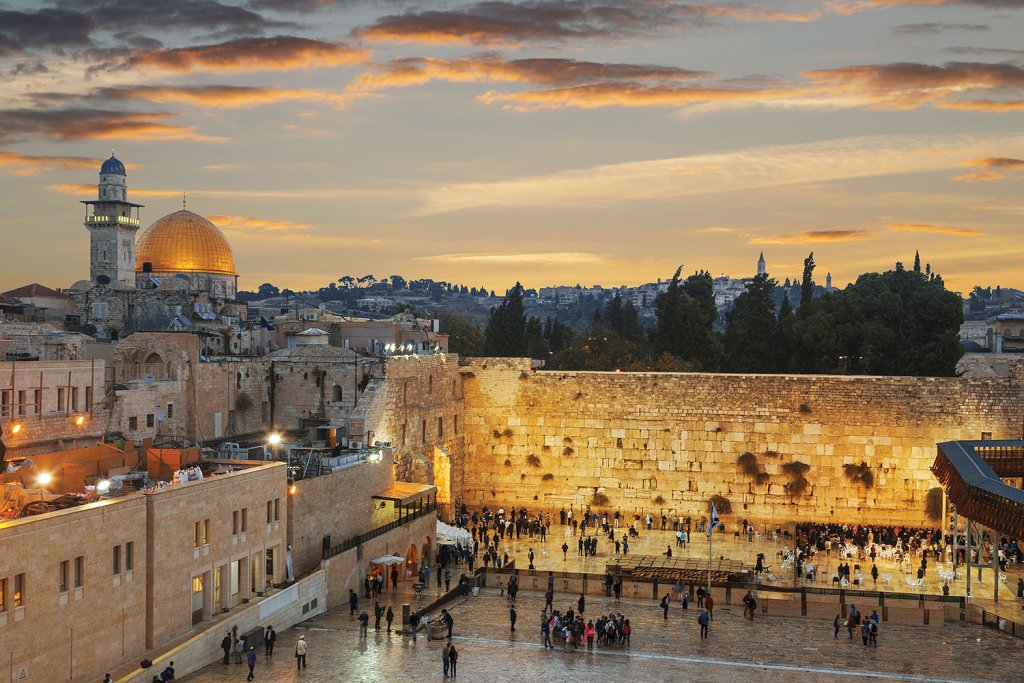

 The Glorious Quran and Science
Leave a comment