

Promoted post: Beauty in Nature as a Path to God: An Islamic Perspective
Written and collected by Zia H Shah MD, Chief Editor of the Muslim Times
Verses with Scientific and Theological Commentary
Quran 30:19
“He brings the living out of the dead and the dead out of the living. He gives life to the earth after its death, and you will be brought out in the same way.”
- Scientific context: This verse alludes to the cycling of life and death in nature. Modern biology confirms that life emerges from what is lifeless: for example, living plants grow from seemingly dead seeds in soil, and life’s building blocks (elements like carbon, nitrogen) come from non-living matter. Indeed, the human body itself is composed of “stardust” – elements forged in ancient stars. Dead organisms decompose and return nutrients to the earth, which in turn nourish new life. Ecologically, entire ecosystems rely on death recycling into new life (e.g. decaying plant matter fertilizing new growth). Rain is often the catalyst that “gives life to the earth after its death,” as parched ground blooms with vegetation when watered. Science observes this in desert “superblooms,” where dormant seeds spring to life after rainfall. Thus, the verse captures the fundamental biological cycle of life, death, and regeneration.
- Theological reflection: In Islamic theology, these natural cycles are āyāt (signs) pointing to God’s power to create and resurrect. Just as the earth comes back to life after rain, the verse concludes with a promise that humans will be brought forth again on Resurrection Day. The tawḥīd (oneness of God) is implied: only a single, almighty Creator could govern such transitions of life and death in a coordinated way. The image of “living from dead and dead from living” also symbolizes spiritual revival – God can bring faith to a “dead” heart. Ultimately, believers see in this cycle a reassurance of divine wisdom and ability: the God who revives barren earth can surely raise the dead. Nature’s renewal is thus a sign and a parable of resurrection (cf. Quran 30:50, 35:9), deepening faith in the One God who is Al-Muḥyī (Giver of Life) and Al-Mumīt (Causer of Death).
Quran 30:20
“One of His signs is that He created you from dust and– lo and behold!– you became human and scattered far and wide.”
- Scientific context: The origin of human life “from dust” resonates with modern scientific understanding in several ways. Firstly, the elements in the human body – carbon, oxygen, iron, calcium, and so on – are literally the same elements found in the earth’s crust (dust/soil) and were originally formed in stars. In fact, as astronomers often say, “nearly all the elements in the human body were made in a star” before becoming part of Earth. Secondly, evolutionary biology holds that life began in earth’s primordial environment (often poetically described as clay or soil in origin-of-life hypotheses), which aligns with the Quranic metaphor of dust/clay. Today, we know that the human body is ~99% composed of just six elements common in earth’s dust (O, C, H, N, Ca, P). Thus, science agrees that our material origin is literally earth itself. From that humble origin, humans have “scattered far and wide,” populating every continent. Anthropology and genetics show that from an initial population in one location, humans migrated across the globe over tens of thousands of years, diversifying into many cultures while remaining one species. All humans share 99.9% the same DNA, a reflection of our common origin despite our worldwide dispersion.
- Theological reflection: In Islamic thought, being created “from dust” emphasizes human humility and the power of God as Creator (Al-Khāliq). The Quran elsewhere says God fashioned the first human from earth’s clay (e.g. Quran 15:26), and this verse reminds us that no matter how far humanity spreads or how advanced we become, our physical origin is base matter by God’s will. The sign (āyah) here is twofold: (1) the creation itself – transforming inert dust into a living, conscious human being – showcases divine qudrah (omnipotence), and (2) the subsequent multiplication of humans across the earth highlights God’s plan and providence. This inspires reflection on tawḥīd: such a unified origin of mankind points to a single Creator. It also underpins the Islamic concept of human dignity tempered by humility – we are noble as bearers of God’s spirit, yet humble in our earthly origin. Theologically, God creating humans from dust and scattering them fulfills a purpose: to know one another and recognize God’s bounty (as reinforced in Quran 49:13). The verse thus calls us to recognize our dependence on the One who brought us forth from earth and to avoid arrogance.
Quran 30:21
“Another of His signs is that He created spouses from among yourselves for you to live with in tranquillity: He ordained love and kindness between you. There truly are signs in this for those who reflect.”
- Scientific context: This verse highlights the pairing of humans into mates and the qualities of love (
mawadda) and mercy (raḥma) in marriage. Biologically, human reproduction requires the union of male and female – a fact of sexual reproduction across most of the animal kingdom. But beyond biology, modern science has also studied the bonding and affection between mates. Neuroscience, for example, has identified hormones like oxytocin and dopamine that are associated with attachment, trust and affection between partners. Acts of love and kindness trigger the release of oxytocin, reinforcing pair-bonds. Evolutionary psychology suggests that human pair-bonding has survival advantages: a stable two-parent unit can better protect and nurture offspring (who are dependent for many years) compared to a single parent. In fact, researchers hypothesize that love itself may have an evolutionary role as a “commitment device” encouraging parents to cooperate in child-rearing. The verse’s mention of tranquillity (sukūn) corresponds to psychological findings that supportive spousal relationships reduce stress and improve well-being. In sum, the formation of couples and the emotional bonds of compassion and kindness between them reflect innate aspects of human social biology, which science recognizes as crucial for family stability and mental health. - Theological reflection: The creation of mates is viewed in Islam as a deliberate blessing from the One God, fostering sakīnah (peace) in human life. Tawḥīd is subtly underscored – God “created spouses from among yourselves”, meaning the compatibility and complementary nature of the sexes is part of a divine design, not a random accident. The love and mercy between spouses are described as God-ordained; thus, even the profound emotional connection we call love is a sign of God’s care for humanity. Many Islamic scholars note that the harmony of husband and wife reflects divine wisdom in ensuring the continuation of life and the nurturing of the next generation. The verse invites believers to “reflect” on how such personal joys (marital love, kindness, domestic tranquility) are signs (ayat) of God’s benevolence. In a broader sense, marriage in Islam is not merely a social contract but a spiritual signpost: unity between spouses points to the unity of the Creator, and the tenderness they share hints at God’s mercy for His creation. This resonates with the idea that experiencing love on earth should remind one of the ultimate source of Love (al-Wadūd, “The Loving” is one of God’s names). Thus, the verse integrates a social-biological reality with a spiritual message – encouraging gratitude to the One who fashioned this loving pair-bond for our benefit.
Quran 30:22
“Another of His signs is the creation of the heavens and earth, and the diversity of your languages and colors. There truly are signs in this for those who know.”
- Scientific context: Here the Quran points to two grand realms as signs: the cosmos (“heavens and earth”) and human diversity (in languages and colors). Modern cosmology has greatly expanded our knowledge of “the heavens.” We now know the universe had a beginning – a creation event often called the Big Bang, approximately 13.8 billion years ago science.nasa.gov. From an extremely hot, dense state, space itself has been expanding and cooling, leading to the formation of galaxies, stars, planets – including Earth. The fact that the universe has an origin in time (as opposed to being eternal and uncaused) aligns with the Quran’s millennia-old proclamation of a created heavens and earth. Science today can measure cosmic background radiation and galaxy movements as evidence of this creation event, but it still cannot answer why the universe exists at all – a question that to believers points to God. The verse also highlights the rich anthropological diversity of humanity: our multitude of languages and range of skin tones. Linguistics estimates there are over 7,000 languages spoken on Earth today ethnologue.com, all evolving from earlier tongues. This profusion of languages likely stemmed from humanity spreading out geographically; as groups became isolated, their speech diverged into new languages. Similarly, the diversity of human “colors” (phenotypes) is understood in biology as an adaptation to environment. For instance, skin pigmentation correlates strongly with UV sunlight exposure: populations ancestrally near the equator evolved darker, melanin-rich skin to protect from intense UV, whereas those in higher latitudes evolved lighter skin to better produce vitamin D in low sunlight pnas.org. In essence, modern science confirms the unity of humankind – we are one species with common origins – as well as the variation that arose as we populated different climates and locales. All humans share the same basic genome (99.9% identical DNA) quora.com, yet exhibit beautiful variety in external traits and cultures. This unity-in-diversity is precisely what the verse draws attention to.
- Theological reflection: The creation of the heavens and earth is perhaps the ultimate sign of God’s existence and oneness, frequently mentioned in the Qur’an. It points to God’s role as Al-Khāliq (The Creator) of the entire universe. For those “who know” (ulūl-ʿilm), studying the cosmos – its vastness, order, and laws – should deepen awe of the Creator. The diversity of languages and colors among humans is another deliberate sign. Rather than seeing our differences as a cause for division, the Quran teaches that they are āyāt (signs) of God’s wisdom and creative power (cf. Quran 49:13). From an Islamic perspective, despite varying ethnicities and tongues, all humans are descendants of one pair (Adam and Eve), which reinforces tawḥīd: one human family under one God. The multiplicity of languages showcases God’s teaching of speech to humans (Quran 55:3-4) and the richness of cultures in His plan. Theological commentators often note how language – a sophisticated, information-rich system – is itself a miracle pointing to a Mind behind our minds. Likewise, the range of skin colors has no effect on a person’s worth in Islam (the Prophet Muhammad in his Farewell Sermon reminded that no race has superiority over another except in piety). Thus, this verse invites appreciation of human diversity as a sign of divine artistry. It reinforces that behind the variety in creation is a single Creator. Recognizing this should foster humility and unity among people, and recognition of God’s wisdom in making us all different yet spiritually equal. As the verse concludes, “indeed in that are signs for those who know” – those who use intellect and knowledge will perceive in both the starry heavens above and the human community around us the unmistakable signs of One God.
Quran 30:23
“Among His signs are your sleep, by night and by day, and your seeking His bounty. There truly are signs in this for those who can hear.”
- Scientific context: This verse shifts focus to a daily human experience: sleep and waking activity, as signs of God. Sleep is a universal biological need for nearly all animals, and in humans it is crucial for survival and health. Modern neuroscience has shown that sleep plays a critical role in memory consolidation, tissue repair, and metabolic regulation. “Healthy sleep is important for cognitive functioning, mood, and even cardiovascular and metabolic health,” as medical research confirms jcsm.aasm.org. The verse notes we sleep “by night and by day,” indicating the diurnal cycle. Human biology indeed follows a roughly 24-hour circadian rhythm tied to Earth’s rotation (day-night cycle). Every cell in our body has clock genes that synchronize with the light/dark cycle. These internal clocks are “hard-wired” by evolution to anticipate day and night for our optimal functioning pmc.ncbi.nlm.nih.gov. Nearly every organism studied – from cyanobacteria to mammals – exhibits circadian rhythms, highlighting how fundamental the day-night cycle is to life’s programming pmc.ncbi.nlm.nih.gov. The verse also mentions “seeking His bounty” – an allusion to working or seeking sustenance during our waking hours. Indeed, from an anthropological perspective, human societies have traditionally operated in the daytime (using daylight for hunting, farming, and labor) and rested at night. This pattern maximizes our use of light and aligns with our vision (humans have poor night vision compared to nocturnal animals). Modern science might add that some people can and do work at night (and sleep by day), but even they maintain a roughly 24-hour cycle. When our sleep cycles are disrupted, we experience ill effects (as seen in shift-work sleep disorder, etc.), underlining how designed we are to follow the natural rhythm. In sum, the phenomena of sleep and productivity form a cycle built into our biology – a sign that our lives are attuned to cosmic cycles (Earth’s rotation). It is also notable scientifically that while we take it for granted, the mechanism of sleep (why we must spend a third of our lives unconscious) is still something of a mystery; it’s simply how life is constructed.
- Theological reflection: In the Quran, the alteration of night and day is frequently mentioned as a sign of God’s order (for example, in the very next verse 30:24, and in 3:190). Here, the focus is on human response to night and day: we rest in sleep and strive for livelihood when awake. For believers, this cycle is a gift and a sign of divine mercy. Sleep is described in Islamic literature as a time when the soul is taken under God’s care and then returned upon waking (Quran 39:42) – a daily mini-resurrection that reminds us of the greater Resurrection to come. Tawḥīd is indicated by the harmonious cycle; one Lord regulated the cosmos such that night is suited for rest and day for seeking “bounty” (provision). The phrase “seeking His bounty” implies that even our ability to work and earn a living is facilitated by God (through the resources and energy He provides). Theologically, there is an encouragement to “those who can hear” – i.e. those receptive to truth – to recognize God’s grace in these rhythms. The alternation of work and rest also suggests a balance that Islam encourages (worship and worldly effort both have rights on the believer). Many commentators see in sleep a sign of human limitation and God’s care: no matter how powerful a person is, they must surrender to sleep regularly, which is a humbling sign of dependence on God’s design. Thus, every night and morning become reminders of God’s sustaining power. The verse invites gratitude for the refreshment of sleep and the opportunity to toil by day, both coming from the one Creator. It subtly critiques those who are “deaf” to these signs – who go through life’s daily cycle heedless of the Source of the blessings. In essence, the mundane cycle of sleep and work is elevated to a spiritual sign, attesting to a Wise Planner who knows the needs of His creation.
Quran 30:24
“Among His signs, too, are that He shows you the lightning that terrifies and inspires hope; that He sends water down from the sky to restore the earth to life after death. There truly are signs in this for those who use their reason.”
- Scientific context: This verse highlights two related meteorological phenomena: lightning and rain. Lightning is described as producing both fear and hope – an astute observation echoed in many cultures. Scientifically, lightning is a sudden electrostatic discharge that occurs during storms when charged regions within clouds (or between cloud and ground) equalize. A bolt of lightning can heat the air to over 30,000°C and release up to a billion Joules of energy, making it extremely dangerous (hence it terrifies). People justly fear lightning strikes, which can kill living beings and ignite fires. At the same time, lightning is often accompanied by life-giving rain (hence it inspires hope). Modern science has uncovered another fascinating benefit of lightning: it helps fix nitrogen in the atmosphere. The extreme heat of a lightning bolt breaks the strong N₂ bonds, allowing nitrogen to combine with oxygen, and the resulting nitrates fall with rain, fertilizing the soil spectrumlocalnews.com. In this way, lightning plays a role in the nitrogen cycle, providing “super fertilizer” from the sky spectrumlocalnews.com that green-ups plants. The verse then centers on rain’s eco-biological role: rain “restores the earth to life after its death.” This is a precise description of what we observe in dry regions and after droughts. Ecology and botany document how seeds and plant life can lie dormant in parched soil, appearing “dead,” until rainfall triggers germination. The well-known “desert bloom” is one example: in places like the Atacama or Death Valley, a burst of rain leads to a sudden explosion of wildflowers and vegetation from long-dormant seeds en.wikipedia.org. Soil microbes and fauna similarly spring to activity with moisture. The hydrological cycle as understood today matches the Quranic imagery: water evaporates from the earth and oceans, forms clouds, then falls back as rain or snow, replenishing the land noaa.gov. The verse’s phrasing recognizes the dramatic transformation wrought by rain – something a desert-dwelling Arab in the 7th century would keenly appreciate, and which hydrology today quantifies in detail (e.g. how inches of rainfall translate to plant biomass growth). In short, rain is the lifeblood of ecosystems, and here it is accurately depicted as reviving dead earth, which modern science would describe in terms of rehydrating soil, enabling seed metabolism, and restarting photosynthesis in plants.
- Theological reflection: The tandem of lightning and rain is a powerful sign of Allah in Quranic theology. Lightning’s fearsome power and beneficial outcomes illustrate how God’s actions can contain mercy within might. Classical commentators note that lightning (barq) makes a person fear destruction yet also yearn for the rain that follows – a dual emotional response that turns one’s attention to the heavens (and thus to God). The believer sees God’s majesty in the brilliant flash and rolling thunder (cf. Quran 13:12-13, which says even the thunder praises God), and God’s mercy in the ensuing showers. The phrase “signs in this for those who use their reason” emphasizes that a rational, thoughtful observer should infer from these phenomena the existence of a wise, purposeful Creator. Tawḥīd is reflected in the integrated system: the same God controls the frightful lightning and the gentle rain – not separate deities for wrath and blessing (contrary to some pagan beliefs). The rain reviving the earth is one of the Quran’s most recurrent analogies for resurrection. Theologically, just as dry earth seems dead but isn’t truly final – awaiting rain by God’s decree – so the dead in their graves are not gone forever but will be raised at God’s command (the verse immediately preceding, 30:19, makes this parallel explicit). Thus, every rainstorm is like a reminder of resurrection and an exhibition of divine mercy. The life-after-death of the soil also teaches that Allah is Al-Muḥyī (The Life-Giver). Islamic teachings often encourage reflecting on rain as a reason to thank God – it is “His mercy” (30:50) and part of His provision to all creatures. Even the balance in lightning – enough to produce beneficial nitrates but not so frequent as to destroy life – can be seen as intentional divine calibration. In sum, this verse encapsulates a common Qur’anic theme: natural phenomena that humans experience viscerally (storm and rain) carry a deeper message about God’s power, mercy, and promise of renewal. It challenges the listener to “use their reason” and not view these as mere weather events but as purposeful signs from the One Managing the universe.
Quran 30:25
“Among His signs, too, is the fact that the heavens and the earth stand firm by His command. In the end, you will all emerge when He calls you from the earth.”
- Scientific context: This verse points to the stability and order in the cosmos (“heavens and earth”) as a sign, and then alludes to an ultimate future event (resurrection). The notion that the heavens and earth “stand firm” or are upheld by a command speaks to the reliability of natural law. From a modern scientific perspective, we indeed observe a remarkable stability in cosmic phenomena: planets follow regular orbits, stars and galaxies abide by physical laws (gravity, electromagnetism, etc.), and the Earth itself maintains an orbit in the habitable zone that has allowed life to persist for billions of years. Tiny changes in fundamental constants or Earth’s distance from the sun could lead to chaos or uninhabitability, yet we find ourselves in a finely balanced environment. For example, Earth orbits the sun at just the right distance to sustain liquid water – an astronomically narrow “goldilocks” zone seec.gsfc.nasa.gov. Its orbital path is nearly circular and consistent, keeping climate relatively stable over geological times. Physics would describe this stability as a result of initial conditions and gravity; a believer would attribute the “command” or governing order to God. In fact, the fine-tuning observed in the universe – the precise values of forces and constants that allow stars, planets, and life to exist – is a topic of wonder in science; if they were even slightly different, the heavens and earth would not “stand firm” in a life-permitting way biologos.org. Thus, one could say contemporary cosmology provides quantitative insight into how extraordinary it is that the universe is orderly and stable. The second part of the verse touches on a future event beyond scientific scrutiny: humans being called forth from the earth (resurrection). While science cannot examine resurrection, it is noteworthy that our bodies are indeed part of the earth (as earlier verses stated). Upon death, our elements return to the ground, effectively “sleeping” in the earth. If one thinks in conservation-of-matter terms, the atoms that made up people are still on Earth, scattered in soil and air. The idea of being “called out” could be analogized (imperfectly) to how dormant seeds or hibernating life forms can suddenly awaken under the right conditions – a natural metaphor for the concept of resurrection. Overall, scientifically we appreciate the cosmic order that prevails, and we acknowledge that science has limits (the final emergence of all humans from earth is a matter of faith, not experiment). Interestingly, one might note that physics anticipates that if the laws upholding the universe were to “relax,” matter would disintegrate – a scenario somewhat akin to the Quranic imagery of the heavens and earth dissolving on the Last Day (which the verse implies will happen when God issues the command to resurrect).
- Theological reflection: In theology, the stability of heavens and earth is seen as an expression of Allah’s sustaining power (rubūbiyyah). By His “command” (amr), natural laws operate with precision – the sun rises day after day, the planets do not collide arbitrarily, the earth yields its produce in season. This order is one of the signs of tawḥīd: a chaotic cosmos might suggest multiple conflicting forces, but a cosmos that “stands firm” in unity suggests One Orderer. The Quran elsewhere says, “Had there been in the heavens or earth other gods besides Allah, both would have fallen into ruin” (21:22) newstaging.whyislam.org – in other words, the coherence of the universe points to a single divine willnewstaging.whyislam.org. Believers thus see astronomy and physics as studying God’s customs in creation (sunan Allah). The verse then reminds us of the ultimate destiny: “In the end, you will all emerge when He calls you”. This is a direct reference to the Day of Resurrection when Allah’s command will shatter the current order (the firm heavens and earth will break at the trumpet blast) and the dead will rise. The juxtaposition is instructive: the same commanding Word of God that keeps the universe steady now will one day reorder it entirely. This assures believers that resurrection is as easy for God as creation – a theme echoed in verse 27 that “He who originated creation will repeat it.” Theologically, this is meant to instill both hope and accountability: hope that death is not the end (we will emerge again), and a sense of purpose knowing a Day of Meeting Allah awaits. The phrase “when He calls you from the earth” paints a vivid scene also found in Quran 17:52 and 36:51 – humanity responding like plants sprouting from soil at the divine call. For a Muslim, the current stability of nature is a blessing to cherish and learn from, and its eventual upheaval is a certainty to prepare for. Both states – the ordered present and the transformative future – point back to God’s Sovereignty. Thus, this verse reinforces tawḥīd in both maintenance and restoration: God alone upholds all existence now and God alone will resurrect and judge His creation in the end. Divine wisdom is seen in the measured timing: He keeps all things fixed until an appointed Day, known only to Him. Those “signs” are for people of reason indeed – to deduce that a consistent creation underlines a consistent Creator, and that our story fits within His grand design.
Quran 30:27
“He is the One who originates creation and will do it again– this is even easier for Him. He is above all comparison in the heavens and earth; He is the Almighty, the All Wise.”
- Scientific context: This verse explicitly touches on the idea of the repetition or renewal of creation. From a scientific angle, one might think about cyclical processes or events in the cosmos that echo this concept. In nature, we observe cycles: day and night, seasons, water cycle, birth-death-rebirth cycles of ecosystems, etc., which are smaller reflections of creation “happening again.” On a cosmic scale, the Quranic claim that God can recreate the universe has some intriguing parallels or analogues in theoretical physics. For instance, modern cosmologists have speculated about cyclic universe models – the idea that the universe might go through infinite expansions and contractions (Big Bang followed by Big Crunch and a new Bang, repeatedly) en.wikipedia.org. While the standard Big Bang model doesn’t require a re-bang, these theories (like the “Big Bounce”) suggest a universe that originates and is redone multiple times. Such models remain speculative, but they show that the concept of a repeated creation is not considered impossible in cosmology – rather, it’s an area of active discussion en.wikipedia.org. The verse also states that repeating creation would be “even easier” for God – scientifically, one could interpret that once the laws and blueprint exist, running the process again would presumably be straightforward (just as for an engineer, rebuilding a designed machine is easier the second time). Additionally, consider the stellar life cycle: stars are “born” from nebulae, live out their life, die (exploding or collapsing), and from the debris new stars are born. In a poetic sense, the universe already exhibits a cycle of creation and re-creation – elements from old stars form new ones schoolsobservatory.org, and even planets and life (our solar system’s elements are recycled from previous stars schoolsobservatory.org). On Earth, mass extinctions wiped out most life, yet life rebounded with new forms – a kind of creation anew (though guided by natural processes). From the human point of view, biological reproduction is a repeat of creation in each generation: the creation of a human being in the womb (which the Quran elsewhere cites as something God can repeat easily, e.g. Quran 30:40, 56:62). All these scientific observations affirm that creating again is an embedded principle in nature. However, the ultimate scope here is cosmic and beyond normal observation: God brought the universe into existence from nothing, and He can do so again or restore life after its end. This lies in the intersection of science and metaphysics – science can describe cyclic patterns, but the initial origination and final resurrection remain acts of divine will from the believer’s perspective.
- Theological reflection: The verse addresses any doubt about resurrection or re-creation. In the Quran’s argument, if God could create everything from nothing in the first place (badā’a al-khalq), why would recreating it be difficult? “Doing it again” encompasses both the resurrection of humans and the possibility of regenerating the entire cosmos. The phrase “even easier for Him” is a concession to human understanding – nothing is actually difficult for the Almighty (both first creation and second are equal acts of His will), but from our perspective, repeating something already done seems easier than doing it anew. This dismantles the notion that resurrection is far-fetched. In an earlier verse (Quran 30:11) the same point is made: “God brings creation into being; in the end He will reproduce it”. For believers, this is a comfort and a warning: life after death is not only possible but certain, because the One who made us once can make us again. The verse also glorifies God’s transcendence: “above all comparison in the heavens and earth” (literally, He has the highest description or analogy). That is, nothing in creation can fully analogize God’s power – He is beyond the laws of nature that He himself set. Tawḥīd is reinforced by titles Al-‘Azīz (All-Mighty) and Al-Ḥakīm (All-Wise): God’s unmatched power and wisdom underlie the cycle of creation. Islamic scholars often remark that this verse hits at the arrogance of those who think God is bound by natural limitations; it reminds us that cause and effect are His instruments, not His shackles. In philosophical theology, the idea that the universe could be originated and annihilated and originated again underscores God’s absolute sovereignty over time and existence. Divine wisdom (ḥikmah) is also signaled – creation has a purpose, and repeating it or resurrecting humanity is part of the wise plan (for ultimate justice and fulfillment of purpose). Thus, 30:27 ties together cosmology and eschatology in a statement of God’s unrivaled power. It invites the listener to glorify God who not only made all things but can renew all things at will, something no pagan deity or idol claimed to do. In a sense, it’s also a rebuttal to a cyclical pagan view that nature renews itself automatically; here the renewal is attributed directly to God. For the believer “who reasons,” this verse seals the understanding that the God who created the universe is one and the same as the God who will resurrect us – a seamless singular authority over all time.
Quran 30:40
“It is God who created you and provided for you, who will cause you to die and then give you life again. Which of your ‘partners’ can do any one of these things? Glory be to God, and exalted be He above the partners they attribute to Him.”
- Scientific context: This verse succinctly outlines the stages of human existence – creation (origins), provision (sustenance), death, and re-life (resurrection). Three of these stages are within scientific inquiry: our creation (in terms of biological origins and development), our provision (how we obtain food and resources to live), and our death (cessation of life). The fourth, being given life again after death, lies outside empirical science and in the realm of faith. From a biological standpoint, each human’s creation in the womb follows a precise order encoded by genetics and embryology; we understand how a zygote forms, cells divide and differentiate, and a baby develops (as described elsewhere in the Qur’an, e.g. 23:12-14). The provision aspect is interesting scientifically because it touches ecology and earth sciences: our food, water, and oxygen are all provided by Earth’s systems, ultimately powered by the sun. We know that “almost all life on Earth relies on solar energy for food” education.nationalgeographic.org – plants capture sunlight via photosynthesis, forming the base of the food chain that feeds us. Also, Earth provides vital resources: soil minerals, fresh water through the rain cycle, etc. In a way, the verse hints that an entire support system is in place to sustain human life, which science recognizes through fields like ecosystem science and agriculture. The death of an organism is a well-studied process (cessation of biological function, cellular breakdown, etc.), and science sees death as a natural endpoint of life due to entropy, genetic limits (like telomere shortening), or disease. Notably, human life expectancy and health span have been studied extensively – while we can extend life, death remains inevitable. The verse’s rhetorical question asks if any of the so-called idols or partners can do these cosmic tasks of creating life, sustaining it, or resurrecting – and clearly, from a scientific perspective, no known natural process or idol “causes life after death.” Even the most advanced science has not conquered death (we can delay it, but not abolish it, and certainly not reverse it after decades). There are scientific attempts at resuscitation (reviving someone who’s clinically dead within a short window) and future ideas about cloning or digital consciousness, but true resurrection – restoring a long-dead individual with identity and memory – is beyond any human capability or natural law as we know it. Thus, the phenomena listed are either uniquely acts of God in the believer’s view or unsolved mysteries in science (like the origin of life and consciousness). Modern cosmology and biology do study origins (cosmic and abiogenesis) and find that special conditions are needed to create life and maintain it; the uniqueness of Earth in providing the precise “provision” for life is emphasized in astrobiology (so far, no other known planet sustains complex life). In summary, the verse enumerates fundamental aspects of our existence. Science can explain the mechanisms of our coming into life, being sustained, and dying, but it also highlights how remarkable these processes are – and it falls silent on returning to life after death, which remains solely a matter of religious promise.
- Theological reflection: The verse is a direct challenge to polytheism and a clarion statement of tawḥīd. Each clause attributes a fundamental aspect of our existence to the one God (Allah), and then asks rhetorically if any supposed partner-deity can claim the same. In Islamic theology, creation (khalq) of life, provision (rizq) of sustenance, death (mawt), and resurrection (nushūr) are all exclusively under God’s authority. No idol, saint, or nature deity “provides” for us in the ultimate sense – it is God who causes rain to fall, crops to grow, and so on. The mention of provision here ties to one of God’s names Al-Razzāq (The Provider). Believers see their daily bread as coming from God, even if through intermediate means like farming and trade. The verse’s climax – giving life again after death – underscores God’s power over the afterlife, highlighting the Islamic belief in bodily resurrection. By asking “Which of your partners can do any one of these things?”, the Quran exposes the powerlessness of the things people worship apart from God. In antiquity, one might worship a rain god for provision or a fertility god for life, but this verse asserts none of those have independent power; only the One God does all. “Glory be to God, exalted be He above the partners they attribute” is a declaration of transcendence, implying that associating others with God is not only false but demeaning to His unique majesty. Theologically, this verse also provides a simple logical proof: since none but God can create life or resurrect, He alone deserves worship. For Muslims, this affirms Īmān (faith) in Allah’s comprehensive lordship – He brought us into being, keeps us alive each moment, and our fate after death is in His hands. It cultivates an attitude of reliance and gratitude: reliance, knowing our sustenance is secured by Him (as Jesus is quoted in Quran 5:110, only God provides daily needs), and gratitude, recognizing life itself is a gift. The inclusion of resurrection in the litany is significant; it reminds that life is a continuum in God’s view – He created us once and will recreate us, fulfilling a just moral order. Thus, the verse ties natural theology with moral theology: the One who gives life and death will also call us to account. In sum, Quran 30:40 encapsulates the doctrine of tawḥīd al-rubūbiyyah (God’s oneness in Lordship) – that Allah alone is Lord of creation, sustenance, and life-death cycles – and negates any notion of divine agency in the idols. This understanding is meant to transform the believer’s worldview: seeing every heartbeat and every meal as evidence of the One God, and expecting the hereafter with certainty due to His proven power in the first creation.
Quran 30:41
“Corruption has flourished on land and sea as a result of people’s actions and He will make them taste the consequences of some of their own actions so that they may turn back.”
- Scientific context: Strikingly, this verse addresses human impact on the environment – a topic extremely pertinent to modern scientific observations. “Corruption (fasād) on land and sea” caused by human actions can be understood today in terms of pollution, ecological degradation, biodiversity loss, climate change, and other anthropogenic harms to Earth’s systems. Environmental science in the 21st century has documented extensive evidence of how human industry and activity have adversely affected both land and sea. For example, on land we see deforestation, soil erosion, desertification, and species extinctions at alarming rates. The UN IPBES report (2019) warned that around 1 million species are at risk of extinction due to human activities, an unprecedented loss in biodiversity un.org. Likewise, the oceans have not been spared: overfishing has depleted fish stocks, pollution (plastic waste, oil spills, chemical runoff) has contaminated waters, and rising CO₂ levels are causing ocean warming and acidification. Climate science has confirmed that global warming (driven by greenhouse gas emissions from human activities) is causing more extreme weather, sea-level rise, and ecosystem disruptions. The phrase “flourished on land and sea” eerily fits the global scale of modern environmental crises. For instance, global warming of approximately 1.1°C since the Industrial Revolution is already intensifying droughts, wildfires, storms and harming both terrestrial and marine life greenpeace.org. Marine “dead zones” and coral reef die-offs show corruption in the seas, while deforestation and polluted air show it on land. The cause is explicitly “people’s actions” – which aligns with scientific consensus that human activity (burning fossil fuels, destroying habitats, etc.) is the primary driver of these negative changes. The verse suggests a feedback loop: humans damage the environment, and then “taste the consequences” of their deeds. Indeed, we are now tasting consequences in the form of natural disasters and resource scarcities. Environmental science and public health note that things like climate change increase heatwaves (causing crop failures and health hazards), pollution increases disease, and loss of ecosystems can even lead to pandemics (through zoonotic disease transfer). This concept of consequences is essentially the principle of cause and effect – sometimes termed “blowback” or unintended consequences in ecological terms. What’s remarkable is that a 7th-century text identifies human misconduct as a cause of ecological disorder – something only recently quantified in science (the notion of the Anthropocene epoch, where humans are the dominant influence on the planet, is a very new idea). Furthermore, phrases like “land and sea” encompass the whole biosphere; today’s Earth system science likewise treats the planet as an interconnected whole. We can see this verse almost as a one-line summary of sustainability ethics: human misbehavior leads to environmental corruption, which in turn harms humans, urging a change in behavior.
- Scientific context (examples): To illustrate, consider pollution: industrial waste and plastic have reached the oceans’ depths and even the Arctic, contaminating food chains. Overfishing and ocean warming have caused a decline of marine populations by roughly 50% since 1970. On land, rampant use of fossil fuels has increased atmospheric CO₂ to levels not seen in millions of years, leading to a “greenhouse” effect that disrupts climate patterns. The Greenpeace organization commented on this verse, noting that “the destruction of the planet – the loss of biodiversity and overexploitation of natural resources on both land and sea – that we witness today were foretold by the Islamic holy book”, and that “storms, droughts, fires and floods… the impacts of climate change are… an urgent threat to the delicate balance between nature and humankind.” This is exactly the scenario science describes and the verse warns of: a broken balance due to human excess.
- Theological reflection: In Islamic theology, this verse is often understood on two levels – moral and literal. Morally, “corruption (fasād)” includes all forms of moral decadence and injustice; classical tafsirs mention that widespread sin and oppression cause disorder in society and even invite calamities as a divine wake-up call. Literally, however, the words encompass environmental ruin, which modern Muslim scholars increasingly emphasize as part of Quranic guidance. The verse implies a form of divine justice or sunnat Allāh (God’s way): God allows humanity to face the natural repercussions of their collective wrongdoing “so that they may turn back” (repent and reform). In other words, the hardships and ecological crises are meant to jolt humans into realizing their mistakes and returning to a path of moderation and righteousness. Tawḥīd here is reflected in the idea that the environment is a trust from the One God (we are stewards or khalīfa on earth per Quran 2:30), and violating that trust by corrupting the land and sea is essentially a rebellion against the Sustainer’s commands. The verse subtly attributes the ultimate causation to God (“He will make them taste…”), meaning that even the consequences are by His permission – nature’s laws are instruments of His will. Yet the blame is on human free will misused. Islamic teachings strongly promote environmental ethics: not wasting resources (Quran 7:31), maintaining balance (55:8-10), and not causing fasād (2:11). This particular verse (30:41) is often cited as a proof that caring for the environment is a spiritual duty. It frames ecological crises as a spiritual consequence of human moral failure (greed, arrogance, heedlessness of God’s limits). Theologically, it resonates with the concept of measure (mīzān) in creation – God has created everything in balance (55:7-9), and humans upset that balance at their peril. The hope in the verse is “so that they may return” – it is essentially a call to tawbah (repentance) and course correction. From an Islamic viewpoint, this could mean both turning back to God in obedience and practically changing behaviors that cause harm (in today’s terms, adopting sustainable living, justice in consumption, etc.). Many Muslim thinkers see this verse as remarkably applicable to the age of climate change: humanity must collectively return to ethical principles to heal the earth. It also reflects God’s mercy even in punishment – we are made to taste “some of” our deeds’ consequences (not all), hinting that God withholds full destruction to give us a chance to reform greenpeace.org. In summary, Quran 30:41 can be viewed as a concise divine commentary on the human-environment relationship: it acknowledges our free will and responsibility for earthly stewardship, warns that transgressing moral/ecological boundaries brings about real-world suffering, and urges a restoration of harmony through repentance and adherence to divine guidance. This powerfully ties natural science facts with spiritual ethics under the umbrella of divine wisdom.
Quran 30:46
“Another of His signs is that He sends out the winds bearing good news, giving you a taste of His grace, making the ships sail at His command, enabling you to journey in search of His bounty so that you may be grateful.”
- Scientific context: This verse cites winds as a divine sign, highlighting two of their key effects: bringing “good news” (generally interpreted as heralding rain) and propelling ships for human transportation and trade. Scientifically, wind is simply air in motion, driven by pressure differences mainly caused by temperature gradients (for example, the sun heating the Earth unevenly). The mention of winds as bearers of glad tidings corresponds to how, in many climates, certain wind patterns precede rainfall – for instance, a cool breeze might signal an approaching rainstorm or the monsoon winds signal the rainy season in South Asia. Meteorologically, winds indeed often carry moisture from oceans to land, forming rain clouds. So a farmer feeling a moist breeze or seeing wind push clouds in his direction takes it as a hopeful sign of coming rain (validating the Quran’s phrasing). Regarding ships, before the modern engine era, virtually all maritime travel depended on wind power via sails. Prevailing wind systems (such as the trade winds and westerlies) determined the major sea routes. For example, the trade winds in the Atlantic and Pacific reliably blow east-to-west in the tropics, enabling ships to cross oceans; the verse’s audience, likely familiar with Red Sea or Indian Ocean trade, would know how ships rely on monsoon winds (which reverse seasonally, facilitating round-trip voyages). It is noteworthy that the Quran, in a 7th-century context, recognizes the connection between wind patterns and navigation – essentially describing what we now understand as an interplay of atmospheric science and technology. Even today, though we have engines, wind remains a critical factor in shipping (affecting fuel efficiency and routes) and is harnessed anew via wind turbines for energy. Modern science might add that wind-driven ocean currents also assist in moving ships and distributing nutrients in the sea. The phrase “enabling you to journey in search of His bounty” encompasses all economic and exploration activities humans undertake across the seas. Historically, winds allowed the spread of goods, culture, and knowledge (e.g., the age of sail enabled global trade networks). One could say winds were the engine of the pre-industrial global economy. Now, in the 21st century, we still benefit from wind as a renewable energy source – wind farms produce over 6% of global electricity as of 2020 c2es.org, a number rapidly growing. This modern fact – that we convert wind’s kinetic energy to electricity – underscores wind’s continued role as a “taste of His grace” in providing clean power. Lastly, winds play a role in ecology by dispersing seeds and pollen, effectively helping “His bounty” of plant life spread. From dispersing rainclouds to enabling pollination, wind is a key component of Earth’s life support system.
- Theological reflection: In Quranic symbolism, wind (rīḥ) can carry different connotations based on context – sometimes punishment, but here clearly mercy. The “good news” it carries is usually interpreted as news of coming rain (as also mentioned in Quran 7:57). This makes wind a herald of Allah’s raḥmah (mercy), since rain is such a blessing in arid lands. That the wind-driven ships allow humans to seek “bounty” (provision, livelihood) shows God’s facilitation for us to use the world for our benefit. It echoes the notion that the seas are “subjected” to us by God (Quran 45:12) and we should be thankful. Tawḥīd is implied in “at His command” – the winds obey divine laws, not chance or independent deities (wind was often personified as a god in ancient cultures, but here it is simply God’s instrument). By attributing navigational success to God’s command over wind, the Quran teaches dependence on God even in human technological endeavors. A devout sailor in the past would pray for fair winds, knowing ultimately it is God who “sends” them. The verse finally enjoins gratitude: “so that you may be grateful.” Gratitude (shukr) is a core Quranic virtue, and here it specifically ties to recognizing God’s hand in beneficial natural phenomena and in our economic sustenance. Theologically, wind being called an āyah means believers should see beyond the physics – they should marvel at how something invisible like air can have such useful force by Allah’s design. It’s also a reminder of our dependency: without wind, maritime travel in the ancient world would halt (no “bounty” via trade), and even rainfall patterns would change, affecting crops. Thus, the verse gently reminds us that what we might take for granted (a breeze) is actually part of a providential arrangement. In a broader spiritual sense, some commentators see in this verse an allegory: the winds that carry rain clouds are like the divine messages carried by prophets – initially met with trepidation by some, but ultimately bringing mercy and guidance, leading to spiritual bounty. While the direct meaning is the physical wind, this layered understanding complements how physical signs often parallel spiritual truths in the Qur’an. Lastly, the cooperation between humans and nature here (wind and ships) indicates that while God provides the means (wind), humans must exert effort (build and navigate ships) – an ethic of trust in God combined with human initiative. We are to be grateful for both the means and the ability to use them. In summary, Quran 30:46 encourages us to acknowledge God’s mercy in the favorable winds that make our journeys (literal and metaphorical) possible, reinforcing a worldview where even the elements are part of a benevolent divine plan and calling forth corresponding gratitude to the One Lord of the worlds.
Quran 30:48
“It is God who sends out the winds; they stir up the clouds; He spreads them over the skies as He pleases; He makes them break up and you see the rain falling from them. See how they rejoice when He makes it fall upon whichever of His servants He wishes,”
- Scientific context: This verse provides a remarkably succinct description of the water cycle and cloud dynamics, as understood in simple terms. It starts with wind again: scientifically, wind carries evaporated moisture (water vapor) from bodies of water or moist land upwards and inland. As winds “stir up clouds,” we have an image of warm, moist air being lifted to higher, cooler altitudes where water vapor condenses into droplets, forming clouds. Meteorology confirms this: updrafts (often wind-driven) cause clouds to form and grow. Next, “He spreads them over the skies” – once formed, clouds can be moved by upper-level winds over large areas. We see layered stratus clouds spread out like blankets, or large cumulonimbus towers expanding. The verse then says God “breaks them up” – clouds can merge or break apart depending on atmospheric conditions. Eventually, “rain falls from them” when water droplets coalesce to a sufficient size or ice crystals melt, overcoming updrafts and gravity pulling them down. This aligns perfectly with modern explanations of precipitation. The entire sequence wind → cloud formation → rain mirrors what one finds in meteorology textbooks: “Liquid water evaporates into vapor, condenses to form clouds, and precipitates back as rain” noaa.gov. The people “rejoice” at the rain – a human reaction that is timeless and universal, especially in agrarian societies. Scientifically, that joy is justified: rain restores water to ecosystems, refills aquifers, enables crops to grow, and generally sustains life. We might also note the phrase “as He pleases” – scientifically, this corresponds to the observation that humans cannot control where and when exactly rain falls (even today, cloud seeding is limited in efficacy). The distribution of rainfall depends on complex climate systems. Sometimes rain clouds dissipate without raining (the verse alludes to clouds breaking), other times they release torrential downpours. Modern climatology studies phenomena like why certain regions get heavy rain (monsoons, ITCZ) and others are arid; ultimately, it’s a result of Earth’s tilt, geography, ocean currents, etc., which a believer would see as parameters set by God. This verse (and its context with verse 49 that follows) also acknowledges the psychological impact: drought and relief. Before rain, people may despair; when rain finally comes, they rejoice – an experience many farmers have even today. We could mention that science has found ways to alleviate drought (irrigation, etc.), yet the fundamental dependence on timely rain remains in many parts of the world. Even with all our technology, a severe drought can cause crop failure and famine, showing how crucial rain is. Thus, the Quran’s depiction is as relevant now as ever. In sum, the verse encapsulates the hydrologic cycle: wind-driven cloud formation and rain, and captures the human reliance on this cycle.
- Theological reflection: The agency is entirely given to God – “God sends… He spreads… He makes them break up…”. This reinforces tawḥīd in the realm of weather: in Islam, there is no separate storm god or rain goddess; rather, the winds and clouds are tools of Al-Raḥmān (The Most Merciful). Seeing God’s hand in rainfall cultivates an attitude of prayer (e.g., farmers praying for rain, thanking God when it comes). The Prophet Muhammad himself would make supplications when clouds gathered, seeking beneficial rain and protection from destructive storms. The verse invites contemplation of God’s mercy – despite human powerlessness to produce rain, God freely gives it “to whichever of His servants He wishes,” and when He does, “they rejoice.” There is a subtle reminder that we should be grateful before complaining: verse 49 (not fully quoted above) notes that if people had been in despair and then rain comes, how joyful they become – implying we should trust God even during the dry spell. The imagery of God spreading clouds and breaking them also speaks to God’s intimate governance of the world: nothing in nature is random or outside His knowledge. “As He pleases” emphasizes divine will – sometimes rain is withheld as a trial or consequence (connecting to verse 41 about corruption causing withheld blessings), and sometimes given generously. In theology, rain is one of the oft-cited “signs of mercy”; numerous hadiths refer to rain as mercy and even as a time when prayers are answered. The joy at rain is framed here as almost an act of worship – “they rejoice” (farīḥū) could be seen as an instinctive praise of God, even by those who might not normally remember Him. Theologically, this underscores that Allah is the Provider (Al-Razzāq) in a very direct way: through rain, He provides food and drink to living beings. It also touches on the concept of rizq (provision) being pre-portioned – He gives rain “to whom He wills,” which in context is out of His wisdom and justice. This humbles the reader: we cannot force our provision beyond what God decrees. Yet, the overall tone is positive – a celebration of God’s gracious care for His creation. In a spiritual sense, some commentators compare rain to divine guidance: just as rain revives dead earth, guidance and revelation revive dead hearts. The winds stirring clouds could be likened to the prophets or preachers stirring people’s thoughts, the spreading of clouds to the spread of the message, and the rain to the actual outpouring of guidance into receptive souls. Those whose hearts were barren come to life and rejoice in faith. This parable is drawn explicitly in other verses (e.g., 30:50 and 57:17 compare the revival of earth to revival of hearts). Therefore, the verse operates on multiple levels: literally, as a lesson in God-managed meteorology evoking gratitude, and metaphorically, as an image of spiritual renewal. In all cases, the message is the same – recognize the sign, and be among the grateful.
Quran 30:50
“Look, then, at the imprints of God’s mercy, how He restores the earth to life after death: this same God is the one who will return people to life after death – He has power over all things.”
- Scientific context: This verse is a directive to observe nature (“look at”) as evidence of a larger truth. The phrase “imprints of God’s mercy” ( آثار رحمة الله ) refers to the tangible effects of rain and fertility on the earth. Scientifically, these “imprints” are everywhere after rainfall: dry soil becomes moist and rich, seeds germinate, plants grow green, flowers bloom, and animals return to graze. Ecology shows that an ecosystem can be rejuvenated remarkably after receiving water. For example, in desert ecosystems or after a drought, a single substantial rain can trigger an entire food web revival – dormant eggs hatch (like in desert ponds), insects buzz to life, which then feed birds and so on. The soil microbiome also springs into action; previously desiccated microbes or spores resume metabolic activity. Modern soil science reveals that even in very dry conditions, many seeds and microorganisms remain viable for long periods, essentially “paused” until moisture allows them to resume life. This aligns with the “after its death” metaphor – the land seems dead (no visible life or growth), but life is just waiting for the mercy of rain. We see this phenomenon in temperate climates every winter and spring: in winter, plants die back and the land looks barren; in spring, with warmer weather and rains, the same earth bursts into life with new vegetation. To “look at” these processes is exactly what agricultural science and environmental biology do in detail – studying how nutrients, water, and sunlight restore life to ecosystems. Through satellite imagery, we can even watch the “greening” of regions after seasonal rains. For instance, NASA images show the Sahel (on the southern edge of the Sahara) turning green after the summer rains and then browning in the dry season – a visual imprint of mercy. The verse then makes a comparison to human resurrection. Scientifically, while we do not see dead humans revivified in our daily experience, the analogous process in botany is seed germination: seeds are often described as “dead” or inert until planted and watered, then they sprout. In fact, a seed can lie dormant for years and then under the right conditions sprout into a plant, which is a commonly used analogy in the Qur’an and by scientists like Sir Isaac Newton (who mused that resurrection could be like a dried kernel growing into a plant). The physics/biology of resurrection is beyond current science (no one has reassembled a long-decomposed organism), but the Quran invites the skeptic to consider: if nature can cycle from death to life routinely, why doubt that life can re-emerge in a form beyond our observation? From an astrophysical perspective, one might also consider that the elements that made past generations of living beings still exist, scattered in the earth. While science cannot reassemble those into the original persons, the raw material persists, hinting at physical possibility under a powerful guiding force. Thus, the “mercy prints” in nature serve as a model or evidence-of-concept for resurrection.
- Theological reflection: The verse explicitly draws the parallel between how God revives the dead earth and how He will raise dead people. It emphasizes God’s mercy (raḥma) in the natural world and ties it to the ultimate mercy of afterlife (giving us another life for reward and chance of eternal bliss). Believers are urged to literally observe and strengthen their faith. This contemplative approach is a hallmark of the Qur’an’s invitation: use empirical reflections on creation as a bridge to certainty in unseen realities. Tawḥīd is central here – “this same God” who does wonders in nature will be the one to resurrect, meaning the power isn’t in some other domain; it’s unified in the one Lord of all. The phrase “He has power over all things” (innahu ʿalā kulli shayʾin qadīr) is an oft-repeated Qur’anic formula underscoring omnipotence. Theologically, the revival of the earth is one of the clearest analogies God provides for resurrection (mentioned numerous times, e.g. Quran 36:33, 7:57, 35:9). It is meant to make the abstract concept of life after death tangible and believable. Early Muslim exegetes pointed out how the Arabs, witnessing the desert bloom, would acknowledge that only a divine power could bring life from such death-like conditions – thus they had a sign right before them for resurrection if they pondered. The directive “Look” or “Behold” implies an educational, reflective practice almost like scientific observation but with spiritual insight. The term “athar” (imprint/trace) of mercy suggests that mercy is an intrinsic quality of God that leaves observable traces in the world – meaning the natural beauty and sustenance we see are reflections of a merciful Creator. This counters any notion that God’s power is arbitrary; it shows it is purposeful and benevolent. The verse thus comforts the believer: the God who so lovingly renews the earth will not leave you in the grave without renewal. It also subtly warns the disbeliever: signs of God’s abilities are apparent, so one should not be heedless and should prepare for the resurrection to come. In Islamic spirituality, springtime is sometimes called a “resurrection of the earth,” and this cyclic event builds hope in the heart. Sufi poets like Rumi famously drew on this theme – “And as the resurrection of the world is shown in spring, so to the resurrection of the body shall surely come” (paraphrasing) – directly echoing Quran 30:50. Ultimately, this verse ties natural science (rain and growth) to eschatology, encapsulating the Quran’s holistic view: the natural world is not an independent, aimless mechanism but a sign-laden tapestry teaching us about God’s attributes and promises. Recognizing the mercy in rain should lead us to trust in God’s mercy in granting a next life, and recognizing the power in reviving dead land should lead us to reverence God’s power to resurrect all dead. It’s a beautiful convergence of empirical observation and faith in the unseen, inviting an integrated understanding of reality under one divine framework.
Quran 30:51
“Yet they will continue in their disbelief, even if We send a [scorching] wind and they see their crops turn yellow.”
- Scientific context: This verse describes a scenario of punishing wind that withers vegetation, turning crops yellow – essentially depicting a scorching wind or drought condition. Scientifically, hot, dry winds (like the sirocco or simoom in the Middle East, or föhn winds in Europe, Santa Ana winds in California) can indeed cause rapid drying of plants. When crops “turn yellow,” it indicates stress or death – lack of water stops chlorophyll production, and leaves lose their green color. In agronomy, sustained hot winds can desiccate soil and plants, leading to crop failure. Modern examples include heatwaves that scorch fields: e.g., the European heatwave of 2022 caused parts of normally green farmland to turn yellow-brown, visible even in satellite images, due to heat and drought. The verse’s implied context is that previously people rejoiced at rain (as in verse 48-49), but if God shifted conditions to a harsh wind that ruins crops, those same people would quickly despair or persist in denial rather than learn a lesson. From a climate science viewpoint, this is interesting because we observe that extreme heat and winds have become more frequent with climate change, causing more crop damage. Research shows that excessive heat and drought “consistently reduce crop yields” nature.com and can lead to up to ~10% yield losses per degree of warming for staples like wheat agupubs.onlinelibrary.wiley.com. So the phenomenon of crops yellowing due to weather extremes is well documented. For the verse’s people (7th century agrarian communities), a scorching wind or intense dry spell could mean famine. Science might add that such events often result from atmospheric high-pressure systems and wind patterns that prevent rain (e.g., the “Sharq” east wind in Arabia can be extremely dry and hot). Additionally, the contrast of green vs. yellow fields is a quick measure farmers use to assess crop health – even today, “greenness indices” are used in agricultural monitoring via remote sensing. So the Qur’an’s imagery is both vivid and agronomically accurate: healthy crops are green; severely stressed or dead crops are yellow. Another subtlety: verse 51 mentions “if We send” a scorching wind – implying that such natural calamities are not random but under God’s control. Science would describe the physical mechanism, but cannot predict when exactly a “scorching wind” might hit a particular field beyond short-term weather forecasting. Thus, from a scientific perspective, humans remain vulnerable to these events, though we mitigate some effects (irrigation, drought-resistant crops). Still, a truly fierce hot wind or heatwave can overwhelm even modern systems (as seen in wildfires or crop losses worldwide). In short, this verse captures the flip side of the gentle winds of mercy: nature can also deliver devastation, which science acknowledges as part of climate variability and extremes.
- Theological reflection: Theologically, this verse serves as a sobering counterpoint to the preceding signs of mercy. It highlights human stubbornness (“continue in their disbelief”) even in the face of signs that should humble them. The scorching wind turning crops yellow is often understood as a sign of divine wrath or a trial – God withdrawing the grace (rain) and instead sending a harm (hot wind). In the Quran, wind can be a tool of punishment (e.g., the ‘Ad people were destroyed by a furious wind, Quran 41:16). The people referenced here likely are those who only superficially “believe” or rejoice when things are good (rain comes), but when hardship comes, they fall back into denial or ingratitude – a commentary on fickle faith. It suggests a conditional attitude: when God gives bounty, they are happy (though perhaps not truly thankful), but when God tests them by ruining some of that bounty, they revert to disbelief or despair. This attitude is criticized in Quran 11:9-10 as well. Tawḥīd in this context means accepting God’s decree in good and bad and maintaining faith. The verse implies that some people fail in that – their belief was shallow, tied only to continual blessings. Theologically, it teaches that one should recognize God not only in mercy but also in difficulty; both are signs – one of His generosity and one of His power or justice. The “yellowing” of crops is a metaphor for worldly life’s frailty: earlier verses in the surah (e.g. 30:54) talk about human strength turning weak in old age, similarly here lush fields can turn barren overnight. This should detach one’s heart from over-reliance on worldly means and attune it to the Changeless One behind them. An Islamic teaching from the Prophet says, “If you relied on Allah truly, He would provide for you like He provides for the birds – they go out hungry in the morning and return full in the evening.” But those who disbelieve here perhaps relied only on the means (the fact that it rained last season, etc.) and when the means failed (a bad wind), they had no spiritual anchor. The verse underscores divine justice as well: “He will make them taste the consequences…” (preceding verse) and here is an example of a consequence – famine or loss as a result of prior ingratitude or corruption. In essence, it’s a mini theodicy: God sometimes allows suffering (like crop failure) to manifest the reality of people’s inner faith or lack thereof. For the faithful, such trials are moments to turn back to God in repentance and patience; for the hard-hearted, they sadly become more entrenched. The verse thus warns against the spiritual disease of conditional faith and urges recognition of God’s hand in all circumstances. We might also extract an ecological moral: humans often only react when catastrophe strikes (“crops turn yellow”), but a believer is called to remember God and act rightly even during prosperity (when crops are green), thus perhaps averting the corruption that leads to such consequences. In summary, Quran 30:51 reminds that not all will heed the lessons of nature’s signs – some remain blind whether God sends nourishing rain or a scorching wind. It beckons the reader implicitly: don’t be like those people. Learn, be grateful in bounty, be steadfast in trial, and always acknowledge the One behind nature’s changing face. This completes the passage’s arc from mercy to trial, underscoring God’s total sovereignty and the various responses of the human heart.
Quran 30:54
“It is God who creates you weak, then gives you strength, then weakness after strength, together with your grey hair: He creates what He will; He is the All Knowing, the All Powerful.”
- Scientific context: This verse outlines the human life cycle in three phases: initial weakness (infancy/childhood), then strength (youth and adulthood), then a return to weakness in old age, marked by grey hair. This trajectory is a well-known biological pattern for humans (and many organisms that have a growth-maturity-senescence cycle). Modern medicine and gerontology provide extensive data on these stages. A human infant is indeed extremely weak and dependent – newborns cannot even hold up their head, and human babies remain dependent on caregivers for much longer than most mammals. As one grows, muscle strength, bone density, immune system robustness, and cognitive abilities all increase, typically peaking in early adulthood. Science pinpoints the peak of physical strength generally in the 20s to 30s for many measures (e.g., maximum muscle mass is often reached around age 30). Thereafter, a slow decline begins. The verse then notes “weakness after strength” and specifically grey hair – hallmark signs of aging. Biologically, aging (senescence) involves a decline in physiological function: muscle mass and strength decrease (by about 3-5% per decade after 30, accelerating after 60 pmc.ncbi.nlm.nih.gov), bones may weaken (osteoporosis), senses dull, and the body becomes more susceptible to disease. Hair turns grey or white due to the loss of melanin-producing pigment cells in hair follicles – a common sign of aging (often starting in mid-30s and progressing). The verse’s characterization is scientifically sound: our trajectory is not open-ended growth; it has a peak and then deterioration. Geneticists and biologists have various theories for why aging happens – from telomere shortening, accumulation of cellular damage, to evolutionary trade-offs. But the fundamental observation stands: strength is transient. The verse also says “He creates what He will” – which, from a biological standpoint, could even encompass the diversity in how people age (some live long with vigor, others decline earlier – all within God’s allowance). It also reminds that this life cycle is part of the created order for our species – something we can’t currently escape. Even with medical advances extending lifespan, senescence still sets in eventually; no one has halted the aging process. The mention of knowledge and power (All-Knowing, All-Powerful) at verse’s end might correlate to modern awe: despite our knowledge, we cannot fully solve aging; despite our power, we cannot resist it – implying the design is in higher hands. From an evolutionary perspective, one could say organisms are “designed” (by natural selection) to prioritize reproduction in the strong phase, after which maintenance gradually fails – an observation some might link to a teleological design by the Creator who “creates what He wills.” In any case, the verse encapsulates a human biological reality in a few words, one that is universally observable and confirmed by science: mortality and aging are part of our nature.
- Theological reflection: In the Quranic view, this verse is a humbling reminder of human frailty and the stages of life orchestrated by God. It reinforces that Allah is in control of our lifespan and condition – we do not choose to be a weak baby, nor can we prevent the decline of old age. This should instill humility; no matter how strong or independent one feels at their prime, one began as a helpless child and may end up feeble in old age. Tawḥīd is evident in “God who creates you” at each stage – attributing these stages to His creative act and will. It combats arrogance by framing strength as a temporary gift from God, not an inherent, permanent trait. The phrase “He creates what He will” highlights divine volition – He may allow some to die young (never reaching the full strength), or some to live very long (experiencing extended weakness of old age), or even exceptions like extraordinary strength in some elders, according to His wisdom. The epithets All-Knowing, All-Powerful (Al-ʿAlīm, Al-Qadīr) underscore that God perfectly knows the needs and nature of His creation and has absolute power over it. In Islamic theology, one lesson from this life cycle is the transient nature of dunya (this worldly life) – it is not meant to be a steady state of perfection but a test with changing conditions. Youth and strength are a test just as much as childhood dependence or elder frailty. The “grey hair” is explicitly mentioned – in Islamic tradition, grey hair is often respected as a sign of wisdom and approaching the meeting with God, but it’s also a reminder that one’s term is nearing its end. The Prophet Muhammad taught respect for the elderly and said that for one who reaches old age in Islam, it can be a cause of mercy (if their weakness prevents them from doing as many good deeds, God may still reward them on their intentions and past habits). Thus, the return to weakness is not viewed as meaningless suffering; it can be spiritually purifying and meritorious if met with patience. The verse invites reflection on dependency: as babies, we depend on others by God’s design, and many end life needing others’ help again – bracketing our independent years. This should foster compassion across generations (the young should care for the old as repayment, and recognition that the tables could turn). It also teaches that power and capability are not self-earned entitlements but phases given by God – which should be used in obedience and gratitude. Many Islamic scholars point out that one should worship God intensely in youth and health before the decrepitude of age makes it harder (echoing Prophet Muhammad’s saying “Take advantage of five before five: your youth before your old age, your health before your sickness, … your life before your death”). The symmetrical pattern of weakness->strength->weakness shows purpose: life is a cycle and ultimately points beyond itself. That beyond is implied by mentioning God’s attributes at the end: as if to say, unlike you who go from weakness to weakness, God is Ever-Knowing and Ever-Powerful, without decline. It contrasts the Creator’s permanence with the creation’s transience. In some sense, this verse dovetails with verse 50 on resurrection: after reaching the final weakness (death), God, who can do all things, will raise humans to a new form where, in Islamic eschatology, the righteous will no longer suffer weakness or aging in paradise. Thus, 30:54 underscores a key Qur’anic moral: recognize your limitations and mortality, so that you turn to the Unlimited, Eternal God. As a sign (āyah), the human life cycle is almost a microcosm of the cosmos (which had a beginning, will have an end) and a preparation for meeting Allah, the source of all strength. The wise person, appreciating this, will not be deluded by temporary vigor nor despair in weakness, but will remain devoted to the One who is almighty at all times.
Thematic Reflections: Signs of Creation and Knowing the One Creator
Surah Ar-Rum (30) weaves together multiple natural phenomena – from the vast cosmos to the intimate stages of human life – and labels them all āyāt (signs). The thematic thread connecting these verses is the Qur’anic invitation to reflect on creation as a pathway to knowing God. This Surah, like many others, establishes a kind of Qur’anic cosmology in which the physical universe and its patterns are deliberate symbols of deeper truths.
Unity of Creation, Unity of God:
One striking theme is order and unity. The Surah highlights the creation of the heavens and earth (v.22), the fact that they “stand firm” by God’s command (v.25), and the regularity of natural cycles (winds, rain, life-death cycles). In the broader Qur’an, this cosmic order is directly linked to the oneness of God (tawḥīd) – “Had there been other gods in the heavens or earth, both realms would have fallen into chaos” newstaging.whyislam.org. Instead, we observe a finely tuned cosmos, which the Qur’an presents as evidence of One governing Lord. Modern cosmology’s discoveries of consistent physical laws and a singular origin (the Big Bang) reinforce this sense of unity. Just as scientists search for a unified theory behind cosmic forces, the Qur’an points to the Singular Source behind all existence newstaging.whyislam.org.
Ar-Rum encourages us to see phenomena not as isolated curiosities but as interconnected signs of one Creator. The same God who “originates creation and repeats it” (v.27) is behind the winds that carry ships (v.46) and the winds that form clouds (v.48). By cross-referencing different levels of creation – macro (cosmos) and micro (human life) – the Surah builds a holistic picture: “Allah is the Creator of everything” (Quran 39:62). This echoes the Quranic refrain: “To Him belongs the dominion of the heavens and the earth” (e.g. v.26). Our job is to recognize this dominion by studying the signs.
Ayāt in Nature – A Universal Scripture:
The Qur’an often speaks of the “two books” of revelation: the written Qur’an and the book of nature. Surah Ar-Rum exemplifies how observing nature is like reading divine verses. Each natural sign is an “imprint of God’s mercy” (v.50) or power. For example, the revival of dead land is so important that Allah commands, “Look at it!” (v.50) – effectively telling humanity to engage in what we today call scientific observation. This reflective approach is exemplified elsewhere: “Indeed, in the creation of the heavens and earth and the alternation of night and day are signs for those of understanding” greenmuslims.org. Those who ponder these signs, as described in Quran 3:190-191, are moved to exclaim, “Our Lord, You did not create all this without purpose!” greenmuslims.org. Thus, nature’s signs lead to the recognition of purpose and wisdom (ḥikmah) in creation, and ultimately to worship (`ibādah) – “celebrating God’s glory” (as v.17-18 of this Surah mention the times of day for prayer, in harmony with cosmic cycles).
The Surah’s range of topics – astronomy, meteorology, biology, sociology (languages and peoples) – shows that every field of inquiry can reveal divine signs. It encourages a believer to approach science not as a secular endeavor but as tafakkur (reflection) and taʾammul (contemplation) on God’s work. Cross-referencing other passages: Quran 45:3-5 is a close parallel, stating “In the heavens and earth are signs for the believers; in your own creation and in the creatures scattered is a sign for those of assured faith; in the alternation of night and day, and in the rain Allah sends down to revive the earth, and in the changing of the winds, are signs for those who reason.” Here we see the Qur’an explicitly enumerate the same phenomena as Ar-Rum – cosmology, biology (our bodies, other animals), and geophysical cycles – all as āyāt islamonline.net. This repetition underscores a core Qur’anic principle: the natural world is imbued with meanings that point beyond itself.
Tawhid and Trust through the Cycles of Life:
The cyclical patterns in Surah Ar-Rum (day-night, seasons of rain and drought, youth-age, life-death-life) reinforce tawḥīd al-rubūbiyyah – the oneness of God in nurturing, sustaining, and governing creation. For instance, the cycle of life from death (seen in vegetation) is linked to resurrection of humans. Quran 30:19 and 30:50 together make this connection explicit: God’s ability to bring life from death in nature is like a promise and preview of the Resurrection. This connection is reinforced elsewhere: “He gives life to the earth after its death, and thus you shall be brought forth” (Quran 30:19) and “Just as We gave life to this land after its death, so shall We bring you forth (on Judgment Day)” (Quran 7:57, paraphrased). The broader Qur’anic cosmology holds that creation and resurrection are two arcs of one story, both in the hand of the Almighty. By observing one (spring after winter), we can grasp the credibility of the other (life after death). As the Qur’an says in 41:53: “We will show them Our signs in the horizons and within themselves until it becomes clear to them that this (revelation) is the Truth.” thelastdialogue.org.
Moreover, these cycles teach reliance on Allah (tawakkul). Humans have limited control – we cannot make rain fall in drought (Surah 56:70-72 reminds, it is God who makes water available) nor stop aging. Recognizing this fosters an attitude of trust in the One who set these cycles in motion. The Qur’an often contrasts believers who understand this (and thus remember God constantly) with those who turn to God only intermittently. Surah Ar-Rum addresses this: people rejoiced at rain, but some disbelieve when adversity (a scorching wind) hits (30:48-51). The thematic lesson is that true faith means seeing God’s hand in both ease and hardship, in the “giving of life” and “withholding of life.” This echoes Quran 21:35 that life’s ups and downs are tests. The scientific appreciation of how necessary rain is, or how inevitable aging is, can deepen a believer’s reliance on God’s mercy at every turn. We plan and work (as science encourages), but we ultimately say “In shā’ Allāh” (if God wills), acknowledging the divine governance of all outcomes – an attitude born from understanding the signs.
Ethical and Moral Awareness – Stewardship and Gratitude:
By identifying human-caused “corruption on land and sea” (30:41), the Surah ties natural signs to moral signs. It teaches that the natural world responds to human behavior; our ethical conduct has environmental consequences – a remarkably forward-looking concept aligning with modern notions of environmental stewardship. The broader Qur’an reinforces this in places like Quran 7:56: “Do not cause corruption on the earth after it has been set in order.” Thus, knowing God through nature also includes respecting the natural order as part of faith. The Islamic perspective makes environmental care a form of worship: Earth is a trust (amānah) from God. When 30:41 says people suffer consequences “so that they may turn back,” it implies environmental crises are meant to correct our moral course greenpeace.org. This is deeply relevant today: many Muslims interpret climate change, extinction crises, etc., as a wake-up call to return to sustainable and just living per Islamic principles greenpeace.org.
Another broad theme is gratitude (shukr). Almost every sign listed is coupled with an aim like “so that you may be thankful” (30:46) or an implied “for those who reflect/know/hear.” The broader Quran states, “If you would count God’s blessings, you cannot enumerate them” (14:34). Surah Ar-Rum catalogs a good number of those blessings: life, mates and love, diversity, sleep and livelihood, rain and food, wind for travel, etc. The sheer breadth of topics itself inspires awe at how much we are given. By cross-referencing other passages: Quran 16 (Surah an-Naḥl) is known as “The Chapter of Blessings” – it similarly lists livestock, milk, fruits, stars, seas, etc., concluding “Which of God’s favors will you deny?”. The thematic intersection is clear: recognizing signs should lead to grateful devotion. In Quran 30:26-27, directly after enumerating signs, it says “To Him belongs everyone in heavens and earth; all are devoutly obedient.” The natural order obeys God – it’s implied that we too should submit (as ‘Muslim’ means) to the one God, willingly and gratefully.
Knowledge (`Ilm) and Faith (Imān) Go Hand in Hand:
Surah Ar-Rum uses phrases “for those who use reason”, “who have knowledge”, “who can hear (pay heed)”, “for those who understand.” This underscores that Islam encourages a rational, thoughtful approach to faith, not blind belief. Cross-reference Quran 2:164, a single verse that lists creation of heavens and earth, alternation of night/day, ships at sea, rain and vegetation, animals, winds, clouds – concluding “surely in these are signs for people who reason.” The Qur’anic cosmology does not fear scientific inquiry; on the contrary, it invites humanity to investigate the world because every discovery can become an ayat reinforcing faith. Muslim scholars historically took these verses as inspiration for science – seeing the study of astronomy, medicine, biology as uncovering the wisdom of Allah’s design (e.g. Ibn al-Haytham, the pioneer of optics, was motivated by understanding the light God created).
In thematic context, Ar-Rum’s approach dismantles any perceived conflict between science and faith: the more you know (ilm) about how babies develop, how winds form clouds, how diverse human lineages are, the more your amazement at the Creator should grow. “Allah is All-Knowing, All-Powerful” (v.54) – a statement that, in context, suggests God’s knowledge and power are exhibited in what He created. We as humans gain a tiny slice of that knowledge through science, which should lead us to glorify God, not deny Him. As the Islamic scholar Ibn al-Qayyim wrote, “He who knows the creation, knows the Creator,” meaning the study of creation (ilm al-khalq) is a path to maʿrifatullah (knowing God). Surah Ar-Rum is a prime scriptural basis for this outlook.
Integration with Broader Qur’anic Message:
The natural signs in Surah Ar-Rum don’t stand alone; they bolster the Qur’an’s moral and eschatological message. Immediately after many of these verses, the Surah transitions to talk about the Day of Judgment, human divisions, and the need for steadfast faith. This shows the contextual purpose of natural signs: to remind humans of their origin and destiny, instill humility, and validate the promise of resurrection and judgment. For example, after mentioning corruption (30:41), it says “Travel the earth and see the fate of those before” (30:42), linking historical signs (ruins of past nations) with natural signs as lessons. Similarly, after the verse on aging (30:54), the Surah speaks of the Hour and people’s The Surah thus transitions seamlessly from scientific observations to spiritual conclusions. Immediately after cataloging these natural signs, Ar-Rūm draws our attention to the Day of Judgment and human response – for instance, it reminds us that many will still turn away in heedlessness, and that ultimately “on the Day the Hour arrives” people will realize how brief and purpose-filled their earthly life was (30:55-56). The implication is clear: all the signs in nature are there “so that you may understand” (30:28) and prepare for the meeting with our Creator. As another verse puts it, *“Surely in the creation of the heavens and earth, and the alternation of night and day, there are indeed signs for those of understanding – those who remember God standing, sitting and on their sides, and reflect on the creation of the heavens and earth, saying: ‘Our Lord, You have not created this in vain! Glory be to You, so protect us from the Fire.’” In the Qur’anic worldview, studying the wonders of creation should lead one to glorify God, recognize that this world is purposeful, and live righteously in gratitude.
In summary, Surah Ar-Rum’s thematically linked verses present the natural world as a grand, open book of signs (āyāt) – a book that harmonizes with the written Qur’an. Cosmology, biology, geology, and meteorology are all pressed into service of a single profound message: to affirm the Oneness of God (tawḥīd) and His wisdom. The scientific commentary on these verses highlights how consonant the Qur’anic descriptions are with modern understanding – from the water cycle and human embryology to the causes of environmental degradation – but the Qur’an pushes further, beyond the material mechanisms, to the divine meaning behind them. The theological commentary reveals how each phenomenon is a lesson in humility, trust, and accountability to our Lord.
Ultimately, the Surah invites us to a stance of wonder and worship. We are urged to be “people of reason” who ponder the signs, and thereby become “those of understanding” who declare, *“Lord, You did not create this all for nothing!” It teaches that by reflecting on creation we come to know the Creator, and by knowing the Creator, we find our rightful place as grateful servants and responsible caretakers of the earth. The “Romans” of antiquity (after whom the Surah is named) rose and fell, but these eternal signs in nature and the Qur’an’s call to reflect endure for all humanity. In our age of scientific advancement, Surah Ar-Rum’s message is more timely than ever: let empirical discovery deepen our faith, let the beauty and complexity of the natural world lead us to reverence, and let the signs around us and within us point us always to the One who made them – Allah, the Almighty, the All-Wise.

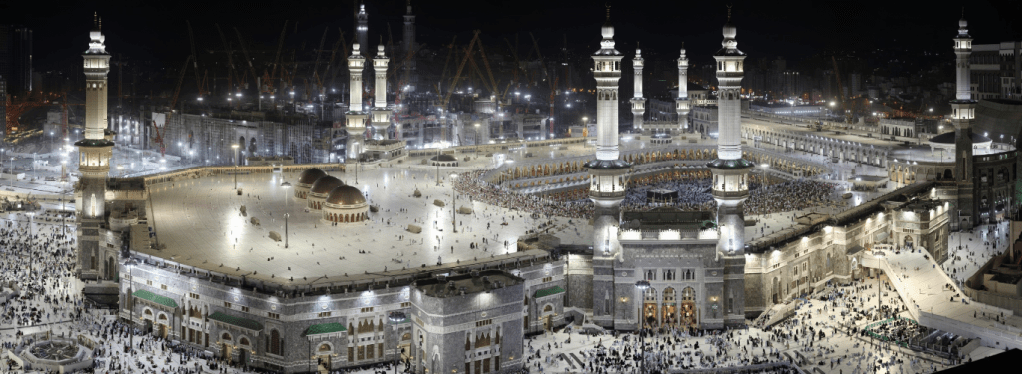
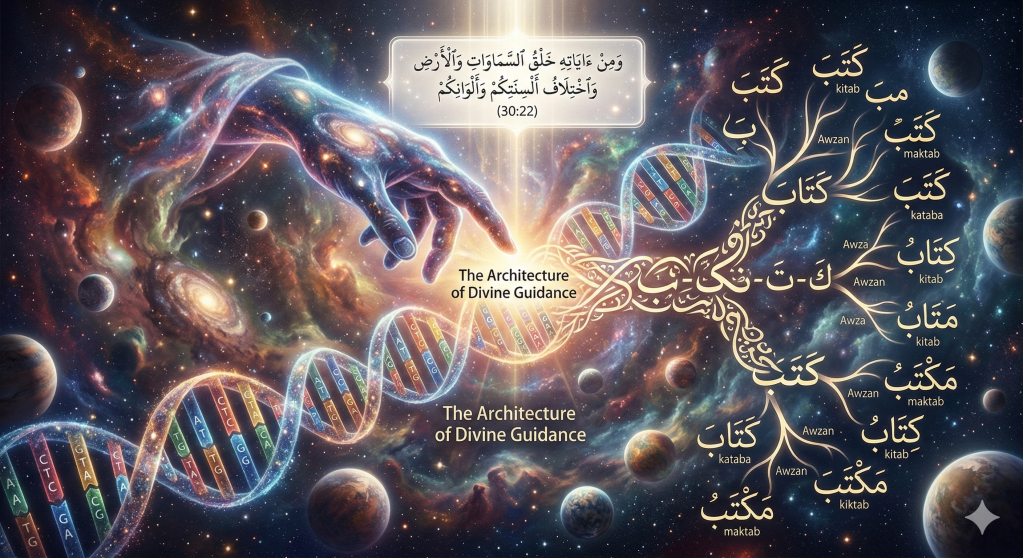
 The Glorious Quran and Science
Leave a reply to In the Face of Injustice: Pakistan’s Climate Crisis and the Islamic Call to Act – Sustainably Muslim Cancel reply