
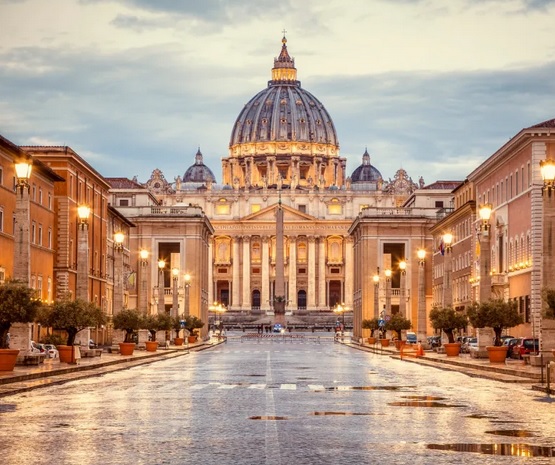
Promoted post: Beauty in Nature as a Path to God: An Islamic Perspective
In the name of God, the Lord of Mercy, the Giver of Mercy.
Dear Catholic Christian friends,
We extend to you a heartfelt invitation grounded in the words of the Qur’an, Islam’s holy scripture, to engage in dialogue and mutual understanding. This invitation begins from our shared spiritual heritage – a common belief in the one God, reverence for His prophets, dedication to moral living, and hope in the life to come. The Qur’an itself addresses “People of the Book” (a term of respect for Jews and Christians) and urges us to come to what is common between us: “Say, ‘People of the Book, let us arrive at a statement that is common to us all: we worship God alone, we ascribe no partner to Him, and none of us takes others beside God as lords’”. In this spirit, we invite you to reflect on our common ground and also to explore our theological differences with honesty, reason, and respect. Our goal is not to debate for victory, but to “argue only in the best way” and to affirm that “our God and your God is one and the same” postbarthian.com. With genuine respect and brotherhood, let us build on the profound truths we share before God.
Shared Foundations: One God, Prophets, and the Afterlife
Both Catholics and Muslims affirm a core of spiritual truths that bind us together. At the heart of our faiths is the belief in one God, the Almighty Creator of heaven and earth, who is merciful, just, and loving. Catholics proclaim the oneness of God in the Creed, and Muslims uphold tawḥīd, the absolute unity of God. We recognize that, despite differing understandings of God’s inner nature, we all worship the God of Abraham – the God who created Adam and Eve, who spoke to Abraham, Moses, and other prophets, and who guides humanity. The Qur’an highlights this unity of object of worship, addressing both communities together: “We believe in what was revealed to us and in what was revealed to you; our God and your God is One [and the same]” postbarthian.com.
Another shared foundation is our reverence for prophets and messengers. In Catholic tradition, figures like Noah, Abraham, Moses, and David are esteemed as righteous servants of God; Jesus Christ himself said he came not to abolish the law of Moses and the message of the earlier prophets, but to fulfill them. The Islamic faith confirms and honors all these prophets as well. The Qur’an tells Muslims to say: “We believe in God and in what was revealed to us and in what was revealed to Abraham, Ishmael, Isaac, Jacob… and what was given to Moses, Jesus, and all the prophets from their Lord – we make no distinction between any of them” (Qur’an 2:136). Thus, we stand on common ground in cherishing the same spiritual lineage. In particular, Jesus and Mary have a special place in the Qur’an: Jesus is called the Messiah and Word of God, born of the Virgin Mary who is honored above all women. While Muslims do not view Jesus as divine, we deeply respect Him as a noble prophet and messiah. Both our traditions await his role in God’s plan (Catholics anticipating his Second Coming, Muslims believing he will return as well); we share love and reverence for Jesus, even if we understand his nature in different ways.
Furthermore, our moral and spiritual vision for life is strikingly similar. Both faiths teach the importance of worshiping God with devotion, praying and giving thanks, and living a righteous life by loving our neighbors, caring for the poor, and upholding honesty and compassion. In Catholic Christianity, the teachings of Jesus emphasize love, mercy, humility, and service – values that the Islamic scripture reinforces time and again. The Qur’an, for instance, praises those who “feed the needy, the orphan and the captive, for the love of God” (76:8) and those who “perform the prayers, pay alms, and enjoin what is right and forbid what is wrong” (9:71). Both communities prize humility, charity, forgiveness, and justice as central virtues. We both heed the Ten Commandments in spirit – honoring parents, rejecting idolatry, perjury, theft, or murder – and we aspire to the same Golden Rule taught by Jesus: “So in everything, do to others what you would have them do to you” (Matthew 7:12), a principle echoed in Islamic tradition. In essence, our two faiths call on us to worship the same God of holiness and love, and to live out that devotion through moral integrity and love of neighbor.
Some of these shared foundations can be summarized as follows:
- One God, the Almighty Creator: We all worship the one sovereign God, compassionate and mighty, who revealed Himself to Abraham and desires that we know Him and do His will.
- Prophetic Tradition: We jointly revere a long line of prophets – Adam, Noah, Abraham, Moses, David, Solomon, and others – as bearers of God’s guidance. We both honor Jesus (peace be upon him), and we uphold many of the same sacred stories and teachings from scripture.
- The Afterlife and Accountability: Catholics and Muslims alike affirm that life has a higher purpose and that we are ultimately accountable to God. We believe in a Day of Judgment when all souls will answer for their deeds, followed by the reality of Heaven and Hell. This shared eschatological hope calls us to responsibility and hope in God’s mercy.
- Moral Teachings: Both faiths strongly promote charity, chastity, honesty, forgiveness, and respect for life. We stand together on principles like honoring one’s parents and family, protecting the sanctity of life, rejecting theft and injustice, and fostering peace. Our scriptures both teach us to value love of God and love of neighbor as fundamental commandments.
Recognizing this substantial common ground reminds us that we are, in a very real sense, members of one extended spiritual family. We are all children of Adam, created by the One God. The Qur’an reminds humanity: “People, be mindful of your Lord, who created you from a single soul” (Qur’an 4:1). In a similar vein, the Bible teaches that from one ancestor God made all nations (Acts 17:26). Our faiths see human beings as endowed with dignity and a conscience oriented toward the good. In Catholic thought, this is expressed through the idea of natural law and the imago Dei (being created in God’s image), and in Islam through the concept of fiṭra (the innate disposition toward God and goodness). These ideas reinforce each other, affirming that deep within, we share an intuitive understanding of truth and morality given by the same God.
Respectful Exploration of Doctrinal Differences
Beginning from these shared values and beliefs, we can approach our doctrinal differences in a spirit of respect and frankness. It is an act of friendship, not aggression, to understand where our theologies diverge. The Qur’an itself encourages Muslims and Christians to discuss matters of faith openly but courteously, saying: “[Believers], argue only in the best way with the People of the Book” postbarthian.com. In this light, we address a few key theological differences — not to debate contentiously, but to clarify understanding and invite reflection on how the Qur’an speaks to these issues that are central to the Christian faith.
On the Nature of God: Tawḥīd and the Trinity
Perhaps the most significant difference between us lies in our understanding of God’s nature. Catholic Christianity, in continuity with ancient Christian doctrine, professes that the one God exists as a Trinity of Persons: Father, Son, and Holy Spirit. Islam, by contrast, emphasizes tawḥīd, the absolute oneness and indivisibility of God, and the Qur’an gently but firmly cautions Christians against extending God’s unity into a trinitarian formula. The Qur’an addresses Christians as “People of the Book” and states with respect: “do not speak of a ‘Trinity’ – stop this, that is better for you – God is only one God”. In other words, the scripture appeals to our shared commitment to monotheism, urging that God’s nature not be divided in our understanding. From the Islamic perspective, calling God “three in one” can unintentionally compromise the pure unity that is His alone – even though Christians intend no polytheism by it. The Qur’an acknowledges that Christians worship God, but it seeks to correct what Muslims see as an inadvertent theological excess out of devotion to Jesus. Thus it says: “People of the Book, do not go to excess in your religion, and do not say anything about God except the truth”. The verse then immediately clarifies that truth, affirming strict monotheism: “God is only one God, He is far above having a son”.
From the Catholic point of view, the Trinity is a profound mystery – one God in three co-eternal Persons, not three gods. We recognize that this doctrine is deeply meaningful to you, encapsulating God’s intimacy and love (Father and Son) and His immanence in our lives (the Holy Spirit). The Qur’anic challenge to the Trinity is not meant as a casual dismissal of this cherished belief, but rather as a call to re-examine how we describe God’s oneness. Islam teaches that God’s oneness is absolute: He has no partners, no equals, and nothing in creation is of the same substance as Him – not even a “begotten Son,” for He begets not, and all depend on Him. As it says in Islam’s pure monotheistic creed: “He is God the One… He begot no one nor was He begotten. No one is comparable to Him” (Qur’an 112:1-4) postbarthian.com. This concept, known as tawḥīd, is the axis of Islamic theology.
We invite our Catholic friends to reflect on how the unity of God is also central in your own tradition – for example, the first of the Ten Commandments and Jesus’s affirmation of the Greatest Commandment (“Hear, O Israel: The Lord our God, the Lord is One”). Many Christian theologians, too, have pondered ways to express the Trinity without compromising God’s oneness. In fact, some interpretations of the Trinity in Christian history (for instance, by Thomas Aquinas, who argued for the simplicity and unity in God’s essence) resonate with the Qur’anic insistence that God is utterly one postbarthian.com. Our invitation is to engage in dialogue about this mystery of God’s unity and diversity, seeking clarity on how the love and relationality within God can be understood without attributing “partners” to Him in a way the Qur’an forbids. This is a subtle and sensitive conversation – one that Muslims approach with reverence, knowing how sacred the Trinity is to you, and how sacred pure monotheism is to us. Through patient discussion, we can strive to better grasp each other’s perspective and perhaps discover deeper ways to appreciate God’s transcendence and oneness.
On Jesus Christ: Crucifixion and Divine Sonship
Another important doctrinal difference concerns the role and nature of Jesus Christ (peace be upon him). For Catholics, Jesus is the incarnate Son of God – fully divine and fully human – who gave His life on the cross for the salvation of humankind and rose from the dead. Islam reveres Jesus as the Messiah and a mighty Prophet, born of the Virgin by God’s command, who preached the Gospel. However, the Qur’an does not accept the ideas of Jesus’s divinity or his atoning death. It portrays Jesus as a human messenger, not a part of God, and it denies that he was crucified by his enemies, even though it acknowledges that it appeared so to the people at the time. In a notable verse, the Qur’an relates the boast of some who opposed Jesus and then corrects it: “[They said], ‘We have killed the Messiah, Jesus, son of Mary, the Messenger of God.’ They did not kill him, nor did they crucify him, though it was made to appear like that to them” (Qur’an 4:157). Instead, the Islamic account is that Jesus was raised up by God and saved from such a fate (Qur’an 4:158), and that he will play a role at the end of times.
What is the meaning of this Qur’anic stance, and how can we discuss it in a spirit of respect? Muslims understand these verses to be defending the honor and innocence of Jesus. According to Islamic theology, God would not subject His beloved messenger to the humiliating death of crucifixion, nor does God need a blood sacrifice to forgive sins – His mercy is directly accessible. In Islam, each person is accountable for his or her own deeds, and no innocent person can bear the sins of others: “no soul will bear the burden of another” researchgate.net. This principle, the Qur’an asserts, absolves the need for the kind of vicarious atonement that the crucifixion represents in Christian theology. Instead, salvation in Islam comes through faith in God’s oneness, repentance, and righteous action, with God’s grace. The sacrificial death of Jesus is therefore not a part of the Islamic narrative – not because Muslims dishonor Jesus (on the contrary, we honor him so greatly that we do not accept that God would abandon him to his foes), but because Islam preaches that God’s forgiveness does not require the death of His messenger or of any innocent soul.
We fully appreciate that for Catholics, the crucifixion and resurrection of Christ are the heart of the faith – the ultimate act of God’s love, demonstrating divine solidarity with human suffering and the conquest of sin and death. We do not seek to trivialize this conviction. Rather, we invite you to consider the Qur’anic perspective as an alternative vision of how God can save. The Qur’an emphasizes God’s power to forgive and guide without intermediary sacrifices, and it upholds Jesus’s dignity by saying God rescued him. It also upholds God’s justice by teaching individual responsibility: each person answers for their own sins, while God’s mercy is always available through repentance. These differences in theology about atonement and human sin (original sin vs. individual accountability) are indeed significant. Yet, even here there are points of contact: for example, both faiths affirm God’s mercy and justice. The Catholic Church teaches that God is merciful and desires to forgive, and that Christ’s sacrifice was an act of mercy, not an arbitrary punishment. Muslims likewise believe emphatically in Divine Mercy (every chapter of the Qur’an begins with invoking God’s mercy), and we believe God judges justly. Perhaps our understandings of how mercy and justice play out differ, but we both hold that God is All-Merciful and All-Just. In dialogue, we might explore questions like: How can a perfectly just God forgive sins freely? How can a loving God let the innocent suffer for the guilty? These are philosophical and theological questions that both our traditions grapple with, and by discussing them, we can each deepen our own faith and appreciation for the other’s insights. For instance, Catholics may find it intriguing that the Qur’an calls Jesus “a spirit from God” and “His word directed to Mary” – lofty titles which echo the Gospel of John’s concept of Jesus as the Word (though Islam understands them differently). Muslims, in turn, can acknowledge the profound symbol of self-sacrifice that the Cross represents to Christians – even if we do not share the doctrine, we understand the values of love, selflessness, and obedience to God’s will that it embodies, values which the Qur’an also extols in its own way.
On Human Nature and the Path to Salvation
Underlying these theological differences are distinct perspectives on the human condition and salvation – what theologians call theological anthropology. In Catholic theology, humanity is seen as created good in the image of God, but fallen through original sin. We inherit a flawed nature and a tendency to sin, and only God’s grace – chiefly through the redemptive sacrifice of Christ and the sacraments (like baptism which cleanses original sin) – can restore us to communion with God. Islam, by contrast, does not teach original sin; rather, it teaches original responsibility. The Qur’an portrays each person as born in a state of purity (fitra), accountable for their own choices. It relates the story of Adam and Eve’s slip in Eden not so much as the cause of an inherited guilt on all their descendants, but as the first example of man’s ability to err and God’s willingness to forgive. Indeed, the Qur’an says that when Adam erred, he repented and God forgave him (Qur’an 2:37), and each of us, likewise, can turn back to God when we err.
Because of this view, Islam teaches that salvation is open to all who submit to God and do good, by His mercy, without any human being having to pay for the sins of others. As mentioned, the Qur’an clearly states the principle of personal accountability: “each soul is responsible for its own actions; no soul will bear the burden of another” researchgate.net. This means that, unlike in Christianity, there is no concept of inherited sin-stain passed down from Adam requiring a universal atonement. Theologically, one might say Islam is more optimistic about human nature’s ability (with divine guidance) to choose good and earn God’s forgiveness through sincere repentance. The role of Jesus in salvation history is accordingly viewed differently: rather than being a savior who atones for humanity’s fall, he is a prophet who reiterates the perennial message of all prophets – worship the one God and live righteously – and he foretells the coming of the final Prophet (Muhammad) who would restore the complete guidance for mankind.
For Catholics, the idea of not having original sin might raise the question: then why do humans consistently sin and need salvation at all? Islam’s answer is that while we are born innocent, we are also given free will and desires, and so we have the capacity to err, which most humans do. We are weak without God’s help. Thus, in practice, all people do commit sins and need God’s mercy, but this need not imply a hereditary spiritual defect – it’s simply part of our test in life. The Qur’an teaches that this life is a test of who will do best in deeds, and those who believe and do good works, by God’s grace, may enter Paradise. Those who persist in evil and deny the truth are those who jeopardize their souls. In Catholic terms, this sounds somewhat like the importance of free will and works alongside faith – indeed, Catholics also reject the idea that one is saved by faith alone without works of love. In Islam, faith (īmān) and works (ʿamal) are two sides of the same coin, both essential. We might find that our conceptions of how humans attain salvation can converge on the idea that God’s grace and human response cooperate. Catholics talk of faith working through love, and Muslims talk of faith proven by deeds. Neither of us believes in a cheap grace that requires no moral effort, nor do we believe one can simply earn Heaven without God’s generous mercy. So even in this difference – original sin vs. original purity – there is room for fruitful discussion about how God’s justice and mercy meet, and how humans can be transformed from sin to righteousness. The Qur’an invites all People of the Book to reflect on this by emphasizing God’s forgiveness for the repentant and warning against despair or complacency. It also invites us to remember that in the end, God is the ultimate judge of our disputes: “You will all return to your Lord in the end, and He will tell you the truth about your differences” researchgate.net. This humble reminder can temper our disagreements with the knowledge that God knows best and will reveal ultimate truth in the Hereafter.
Throughout these explorations of difference, we maintain a tone of reverence and kinship. We acknowledge that each of these beliefs (the Trinity, the Crucifixion, Original Sin, etc.) is held with sincere conviction and deep emotional resonance in your hearts, as corresponding Islamic beliefs are in ours. Our aim is not to score points or win arguments – it is to fulfill what the Qur’an envisions: an exchange in pursuit of truth undergirded by love and respect. We recall that according to the Qur’an, Christians are among those closest in affection to Muslims: “you are sure to find that the closest in affection towards the believers are those who say, ‘We are Christians,’ for among them are people devoted to learning and ascetics, and they are not arrogant” (Qur’an 5:82). This Qur’anic praise for the humility and devotion of many Christians is a testament to the goodwill between our communities. We build on that goodwill as we tackle these complex theological questions together, trusting that our exchanges can be not a source of conflict, but a journey of mutual enlightenment guided by God.
Unity of Creation and the Appeal to Reason
Beyond scripture and doctrine, human reason and the natural world offer us another meeting place for dialogue. Both Catholic Christianity and Islam uphold that faith and reason are harmonious, not contradictory. The Catholic intellectual tradition – from Saint Augustine and Saint Thomas Aquinas to modern scholars – has long valued philosophy and science as “handmaids” of theology, ways to understand God’s creation and thus to know God better. Islam too has a rich tradition of rational inquiry; the Qur’an itself continuously invites people to reflect, ponder, and use their intellect (ʿaql). In fact, the pursuit of knowledge (ʿilm) is a religious duty in Islam. Early Muslim civilization eagerly absorbed Greek philosophy and science, and Muslim scholars like al-Farabi, Ibn Sina (Avicenna), and Ibn Rushd (Averroes) engaged with reason in ways that later influenced Christian scholastics. This shared heritage of valuing the mind and seeking truth through both revelation and reason is an important point of contact between us.
We encourage exploring theological questions together rationally. For example, when considering God’s nature, we might employ philosophical reasoning about the necessity of a single First Cause or a single unifying Will behind the cosmos – arguments that Christian and Muslim philosophers alike, such as Aquinas and Avicenna, put forward. The unity of creation that modern science reveals (the laws of physics are uniform across the universe, life on earth is interdependent, etc.) can be seen as reflecting the unity of its Creator. It is reasonable to conclude that one rational Mind is behind the ordered cosmos, rather than many competing gods. This idea resonates strongly with tawḥīd, and indeed many Christian thinkers would agree that the coherence of the universe points to the one God of Abraham. Moreover, the Qur’an points to natural signs as evidence for God, appealing to our intellect: “In the creation of the heavens and earth, and the alternation of night and day, there are signs for those who use their reason” (Qur’an 3:190). We both believe that truth is ultimately one – scientific truth, philosophical truth, and religious truth all come from the same God and thus cannot truly contradict each other. Where there is apparent conflict, it invites deeper understanding.
In our invitation, we also appeal to the common human desire for truth. Every person, guided by both heart and mind, seeks answers to the great questions: Why are we here? Who is our Creator? How can we live a good life? What happens after death? Both the Bible and the Qur’an encourage believers to engage their reason to affirm their faith. The Prophet Isaiah invites, “Come now, let us reason together, says the Lord” (Isaiah 1:18), and the Qur’an frequently asks, “Will you not then use your reason?” (Qur’an 2:44, 10:16, and many other places). Our traditions are not afraid of inquiry; indeed, we see faith and intellect as mutually reinforcing. The Catholic Church in modern times has repeatedly taught that there can be no contradiction between true science and faith, and the Qur’an too alludes to natural phenomena in a way that has intrigued many scientific minds. For instance, some see in the Qur’an’s descriptions of embryonic development (Qur’an 23:12-14) or the expansion of the universe (Qur’an 51:47) a convergence with scientific knowledge – suggesting that the Qur’an invites awe at a time when such knowledge was not yet systematized by humans. Whether or not one leans on such interpretations, it is clear that both faiths cherish knowledge and view the universe as a deliberate, intelligible creation by God.
Thus, our dialogue can proceed on the basis of reasoned arguments and evidence as well as scriptural testimony. We can discuss, for example, the philosophical plausibility of the Incarnation (Can God become man? Would an infinite God do so? Does it solve a problem or create logical dilemmas?) and the concept of Atonement (Is it just for God to transfer sins? Could divine mercy operate without sacrifice?). These are questions that thinkers in both traditions have grappled with. We need not shy away from them; rather, by using the intellect God gave us, and referencing both the Bible and Qur’an, we can seek answers that satisfy both the mind and soul. Importantly, such discussions are not meant to reduce holy mysteries to dry rationalism, but to show that faith is not irrational. They also demonstrate our trust that ultimately, all truth is God’s truth. If we earnestly seek the truth together, with open hearts and minds, we believe we will come closer to God’s intent. The Qur’an promises that God will guide those who strive for Him and ask sincerely. It also says, beautifully: “We shall show them Our signs in the horizons and in themselves, until it becomes clear to them that this [revelation] is the Truth” (Qur’an 41:53). This can be understood to mean that through both external observation (science, history) and internal reflection (conscience, spiritual experience), God will make the truth evident to honest seekers. Let this be a hopeful assurance for us both: if we seek truth together, we trust that God’s signs and our shared reasoning will gradually lead us toward greater agreement and understanding.
Conclusion: Towards Mutual Respect, Reflection, and Common Good
In conclusion, we extend this invitation as a gesture of friendship and spiritual kinship. Islam and Catholic Christianity are like two branches of the same Abrahamic tree – we have grown in different directions and have our own distinct foliage, but our roots interweave deep beneath the soil. The Qur’an recognizes this closeness and calls us to focus on the “common word” between us – the affirmation of God’s oneness and our devotion to Him – as a basis for unity. We might never agree on every point of doctrine in this life, but we can certainly agree on our shared reverence for God, our shared love of goodness, and our shared commitment to seeking His truth. We are invited to disagree without bitterness or scorn, and instead to compete with one another in good works (as Qur’an 5:48 suggests). As Pope John Paul II once said, “In the end, the truth is a person, Jesus Christ,” and Muslims might say “the truth is ultimately with God.” Perhaps these statements are not so far apart – for if Jesus taught love, mercy, and worship of the Father alone, then to follow truth is to follow those teachings, which are very much in harmony with the Qur’an’s teachings. We Muslims appeal to you not to see our invitation as an attack on your faith, but as an outstretched hand – an opportunity for both of us to rediscover the pure monotheism and sincere submission to God that characterized Abraham, whom we both claim as a forefather in faith. The Qur’an invites us to emulate Abraham’s devotion and uprightness (Qur’an 3:67-68), and indeed the Second Vatican Council’s document Nostra Aetate acknowledged that Muslims “take pleasure in Abraham’s faith” as you do. Let us join hands as cousins in faith, children of Abraham, in exploring what it means to worship the One God with wholehearted devotion.
Finally, this is a call not only to theological dialogue, but to shared moral action. Our world today is fraught with spiritual confusion and moral challenges – materialism, injustice, conflict, and loss of the sense of the sacred. Christians and Muslims, together making up over half of the world’s population, have a responsibility to work in tandem for the common good. The Qur’an urges Muslims and Christians to remember the values we both hold dear and to support one another in upholding them: “that none of us shall take others beside God as lords” – meaning we should reject tyrannies and false idols whether they be ideologies or worldly temptations, and serve only the higher cause of God. We are called to stand together for justice, peace, and the dignity of all people, as our religions teach. In this spirit, let us find practical avenues of cooperation: defending the sanctity of life at all stages, helping the poor and refugees, promoting education and family values, and fostering peace where there is conflict. When we engage side by side in such endeavors, we live out the best of our faiths and also find our hearts drawing closer. In doing good together, we exemplify the Qur’anic principle of “vying with one another in goodness” and Christ’s teaching “let your light so shine before men that they may see your good deeds and glorify your Father in heaven.” Our dialogue, then, is not just words, but a shared journey of faith in action.
To our Catholic brothers and sisters: we invite you with the utmost respect to consider the message of the Qur’an anew, not as a negation of what you hold dear, but as a confirmation and clarification of eternal truths – an invitation to complete the devotion to one God that we both cherish. The Qur’an says to the People of the Book: “If they turn away, say, ‘Witness our devotion to Him’”. In other words, whether or not we come to full agreement, let us at least bear witness to each other of our sincere devotion to God. We Muslims testify that we are devoted to the God of Abraham, of Moses, and of Jesus – and we know you strive to be devoted to Him as well. May our mutual devotion become a bond of peace and understanding between us. The doors of dialogue remain open, and indeed Pope Francis and many Muslim leaders have walked through those doors in recent years, embracing each other in fraternity. Let us all, at the grassroots level, follow their example. We end with a prayer that echoes both our traditions:
God Almighty, guide us all to the truth in Your perfect light. Unite our hearts in Your love. Forgive us our shortcomings and help us to forgive one another. Lead us to live together in harmony as we seek Your Face. Amen.
In the spirit of this prayer, we look forward to continued dialogue, deeper understanding, and a strengthening of the friendship between Catholics and Muslims. Thank you for considering this invitation. May God bless you and keep you always.
Peace be upon you. (As-salāmu ʿalaykum)
With sincere respect,
Your Muslim brothers and sisters
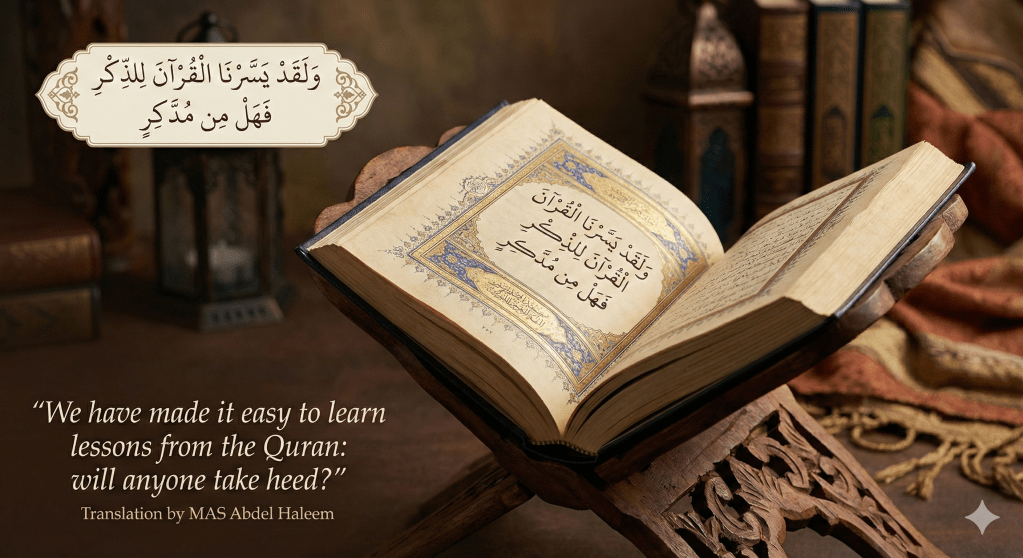
 The Glorious Quran and Science
Leave a comment