
Written and collected by Zia H Shah MD, Chief Editor of the Muslim Times
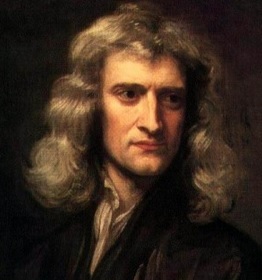
Sir Isaac Newton is widely celebrated for his scientific genius, but he was also a deeply religious thinker who held unorthodox theological beliefs. In an era when virtually all of Newton’s countrymen embraced Trinitarian Christianity, Newton privately rejected the doctrine of the Trinity and affirmed a strict monotheism. His private manuscripts—many unearthed only after his death—reveal that Newton regarded the Trinity as a post-biblical corruption of true Christianity. This essay examines the historical context of 17th-century English religion, analyzes Newton’s secret theological writings (especially his denial of the Trinity and emphasis on God’s oneness), explores his reasoning through Scripture and early Church history, discusses the risks he faced as a heretic and his choice to keep these views private, and considers how Newton’s monotheistic outlook influenced his broader worldview and even his approach to science. Throughout, we will draw on Newton’s own words and modern scholarly commentary to understand this fascinating aspect of Newton’s life and thought.
Trinitarian Orthodoxy in 17th-Century England: The Historical Context
In Newton’s lifetime, belief in the Trinity (one God in three co-equal persons: Father, Son, and Holy Spirit) was the cornerstone of official Christianity in England newtonproject.ox.ac.uk. The Church of England’s creeds and the Thirty-Nine Articles of Religion enshrined Trinitarian doctrine as fundamental truth, and worship of the Triune God was seen as essential for salvation. Denying the Trinity was not just a theological divergence but a civil offense: it was widely held that rejecting the Trinity was as grave as outright atheism. Earlier in the 1600s, two men (Bartholomew Legate and Edward Wightman) were even burned at the stake (in 1612) for heresy after rejecting Trinitarian beliefs. Laws against blasphemy passed in 1648 technically made denial of the Trinity punishable by death, and although enforcement softened over time, anti-Trinitarian writings were periodically prosecuted. After the Restoration of the monarchy in 1660, some Anglican clergymen privately harbored doubts about the Athanasian Creed’s Trinitarian formula, but “most wisely kept their opinions to themselves” rather than risk punishment.
This repressive atmosphere continued into Newton’s adulthood. In 1697, a Scottish student named Thomas Aikenhead was executed for openly expressing anti-Trinitarian ideas – a chilling reminder of the potential consequences of heresy. Even in England, where penalties were less draconian by then, the Blasphemy Act of 1698 still prescribed imprisonment or fines for anyone publicly denying the Trinity. High-profile cases underscored the dangers. In 1703, the dissenting minister Thomas Emlyn was convicted of blasphemy and jailed after publishing a pamphlet arguing against the Trinity. A few years later, Newton’s friend and successor at Cambridge, William Whiston, began openly teaching Arian views (the belief that Christ was subordinate to the Father rather than co-equal). The result was swift: Whiston was expelled from his professorship in 1710 for “heretical” doctrine newtonproject.ox.ac.uk. These examples show that in Newton’s England, to challenge the Trinity was to invite professional ruin or even legal prosecution. Trinitarian orthodoxy was so dominant that open anti-Trinitarianism was virtually synonymous with sedition or blasphemy.
This mainstream context highlights how remarkable Newton’s private divergence was. As a fellow of Trinity College, Cambridge (ironically named for the doctrine), Newton ordinarily would have been required to be ordained as an Anglican priest and swear loyalty to Trinitarian doctrine en.wikipedia.org. In fact, upon becoming a Fellow in 1667, he was expected to take Holy Orders within seven years and to subscribe to the Anglican Articles of faith (which included the Trinity). Newton was so averse to this requirement that he contemplated giving up his academic career rather than be ordained. Ultimately, he succeeded in obtaining a special royal dispensation in 1675–1676 that excused him from ordination en.wikipedia.org. This extraordinary exemption (engineered with the help of his mentor Isaac Barrow and government officials) allowed Newton to remain at Cambridge without making a public declaration of Trinitarian belief. It was a critical concession, for Newton’s private studies were already leading him toward anti-Trinitarian conclusions. Thus, the stage was set for Newton to pursue his heterodox theology in secret, sheltered by outward conformity. The heavy dominance of Trinitarianism in 17th-century England—and the harsh penalties for heresy—explain why Newton would choose to conceal his true beliefs for decades.
Newton’s Private Writings: A Unitarian Faith Hidden in Manuscripts
Away from the public eye, Newton immersed himself in theological research with the same intensity he brought to mathematics and physics. By the late 1660s and 1670s, while still a young scholar at Cambridge, he undertook an “extraordinary programme of creative theological research” into Scripture and the early Church newtonproject.ox.ac.uk. There is no evidence that Newton was indoctrinated by any radical sect; rather, he was largely self-taught in theology, driven by solitary study of the Bible and patristic texts en.wikipedia.org. Over years of meticulous inquiry, Newton came to a stark conclusion: the orthodox doctrine of the Trinity was a grievous error – a “fiction” foisted on Christianity in the fourth century newtonproject.ox.ac.uk. In Newton’s eyes, true Christianity was the pure worship of one God, and this had been the original faith of the Church until it was corrupted by theologians and imperial politics after the time of Constantine. Newton believed that “a simple and authentic form of Christianity had been perverted” in the post-apostolic era. The central culprit was Trinitarianism. He bluntly concluded that the Trinitarian doctrine, far from a divine mystery, was a human invention of the early 300s A.D., later propagated by “servants of the devil” amid ecclesiastical power struggles.
Crucially, Newton held that worshiping Christ as God violated the First Commandment. He judged it “a form of idolatry to give to any other being the worship that was properly due to God” alone newtonproject.ox.ac.uk. In his theology, only the Father (often referred to by the biblical name “Jehovah”) is the one supreme God. Jesus Christ, in Newton’s view, was the Son of God but not God Himself newtonproject.ox.ac.uk. Newton did not deny Christ’s divinity outright – he believed Jesus was divinely authorized and even “divine” in some sense – but Jesus was subordinate to the Father and not equal in substance or eternity. In other words, Newton’s Christology aligned with the old Arian heresy: Christ is the Son, distinct from and inferior to the Father. “Jesus was divine but was not God” is how one scholar summarizes Newton’s belief newtonproject.ox.ac.uk. Newton thus rejected the key Trinitarian claim that the Father, Son, and Spirit are co-equal Persons in one Godhead. This private faith of Newton’s can be described as unitarian (belief in one God, one Person) and strongly monotheistic. Modern researchers classify Newton as a nontrinitarian Arian in theology, akin to other 17th-century figures like John Milton who held similar beliefs en.wikipedia.org. It is telling that Newton in his manuscripts sometimes used the language of early creeds but reinterpreted it: for example, he would speak of Father, Son, and Holy Spirit as three beings of God’s dominion, but not co-equal or consubstantial. He emphasized Bible verses such as John 17:3 (“that they might know Thee, the only true God, and Jesus Christ whom Thou hast sent”) to underline that the Father alone is the “only true God.” Indeed, Newton was emphatic that “Jehovah is the unique God,” a phrase he explicitly noted in his papers tabletmag.com. Any doctrine that elevated Jesus to Absolute Godhood alongside the Father Newton saw as a distortion of biblical monotheism.
The most striking evidence of Newton’s anti-Trinitarian conviction comes from his own private writings, which he guarded closely during his lifetime. He wrote a number of treatises and notes on theology – by some estimates, more than a million words on biblical subjects – but none were published while he livedrsc.byu.edu. After Newton’s death in 1727, these theological manuscripts were deemed too controversial and were largely suppressed or forgotten for many years tabletmag.com rsc.byu.edu. It was only in the 20th century, when Newton’s papers were auctioned in 1936, that scholars fully realized the scope of his heterodox religious work. Among Newton’s most important theological documents is a dissertation he penned in 1690, “An Historical Account of Two Notable Corruptions of Scripture.” This text (originally sent as a private letter to the philosopher John Locke) deals with two Bible verses that had come to be used as proof-texts for the Trinity: 1 John 5:7 and 1 Timothy 3:16. Newton approached these passages like a textual scientist. He painstakingly collated ancient manuscripts and versions of the New Testament, examined quotations by the early Church Fathers, and concluded that both verses had been tampered with to support Trinitarian doctrine newtonproject.ox.ac.uk. In the case of 1 John 5:7, the King James Bible read: “For there are three that bear record in heaven, the Father, the Word, and the Holy Ghost: and these three are one.” This certainly sounds Trinitarian. But Newton discovered that the critical phrase “the Father, the Word, and the Holy Ghost: and these three are one” was absent in all the earliest Greek manuscripts and in the earliest Latin translations rsc.byu.edursc.byu.edu. He noted it was completely unknown in the writings of the Church during the centuries when Trinitarian disputes were hottest. Newton wrote that the Trinitarian clause in 1 John 5:7 “was neither in the ancient Versions nor in the Greek but was wholly unknown to the first churches,” as proved by the fact that “in all that vehement, universal, and lasting controversy about the Trinity in Jerome’s time, and both before and long enough after it, this text of the Three in Heaven was never thought of. It is now in everybody’s mouth and accounted the main text for the business [of supporting the Trinitarian dogma]” rsc.byu.edu. In other words, had that verse been genuine and known in early Christian times, the Church Fathers surely would have cited “there are three that bear record in heaven” during the 4th-century Trinitarian controversies – yet none did, confirming to Newton that the verse was a later insertion. He similarly argued that 1 Timothy 3:16, which in the received text read “God was manifest in the flesh,” was corrupted – the original read “He was manifest in the flesh,” referring to Christ, without explicitly calling Christ ‘God’ newtonproject.ox.ac.uk. Newton concluded that these textual “corruptions” were deliberate or accidental additions made in the fourth or fifth century, bolstering Trinitarian doctrine by falsifying Scripture newtonproject.ox.ac.uk. This was a radical claim for his time, effectively accusing the post-Nicene Church of altering the Bible.
Newton’s theological notebooks show that he didn’t stop at those two verses. He conducted “a series of destructive textual analyses” of all the scriptural passages used to defend the Trinity newtonproject.ox.ac.uk. With exhaustive scholarship, he tried to demonstrate that none of the biblical proof-texts offered unequivocal support for the concept of co-equal Father, Son, and Spirit. Newton also compiled extensive notes on early Christian writers. He was deeply familiar with the works of Athanasius (the great champion of Nicene Trinitarianism) and his opponents like Arius newtonproject.ox.ac.uk. Newton believed that many ante-Nicene Church fathers (those before the Council of Nicaea in 325 AD) held subordinationist views of Christ that aligned more with Newton’s own beliefs newtonproject.ox.ac.uk. He even studied how later theologians such as St. Augustine had wrestled with the Trinity. (At one point Newton wryly observed that even Augustine admitted the Trinity was “incomprehensible,” which Newton took as evidence of its logical absurdity.) In Newton’s eyes, the authentic apostolic doctrine was that God is one and that Jesus is the Messiah and Son of God, but not literally God Almighty. All later dogmas elevating Christ’s status or introducing “mysteries” like three-in-one were, to Newton, part of an apostasy or falling away from original truth.
In a short but pointed comment on the Athanasian Creed – one of the classic statements of Trinitarian faith used by Anglicans in Newton’s day – Newton openly ridiculed its convoluted language. The Athanasian Creed declares that in the Trinity “none is afore or after other, none is greater or less than another… the Unity in Trinity and the Trinity in Unity is to be worshipped.” Newton could not accept this. “For Newton this was simply not logical,” and he wrote in response: “Let them make good sense of it who are able; for my part, I can make none.” rsc.byu.edu. This terse dismissal in Newton’s private notes illustrates his rationalist approach – he was unwilling to accept a doctrine that, to his mind, defied reason and Scripture alike. Newton summarized the crux of the doctrinal corruption in one of his manuscripts by stating that “the apostasy [of the Church] was to begin by corrupting the truth about the relation of the Son to the Father in putting them equal.” rsc.byu.edu In his view, calling the Son “equal” to the Father was the first step away from true religion, a step that led to full-blown idolatry when Christians began worshipping Jesus as the supreme God. Newton’s private theological treatises, such as his unpublished reflections on Revelation and Church history, consistently hammer this theme: a “great apostasy” occurred in Christianity when the original monotheism was lost and an “idolatrous” Trinitarian church came to power. In Observations upon the Prophecies of Daniel and the Apocalypse (a work Newton wrote earlier but only saw posthumous publication in 1733), he hinted that the true Church had gone into hiding while an illegitimate, pseudo-Christian orthodoxy (Trinitarian and allied with worldly power) reigned for a long era rsc.byu.edu. Clearly, Newton saw himself on the side of restoring original, pure worship of one God. He privately regarded his heterodox faith not as heresy at all, but as a return to the authentic Christianity of Christ and the Apostles.
It is important to note that Newton never identified as a Socinian (the radical anti-Trinitarians of the Reformation who denied Christ’s pre-existence and divinity altogether). In fact, he disagreed with Socinian theology on several points, such as the denial of Christ’s divine mission and the doctrine of the soul’s mortality newtonproject.ox.ac.uk. Newton’s beliefs were closer to Arianism, because he did accept that Christ existed before his human birth and played a key role in God’s plan (for example, Newton likely believed, as Arians did, that the pre-incarnate Christ—“the Logos”—was used by God as an agent in creating the world). But crucially, Newton held that this Son was created by and subordinate to the Father, “not consubstantial” with Him. In Newton’s theology, the Son could even be called “divine” or “a god” in a limited sense, but only the Father is ho theos (the God) in the highest sense. Thus, Newton stood in the long line of subordinationist thinkers who affirmed one supreme God. In summary, Newton’s private writings from the 1670s through 1690s unequivocally reject the Trinity. They affirm a Unitarian monotheism centered on the Father, with Christ seen as the Messiah and Son who is to be honored but not worshipped as co-equal deity. These manuscripts, kept under lock and key in Newton’s study, show us a brilliant theologian working in the shadows—someone applying rigorous analysis to theology just as he did to astronomy, and arriving at a dramatically unorthodox conclusion that he dared not voice publicly.
Faith and Reason: Newton’s Theological Method and Philosophy
Newton’s rejection of the Trinity was not a flight of fancy but the result of a deliberate methodological approach to religion. He applied to theology the same empirical and rational principles that guided his scientific work. Newton was convinced that true religion had to be grounded in scripture and reason, not in the decrees of councils or mysterious dogmas. Thus, he saw two major flaws in the Trinity doctrine: first, it lacked solid biblical support, and second, it was logically incoherent rsc.byu.edu. He set out to demonstrate both points.
On the scriptural front, Newton was a thoroughgoing Biblicist. He literally devoured the Bible, comparing translations and compiling notes. Surviving evidence shows he owned a personal copy of the King James Bible full of annotations and cross-references, with hundreds of marked verses (many of which relate to the nature of God and Christ) en.wikipedia.org. He collected proof-texts that, in his view, taught the subordination of Christ. For example, Newton cited Jesus’s own words in John 14:28, “My Father is greater than I,” as clear evidence against equality rsc.byu.edu. He also pointed to John 20:17, where the risen Christ calls the Father “my God,” indicating that even Christ viewed the Father as his God and superior rsc.byu.edu. Likewise, Newton noted that according to Mark 13:32, the Son does not know the timing of the Last Day, but the Father alone knows – a verse strongly suggesting the Son is not all-knowing and thus not co-equal with the Father rsc.byu.edu. By assembling such scriptures, Newton argued that the Bible teaches the Father’s primacy clearly and nowhere unequivocally teaches that the Son is equal in power or eternity. He believed the New Testament writers did not preach any triune God; rather, they taught exactly what the early Jews and Christians professed: that “to us there is but one God, the Father” (1 Corinthians 8:6) and that Jesus is the Christ, God’s Son and servant. Newton accused later theologians of “corrupting the true Scripture doctrine” by twisting or interpolating texts to find the Trinity.

Newton’s approach to these biblical texts was notably critical and historical. He anticipated modern textual criticism by over a century, seeking out the oldest sources to get behind what he thought were Catholic corruptions. This scholarly, evidence-based approach mirrored the inductive reasoning he used in science. Just as Newton would collect observations and experiments to derive a law of physics, he collected manuscripts and patristic citations to derive the original wording of Scripture. One scholar writes that anti-Trinitarians like Newton could see at a glance in the newly published polyglot Bibles of the era that certain key Trinitarian proof-texts were absent in older manuscripts, motivating them to investigate further. Newton’s Historical Account of Two Corruptions is a prime example of this empirical method applied to religion. The level of detail and care in that work – he examines how the verses appear in various languages (Latin, Greek, etc.) and which early writers quote them or not – shows a mind as rigorous in the library as it was in the laboratory.
Philosophically, Newton’s insistence on logical clarity in doctrine also guided him. He refused to accept the standard defense of Trinitarian mystery (“three in one” being beyond human reason). If a doctrine appeared self-contradictory or nonsensical, Newton was inclined to doubt its truth. The Athanasian Creed’s pronouncement that the Father, Son, and Holy Ghost are each uncreated and almighty and yet not three Gods but one God struck him as an exercise in futility or worse. His frank comment – “I can make no sense of it” rsc.byu.edu – reveals a rationalist temper. This does not mean Newton was irreligious or denied all mysteries of faith; rather, he believed that doctrines must at least have a basis in divine revelation properly interpreted, and one must be able to affirm them without logical contradiction. To Newton, the doctrine of the Trinity failed these tests. It had no explicit scriptural warrant (only inference and later theological jargon), and it seemed to violate the principle of non-contradiction (how can three be one in the same sense?). His theology was guided by what he considered the plain meaning of biblical texts and the fundamental tenet that God’s nature would be consistently revealed (not requiring esoteric metaphysics to explain). Newton often invoked the wisdom of early Christians to bolster his stance: he studied writers like Justin Martyr, Origen, and Eusebius who emphasized the Father’s superiority, and he argued that the dominant doctrine of the undivided Trinity emerged only after these early authorities, as a novel imposition on the original Christian creed.
In addition, Newton’s abhorrence of “idolatry” played a key role in his reasoning. His Protestant piety, strongly anti-Catholic in flavor, saw the adoration of Jesus as God and the use of images or metaphysical formulas in worship as a relapse into the idolatrous practices that biblical prophets and apostles fought against. Newton was deeply committed to the notion that God’s transcendence and oneness must be protected. He likely took inspiration from Old Testament monotheism and perhaps even Jewish theological writings. (Notably, economists and scholar John Maynard Keynes, who studied Newton’s papers, suggested that Newton was a “Judaic monotheist of the school of Maimonides,” indicating Newton’s affinity for the pure One-God theology of Judaism jewishreviewofbooks.com.) Whether or not Newton read Maimonides, he certainly echoed the Jewish Shema (“Hear O Israel: the Lord our God, the Lord is One”) in his own profession of faith. For Newton, true worship meant acknowledging the Father alone as Almighty God. Any creed that muddled this by introducing coequal persons undermined the very foundation of religion, as it could lead people to effectively worship multiple beings. This theological conviction gave Newton a moral and spiritual urgency in his anti-Trinitarian studies: he believed he was upholding the first commandment and cleansing Christianity of later pagan influence. Newton even wrote that the divine wrath in Church history (such as the prophesied corrupt “Whore of Babylon” in Revelation) corresponded to the Church’s fall into idolatrous Trinitarian worship rsc.byu.edu. Such ideas show how thoroughly Newton intertwined his interpretation of the Bible with his theological worldview: history, prophecy, and doctrine all pointed to the same conclusion—the need to return to the worship of the one true God of Israel, with Jesus in his proper, subordinate place.
In summary, Newton’s reasoning against the Trinity was a fusion of biblical exegesis, historical investigation, and logical critique. He held Scripture as the ultimate authority (sola Scriptura) and read it with a keen eye for original intent, unclouded (as he saw it) by later tradition. He sought to verify textual authenticity with evidence, much like a scientist verifying data. And he demanded that doctrine make sense in light of reason and the unity of God’s revelation. By these lights, Trinitarianism failed and Monotheism triumphed. Newton saw himself as stripping away centuries of myth and confusion to uncover the simple theological truth: God is one, and there is no other. In doing so, he believed he was championing both true religion and true reason.
Heresy and Discretion: Newton’s Secret Faith and the Risks He Faced
Given his unorthodox conclusions, Newton was acutely aware that openly airing his theology would be perilous. He lived in a time when heresy could destroy one’s career or worse. Newton therefore became, in effect, a “Nicodemite” – a term used for those who, like the biblical Nicodemus, keep their heterodox faith secret and practice their worship quietly to avoid persecution. Throughout his long career, Newton never publicly renounced the Trinity or published anything explicitly anti-Trinitarian. He cautiously kept his heterodoxy confined to private circles and manuscripts, a strategy that preserved his reputation and safety.
The risks were very real. We have seen how figures like Whiston and Emlyn suffered for far less prestigious challenges to orthodoxy. Newton, as a high-profile academic and later a national figure (Master of the Mint and President of the Royal Society), would have attracted intense scandal had his anti-Trinitarianism become known. Indeed, Newton’s earliest biographers and colleagues had only inklings of his true beliefs, and some were shocked when the evidence emerged long after his death. Newton himself took concrete steps to minimize exposure. One such step was avoiding Anglican ordination, as discussed earlier. By securing a dispensation from the requirement to be ordained as a clergyman, Newton sidestepped having to make binding vows of doctrinal conformity en.wikipedia.org. This meant he never had to publicly affirm the Athanasian Creed or other statements that he privately disbelieved. It also meant he did not have to regularly administer or partake in the Anglican sacraments, which might have troubled his conscience. (In fact, at the very end of his life, Newton famously refused the last rites/communion from the Anglican Church en.wikipedia.org. This refusal, recorded by an attendant, is telling – Newton would not even passively participate in a Trinitarian sacrament on his deathbed, implying how strongly he objected to outwardly professing what he held to be false.)
Newton’s correspondence also reveals his careful secrecy. When he wrote his 1690 letters on the corrupted Bible verses, he initially shared them only with John Locke and asked Locke to circulate them anonymously on the European continent. Newton explicitly did not publish these findings in England under his own name. Locke sent Newton’s manuscript to scholars like Jean Le Clerc in Holland in hopes it might be published in Latin anonymously. Newton was trying to contribute to theological knowledge without drawing attention to himself as a heretic. Ultimately, the Two Notable Corruptions treatise was not published until decades later (1754, well after Newton’s death). Similarly, Newton wrote other theological works “for the drawer” – for his own satisfaction or for a future time when it might be safe to reveal them. He shared some of his prophecy interpretations with a few trusted friends, but always under conditions of confidentiality. It appears that Newton may have revealed his anti-Trinitarian faith to a handful of close confidants (possibly to Whiston, who later hinted at Newton’s heresy thenewatlantis.com, and to his niece’s husband John Conduitt, who managed Newton’s papers). But even among friends, Newton was cautious. He had no “heretical congregation” or sect behind him; he was a lone believer, with no desire to spark a public controversy that could end his career.
This reticence was a calculated trade-off. Newton recognized that remaining outwardly orthodox (or at least not openly unorthodox) allowed him to continue his scientific and public service work unimpeded. One historian notes that if Newton had proclaimed his theological beliefs in the 1680s or 1690s, he likely would have been ejected from Cambridge and “would almost certainly have retired to what he would have seen as the freedom of his manor in Lincolnshire.” In that scenario, Newton might never have held the influential positions or even written some of the works that brought him fame. Newton himself seems to have understood this. By keeping silence, he was able to become Master of the Mint, President of the Royal Society, and even receive a knighthood – achievements that required a degree of social and religious acceptability. Thus, Newton compartmentalized his life: science and public duties in the foreground, unorthodox theology in the background.
It is striking that as Newton grew older and more prominent, he continued his private religious studies but in a less openly antagonistic tone. The works he did publish in his lifetime, like his famous Opticks or Principia Mathematica, included only subtle references to God (and certainly nothing about the Trinity controversy). Even the theological works he allowed to be published posthumously, like Observations on Daniel and the Apocalypse (1733), were relatively moderate—focusing on biblical prophecy rather than explicit anti-Trinitarian polemic. In those later writings Newton still conveyed his belief in a great apostasy and a forthcoming restoration of true faith, but he didn’t explicitly attack the Trinity in them newtonproject.ox.ac.uk. This moderation was likely intentional to avoid tarnishing his legacy. Only with the passage of time and the gradual release of his private manuscripts did the full extent of Newton’s heresy become known. When it finally did, generations after he died, many were taken aback at how the lionized icon of Enlightenment science had been, in secret, a radical religious dissenter tabletmag.com.
The risks Newton faced were not merely hypothetical, as evidenced by the Emlyn and Whiston cases. Newton learned from Whiston’s misfortune: Whiston openly published his Arian views and was condemned, whereas Newton kept his peace and avoided that fate newtonproject.ox.ac.uk. As one scholar put it, Newton’s intellectual bravery in pursuing truth was exceptional, “but he had no inclination to follow Whiston’s example” of public martyrdom. Newton chose the role of a “hidden heretic”. Stephen Snobelen, a historian of Newton’s religion, aptly calls Newton “a Nicodemite,” highlighting his strategy of outward conformity and inward dissent. Newton even complied with many external forms of Anglican observance (attending chapel at Cambridge, etc., at least in earlier years), insofar as he could do so without explicitly compromising his belief in one God. But he drew the line at anything that would force him to profess what he considered blasphemy – hence avoiding communion and ordination.
Despite the cloak-and-dagger nature of Newton’s private faith, we should not think he was simply a cynical unbeliever mouthing platitudes. On the contrary, Newton by all accounts remained a devout Christian in the broader sense: he believed in the Bible’s divine inspiration, in Jesus as the Messiah, in living a pious and moral life, and in God’s providential governance of the world en.wikipedia.org. He differed from his Anglican peers only in how he understood the nature of God and Christ. In his own mind, Newton likely did not see himself as a “heretic” at all – he thought of Trinitarians as the true heretics who had deviated from original Christianity biblestudentarchives.com. In fact, Newton produced writings that defended the core of Christian faith as he saw it. He wrote rebuttals to deism and atheism, arguing for the truth of Scripture and prophecies en.wikipedia.org. He kept the Sabbath diligently, studied Scripture daily, and prayed to God (the Father) regularly. Thus, while he had to hide one aspect of his belief, he maintained a genuine religious life. It was a life lived under the threat of misunderstanding: had his contemporaries discovered his theology, they likely would have branded him an infidel, not appreciating that Newton felt they were the ones in theological error.
In the end, Newton managed to escape any formal accusation of heresy during his 84 years. He died in 1727 with his public reputation intact as an orthodox, if somewhat non-attending, Anglican. Only posthumously did the puzzle pieces come together. In 1754, Bishop Samuel Horsley published some of Newton’s theological papers (with alarm and disapproval) newtonproject.ox.ac.uk. In the 19th century, scholars like Sir David Brewster were perplexed by manuscripts they found, and tended to downplay Newton’s heresy or rationalize it as a youthful phase. It was not until the 20th-century auction and subsequent research that Newton’s “pure monotheism” was fully acknowledged by historians. Today, it is well established that Newton “held what most of his contemporaries thought of as scandalous and even heretical views about the doctrine of the Trinity” thenewatlantis.com. The fact that he kept these views largely secret until after his death was key to his personal survival and success. Newton’s story thus illustrates the complex interplay between intellectual conscience and social conformity in an age of religious intolerance.
One God, One Universe: The Influence of Newton’s Monotheism on His Worldview and Science
Newton’s commitment to pure monotheism was not an isolated quirk of his persona; it resonated with and even informed other aspects of his worldview, including his approach to science. For Newton, the universe was the coherent creation of a single, all-powerful Deity – a belief that undergirded his confidence in the rational order of nature. He saw no conflict between his religious and scientific pursuits; in fact, he saw them as mutually reinforcing, each revealing aspects of the one God’s qualities. Newton famously remarked in a letter: “When I wrote my treatise about our Systeme [the Principia], I had an eye upon such Principles as might work with considering men for the belief of a Deity, and nothing can rejoice me more than to find it useful for that purpose.” en.wikipedia.org. In other words, one motive behind Principia Mathematica was to demonstrate the existence and wisdom of God through the lawlike harmony of the cosmos. This statement shows Newton’s conviction that scientific truth testifies to the one God.
Indeed, Newton’s conception of God subtly shaped his scientific theories. He envisaged God as a kind of universal sovereign whose will is expressed as the laws of nature. According to one analysis, “Newton’s conception of God permeated his entire scientific work: God’s universality and eternity express themselves in the dominion of the laws of nature” en.wikipedia.org. The uniformity and mathematical order that Newton discovered – for instance, that the force of gravity operates by the same inverse-square law on earth and in the heavens – reflected, to him, the unity and consistency of the divine Lawgiver. In a universe governed by a single deity, one should expect one set of principles, not arbitrary or conflicting forces. Polytheistic or dualistic worldviews might anticipate a fragmented natural order, but Newton’s monotheism provided a philosophical foundation for believing nature is a coherent system. He explicitly argued against the idea that the cosmos could be a product of random fate or self-sufficient mechanisms. In Opticks, Newton inserted a famous query suggesting that the beautiful planetary system could not originate from chaos alone: “Blind fate could never make all the planets move one and the same way in orbs concentric… this most beautiful system of sun, planets, and comets could only proceed from the counsel and dominion of an intelligent and powerful being” en.wikipedia.org. Such statements, peppered in his scientific works, highlight that Newton saw the hand of the One Creator behind natural phenomena.
Newton’s God was not an abstract principle but a living ruler, which influenced how Newton thought about natural phenomena like gravity and motion. He criticized philosophers (like some followers of Descartes or later, Leibniz) who posited a universe that, once set in motion, needed no further divine input. Newton, by contrast, believed that God’s providence was continuous – that God sustained the order of the world actively. In the famous Leibniz–Clarke correspondence, where Newton’s ally Samuel Clarke defended Newtonian views, Clarke (echoing Newton) argued that a perfectly contrived clockwork universe with no need of God’s intervention was effectively pushing God aside en.wikipedia.org. Newton held that God’s governance was required to periodically stabilize the cosmos (for instance, he thought God might occasionally adjust the orbits of planets or the trajectories of comets to prevent systemic decay)en.wikipedia.org. This perspective again ties to Newton’s monotheism: the one God is a personal deity with will and agency, not merely an initial cause. Newton’s rejection of the Trinity did not make him less devout; rather, he directed all devotion to one Person, and in his natural philosophy he likewise saw all force and causality as unified in one source. As a result, Newton rejected any notion that natural laws operated independently of God. Instead, natural laws were an expression of God’s constant will – “the organs of God,” as one commentator paraphrases Newton en.wikipedia.org. Time and space themselves Newton viewed as the “sensorium” of God’s presence, a kind of medium in which God’s omnipresence sustains creation en.wikipedia.org. This quasi-theological view of space and time informed Newton’s physics (he posited absolute space and time, which some have linked to his idea of God’s eternal duration and omnipresence).
Thus, Newton’s broader worldview was profoundly theocentric. Whether deciphering prophecy or discovering a new mathematical law, Newton felt he was thinking God’s thoughts after Him. He did not compartmentalize science and faith; both were part of a quest for truth about the universe and its Maker. His monotheistic stance arguably gave him a drive for unity in knowledge. Just as he believed there was one God, he also sought unifying principles in nature (like gravity as a universal force uniting celestial and terrestrial mechanics). Some scholars have suggested that Newton’s belief in an intelligible, law-governed creation (as opposed to an unpredictable cosmos) stemmed from his firm conviction in a wise God en.wikipedia.org. It is certainly true that many early scientists were motivated by theological belief in a rational creator, and Newton is a prime example. In his case, the creator was explicitly the Father of Christ (though Newton did not accept the Nicene understanding of that relationship).
Interestingly, Newton’s anti-Trinitarian views set him apart from many contemporaries, but in terms of scientific outlook, they brought him somewhat closer to the Deists of the Enlightenment – those who believed in a single Creator but rejected revealed religion. Like the Deists, Newton emphasized a unitary God and downplayed “mysteries” and ritual. However, Newton was not a Deist in the typical sense; he did believe in revelation (the Bible) and prophecy, and he saw God as more interventionist than the Deists did en.wikipedia.org. One might say Newton occupied a unique position: a devout but unorthodox Christian who shared the Deists’ stringent monotheism and the rationalist approach, yet who also engaged deeply with scripture and considered himself a defender of true Christianity. This unique blend influenced his science in that he had no qualms about mixing theological reflections with scientific ones. For example, at the end of Principia, Newton added the General Scholium (1713), which is a theological epilogue praising God’s wisdom. There Newton famously writes: “This most beautiful system [the solar system] could only proceed from the dominion of an intelligent and powerful Being. This Being governs all things, not as the soul of the world, but as Lord over all; and on account of His dominion He is wont to be called Lord God ΠΑΝΤΟΚΡΑΤΩΡ [Pantokrator or Universal Ruler]” en.wikisource.org history.hanover.edu. He goes on to distinguish between the true God and imaginary deities, stating: “The true God is a living, intelligent, and powerful being… He is Supreme, or most perfect.” In that passage, Newton notably avoids any reference to a Trinity; he speaks of God’s singular dominion and uses the singular pronoun “He.” Newton’s God is clearly one being, the Almighty (“Pantokrator”) of Scripture. By invoking the term Pantokrator (used in the New Testament for the one God) and emphasizing God’s role as Lord, Newton underlines the monotheistic vision that inspired both his worship and his scientific awe. He even subtly jabs at the notion of God being a “soul of the world” (the Stoic or pantheist idea of a diffuse God) – Newton insists instead on God as Lord, implying personhood and will. This aligns perfectly with his theological stance that God is one literal being, not a Trinity, not an impersonal force.
Moreover, Newton’s belief in a consistent divine legislator gave him a framework to seek unifying theories. He attempted, for instance, to reconcile different fields of knowledge (optics, mechanics, alchemy, chronology, prophecy) under an integrated vision of God’s creation and plan. While his alchemical and prophetic studies seem far removed from physics, Newton saw them as part of the same mission: deciphering the laws set by the Creator, whether in nature or in scripture. In both domains he looked for underlying patterns ordained by God. Some scholars note that Newton’s fascination with finding hidden codes in the Bible (for example, in the dimensions of Solomon’s Temple or the timing of the end of days) mirrors his search for hidden forces in nature. In each case, he presumed a single intelligence (God) as the source, and that gave him confidence that there was an answer to be found through diligent study.
In sum, Newton’s monotheistic faith was not a mere private oddity—it subtly but importantly influenced how he perceived the world. Believing in one God who is rational, truthful, and omnipotent made Newton both bold and humble in science: bold to probe nature’s secrets (since they were laid by a rational mind and thus discoverable), and humble to attribute the grandeur of creation to God’s design rather than his own cleverness. Newton’s contemporary, philosopher John Locke, once observed that Newton had “the whitest soul” as well as the greatest mind, meaning Newton’s character was deeply shaped by his religious devotion. Newton’s pure monotheism was at the core of that devotion. It gave him a clear purpose: to honor God alone and to restore truth. While it set him at odds with mainstream Christianity on a doctrinal level, it also perhaps freed him from certain constraints, allowing him to pursue truth in unconventional ways.
Conclusion
Isaac Newton’s theological beliefs, long hidden behind his public image as a scientist, reveal a man who dared to think differently about God just as he did about the cosmos. In the context of 17th-century England’s staunch Trinitarian orthodoxy, Newton’s private embrace of pure monotheism was a bold heresy – one he was wise enough to keep secret. Newton saw himself not as an innovator of a new religion, but as a restorer of original Christianity, stripping away what he perceived as centuries of accreted error. He rejected the doctrine of the Trinity, not out of irreligion, but out of a profound conviction that “the Lord our God is one Lord” and that giving Christ or any other being equality with the Father was a grave mistake contrary to Scripture. Newton marshaled impressive scholarly evidence to support this conviction, from biblical textual criticism to historical research, and supplemented it with clear-eyed logical critique of Trinitarian formulations.
The risks he faced for these beliefs were very real, and Newton’s handling of those risks demonstrates his pragmatism and patience. By choosing the path of a quiet heretic, he avoided the fate of others who were ostracized or worse. Only after his death did the world come to know that the great Sir Isaac Newton – buried with highest honors in Westminster Abbey under the auspices of the Church – had in fact denied that Church’s central dogma. That irony adds a new dimension to Newton’s legacy: he was a revolutionary not only in physics and mathematics, but also in theology, though his theological revolution was carried out in whispers and manuscripts rather than public acts.
Newton’s commitment to monotheism also enriched his perspective on the world. It reinforced his sense of an orderly universe governed by one Lawgiver, thereby harmonizing with his scientific quest for unifying laws of nature. In his own words, Newton believed that his discoveries provided evidence for a “Deity” – a singular, intelligent Creator – and nothing pleased him more than that en.wikipedia.org. Though he rejected the Christian Trinity, he did not reject the idea that Christ’s religion and the natural world both ultimately testify to the glory of one God. In a way, Newton saw unity everywhere: one God, one truth, one creation. This integrative vision helped fuel his unparalleled achievements, even as it diverged from orthodox theology.
In conclusion, Isaac Newton’s theology was as remarkable as his science. He stood virtually alone in his generation as a devout yet heterodox thinker who revered Scripture but arrived at anti-Trinitarian conclusions. Historically, his views connect him to streams of thought that would later flow into Unitarianism and other liberal Christian movements. Intellectually, his approach to theology mirrored the empirical rigor of the scientific revolution. And personally, Newton’s faith guided his moral life and his sense of mission. The story of Newton’s monotheism and Trinity-denial reminds us that the Enlightenment era was not only a time of scientific ferment but also of intense religious questioning. Newton’s example shows a unity of intellectual courage: the same fearless inquiry that led him to gravity and calculus led him to challenge a religious doctrine that had reigned for over a millennium. In both realms, Newton left an indelible mark. His scientific contributions are universally acknowledged; his theological contributions, once concealed, now enhance our understanding of Newton as a truly complex and daring thinker who sought God’s truth in all things – and who believed, above all, in the One God who is the source of all truth en.wikipedia.org tabletmag.com.
Sources:
- Newton’s private theological manuscripts and correspondence (e.g. An Historical Account of Two Notable Corruptions of Scripture, 1690) rsc.byu.edursc.byu.edu.
- Published commentary on Newton’s religious views, including the Newton Project’s analysis of his heresynewtonproject.ox.ac.uk and modern scholarly summaries rsc.byu.edu en.wikipedia.org.
- Historical context from 17th-century English church history and laws on heresy newtonproject.ox.ac.uk.
- Newton’s own words, as quoted in secondary sources (e.g. his remark on the Athanasian Creed rsc.byu.edu and the General Scholium of Principia on the nature of God en.wikisource.org).
- Analyses of how Newton’s conception of God related to his scientific work en.wikipedia.org. The integration of these sources provides a comprehensive picture of Newton’s theological beliefs and their significance.


 The Glorious Quran and Science
Leave a comment