
Written and collected by Zia H Shah MD, Chief Editor of the Muslim Times
Introduction
Islamic history and scripture provide compelling evidence that Islam is a religion under divine protection, charting a hopeful course for the future of both Islam and humanity. From the meticulous preservation of the Qur’an’s text over 14 centuries to miraculous interventions safeguarding Islam’s holiest site, these signs point to an enduring, resilient faith. The Qur’an itself promises divine guardianship of the Islamic message (Qur’an 15:9), and historical events like the Year of the Elephant (570 CE) illustrate that promise in action. This essay examines the continuity of the Qur’an’s text, the Qur’anic promise of preservation, and the protection of the Kaaba in light of Surah al-Fil – building the case that such preservation and protection signal a divinely-supported religion with a positive future for all humankind.
Preservation of the Qur’an: Textual History and Continuity
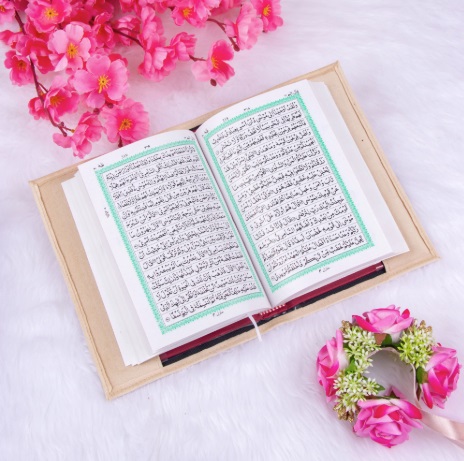
One of the most striking aspects of Islamic history is the unparalleled preservation of the Qur’an. Unlike many ancient texts, the Qur’an today remains textually consistent with the form it had in the Prophet Muhammad’s time . Its words have been safeguarded through a unique combination of oral and written transmission. As scholars note, “The Qur’an was preserved through both mass memorization and written recording.” From the moment of revelation, measures were in place to protect the scripture’s integrity.
Key factors in the Qur’an’s preservation include:
- Oral Memorization (Hifẓ): Prophet Muhammad’s companions memorized the revelations as they were revealed, and the Prophet himself reviewed the entire Qur’an with the angel Jibrīl (Gabriel) yearly . Dozens of companions served as scribes and many had memorized the Qur’an in its entirety during Muhammad’s lifetime . This established an unbroken chain of memory: generations of ḥuffāẓ (memorizers) who could recite the whole Qur’an verbatim, ensuring the words could never be lost or altered.
- Written Compilation: Although verses were written on parchment and other materials during the Prophet’s life, they were first compiled into a single codex shortly after his death . The first Caliph, Abu Bakr, oversaw a collection of all Qur’anic verses, and later, the third Caliph, ʿUthmān ibn ʿAffān, distributed a standardized written text (the Uthmanic codex) to major Muslim regions . This careful process – “unlike any other in human history” – produced identical copies of the Qur’an across the Muslim world, each exactly matching the others . Duplicates of the Uthmanic codex were copied scrupulously, while variant personal copies were set aside to prevent confusion, thereby establishing a single, uniform text.
- Continual Scholarly Scrutiny: Over the centuries, Muslim scholars and reciters have acted as guardians of the Qur’an’s accuracy. The oral and written traditions ran in parallel, cross-verifying each other. Any attempt to deviate in wording would be caught by the collective memory of the community. As a result, Muslims today recite “the exact same text” compiled by the Prophet’s companions . The accumulation of ancient manuscripts further confirms that the Qur’anic text has remained unchanged, containing “precisely what was revealed by Allah, taught by the Prophet Muhammad ﷺ, and written by the companions.”

It is identical to present-day Qur’an copies . This provides material confirmation of the scripture’s preservation. Such artifacts highlight how faithfully the Qur’anic text has been transmitted since the Prophet Muhammad’s time.
The result of these robust preservation methods is a holy scripture that has never undergone revision or textual evolution. Every Quranic verse read today is exactly as it was recited in the 7th century. This continuity has reinforced a strong consistency in Islamic teachings worldwide. A Muslim in Indonesia and one in Nigeria read the same Arabic verses and learn the same guidance, reflecting a unity of message that transcends geography and time. Moreover, modern textual analysis supports this stability: for example, when fragments of an ancient Qur’an manuscript were discovered and dated close to the Prophet’s lifetime, they were “found to be identical with present-day copies of the Qur’an,” further evidence that the text has been preserved in its original words . Such fidelity of transmission is extremely rare for a scriptural text, underscoring the Islamic claim – made in the Qur’an itself – that a divine hand guards this book from corruption.
Qur’an 15:9 – Divine Assurance of Preservation
The Qur’an not only has been preserved de facto, but it also contains an explicit divine promise that it would be preserved. In Qur’an 15:9, God proclaims: “It is certainly We Who have revealed the Reminder (the Qur’an), and it is certainly We Who will preserve it.” This verse (Surah al-Ḥijr, 15:9) serves as a foundational assurance to Muslims that their holy book is under God’s protection. Believers throughout history have viewed this as a prophecy and guarantee of the Qur’an’s integrity.
Notably, classical scholars commented on the remarkable fulfillment of this verse. Fakhr al-Dīn al-Rāzī, a 12th-century Quranic exegete, described the preservation of the Qur’an as one of its “greatest miracles,” observing that this “Divine promise” had already “stood the test of time for six centuries” by his era . In other words, even six hundred years after revelation, the Qur’an remained unchanged – a fact Rāzī saw as a living miracle validating the scripture’s divine origin. Today, over fourteen centuries since the Qur’an’s revelation, we find that “the Divine promise remains fulfilled and even more vividly attested.” The continued existence of a single, unaltered Qur’anic text across the world is taken by Muslims as tangible proof of God’s words in 15:9. Muslim writers often contrast this with the fate of earlier scriptures, noting that whereas previous communities failed to fully preserve their revelations, Allah Himself took on the role of preserving the Qur’an . This belief imbues Muslims with confidence that the core guidance of Islam will never be lost or obscured.
Thus, Quran 15:9 is more than just a comforting verse – it is seen as a historical reality that has played out exactly as promised. Each time a new copy of an ancient manuscript is unearthed or a non-Muslim scholar acknowledges the Qur’an’s textual consistency, it is viewed in the Muslim world as yet another confirmation that “the promise of Allah has been fulfilled.” This divine assurance of preservation has given the Muslim community a strong sense of continuity with the Prophet’s message, and a trust that Islam’s guiding light will remain undimmed for future generations. It suggests that the religion can withstand the tests of time and change – a key indicator of a bright future.
Protection of the Kaaba: The Miracle of Abraha’s Defeat (Surah
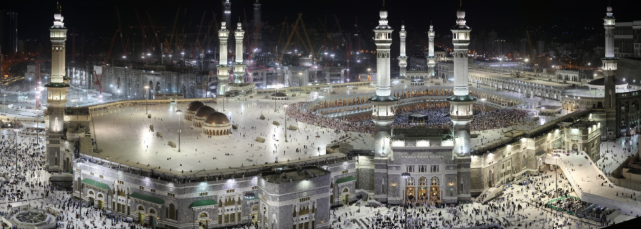
Divine support in Islam’s history is not limited to scripture. Islamic tradition also recounts God’s protection of sacred sites central to the faith – most prominently, the Kaaba in Mecca. The Kaaba, a cube-shaped structure believed to have been built by Prophet Abraham as the first house of monotheistic worship, has stood at the spiritual heart of Islam for millennia. An event in the year 570 CE – known as the Year of the Elephant – is remembered as a dramatic example of Allah’s intervention to safeguard this holy sanctuary. That year, Abraha al-Ashram, a Christian ruler of Yemen, marched with a large army (including war elephants) toward Mecca, intent on destroying the Kaaba and redirecting Arabia’s pilgrimage center to his own kingdom.
The Qur’an itself alludes to this incident in Surah Al-Fīl (Chapter 105). In this short surah, God asks: “Have you not seen how your Lord dealt with the People of the Elephant?” and then describes the fate of Abraha’s forces. Allah “sent against them flocks of birds, which smote them with stones of baked clay, and made them like straw eaten up” . In these vivid verses, the mighty army is utterly devastated by a seemingly small and unexpected force – pelting pebbles delivered by birds – leaving the invaders as lifeless as chewed straw. Muslim commentators unanimously identify “the People of the Elephant” in this chapter with Abraha’s expedition . The historical accounts provide additional details: as Abraha’s troops approached Mecca, the lead elephant (named Mahmud) refused to advance upon the sanctuary, no matter how much the handlers urged it on . Suddenly, flocks of birds (called abābīl in Islamic tradition) descended from the sky, bombarding the army with tiny clay stones. Each stone found its mark, reportedly killing whomever it struck. Abraha himself was hit multiple times and suffered a gruesome fate – by the time he fled back toward Yemen, his body had been torn and “dismembered,” and he died en route from the injuries . Thus, without any human defender, the Kaaba was saved from destruction.
For the Arabs of Mecca (and later, for Muslims worldwide), the failed attack of Abraha became a powerful symbol of divine protection over the heart of Islam. It happened in the very year that Prophet Muhammad was born , which Muslims see as no coincidence: God preserved the Kaaba – the focal point of worship – just before the arrival of Islam’s final Prophet, thereby paving the way for the new religion to flourish. The Chapter of the Elephant (Surah Al-Fīl) is recited by Muslims as a reminder that no matter how dire the threat, God can protect His sacred institutions. As one Quranic commentator (Ibn Kathīr) described, “There never fell a stone on a soldier except it dissolved his flesh… Abraha fled while his flesh was bursting into pieces and died on the way back to Yemen,” emphasizing the miraculous nature of this event . This story has been passed down as part of the Islamic historical memory, strengthening Muslims’ conviction that their religion’s foundations are under divine guardianship.
The Kaaba’s preservation against Abraha’s superior forces illustrates a broader theme: when it comes to Islam’s essential pillars and symbols, divine aid can intervene directly to ensure their survival. Just as the Qur’an’s text was divinely guarded from distortion, the physical center of Islamic worship was guarded from annihilation. These twin forms of preservation – of the Message (Qur’an) and the House of Worship (Kaaba) – reinforce each other. Together they suggest that Islam is meant to endure. The Kaaba stands to this day and continues to be the destination of millions of pilgrims every year, a living testament to the idea that what is sacred to God will be upheld.
Resilience of Islam and a Bright Future for Humanity
The above examples – the unchanging scripture and the protected sanctuary – are not just relics of the past; they are signs that carry implications for Islam’s future. They demonstrate a remarkable resilience built into the very fabric of the religion. If the Qur’an has remained intact through every upheaval of history, and if the core symbols of Islam have been defended against all odds, then the trajectory of Islam appears persistently strong. Indeed, looking at the present and future, one finds many indications that Islam will continue to thrive and benefit humanity.
Firstly, Islam’s global growth and vitality in modern times reflect its enduring appeal and divine support. Far from fading, Islam is currently the world’s second-largest religion with over 1.9 billion adherents, and it is projected to expand further. Demographic studies by the Pew Research Center project that Islam will be the world’s fastest-growing major faith in the coming decades and may become the largest religion by the end of the 21st century . Such trends suggest a faith very much alive and forward-looking. But numbers tell only part of the story. The deeper strength of Islam lies in the guidance it offers – guidance that Muslims believe is unerring precisely because the Qur’an has been so impeccably preserved. As new challenges confront humanity (be it moral confusion, social injustice, or spiritual voids), the Qur’an’s teachings remain a reliable wellspring of wisdom. Future generations can read the same words of God that inspired justice, charity, and knowledge in past Islamic civilizations, drawing lessons to address contemporary problems. In this sense, the preservation of the Qur’an is not a static fact but a dynamic resource for humanity’s future: it ensures that authentic divine guidance is always at hand, untouched by time.
Secondly, Islam’s values and institutions have a proven capacity to unify and uplift diverse peoples, which bodes well for humanity’s prospects. The preservation of the Kaaba and its establishment as the universal direction of prayer (qibla) means that all Muslims, regardless of nationality or ethnicity, orient their worship toward the same sacred center. This physical and spiritual unity is dramatically displayed during the Hajj pilgrimage. Every year, millions of Muslims from every corner of the world gather in Mecca, transcending differences of race, language, and social status in a shared act of devotion. The communal experience of Hajj “unites Muslims of diverse races, ethnicities, languages and economic classes… in the same time and place,” fostering a profound feeling of unity, connection, humility and equality among pilgrims . In 2019, for example, nearly 2.5 million Muslims performed Hajj together . This extraordinary level of human convergence around spiritual ideals illustrates how Islamic practice can bind humanity together. In a world often divided by prejudice and conflict, the Qur’anic vision of a single human family under the One God offers a path toward greater harmony. The fact that this vision continues to be actualized (as in Hajj and the daily brotherhood of Muslims) indicates that Islam will keep serving as a force for unity and moral progress.
Finally, the recognition of divine preservation engenders hope. Muslims believe that if Allah has protected Islam’s past, He will also guide its future. This hope is not only for the community’s survival, but for its positive contribution to the world. Historically, Islam’s rise (buoyed by the integrity of its teachings) led to periods of remarkable advancement – the preservation of Greek knowledge, the development of algebra and medicine, concepts of social welfare and rights – which benefited all humanity. With the Qur’an’s message remaining alive and accessible, similar contributions can continue and new ones can emerge. The religion’s core teachings of justice, compassion, knowledge, and the dignity of life are timeless principles that can help address modern issues like inequality, environmental stewardship, and peace-building. A preserved scripture means Muslims today can still hear the Qur’an’s call “to enjoin what is right and forbid what is wrong” just as the first Muslims did, and strive to build a more ethical society in response. In Islamic theology, the final success of truth over falsehood is assured – “Truth has come, and falsehood has vanished” (Qur’an 17:81) – giving believers an inherent optimism about the course of history.
In light of all this, the bright future of Islam appears intertwined with a bright future for humanity. Islam does not see itself as a parochial force but as a mercy for all peoples; the Prophet Muhammad is described in the Qur’an as “a mercy to the worlds” (21:107). The enduring preservation of the Qur’an ensures that this merciful guidance can continuously radiate outward. As more people encounter Islam’s teachings (whether by birth or conversion or intercultural exchange), the potential grows for shared values that uplift communities. Even non-Muslims can benefit from the principles of Islamic ethics and the stability provided by a large population grounded in clear moral guidance. Thus, the signs of divine preservation we have discussed are not just reassuring to Muslims – they also imply that humanity at large will not lose access to the spiritual and moral wealth contained in Islam. In an age of uncertainty, the consistency of the Qur’an and the resilience of Islamic faith can be seen as anchoring points for civilization.
Conclusion
Through the preservation of its scripture and the protection of its sacred house, Islam exhibits a unique continuity that undergirds its future prospects. The Qur’an’s unaltered text, kept intact by both human effort and divine promise , means Islam’s foundational guidance remains pure and effective for generations to come. The Kaaba’s survival against forces like Abraha’s army testifies to a destiny for Islam that even the mightiest adversaries cannot derail . These historical realities have nurtured a faith that is confident in its mission and optimistic about its role in the world. As we move forward, the same forces that preserved Islam’s past continue to operate – inspiring millions, drawing the world’s peoples together in faith, and providing answers to humanity’s deepest needs. The evidence from Islamic scripture and history thus converges on a powerful argument: Islam’s path is luminously secure, and its contributions will endure. With divine support guarding its essence, Islam stands as a resilient religion whose future shines bright, not only for its followers but for all humanity who can share in the justice and guidance it brings.
Sources:
- Ammar Khatib & Nazir Khan, “The ʿUthmānic Codex: Understanding how the Qur’an was Preserved,” Yaqeen Institute .
- The Review of Religions – “Preservation of the Holy Qur’an,” evidencing Qur’an’s immaculate preservation .
- Yaqeen Institute – on fulfillment of divine promise and manuscript evidence .
- Quran.com – Translation of Qur’an 15:9, promise of preservation .
- Fakhr al-Dīn al-Rāzī’s commentary on Qur’an 15:9 (cited in Yaqeen) .
- Arab News – P.K. Abdul Ghafour, “Saudis retrace route of Abraha’s army…” (story of Abraha’s failed attack) .
- Quran 105 (al-Fīl) translation and commentary .
- Pew Research Center via VOA News – on Islam as fastest-growing religion, future projections .
- PBS NewsHour – “The Hajj pilgrimage and why it’s significant,” on Hajj’s unifying impact and statistics .

 The Glorious Quran and Science
Leave a reply to Preservation of the Qur’an – Evidences of Islam Cancel reply