
Written and collected by Zia H Shah MD, Chief Editor of the Muslim Times
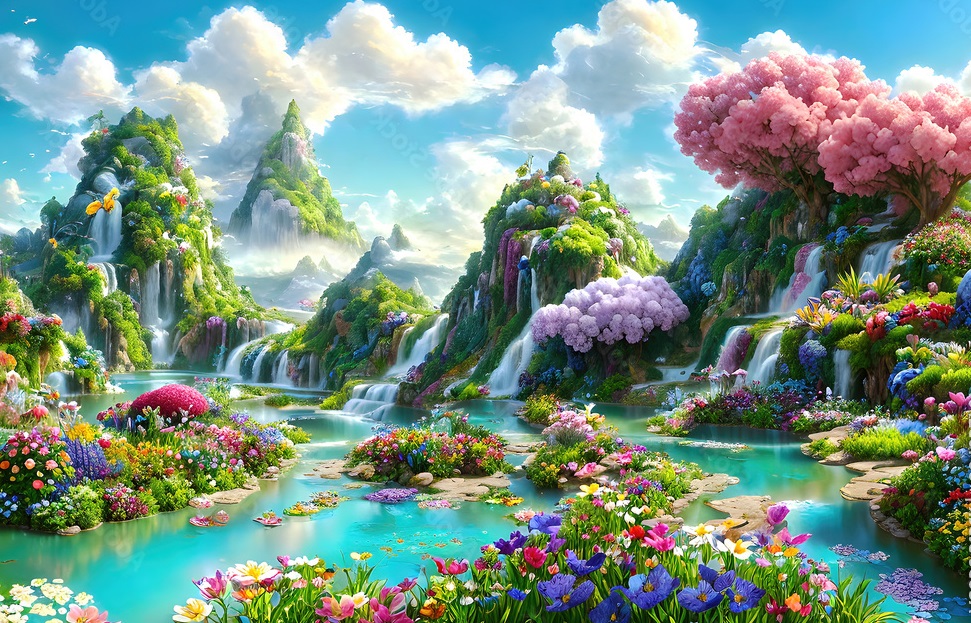
Introduction: Signs of Divine Beauty in Creation
The Quran paints a portrait of creation suffused with purpose, order, and beauty. It proclaims that God “perfected everything which He created” (Qur’an 32:7) thequran.love – meaning nothing in the universe is created in vain or left flawed. Every creature and object has been formed in the most fitting manner, with “nothing ugly or ill-shaped” in its design. Such perfection is not merely functional but aesthetic: God’s creative act “marries function with form in an excellent balance.” The Quran extols the Creator with names like Al-Muṣawwir (The Fashioner of forms) and Al-Jamīl (The Most Beautiful One), teaching that the beauty we observe in nature is a direct reflection of the Creator’s own beauty and wisdom. In Islam’s view, every aspect of the cosmos – from the swirl of galaxies to the shape of a leaf – is an intentional sign (ayah) pointing beyond itself. As such, the universe is like a sacred book written in the language of beauty, order, and purpose. We are invited to read this book with both awe and intellect, seeing in it the harmonious artistry of the Divine. What follows is a meditation on four Quranic verses (32:7, 64:3, 67:3–4, 95:4) that illuminate how divine beauty (husn) is expressed throughout creation – across the heavens, the earth’s geological tapestry, the world of living forms, and ultimately within the human being. Blending spiritual insight with contemporary cosmology, geology, biology, and anthropology, we reflect on a cosmos of balance and purpose that invites our deepest contemplation.
This article is not written to silence a critic but to inspire and guide one who is inclined to believe.
The Celestial Harmony: Heavens Without Flaw
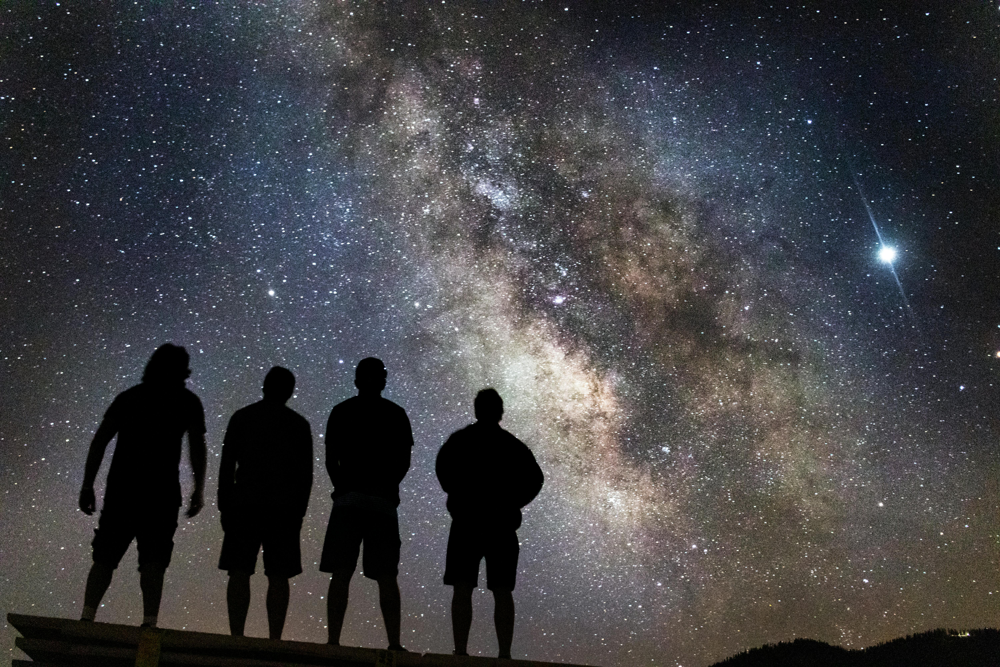
The Quran often draws our gaze upward to the majesty of the heavens as the ultimate sign of divine order. “[God] created seven heavens in layers. You do not see in the creation of the Most Merciful any inconsistency. So look again: do you see any flaw?” (Qur’an 67:3) This bold challenge is followed by an instruction to look repeatedly: “Then return your vision twice again – [each time] your vision will return to you humbled and exhausted” (67:4). In this Qur’anic scene, the human being stands under the night sky, searching for any crack, gap, or defect in the fabric of the universe – and finding none. Our eyes grow tired before we ever find a fault. The seamless perfection of the sky, as classical commentators note, is a sign of God’s “flawless craftsmanship,” with “no discrepancy or disproportion” to be found. We are humbled by a vastness that is orderly and whole, a celestial dome adorned with countless stars yet “utterly free of rifts (fuṭūr).” The heavens thus awaken a sense of awe and surrender: we intuit that such immensity coupled with harmony is not a product of mere chance. As the Quran says of those who reflect deeply, “Our Lord, You have not created this in vain!’’
Modern cosmology remarkably echoes this Quranic insight. Everywhere we look in the universe, from the largest galactic clusters down to subatomic particles, we find no laws broken, no chaos unbound – physical law remains consistent and unified. There is “a consistent unity of physical law everywhere we look, suggesting a single origin and governance.” In other words, science today affirms what the Quran stated millennia ago: the cosmos is finely ordered, with no true “flaws” or exceptions in its fundamental design. Astrophysicists marvel at the precise arrangement of cosmic parameters that make our universe stable and life-bearing. The force of gravity, the charge of the electron, the speed of light – dozens of such constants seem “finely tuned, against all odds, to make life possible.” Even the slightest deviation in these values would render the universe inhospitable to stars, planets, and biology. This phenomenon is widely known as the anthropic fine-tuning of the cosmos. As one renowned astrophysicist, Paul Davies, admitted, “the impression of design is overwhelming” when one examines the evidence. Another scientist, Sir Fred Hoyle, famously remarked that it is as if “a super-intellect has monkeyed with physics” to craft the universe just so. Such testimony from modern thinkers conveys how the heavens themselves stir a sense of intentionality – a cosmos seemingly meant for something beyond mere randomness.
Looking deeper into the sky, we find more wondrous signs of cosmic architecture. Galaxies are not scattered haphazardly; they arrange themselves into a vast cosmic web, filaments and clusters stretched across unimaginable distances. Our own Milky Way galaxy is a graceful spiral with near-symmetric arms, recently discovered to be “a near-perfect mirror image of itself” across its center. This large-scale symmetry and organization resonates with the Quran’s description of the heavens as a woven tapestry: “By the sky full of pathways” (51:7) and an expanse “adorned” with celestial lights (67:5). It is as if geometry and artistry coalesce in the very structure of the cosmos. The Quran even highlights the strict balance (mīzān) governing the heavens: “He raised the sky and set the balance” (55:7) and “the sun and moon [move] by precise calculation” (55:5) – verses that evoke the precise orbital rhythms that modern astronomy has confirmed. Planets trace their orbits with clockwork regularity and stars follow predictable cycles, all governed by elegant physical laws. The more we study the cosmos, the more we perceive a grand harmony “written” into its fabric – what philosophers have called the music of the spheres. Little wonder that mathematicians and physicists often speak of “beautiful equations” or symmetries underlying nature. Albert Einstein once mused that “the most incomprehensible thing about the universe is that it is comprehensible at all.” In the Islamic perspective, this comprehensibility is no mystery – it reflects the unity of a single Creator who crafted the world intelligibly and purposefully. The Quran puts it succinctly: “The heavens and the earth stand by His command” (30:25), upheld by laws ordained by the All-Wise (Al-Ḥakīm).
Thus, the shining heavens embody balance and purpose at every level. In their vast beauty and seamless order we discern the signature of the Divine. The longer we gaze in wonder – whether with the naked eye or through the most powerful telescope – the more we feel the human soul humbled by a harmonious cosmos. This humility before the night sky becomes a spiritual experience. We realize that our tiny planet is part of a much larger, meaningful whole. The Qur’an invites us to see the stars, sun, and moon not as mere objects, but as signposts. By swearing oaths on them – “By the sun and its brightness… By the night when it covers” (91:1–4), “By the star when it falls” (53:1) – God draws our attention to their significance. What truth do these brilliant signs point toward? They point us to the existence of a singular Reality behind all reality, an Intelligent Presence that “has not created this in vain.” In the end, the celestial beauty that surrounds us beckons us to remember the One who “built it and adorned it” (50:6–7), and to find our place in this orderly, living universe with reverence and gratitude.
Earth’s Foundations: The Beauty of Geological Order
If the heavens represent the grand canvas of God’s design, the earth under our feet is the intimate tapestry we experience everyday. The Quran tells us that “He created the heavens and the earth for a purpose, and shaped you, perfecting your form” (Qur’an 64:3) quran.com. The same divine intentionality that rules the stars also laid the foundations of our planet. In geological structures and earthly processes, we find further expressions of balance and beauty that sustain life and inspire the soul. Consider the massive mountains, for example – the Qur’an describes them as “pegs” stabilizing the earth’s crust (78:7) and as “landmarks” for travelers (16:15). Today we know that mountains are born from the slow dance of tectonic plates, which collide and buckle to push up the earth’s crust. This process of plate tectonics does much more than create majestic peaks; it is part of Earth’s life-support system. By cycling minerals and regulating the planet’s internal heat, plate tectonics helps keep Earth habitable nsf.gov. The shifting plates continually reshape the land and sea, renewing the surface and maintaining a balance between geological creation and destruction. From a scientific view, if our planet’s crust were completely rigid, it would have retained heat and pressure to a dangerous degree. But the earth’s crust “breathes” through plate tectonics, venting heat and recycling nutrients – a mechanism that has kept Earth’s environment stable over eons. Even the protective magnetic field that shields us from solar radiation is linked to this dynamism: movement in Earth’s liquid iron core (which plate tectonics helps sustain by cooling the planet) generates the magnetosphere. In all this, we see a picture of remarkable providence. Our planet’s geology is finely tuned to foster life, operating like the calibrated cogs of a clock. Were it not for the exact thickness of Earth’s crust, the presence of water and a molten core, and the delicate balancing act of outgassing and recycling, life as we know it might not exist. The more we learn, the more we appreciate Earth as a uniquely balanced world – a home carefully prepared for a myriad of living beings.
Geology also offers a different kind of beauty: the beauty of form and pattern in the “stones” themselves. Look at minerals and crystals: when elements arrange into a crystal lattice, they often form stunning geometries – quartz crystals, snowflakes, and diamonds manifest nature’s preference for symmetry and proportion. A humble snowflake, formed of water molecules responding to atmospheric conditions, invariably grows into a six-fold symmetric jewel of delicate filigree. A cut geode reveals crystals whose facets meet at precise angles, as if sculpted by an artist’s hand. These patterns are born from the laws of chemistry and physics, yet they evoke in us a sense of wonder. Each crystal is a silent testament that order can arise from chaos, that beauty can emerge from basic elements following set rules. Even on a grander scale, we find patterns in the lay of the land. Mountain ranges outline jagged horizons that exhibit self-similar shapes at different scales – a property mathematicians describe as fractal. The contours of a coastline, when viewed from high above, have a roughness and branching quality that looks surprisingly similar if one zooms in on a smaller segment of shoreline. In fact, fractal patterns – shapes that echo themselves at different scales – abound in nature, from the profile of mountains and river networks to the outline of clouds. This fractal geometry is visually captivating and also functional: a coastline’s fractal complexity increases habitats for life; a mountain’s crags and valleys catch more rain and nurture diverse micro-climates. The prevalence of such mathematical elegance in the natural world suggests an underlying order and intentionality, delighting both scientists and theologians. It is as if the Earth’s very shape has been etched by a mindful calculus, balancing utilitarian function with aesthetic form.
Even more astonishing is how connected the Earth is with the heavens. Modern astronomy has revealed that the atoms in our rocks, oceans, and bodies were forged in the hearts of ancient stars. The Quran hints at a common origin of all creation, and science affirms this unity: the iron in our blood and the calcium in our bones were formed billions of years ago in distant stars, scattered across the galaxy when those stars exploded natureloversdigest.com. Every element heavier than helium – the oxygen we breathe, the silicon in sand, the gold in our jewelry – is literally stardust. “The building blocks of our bodies originated somewhere in the heavens, and we share this cosmic history with everything on Earth: animals, plants, rocks, and soil,” as one science writer beautifully noted. Think of it: the chalky limestone cliffs by the sea are composed of calcium from long-dead marine creatures, but that calcium’s existence traces back to stellar furnaces. In this sense, geology is a story authored by the cosmos. Our planet is not an isolated artwork; it is part of the grand cosmic masterpiece, shaped by forces that span light-years and epochs. This realization adds a profound layer of beauty to geology: the Earth is a child of the stars, and in every stone and every grain of dust lies a memory of the cosmos. When the Quran says “He brought you forth from the earth” (11:61) and “From it We created you” (20:55), we can reflect on how literally true this is – our physical being is composed of Earth’s elements, which in turn were given by the heavens. Thus, in the very substance of our world, there is unity, balance, and continuity with the wider universe. Geological beauty, then, is both in the elegant processes that sustain a livable world and in the very material that connects us to the stars. From the layered sedimentary rocks that record Earth’s history like pages in a book, to the glittering crystals hidden deep in dark caverns, the Earth silently declares a truth: the design of the Most Merciful pervades every depth of creation.
The Living Tapestry: Patterns of Life and Growth
If the mineral world shows symmetry and order in static form, the living world explodes in dynamic beauty – a tapestry of “endless forms most beautiful,” to borrow Charles Darwin’s famous words. The Quran reminds us again and again to look at the signs of life: the plants that sprout from barren soil, the animals of countless species, the intricate balance of ecosystems. All these, too, reflect the principle that God “made beautiful everything that He created.” In Surah As-Sajdah, after stating that God perfected everything, the verse specifically notes “He began the creation of man from clay” (32:7) – linking human life to the earth – and other verses draw attention to vegetation springing from the ground as a renewing sign (e.g. 22:5, 36:33). Life, in its myriad expressions, manifests husn (beauty/excellence) through growth, form, color, and even behavior.

Consider a simple leaf of a fern unfurling in the forest. Its shape is not random; it follows a remarkably ordered pattern where each small part resembles the whole. The fern’s fronds are composed of sub-leaves that mirror the geometry of the entire leaf (a living fractal), and those sub-leaves in turn have smaller leaflets of similar shape This self-repeating pattern maximizes the fern’s ability to capture sunlight while also pleasing the eye with its elegance. Similar patterns exist in many plants – think of the spiral arrangement of sunflower seeds or the Romanesco broccoli’s logarithmic spirals, each floret a smaller version of the entire head. In the animal kingdom, we observe stripes and spots following mathematical models of pattern formation, from the lattice-like skin of giraffes to the radiant symmetry of butterfly wings. The natural world is a vast art gallery of such designs. Scientists have noted that “many of nature’s objects are fractal” or otherwise mathematically patterned, and these patterns often serve practical purposes while simultaneously being beautiful. A tree’s branching structure (fractal-like in its repeatedly splitting limbs) optimizes light exposure and nutrient delivery; a tree in full bloom is also one of the most beautiful sights on earth. Why should utility and beauty coincide so often in the biological world? One could have imagined a functional ecosystem that is drab and monotonous, but the opposite is true: usefulness and splendor walk hand in hand throughout life’s design. The believer sees here no mere coincidence, but the intent of an Artist who loves beauty. It is as if nature is engineered for both survival and wonder – to sustain life, yes, but also to inspire minds and hearts. Every flower that attracts a pollinating bee with its vivid petals also delights a human admirer; every birdsong that marks a territory in the forest also brings joy to the morning walker. This duality of purpose – practical and aesthetic – speaks to a deeper wisdom infusing life’s processes.
Moreover, the sheer diversity of life showcases a balance between unity and variety. The Quran points to this diversity as a deliberate sign: “And of His signs is the creation of the heavens and the earth and the diversity of your languages and your colors. Indeed in that are signs for those of knowledge.” (30:22). From an evolutionary perspective, Earth’s millions of species emerged and adapted to every niche. Yet from a faith perspective, this is not unguided chaos but a proliferation of forms willed by the Fashioner (Al-Muṣawwir) who “shaped each thing and designed it with its nature.” The flora and fauna of each ecosystem form a web of interdependence that maintains equilibrium: plants produce oxygen and food, herbivores feed on plants, carnivores keep herbivore populations in check, and decomposers recycle nutrients back to the soil. This cycle of life is perfectly balanced to sustain the whole – an ecological mīzān (balance) mirroring the cosmic balance. If one element is removed, the harmony can collapse, yet when each fulfills its role, the system thrives in resilience. It is a living symmetry of roles rather than shape: predator and prey, growth and decay, each opposite complements the other in sustaining life’s continuity. There is undoubted beauty in this equilibrium; many naturalists have described ecosystems as “beautifully balanced” communities. Even what we perceive as fierce or brutal in nature (a lion hunting a gazelle, for instance) has its place in the larger tapestry of khair (goodness) – preventing overgrazing, strengthening the gene pool, etc. Thus nothing is “ugly” in an absolute sense; as the Quranic commentators said, every creature has its own special beauty and purpose, even if at first glance we fail to see it. A tiny insect might not match our human standards of beauty, but when we understand how exquisitely it is adapted to its niche – how its form perfectly follows its function – we appreciate a different kind of beauty: the beauty of fit and purpose. A beetle’s hard shell, a bat’s echolocation, a chameleon’s color change – all these functional marvels evoke admiration. There is aesthetic pleasure in recognizing ingenious design, which is a subtle beauty perceivable to the mind if not immediately to the eyes.
Life’s beauty also often strikes a chord in the human heart through color and music. Why is the world so colored and melodious? It was not strictly necessary for survival that flowers be painted in rich hues or that birds learn melodious songs – yet they are. The Quran draws attention to how the “rainbow” of creation benefits and pleases us: “And what He has multiplied for you on the earth of varying colors – indeed in that is a sign for people who remember” (16:13). The green of vegetation is restful to our eyes; the colors of fruit signal ripeness and delight our senses; the very existence of fruits of different tastes and fragrances is repeatedly mentioned in the Quran as a favor and sign. Modern biology explains how such traits evolved (flowers evolved bright colors to attract pollinators, bird songs evolved for mating calls, etc.), but this does not diminish the enchantment one feels. In fact, understanding the science can heighten the awe: for instance, knowing that the deep red in a rose petal comes from complex pigments that also protect the flower from UV light shows a double wisdom at work. Everywhere we look in the biological realm, we encounter this fusion of the beautiful and the beneficial. It is as if the Designer decreed, “Let this be useful, and let it also be an adornment.” The Quran uses exactly such language for domesticated cattle: “In them there is beauty for you – when you bring them home in the evening and when you take them out to pasture in the morning” (16:6). In a pastoral society, cows and sheep were mainly sources of milk, meat, and labor – yet God asks us to notice their beauty as they graze in golden light or return at dusk. The message is that beauty is not an accidental by-product; it is an intended part of creation, woven into the very practical fabric of life.
From the graceful bending of a tree in the wind to the synchronous flashing of fireflies at night, from the microscopic elegance of a DNA double helix to the macro spectacle of a migrating herd, life constantly invites us to marvel. And marvel we do – for human beings are uniquely attuned to appreciate life’s beauty. Our eyes are drawn to symmetry and pattern; our ears recognize harmony and rhythm. Psychologists have found that humans across cultures show preference for certain proportions and symmetries in what we deem “beautiful” psychologytoday.com – an indication that our brains are wired to recognize the signature of order. This too is no coincidence: it is as if the Creator instilled in us a natural affinity for the very types of beauty He placed in nature, so that we would be drawn to contemplate them. Our sense of aesthetics becomes a bridge between our minds and the outer world, leading us to ponder and ultimately to appreciate the Creator behind the creation. The Qur’an’s term for natural wonders is ayat, meaning signs, and indeed each living form is a sign that can speak to our soul if we observe with an open heart. Together, the community of life on Earth forms an ever-changing, living tapestry that reflects divine names: Al-Khaliq (The Creator) in the sheer variety of species, Al-Latif (The Subtle) in the minute precision of cellular machinery, Al-Jamil (The Beautiful) in the appearance and interactions of creatures, and Al-Hakim (The Wise) in the clever solutions living things exhibit to life’s challenges. It is a theater of divine artistry in motion.
The Human Being: In the Best of Forms
After journeying through the cosmos, the earth, and the biosphere, we arrive at the human being – insān – who, according to the Quran, occupies a special place in this grand design. In many ways, humanity is a microcosm of the cosmos, a synthesis of clay and spirit, matter and meaning. The Quran states unequivocally: “We have certainly created man in the best of forms (ahsan taqwīm)” (Qur’an 95:4) thequran.love. This simple phrase carries layers of significance. Physically, the human body is proportioned upright, enabling us to gaze at the stars and walk with dignity. The Qur’an reminds us that God “fashioned you and perfected your forms” (64:3) quran.com, giving us an erect stature, opposable thumbs, articulate speech, and an intelligent brain – faculties that distinguish us among creatures. Our very anatomy bespeaks a certain nobility: we are not the strongest or fastest animal, but our form is remarkably suited to versatile movement, tool use, and expressiveness (think of the subtlety of human facial expressions, each enabled by a complex arrangement of muscles). The human form combines strength and delicacy, enabling both hard labor and gentle caresses, both survival and art. The Prophet Muhammad ﷺ is reported to have said, “God created Adam in His image,” which scholars interpret as referring to attributes like hearing, seeing, willing – aspects of personhood that reflect a higher template. Indeed, the verse 95:4’s phrase “the best of forms” has been understood by scholars to include our intellectual and spiritual design, not just our outward shape. We have been endowed with minds capable of abstract thought, imagination, and reason; with hearts capable of love, empathy, and awe. These faculties allow us to not only survive, but to seek meaning and beauty, to recognize truth and aspire to virtue. In the Islamic understanding, this is no evolutionary fluke but a deliberate endowment – an amānah (trust) given by the Creator.
One striking aspect of humanity is our inner appreciation of beauty and order, which we have touched on above. Humans compose symphonies, paint landscapes, write poetry, and contemplate the galaxies. We are driven by more than instinct; we have an innate urge to know and wonder. The modern scientific notion of the “anthropic principle” points out that the universe’s laws seem astonishingly set up to produce conscious observers (us). From an Islamic perspective, this is fully expected: God created the world to be known and loved, and He created human beings with the capacity to know and love Him. In other words, the cosmos is a grand revelation and we are the audience it was meant for. Our ability to perceive beauty in the cosmos is itself part of the cosmic design. The Qur’an says “Allah brought you out of your mothers’ wombs not knowing a thing, and gave you hearing, sight, and hearts, that you might be thankful” (16:78). We were given eyes to marvel at sunsets, ears to be enthralled by a child’s laughter or the patter of rain, and a mind to reflect on “the creation of the heavens and the earth” (3:191). This cognitive and spiritual endowment is what completes the picture of a purposeful universe. Without a consciousness to appreciate it, would the universe’s beauty not go unwitnessed? As some scientists and philosophers have mused, “The cosmos is within us, we are a way for the cosmos to know itself.” Our presence as curious, self-aware beings closes the loop of creation’s purpose: the Creator fashioned an ordered, beautiful world and endowed a creature with the capacity to perceive that order and beauty, to consciously affirm the truth and goodness underlying it. In that sense, human beings are the mirror through which the cosmos recognizes its Creator. Our finest human qualities – our intellect, our moral sense, our artistic creativity – all reflect aspects of the divine attributes on a limited scale. Small wonder then that the Quran calls humanity “ashraf al-makhluqat” (though not a Quranic phrase, it’s an Islamic term meaning “the noblest of creation”), charged with the stewardship of the earth.
The beauty of the human being is therefore multifaceted. Outwardly, as noted, our form has symmetry and proportion; the Quran mentions that God “made your shapes beautiful” and gave us a comely appearance among creatures. Inwardly, our beauty lies in the ruh (spirit) breathed into us. That spirit manifests in qualities like compassion, creativity, understanding, and the urge to seek transcendence. Anthropologically, humans across every culture produce art, music, and mythology – an indication that the search for beauty and meaning is a universal part of being human, not a luxury. We adorn ourselves and our surroundings, we celebrate through color and song. This could be seen as an extension of nature’s own love of beauty: just as birds decorate nests or peacocks fan their radiant tails, humans beautify their world in endless ways. Yet with humans it goes a step further: we consciously appreciate beauty for its own sake and even sacrifice practical needs for artistic or moral ideals. A scientist spends decades probing an abstract truth, an artist toils to capture a fleeting emotion on canvas, a martyr gives up life for a principle – these actions make little sense in a purely survivalist view of life. They point to our orientation toward something higher: truth, beauty, justice, love. The Quran hints at this higher purpose by reminding us that humanity has been honored among creation (17:70) and entrusted with moral agency (33:72). To put it another way, if the cosmos is a symphony, humans are unique in that we can both hear the music and appreciate the composer. When we respond with wonder to a night sky or feel reverence in a forest, we are fulfilling the role we were created for – to recognize the signs and respond in awareness. In such moments, the beauty “out there” evokes the beauty within our souls, namely awe, humility, and gratitude.
It’s worth noting that the Quran also alludes to the tragedy of humans who fail to live up to this lofty design. Right after declaring man created “in the best of forms,” it says “then We reduced him to the lowest of the low, except for those who believe and do righteous deeds” (95:5-6). The gift of our exalted form and faculties comes with the responsibility to use them rightly. If we turn away from truth and beauty – if we sow corruption and ugliness – we betray our fitrah (innate nature) and fall below the level of beasts. But for those who keep faith and cultivate virtue, the verse promises an unfailing reward, implying they will realize the full potential of that “best form” in which they were made. In our context, it suggests that to appreciate and uphold the beauty, balance, and purpose in creation is part of being a righteous, believing human. It aligns us with the cosmic order rather than opposing it. A believer is thus almost ecosystemic in their role: a caretaker who preserves the balance (mīzān) in themselves and their environment, reflecting the harmony of creation in their own life.
To sum up, the human being encapsulates the theme of husn (beauty/excellence) in creation in a unique way. We are products of the cosmos – composed of its elements, subject to its laws – yet we are also observers and stewards, able to appreciate the beauty around us and mirror it through our actions. In our very being, physical clay is united with a breath of divine spirit. We are, as one philosopher-poet said, “the nexus of the two seas” – the material and the spiritual. Our excellence of form is not a cause for arrogance, but an invitation to responsibility and wonder. When we stand in contemplation, feeling the wind on our skin and the starry firmament above, we might recall that the Same One who fashioned the galaxies and the mountains also fashioned our eyes and hearts. Thus, knowing ourselves and knowing the cosmos go hand in hand – both are ayat of God. And knowing God, the Ultimate Source of all beauty and order, is the highest purpose of all.
Conclusion: Awe and Contemplation in a Purposeful Cosmos
In the verses and reflections above, a consistent message shines forth: beauty, harmony, and purpose pervade all levels of creation. The Qur’anic vision of the universe is not a cold, random expanse but a cosmos in the truest sense – a word that tellingly comes from the Greek kosmos, meaning order and adornment. From the flawless architecture of the heavens to the renewing cycles of the earth, from the elegant patterns in living things to the inner excellence of the human soul, everything is endowed with husn: an appropriate, fitting goodness and beauty that bespeaks intentional design. The Quranic verses 32:7, 64:3, 67:3–4, and 95:4 each highlight this truth in their own way. They suggest a universe where nothing is out of place and nothing is purposeless: a balanced whole (tawāzun) upheld by the All-Merciful, who wastes not an atom and forgets not a creature. Modern scientific discoveries – the unity of physical laws, the fine-tuning of cosmic constants, the intricate web of ecological relationships, the biochemical secrets of life – all bolster this ancient narrative, providing a contemporary language to marvel at the same wonders. Far from diminishing the sense of the sacred, each new insight into the workings of nature can deepen our admiration for the Creator’s work. As the physicist Feynman noted, “symmetry is a great guiding principle in nature”, and as the mathematician du Sautoy observed, “the balance in the structure of our universe” is almost delicate in its precision psychologytoday.com. These are scientific ways of saying what the Quran expressed so concisely: “You will not see in the creation of the All-Merciful any flaw”. Indeed, the more closely we look, the more the flaws disappear – order emerges at every scale, sometimes in surprising forms, but always there for those “with eyes to see.”
Yet, this journey of contemplation is not meant to end in mere admiration of nature’s beauty. The Quranic invitation is ultimately to know the Author of that beauty. Every sunrise and star, every leaf and every human face, is a signpost directing us to the One who is Beauty itself. In Islamic theology, all beauty is God’s beauty by reflection: “All things of beauty reflect Al-Jamīl (The Most Beautiful One)”thequran.love. The harmony we perceive in the world is a glimpse of divine harmony; the love we feel when beholding the goodness in creation is a spark of divine love. The cosmos, in all its grandeur, is not an end in itself but a mirror – a mirror in which the divine names and attributes are manifested in countless ways. Our role, as conscious beings, is to polish the mirror of our hearts to better see that reflection. Thus, science and spirituality join hands in a singular act: paying attention. The Quran praises “those who remember God standing, sitting, and lying on their sides, and reflect on the creation of the heavens and the earth” (3:191). Such people exclaim, “Our Lord, You have not created this in vain; Glory be to You!” thequran.love. This is the intended culmination of observing beauty: it should lead to glorification (tasbeeh) of the Most Beautiful, and to a profound sense of gratitude and humility.
In a world often beset by darkness and strife, the Quranic perspective of an underlying beauty and order offers solace and hope. It teaches us that reality at its core is good and purposeful – that ugliness and evil are surface phenomena, like temporary storms on a fundamentally calm sea. The task for us is to align with that underlying goodness, to become agents of beauty and balance ourselves. When we plant a tree, tend a garden, or save an endangered animal, we are upholding the aesthetic and ethical order God loves. When we seek knowledge of the cosmos or the genome, we are acting on the God-given drive to understand His ayat. When we create art or help someone in compassion, we participate in the creativity and mercy that God wove into the fabric of existence. In doing so, we find personal fulfillment, because we operate in concord with our fitrah (innate nature) and the nature of the universe.
Ultimately, the recognition of divine beauty in all of creation transforms how we walk through the world. The earth becomes a place of wonderment – even a mundane pebble or a blade of grass becomes imbued with significance as an artifact of the Divine Artist. The night sky becomes a scripture to read, the forest a temple of praise, every living being a fellow traveler in declaring God’s glory. One begins to see, as the Qur’an says, “faces of God” wherever one turns (2:115) – meaning signs of His presence and attributes. This holistic appreciation is deeply poetic: the soul feels in harmony with the cosmos, experiencing what one might call cosmic spirituality. Many sages and poets in Islamic tradition have expressed this feeling. Jalaluddin Rumi, for instance, mused that “Each and every part of the world is a letter of the Beloved’s love-letter.” Such an outlook encourages us to treat the world with reverence and care, as something beloved of God.
In closing, the verses we reflected on are an invitation to contemplative awe. They beckon us to step outside on a clear night and actually look up, or to sit by a flowing river and listen, or to examine the intricate veins of a leaf – and to do so with a quiet mind and open heart. If we accept this invitation, we may find ourselves overcome by the same realization that moved past prophets, scientists, and poets: that we are part of something profoundly beautiful. In that moment of realization, one cannot help but to whisper a prayer of thanks. For truly, the universe is a gift – a gift crafted with love and bestowed with wisdom, a gift that resonates with meaning in every filament of its being. And the Quranic insight is that the Giver of this gift is as near to us as our own heartbeat, waiting to be recognized through the very beauty that He spread boundlessly before our eyes.
“He is the One Who has made perfectly everything He has created” thequran.love.
“He created the heavens and the earth with truth… and formed you, giving you excellent forms” quran.com.
“So gaze again: do you see any flaw?” thequran.love.
“Indeed, We created humankind in the best of forms” thequran.love.
In these words, we hear a cosmic melody – one that, if we listen closely, inspires us to join in the symphony of praise with our own voice and being. Alhamdulillah (praise be to God) for the beauty in all creation.
Sources:
- The Qur’an, translated (32:7, 64:3, 67:3–4, 95:4, etc.) thequran.love quran.com.
- Tafsir (exegesis) of Quranic verses emphasizing creation’s perfection.
- Shah, Z. (2025). Beauty in Nature as a Path to God: An Islamic Perspective – Explores Quranic insights on nature’s beauty and scientific reflections.
- Scientific commentary on cosmic fine-tuning and order: Paul Davies and Fred Hoyle quotes on design thequran.love; unity of physical laws in the universe thequran.love; “anthropic principle” relating cosmic parameters and observers thequran.love.
- Astronomy sources on galactic structure and symmetry (Milky Way’s near-mirror symmetry)thequran.love; fractal patterns in nature (ferns, coastlines) thequran.love.
- NSF research on plate tectonics and Earth’s habitability nsf.gov.
- “We are stardust” – Astrophysical fact of elements from stars in our bodies natureloversdigest.com.
- Psychology Today – philosophical perspectives on symmetry and beauty as fundamental to understanding the universe psychologytoday.com.

 The Glorious Quran and Science
Leave a comment