
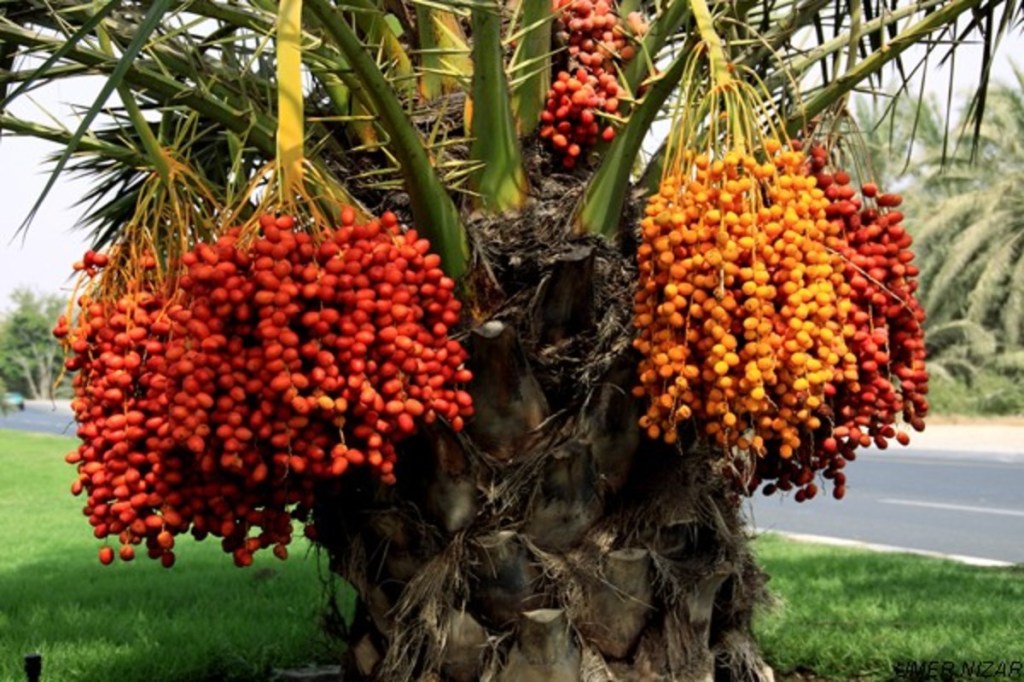
Written and collected by Zia H Shah MD, Chief Editor of the Muslim Times
Thematic Commentary on Qur’an 6:95–99
Introduction:
Qur’an 6:95–99 presents a series of vivid natural images as signs (ʾāyāt) of God’s creative power and wisdom. Rather than a verse-by-verse exegesis, these verses are best understood thematically, as they collectively draw the reader’s attention to the phenomena of life emerging from death, the ordered cycle of day and night, celestial guidance, the unity of human origin, and the provisioning of water and diverse plant life. Classical commentators such as al-Ṭabarī, Fakhr al-Dīn al-Rāzī, and Ibn Kathīr emphasize how these signs refute idolatry and affirm divine oneness, while modern interpreters often highlight their scientific resonances and the Quranic invitation to reflect using reason. Taken together, the passage is a compelling tapestry of theology, nature, and epistemology – urging humanity to observe the world as a “book of nature” written by God, wherein each element carries theological implications of divine authorship, providence, and guidance. We will explore these themes in turn, integrating classical tafsīr insights with contemporary commentary and scientific observations.
Signs of Life, Death, and Resurrection in Nature
A young seedling rises from decaying wood, symbolizing life emerging from death. The passage opens with the miracle of germination: “Indeed, it is Allah who splits the grain and the date-stone (seed). He brings forth the living from the dead, and brings forth the dead from the living.” (6:95). Classical exegesis understands fāliq al-ḥabb wa-n-nawā (Splitter of the grain and seed) as God’s act of cracking open seeds so that plants sprout forth. Al-Ṭabarī, citing early authorities, notes that Allah “شق الحب عن النبات … وأخرج منه الزرع” – “splits the grain so a plant emerges, and splits the date-stone so a palm tree springs forth”. Some, like Mujāhid, also pointed to the visible fissure in every seed as the mark of God’s design. This seemingly simple botanical fact carries profound meaning: all animal and human life ultimately depends on plant life, and plant life in turn originates from seeds. By highlighting God as the one who germinates seeds, the Qur’an draws attention to the origin of life that humans utterly rely upon.
The verse also describes God “bringing forth the living from the dead and the dead from the living.” Classical commentators gave various examples for this cycle. They noted how a lifeless seed yields a living plant, and how that living plant later produces new dry seeds. Ibn Kathīr explains that Allah brings forth a green shoot from a dry seed or fruit stone – “a lifeless and inanimate object” – and likewise produces the dead seed out of the living plant. He and others also extend this to animals: “He brings the egg from the chicken, and the chicken from the egg.” Some even allegorized it to mean God can bring a believer from the loins of disbelieving parents and vice versa, though the literal natural examples are primary. Ibn ʿAbbās offered a further insight: the “living from the dead” includes a human coming from a lifeless drop of sperm. Al-Ṭabarī concurs that the phrase is general, encompassing every instance of life emerging from what is (or appears) dead, and death emerging from life. By presenting this mystery of life and death in the plant world, the Qur’an subtly alludes to God’s power to resurrect. As classical scholars note, if dry seeds buried in earth can sprout anew by God’s leave, surely He can revive human beings from the dust of their graves on the Last Day.
Beyond the exegetes’ examples, modern commentators have marveled at how these verses anticipate scientific observations in botany and biology. They invite us to ponder the germination process itself as a sign of divine providence. For example, the commentary Ishrāq al-Ma‘ānī highlights two astonishing aspects of seed sprouting: First, the tender shoot – so soft it could be plucked by a child – breaks through the hard soil that an adult’s finger could hardly penetrate. This power packed in a tiny seedling reflects a wise design. Second, when a seed germinates, it sends roots downward and a shoot upward, as if knowing which way to grow. If the seed is flipped upside-down, the root and shoot miraculously redirect to their proper orientations in soil and air. Scientists have discovered a specialized gravity-sensing mechanism in plant cells (the amyloplasts acting like tiny gyroscopes) that guides this process. Yet, as one article noted, even after identifying these instruments, science “cannot explain how the mechanism came to be there in the first place.” Such remarkable coordination, in classical and modern perspectives alike, points to an intelligent Creator rather than random chance. Fakhr al-Dīn al-Rāzī observes that God’s title “Splitter of the seed” has not only the literal meaning of breaking dawn (as in 6:96) but also a metaphysical symbolism – God “splits the morning of life from the darkness of lifeless matter”, bringing life out of inert material by His command.
The phrase “brings forth the living from the dead” resonates today in microbiology as well. An example is the behavior of viruses: outside a host cell, a virus is inert (effectively “dead”), but once it enters a living cell, it springs to life, replicating itself. Even more enigmatic are viroids – bare strands of RNA – and prions, which are just protein fragments; these particles can lie dormant like lifeless dust, then suddenly come “alive” under certain conditions. Modern science only begins to unravel such mysteries, but the Qur’an draws attention to the phenomenon – life emerging from lifelessness – as a sign of Allah’s creative power. The theological implication is that the Author of life has the power to revive what is dead. Indeed, elsewhere the Qur’an explicitly uses the revival of barren earth by rain as a proof for resurrection (e.g. Quran 30:50, 35:9). Thus, verse 6:95 thematically links to the Quranic motif of al-ba‘th (resurrection): the One who vivifies seeds and land can certainly vivify human beings after death. This inspires both awe at the origin of life in this world and hope in the renewal of life in the hereafter, reinforcing faith in God’s power over life and death.
The Cycles of Day and Night: Divine Order and Time
After establishing God’s role in the unseen process of germination, the passage turns our gaze to the grand cosmic cycle of night and day. Verse 6:96 extols Allah as “Fāliq al-Iṣbāḥ” – the Cleaver of Daybreak, who “made the night for rest, and the sun and moon for reckoning (time). That is the determination of the All-Mighty, the All-Knowing.”Classical scholars note the beautiful continuity of imagery: just as God “splits” the seed, He “splits” the darkness of night with the dawn. He is Fāliq in both senses – splitting seeds to bring forth life, and splitting the horizon to bring forth the morning light. Ibn Kathīr comments that Allah, who created the darkness of night and the light of day, causes each to succeed the other with precision: the dense darkness of night is gradually “dissipated” by the morning light, and day likewise yields to night in turn. This rhythmic alternation testifies to God’s “perfect greatness and supreme power”, as He creates opposites (light and dark) in perfect measure. The night is made “sakan”, a time of stillness in which creatures rest, and the day emerges for activity – a daily mercy that enables the cycle of work and repose. Classical exegete al-Qurṭubī notes that the phrasing “made the night for rest” underscores God’s providence in designing night as a natural period of cessation, which even the most basic living things need to recuperate. From a modern scientific perspective, we understand that human biology is tuned to this cycle: our circadian rhythms are regulated by the light-dark cycle, affecting sleep patterns and hormone levels. Thus, the Quranic statement reflects an observed benefit in nature’s design – the alternation of day and night serves the well-being of living creatures, an aspect of divine providence.
The verse also specifies the sun and moon as instruments of reckoning time (ḥusbānā). Throughout history, human societies have used the sun’s position for the day and the lunar phases for months – indeed, the Islamic calendar is lunar while the solar cycle governs the seasons. Ibn Kathīr remarks that the sun and moon run on ordained courses with “magnificent precision that never changes.” Their regular rising, setting, and distinct positions over the year allow mankind to calculate days, months, and years. This aligns with what we know in astronomy: the earth’s rotation and orbit, and the moon’s orbit, are so stable that they provide an accurate clock and calendar for all humanity. The phrase ḥusbān can mean calculation or precisely computed phases. Rāzī, however, also notes an alternate reading: it can allude to ḥisāb (account), or even to “burning” (as in a destructive force) – though in context the meaning of time-reckoning is most fitting. In any case, “the sun and moon for reckoning” highlights that the heavenly bodies are not gods themselves (as some ancients worshipped them) but tools created by God for our benefit, to measure time. This showcases God’s attribute of planning and wisdom (taqdīr al-ʿAzīz al-ʿAlīm as the verse ends): the entire cosmic order is finely tuned by the Almighty, All-Knowing. Modern astrophysics confirms that the orbits of the earth, sun, and moon obey fixed laws of gravity – a reliability that enables everything from agriculture (knowing seasons) to navigation and calendar-making. The Qur’an directs our attention to this reliability as a sign of intentional design.
Fakhr al-Dīn al-Rāzī, in a spiritually rich interpretation, goes beyond the physical dawn to see al-Iṣbāḥ (morning) as symbolic of all kinds of enlightenment. He writes that God is “the Splitter of the morning of intellect after the darkness of ignorance, the Splitter of the morning of spiritual awareness from the darkness of earthly existence.” In other words, just as daylight illuminates the physical world, God’s guidance can illuminate the human soul, dispelling the darkness of error. While this is a more esoteric layer of meaning, it harmonizes with the Quran’s style of using natural metaphors for spiritual truths. Night and day, then, are not only an astronomical reality fixed by God’s decree, but also a metaphor for the contrast between heedlessness and guidance. The thematic message is clear: the regularity of these cosmic cycles reflects God’s lordship over the world and His care for His creatures (providing light, darkness, rest, and means to track time), while also inviting us to seek the light of knowledge after periods of darkness or unawareness in our own lives.
Guidance from the Stars: Navigating by Divine Signs
From the cycle of days and nights, the Qur’an next directs us to look up at the night sky: “And He is the One who placed for you the stars so that you may be guided by them through the darknesses of land and sea. We have certainly detailed the signs for a people who know.” (6:97). This verse highlights another aspect of divine providence – the fact that the stars have been set in the heavens not merely as ornaments, but to serve humanity’s need for navigation. In the pre-modern world, travelers and sailors depended on the constellations to find their way. The classical exegetes unanimously recognize this literal meaning. Ibn Kathīr notes that by the stars, people “guide themselves in the dark deserts and oceans”, and he often cites the saying that Allah made the stars for three purposes: as decoration of the lowest heaven, as missiles against devils (a reference to meteors in 37:6-10), and as guiding signs for navigation. While the verse here explicitly refers to the guidance of travelers, it implicitly contrasts the believer – who follows God’s guidance – to those lost in spiritual darkness. The clause “We have detailed the signs for a people who know” suggests that those equipped with knowledge will appreciate this providence. Indeed, the more one knows about the stars, the more guidance one can derive from them.
Historically, the stars’ role in navigation is well documented. Ancient Arabian travelers knew the night sky intimately; for example, the star Polaris (the North Star) has been used for centuries to find north in the northern hemisphere. In fact, 57 stars are still recognized in modern navigation for their importance, many of them named by Greeks and Arabs of antiquity. Using a star like Polaris, one can gauge latitude or direction. The Quran’s original audience – many of whom were desert caravan guides or seafarers – would immediately appreciate this divine favor: without stars in the night sky, human mobility would be severely constrained. By drawing attention to this, the Qur’an implies that what seems like a natural given (stars in the sky) is actually an intentional sign meant to help mankind. The night, which earlier was described as peaceful but dark, is now shown to have its own guiding lights.
Moreover, commentators like al-Qurṭubī and al-Rāzī mention that being guided “in the darknesses (ẓulumāt) of land and sea” can also symbolize finding one’s way through the moral and spiritual darkness of the world, by following divine guidance (often analogized to light or stars). Although the primary meaning is navigation, the Qur’an frequently pairs physical guidance with spiritual guidance. Just as a traveler with knowledge can navigate by the stars, a person of understanding (qawm ya‘lamūn, “people who know”) can navigate life by reflecting on the ayat of Allah. It is significant that the verse ends with an appeal to knowledge – an invitation to the learned to delve into astronomy, geography, and theology. Indeed, Muslim civilization later developed advanced astronomy partially motivated by verses like this; the precise cataloguing of stars by scholars such as al-Battānī and the use of the astrolabe exemplify how Muslims sought to literally and intellectually follow the guiding stars. Theologically, verse 6:97 reinforces the idea that the Creator did not abandon His creation; He placed in it means of guidance – both external (signs in nature) and internal (reason and revelation) – so that people are not left lost in the dark. Each glittering star is a reminder and manifestation of al-Hādī, the Guide, who cares for His servants’ journeys. This serves the broader Quranic argument against blind idol worship: why turn to powerless idols, when the true God has inscribed guidance into the very cosmos for you?
On a practical level, this verse is an invitation to observe and learn from the natural world. The phrase “We have detailed the signs (āyāt) for a people who know” suggests that understanding these phenomena is within human grasp – the more we study the stars and their courses, the more we appreciate Allah’s workmanship. The early Muslims did exactly that, preserving and expanding knowledge of astronomy. And while today GPS has eclipsed celestial navigation, if one finds themselves without technology, the timeless stars still offer guidance as they did in the Prophet’s time. The permanence of this sign – stars shining each night – is a constant reminder of God’s reliable guidance, both physically and spiritually. Thus, in thematic context, after establishing life cycles and cosmic order, the Quran emphasizes guidance: the One who gave life and light also provides guidance, so that we may find our way in every sense.
Unity of Human Origin and Destiny
The next verse (6:98) brings the focus back down to humanity: “And He is the One who produced you from a single soul (nafs wāḥida); then (there is) a permanent place (of stay) and a temporary repository. We have explained the signs for a people who understand.” This verse carries deep theological and anthropological implications. All humans share a common origin – a single soul – which classical exegesis universally identifies as the soul of Adam, the first human, or as the singular essence from which the human race was created (cf. Quran 4:1). By reminding us of our single progenitor, the Qur’an emphasizes the unity of mankind under one Creator. This undercuts all notions of aristocracy or racial polytheism among the pagan Arabs: if we all ultimately stem from one soul created by God, then worshipping family gods or tribal idols is baseless – our collective origins are one and the same. Fakhr al-Dīn al-Rāzī also muses that nafs wāḥida could imply the spiritual unity of humans – we share the same fundamental nature and are equally recipients of God’s signs, which should lead to universal recognition of the One God.
The latter part of the verse, however, is more cryptic: “a permanent abode (mustaqarr) and a temporary storage (mustawda‘).” Classical scholars offered multiple interpretations of this phrase, reflecting its ambiguity. Linguistically, mustaqarr means a stable, lasting place, while mustawda‘ is a place of deposit or temporary trust. One common interpretation (from Ibn Mas‘ūd) is that this refers to the womb (mustawda‘) and the grave or earth (mustaqarr) – in other words, each person has two abodes: first the womb where one is deposited until birth, and finally the earth where one’s body settles after death. Another view, attributed to Ibn ʿAbbās, is the opposite pairing: mustaqarr as the maternal womb (where the embryo settles for nine months) and mustawda‘ as the loins of the father (where the seed is temporarily placed). Indeed, Ibn ʿAbbās reportedly said to a bachelor, “Allah will surely bring forth from the mustawda‘ of your back someone to dwell in the womb (mustaqarr).” This reading emphasizes the stages of human procreation: first the sperm is stored in the father, then the child develops in the mother. Yet another view sees mustaqarr as one’s life on earth and mustawda‘ as the grave (a temporary holding place until resurrection). Interestingly, the companions and early scholars themselves held all these views at different times, and Ibn Jarīr al-Ṭabarī and Ibn Kathīr conclude that all are plausible – the verse succinctly encompasses the entire arc of human existence: our origin from one soul, our lineage through parental vessels, and our eventual return to the earth and then to God.
Despite varying details, all interpretations converge on the idea of transience vs. permanence. One way or another, part of our journey is temporary and part is lasting. Theologically, this implies that this worldly life is not our final station. Many scholars, including Mujāhid and Saʿīd b. Jubayr, understood mustaqarr to ultimately allude to the Hereafter (the eternal abode with God), and mustawda‘ to this worldly life (a deposit to be returned). In the arc of the Qur’an’s message, such wording reminds the listener that after being guided through the signs in nature, one must remember their ultimate destination and not become heedless. God “has explained His signs for those who understand (yafqahūn)” – a term meaning those who grasp the deeper truth. The Arabic root faqaha implies understanding beyond the surface, delving to the essence. Al-Rāghib al-Isfahānī defined fiqh as inferring the unknown from the known, or reaching profound comprehension. Notably, a modern commentator draws a parallel here with the scientific method – observing data, forming hypotheses, testing, and theorizing – as a way of uncovering deeper realities (although in science the conclusions remain tentative). The Quranic call to those “who understand” thus encourages a kind of systematic, reflective analysis of the signs God has provided. In context, having reflected on the seed, day/night, and stars, the truly perceptive will conclude that human life itself is purposeful and directed towards an ultimate meeting with the Creator.
In sum, verse 6:98 reinforces two key theological points: (1) Human unity and equality – we all come from one origin, so we should recognize one God and one moral law for humanity, and (2) Human life has stages and an ultimate destination – we have been “produced” by God, placed on earth temporarily, and will end up in our final abiding place, according to His plan. Classical tafsīr gave concrete interpretations (womb, earth, etc.) to drive home that everyone’s existence is bookended by God’s acts – He created us initially and will resurrect us finally. Modern readers might also see in “from a single soul” a foreshadowing of the scientific understanding that all humans share 99.9% of their genetic material, pointing to a common ancestor – a nice harmony with the idea of a single origin. Whether one emphasizes the spiritual or biological unity of humankind, the verse invites humility and reflection: “Certainly, We have made clear Our signs for people who think deeply.” Those who use reason and recognize these truths will be more inclined to heed the Quran’s moral and spiritual guidance. Here again the Quran bridges observational knowledge (of our origins and life cycle) with theological insight, urging us to see our lives as part of a divinely guided continuum, not an aimless journey.
Water, Vegetation, and Divine Providence
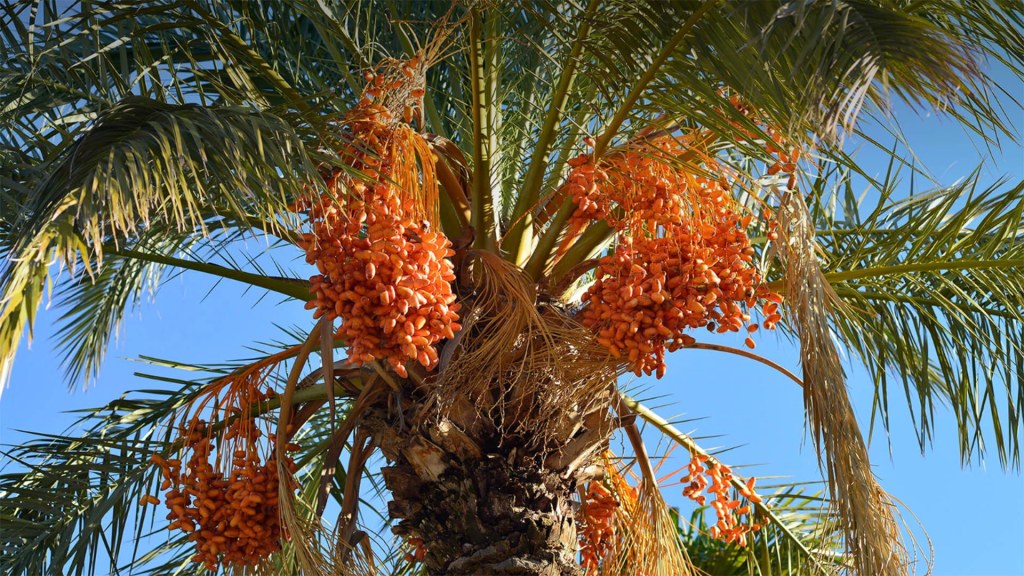
In verse 6:99, the Qur’an returns to observable nature, elaborating on how divine providence sustains life through water and vegetation. This verse is rich in botanical detail and almost visual in its description: “He is the One who sends down water from the sky. With it We bring forth the growth of all things; from it We bring out green shoots, from which We produce grain in clusters. And from the palm trees, from its spathes come forth clusters of dates hanging low. And gardens of vines, and olives, and pomegranates – similar (in kind) yet different (in taste). Look at their fruit when they bear fruit and as they ripen. Indeed, in all that are signs for people who believe.” This verse thematically complements 6:95: earlier we read of the seed splitting as the beginning of life; now we read of the water that enables that seed to grow, and the full bounty that results.
Classical commentators observe that the mention of water from the sky alludes to the rain cycle which was recognized even then: God sends rain, which revives the dead earth and causes it to produce vegetation. Countless other verses echo this, making rain a primary symbol of God’s mercy (e.g. 7:57, 16:10-11). What is notable in 6:99 is the level of detail: it enumerates different types of plants and fruits familiar to the Arabian context – grains, date palms, grape vines, olives, pomegranates – covering staples and luxuries, crops and fruits. Exegetes like Ibn Kathīr highlight how from the same water and soil, different plants emerge with diverse fruits. Modern commentators have also noted this striking fact: biologically, all these plants rely on the same basic elements (water, earth, sunlight), yet the outcomes are vastly varied in flavor, form, and benefit. As Muhammad Asad remarks, “all are so alike in the basic principles of their life and growth, and yet so different in physiology, appearance and taste.” The Qur’an draws attention to this “similar yet different” quality by saying “mutashābihan wa ghayra mutashābih” – their foliage may be similar, yet their fruits of myriad colors and flavors are not alike. This invites the believer to infer that such differentiation is due to intentional design and purpose, not random chance: it is Allah who “produces all kinds of vegetation” for our sustenance.
The verse also invites direct observation: “Look at their fruit when they bear fruit and when they ripen.” This almost commands a scientific curiosity – to watch the phases of fruit development. Fakhr al-Dīn al-Rāzī, with remarkable insight, describes the stages of fruit ripening: after pollination, a tiny bud appears; initially it may be bitter or even poisonous, but gradually it swells and changes color, from green to red or golden, its acids convert to sugars so that what was bitter becomes sweet, and it becomes nourishing and palatable whereas it wasn’t before. All these transformations occur in sequence, “in stages”, each stage providing ayat (signs) of Allah’s artistry. Modern botany explains these changes in terms of chemical processes (starch to sugar conversion, chlorophyll breakdown, etc.), yet the coordinated sequence and beneficial result still astonishes: who taught the fruit to mature in this way, perfectly timing its sweetness with the needs of the creatures that will eat it? Rāzī’s observation that fruits can even be harmful (raw) before becoming beneficial (ripe) is particularly striking. It’s as if nature “knows” when to present its bounty. Such knowledge, the Quran implies, comes from the All-Knowing Creator.
Another intriguing point is the phrase “the shoot of every (kind of) thing” (nabaata kulli shayʾ), which some classical commentators interpret as meaning “all kinds of plants” are brought forth. In a semi-scientific vein, the commentary Ishraq al-Ma‘ani notes that plant life underpins all other life – animals and humans depend on plants for food and oxygen – so bringing forth the nabaat of kulli shayʾ (the vegetation of all things) can be seen as bringing forth the foundation of the food chain. Indeed, when rain falls on barren land, an entire ecosystem of plants can spring up, supporting insects and animals. In modern ecology, we understand that the diversity of plant life (grains, fruits, trees) is what allows for a diversity of higher life forms. The Qur’an encapsulates that truth in a few elegant lines, directing all credit to Allah’s providence.
The mention of specific fruits like dates, grapes, olives, and pomegranates also has a theological dimension in classical tafsīr. These were well-known blessings in Arabia and the Mediterranean – often symbols of health and abundance. Olives and figs are even sworn upon in Quran 95:1. By listing these, the Quran reminds the listener of God’s daily gifts. Each meal one takes from bread (grain) to date-syrup to wine (in moderation, for earlier communities) or vinegar (from grapes) is only possible because of that initial rain and the biochemical factories that are plants, engineered by God. Providence (rubūbiyya) in Islamic theology means that God continuously nourishes and sustains creation. Verse 6:99 is almost a commentary on rubūbiyya: He sends the rain, causes the seed to sprout, develops it into various produce, and brings it to fruition for you to enjoy. No wonder it ends with “Surely in that are signs for those who believe.” Those who have faith will see beyond the material fact (rain makes plants grow) to the Divine Hand behind it all, and thus increase in gratitude and belief.
The phrase “look at the fruit as it ripens” also reinforces the Quran’s invitation to empirical observation as a basis for faith. The Qur’an does not ask for blind belief; it points to empirical realities (ayat in the physical world) and asks us to reflect on them. A believer observing a ripening pomegranate is almost performing a spiritual form of science – noting the changes, marveling at the design, and concluding “Alhamdulillah, all praise to Allah”. The modern reader might take for granted the water cycle and plant biology, learning it in school as basic science, but the Qur’an pushes us to not let familiarity dull our sense of wonder. It is notable that this passage (6:95-99) began with subtle phenomena (seeds underground) and ends with very visible phenomena (lush gardens and ripe fruits), coming full circle. In doing so, it paints a comprehensive picture of creation as an interconnected system: water, earth, vegetation, celestial bodies, and living souls all participate in a divinely-orchestrated tapestry. Each thread, when followed with the intellect and faith, leads back to the Originator.
Reason and Faith: Reflecting on the Signs of Creation
Throughout Qur’an 6:95–99, a unifying thread is the invitation to use reason (ʿaql) and observation (naẓar) to recognize God’s signs in nature. This is a hallmark of the Qur’anic approach: rather than presenting dry theology, it weaves arguments for God’s oneness and power into the fabric of everyday phenomena. Each verse analyzed above ends with a phrase like “for a people who know”, “who understand”, or “who believe.” The implication is that belief in God is reinforced by understanding the natural world, and conversely, the natural world is truly understood only when one perceives its spiritual dimension. As Yusuf Ali eloquently summarizes, in these few verses “the whole pageant of Creation is placed before us”: from our basic dependence on plant life, to “the interaction of the living and the dead” (seed and plant, life and death), to “the daily miracle of morning, noon, and night”, then to “the stars that guide the distant mariner”, then to “the mystery of the countless individuals from the one human soul – their sojourn and their destiny”, and finally to “the luscious fruits which the gentle rain from heaven produces”, which lead us to contemplate “the spiritual fruits which faith provides, by the showers of Allah’s mercy.” This masterful synopsis by a modern translator-tafsir writer shows how the passage moves from physical needs to metaphysical meaning. It is as if each layer of creation corresponds to a layer of understanding: physical life sustains bodily needs, but also symbolizes higher truths that nourish the soul.
Classical tafsīr reinforce that the ultimate purpose of noting these signs is to affirm tawḥīd (the oneness of God) and reject any partners or idols. Al-Ṭabarī, after explaining “That is Allah, so how are you deluded?” (end of 6:95), remarks: “Is it conceivable that the one who brings forth grains, fruit, and life itself from dead matter should have a partner as god – especially partners that can neither harm nor benefit, nor hear nor see?” In other words, the logical conclusion of observing these realities is that only an omnipotent, omniscient deity could be behind them, so worship belongs to Him alone. The polytheists who attributed fertility or rain to idols (like Baal or others) are rhetorically chastised: “Where then are you being driven (by your false beliefs)?” (6:95) – you are turning away from the very Source of life that all these signs indicate. Thus, the natural theology here has a polemical edge: it’s calling the disbelievers back to reason. The Quranic argument uses what later theologians would term burhān al-tamānu‘ (proof by exclusion of others) – since no idol or natural cause can truly claim credit for these marvels, the credit and worship is due to God alone, “lā sharīka lahū” (with no partner).
For the believer (and the earnest seeker), these verses also cultivate an attitude of wonder, gratitude, and responsibility. Recognizing God as the splitter of seeds and sender of rain engenders a sense of trust (tawakkul) in His providence – He who provides for the seeds will provide for our needs. Realizing the precision of the cosmos (day, night, sun, moon, stars) encourages us to rely on the orderliness of God’s creation but also to be mindful of the cosmic signs of God’s knowledge and power. Knowing we come from one soul and will return to a permanent abode with God should foster humility and ethics (we are one human family, accountable to our Maker). And seeing the immense diversity of fruits and crops from one earth and water should make us grateful stewards of the earth’s resources and awed lovers of the Creator’s artistry.
In bridging classical and modern perspectives, one finds no real contradiction – rather, a complementarity. The classical commentators provide linguistic, moral, and spiritual insights, while modern observations (from microbiology to astronomy) offer additional layers of meaning that further exalt the message of these verses. For instance, learning about seed geotropism or viral lifecycles as we did, only amplifies the sense of marvel that the verse “brings the living from the dead” conveys. The Qur’an’s wording is broad enough to encompass truths that unfolded to human knowledge centuries after it was revealed, yet it remains focused on guidance rather than scientific detail. The purpose is not to teach science, but to use the science of everyday life – accessible to all people in all times – to point towards higher truths. In that sense, Quran 6:95–99 exemplifies what some scholars call the “ayat of creation” (ayat al-kawn) methodology: the universe is full of signs just as the Quran’s verses are signs, and one set of signs elucidates the other.
In conclusion, verses 6:95–99 form a cohesive thematic unit that celebrates God’s creative power and sustaining mercy through the imagery of seeds and sprouts, dawn and dusk, stars and navigation, human origins, and bountiful gardens. They challenge the reader to reflect (tafakkur) and understand (fiqh), using both intellect and faith. As one modern exegete noted, in these verses “faith and reason go hand in hand” – the more we contemplate the rational structure and wonder of the natural world, the more our hearts incline to worship the One who fashioned it. And the more we believe, the more signs we perceive around us. Thus, the Qur’an’s invitation is open-ended: “Look!” – the act of looking itself, with a seeking heart, becomes an act of worship. The thematic journey from the hidden seed to the visible fruit, from the darkness of night to the guiding star, and from our first soul to our final end, ultimately brings us back to the central thesis: “Such is Allah” – the sole author of these wondrous signs – “Will you not then reason and remember?”




 The Glorious Quran and Science
Leave a reply to Sexual Reproduction in Plants: Angiosperms and Gymnosperms – The Glorious Quran and Science Cancel reply