
Written and collected by Zia H Shah MD, Chief Editor of the Muslim Times
Introduction
The Qur’an opens with an invocation of divine mercy: “Bismillāh Al-Raḥmān Al-Raḥīm” – “In the Name of God, the Most Merciful, the Most Compassionate.” Muslims recite these two Names of God, Al-Rahmān and Al-Raḥīm, continually, yet few pause to ponder their profound roots. Both names derive from the triliteral Arabic root R-Ḥ-M (raḥima), which carries the meaning of mercy, compassion, and tenderness. Tellingly, this same root also gives rise to the Arabic word raḥim – “womb.” Islamic tradition makes an explicit connection between mercy and the womb: the Prophet ﷺ related that God said “I am al-Raḥmān (the All-Merciful) and created the raḥim – and derived its name from My Name.” In other words, the very name for the organ of motherhood is directly linked to God’s attribute of mercy. This essay explores the linguistic and theological significance of this connection, examining how rahmah (mercy) and raḥim (womb) intertwine in Arabic, how the Qur’an embeds these concepts in its verses on creation and compassion, and what classical and modern exegesis (tafsīr) say about Al-Rahmān and Al-Raḥīm. Further, we delve into how the maternal womb symbolizes mercy in both spiritual and biological terms – from the nurturing love of mothers to the evolutionary design of mammalian life. The study concludes with a theological reflection on divine mercy as an overarching principle in God’s design, manifest from the formation of life in the womb to the love and care that pervade creation.
R-H-M: The Root of Mercy and Womb
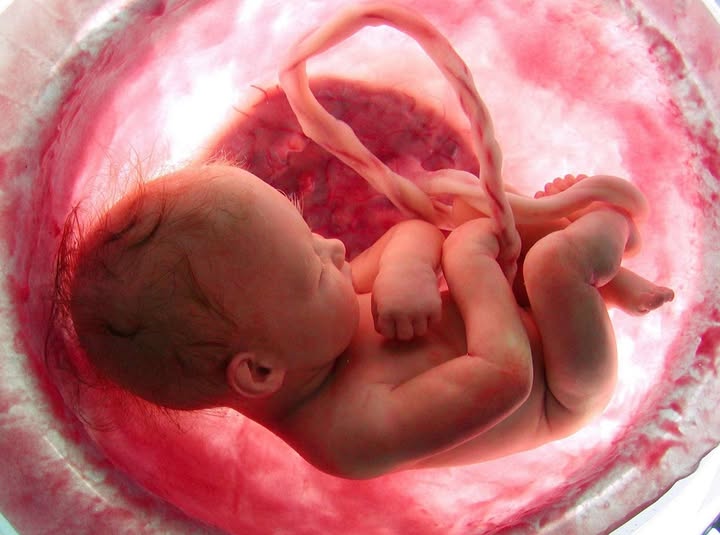
In Arabic, mercy is expressed by words derived from R-Ḥ-M (raḥm), a root connoting tenderness, compassion, and loving care. The noun raḥmah (رحمة) means mercy or compassionate love, while raḥim (رحم) denotes a womb – the uterus, the maternal seat of life. This is no coincidence of language, but rather a reflection of concept: the Arabs recognized the mother’s womb as a place of nurturing compassion. As one scholar explains, “The Arabic root of rahma (mercy) is R-Ḥ-M, which shares its origin with rahm (womb). This linguistic connection emphasizes the nurturing, protective, and sustaining aspects of mercy. Just as a womb nurtures and safeguards life, Allah’s mercy surrounds and protects His creation.” In the womb, an unborn child is enveloped in warmth and safety, receiving sustenance without any effort of its own – an unconditional provision resembling pure mercy. The 13th-century exegete Fakhr al-Dīn al-Rāzī defined raḥmah as “the removal of afflictions and the granting of goodness to those in need,” highlighting that mercy is fundamentally about caring for and benefiting the vulnerable. Nowhere is this more evident than in the womb: the embryo is wholly weak and needy, yet is continually cared for and grown under the mother’s heartbeat.
Islamic revelation explicitly links the raḥim (womb) to raḥmah (mercy). In a famous hadith qudsī, the Prophet ﷺ said: “The word ar-raḥm (womb) derives its name from Ar-Raḥmān (the Most Merciful). Allah said [to the womb]: ‘I will keep good relations with the one who keeps good relations with you, and sever relations with him who cuts you off.’” Here, God personifies the womb and pledges His support for those who honor the bonds of kinship (literally “the ties of the womb”). The womb is thus a sacred symbol of connectedness and care. Classical Arabic lexicons note that raḥim came to mean not only the physical uterus but also kinship and family mercy (ṣilat al-raḥim). To “cut off the womb” is an idiom for severing family ties – an act so grievous that it withdraws one from the divine mercy promised to those who foster love among relatives. The Prophet ﷺ also taught that God’s mercy for His creatures far exceeds even a mother’s mercy for her infant. On one occasion, he pointed to a woman frantically searching for her lost baby among war captives; upon finding the child, she embraced and nursed it. He said to his companions, “Do you think this woman would ever throw her child into a fire?” They replied that she never would. The Prophet then said, “Allah is more merciful to His servants than this mother is to her child.” Such teachings drive home the concept that maternal compassion is the nearest earthly mirror of divine compassion – and even that is but a fraction of God’s infinite rahmah.
Al-Rahmān and Al-Raḥīm in the Qur’an
The Qur’an repeatedly affirms mercy as one of God’s central attributes, often through the paired names Al-Rahmān and Al-Raḥīm. Al-Rahmān (الرحمن) is typically translated “the Entirely Merciful” or “Most Gracious,” and Al-Raḥīm (الرحيم) as “the Especially Merciful” or “Most Compassionate.” Both Names come from the root R-Ḥ-M, emphasizing that mercy is at the heart of God’s identity. The formula “In the name of Allah, Al-Rahmān Al-Raḥīm” prefaces 113 chapters of the Qur’an, signaling that every divine action “begins” with mercy. In the opening sūrah (Al-Fātiḥah), the believer praises God as “Lord of the worlds, Al-Rahmān Al-Raḥīm” (1:1–3), thus framing our relationship with the Creator in terms of compassion and care from the outset.
Several Qur’anic verses explicitly connect God’s mercy to His creative power and providence. For example, “Your God is One God; there is no deity except Him, Al-Raḥmān Al-Raḥīm” (Qur’an 2:163). Here, immediately after asserting God’s oneness, the verse highlights mercy, implying that the unity of creation is sustained by divine compassion. Likewise, in Sūrat Maryam, believers are reminded to invoke God as Ar-Raḥmān: “Invoke Allah or invoke Ar-Raḥmān; by whichever Name you invoke – to Him belong the best Names.” (17:110). The disbelievers of Makkah, unfamiliar with the name Ar-Raḥmān, once scoffed, “What is Ar-Raḥmān?” (25:60), yet soon the Quranic revelation made it clear through context: Ar-Raḥmān is He who nurtures and provides. Indeed, an entire chapter, Sūrat Ar-Raḥmān (Chapter 55), is devoted to illustrating why God is called Ar-Raḥmān. It begins: “Ar-Raḥmān, taught the Qur’an, created man, and taught him eloquence.” (55:1-4) – in these lines, mercy is manifest in both creation and revelation. God’s teaching of the Qur’an is an act of guidance and love, and His creation of human beings with the faculty of intelligent speech is a merciful gift. The same chapter goes on to enumerate countless blessings of nature – the sun and moon, fruits and shade, pearls and coral, sweet and salt waters – punctuating each section with the refrain: “So which of the favors of your Lord will you deny?” (55:13) All these favors are aspects of rahmah, freely given sustenance and beauty for humanity. As one writer notes, Ar-Raḥmān bestows essential blessings “that we did nothing to earn. Simply through His rahmah on us, God provided. Similarly, a baby in the womb has all it needs for survival and nourishment without any doing of its own.” Here again the parallel emerges: just as a fetus receives unearned nourishment in the womb, we receive unearned blessings under Ar-Rahmān’s care.
The Qur’an also explicitly mentions the womb in context of God’s knowledge and creative mercy. “He is the One who shapes you in the wombs as He wills. There is no god but He, the Almighty, the All-Wise.” (Qur’an 3:6) In another verse, “Allah knows what every female bears, and what the wombs diminish or exceed. Everything with Him is by due measure.” (13:8) – affirming that every stage of gestation, whether a premature birth or an overdue one, is encompassed by His wisdom and mercy. And when the infant departs the womb, divine mercy continues: “Allah brought you forth from the wombs of your mothers not knowing a thing, and He made for you hearing, vision, and intellect, so that you might be grateful.” (16:78) Thus from conception, through birth, and beyond, God’s compassionate design shelters and equips each human. It is little wonder that in Islamic understanding, “My mercy encompasses all things” (Qur’an 7:156) is a foundational divine declaration. God “has decreed upon Himself mercy” (6:12) as a guiding rule in dealing with creation. Every child gestating in the hidden womb and every creature receiving sustenance openly in the world is a sign of that all-encompassing mercy.
Classical Tafsīr Insights on Al-Rahmān and Al-Raḥīm
From the earliest days of Qur’anic exegesis, scholars probed the nuance of these two divine Names. Both Al-Rahmān and Al-Raḥīm spring from the same root of mercy, yet they are not mere synonyms. As Imām al-Ṭabarī (d. 923 CE) observes, if they were identical in meaning it would be redundant for the Qur’an to use them together. There must be a subtle distinction. In the Arabic language, the form Raḥmān (فعّلان) conveys intensity and fullness of an attribute, whereas Raḥīm (فعيل) suggests constancy and specialization. Many classical authorities thus held that Ar-Raḥmān signifies God’s all-encompassing mercy – an intensive mercy flooding all creation – while Ar-Raḥīm signifies His specific mercy – a gentler, continual mercy reserved in a special way for the believers.
Ibn ‘Abbās, the Companion and Qur’an interpreter, explained that Ar-Rahmān extends to “all of Allah’s creation in this world and the Hereafter,” whereas Ar-Raḥīm is “especially for the believers.” In other words, God is Al-Rahmān to everyone, granting broad mercy such as life, health, and daily sustenance to both righteous and sinner alike, but He is Al-Raḥīm in the fuller sense to those who accept His guidance – rewarding them with forgiveness and eternal bliss. Ibn ‘Abbās added that on the Day of Judgment, the general mercy denoted by Ar-Rahmān will give way to justice for those who rejected faith, whereas the specific mercy (Ar-Raḥīm) will continue unabated for the faithful. This view is echoed by al-Ṭabarī in his Tafsīr: after surveying earlier opinions, he concludes that Allah is Al-Rahmān to all in that He is compassionate to the entire creation in both this life and the next, and He is Al-Raḥīm specifically to the believers. This “general vs. special mercy” interpretation became widely accepted. Imām Ibn Kathīr (d. 1373) cites the words of Prophet ʿĪsā (Jesus) for illustration: “Ar-Raḥmān is the Compassionate One to the people of this world and the Hereafter, while Ar-Raḥīm is the Merciful One to the believers in the Hereafter.”
Thus, Jesus (in Islamic tradition) affirmed that everyone – believer or not – is enveloped in Ar-Rahmān’s universal mercy (for example, by being provided rain, food, and opportunities in life), but Ar-Raḥīm’s grace on the Day of Resurrection (forgiveness and salvation) will be for those who believed.
Another point of discussion was that Al-Rahmān appeared to Arabs as a unique term. The pagans of Mecca even questioned it, not realizing it was one of God’s names (Q.25:60). Exegetes note that Al-Rahmān in its form is more emphatic and was used only for God – akin to a proper noun – whereas Raḥīm could descriptively be used for people. Qāḍī al-Bayḍāwī (d. 1286) writes that both names derive from rahma, “emphasizing different levels of mercy: Ar-Rahmān is more intense, encompassing both believers and unbelievers in this world, while Ar-Raḥīm refers specifically to the believers.” Imām al-Qurṭubī (d. 1273) mentions an opinion that Al-Rahmān denotes universal mercy and Al-Raḥīmmercy toward the believers, aligning with the majority view. However, he also notes some earlier scholars (like the grammarian Sibawayh) who considered the two terms nearly synonymous – an opinion largely set aside in favor of the nuanced distinction. The two Names often appear together to convey the full spectrum of mercy: intensive and extensive (Al-Rahmān), as well as personal and saving (Al-Raḥīm). The pairing itself is eloquent: “Ar-Rahmān and Ar-Raḥīm are two delicate names, with one being more tender than the other. Ar-Rahmān signifies compassion, while Ar-Raḥīm refers to showing mercy to His creation,” as one early scholar, al-Husayn ibn al-Faḍl, described.
Furthermore, classical tafsīr connects these Names back to the womb-mercy concept. The 11th-century commentator al-Baghawī reminds us that just as only Allah is truly Ar-Rahmān, the ultimate source of universal mercy, so too the word raḥim (womb) evokes a unique attribute of God: only He could create such an abode of life-giving compassion. People may be called raḥīm (merciful) in a limited sense, but Raḥmān is transcendent. We find in Tafsīr works anecdotes that Paradise and Hell once argued, and God responded by filling Hell with His justice and Paradise with His mercy – even writing above His Throne, “Indeed, My mercy prevails over My wrath.”
This celebrated hadith (found in Ṣaḥīḥ al-Bukhārī and Muslim) encapsulates the theological optimism that pervades Islamic thought: while God’s justice is real, His mercy predominates and is the default mode of His dealing with creation. Classical scholars, whether al-Ṭabarī, al-Rāzī, or Ibn Kathīr, all underscore that the repetition of Raḥmān and Raḥīm is meant to instill hope and gratitude in the believer’s heart, reminding us that every moment of existence is enveloped in God’s compassionate design. From sending down rain on a barren land to forgiving a sinner who sincerely repents, the signs of Al-Rahmān and Al-Raḥīm are ubiquitous.
Modern Tafsīr Perspectives and Linguistic Reflections
Modern scholars and linguists have continued to reflect on the semantic richness of the root R-Ḥ-M and the nuances of Al-Rahmān and Al-Raḥīm. Contemporary Quran commentators often emphasize the maternal imagery of mercy in order to convey its depth to present-day audiences. They note that in English, “mercy” can sound like merely sparing someone from punishment, whereas rahmah in Arabic is far more encompassing – it is not just leniency, but proactive love and care. As one modern explanation puts it: “If mercy is not the correct translation of rahmah, then what is? The womb of a mother (raḥm) gives us the clue. A child in the womb has no worries or needs unmet; all problems fall on the mother. The child is completely wrapped in the care of its mother and has no idea what she endures for it. That child is in a state of rahmah. So rahmah is like the kind of love, care, and protection a mother has for her unborn child – even though the child may cause her pain. And the rahmah of Allah is much greater, beyond our imagination. We have no idea how many ways Allah is taking care of us… Mercy alone doesn’t capture it; the closest description of rahmah is love and care.” This beautiful explanation by a contemporary author draws directly on the womb analogy to redefine rahmah as a tender loving care. It highlights that rahmah is fundamentally positive and nurturing, not merely the absence of wrath.
Modern linguistic analysis also sheds light on the two Names’ nuances. Philologists point out that Raḥmān follows an Arabic morphological pattern that implies extensiveness and immediacy (fa‘lān form, which often conveys being filled with an attribute), whereas Raḥīm follows a pattern implying permanence and ongoing action (fa‘īl form, often used for lasting qualities). For example, in Arabic, ghaḍbān means extremely angry (overflowing with anger in the moment), and raḥmān analogously means overflowing with mercy. Some scholars thus say Al-Rahmān indicates the vast, boundless mercy of God that is continuously flowing to all creation here and now, while Al-Raḥīm indicates the enduring mercy that will never cease. A concise way to phrase it: Al-Raḥmān is mercy extensive in scope, and Al-Raḥīm is mercy intensive in degree – Allah’s mercy to all creatures, and His special mercy to the virtuous, respectively. Another contemporary source phrases the difference in terms of time: Ar-Rahmān’s mercy is immediate and overwhelming (covering “His entire creation at all times”) whereas Ar-Raḥīm’s mercy is “always loving and caring,” especially manifest in the next world for the faithful. Both views agree that the two Names together convey a totality of mercy: God cares for us in the present and will care for us in the future; He cares for the whole universe and also for each sincere individual.
Some modern scholars, like Muhammad `Abduh and Rashid Rida, also noted that Al-Rahmān was understood by the Prophet’s contemporaries as equivalent to the God of the Quran – even non-Muslims used that name for God in certain contexts – thereby refuting any claim that it referred to a different deity. In modern tafsīr circles, there is also an emphasis on how frequently rahmah and its derivatives appear in the Quran (over 300 times), underscoring that mercy is the dominant theme of God’s message. They integrate prophetic traditions to show the priority of mercy: e.g. the Prophet Muhammad ﷺ is described in the Qur’an as “a mercy to all the worlds” (21:107), and he himself said, “He who does not show mercy will not be shown mercy” – urging human beings to mirror the divine attribute in their own lives.
Perhaps most strikingly, contemporary reflections link the concept of mercy to the experience of mercy in creation in scientific terms. Writers have drawn analogies between the protective environment of the womb and various “womb-like” mercies in nature. For instance, one author notes that Earth’s atmosphere acts like a womb for life: it shields us from harmful cosmic radiation just as the mother’s womb shields the fetus from shocks and toxins. Our planet provides free nourishment (water, oxygen, food) adapted to our needs, much as the placenta provides tailored nutrients to the growing baby. Such analogies, while not found in classical texts, resonate with modern audiences by uniting spiritual and scientific perspectives – they portray the entire natural world as operating under Raḥmānīyah, a merciful ecosystem established by Al-Rahmān. Even our moral and spiritual development is facilitated by mercy: the Quran and guidance sent by God function as a “protective moral shield” akin to a womb for the soul’s growth. These insights do not contradict classical tafsīr, but rather build on them, using today’s knowledge to appreciate the Quran’s timeless message. They reaffirm that mercy is woven into the very fabric of existence – an idea that modern science, interestingly, can complement by illustrating the prevalence of cooperation, altruism, and nurturing in the natural world. Before turning to science explicitly, we will examine more closely how the womb itself serves as a paramount symbol of mercy in Islamic thought.
The Womb as a Metaphor for Mercy
The maternal womb (raḥim) stands in Islam as one of the most powerful metaphors for divine mercy (raḥmah). It is the locus of the most tangible form of compassion humans witness: a mother’s love for her child. Islamic scripture and tradition frequently invoke motherhood to help us grasp God’s care. The Prophet Muhammad ﷺ said, “Paradise lies at the feet of your mother,” indicating that serving one’s mother is one of the noblest deeds and a gateway to God’s pleasure. When we reflect on why the mother holds such esteem, we are invariably brought to the experience of pregnancy, birth, and nursing – experiences centered on the womb and its fruits. The pain a mother endures and the selflessness she shows in bringing a child into the world exemplify rahmah in action. It is a mercy that expects no recompense; an infant can give nothing back to the mother, yet her affection only increases.
Islamic teachings encourage believers to maintain the ties of the womb (ṣilat al-raḥim, i.e. kinship bonds) as a way of attaining divine mercy. A hadith qudsī already noted says that God will sever from His mercy those who sever their family ties. Conversely, one who upholds familial compassion is promised God’s favor. This concept goes beyond mere social duty – it sacralizes the biological relationships formed via the womb, imbuing them with spiritual significance. The womb is seen as almost sanctified by its connection to Al-Rahmān. “Allah has tied rahmah specifically to the raḥim,” as one modern writer summarizes; “to attain His mercy, let us turn back to our rahm. The best door we have to His rahmah is in the service of our mother.” In other words, showing kindness to the one who bore us is a direct means of drawing closer to the Merciful Lord who bore us all into existence.
Maternal mercy is repeatedly used in tafsīr and hadith to illustrate God’s own mercy. A striking Prophetic narration describes how God divided mercy into one hundred parts: “He kept ninety-nine parts with Himself and sent down one part to the earth. Through this one part, creatures are merciful to one another – so much so that a mare lifts its hoof away from its foal out of fear of harming it.” In this vivid image, even an animal – a horse – exhibits compassionate restraint toward its young, a direct result of the single share of mercy that infuses worldly life. Every gentle act of parenting in the animal kingdom, every instance of a mother nourishing her baby or protecting it from danger, is seen as a manifestation of that one fragment of God’s mercy allotted to creation. The remaining 99 parts are retained by God for the Day of Judgment, as the hadith continues – implying that He will show unfathomable mercy to His servants then. The mare carefully lifting her hoof so as not to step on her newborn foal exemplifies raḥmah in a pure, instinctual form. It is remarkable that the Prophet ﷺ chose an example from a non-human creature, suggesting that this merciful quality is woven into the very nature of life on earth. Mercy, we learn, is not just an abstract moral principle but a biological reality and a cosmic principle – extending from human mothers to animal mothers and beyond.
The Qur’an itself invites us to reflect on the parent-child relationship as a sign of God. In one moving verse, it says: “We have enjoined upon man kindness to his parents. His mother carried him in weakness upon weakness, and his weaning is in two years. Be grateful to Me and to your parents” (31:14). The layering of “weakness upon weakness” (the travails of pregnancy) is mentioned to stir empathy and appreciation. God is effectively saying: Remember the compassion with which your mother bore and raised you, and realize that this is a gift from Me – therefore, show gratitude to the Creator and to the mother through whom the Creator’s mercy flowed to you. In another verse, as Maryam (Mary) suffers the pangs of labor, an angelic voice comforts her with news of a stream and ripe dates provided for her relief (19:24-26). Here God directly intervenes with sustenance during childbirth – symbolically underscoring that the process of birth, though painful, is surrounded by divine care.
We see then that the womb is both a physical reality and a spiritual symbol. Biologically, it is the organ where life begins. Spiritually, it represents rahmah: connectivity (between mother and child), vulnerability (of the child, invoking care), and creativity (bringing forth new life by God’s permission). The raḥim is a microcosm of the way God nurtures creation. Just as an embryo is hidden yet meticulously provided for, much of God’s mercy to us goes unseen and underappreciated – our hearts beat and lungs breathe without our awareness, and countless dangers are averted from us daily by His decree, just as the womb shields the fetus. The renowned scholar Ibn Qayyim (d. 1350) wrote that every beat of the heart and every blink of the eye happens only through the nourishment of God’s rahmah.
The Womb in Mammalian Life: Maternal Instincts and Evolutionary Design

Modern biology offers fascinating insights that resonate with the Islamic view of the womb as an abode of mercy. The evolution of the mammalian womb and placenta can be seen as nature’s provision for intensive parental care. Unlike egg-laying creatures, mammals (especially placental mammals) develop their young internally, which demands a tremendous investment from the mother but greatly increases the offspring’s chances of survival. Scientists note that “a major development in the evolution of mammals was placentation – internal development of the fetus and protracted care after birth to ensure infant survival to reproductive age. The only parent guaranteed to be present at birth, equipped to provide initial nourishment (through lactation), is the mother. Therefore, it is hardly surprising that females form their strongest social bonds with their own offspring.” In other words, the emergence of the womb in evolutionary history went hand-in-hand with the emergence of strong maternal bonding. The raḥim enabled creatures to carry their young safely inside their bodies, and this in turn necessitated (and favored) the development of maternal instincts—behaviors driven by mercy and care.
Biologically, during pregnancy a mother’s body undergoes remarkable changes to accommodate and protect the developing baby. The placenta – a temporary organ – connects mother and fetus, delivering oxygen and nutrients and removing waste. But beyond these physical functions, the placenta also has a profound hormonal influence on the mother. It produces hormones like estrogen, progesterone, and oxytocin that prepare the mother’s brain and body for maternal behavior. Researchers have observed that in many mammals, a female does not automatically exhibit maternal care at birth unless certain hormonal events have taken place during gestation. The hormones of pregnancy, largely regulated by the fetus and placenta, “enter the maternal circulation to adapt maternal physiology, metabolism and behavior… ensuring the synchronization of birth with maternal care and milk availability.”
In essence, the conceptus (the unborn baby and its support system) chemically influences the mother to feel mercy and attachment toward the newborn. Oxytocin in particular – often dubbed the “bonding hormone” – surges during labor and breastfeeding, fostering affection and trust. Neurobiologists explain that this single molecule has multiple roles: it causes the womb to contract in labor, stimulates milk release for nursing, and also creates feelings of love and bonding. Thus, the very hormone that causes a mother’s womb to expel the infant also causes her to be filled with tenderness toward it. From an Islamic perspective, one might say Allah has “programmed” the bodies of mammals such that mothers are inclined to show rahmah as soon as a child enters the world. These scientific findings beautifully align with the idea that the womb is a cradle of mercy by divine design.
Maternal caregiving behavior is not limited to humans; it is widespread in the animal kingdom, especially among mammals. A tigress will risk her life to defend her cubs, a nesting bird will flutter helplessly to draw a predator away from her chicks, and even creatures as small as mice carefully nurse and groom their pups. Biologists interpret this in evolutionary terms (passing on one’s genes by ensuring offspring survival), but from a believer’s viewpoint, it also exemplifies the Creator’s mercy manifesting even in creatures that have no moral agency. As the hadith of the mare and foal indicated, animals too partake in that one share of mercy God sent to earth. Notably, without this merciful instinct, many species would simply not survive. Newborn mammals are often helpless; without parental care, they would perish. So critical is the mother-infant bond that experiments have shown even the recognition of the offspring (by scent, sound, or sight) triggers reward circuits in the mammalian brain, reinforcing care. In small-brained mammals, smell is key; in humans, the process is more complex and involves cognitive and emotional factors, but the fundamental outcome is the same: the mother feels compelled to care. Scientists like Sarah Hrdy have described this as mothers being “primed” by gestational hormones to respond to their baby’s needs, and even fathers or adoptive parents can develop some of this response through close contact and oxytocin release.
The symbolic significance of the womb in evolution is that it represents a shift toward greater compassion and social bonding in life’s history. It is intriguing that higher mammals (like primates and especially humans) have longer gestation and childhood, requiring much longer care, which in turn demands stronger family structures and social support. One could argue that humanity’s capacity for empathy and love grew in tandem with the prolonged vulnerability of its young – a vulnerable infant evokes mercy in the parents and even in the community. Evolutionary biologists suggest that the helplessness of human babies (who cannot even hold their heads up for months) led to the development of cooperative child-rearing and social altruism in human societies. In an Islamic paradigm, this all accords with a merciful Creator who deliberately chose a mode of reproduction (viviparity, live-bearing) that would maximize opportunities for compassion. The raḥim not only produces a child, it produces a mother – a human being now elevated by the exercise of selfless love.
From a theological perspective, observing the womb’s role in biology can deepen one’s awe of Al-Rahmān. For example, consider that the human embryo implants in the uterine wall and for nine months is fed from the mother’s bloodstream. The baby’s heart beats because the mother’s heart beats; its very existence is an extension of hers. This reflects our utter dependence on God, the Supreme Nourisher. As one Quranic verse says: “Allah brought you out from the wombs of your mothers while you knew nothing at all, and He gave you hearing, sight, and hearts, so that you might give thanks” (16:78). We emerge fragile and ignorant, yet immediately find the warmth of a mother’s embrace, milk to drink, and a natural love placed in our parents’ hearts for us. These are signs of a mercy that precedes our consciousness. Indeed, in Islamic thought, God’s mercy to us “pre-natal” (before we are even aware) is a model for understanding grace – we did not earn life or maternal love; they were gifts. This is why the mother’s rights are unrepayable; as the Prophet ﷺ taught, a child can never repay what its mother endured in pregnancy and childbirth.
Finally, the womb also has an ethical message in Islam: Just as the womb shelters new life, we are called to be merciful and nurturing toward those who are weak. The Prophet ﷺ said, “Show mercy to those on earth, and the One above the heavens will show mercy to you.” The connection of raḥim and rahmah implies a mandate to honor relationships and protect life. It is notable that the verb raḥima (to have mercy) in the Qur’an is often used for God, but when humans are its subject, it usually refers to family mercy or is negated to condemn hard-heartedness. Believers are urged to cultivate a “womb-like” compassion in their dealings – gentleness, forgiveness, and kindness, especially to the needy and kin. The familial language in Qur’an 4:1 is telling: “Fear Allah, in Whose name you ask each other, and [fear] the wombs (that bore you)” – reminding us to be mindful of God and the maternal bonds He created.
Conclusion: Divine Mercy in Creation, Nurturing, and Love
The exploration of Al-Rahmān and Al-Raḥīm through their Arabic roots and connection to the womb reveals a beautifully integrated understanding of theology, language, and life. In Islam, mercy (raḥmah) is not an abstract attribute of God; it is the very matrix of existence, reflected in the gentle embrace of a womb, the selfless love of a mother, and the myriad nurturing processes in nature. The divine names Al-Rahmān and Al-Raḥīm encapsulate an overarching reality: that God’s relationship to the world is fundamentally one of compassion and care. Classical scholars recognized in these names the dual aspects of mercy – the broad and the specific – and modern insights have only reinforced how pervasive and nuanced that mercy is. From Qur’anic verses, we saw that creation itself is an act of mercy: God fashions the human being in the womb with wisdom and sustains each soul after birth with providence and guidance. From tafsīr, we learned that God’s mercy extends to all creatures (as Al-Rahmān) and will embrace the faithful with special warmth in the Hereafter (as Al-Raḥīm). From hadith, we were reminded that the womb is named after Al-Rahmān, and severing the bonds of the womb distances one from the Divine. And from observing the natural world, we discovered that the very existence of the womb and maternal instinct is a signpost of divine mercy etched into biology – a sign that we are meant to find safety and love from our first moments, and that mercy is literally the womb of life.
In Islamic theology, none of this is viewed as incidental. God intended mercy to predominate. In fact, He said, “My Mercy encompasses all things” (7:156) and “My mercy prevails over My wrath.” The narrative of existence, from an Islamic vantage, is underwritten by mercy. Even justice and discipline serve a merciful end (to restore balance and guide souls to goodness). The womb exemplifies that intentions of wrath or punishment are absent in the origin of life; we begin surrounded by mercy. As life progresses, every capacity we develop – sight, hearing, understanding – is viewed as a merciful gift to enable us to flourish and recognize our Lord. When some element of harshness or difficulty comes, it is contextualized within the greater schema of raḥmah (for instance, a mother’s birth pains lead to the joy of a child, just as worldly tests can lead to spiritual growth and reward).
Ultimately, the connection of Al-Rahmān/Al-Raḥīm with raḥim (womb) invites a profound meditation on love as the fabric of creation. Just as a child cannot see all that the mother does for it, we often cannot fathom the ways God cares for us: “We are just as ignorant as the baby in the womb…” of how our Lord protects and provides. Yet, through faith, we trust in that unseen mercy. It also urges us to emulate mercy. If God manifests His raḥmah through the womb, we too must be agents of raḥmah in the “wombs” of our communities – nurturing the young, caring for the vulnerable, and fostering unity. The Prophet Muhammad ﷺ, the “Mercy to the worlds,” showed by example that leadership is rooted in compassion: he mended the hearts of the weak, loved children dearly, and forgave his enemies when he had the power to punish. To be merciful in the spirit of Al-Raḥmān is to be unconditionally kind; to be merciful in the spirit of Al-Raḥīm is to show special tenderness to those closest to you and to the faithful. In our daily lives, this might mean overlooking others’ faults, keeping family ties strong, and responding to suffering with empathy and action.
In sum, the Arabic roots of Al-Rahmān and Al-Raḥīm lead us on a journey from the lexicon of language to the lexicon of life. They teach us that God’s design is merciful by nature – our very bodies, relationships, and instincts are imbued with compassion as a reflection of His names. The womb, both as word and reality, is a central emblem of this truth. It symbolizes that to create is to love, to nurture is divine. When we contemplate the sheltering womb, the doting parent, or the harmonious provisions in our world, we are seeing the signature of Al-Rahmān Al-Raḥīm. And by responding with gratitude (shukr) and mercy toward others, we mirror that signature in our own small way. In the end, the theological message shines clear: God’s mercy is the womb of existence, and all of us dwell within it – “Truly, Allah is Al-Rahmān Al-Raḥīm.”
Sources:
- Quran 1:1-3; 2:163; 3:5-6; 7:156; 13:8; 16:78; 19:24-26; 25:60; 31:14; 55:1-13; 55:13 (passim); 57:28.
- Sahih al-Bukhari, Hadith on the Womb’s name sunnah.com; Sahih Muslim, Hadith on Allah’s mercy exceeding a mother’s aboutislam.net; Sahih Bukhari & Muslim, Hadith Qudsi on Allah’s mercy over wrath knowingallah.com.
- Mansoor Alam, “God’s Mercy,” IslamiCity (2018) islamicity.orgislamicity.org.
- Raiiq Ridwan, “Understanding the Meaning of God’s Mercy,” AboutIslam (2020) aboutislam.net.
- Quranic Corpus Dictionary (Leeds Univ.) – entry R-Ḥ-M (ر-ح-م).
- Tafsīr al-Ṭabarī (Jaamiʿ al-Bayaan) vol.1, p.126-129 knowingallah.com; Tafsīr Ibn Kathīr vol.1, p.124-125 knowingallah.com; Al-Qurṭubī, Al-Jāmiʿ li-Aḥkām al-Qurʾān vol.1, p.105 knowingallah.com; Al-Bayḍāwī, Anwār al-Tanzīl vol.1, p.27 knowingallah.com.
- QuranSpace.org, “Ar-Rahman and Ar-Rahim,” (n.d.) quranspace.org quranspace.org.
- E.B. Keverne, “Mother–infant bonding and the evolution of mammalian social relationships,” Philos. Trans. R. Soc. B 361(2006):2199pmc.ncbi.nlm.nih.gov pmc.ncbi.nlm.nih.gov.
- National Geographic, “Is Maternal Instinct Only for Moms? The Science.” (May 2018) nationalgeographic.comnationalgeographic.com.
- Tarteel.ai Blog, “The Boundless Mercy of Islam: Understanding Rahma,” (Nov 2024) tarteel.aitarteel.ai.
- AboutIslam, “4 Verses… Mother’s Womb” (Feb 2019) aboutislam.netaboutislam.net.


 The Glorious Quran and Science
Leave a comment