
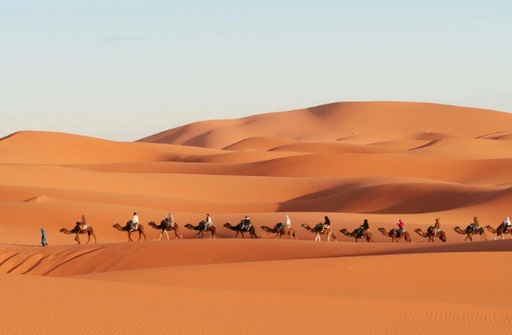
Written and Collected by Zia H Shah, Chief Editor of the Muslim Times
Invitation to Reflect: Context of Qur’an 88:17–20
Surah Al-Ghāshiyah (88) includes a striking invitation to observe the natural world:
“Do they not look at the camels, how they are created? – And at the sky, how it is raised? – And at the mountains, how they are erected? – And at the earth, how it is spread out?” (Qur’an 88:17–20)
These rhetorical questions urge listeners to look and reflect. The context of these verses is a discourse on the Afterlife. After describing the fates of the saved and the damned, the Qur’an challenges the skeptics of resurrection by pointing to visible signs of God’s creative power. The logic is clear: if God can create the camel, the sky, the mountains, and the earth – all wonders before your eyes – then surely He can resurrect the deceased as the last part of the Surah dwells in.
The aim is to humble the skeptics and awaken a sense of awe and gratitude. As one commentary explains, “His camel that he rides upon, the sky above his head, the mountain facing him, and the earth under him – all of this is proof of the power of the Creator… These things should lead him to see that He is the Lord… and the Controller of everything.” In other words, the rhetorical purpose of Qur’an 88:17–20 is to direct people’s attention to the evident handiwork of God in nature, so that they may recognize the Creator and His wisdom.
This invitation to observe is not merely for the Bedouin Arabs of the 7th century. The verse asks “Do they not look…?” – implying that all people should take a thoughtful look at the world around them. It turns everyday phenomena (like a camel or a mountain) into signs (āyāt) of deeper reality. Theologically, the Qur’an often uses such signs in nature to remind us of God’s Oneness and power, and to rebut those who doubt His abilities. In this case, by pondering “how they are created,” one is meant to realize that these things did not come about randomly or from nothing. Classic exegesis notes that only a willfully heedless person could fail to see purpose in these creations. If one concedes that an “All-Powerful, All-Wise Designer” is behind the camel, sky, mountains and earth, then accepting the resurrection and ultimate accountability becomes “no reason… remote from reason.” Thus, the theological thrust is that contemplating creation should lead to conviction in God’s wisdom and the reality of the Hereafter.
Tafsīr Insights on “How They Are Created”
Both classical and modern Muslim scholars have drawn insights from the phrase “how they are created.” Rather than providing a technical explanation of creation, the Qur’an is prompting its audience to marvel at the manner and purpose evident in the camel’s design. For example, the famous scholar Ibn Kathīr (14th century) remarks that the camel is “an amazing creation, and the way it has been fashioned is strange.” He notes its extreme strength despite its gentle nature – it can carry heavy loads yet be led by a mere child. He also highlights the camel’s many uses: it provides meat to eat, hair for textiles, and milk to drink. In Ibn Kathīr’s view, the Arabs are reminded of the camel because it was their most common domestic animal, a daily companion and lifeline in the desert. Likewise, other classical commentators pointed out the Bedouins’ intimate familiarity with camels: they rode them, relied on them for transport, food, and shelter, and thus would immediately appreciate how remarkable this creature is by design. Early Muslim judges like Shurayḥ al-Qāḍī even used to take people outdoors to physically “look at the camels and how they were created” as a spiritual lesson, pairing that observation with looking at the sky above.
Many early tafsīr (exegesis) works emphasize that “how they are created” means “how wondrously and perfectly they are fashioned by Allah,” for instance, comments on this verse by asking: “Can anyone create the like of a camel…?” – underscoring that the camel’s very existence, with all its unique features, is a sign of a Creator’s ingenuity. Modern scholars have echoed these thoughts. Sayyid Abul Ala Maududi (20th century) wrote that the camel possesses “precisely the same characteristics as needed by the desert dwellers of Arabia,” and he invites the skeptic to consider whether such a perfectly suited creature could arise without intention. He and others list the camel’s special traits – its ability to survive with little water, its endurance in harsh climate, its usefulness to humans – as reflections of divine wisdom in creation. The classical and modern consensus is that the verse is not asking whether camels were created (that is taken for granted), but to reflect on the way they were created – implying an artistry and purpose that mere chance cannot account for. In essence, Qur’an 88:17 is a call to thoughtful observation, leading one to recognize the Creator’s providence in equipping the camel (and by extension, all creatures) with suitable form and function.
The Camel as a Desert Marvel of Creation
When the Qur’an invites us to “look at the camel, how it is created,” it directs our attention to the camel’s extraordinary features. Modern biology has revealed in detail just how perfectly adapted the camel is to desert life – confirming the very wonders that awed people in the past. Here are some of the camel’s remarkable design features and adaptations:
- Hump (Fat Storage) – A camel’s hump is a reservoir of fat, not water. This stored fat can be metabolized into energy and water when food is scarce, allowing the camel to survive long periods without eating. Remarkably, the hump also aids in thermoregulation: by concentrating fat in one place, the camel’s body has less insulation elsewhere, which helps it avoid overheating in the day. At night, the heat stored in the hump dissipates to keep the camel warm when desert temperatures plunge. A well-fed camel’s hump stands upright and firm, but if the camel endures long starvation, the hump shrinks and may even slouch to one side as the fat is consumed – a visible testament to this built-in survival pantry.
- Water Conservation and Hydration – Camels are famous for going weeks without water. They achieve this through multiple ingenious physiological adaptations. For one, they can tolerate extreme dehydration: a camel can lose up to 30% of its body weight in water and still live, whereas most mammals (including humans) would suffer fatal circulatory collapse after losing just 12%. This is one of the highest dehydration tolerances of any mammal. When water becomes available again, the camel rehydrates with astonishing efficiency – it can drink up to 100 liters (30 gallons) in one session! Its blood has unique oval-shaped red blood cells that remain flowy when dehydrated and can expand elastically during rapid rehydration, so they don’t burst with the influx of water. Moreover, the camel’s kidneys and intestines are extremely effective at conserving water: the kidneys produce highly concentrated urine, described as thick and syrupy, to minimize water loss, and the feces come out so dry that desert dwellers historically used camel droppings as fuel immediately after excretion. In essence, almost every drop of water is recycled – nothing is wasted. These mechanisms allow a camel to survive about a week or more with, and even longer (several months) if it can eat succulent plants in the meantime.
- Body Temperature Regulation – To further cope with scarce water, camels can let their body temperature fluctuate degrees, reducing the need to sweat. By tolerating a body temperature range from about 34°C up to 40°C (93–104°F) daily, the camel avoids sweating until absolutely necessary, thus conserving water. This daily “temperature cycling” means in cool nights it dissipates heat, and in hot days it can safely store heat in its body. Combined with the thermal role of the hump, this adaptation helps the camel use far less water than other animals of similar size in the same heat.
- Protective Eyelids and Lashes – The camel’s eyes are marvels of protection. They have two rows of long, thick eyelashes plus prominent bushy eyebrows – these shield the eyes from blowing sand and the harsh sun’s glare. If sand still gets in, a camel has a third eyelid – a transparent nictitating membrane – that acts like a built-in “windshield wiper.” This third eyelid can sweep across the eye to remove debris and even allows the camel to see in sandstorms while keeping its eyes covered. These features ensure that even in the face of blinding sandstorms, the camel’s vision remains unharmed. In essence, a camel’s eyes are self-cleaning and sand-proof – a critical adaptation in deserts.
- Closable Nostrils and Ears – Camels can literally close their nostrils at will. During sandstorms, they pinch their nostrils shut to prevent sand from blowing in yet can still breathe through slits. Their ears are small and lined with hair, which, while not sealable, help block sand and dust. These simple but effective adaptations mean a camel can keep moving in conditions that would choke other animals. As one science writer put it, the camel’s nose functions like nature’s AC filter, trapping blowing sand and conserving moisture at the same time.
- Large, Padded Feet – A camel’s feet are broad and flat, with thick, leathery pads – almost like natural snowshoes. This allows their weight to be distributed over a larger area so they don’t sink into soft sand. The pads also provide insulation against the scorching ground. With each step, the foot spreads, and upon lifting, it contracts, making for a very stable tread on dunes. These wide, cushioned feet enable camels to walk on sand that might trap narrower-hoofed animals, making them ideal pack animals for desert travel.
- Diet and Metabolism – Camels are not picky eaters; they can digest tough, thorny desert plants that other herbivores spurn. Their thick lips allow them to eat prickly shrubs without injury. They can even tolerate salty plants. This flexibility in diet is crucial in a sparse environment. Additionally, their metabolic systems can ramp down during scarcity – a camel’s body can reduce urine output, slow down activity, and even draw on water from body tissues safely. Camel milk is extremely rich and remains available even the camel is dehydrated (a survival boon for desert nomads who use camel milk as a staple). All these factors mean the camel can flourish where other animals would starve.
It becomes clear why the camel is singled out in Qur’an 88:17. For the desert Arabs, this creature was a daily reminder of God’s blessing: an animal perfectly tailored to their environment and needs. From a modern perspective, the camel is a biological wonder – almost a “machine” optimized for desert survival. The 9th-century Arabs might not have known about oval blood cells or cholesterol regulation in kidneys, yet they still observed enough to be impressed: the camel’s endurance, its self-sufficiency, and its usefulness were obvious signs. Today, every new scientific insight into “how they are created” – from genomic analyses of water conservation genes to studies of renal physiology under dehydration stress – only deepens our amazement. It underscores the Qur’anic point that such complex, interlocking adaptations are “signs for people of understanding” (Qur’an 2:164) – pointers to a wise Creator.
Qur’anic Reflection and the Scientific Method
The Qur’an’s call to observe living beings like the camel resonates strongly with the spirit of scientific inquiry. Science, at its core, begins with observation of the natural world – precisely what Qur’an 88:17 is urging. The verse does not ask us to accept truths blindly; it asks, “Do they not look…?” This almost empirical invitation is repeated throughout the Qur’an. Another verse, for example, proclaims:
“Surely in the creation of the heavens and the earth, and the alternation of night and day, and the ships that sail the sea for the benefit of people, and the water (rain) which God sends down from the sky – giving life to the earth after its lifelessness and dispersing upon it all kinds of creatures – and the shifting of the winds and the clouds controlled between the sky and the earth, are signs for people who use their reason.”
This is Qur’an 2:164, which reads like a catalogue of phenomena a scientist might study: astronomy (heavens and earth), geoscience (day/night cycle), marine science (ships and sea), hydrology and biology (rain reviving land, biodiversity of creatures), meteorology (winds and clouds). The verse concludes that in all of these are signs for those who reason. In other words, the Qur’an explicitly links faith with rational reflection on nature. It implies that understanding the world – using one’s intellect to examine how things work – can lead to a greater appreciation of divine truth. This outlook laid the groundwork for a culture in which scientific inquiry was not seen as opposed to belief, but rather as a means to affirm it. Historically, many Muslim scholars and scientists (during Islam’s Golden Age and beyond) were directly inspired by such verses. They saw the study of natural history as uncovering the signs (āyāt) of God in the universe. For instance, medieval Muslim astronomers would often begin their works by praying to who “ordered the heavens,” and Muslim physicians like Ibn Sina saw wisdom in doing the same for treating patients
The Qur’an does not read like a science textbook, but it encourages and tells people to travel in the land and see, to observe the birds, to consider the alternation of day and night, etc. This nurtured an outlook where studying nature was seen as a part of religious duty. Many early Muslim scientists were devout believers who saw their research as uncovering the patterns Allah’s plan. They often preambled their works by marveling at the very phenomena they studied. For instance, a medieval astronomer might begin by glorifying God “Who raised the sky without pillars,” echoing Qur’an 88:18 and 50:6, before delving into calculations of the stars. Physician Ibn Sinā (Avicenna) and philosophers like Ibn Rushd (Averroes) argued that reason and revelation complement each other – the laws of nature discovered by reason are signs of the Lawgiver described by revelation.
Crucially, the Qur’an applauds those who use reason (ya‘qilūn) and constantly criticizes blind following of ancestors or conjecture without evidence. This intellectual ethos helped give rise to a rich tradition of inquiry in classical Islamic civilization. While the Qur’an’s focus is on spiritual guidance, the mode it employs – directing people to reflect on creation – naturally leads to a positive view of empirical investigation. A believer reading “look at the camels, how they are created” in the 7th century would not have known how to analyze a camel’s physiology, but he would be motivated to appreciate it, perhaps ask questions, and certainly to see it as meaningful. Similarly today, a biologist can study the camel’s anatomy or genetics and, if they are spiritually inclined, see their findings as uncovering the very “signs” the Qur’an beckoned us to notice.
The harmony between Islamic theology and science is perhaps best captured by the concept of “two books”: Muslims have often spoken of the Qur’an as the Book of Allah’s words and the natural universe as the Book of Allah’s works. Both are to be “read” attentively. Verses like 88:17–20 and 2:164 invite us to read the book of nature, which in turn can deepen one’s understanding of the divine attributes – power, knowledge, wisdom, beneficence – inscribed in the fabric of the world. Thus, when the scientifically-minded believer examines a camel’s cells under a microscope or models its water balance, they are in a way engaging in an act of worship by fulfilling the command to “look and reflect.” In summary, the Qur’anic invitation to observe creation resonates strongly with the investigative spirit of science: both encourage us not to take the world for granted, but to probe how it works and why it might be the way it is.
Evolutionary Adaptation and Divine Guidance
Modern evolutionary biology provides a compelling narrative for how the camel got its humps (and other traits). Through the lens of science, camels evolved from earlier camelid ancestors that lived tens of millions of years ago. Fossil evidence suggests that camel-like creatures originated in North America and later migrated to Asia and Africa. Over time, natural selection would have favored individuals with mutations that conferred advantages in arid climates – for example, better water retention or tolerance for heat. Little by little, through countless generations, the camel’s hallmark features emerged: a fat-storing hump for lean times, efficient kidneys for water conservation, specialized blood cells, etc. A 2014 genomic study of camels and their relatives found “complex features related to desert adaptations, including fat and water metabolism, stress responses to heat, aridity, intense ultraviolet radiation and choking dust,” showing at the genetic level how the camel’s body was fine-tuned for desert survival. Such studies paint a picture of gradual adaptation: the camel’s ancestors that wandered into drier, hotter environments survived because they incrementally acquired traits that today astonish us as a cohesive design.
For some, the evolutionary explanation might seem to remove the need for a designer – but many religious thinkers see it differently. The Qur’an teaches that Allah is al-Khāliq (The Creator) and al-Ḥakīm (The Wise). How His creative wisdom manifests in the natural world is a matter of process, and believers hold various views on this. An increasing number of Muslim scholars and scientists embrace the idea of “guided evolution”, also known as theistic evolution. In this view, the evolutionary process is real and is the mechanism by which life diversified, but it is not random or purposeless – it is guided by God’s knowledge and intent. They argue that Allah’s design can operate through natural laws; after all, from an Islamic perspective, those natural laws themselves were established by God. Under guided evolution, one could say God willed that camels eventually come to possess the exact features needed for desert life, using evolution as the tool over long spans of time. The end result is the same marvel: the camel, “created” through a divinely authored script of genetic mutations and environmental pressures. When the Qur’an asks us to look at “how they are created,” it doesn’t spell out the method – it leaves it open. This allows a believer to accept scientific findings without feeling their faith in God’s creation is threatened. A reflective Muslim might say: “Subḥānallāh (Glory be to God), He taught the camel’s body to adapt in this amazing way!” – effectively attributing the guidance of evolution to God’s hand.
Of course, not all scholars in the Islamic tradition have discussed evolution (the theory was formulated in the 19th century), and some modern Muslims prefer the idea that God specially created the camel species outright with its features intact. They may point to the Quranic word “kun” (Be!) – by which God creates instantly (Qur’an 36:82) – and believe the camel was always a camel by God’s command. Others find flexibility in the Quranic concept of creation, noting that the Qur’an also says God created life in stages (e.g. human embryonic development in Qur’an 23:12-14). Thus, God could create through instant command or gradual development, according to His will. Either way, the emphasis is that the camel’s features are not accidental – they fulfill a purpose and exhibit wisdom. Modern believers who accept evolution simply extend that wisdom into the DNA and the environment: they see evolution itself as one of the sunnatullah (divine laws in creation) that achieves His intent. In this light, the camel’s long evolutionary journey, culminating in the desert ship we know, can be viewed as a masterful plan unfolding over eons. This perspective beautifully melds with the awe that Qur’an 88:17 evokes – whether one believes the camel was crafted instantly or honed over ages, “how they are created” remains a question that inspires wonder and praise for the Creator.
Signs in Nature and Divine Purpose (Qur’an 2:164, 3:189–191)
The Qur’anic references to nature are consistently tied to the idea of divine purpose and wisdom. We saw how Qur’an 2:164 enumerated signs for people of understanding. Another set of verses, in Surah Āl ‘Imrān, reinforces this theme and connects it directly to spiritual devotion:
“To Allah belongs the kingdom of the heavens and the earth, and Allah is over all things competent. Surely in the creation of the heavens and the earth and the alternation of night and day are signs for those of understanding – those who remember Allah standing, sitting, and lying on their sides and reflect on the creation of the heavens and the earth, [saying]: ‘Our Lord! You have not created all this without purpose – Glory be to You! So protect us from the punishment of the Fire.‘” (Qur’an 3:189–191)
In these profound verses, the act of reflection (tafakkur) on nature is directly linked to recognizing that nothing in creation is pointless. “You have not created this in vain (bāṭilan),” the believers exclaim. The multilayered ecosystems, the finely tuned cosmos, the resilient camel – none of it is random or absurd. It all points to a Creator who does everything deliberately and wisely. The phrase “glory be to You” (subḥānaka) in 3:191 signifies that God is above and beyond any imperfection or flaw; creating anything without purpose would be a flaw, thus He creates with intent. For a faithful mind, then, every natural adaptation or scientific law uncovered is another brushstroke in the grand painting of divine wisdom.
Qur’an 3:190-191 also shows the spiritually transformative effect of observing nature. Those who reflect on creation are driven to prayer and humility (“protect us from the Fire,” they pray, realizing God’s greatness and their own responsibility). In Islamic theology, the world is full of āyāt (signs) precisely so that humans might find their way to truth. The camel’s extraordinary makeup is one such sign – whether one lived 1400 years ago or today, pondering it can spark that realization: “Truly, our Lord did not create this marvel for nothing.” In an age of science, one might add: even the evolutionary history of the camel or the physics of its body are not “for nothing” – they all testify to an underlying order and intent.
It is notable that the Qur’an puts the act of reflecting on nature on nearly the same level as worship. In 3:190, those who remember God and those who reflect on creation are the same people, and their reflection directly leads to exaltation of God. This synthesis of faith and reason, observation and devotion, is a hallmark of the Qur’anic message. It assures the scientifically minded that seeking knowledge about the natural world can be a spiritually rewarding endeavor, and it assures the devout that their faith is not afraid of what study of creation will reveal. On the contrary, deeper study will only yield more signs of truth. As the Qur’an hints in another verse: “We will show them Our signs in the horizons and within themselves until it becomes clear to them that this [revelation] is the truth.” (Qur’an 41:53). Every new discovery – whether the camel’s efficient kidneys or the intricacy of its genome – can be seen as part of this unfolding of signs.
Conclusion: An Integrated Vision of Wonder
In summary, Qur’an 88:17–20 beckons us to unite spiritual reflection with scientific appreciation. The verses’ rhetorical and theological purpose is to jolt us from complacency – to make us stop and think about the wonders we often take for granted. The camel is a prime example: what seems like a common pack animal is, on closer examination, a masterpiece of biological engineering and a manifest sign of providence. Classical Muslim scholars, with the knowledge available to them, praised the camel’s robustness, serviceability, and tailored features, seeing in them the wisdom of an Omnipotent Creator. Modern science has taken the examination even further, unraveling the microscopic and genetic secrets behind those same features – and remarkably, each layer of understanding reinforces (rather than diminishes) the sense of amazement.
For a broad-minded reader – whether religious, scientific, or both – the Quranic call “look at the camel, how it is created” can be appreciated on multiple levels. It is a prompt to curiosity, a divine nudge saying: “Pay attention – there is something special here.” It is a challenge to skepticism, implying that such functional elegance in nature is not self-made. And it is an invitation to gratitude and faith: after reflecting, one is meant to say “Alḥamdulillāh” (praise be to God) or “Subḥānallāh” (glory to God), as the people of understanding do in 3:191. Indeed, one might imagine a Bedouin of old gazing at his camel and uttering words very similar to the scientific zoologist today after years of study – “How wonderfully you are made!” One attributes that wonder to God, the other to evolutionary adaptation, but ultimately both are responding to the inherent marvel that the Qur’an so succinctly directs us toward.
The camel thus becomes a symbol of the harmony between knowledge and reverence. Its hump, its eyelashes, its nostrils, its cells – all point beyond themselves. For the believer, studying these features is not just biology; it is reading the signs of God. And for the skeptic or seeker, the Qur’an is saying: dare to ask the question of why such things are the way they are. In a sense, the Qur’an anticipated a principle that underlies all science and spirituality: truth is found by observing the reality around us with an open mind and heart. Camels, skies, mountains, earth – wherever one looks, one finds depth and order calling out for explanation. The Qur’an provides a unifying explanation: divine wisdom.
Ultimately, the commentary on Qur’an 88:17 leads us to a reflection that is both scientific and spiritual. We learn about the camel’s evolutionary adaptations and feel awe at nature’s inventiveness; simultaneously, we ponder the camel as an intentional sign-post directing us to the Inventor behind nature. This fusion of perspectives enriches our understanding. As our knowledge of camels (and the natural world in general) grows, so can our spiritual awe. In the camel’s patient eyes and enduring form, a reflective soul sees a testament to what the Qur’an calls “signs for those who contemplate”. And so, the next time we encounter a camel – be it in person or on the pages of a textbook – we are encouraged not just to shrug it off as a banal fact of life, but to remember the divine question: “Do they not look at the camels, how they are created?” – and to carry that ethos of inquiry and humility into all our looking.



 The Glorious Quran and Science
Leave a comment