

Epigraph
إِنَّ اللَّهَ فَالِقُ الْحَبِّ وَالنَّوَىٰ ۖ يُخْرِجُ الْحَيَّ مِنَ الْمَيِّتِ وَمُخْرِجُ الْمَيِّتِ مِنَ الْحَيِّ ۚ ذَٰلِكُمُ اللَّهُ ۖ فَأَنَّىٰ تُؤْفَكُونَ
It is God who splits open the seed and the fruit stone: He brings out the living from the dead and the dead from the living — that is your God — So how can you turn away from the truth? (Al Quran 6:95)

Written and Collected by Zia H Shah, Chief Editor of the Muslim Times
Nature tourism, encompassing activities like wildlife observation, hiking, and visits to national parks, is a significant and growing segment of the global travel industry. Protected natural areas worldwide receive approximately eight billion visits annually, highlighting the widespread appeal of nature-based experiences.
Much of the natural beauty we enjoy comes from greenery and the plant world, including flowers and fruits, but we often take them for granted without wondering where they come from or how they are produced. This is the anesthesia of familiarity.
Scientists estimate there are around 391,000 species of vascular plants known to science, with about 369,000 being flowering plants, and that about 2,000 new plant species are discovered or described every year.
The vascular plants, also known as tracheophytes, are plants with specialized tissues (xylem and phloem) for transporting water, minerals, and food throughout the plant, allowing them to grow larger and thrive in various terrestrial environments. So, flowering plants make up about 94% of the vascular plants.
The majority of all land plants, almost 90%, multiply through seeds. The remaining 10-15% of plant species include non-vascular plants (like mosses, liverworts, and hornworts) and vascular seedless plants (like ferns and horsetails), reproduce via spores instead of seeds.
The plants offer numerous wonders and miracles, but today, in keeping with the Quranic verse quoted above as an epigraph, we aim to study only one of the awe-inspiring realities of the seeds.
Life on Pause: How Seeds Survive Dormancy
Seeds are often described as life in suspended animation. In a state of dormancy, a viable seed can pause its growth until conditions are favorable. Many seeds dry out to extremely low moisture levels – often below 10% of their weight – which effectively halts their metabolism. With so little water, the cell contents become viscous or even glass-like, greatly slowing any chemical reactions. In this inert state, seeds consume almost no energy and can remain alive for years, decades, or even centuries. For example, the seeds of the date palm (Phoenix dactylifera) have been shown to survive in dry storage for extraordinarily long times. Dormancy is an adaptation that allows the embryo inside the seed to wait out bad times – such as winter cold or drought – and only sprout when the season or environment is right.
A number of biological mechanisms protect a seed’s viability during dormancy. Many seeds have a tough outer coat that shields the embryo from physical damage, drying, or digestion. This hard seed coat can also prevent water and oxygen from entering the seed too soon. Inside the seed, there are special sugars and proteins that stabilize cells when dehydrated, preventing damage when the seed dries and later rehydrates. Essentially, the seed carries its own survival kit: chemical antioxidants to curb cellular damage, DNA repair enzymes on standby, and stored nutrients to fuel the embryo when growth finally resumes. Some seeds even carry growth inhibitors – hormones that keep the embryo asleep until environmental cues (like heavy rain or a lengthy cold spell) break down those chemicals. All these features give dormant seeds remarkable longevity. As one scientific review summarized: because seeds dry out and reduce their metabolism to a minimum, they can remain viable for very long periods – in some cases centuries.
Awakening: Environmental Triggers for Germination
Dormancy is not permanent – it is reversible once the right signals arrive. A dormant seed will wake up (germinate) only when a specific combination of environmental conditions tells it that the time and place are suitable for growth. Each plant species has its own triggers, evolved over millennia to maximize the chances of survival. Generally, all seeds need water, oxygen, and a suitable temperature to start germinating. Water is the first key: when a dry seed imbibes water, it swells and metabolic processes reactivate. After a long slumber, the seed’s cells quickly begin repairing themselves and producing energy once water is available. Oxygen is needed for respiration (seeds buried too deep or in waterlogged soil may lack oxygen and stay dormant). Temperature signals the season – many temperate-zone seeds won’t sprout until they’ve felt a cold winter followed by warming soil, ensuring they germinate in spring and not before.
Common triggers that awaken dormant seeds include:
- Water and Rainfall: A soaking rain can wash out chemical inhibitors and hydrate the seed. Desert wildflower seeds often wait for a drenching rain to ensure enough moisture for growth.
- Temperature Cycles: Some seeds require a period of cold (winter) or even a fluctuation between warm days and cool nights to break dormancy. This requirement, called stratification, prevents seeds from sprouting until after winter has passed.
- Light or Darkness: Certain seeds germinate only when exposed to light, while others need darkness. Tiny seeds in nature might need sunlight to cue that they’re near the soil surface.
- Fire and Smoke: In fire-prone ecosystems, some seeds lie dormant until a wildfire sweeps through. The intense heat can crack hard seed coats, and chemicals in smoke can act as a signal that competing vegetation has been cleared by fire. For example, after forest fires, it’s common to see flushes of new plant growth – those seeds germinated because of the fire.
- Physical Scarring: The passage through an animal’s digestive tract or other forms of abrasion can weaken a seed coat (a process known as scarification). Many wild seeds are designed to be eaten by animals and later deposited with a bit of fertilizer, only sprouting once their tough coat has been worn down by stomach acids or chewing.
In short, a seed stays dormant until a specific combination of cues assures it that “now is the right time to grow.” This prevents the seed from germinating during a brief warm spell in winter or in a drought that won’t sustain the seedling. Dormancy thus acts as a masterful timing mechanism. Once conditions are right, the seed resumes metabolism: it swells with water, enzymes break down stored food into energy, and the embryonic root (radicle) pushes out into the soil – the first sign that the seed’s long dormancy has ended.
Modern Miracles: Seeds Sprouting After Decades
Dormancy isn’t just a theoretical concept – spectacular real-world examples show how long seeds can bide their time. In agriculture and botany, it’s well known that many seeds remain viable for several years if stored properly. Gardeners often find that even seeds from old packets (five, ten, or more years old) can still germinate, though with lower success rates. But beyond the garden-variety examples, scientists have been actively testing the extremes of seed longevity. One of the most famous experiments is the Beal seed viability experiment, begun in 1879 by botanist William James Beal. Beal buried bottles each containing 50 seeds of 21 different plant species, with the plan to dig up a bottle every few years to see which seeds would still grow. Remarkably, this experiment is still running today – 146 years later – making it one of the longest-running scientific studies in history. In 2021, researchers at Michigan State University secretly dug up one of Beal’s bottles under the cover of darkness (to avoid unwanted light exposure on the seeds). When they planted the seeds, at least one tiny seedling sprouted from a seed that had waited 142 years to grow. In fact, about 13 of the seeds in that bottle successfully germinated, proving that under the right conditions, some seeds can lie dormant for well over a century!
Scientists conducting the Beal experiment noted that only a few hardy weed species were able to germinate after so long, whereas many other species in the bottles had long since lost viability. This aligns with observations that smaller, hardy seeds (often from weedy or pioneer plants) tend to stay viable longer than large or particularly sensitive seeds. The Beal experiment, slated to continue until the year 2100, will keep pushing the boundary of how long seeds can last in soil. Each new opening of a bottle is an exercise in patience and wonder – a true time capsule of life. As plant biologist Marjorie Weber put it, “We know that seeds can last a really long time in perfect conditions, like in seed storage vaults or the permafrost. We don’t really know how long seeds can last in the soil.” The ongoing results suggest that while most seeds give up after a few decades, a select few can survive for a century or more waiting for their moment.
Modern seed banks and seed storage projects also bank on dormancy to preserve plant species. Institutions like the Svalbard Global Seed Vault in the Arctic or the Millennium Seed Bank in the UK store seeds at cold, dry conditions to prolong their lifespan – essentially putting them in an even deeper dormancy. Under such ideal conditions, it’s projected that many crop seeds can remain viable for hundreds of years. In one study on seed longevity, researchers found measurable biochemical markers that predict how long a seed will live, helping seed banks better plan for regeneration of old samples. All this modern research underscores a hopeful fact: those tiny grains at the heart of agriculture carry a legacy far into the future. Even after decades on a shelf or underground, a seed may still surprise us by awakening and unfurling green leaves toward the sun.
Ancient Seeds Revived from Millennia Past
Dormancy over decades is impressive – but what about seeds that last centuries or millennia? It sounds like the stuff of legend, yet a few extraordinary cases have shown that even after thousands of years, life can re-emerge from a seed. Perhaps the most famous example is the case of the Judean date palm. In the mid-2000s, scientists in Israel germinated a date palm seed that had been recovered from the ancient desert fortress of Masada. Radiocarbon dating showed the seed was about 2,000 years old – dating back to the time of the Bible. Amazingly, when this ancient seed was planted (with a bit of nutrient and hormone treatment to encourage it), it sprouted! The resulting date palm, affectionately nicknamed “Methuselah” after the oldest figure in the Bible, grew into a healthy young tree (about 1.5 meters tall as of 2008). This 2,000-year dormancy shattered the previous record for the oldest seed to ever germinate. Methuselah the date palm is a living relic – a tree born from a seed that had lain dormant since the time of King Herod, now growing leaves in the 21st century. Researchers noted that the seed’s survival was likely aided by the extremely dry conditions at Masada, which preserved it like a natural storage jar. (The date palm seed was found in a jar, in a cool, dry location – practically ideal for long-term preservation.) Previously, the title for oldest viable seed belonged to a sacred lotus seed about 1,300 years old, so this ancient date palm truly took longevity to a new level.
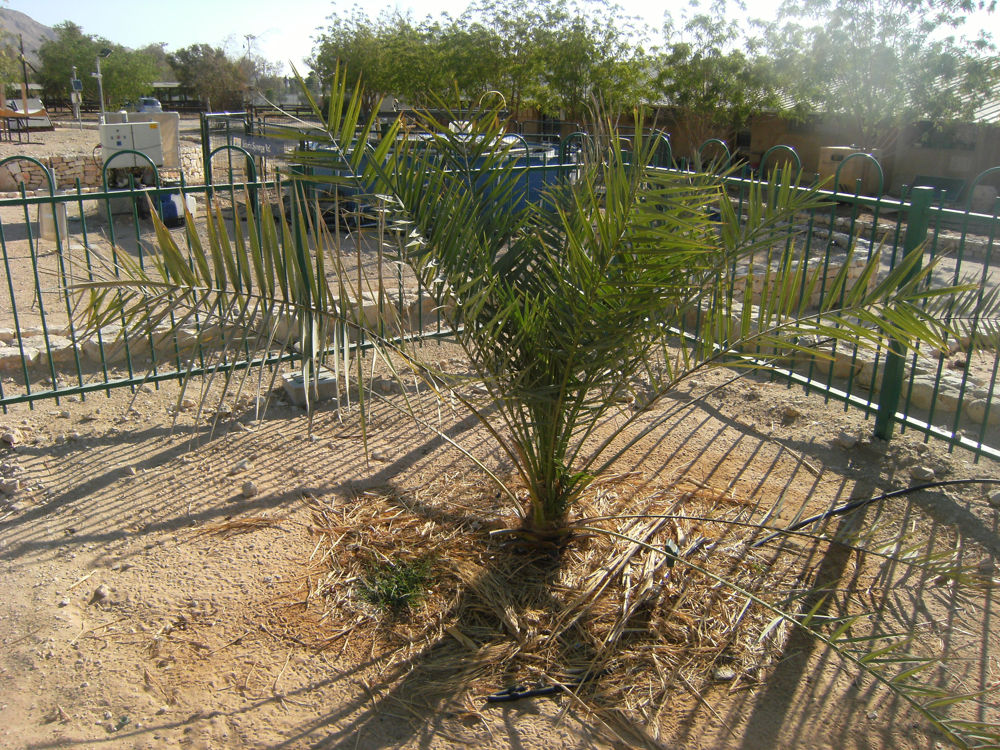
Other remarkable seed revival stories include:
- Sacred lotus (Nelumbo nucifera): A dry lotus seed recovered from a lakebed in China was successfully germinated after approximately 1,200–1,300 years of dormancy. This lotus, often called the “Thousand-Year Lotus,” had been preserved in the mud of an ancient dried-up pond. When scientists planted it in the 20th century, it grew into a lotus plant with beautiful blooms. (For a long time, this was the record-holder for oldest germinated seed until the Judean date palm surpassed it.) The sacred lotus is known for the longevity of its seeds; even younger lotus seeds (hundreds of years old) have unusually high viability, which has made them a subject of research into how their biochemistry resists aging.
- Narrow-leafed campion (Silene stenophylla): In 2012, a team of Russian scientists announced they had regenerated a flowering plant from 30,000+ year-old material found in Siberian permafrost. Buried deep in frozen soil, fruit pods dating to the Ice Age (around 32,000 years old) were discovered in an ancient ground squirrel burrow. The mature seeds inside these fruits were damaged, but the scientists extracted tissue from the fruit and successfully coaxed it into growing. The result was a living plant of Silene stenophylla, a delicate Arctic flower, revived from tissues tens of thousands of years old. This feat – effectively cloning a plant from Pleistocene-era seed tissue – beat the Judean palm’s record by an order of magnitude. The regenerated campion grew, bloomed, and even produced new seeds of its own, essentially resurrecting a piece of the Ice Age tundra flora. This discovery suggests that permafrost can serve as a vault preserving life far beyond the usual time scales, and it sparks the imagination about what other extinct plants (or even plant life from ancient ecosystems) might be recovered in the future.
- Arctic lupine (Lupinus arcticus): An intriguing but debated case involves seeds of an Arctic lupine reportedly found in frozen soil of the Yukon. In 1966, a scientist claimed to have germinated lupine seeds that had been frozen in permafrost for over 10,000 years – an astonishing claim at the time. For a while, these were hailed as the oldest seeds to sprout. However, later research with more advanced dating methods cast doubt on the find. It turns out the seed samples were likely modern contaminants (perhaps modern lupine seeds that found their way into ancient rodent burrows). In other words, the lupine seedlings were real, but the seeds probably weren’t actually thousands of years old. Despite this twist, the story of the “10,000-year-old lupine” endures as a science lore – and it highlights how eager we are to discover seeds that can cheat time. Even as a cautionary tale, it emphasizes the extraordinary potential of seeds and the fascination we have with their longevity.
These ancient seed stories blur the line between science and miracle. Each germination is not only a botanical achievement but also a journey backward in time. The Judean date palm that sprouted is genetically distinct from modern date palms, providing a window into the past (scientists even sequenced its genome, learning about ancient cultivation and traits). The sacred lotus carries the lineage – and perhaps the spiritual symbolism – of flowers that bloomed in medieval Chinese ponds. The Ice Age campion offers a peek into prehistoric ecosystems, as if time-traveling gardens were possible. Together, these cases show that under the right circumstances, life can pause for millennia and still resume. It’s hard not to feel a sense of awe when a long-lost seed finally sprouts: it’s as if history itself briefly comes to life in green shoots and blossoms.
Seeds of Hope: Nature’s Resilience and Symbolism
It’s no surprise that seeds – these unassuming packets of life – have become powerful symbols of hope, rebirth, and resilience. A seed can endure through harsh seasons, lie buried in darkness, and weather the passage of years, only to burst forth when conditions improve. This natural cycle of dormancy and revival inspires us on a philosophical and spiritual level. Consider how after a devastating forest fire, the blackened earth can be covered in fresh green sprouts within weeks – a vivid reminder that from destruction comes renewal. Those sprouts come from seeds that survived the fire (some actually needed the fire to grow) and they represent a new beginning. Similarly, in deserts that haven’t seen rain in years, the sudden arrival of a downpour can awaken a whole carpet of wildflowers from the seed bank hidden in the soil. Life was there all along, just waiting patiently.
Around the world, cultural and spiritual traditions have long recognized the metaphor in a seed’s revival. We speak of “seeds of hope” or planting seeds for the future, drawing on the idea that small actions (or latent potential) can lead to blossoming outcomes after a time of gestation. In some religious texts, the analogy of a seed emerging from the ground is used to illustrate resurrection and renewal. The very act of gardening – burying a seemingly lifeless seed in soil and watching it become a living plant – has been described as an act of faith in the future. It’s a hands-on encounter with the miracle of life’s resilience.
One beautiful reflection comes from a horticultural writer marveling at seeds: “These little lightweight packages of starch and protein… are weighty with potential for what they can do in the future, and truly weighty with messages from the past… Seeds are life in abeyance. Each seed is a nexus, connecting the ways of the past with hopes for the future.” Indeed, a dormant seed is like a tiny time capsule. It carries the genetic memory of its parent plant (the past), and the promise of a new plant (the future) if given a chance to grow.
The science of seed dormancy and revival shows us that patience is woven into the strategy of life. In a fast-paced world, seeds teach a quiet lesson: that waiting and persisting through adversity can eventually lead to renewal. A seed might wait for a year or for a thousand years, but given the slightest opportunity – a drop of water, a ray of sunshine – it will strive to grow. This resilience in nature resonates deeply with us. Just as a long-dormant seed can surprise us by sprouting, our most dormant hopes can reawaken under new light. The next time you hold a seed in your hand, consider the dormant universe of possibilities inside it. Whether it springs up next week or in the distant future, that seed carries the flame of life, unextinguished. In the miraculous revival of seeds from years gone by, we find a powerful symbol of enduring hope and the promise of rebirth.
The phenomenon of seed dormancy and longevity has been documented in scientific literature, with extraordinary examples reported in news and research updates (e.g., the 142-year-old seeds in the Beal experiment, the Judean date palm grown from a 2,000-year-old seed, and the regeneration of a 32,000-year-old Arctic flower). These cases, alongside others, illustrate the science and wonder behind seeds that seemingly conquer time. Each tiny seed holds lessons in botany and inspiration in equal measure – a reminder that life waits patiently, and springs forth when given the chance.
Epilogue
We return to the verse used as an epigraph in the very beginning:
“It is God who splits open the seed and the fruit stone: He brings out the living from the dead and the dead from the living—that is God—so how can you turn away from the truth?” (Al Quran 6:95)
This verse highlights the divine power of Allah in initiating life from inanimate matter and underscores the continuous cycle of life and death as manifestations of His will.
Splitting of the Seed and Fruit Stone
The imagery of splitting open seeds and fruit stones refers to the germination process, where dormant seeds, seemingly lifeless, sprout into living plants. This transformation from a static state to dynamic growth exemplifies Allah’s role as the initiator of life. Tafsir Ibn Kathir explains that Allah causes the seed grain and fruit stone to split and sprout in the ground, producing various types, colors, shapes, and tastes of grains and produce.
Bringing Forth the Living from the Dead and Vice Versa
This phrase illustrates the continuous cycle orchestrated by Allah: creating life from non-life and returning living beings to a lifeless state. For instance, plants (living) emerge from seeds (non-living), and animals are born from reproductive cells. Conversely, living beings decompose after death, returning to the earth. This cyclical process signifies Allah’s control over existence. As stated in Tafsir Al-Jalalayn, Allah brings forth the living from the dead, such as the human being from the sperm, and the bird from the egg; and is the Bringer-forth of the dead, the sperm and the egg, from the living.
A Call to Acknowledge Divine Power
The verse concludes with a rhetorical question, challenging individuals to reflect on these signs of divine power and reconsider any inclinations toward polytheism or disbelief. Recognizing such clear manifestations of Allah’s authority serves as a reminder to remain steadfast in faith and not be led astray. Tafsir Ibn Kathir emphasizes that He who does all this is Allah, the One and Only without partners; then how are you deluded?
In essence, this verse encapsulates the marvels of creation as reflections of Allah’s omnipotence, urging believers to observe the natural world as evidence of His singular authority and to remain unwavering in their devotion.
In a single verse, the Glorious Quran presents the entire plant kingdom as evidence of His creativity, divinity, and sovereignty.




 The Glorious Quran and Science
Leave a reply to Hibatur Rehman Cancel reply