


Collected and presented by Zia H Shah MD
Surah Al-Fīl (Qur’an 105), meaning “The Elephant,” is a short Meccan chapter of five verses that commemorates a famous historical incident in Arabian tradition. It refers to the attempted attack on the Ka‘bah in Mecca by a foreign army that came with war elephants – an event dramatically foiled by divine intervention. The Qur’an alludes briefly to how Allah destroyed this army with flocks of birds, making the aggressors “like eaten straw” in the end. According to Islamic tradition, this event occurred around 570 CE, the year the Prophet Muhammad was born, known as the “Year of the Elephant.”
In what follows, we will explore Surah Al-Fil through multiple lenses: the traditional Islamic exegesis (tafsir) of classical scholars (e.g. al-Ṭabarī, Ibn Kathīr, al-Qurṭubī), the historical background of Abraha’s invasion, a linguistic and rhetorical analysis of key terms, and thematic reflections on divine protection, power, and the sanctity of the Ka‘bah. The aim is to maintain scholarly rigor and historical accuracy, drawing on both classical sources and modern research.
Historical Background: The Year of the Elephant
Islamic historical sources relate that decades before Islam, Abraha al-Ashram, the Abyssinian Christian ruler of Yemen, led a military expedition to destroy the Ka‘bah in Mecca. His motive is said to have been partly religious and partly economic: Abraha had built a magnificent cathedral in Sana’a, hoping to divert the Arab pilgrimage to Yemen, and was incensed when an Arab defiled that church in protest. In anger, Abraha vowed to annihilate the Ka‘bah. He mustered a large army – Arabian reports speak of 60,000 troops accompanied by several elephants (with one lead elephant named “Mahmūd”). As this force marched northwards, Arab tribes (such as those led by Dhū Nafr and Nufayl ibn Ḥabīb) attempted to resist but were defeated, and Abraha pressed on towards Mecca.
Upon reaching the outskirts of Mecca (at a place called al-Mughammis or the valley of Muḥassir near Mina), Abraha seized the property of the Quraysh, including 200 camels belonging to ‘Abd al-Muṭṭalib, the Prophet’s grandfather. ‘Abd al-Muṭṭalib, as Mecca’s chief, went to meet Abraha. Notably, instead of pleading for the Ka‘bah’s safety, he calmly requested only his camels back. When Abraha expressed surprise, ‘Abd al-Muṭṭalib gave a famous reply: “I am the lord of my camels, and the House (Ka‘bah) has its Lord who will defend it.”
This statement reflects the Makkan belief in the sanctity of the Ka‘bah and a reliance on divine protection even before Islam. Finding the Meccans unwilling to fight (they had mostly withdrawn to the hills), Abraha prepared to attack. However, as Abraha’s elephant troop advanced, the lead elephant knelt down and refused to enter Mecca. Eyewitness accounts preserved in Islamic tradition say that every time the elephant was turned toward the Ka‘bah it would refuse to move, yet it would readily gallop if turned back the way it came.
The Qur’an narrates, Allah’s help arrived in a miraculous form: “flights of birds” appeared, pelting the invading army with stones. Traditions describe these birds (ṭayr abābīl) as carrying three small stones each – one in the beak and two in the claws – about the size of chickpeas or lentils. The stones struck the soldiers with uncanny precision. Classical historians report that any soldier hit by these projectiles had his flesh disintegrate on impact, “dissolving his flesh and bursting it into pieces,” as Ibn Kathīr vividly recounts. The assault was devastating: “None of the army was struck [by a stone] but that his limbs were cut off and he died”, and the once-mighty force was left in complete ruin. Not every man was hit – some survived and fled in panic, including a wounded Abraha. Those who escaped “rushed towards the road by which they had come,” spreading terror with their account of what befell them. Abraha himself was struck and fell gravely ill; he retreated towards Yemen with his flesh rotting away, and died on the way, according to Ibn Kathīr’s and Ibn Ishāq’s reports.
This miraculous deliverance of Mecca was deeply etched in the Arab memory. The year came to be known as ‘Ām al-Fīl – “The Year of the Elephant,” and it marked an epoch in Arabia. In fact, 570 CE (or 571) became a reference point for Arabs (until the Islamic hijrī calendar was established later). Islamic sources align the incident with the Prophet Muhammad’s birth year, and later Muslim scholars viewed it as an early sign of his prophethood – a miraculous prelude (irhās) signaling the new era to come. Modern historians have tried to pinpoint the date more precisely: archaeological and South Arabian inscriptions hint the event might have occurred around 569 CE (since Abyssinian rule in Yemen was overthrown around 570). Some scholars once speculated it could relate to an Abraha campaign in 552 CE, but newly discovered inscriptions show the Mecca expedition was a distinct, later campaign. In any case, there is no doubt that the “People of the Elephant” met a spectacular defeat. The Qur’an’s account was proclaimed in Mecca within living memory of the event – revealed roughly 40 years afterward – and notably, no one from the Quraysh, not even the staunchest skeptics, ever denied its occurrence. As Imām Fakhr al-Dīn al-Rāzī observes, this made it a potent, incontrovertible sign of God’s power: an act of divine intervention witnessed by the previous generation and universally acknowledged in Arabia.
Traditional Exegesis of Surah Al-Fīl
Surah Al-Fīl is unanimously understood by classical Muslim exegetes to refer to the above historical episode. In the opening verse, “Have you not seen how your Lord dealt with the Companions of the Elephant?”, the address is directed to Prophet Muhammad, but also to anyone aware of this famous event. Al-Ṭabarī (d. 923) explains that “the Companions of the Elephant” clearly denotes Abraha and his army from Yemen who came to destroy the Ka‘bah, led by the Abyssinian elephant commander (Abraha). He clarifies that “Have you not seen?” is figurative – the Prophet (and his listeners) “see” with the mind’s eye by knowing the well-attested story. Thus the Qur’an is appealing to their knowledge of recent history as evidence of God’s intervention.
Classical commentators delve into the details behind these terse Qur’anic verses, often retelling the story to underscore Allah’s power. Ibn Kathīr (d. 1373), for instance, recounts how Abraha’s proud campaign was utterly crushed by what seemed like a trivial force of birds. He describes in his Tafsīr and historical works that each bird rained down small baked clay pebbles that tore through the soldiers’ bodies. He notes that “there never fell a stone on a soldier except it dissolved his flesh… Abraha fled with his flesh coming apart and died on the way back to Yemen.”
Such graphic descriptions highlight the miraculous nature of the punishment. Al-Qurṭubī (d. 1273) similarly narrates that the birds came in successive flocks (abābīl), striking the invaders and leaving them like scattered chaff. He even preserves a report by the early scholar Sa‘īd ibn Jubayr that these birds were “somewhat smaller in size than a pigeon and [of a kind] never seen before.”
In other words, they were not ordinary birds known to the Arabs (despite later folklore equating abābīl with swallows or other species). The term abābīl in Qur’anic Arabic itself means “flocks or crowds” – it “is plural and has no singular, meaning birds in groups or swarms, not a specific breed”
Thus, classical exegetes reject the notion that abābīl refers to a particular bird (Urdu speakers, for example, often assume it means “swallow” due to a false cognate). The emphasis is that Allah sent an overwhelming multitude of birds, underlining the miraculous timing and coordination of the event rather than the species of the creatures.
The second verse states, “Did He not make their plot go astray?” – i.e. Allah caused Abraha’s scheme (kayd) to fail spectacularly. Al-Qurṭubī and others note how Abraha’s carefully laid plan to profane the Ka‘bah was overturned by divine decree. Al-Rāzī makes a linguistic observation here: the Qur’an uses the word kayd (connoting a secret plot or cunning stratagem) even though Abraha’s intention to destroy the Ka‘bah was openly declared. The reason, Rāzī explains, is that Abraha’s deeper motive was hidden – a jealous “scheme” in his heart against the honor and economic standing that the Ka‘bah gave the Arabs. In other words, Abraha’s outward attack masked an inner envy and a desire to undermine the thriving pilgrimage trade of Mecca. Regardless, Allah “led their plan astray,” causing the invaders to meet an end opposite to what they intended. Many exegetes remark that Abraha’s fate illustrates the Qur’anic principle that those who plot evil will see it recoil back on themselves by God’s will (cf. Quran 35:43).
Verses 3–4 of Surah Al-Fīl then describe the instrument of divine punishment: “He sent against them birds in flocks (ṭayran abābīl), striking them with stones of baked clay (ḥijāratin min sijjīl).” Here the classical commentaries provide rich detail, as already noted. The flocks of birds are said to have come from the direction of the sea (the Red Sea coast to the west of Mecca). Each carried tiny projectiles of burnt clay. The Qur’anic term sijjīl is explained by early authorities like Ibn ‘Abbās (a Companion of the Prophet) as “stones of baked clay.”
Al-Ṭabarī and Ibn Kathīr preserve this interpretation in their tafsirs. Interestingly, Fakhr al-Dīn al-Rāzī and the linguist al-Zamakhsharī add an alternative nuance: sijjīl in Arabic could be related to a Persian term meaning “record” or “writing”, as if these stones were marked in a divine register for this very punishment. Some commentators creatively suggest the pebbles had the names of the targets written on them, indicating a pre-ordained divine sentence. In any case, the consensus is that these were no ordinary stones: they were hardened clay missiles sent by God, akin to brimstone, meant to obliterate Abraha’s forces. A number of Islamic reports even mention that each stone had an individual’s name on it – symbolizing how precisely God’s punishment hit its mark. Classical scholars also connect this to reports that diseases like smallpox or measles broke out in the aftermath. Ibn Ishāq, the earliest biographer of the Prophet, records a tradition that “that year was the first time that measles and smallpox appeared in Arabia.”
This has led some to conjecture that the “stones” may have brought a plague upon the army – a view sometimes echoed in modern commentary – though the prevalent Muslim belief is that the physical pummeling itself decimated the troops by God’s direct command.
Finally, verse 5 concludes: “He made them like asf ma’kūl – like straw (fodder) eaten up.” Al-Qurṭubī explains that this refers to the dry outer husk of grain or the stalks of harvested crops, which when eaten and spat out by animals, lose all integrity. The Quranic imagery thus likens the army’s remains to a field of straw that has been masticated and spat out – in other words, annihilated to the point of being unrecognizable. This vivid description in the last verse recapitulates the surah’s main point: no trace of Abraha’s proud force remained save a mush of flesh and refuse, as a sign of God’s power. Indeed, some classical narrations say that the entire area was littered with corpses and disintegrated matter, which then washed away in the rain, leaving nothing but a cautionary tale for posterity.
Linguistic and Rhetorical Analysis
Surah Al-Fīl may be brief, but it employs powerful language and rhetoric. Several key terms and stylistic features in these verses have been highlighted by scholars for their linguistic significance:
- “Alam tara” (أَلَمْ تَرَ) – “Have you not seen…?”: The surah begins with a rhetorical question addressed in the singular form. Although neither the Prophet nor his listeners literally witnessed the event (it occurred around the time of the Prophet’s birth), the Qur’an asks “Did you not see?” as a device to prompt reflection on a well-known historical fact. Exegetes note that in Arabic usage, “have you not seen” can mean “have you not considered/come to know”. Al-Ṭabarī paraphrases it as “Did you not look with your heart and see what your Lord did…?”, indicating that mental vision (through knowledge) is intended. This rhetorical question has the effect of asserting the truth of the event – it’s as if the Qur’an says “Surely you are aware of how God dealt with them!” – thereby jolting the audience to acknowledge God’s intervention in their own recent history.
- “Aṣḥāb al-fīl” (أَصْحَابُ الْفِيلِ) – “Companions of the Elephant”: This phrase is a synecdoche for Abraha’s army (as elephants were its distinguishing feature). In classical Arabic, ṣāḥib (companion) can mean someone associated with or possessing something. The use of this epithet instead of naming Abraha directly adds an air of derision: they are remembered only as the people accompanying a beast in a foolhardy expedition. Some scholars, like al-Rāzī, even muse that calling them “the Elephant People” hints at their stupidity – blindly following an elephant into disaster islamicstudies.info. The elephant, an animal not native to Arabia, is also a symbol of foreign power; yet even this symbol of might availed them nothing against God.
- “Kayd” (كَيْد) – “scheming/plot”: The Qur’an characterizes Abraha’s entire plan as a kayd, meaning a deceptive scheme. Linguistically, kayd implies guile or a secret strategy intended to outwit. This is intriguing because Abraha’s attack was not secret at all – it was an open military assault. As mentioned, al-Rāzī explains the word choice by pointing out Abraha’s hidden agenda: beyond the open aggression lay a devious aim to hurt Mecca’s standing out of envy. The Qur’an thus exposes the malicious cunning behind the attack, and then declares that Allah “sent it astray” – using the verb taḍlīl, which means to make something go wrong or off-track. The rhetorical effect is to show that no matter how shrewd or forceful a plan is, God can unravel it completely. The sudden collapse of Abraha’s seemingly unstoppable campaign is the ultimate illustration of “man proposes, God disposes.”
- “Ṭayran abābīl” (طَيْرًا أَبَابِيلَ) – “birds in flocks”: The word abābīl is unusual; it appears only here in the Qur’an. It has no singular form and essentially means “in separate groups” or “in successive bands.” Thus, it denotes a continuous wave or multitude of birds coming from all directionsquran.com. This term intensifies the image: not just a few birds, but swarms upon swarms. The verse structure places abābīl at the end for emphasis, almost as a striking visual: first “birds,” then qualifying “in swarms.” Classical lexicons note that abābīl conveys dispersal – perhaps suggesting that the birds came group after group, pelting the army repeatedly. The Quranic narrative is very terse (“He sent against them birds, abābīl…”) but the uncommon word choice invites the listener to imagine the sky darkened by waves of avian attackers – a scene of awe and terror.
- “Ḥijārah min sijjīl” (حِجَارَةٍ مِنْ سِجِّيلٍ) – “stones of baked clay”: Sijjīl is another rare term, found in a few Quranic passages, often understood as baked or hardened clay turned to stone. Ibn ‘Abbās and many early authorities glossed sijjīl as clay that has been fired (like pottery or brick). This suggests that the pebbles were extraordinarily hard and perforating – more like shrapnel than ordinary pebbles. Some etymologists, as noted by al-Zamakhsharī, think sijjīl entered Arabic from Persian (possibly from sang-o-gil, “stone and clay”), which again points to the idea of stone-like clay. The combination of words ḥijārah min sijjīl implies these were not natural hailstones or common rocks, but a special divine ammunition. Rhetorically, the phrase also echoes earlier Quranic punishments (like the people of Lot being rained on by “stones of baked clay” in Quran 11:82), thus linking Abraha’s fate to the archetype of communities destroyed by heavenly wrath. The destructive impact described by the commentators – limbs severed, flesh melted – underscores that these were supernaturally potent projectiles.
- “Ka-‘aṣfin ma’kūl” (كَعَصْفٍ مَأْكُولٍ) – “like eaten straw”: This simile in the final verse is a graphic visual metaphor. ‘Aṣf in Arabic refers to plant matter such as straw, chaff, or leaves, especially the remnants after harvest. Ma’kūl means “eaten” – here implying something chewed up. The image evoked is that of crop stalks that have been grazed and chewed by animals, which become a pulpy mass of refuse. By simile, the mighty army was reduced to a chewed-up carcass, trampled and broken as if “digested” by the wrath sent upon them. Linguistically, the conciseness of this simile is admired: in just two words (“eaten straw”), the Qur’an conveys complete annihilation. The choice of agricultural imagery (straw) for an army’s remains is also poignant – it implies the men were as powerless as dry grass before the divine “scythe.” Some commentators note that this metaphor also carries a tone of disdain – the arrogant aggressors are likened to animal feed, essentially worth nothing more than fodder once God dealt with them.
From a broader rhetorical perspective, the entire surah uses historical allusion as argument. By asking “Have you not considered how your Lord dealt with…?” at the start, it uses the listener’s knowledge of recent history as evidence of God’s sovereign power. This is a form of argumentum ad factum – appealing to an undeniable fact that even opponents acknowledge. The surah’s rapid, forceful depiction (in just a few lines) of a significant event gives it a dramatic flair. It moves quickly from setup (verse 1) to denouement (verses 3–5), with verse 2 (the failure of the scheme) serving as a pivotal turning point. The brevity itself is eloquent: the Qur’an does not need to spell out every detail; the audience fills them in from memory, which makes the recitation impactful. In essence, Surah Al-Fīl is a masterclass in allusive narrative – it presumes the audience knows the story and draws out the moral in a few bold strokes, letting the details resonate in the background. This interplay of what is said and unsaid engages the audience’s imagination and reinforces the lesson that Allah’s power can make the greatest worldly power vanish in an instant.
Thematic Reflections
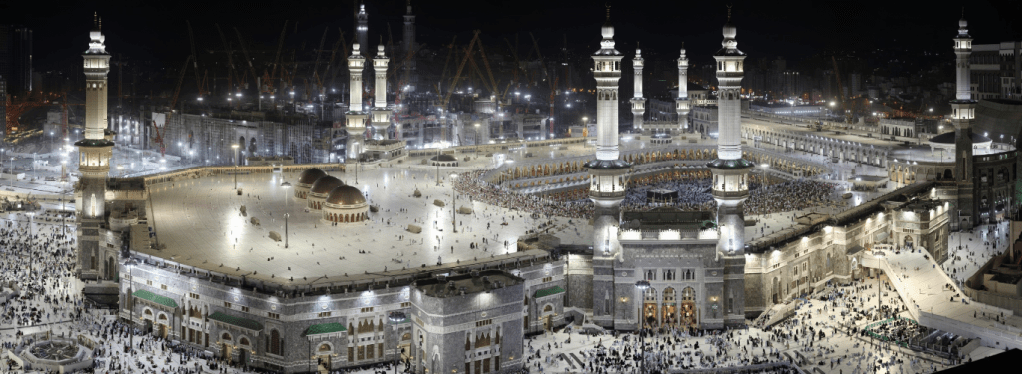
Divine Protection and the Sanctity of the Ka‘bah: The foremost theme of Surah Al-Fīl is that God protects His sacred institutions when He wills, irrespective of the worldly odds. The Ka‘bah in Mecca, despite being in the care of a pagan tribe at that time, was under Allah’s protection because of its destined role as the spiritual center for monotheism (it was originally built by Prophet Abraham, according to Islamic belief). The miraculous deliverance of the Ka‘bah from Abraha’s forces illustrates that no aggressor can violate what God has made inviolable. This theme of sanctity is tied to the Ka‘bah’s status as al-Bayt al-Ḥarām (the Sacred House). Later Islamic history reinforced this inviolability; even Abraha’s failed attempt became a warning that deterred others from similar designs. The fact that ‘Abd al-Muṭṭalib told Abraha “the House has its Lord who will defend it” islamicstudies.info has become legendary – a statement of tawakkul (trust in God) that proved true literally. For Muslims, this story demonstrates that while human beings are caretakers of holy sites, it is ultimately Allah who preserves their sanctity. It also prefigures the idea that Mecca was under divine guardianship in preparation for the Prophet Muhammad’s mission; the Ka‘bah would soon be restored to pure monotheistic worship with the advent of Islam.
Divine Power over Human Might: The narrative starkly contrasts human power and planning (a large army with elephants, a calculated political/religious scheme) with divine power, which turns the tables using the least expected means. The mightiest war elephant is stopped in its tracks by an unseen command, and an army is wiped out by tiny stones delivered by flocks of birds. This is a recurring Quranic motif: Allah can use even His smallest creatures to humble the proud. The Qur’an elsewhere notes that those who oppose God’s will can be destroyed by forces they never anticipated (cf. Quran 59:2, “Allah came upon them from whence they expected not”). Surah Al-Fīl is a vivid case in point. The elephant, a symbol of strength and a terrifying weapon in ancient warfare, was rendered useless – it bowed to the will of its Creator. Meanwhile, birds, seemingly insignificant, became the bearers of doom for a human host. The theme emphasizes that material superiority is futile when one is under divine wrath. This delivers a moral lesson in humility: no matter how invincible one might seem (be it an army or an empire), all power belongs to God, and He can deploy His creation against His enemies in extraordinary ways. Later Muslims often drew analogies between the People of the Elephant and other forces that threatened Islam or the Ka‘bah, taking comfort that God’s support can manifest in miraculous providence when needed.
The Prestige of Quraysh and Gratitude to God: Another outcome of this event – and an important theme implicitly linked to the surah – is the special status Quraysh (the tribe of Mecca) gained afterward. Al-Qurṭubī observes that after Abraha’s army was destroyed, the Arabs regarded the Quraysh with newfound awe and respect, seeing them as “the people of God” who were under divine protection quran.com. This naṣr (divine help) enhanced Quraysh’s social and political standing among the Arab tribes. As a result, the Quraysh enjoyed security in their trade caravans – a privilege alluded to in Surah Quraysh (Qur’an 106), which immediately follows Surah Al-Fīl in the Qur’anic arrangement. In fact, many scholars see a thematic link or continuity between the two surahs. Surah Al-Fīl describes the protection of the Ka‘bah and Quraysh from the external threat, while Surah Quraysh exhorts the Quraysh to worship the Lord of this House in gratitude, since it is He who gave them safety and prosperity quran.com. Thus, the implication of Surah Al-Fīl is a call to recognize Allah’s favor. God’s saving of Mecca was not due to Quraysh’s own merit (they were polytheists at that time), but a mercy from God – one that should have led them to renounce idol worship and honor the one true God who protected them. Thematically, it underscores ingratitude vs. gratitude: a warning that the Quraysh should not take God’s protection for granted, but rather turn to Him in obedience. Historically, this theme culminates when the Prophet Muhammad later conquers Mecca peacefully, cleanses the Ka‘bah of idols, and the Quraysh finally do honor the Lord of the Ka‘bah as the surah implicitly demanded.
Foreshadowing and Divine Plan: Muslim scholars often view the Episode of the Elephant as part of Allah’s grand design in paving the way for Islam. The event happened in the same year as the Prophet’s birth, which is seen as more than mere coincidence. In the science of hadith, as mentioned earlier, this kind of miracle before a prophet’s mission is called an irhāṣ – a “precursory sign” of prophethood. Just as stones and birds defended the Ka‘bah then, later in the Prophet’s life we see nature again coming to his aid in miraculous ways (for example, spiders spinning a web to hide him from enemies in the cave during his migration). Thematically, Surah Al-Fīl can be read as God’s announcement that He was actively intervening in Arabia’s history to ensure the emergence of a new monotheistic order. It foreshadows that no harm will be allowed to befall the Ka‘bah once it becomes the center of Islamic worship. Indeed, despite many conflicts in Islamic history, the sanctuary of Mecca has remained protected from profanation. Furthermore, the failure of Abraha – a Christian ruler – to impose his religious/political agenda on Arabia can be seen as setting the stage for the Prophet Muhammad’s mission to succeed. It symbolically marked the end of one epoch and the beginning of another under God’s providence. Modern scholars also reflect that had Abraha succeeded, the course of Arabian religion and society might have been very different, possibly stifling the environment into which Islam was born. Thus, believers see Allah’s wisdom in timing this event when He did.
Justice and Retribution: Finally, Surah Al-Fīl carries a universal theme of divine justice. The arrogant aggressors who sought to destroy the holy sanctuary unjustly were punished in a manner befitting their arrogance. They came boastfully like an overwhelming force, and they were made into an example for all. The Qur’an often tells stories of past nations as moral lessons, and Surah Al-Fīl serves as a mini-lesson that oppression and sacrilege invite divine retribution. The moral extends beyond just protecting the Ka‘bah: it reassures the oppressed that God sees and can save, while warning tyrants that no power can shield them from God’s justice. In Islamic thought, this resonates with the concept that Allah is al-Ḥāfiẓ (The Preserver) of truth and al-Muntaqim (The Avenger) against wrongdoing. The brevity of the surah, without explicit mention of Allah’s name in the body (aside from “your Lord”), actually intensifies the focus on His act of justice. There is almost a sense of divine sarcasm in how the surah asks, “Don’t you remember what happened to those fellows with the elephant?” – implying look what state they ended up in! This tone can be read as both a consolation to the believers and a veiled threat to any who would similarly challenge God’s will.
Conclusion
Surah Al-Fīl stands as a remarkable convergence of history and scripture, where a real-world event is immortalized in the sacred text to serve as a sign for all times. In this academic exploration, we have seen how classical Muslim scholars like al-Ṭabarī, Ibn Kathīr, and al-Qurṭubī preserved the rich details of this event and expounded its lessons. The historical background of the Year of the Elephant – with Abraha’s ambition and its ruin – provides the canvas on which the surah’s verses are understood. Linguistically, each term in the surah carries weight: from the rhetorical challenge of “Have you not seen?” to the evocative imagery of “eaten straw,” the Qur’an employs language economically yet powerfully to drive home its message. Rhetorically, the surah uses the audience’s own collective memory as evidence of God’s might and beneficence, leaving no room to refute what was common knowledge in Mecca. Thematically, the commentary reveals layers: Divine providence, the futility of pride, the duty of gratitude, and the protection of holy sanctuaries are all embedded in the narrative.
Moreover, by incorporating insights from modern scholarship alongside traditional exegesis, we gain a fuller picture. Contemporary historical research has largely corroborated the broad outline of the event (placing it around 570 CE) while debating some details, yet the enduring significance of Surah Al-Fīl lies in its spiritual and moral import rather than the minutiae of dates. It reminds the faithful that behind the rise and fall of powers is a divine purpose. For believers, the fall of “the Elephant People” is not just a tale of the past; it is a reassurance that God’s plan will triumph over tyranny and sacrilege in every age. The sanctity of the Ka‘bah – and by extension, the values it symbolizes – will be defended by means beyond human expectation. In an academic sense, this surah is also an example of how scripture can encode historical memory and transform it into moral theology. The story of Abraha’s failed invasion transcends its 6th-century context to become a timeless admonition: a warning to every “Abraha” that might arise, and a comfort to those who, like ‘Abd al-Muṭṭalib, entrust their affairs to the “Lord of the House.”
Sources:
- al-Ṭabarī, Jāmi‘ al-Bayān fī Tafsīr al-Qur’ān (Commentary on Qur’an 105:1) quran.com.
- Ibn Kathīr, Tafsīr al-Qur’ān al-‘Aẓīm (Commentary on Sūrat al-Fīl)islamreigns.wordpress.com quran.com.
- al-Qurṭubī, Al-Jāmi‘ li-Aḥkām al-Qur’ān (Commentary on Sūrat al-Fīl)quran.comquran.com.
- Ibn Hishām (relating Ibn Ishāq’s Sīrah), account of the Year of the Elephant islamonline.netislamonline.net.
- Fakhr al-Dīn al-Rāzī, Mafātīḥ al-Ghayb (Keys to the Unseen), commentary on Surah Al-Fīl islamicstudies.infoislamicstudies.info.
- Islamic Studies Info – Ishraq al-Ma‘ānī Tafsir (modern annotated tafsir)islamicstudies.info.
- IslamOnline – “Owners of the Elephant” (historical narrative quoting early sources) islamonline.netislamonline.net.
- Islam Q&A Fatwa 301735 (compiling traditional reports on Abraha’s army) islamqa.infoislamqa.info.
- Valentina Grasso & Christian Robin (via Ahmad al-Jallad) on the historical dating of Abraha’s campaign reddit.com.
- Wikipedia: “Year of the Elephant” and “Al-Fil” (historical summary and references) en.wikipedia.org en.wikipedia.org. quran.com

 The Glorious Quran and Science
Leave a comment