
Epigraph
Allah is He, Who created seven heavens and of the earth a similar number. The divine command comes down in their midst that you may know that Allah has power over all things in His knowledge. (Al Quran 65:12)
And among His Signs is the creation of the heavens and the earth, and whatever living creatures He has spread in both of them and He has the power to gather them together, when He will so please. (Al Quran 42:29)

Written and collected by Zia H Shah MD, Chief Editor of the Muslim Times
Introduction
The universe is unimaginably vast, containing hundreds of billions of galaxies, each with countless stars. Given this enormity, scientists have long pondered whether intelligent life might have arisen many times across the cosmos. Modern advances in astronomy and astrobiology are beginning to provide data to inform this question. From the discovery of thousands of exoplanets (planets around other stars) to studies of life’s resilience in extreme environments, current scientific evidence offers a compelling rationale that our universe could indeed be teeming with intelligent civilizations. This essay explores that possibility through recent findings in astronomy, astrobiology, and the search for extraterrestrial intelligence, maintaining a formal perspective on why numerous intelligent life forms might inhabit the universe.
Recent decades have seen an explosion in the discovery of exoplanets, radically altering our understanding of how common planetary systems are. As of 2025, over 5,800 exoplanets have been confirmed in more than 4,300 star systems en.wikipedia.org. These include a wide variety of worlds – from gas giants larger than Jupiter to small rocky planets only slightly bigger than Earth. Notably, a significant fraction of Sun-like stars (around 20%) are estimated to host an Earth-sized planet in the habitable zone, the region around a star where temperatures could allow liquid water en.wikipedia.org. In our Milky Way Galaxy of roughly 200 billion stars, this statistic implies on the order of 10–40 billion potentially habitable Earth-size planets orbiting stars, especially when including the abundant red dwarfs en.wikipedia.org. Such numbers suggest that the basic conditions for Earth-like life – a stable star and a temperate planet – may be far from rare.
Exoplanet surveys have also identified specific intriguing worlds that fuel speculation about life. NASA’s Kepler mission and other observatories have found planets strikingly similar to our own. For example, the TRAPPIST-1 system contains seven Earth-sized exoplanets orbiting a dim red dwarf star only 39 light-years away; three of these planets lie in the star’s habitable zone where liquid water could exist hubblesite.org. Other discoveries include Kepler-186f, the first Earth-size planet found in a habitable zone, and Proxima Centauri b, a roughly Earth-mass planet in the habitable zone of the closest star to the Sun (Proxima Centauri, just 4.2 light-years away). The sheer number of potentially habitable planets discovered – many in just the tiny portion of the galaxy that we have surveyed – indicates that worlds with the right conditions for life are common. Each of these planets is a potential cradle where life could originate and, given enough time, evolve intelligence. The prevalence of such planets underpins the scientific case that the galaxy may host many forms of life, possibly including advanced civilizations.
Conditions for Life
While a planet’s location in a star’s habitable zone is a good starting point, the conditions for life are multifaceted. Life as we know it requires certain chemical and environmental conditions, notably the presence of liquid water, essential elements (like carbon, hydrogen, oxygen, nitrogen, etc.), an energy source, and relative stability over long timescales. Earth provides a template: it is a rocky planet with abundant water, a protective atmosphere, and a stable climate that allowed life to emerge fairly quickly (within the first few hundred million years) and to persist for billions of years. These conditions are not unique to Earth – many exoplanets and some moons in our own Solar System meet parts of these criteria. For instance, several moons (such as Jupiter’s Europa and Saturn’s Enceladus) have subsurface oceans beneath icy crusts, heated by internal energy, which could provide habitats for life even without sunlight. A planet or moon does not need to be exactly like Earth for life to potentially arise; it only needs to offer an environment where complex chemistry can take place and sustain itself. Scientists have broadened the definition of “habitable” as we discover life in surprising places on Earth.
A key insight from modern biology is that life is remarkably adaptable. Microbial organisms on Earth, known as extremophiles, have been found thriving in conditions once thought utterly inhospitable – from boiling hot deep-sea vents and acidic hot springs to frozen Antarctic lakes and inside rocks in the driest deserts. Some microbes tolerate extreme doses of radiation and even the vacuum of space. In fact, microorganisms not only thrive across a broad spectrum of temperatures, pressures, and chemical environments on Earth, but certain hardy bacteria have survived direct exposure to space with its intense radiation and near vacuum pmc.ncbi.nlm.nih.gov. Such discoveries reveal that the “habitable zone” for life is much wider than initially presumed; life can exist in extreme darkness, cold, heat, or chemical toxicity as long as some form of liquid water (or other solvent) and energy are available pmc.ncbi.nlm.nih.gov. The prevalence of extremophiles suggests that simple life could take hold in a variety of alien environments. If microbial life can endure on Earth in boiling water or under high radiation, then on an exoplanet or moon with similar extremes – say a scorching Venus-like world or a frigid icy moon – life might also find a way. These hardy forms of life could be the pioneers that eventually give rise to more complex organisms. In Earth’s history, single-celled life was ubiquitous long before multicellular life and intelligence evolved; for billions of years, microbes were the dominant life form. By analogy, the universe might be filled with microbial biospheres, some of which could, under the right circumstances, lead to intelligent life over geological timescales.
The Role of Astrobiology
Astrobiology is the interdisciplinary science devoted to understanding life’s potential in the universe, and it plays a central role in evaluating how likely it is that the cosmos harbors many intelligent species. Astrobiology examines the origin of life on Earth, the limits of life in extreme conditions, and searches for evidence of life beyond our planet. It is formally defined as the study of the origin, evolution, distribution, and future of life in the universe nap.nationalacademies.org. By studying life’s beginnings and its adaptation to extreme environments, astrobiologists develop criteria for where life is most likely to exist and what signs it would produce. This field informs the design of missions to other planets and moons and the development of telescopes and instruments to detect biosignatures (signals of life) on distant worlds.
One important contribution of astrobiology is identifying the chemical signatures of life. On Earth, life has dramatically altered our atmosphere and environment – for example, producing abundant oxygen and methane. These gases would not co-exist in large quantities without continual replenishment by living organisms. Astrobiologists thus target such combinations as possible biosignatures in exoplanet atmospheres. Ongoing and upcoming observatories (like the James Webb Space Telescope and future extremely large telescopes) are aiming to detect atmospheric components such as oxygen, ozone, methane, or other disequilibrium gases on Earth-like exoplanets as hints of biological activity. Meanwhile, within our Solar System, astrobiological research guides the search for past or present life on Mars (for instance, the Mars rovers are seeking organic molecules and fossil evidence of microbes) and on ocean-bearing moons. The detection of even simple life elsewhere in the Solar System would be profound, as it would indicate that life has arisen twice in one star system – a strong hint that life might be common throughout the galaxy.
Astrobiology also encompasses the discovery of life’s building blocks in space. Organic molecules, including amino acids (the constituents of proteins), have been found in meteorites and comet samples, showing that the ingredients for life are widespread. Notably, in 2022 scientists announced that samples from asteroid Ryugu contained more than ten types of amino acids – the first direct detection of amino acids on an asteroid in space smithsonianmag.com. This finding reinforces the idea that organic chemistry pervades the cosmos and that the seeds of life can be delivered to young planets by comets or asteroidal impacts. As one astrobiologist remarked, proving that amino acids exist on asteroids “increases the likelihood that the compounds arrived on Earth from space” and “means amino acids can likely be found on other planets and natural satellites, hinting that life could have been born in more places in the universe than previously thought.”
In sum, astrobiology paints a picture of a life-friendly universe: the basic chemical tools for life are everywhere, and life itself, once started, can endure in a wide range of environments. This broad foundation increases the probability that some of those many instances of life have evolved beyond microbes into intelligent organisms.
Technosignatures and SETI
Given the multitude of potentially habitable planets and the adaptability of life, it is a reasonable hypothesis that intelligent life – organisms with advanced cognitive abilities and technologies – may have emerged on some fraction of those worlds. To explore this possibility, scientists turn to the field of SETI, the Search for Extraterrestrial Intelligence, which seeks evidence of technologically advanced civilizations. This search often involves looking for technosignatures – detectable signs of technology or industry, such as radio transmissions, laser pulses, or unusual chemical markers in a planet’s atmosphere that could indicate pollution or engineered compounds. SETI efforts are guided by both our growing astronomical knowledge and conceptual frameworks like the Drake Equation, which was formulated by astronomer Frank Drake in 1961 to estimate the number of active, communicative extraterrestrial civilizations. The Drake equation encapsulates factors thought to play a role in the development of intelligent life, including the number of habitable planets and the probabilities of life and intelligence arising. While many parameters remain uncertain, the equation’s core message is that even if each step (from life to intelligent life to technological civilization) is somewhat rare, the sheer number of stars and planets could still yield many civilizations. In Drake’s formulation, N (the number of civilizations capable of communication) is the product of terms like the rate of star formation, the fraction of stars with planets, the average number of habitable planets per star, the fraction of those planets where life actually evolves, the fraction of life-bearing planets that evolve intelligent life, the fraction of intelligent species that develop detectable technology, and the average longevity of such civilizations. This probabilistic argument, though uncertain in each factor, suggests that unless the likelihood of life and intelligence is extremely close to zero, our Milky Way should harbor other communicative civilizations en.wikipedia.org.
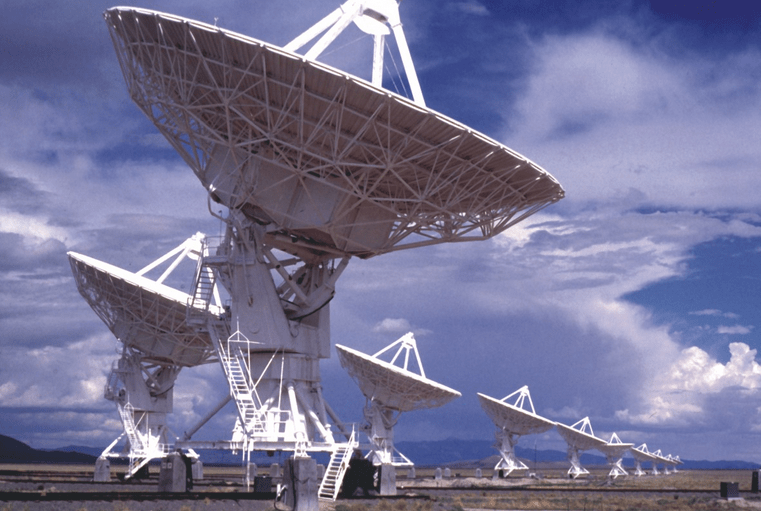
Radio astronomy is the classic method of SETI. Ever since the pioneering Project Ozma in 1960 (when Drake used a large radio telescope to listen for signals from nearby Sun-like stars), researchers have been monitoring the skies for patterns or signals that nature alone is unlikely to produce. One famous episode occurred in 1977, when a strong, intermittent radio signal was detected by The Ohio State University’s “Big Ear” telescope. The signal, now known as the “Wow!” signal (after a researcher’s excited notation on the data printout), appeared to come from the direction of the Sagittarius constellation and bore the hallmarks of an artificial, narrow-band transmission en.wikipedia.org. This 72-second signal remains unexplained and has never been repeated, but its tantalizing properties showed that our instruments could potentially pick up distant radio broadcasts from an alien civilization if they exist. Since then, numerous SETI projects have vastly expanded the search. Dedicated facilities like the Allen Telescope Array (shown above) continuously scan thousands of stars for radio emissions that cannot be attributed to natural cosmic sources. Additionally, optical SETI programs search for ultrafast laser flashes, and new ideas for technosignatures have emerged – for example, looking for the infrared glow of enormous megastructures (like hypothetical Dyson spheres) or peculiar atmospheric gases like industrial pollutants on exoplanets.
To date, no confirmed technosignature or communication from an extraterrestrial intelligence has been detected. Projects such as Breakthrough Listen, launched in 2015, have vastly increased the sensitivity and breadth of searches, examining millions of star systems across broad radio and optical frequency bands. While a few candidate signals have arisen (for instance, a 2020 report of a radio signal possibly from the vicinity of Proxima Centauri made headlines before being identified as likely terrestrial interference), none have met the rigorous criteria to confirm an alien origin. The absence of evidence so far – often framed as the Fermi Paradox (“Where is everybody?” asked physicist Enrico Fermi) – is an important reality-check. It could mean that advanced civilizations are indeed sparse or short-lived. However, scientifically this null result must be tempered by the fact that we have searched only a tiny fraction of the vast parameter space (in terms of sky area, signal types, time windows, and frequencies) for alien technosignatures. In a metaphor often used by SETI scientists, we have so far examined only a glass of water from the cosmic ocean. It is entirely possible that signals or artifacts of intelligent life are out there, waiting to be discovered as we broaden our exploration.
Interestingly, statistical arguments suggest that humans are unlikely to be unique if the probability of life and intelligence has any moderately large value. A recent study in Astrobiology (2020) took a “cosmic evolutionary” approach and concluded that even using very conservative assumptions, there could be on the order of dozens of active intelligent civilizations in our Milky Way galaxy alone phys.org. Another analysis considered the vast number of stars in the observable universe (around 2 \times 10^{22} stars) and calculated that humanity would be the only technological species ever to have arisen in the universe only if the odds of a civilization developing on a habitable planet were truly minuscule – on the order of 1 in 10^{22} science.nasa.gov. In other words, even if only one planet in a trillion produces an advanced civilization, the universe would still have had many such civilizations over its history science.nasa.gov. These probabilistic perspectives bolster the hypothesis that the universe likely has hosted numerous intelligent beings, even if they are rare in any given galaxy or epoch.
Conclusion
Current scientific knowledge provides a strong rationale for believing that the universe may harbor numerous intelligent life forms. The discovery of ubiquitous exoplanets – including many Earth-like candidates in habitable zones – shows that the stage for life is set in countless locations en.wikipedia.org hubblesite.org. Studies of life’s tenacity on Earth demonstrate that where basic conditions are met, life can take hold and persist even in extreme environments pmc.ncbi.nlm.nih.gov. Astrobiology reveals that the chemical ingredients for life are spread throughout space and that life may readily start given the right circumstances smithsonianmag.com. And while we have yet to find direct evidence of extraterrestrial intelligence, our searches have only begun to scratch the surface. The laws of large numbers applied to the cosmos imply that even rare events (like the evolution of intelligence) can occur multiple times when there are astronomically many opportunities. As one analysis put it, humanity cannot be the only advanced civilization unless the emergence of life and intelligence is almost impossibly unlikely science.nasa.gov.
Of course, the question “Are we alone?” remains unanswered empirically. It is possible that many worlds teem with simple life yet very few ever develop technology, or that intelligent civilizations are separated by such vast distances or time periods that contact is exceedingly difficult. Scientists must also grapple with the Fermi Paradox: if the universe is full of intelligent life, why have we not seen clear evidence of it? Various hypotheses address this, from the idea that intelligent life may tend to self-destruct or avoid broadcasting its presence, to the notion that we might not recognize the signals or signs even if they are around us. These cautionary points ensure that the claim of a life-filled universe is kept as a scientific possibility rather than an assumption. Still, each new astronomical discovery – a new exoplanet in the habitable zone, an organic molecule in interstellar space, a peculiar radio burst – adds to the sense that the cosmos is biologically rich.
In conclusion, the convergence of astronomy, biology, and geology in recent decades has moved the idea of a universe teeming with life from science fiction toward mainstream science. While definitive proof of extraterrestrial intelligence has yet to emerge, the trend of evidence points to a living universe where Earth is not an isolated exception but part of a grander cosmic tapestry of life. The scientific quest continues, and with each advance in telescopic power and exploratory missions, we move closer to finally knowing whether our universe hosts many intelligent neighbors or if, against the odds, we are singular. Either outcome – a universe bustling with minds or the rarity of our own existence – carries profound implications, making this one of the most exciting questions science can seek to answer. The balance of current knowledge, however, leans optimistically toward the view that we are unlikely to be alone in the universe. Our galaxy and others beyond may well have their own histories of life and intelligence, waiting to be discovered in the vast dark oceans between the stars.


 The Glorious Quran and Science
Leave a comment