
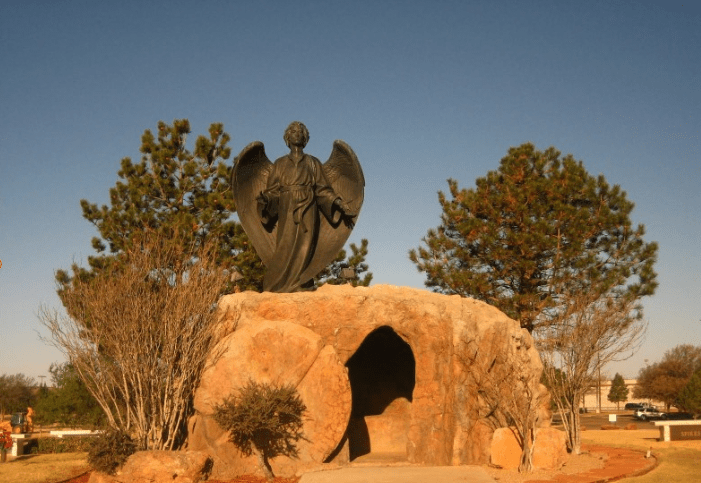
Epigraph
They killed him not, nor crucified him, but he was made to appear to them like one crucified, and those who differ therein are indeed in a state of doubt about it; they have no definite knowledge thereof, but only follow a conjecture; and they did not convert this conjecture into a certainty; on the contrary, Allah exalted him to Himself. And Allah is Mighty, Wise. (Al Quran 4:157-158)

Written and collected by Zia H Shah MD, Chief Editor of the Muslim Times
The Swoon Hypothesis—the idea that Jesus survived crucifixion and later revived—has been proposed by various authors over centuries. Below is a summary of key proponents, their works, and direct quotes advocating the theory, presented without counterarguments:
1. Karl Friedrich Bahrdt (1741–1792)
- Work: Ausführung des Plans und Zwecks Jesu (“Execution of the Plan and Purpose of Jesus,” 1784–1792).
- Key Argument: Bahrdt proposed that Jesus staged his death using drugs (e.g., opium or myrrh) to feign unconsciousness on the cross.
- Quote:
“Jesus had taken a preparation which put him into a deep sleep, resembling death. His friends then removed him from the cross and revived him in the tomb.”
2. Heinrich Paulus (1761–1851)
- Work: Das Leben Jesu (“The Life of Jesus,” 1828).
- Key Argument: Paulus argued Jesus survived crucifixion in a coma-like state, revived in the cool tomb, and later appeared to disciples.
- Quote:
“The apparent death of Jesus was a natural occurrence. The coolness of the sepulchre, the aromatic spices, and the devotion of his followers restored him to life.”
3. Karl Venturini (1768–1849)
- Work: Natürliche Geschichte des großen Propheten von Nazareth (“Natural History of the Great Prophet of Nazareth,” 1800–1802).
- Key Argument: Expanded Bahrdt’s theory, suggesting secret disciples administered a soporific drug to Jesus to help him survive.
- Quote:
“The friends of Jesus, skilled in medicinal arts, provided him with a potion to dull his senses and mimic death. His revival was mistaken for resurrection.”
4. Hugh J. Schonfield (1901–1988)
- Work: The Passover Plot (1965).
- Key Argument: Schonfield claimed Jesus orchestrated a plan to survive crucifixion, including bribing a Roman soldier to pierce his side harmlessly.
- Quote:
“Jesus arranged his own survival. The crucifixion was a premeditated act, designed to fulfill prophecy and convince the world of his messianic role.”
5. Ernest Brougham Docker (20th Century)
- Work: The Swoon of Jesus (1920).
- Key Argument: Docker argued Jesus’ apparent death was a temporary coma induced by physical trauma and dehydration, with revival in the tomb.
- Quote:
“The body of Jesus, though wounded, retained latent vitality. The stillness of the tomb allowed his strength to return, and he emerged alive.”
6. Barbara Thiering (1930–2015)
- Work: Jesus and the Riddle of the Dead Sea Scrolls (1992).
- Key Argument: Thiering used the Dead Sea Scrolls to claim Jesus survived crucifixion, married, and lived into old age.
- Quote:
“The resurrection accounts are symbolic. Jesus survived the cross, recovered, and continued his ministry in obscurity.”
7. Michael Baigent, Richard Leigh, and Henry Lincoln
- Work: The Holy Blood and the Holy Grail (1982) and The Jesus Mystery (1999).
- Key Argument: Suggested Jesus survived crucifixion, fled to France, and founded a bloodline.
- Quote (Baigent):
“The resurrection was a metaphor. Jesus lived on, his survival guarded by secret societies intent on preserving his legacy.”
8. Holger Kersten (Modern Author)
- Work: Jesus Lived in India (1983).
- Key Argument: Jesus survived crucifixion and traveled to India, where he died naturally.
- Quote:
“The swoon theory aligns with Eastern traditions. Jesus revived and completed his mission far from Judea.”
9. Mirza Ghulam Ahmad (1835–1908)
- Work: Masih Hindustan Mein (“Jesus in India,” 1899).
- Key Argument: The founder of the Ahmadiyya Muslim movement claimed Jesus survived crucifixion and preached in Kashmir.
- Quote:
“Jesus did not die on the cross. He was taken down alive and healed, fulfilling his divine mission in the East.”
10. Ahmed Deedat (1918–2005)
A South African Islamic preacher and writer, Deedat was a proponent of the Swoon Hypothesis from an Islamic perspective. He argued that Jesus survived the crucifixion and later appeared to his disciples, aligning with the Islamic view that Jesus was not crucified but was instead raised alive by God. Deedat’s works aimed to challenge Christian theological positions and promote Islamic teachings.
11. Paul André Desjardins (1838–)
Writing under the pseudonym Paul de Regla, Desjardins was a practicing physician who argued that Jesus survived the crucifixion. In his work “Jesus von Nazareth,” he posited that Jesus was not dead when taken down from the cross and that the Essenes, a Jewish sect, succeeded in reviving him. Desjardins combined medical knowledge with historical analysis to support his claims. The Review of Religions
12. Emile Lerou (Pierre Nahor)
Emile Lerou, writing under the pseudonym Pierre Nahor, authored “Jesu,” wherein he explored the idea that Jesus survived the crucifixion. His work delved into the circumstances surrounding the crucifixion and proposed scenarios in which Jesus could have lived through the ordeal. The Review of Religions
13. Henry Leffmann (1847–1930)
An American chemist, physician, and writer, Leffmann authored “The Mental Condition and Career of Jesus of Nazareth Examined in the Light of Modern Knowledge” (1904). He argued that Jesus was a megalomaniac and suggested that his apparent death was a result of a deep unconscious state from which he later recovered. Leffmann’s analysis was influenced by contemporary medical and psychological understandings. Wikipedia
Summary of Themes in Their Works
- Common Threads:
- Crucifixion was survivable with preparation or medical intervention.
- The tomb’s environment (coolness, spices) aided revival.
- Post-crucifixion appearances were misinterpreted as resurrection.
- Later life accounts (e.g., India, France) explain Jesus’ “missing” years.
- Quotes on the Hypothesis’ Purpose:
- Schonfield: “The swoon theory reconciles faith with reason—a messiah who outwitted death, not defied it.”
- Thiering: “To demystify the resurrection is to reclaim Jesus as a man of history, not myth.”
This compilation reflects the diversity of perspectives supporting the Swoon Hypothesis, emphasizing natural explanations for Jesus’ survival and legacy.


 The Glorious Quran and Science
Leave a comment