

Epigraph
They killed him not, nor crucified him, but he was made to appear to them like one crucified, and those who differ therein are indeed in a state of doubt about it; they have no definite knowledge thereof, but only follow a conjecture; and they did not convert this conjecture into a certainty; on the contrary, Allah exalted him to Himself. And Allah is Mighty, Wise. (Al Quran 4:157-158)

Written and collected by Zia H Shah MD, Chief Editor of the Muslim Times
Introduction
Ahmed Deedat (1918–2005) was a South African Muslim public speaker and writer renowned for his debates and writings on Christianity and Islam. One of the controversial ideas he often espoused was the “Swoon” hypothesis – the theory that Jesus did not die on the cross but rather survived the crucifixion. In various books, pamphlets, lectures, and debates, Deedat explicitly argued or implied that Jesus was crucified but did not die, instead recovering from a death-like state. He challenged the traditional Christian narrative of the death and resurrection of Jesus, using biblical passages and logical reasoning to suggest an alternative scenario in line with Islamic perspectives (which hold that Jesus was not killed on the cross).
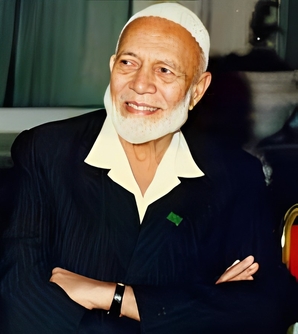
In this report, we compile direct quotes from Ahmed Deedat’s works where he addresses the Swoon hypothesis. These quotes are drawn from his pamphlets like What Was the Sign of Jonah?, booklets such as Crucifixion or Cruci-Fiction?, and his lectures or debates (for example, the 1981 debate “Was Christ Crucified?”). Each quote is accompanied by source references and followed by an explanation of its context and significance. Deedat’s related analogies and arguments – notably the “Sign of Jonah” analogy – are included, illustrating how he supported the Swoon theory by comparing Jesus’s experience to Jonah’s and by examining the details of the crucifixion and its aftermath.
Key Quotes
- “Sign of Jonah” – Jesus alive like Jonah: In What Was the Sign of Jonah? (pamphlet), Deedat emphasizes that Jesus promised the “sign of Jonah” as the only miracle to prove his mission. Deedat argues this meant Jesus, like the prophet Jonah, would survive his ordeal. He writes: “If Jonah was alive for three days and three nights, then Jesus also ought to have been alive in the tomb as he himself had foretold! … The contradiction between his utterance and its fulfillment is obvious. Jonah is alive, and Jesus is d! Very unlike Jonah! Jesus had said ‘like Jonah’ not unlike Jonah.” kalamullah.com
- Preparing the body with healing herbs: Describing Jesus’s removal from the cross in the Sign of Jonah pamphlet, Deedat notes the actions of Jesus’s secret followers (Joseph of Arimathea and Nicodemus) in treating the body with a large quantity of myrrh and aloes – substances with preservative and healing properties. He points out: “To satisfy the religious scruples of the Jews, the ‘secret disciples’ of Jesus took down the body from the cross. They gave the body the Jewish burial bath, plastered it with ‘one hundred pounds weight of aloes and myrrh’ (John 19:39), then placed the shrouded body into the sepulcher before night-fall.”
- Evidence of life: blood and water from the spear wound: In Crucifixion or Cruci-Fiction? (booklet), Deedat examines the Gospel account of a spear piercing Jesus’s side and notes it as evidence that Jesus was still alive at that moment. Citing authoritative sources, he writes: “We are assured in the Encyclopedia Biblica, under article ‘cross,’ column 960, that ‘Jesus was alive when the spear was thrust.’ This also confirms the statement of John that the flow of ‘water and blood’ was instantaneous… which was a sure sign that Jesus was ALIVE!” d1.islamhouse.com
- Pilate’s surprise and “quick” release of Jesus’s body: Deedat frequently argued that Jesus’s death occurred unusually quickly and that Pontius Pilate suspected Jesus might have survived. In Crucifixion or Cruci-Fiction?, he notes that Pilate “marvelled” Jesus had died so soon (Mark 15:44) and readily released the body. Deedat writes: “He had no special reason for verifying whether Jesus was dead or alive. If he was alive — so what? Had he not found Jesus innocent of the charges… Was he not blackmailed into surrendering to Jewish clamour? So if Jesus was alive — good luck to him. Pilate grants permission for Joseph to have the body.” d1.islamhouse.com
- “A spirit has no flesh and bones” – not a resurrected body: Deedat points to Jesus’s post-crucifixion appearances to his disciples as proof that Jesus had not died. Emphasizing Jesus’s own words in Luke 24:39, Deedat imagines Jesus explaining that he is physically alive, not a ghost. In Crucifixion or Cruci-Fiction?, he writes: “‘A spirit has no flesh and bones, as you see me have’ — I am NOT a spirit, I am NOT a ghost, I am NOT a spook, I am NOT resurrected! I am the same living Jesus — ALIVE!” d1.islamhouse.com
- Challenging the resurrection – “Who is lying, you or him?”: In his lecture Resurrection or Resuscitation?, Deedat directly challenges the Christian belief that Jesus died and rose from the dead. He points out that Jesus in the Bible denied being a spirit after the crucifixion, and so by believing Jesus was a spirit (resurrected), Christians contradict Jesus. Deedat pointedly asks: “What is wrong with you (Christian) folk? Jesus is telling you in the most unambiguous language that he is not a spirit – not spiritualised, not a resurrected person – and yet the whole Christian world believes that he was resurrected, i.e. spiritualised. Who is lying, you or him?” archive.org
Context of Each Quote
- Sign of Jonah Prophecy (Quote 1): This quote comes from Deedat’s pamphlet What Was the Sign of Jonah?, in which he analyzes Matthew 12:38–40. In that Bible passage, Jesus says that the only sign he will give is the sign of the prophet Jonah. Deedat interprets this to mean that just as Jonah miraculously survived three days and nights in the belly of the fish, Jesus too must survive three days and nights after the crucifixion. In the surrounding text, Deedat has walked the reader through the story of Jonah – repeatedly asking whether Jonah was “dead or alive” during each stage (thrown overboard, inside the fish, etc., to which the answer is “Alive!” each time)kalamullah.comkalamullah.com. The quoted lines then drive home the argument: Jonah’s sign was his survival, so if Jesus died in the tomb, he would not actually fulfill the sign. Deedat highlights the discrepancy “Jonah alive, Jesus dead – very unlike Jonah,” to argue that Jesus must have been alive, not dead, in order to truly fulfill his own prophecy. This analogy of Jonah is central to Deedat’s Swoon theory argument, and he often used it in debates to contend that the Resurrection as commonly believed did not occur, because Jesus never actually died in the first place.
- Burial with Aloes and Myrrh (Quote 2): In the Sign of Jonah pamphlet, after discussing the crucifixion, Deedat narrates how Jesus’s body was handled by his “secret disciples” (Joseph of Arimathea and Nicodemus). The quote about “one hundred pounds” of aloe and myrrh is significant because Deedat implies this was not a typical burial meant for a definitely dead body, but rather part of a healing protocol. The context is John 19:39-40, which mentions Nicodemus bringing a mixture of myrrh and aloes about 100 pounds in weight to anoint Jesus’s body. Deedat, like others who support the Swoon theory, notes that aloes and myrrh have medicinal and preservative properties (aloes being a healing herb and myrrh a resin used as an antiseptic and in embalming)groups.google.com. By “plastering” Jesus with these herbs, Deedat suggests that Jesus’s followers were treating his wounds, not merely perfuming a corpse. In context, Deedat also emphasizes that the burial was rushed due to the Sabbath, and that the tomb was a spacious chamber close at handd1.islamhouse.com, which would facilitate attending to a still-living Jesus. The implication is clear in Deedat’s narrative: these men expected or hoped that Jesus was alive and tended to him in secrecy, consistent with the Swoon hypothesis.
- Blood and Water from the Spear Wound (Quote 3): The third quote is taken from chapter 10 (“Sympathy for Jesus”) of Crucifixion or Cruci-Fiction?. Here, Deedat is examining the Gospel of John 19:33-34, which describes a Roman soldier piercing Jesus’s side and immediately “blood and water” coming out. Medical opinion (which Deedat references via Dr. W. B. Primrose and others) and the Encyclopedia Biblica are cited to argue that this sudden outflow indicates an active circulatory system – in other words, Jesus’s heart was still beating when the spear was thrustd1.islamhouse.com. The context of the quote is a discussion on how it was “a blessing of God” that the soldier’s spear ensured Jesus’s survival by preventing long asphyxiation on the cross. Deedat posits that by stabbing Jesus’s side (what he calls “blood-letting”), the soldier inadvertently relieved the built-up pressure and helped keep Jesus alived1.islamhouse.com. The phrase “sure sign that Jesus was ALIVE” reflects Deedat’s conclusion that Jesus had not died on the cross by the time he was taken down. This forms a key piece of Deedat’s evidentiary chain: if Jesus was alive after the crucifixion (as evidenced by the flowing blood), then the question of resurrection (rising from death) doesn’t arise – it would have been a case of resuscitation of a living person.
- Pilate’s Marvel and Quick Release (Quote 4): In Crucifixion or Cruci-Fiction?, Deedat discusses the unusually short duration that Jesus hung on the cross – about only six hours (Mark 15:25, 15:34-44) – whereas crucifixion typically took much longer to kill a person (often 2-3 days or more). The quoted passage reflects Pilate’s reaction when Joseph of Arimathea asked for Jesus’s body. According to Mark 15:44, “Pilate marveled if he were already dead.” Deedat seizes on this, arguing that Pilate expected Jesus to still be alive given the brief crucifixion. In the lines around the quote, Deedat even notes that Pilate, having found Jesus innocent and having been pressured to execute him, would secretly be pleased if Jesus survived. He lists several factors that made the situation “fishy” to the Jews d1.islamhouse.com: the quick removal from the cross, Jesus’s legs not being broken (unlike the two thieves, per John 19:32-33), the help of sympathizers, and the accessible tomb. By saying “If he was alive — good luck to him,” Deedat portrays Pilate as complicit in allowing a possible escape. The context shows Deedat building a case that the authorities themselves were doubtful of Jesus’s death or at least indifferent, thus creating an opportunity for Jesus to survive. This interpretation supports the Swoon hypothesis by suggesting that Jesus’s death was not verified rigorously – a scenario in which a live rescue could occur.
- Physical Demonstration: “Not a Spirit” (Quote 5): This quote is from Deedat’s analysis of Jesus’s post-crucifixion appearances, discussed in both Crucifixion or Cruci-Fiction? and his lecture Resurrection or Resuscitation?. The specific lines quoted show Deedat dramatically paraphrasing Luke 24:36-43, where the risen Jesus appears to his disciples. The disciples feared they saw a spirit, but Jesus invites them to touch him and says, “A spirit hath not flesh and bones, as ye see me have” (Luke 24:39), and then eats food in their presence. Deedat stresses that Jesus emphatically proved he was bodily alive – not an immaterial ghost. In the context of Deedat’s writing, he explains that a resurrected person would be “spiritualised” (transformed into a spirit form) whereas Jesus insists he is flesh-and-bone archive.org. By quoting Jesus saying “It is I myself” and not someone else, Deedat argues Jesus was telling his disciples that he is the same person, with the same physical body, who has not died. The quote “I am not resurrected… I am alive!” is Deedat’s way of summarizing Jesus’s message in that scene. He even cites scholars like Albert Schweitzer and Friedrich Schleiermacher, who noted that Jesus’s eating of food was to prove he needed sustenance – something that would be unnecessary and deceptive if Jesus were a purely spiritual, resurrected being archive.org. In short, the context of Quote 5 is Deedat’s argument that Jesus’s own actions and words after the crucifixion show he had not died. This directly supports the Swoon theory: Jesus was alive and merely revived, not resurrected from death.
- Rejecting the Resurrection (Quote 6): The final quote is from Deedat’s pamphlet Resurrection or Resuscitation?, which recounts a conversation between Deedat and a Christian clergyman (Rev. Roberts) about the meaning of Jesus’s words. The context here is Deedat debating the interpretation of the resurrection with the head of a Bible Society. After examining the same Luke 24 passage and other verses, Deedat becomes incredulous that Christians still insist Jesus died and came back, when Jesus himself, in Deedat’s view, said he did not die. The quote “Who is lying, you or him?” comes at the climax of his argument, essentially accusing Christians of disbelieving Jesus’s own testimony in the Gospel. Deedat often took this confrontational tone in lectures to challenge his audience. The context underscores Deedat’s confidence in the Swoon hypothesis: he considered the case so clear from scripture that he openly accused centuries of Christian tradition of being “brainwashed” into reading the opposite of what is written archive.org. In this pamphlet, Deedat also mentions that many earlier scholars doubted the crucifixion death (referring to 19th-century thinkers who called the resurrection into question)archive.org. Thus, Quote 6’s context is a direct confrontation: Deedat is asserting that Jesus never actually died, so the question of resurrection is moot — what happened was a resuscitation, a recovery from unconsciousness. This encapsulates the boldness with which Deedat presented the Swoon theory in both his writings and public debates.
Source References (Books, Debates, Videos)
- What Was the Sign of Jonah? – A short pamphlet by Ahmed Deedat (published by IPCI, ~1970s) focusing on Matthew 12:39–40. Deedat uses the Jonah analogy to argue Jesus survived the crucifixion. Available online: PDF download from the Internet Archive archive.org.
- Crucifixion or Cruci-Fiction? – A 66-page booklet by Ahmed Deedat (IPCI, circa early 1980s) that critically examines the Gospel narratives of the crucifixion. It presents an alternative scenario in which Jesus was taken down alive and tended to by supporters. Available online: PDF via Internet Archive archive.org (also on various Islamic literature sites).
- Resurrection or Resuscitation? – A lecture/transcript by Ahmed Deedat (1980s) discussing Jesus’s appearances after the crucifixion. Deedat argues that those appearances were of a resuscitated (revived) physical Jesus, not a resurrected spirit, hence supporting the Swoon theory. Available online: via Internet Archive (included in The Ahmed Deedat Collection; see Resurrection_or_Resuscitation.pdf).
- Debate: “Was Christ Crucified?” (Ahmed Deedat vs. Josh McDowell, 1981) – A famous public debate held in Durban, South Africa (August 1981) where Deedat defended the Quranic position and the Swoon theory before a Christian apologist, Josh McDowell. Deedat’s arguments in this debate mirrored the quotes above – he extensively cited the “sign of Jonah”, the short time on the cross, the unbroken legs, and Jesus eating food after the event. Watch: YouTube video of the full debate (1h 30m) is available youtube.com. Deedat also held similar debates on the topic in later years (e.g. with Dr. Floyd E. Clark in 1985 and others), which can be found online.
Each of the sources above provides a deeper insight into how Ahmed Deedat presented and defended the Swoon hypothesis. His works remain widely distributed in print and online, and they continue to be referenced in discussions about the crucifixion and resurrection narratives from an Islamic perspective. The quotes and contexts given here capture the essence of Deedat’s argument: that Jesus survived the crucifixion against the odds, and that this understanding resolves the apparent contradictions he saw between Jesus’s prophecy and what Christians generally believe happened on Easter Sunday.
…
Archive
Audio of Ahmad Deedat debate with Dr. Floyd E. Clark: Was Jesus Crucified:


 The Glorious Quran and Science
Leave a reply to Ismaili Interpretations of Jesus’ Crucifixion – The Glorious Quran and Science Cancel reply