
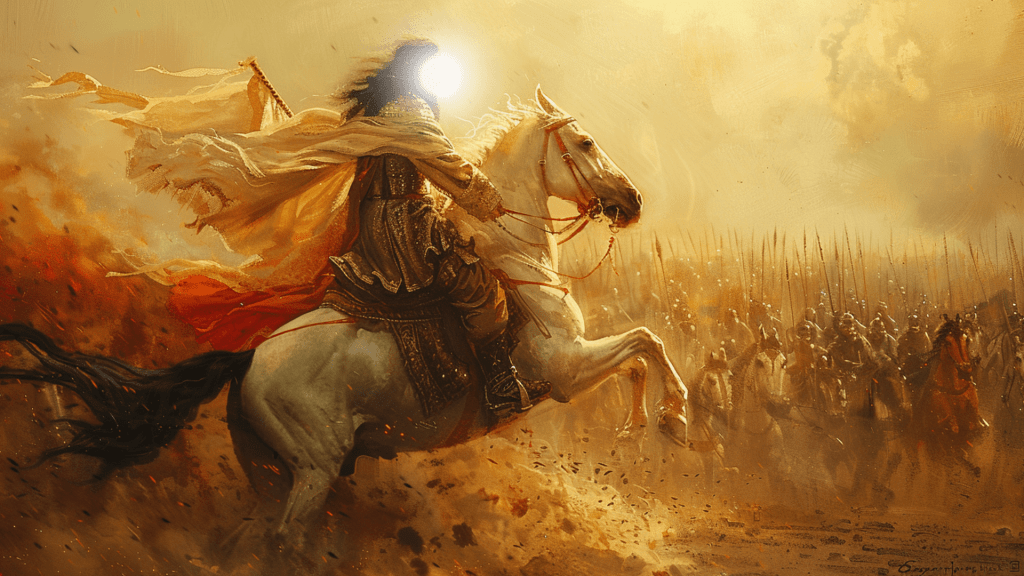
By the charging steeds that pant, striking sparks of fire, raiding at dawn…
Sūrah Al-ʿĀdiyāt is a short, vivid Meccan chapter (11 verses) that uses powerful imagery and rhythmic intensity to convey profound truths about human nature, divine judgment, and the fleeting nature of worldly pursuits. Below is a structured commentary:
1. Overview and Context
- Name: Al-ʿĀdiyāt (“The Chargers” or “The War Horses”) refers to the opening oath sworn by horses galloping into battle.
- Theme: A reflection on human ingratitude, the inevitability of accountability, and the omnipotence of God.
- Structure:
- Verses 1–5: Oaths describing charging warhorses.
- Verses 6–8: Critique of human greed and forgetfulness of God.
- Verses 9–11: Warning of divine judgment and God’s all-encompassing knowledge.
2. Verse-by-Verse Analysis
Verses 1–5: The Oath by the Chargers
“By the charging steeds that pant, striking sparks of fire, raiding at dawn, stirring up clouds of dust, plunging into the midst of the enemy!”
These verses vividly portray warhorses galloping into battle, their hooves sparking against the ground, raising clouds of dust, and breaching enemy lines at dawn. This imagery underscores themes of valor, urgency, and the disciplined might of these steeds. The depiction serves as a powerful metaphor for dedication and readiness to face challenges.
- Imagery: The Surah opens with a dramatic oath swearing by warhorses in battle—a scene familiar to the Arabs of pre-Islamic Arabia. The horses’ panting breath, hooves striking sparks, and fearless raids symbolize intense human effort and worldly ambition.
- Purpose: These verses grab attention and highlight the transient, chaotic energy of worldly pursuits, setting the stage for a contrast with eternal divine truths.
Verses 6–8: Human Ingratitude
“Truly, humankind is ungrateful to their Lord—and they themselves are witnesses to this! Truly, they are extreme in their love of wealth.”
These verses highlight a contrast between the unwavering loyalty of the steeds and human ingratitude. Despite the myriad blessings bestowed upon them, humans often exhibit ingratitude toward their Lord. This ingratitude is self-evident, as individuals are conscious of their own shortcomings. Additionally, there’s an intense attachment to material wealth, indicating a propensity to prioritize worldly possessions over spiritual obligations.
- Critique of Humanity: Despite God’s blessings, humans are inherently ungrateful (kafūr). Their obsession with wealth and materialism blinds them to their Creator.
- Self-Betrayal: The phrase “they themselves are witnesses to this” suggests that deep down, humans recognize their ingratitude but suppress this truth.
Verses 9–11: The Reckoning
“Do they not know that when the graves are emptied, and the secrets of hearts are laid bare, on that Day their Lord will be fully aware of them?”
- Eschatological Warning: The Surah concludes with a reminder of the Day of Judgment, when all hidden deeds and intentions will be exposed.
- Divine Omniscience: God’s knowledge is absolute—nothing escapes Him, not even the “secrets of hearts.”
3. Key Themes
- Transience vs. Eternity: The charging horses symbolize fleeting worldly struggles, contrasted with the eternal reality of divine judgment.
- Human Nature: The Surah exposes humanity’s innate tendency toward greed (ḥubb al-māl) and spiritual forgetfulness (ghaflah).
- Divine Justice: Accountability is inevitable; no deed, however hidden, escapes God’s knowledge.
4. Theological Insights
- The Power of Oaths: The Qur’an often swears by elements of creation (e.g., horses, time, celestial bodies) to draw attention to divine wisdom. Here, the horses’ vigor underscores the futility of human efforts divorced from God-consciousness.
- Gratitude (Shukr): Ingratitude (kufr) is not just denial of God but also a failure to acknowledge His blessings.
- Hidden Hypocrisy: The “secrets of hearts” (v. 11) emphasize that true faith requires sincerity (ikhlāṣ), not mere outward compliance.
5. Modern Relevance
- Materialism: In an age obsessed with wealth and status, the Surah’s critique of ḥubb al-māl (“love of wealth”) resonates deeply.
- Accountability: The warning of judgment challenges modern relativism, affirming that moral and spiritual choices have eternal consequences.
- Self-Reflection: The call to recognize one’s ingratitude invites introspection: Do my pursuits align with eternal truths, or am I chasing sparks in the dust?
6. Reflections from Scholars
- Ibn Kathīr: Notes that the horses’ description symbolizes both human potential and misdirection—energy that could serve God but is often wasted on worldly gain.
- Al-Zamakhsharī: Highlights the Surah’s abrupt shift from physical imagery to spiritual critique, mimicking the suddenness of the Day of Judgment.
- Sayyid Quṭb: Interprets the charging steeds as a metaphor for unchecked human ambition that ignores divine purpose.
7. Conclusion
Sūrah Al-ʿĀdiyāt is a masterful blend of poetic imagery and moral exhortation. It uses the visceral energy of warhorses to jolt listeners into recognizing their spiritual apathy and the urgency of preparing for the Hereafter. In just 11 verses, it encapsulates a timeless message: worldly pursuits, no matter how intense, are fleeting—true success lies in gratitude, righteousness, and mindfulness of the ultimate Reckoning.



 The Glorious Quran and Science
Leave a comment