
Epigraph:
There truly are signs in the creation of the heavens and earth, and in the alternation of night and day, for those with understanding, who remember God standing, sitting, and lying down, who reflect on the creation of the heavens and earth: ‘Our Lord! You have not created all this without purpose –– You are far above that!’ (Al Quran 3:190-191)

Written and collected by Zia H Shah MD, Chief Editor of the Muslim Times
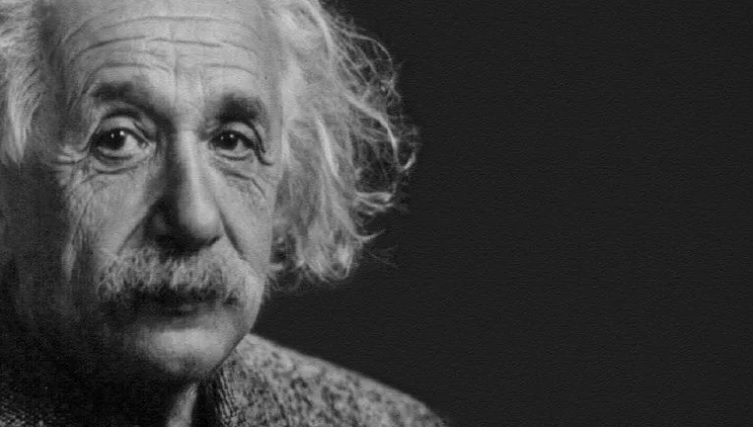
Albert Einstein once remarked, “The most incomprehensible thing about the world is that it is comprehensible.” This statement encapsulates a profound philosophical and scientific conundrum: how is it that the universe, in all its vast complexity, can be understood through human thought and mathematical frameworks?
The Enigma of Comprehensibility
At first glance, the universe appears overwhelmingly intricate. From the subatomic particles that constitute matter to the cosmic expanses of galaxies, the sheer scale and complexity seem beyond full human grasp. Yet, through systematic observation and reasoning, we’ve discerned underlying principles that govern these phenomena. This paradox—that a seemingly chaotic universe adheres to discoverable laws—raises questions about the nature of reality and our place within it.
Einstein’s Perspective
Einstein’s reflection on this paradox highlights the unexpected harmony between human cognition and the cosmos. In his 1936 essay “Physics and Reality,” he wrote, “The eternal mystery of the world is its comprehensibility… The fact that it is comprehensible is a miracle.” He marveled at how human thought could unravel the universe’s mysteries, suggesting a deep-seated connection between the mind and the cosmos.
The Role of Mathematics
Central to this comprehensibility is mathematics. Theoretical physicist Eugene Wigner, in his essay “The Unreasonable Effectiveness of Mathematics in the Natural Sciences,” pondered why mathematical constructs so precisely describe physical reality. This uncanny alignment prompts reflection on whether mathematics is a human invention or a fundamental aspect of the universe itself.
Philosophical Implications
The comprehensibility of the universe has profound philosophical implications. It suggests that human consciousness is uniquely attuned to the cosmos, capable of decoding its laws. This alignment raises questions about the nature of reality and our role as observers within it.
Scientific Exploration and Human Curiosity
Our ability to comprehend the universe fuels scientific inquiry. From Newton’s laws of motion to Einstein’s theory of relativity, the pursuit of understanding has led to transformative insights. This journey reflects humanity’s intrinsic drive to seek knowledge and make sense of the world around us.
The coherence and intelligibility of the universe
The paradox that the universe is both complex and comprehensible continues to inspire wonder and investigation. It challenges us to reflect on the profound connection between human thought and the cosmos, driving the quest to uncover the fundamental truths of existence.
The coherence and intelligibility of the universe have long been subjects of philosophical and theological reflection. The fact that the cosmos operates according to consistent laws, which can be discerned and understood by human reason, suggests the existence of an intelligent designer—God.
The Rational Intelligibility of the Universe
Throughout history, scientists and philosophers have observed that the universe behaves in an orderly and predictable manner. This predictability is evident in the laws of physics, the regularity of natural phenomena, and the mathematical structures that describe cosmic events. Such coherence raises the question: Why does the universe adhere to these intelligible laws?
The Argument from Design
One classical approach to this question is the teleological argument, which posits that the order and purpose observed in the universe imply the existence of a designer. This argument suggests that just as a watch’s complexity and functionality indicate a watchmaker, the intricate order of the universe points toward a divine creator.
The Fine-Tuning of the Universe
Modern discussions often focus on the fine-tuning of the universe—the precise conditions that allow for the existence of life. The specific values of fundamental constants and quantities in nature fall within narrow ranges that make life possible. The improbability of such precise calibration occurring by chance leads some to infer the existence of an intelligent fine-tuner.
Philosophical Perspectives
Philosophers have also contributed to this discourse. Gottfried Leibniz, for instance, argued that the existence of a contingent universe requires a sufficient reason, which he identified as God. This cosmological argument posits that because the universe could conceivably not exist, its existence must have a cause beyond itself—a necessary being.
Scientific and Theological Harmony
The relationship between science and theology is often portrayed as contentious. However, many scholars find harmony between the two. Brother Guy Consolmagno, director of the Vatican Observatory, emphasizes that scientific inquiry and belief in God are not mutually exclusive. He suggests that the rational structure of the universe reflects the mind of a rational creator, and that scientific exploration can be a way of understanding the divine.
Conclusion
The coherence of the universe, manifested in its orderly laws and fine-tuned conditions, provides a compelling argument for the existence of God. This perspective posits that the intelligibility and orderliness of the cosmos are best explained by an intelligent and purposeful designer, offering a harmonious view that integrates scientific understanding with theological insight.
Albert Einstein was a pantheist. If you are impressed by his pithy quote, you need to do more study to continue your journey in search of the Truth with a capital T.
Here, I link all our articles about pantheism.





 The Glorious Quran and Science
Leave a reply to Contemporary Arguments For and Against God – The Glorious Quran and Science Cancel reply