
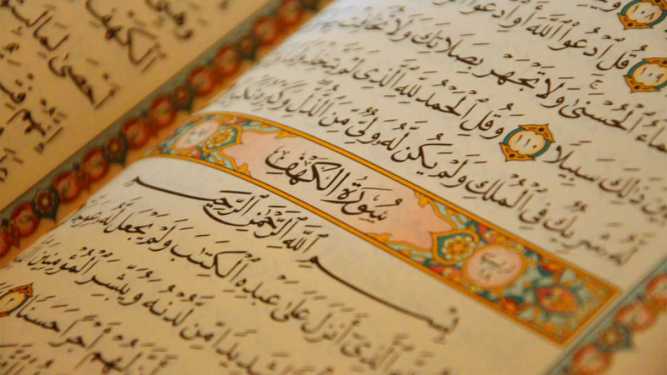
Epigraph
“We have sent down the Qur an Ourself, and We Ourself will guard it.” (Al Quran 15:9)

Written and collected by Zia H Shah MD, Chief Editor of the Muslim Times
Introduction to Sir William Muir
Sir William Muir (1819–1905) was a Scottish Orientalist and historian of Islam who served in the British colonial administration in India. He is best known for his extensive writings on early Islamic history, especially his four-volume Life of Mahomet (1858–1861) and works on the Caliphate and the Quran. Muir approached Islamic history by drawing on primary Arabic sources – the Quran and early Muslim historical traditions – to construct a narrative of Prophet Muhammad’s life and the formation of Islam. Though often critical of Islam from his 19th-century perspective, Muir’s scholarship was grounded in careful study of Muslim records. This rigor sometimes led him to unexpected acknowledgments, particularly regarding the integrity of the Quran’s text, despite his personal bias as a Christian observer. In his writings, Muir examined how the Quran was recorded and compiled, and he ultimately affirmed the authenticity of the Quranic text as we have it today.
Muir’s Views on the Compilation of the Quran
Muir describes the state of the Quran during Prophet Muhammad’s lifetime as one of gradual revelation without a finalized single book. He notes that no complete compilation of the “multitudinous revelations” occurred while Muhammad was alive. Instead, verses were preserved through both oral memorization and sporadic writing by the Prophet’s scribes. According to Muir, various passages “had been written down from his lips, from time to time at their delivery, by some friend or follower performing the office of amanuensis; or they had been first committed to memory, and then at some subsequent period recorded.” The written materials were primitive, reflecting what was available in Arabia: “palm-leaves, leather, stone tablets, or the shoulderblades of goats and camels” served as recording media for different portions of the Quran.
Although the Quran was not bound as a single volume during Muhammad’s life, Muir acknowledges that a basic structure did exist. He writes that there were recognized divisions known as Suras (chapters), and “it seems probable that the greater part of the revelation was so arranged during the Prophet’s lifetime, and used in that form for private reading, and also for recitation at the daily prayers.” Some chapters were short and self-contained, while others grew over time as new verses were revealed. Muir thus portrays a dual mode of preservation in early Islam: faithful memorization by the Prophet’s Companions, and concurrent documentation on various materials. This laid the groundwork for the Quran’s compilation after Muhammad’s death, ensuring that, even before any official codification, every revealed verse was preserved in Muhammad’s own words – a point Muir emphasizes in his analysis.
Muir’s Analysis of the Standardization of the Quran
After the Prophet’s death in 632 CE, efforts were made by the early Caliphs to compile and standardize the Quranic text. Muir recounts in detail the initiative taken by Caliph Abu Bakr (r. 632–634) upon the advice of Umar. Alarmed by the casualties among Quran memorizers in the Battle of Yamama, Umar urged that the scattered revelations be collected before further losses occurred. Muir describes how Abu Bakr entrusted this task to Zaid bin Thabit, “the Prophet’s chief amanuensis,” telling him: “You were wont to write down the inspired revelations… Wherefore now search out the Quran, and bring it together.” Zaid initially hesitated, since Muhammad himself had given no specific instruction to compile the Quran into a book. But “at last he yielded to the joint entreaties of Abu Bakr and Umar” and proceeded to gather all parts of the revelation. Muir writes that Zaid “sought out the fragments of the Quran from every quarter, ‘gathered it together, from date-leaves, and tablets of white stone, and from the breasts of men.’”
In other words, Zaid collected written pieces recorded on palm leaf stalks, flat stones, parchments, as well as the oral recitations of those who had memorized the entire Quran. Through Zaid’s labors, “these scattered and confused materials were reduced to the order and sequence in which we now find them” – reportedly the same order that Zaid himself used to hear and recite in the Prophet’s presence. The completed compilation was kept by Abu Bakr, then passed to his successor Umar, and eventually entrusted to Hafsa (one of the Prophet’s widows), remaining the authoritative text during Caliph Umar’s ten-year rule.
Muir then explains the second major step in standardizing the Quran under Caliph Uthman (r. 644–656). By Uthman’s era, Islam had spread into new lands, and minor variations in Quranic recitation began to surface in different regions. “Variety of expression,” as Muir terms it, either already existed in some copies or soon crept in as new copies were made from the edition compiled by Zaid. Muslims were concerned by these discrepancies – “The Quran sent down from heaven was ONE, but where was now its unity?”
Muir relates the famous incident of Hudhaifa (Hodzeifa), a general who observed differences in pronunciation and wording between the Quran reciters of Iraq and those of Syria during expeditions. Hudhaifa implored Uthman “to interpose, and ‘stop the people, before they should differ regarding their Scripture, as did the Jews and Christians.’” Realizing the danger of fragmentation, Uthman took decisive action. He again summoned Zaid bin Thabit, this time with a committee of three other knowledgeable Companions from the Quraysh tribe, to produce a uniform copy of the Quran.
Muir describes how Uthman’s committee retrieved the original manuscript compiled under Abu Bakr from Hafsa’s custody and used it as the base text. They then collated it with all other available fragments and dialectal recitations. “The various readings were sought out from the different provinces, and a careful recension of the whole [was] set on foot,” Muir writes of this meticulous process. He notes that if any disagreements arose among the compilers – for example, between Zaid and the three Qurayshi editors – they resolved them by adopting the dialect of Quraysh (the Prophet’s dialect), as Uthman had decreed the Quran should be standardized in the form spoken in Mecca. The end result was an official, standardized edition of the Quran in the Quraysh dialect. Uthman ordered multiple copies of this master text to be made and sent “to the chief cities in the empire,” and he commanded that all other existing copies or private manuscripts be burned to eliminate any variant versions. “Transcripts were multiplied and forwarded… and the previously existing copies were all, by the Caliph’s command, committed to the flames,” Muir recounts, emphasizing Uthman’s resolve in preserving textual unity. The original master copy was returned to Hafsa for safekeeping.
According to Muir, these efforts by Uthman fully standardized the Quranic text for the first time. Muir’s assessment of the results is notably positive regarding the text’s accuracy. He states that Uthman’s recension was passed down “unaltered” to later generations. So scrupulous was its preservation that “there are no variations of importance – we might almost say no variations at all – among the innumerable copies of the Quran scattered throughout” the vast Muslim world. Even amid the political and sectarian turmoil that soon followed (such as the conflicts leading to Uthman’s own assassination and the division between Sunni and Shia factions), Muslims all continued to use one and the same Quran. Muir stresses that the universal acceptance of Uthman’s text by all parties – “the consentaneous use by them all in every age up to the present day of the same Scripture” – is “an irrefutable proof that we have now before us the very text prepared by command of the unfortunate Caliph” Uthman. In other words, despite early Islamic civil wars and controversies, no alternative version of the Quran ever gained traction; the text remained singular and uniform across the Islamic realm. Muir points out that the few “various readings” that do exist are exceedingly minor and “wonderfully few in number, and are chiefly confined to differences in the vowel points and diacritical signs” – marks that were not even part of the original Arabic script and added later for pronunciation. Such minute variants, he notes, “can hardly be said to affect the text of Uthman” in any meaningful way. This analysis shows Muir’s view that the Quranic text we have today is essentially identical to the form established under Uthman, with no significant divergences.
Muir’s Conclusion on the Preservation of the Quran
After examining the history of the Quran’s compilation, Muir arrives at a clear conclusion: the Quran has been faithfully preserved from the time of Muhammad. In the introduction to his Life of Mahomet, Muir summarizes this stance in unequivocal terms: “We may, upon the strongest presumption, affirm that every verse in the Qur’an is the genuine and unaltered composition of Mohammad himself.”
He is asserting that the Quran as we have it contains the exact words promulgated by Muhammad, without later insertions or corruptions. Muir further emphasizes the reliability of the transmission by adding, “There is otherwise every security, internal and external, that we possess the text which Mohammad himself gave forth and used.”
Here he refers to the strong evidence both internally (the consistency and coherence of the text) and externally (the rigorous early compilation efforts and continuous use) that give confidence in the Quran’s textual integrity.
Sir William Muir even contrasts the preservation of the Quran with that of other scriptures, noting how remarkably free from variation the Quran’s text is. He acknowledges that Muslims often pride themselves on having a single, unchanged scripture, and he concurs with the essence of that claim. “To compare (as the Muslims are fond of doing) their pure text with the various readings of our Scriptures is to compare things between which there is no analogy,” Muir admits frankly. By “our Scriptures,” he means the Bible, which in his experience contains many textual variants across manuscripts. In this statement, Muir concedes that the Quran’s text stands in a category of its own, having suffered none of the textual corruption or editorial evolution that affected, for example, the Christian New Testament or the Hebrew Bible over the centuries. This is a striking acknowledgment from a Christian Orientalist of the era: essentially, he agrees that the Quran’s textual purity far surpasses that of the Bible, making any direct comparison misleading.
In Muir’s view, the process overseen by Abu Bakr and Uthman ensured that the Quranic revelation was preserved exactly as Prophet Muhammad delivered it. He finds “the fullest ground for believing” that Uthman’s edited copy was an honest reproduction of the collection made by Zaid. No credible early account, according to Muir, casts doubt on Uthman’s integrity in this matter. Even accusations later raised by some Shia sources – suggesting that Uthman omitted verses favorable to Ali (the Prophet’s son-in-law) – are dismissed by Muir as wholly implausible. Such alterations would have been impossible to carry out or conceal, he argues, given that “no early or trustworthy traditions throw suspicion upon Uthman” and that so many Muslims had memorized the Quran or possessed portions of it. Had Uthman tried to deliberately tamper with the text, Muir observes, the community would not have unanimously accepted the new codex. Indeed, Ali himself (whom Shia Muslims accuse Uthman of slighting) became caliph not long after and never objected to Uthman’s Quran—strong evidence in Muir’s eyes that the text contained no deliberate omissions. Muir concludes that “it cannot be imagined that Ali and his followers (not to mention the whole body of the Mussulmans who fondly regarded the Quran as the word of God) would have permitted such a proceeding” as any alteration or loss of Quranic content. Thus, Muir affirms that from the collection by Zaid to Uthman’s authoritative edition, the Quran remained complete and trustworthy.
Summing up his findings, Muir states that Uthman’s recension was exactly what it professed to be: a reproduction of Abu Bakr’s collection without significant change, merely “with the simple reconcilement of unimportant variations” such as dialectal differences. He also addresses the completeness of the earlier collection under Abu Bakr, reasoning that Abu Bakr and Zaid, as sincere believers in the Prophet, would have been diligent in not omitting any revelation. Muir ultimately “safely conclude[s] that Uthman’s recension was, what it professed to be, namely, the reproduction of Abu Bakr’s edition… still a faithful reproduction” of Muhammad’s revelations. In other words, the Quran text finalized under Uthman’s authority was faithful to the Qur’anic material as originally gathered, and that original collection was itself as complete as possible.
Conclusion
Sir William Muir’s study of the Quran’s history led him to affirm several key points: (1) During Muhammad’s lifetime, all Quranic revelations were preserved through memorization and writing, though not yet compiled into one book. (2) Immediately after the Prophet’s death, his closest companions undertook to collect these revelations, producing an initial written compilation that arranged the verses into the Prophet’s intended order. (3) A definitive textual standard was established under Caliph Uthman, who eliminated regional variations and ensured that one uniform version of the Quran spread across the Muslim world. (4) From Uthman’s time until today, the Quran’s text has remained essentially unchanged, without significant variants – a fact which Muir acknowledges as extraordinary in textual history. As a historian and an outsider to Islam, Muir ultimately testified to the Quran’s exceptional preservation. In his own words, “The recension of Uthman had been handed down to us unaltered… Carefully, indeed, has it been preserved”, so much so that “there is probably in the world no other work which has remained twelve centuries with so pure a text.”
These candid admissions from Sir William Muir encapsulate his stance: despite his critical view of Islam in other respects, he did not doubt that the Quran we read today is, in text, the very same Quran promulgated by Prophet Muhammad, preserved with a purity and fidelity unrivaled by most other scriptures in history.
Sources: Sir William Muir’s Life of Mahomet and The Corân: Its Composition and Teaching, as cited above. All quotations are from Muir’s own works, illustrating his perspective on the Quran’s compilation and preservation.
Additional reading
 The Glorious Quran and Science
Leave a comment