
Introduction
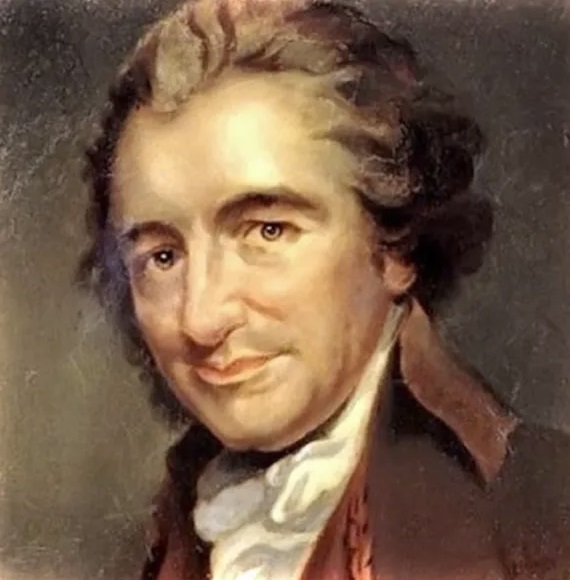
Thomas Paine’s The Age of Reason (published in two parts in 1794 and 1795) is a pioneering Enlightenment critique of organized religion and a robust defense of deism. Paine, famous for political works like Common Sense and Rights of Man, wrote this treatise while in France during the revolutionary era’s intense anti-clerical climate. In it, he challenges the divine authority of the Bible and Christian theology, instead advocating that religion be grounded in reason and the observation of nature. Paine made clear that he was not an atheist – he professed belief in a single Creator – but he rejected revealed religions (such as Christianity) as human inventions. He even bluntly labeled Christianity “a fable” and denied “that the Almighty ever did communicate anything to man, by…speech,…language, or…vision,” positing a distant “Nature’s God” knowable only through reason. The Age of Reason thus stands as both a scathing critique of biblical religion and a seminal text of modern deism, written in Paine’s characteristically direct, accessible style that brought Enlightenment arguments to a broad readership. The following review examines Paine’s key arguments in detail: his attack on organized religion and clerical authority, his critique of Christian dogma and the Bible, his defense of deism, and the work’s historical impact and legacy.
Paine’s Critique of Organized Religion
A major theme of The Age of Reason is Paine’s vehement opposition to the institutional power of churches. He argues that organized religions are political constructions, developed to intimidate people and consolidate power. Paine writes, “My own mind is my own church,” rejecting all institutional creeds and insisting on personal intellectual freedom in matters of belief. In his view, “all national institutions of churches, whether Jewish, Christian or Turkish, appear to me no other than human inventions, set up to terrify and enslave mankind, and monopolize power and profit.” Here Paine contends that churches maintain authority not by genuine divine sanction but by exploiting fear and superstition for worldly gain. This manipulation of belief for social and political control is, for Paine, a fundamental corruption at the heart of organized religion.
Paine is especially critical of the priesthood and clerical authority. He portrays many clergymen as hypocritical and self-interested, entering the profession for profit rather than truth. In an famously caustic passage, Paine describes how a person “takes up the trade of a priest for the sake of gain, and in order to qualify himself for that trade, he begins with a perjury”, arguing that to preach doctrines one does not truly believe is a form of moral corruption. Such harsh language reflects Paine’s view that the clergy’s claim to exclusive religious authority is fraudulent. He traces an “adulterous connection of church and state” through history, noting that when governments enforced official creeds, open inquiry into religious truth was effectively prohibited. In Paine’s analysis, priestcraft thrives on this alliance with state power: by silencing dissent and cloaking itself in law and tradition, organized religion perpetuates ignorance for its own advantage. True faith, Paine insists, should never require the support of coercive authority. He celebrates the French Revolution’s abolition of the national priesthood as an opportunity to “return to the pure, unmixed and unadulterated belief of one God, and no more” once “human inventions and priestcraft” are exposed. Overall, Paine’s critique of organized religion centers on the idea that religious institutions enslave minds and serve earthly ambitions, betraying the very moral truths they claim to uphold.
Criticism of Christian Dogma
Beyond attacking the church as an institution, The Age of Reason directly confronts the major doctrines of Christianity, arguing that many core dogmas are irrational or morally untenable. Paine systematically critiques concepts like the Trinity, the story of the Fall (Original Sin), the atonement, and the authority of Scripture itself. He contends that these theological ideas do not withstand the scrutiny of reason or ethical examination.
One target of Paine’s critique is the Trinity – the notion of God as three persons in one. Paine regards this doctrine as an absurd innovation that conflicts with both reason and the original monotheism of Judaism. He observes that Christianity’s trinitarian godhead emerged by essentially reducing the many gods of pagan mythologies into a three-in-one deity. “The trinity of gods that then followed was no other than a reduction of the former plurality… The Christian theory is little else than the idolatry of the ancient Mythologists, accommodated to the purposes of power and revenue”, Paine writes, urging that “reason and philosophy” should “abolish the amphibious fraud” of such blended theology. In Paine’s view, transforming God into a mysterious triune being – “the Christian system of arithmetic, that three are one, and one is three” – is “irreconcilable… to the divine gift of reason” and serves only to mystify believers. By highlighting the Trinity’s logical contradiction (three equals one) and tracing its lineage to earlier polytheism, Paine casts this central Christian dogma as a human-devised fable rather than a truth revealed by a rational God.
Paine also challenges the doctrine of Original Sin and the related idea of salvation through Christ’s sacrificial death. He finds it morally perverse that an entire lineage of humanity should be damned for the disobedience of Adam and Eve, and even more so that God’s justice would require the death of an innocent (Jesus) to atone for this inherited guilt. Paine calls it an “outrage to moral justice” to suppose that God would “make the innocent [Jesus] suffer for the guilty”, or that God needed to incarnate as a man in order to have an excuse to forgive humankind. He ridicules the logic of atonement by pointing out that if the penalty for Adam’s sin was simply mortality – “thou shalt surely die” – then Christ’s crucifixion was no more efficacious than any common death: “Would it not then have been the same if he had died of a fever or of the small-pox…? A fever would have done as well as a cross, if there was any occasion for either”, Paine quips, exposing the inconsistency in the idea that one man’s death saves the world. He further notes that despite the supposed redemption, humans still die as before, undermining the claim that the crucifixion reversed the sentence on Adam. In essence, Paine rejects the notion of original sin and vicarious salvation as contrary to reason and justice – a “low contrivance” unworthy of the divine, and more like the plot of myth or “quibble” of theologians.
Miracles and revelations fare no better under Paine’s skeptical eye. He dismisses biblical miracle stories – from the Virgin Birth to Jesus’s resurrection – as unproved assertions that a rational person is not obliged to accept. A cornerstone of Paine’s argument is that claims of supernatural events must meet a high standard of evidence, especially if all people are expected to believe them. For instance, regarding the resurrection and ascension of Christ, Paine notes that such events, if true, should have been witnessed as openly as “the sun at noon-day” by the whole city of Jerusalem; instead the Bible offers only the testimony of a few individuals. “A thing which everybody is required to believe, requires that the proof and evidence of it should be equal to all, and universal,” Paine insists, concluding that the meager witness accounts in the gospels are wholly insufficient. The lack of public, verifiable evidence leads him to brand the resurrection story a probable “fraud and imposition” on the world. He even invokes the skepticism of contemporaneous Jews as logical negation: the very people who lived in the time and place of the alleged resurrection flatly “say it is not true,” which Paine wryly calls akin to proving a story by citing those who deny it. In Paine’s rationalist framework, miracles violate the uniform laws of nature and thus demand extraordinary proof – proof he finds utterly lacking in scriptural accounts.
Closely related is Paine’s rejection of “revealed” religion – the idea that God directly communicated doctrines in scriptures. Paine argues that any revelation is by definition first-hand to its original recipient only; to everyone else it is hearsay. “Admitting, for the sake of a case, that something has been revealed to a certain person… it is revelation to that person only, and hearsay to every other, and consequently they are not obliged to believe it,” he writes. “It is a contradiction in terms and ideas, to call anything a revelation that comes to us second-hand,” Paine declares, since all the biblical stories are at best accounts told by others, not witnessed directly by the reader. This epistemological stance undercuts the authority of the Bible: if one must take the word of prophets or apostles on faith, that is no proof at all. Paine underlines that we have no external evidence that the Bible’s human authors were truly inspired. He frequently points out the anonymity or dubious provenance of various biblical books, and he highlights internal inconsistencies and moral defects in the scriptures. As an example, Paine observes that “the story of Jesus Christ being the son of God” closely resembled existing pagan myths of divine heroes, and notes that the Jews (adhering to one God) never accepted this story. He traces how the early Church fused such pagan elements into Christianity – from the Trinity to saint worship – which to him explains the mythological character of Christian dogma. Paine’s biblical analysis often takes the form of comparing scripture to known history and science, aiming to show that much in the Bible is “irreconcilable… to the divine gift of reason… and to the knowledge… [from] the structure of the universe.”
He famously catalogues scriptural “absurdities” and “contradictions”, anticipating the style of later biblical critics who would “systematically manhandle chapters and verses” to expose errors. From the Old Testament’s portrayal of a wrathful, petty deity to the New Testament’s reliance on fulfilled prophecies that Paine deems misapplied, Paine finds the Bible riddled with implausible and unethical claims. In a memorable line (from a later Age of Reason letter), he sums up that “it is from the Bible that man has learned cruelty, rapine, and murder; for the belief of a cruel God makes a cruel man.” Paine’s use of reason leads him to conclude that the Bible is an ordinary piece of literature authored by humans, not the perfect word of a benevolent God. Thus, he urges his readers to question Christian dogmas and scriptures with the same critical eye one would apply to any other tradition or text.
Defense of Deism
While Paine tears down the structures of organized religion and Christian theology, he simultaneously builds a positive case for deism – a natural religion grounded in reason and the observable world. Deism in the 18th-century context was the belief in a single supreme Creator who governs through universal laws, not through arbitrary miracles or priestly intermediaries. Paine’s deistic creed is plainly stated at the very start of The Age of Reason: “I believe in one God, and no more; and I hope for happiness beyond this life. I believe in the equality of man; and I believe that religious duties consist in doing justice, loving mercy, and endeavoring to make our fellow-creatures happy.”
In these opening lines, Paine affirms a faith based on one God and ethical conduct, eschewing all specific dogmas and sectarian “creeds.” This personal profession of faith sets the tone for Paine’s defense of a rational, uncomplicated religion accessible to every person.
Paine distinguishes deism sharply from theism grounded in revelation. For Paine, God’s existence is evidenced by the natural world and the innate reason of human beings, not by holy books or prophets. He articulates a core deist principle that the true “Word of God” is not the Bible or any written scripture, but the creation itself. “Yes; there is a word of God; there is a revelation,” Paine mockingly answers those who ask – “THE WORD OF GOD IS THE CREATION WE BEHOLD”, he exclaims, “and it is in this word, which no human invention can counterfeit or alter, that God speaketh universally to man.”
In Paine’s theology, the universe is God’s revelation, open to all and not subject to priestly distortion. Unlike human languages and texts – which are local, changeable, and often corrupted – the laws of nature are universal and constant, proclaiming the wisdom and power of the Creator in every sunrise and every blade of grass. He argues that it is only through studying “the structure of the universe” that one gains true knowledge of God’s attributes. “Do we want to contemplate his power? We see it in the immensity of the Creation… Do we want to contemplate his wisdom? We see it in the unchangeable order by which the incomprehensible whole is governed!” Paine writes, rhapsodizing on how the cosmos itself testifies to God’s glory. This reverence for the natural world as the direct communication of God is at the heart of Paine’s deism.
Crucially, Paine’s God is rational and benevolent, not the capricious deity he feels is depicted in parts of the Bible. He maintains that since God gave humans reason, God would not require us to believe propositions that insult our intelligence or moral sense. Thus, deism honors God by using reason as “the most formidable weapon against errors of every kind.”
Paine’s deity is sometimes described (in Paine’s own words) as “Nature’s God,” echoing a term from America’s Declaration of Independence. This God set the universe in motion with natural laws and does not violate those laws with miracles or need to constantly intervene in human affairs. In Paine’s deist philosophy, prayer and ritual are unnecessary attempts to persuade God to change an order that is already perfect; the proper “worship” of God is to study creation and practice virtues toward one another. Paine even helped organize in Paris a short-lived deist society (the Church of Theophilanthropy) which taught that we best honor God by imitating His wisdom and benevolence, rather than through traditional worship Unlike atheists, Paine never doubts the existence of a Creator – “I professed, in the midst of the French Revolution, ‘I believe in God’”, he emphasizes – but unlike Christians, he denies that God has chosen any particular nation or text for a special revelation. In Paine’s deism, God is utterly universal: accessible to all people at all times through “an ever-existing original [text], which every man can read” – namely, the natural world. This elegant conception of a rational God and a universal religion of nature is Paine’s answer to the sectarian strife and superstition he saw in organized faiths. He offers deism as a creed that upholds the “principles of science and reason” while still affirming a Creator and moral order marxists.org. Through The Age of Reason, Paine became, in effect, the principal American exponent of Deism, making the case that one can reject Judeo-Christian dogmas yet still “believe in God” and lead a spiritually meaningful, ethical life britannica.com.
Historical and Philosophical Impact
The Age of Reason was enormously controversial in its day, provoking strong reactions on both sides of the Atlantic. Reception of the book varied by locale, but hostility from orthodox religious circles was a common theme. In Britain and America especially, Paine’s assault on the Bible and Christianity stirred a backlash that paradoxically helped reshape the religious landscape.
Upon publication, Paine’s work was met with outrage and fear by many readers and authorities. Four main aspects alarmed his contemporaries: his denial of the Bible’s divine inspiration, his assertion that Christianity was a human invention, the wide reach of his popular prose, and his mocking, irreverent tone toward sacred subjects.
In Britain, The Age of Reason sparked a veritable pamphlet war. The government viewed it as a threat to public morals and social order – dozens of refutations and attacks appeared between 1795 and 1799, and publishers of the book were prosecuted for blasphemy. Notably, even liberal religious dissenters who had admired Paine’s political writings (like Unitarian minister Joseph Priestley) distanced themselves from his religious claims, finding his deism too radical. Instead of engaging Paine’s detailed biblical criticisms, many defenders of Christianity simply reasserted the traditional authority of Scripture and denounced Paine’s character. He was vilified “as an enemy of proper thought and of the morality of decent, enlightened people” by his detractors. This vehement British reaction underscored how shocking Paine’s ideas were to the 18th-century religious establishment, which feared that his plainspoken critiques could undermine church authority among the masses.
In France, ironically the book had far less impact. Paine had intended The Age of Reason partly for French revolutionaries (to deter them from outright atheism), and he even had it translated into French. However, its arguments were already familiar in France from existing Enlightenment works, and it failed to capture significant attention there. The French revolution’s leaders were either embracing a secular civic religion of reason or, in some cases, leaning toward atheism; Paine’s deistic approach did not make major inroads. Paine himself helped establish the deist Church of Theophilanthropy in Paris, promoting worship of God through reason and moral living, but this movement was short-lived and dissolved by 1801 when Napoleon restored the Catholic Church’s influence. Thus, in France Paine’s religious ideas were largely “ignored” or already passé, confirming Paine’s own later remark that the French were “running headlong into atheism” despite his efforts.
It was in the United States that The Age of Reason saw both its greatest popularity and its most consequential backlash. In the late 18th century, America was in a ferment of religious ideas, and Paine’s work initially tapped into a growing current of skepticism. The book enjoyed a wide readership in the U.S., going through numerous editions and selling thousands of copies. Its plain, vigorous style made deist philosophy accessible beyond the educated elite. In fact, The Age of Reason helped spark a brief “deistic revival” in the early 1790s United States. Thinkers like Ethan Allen had earlier written in support of deism, but Paine presented the case in a far more popular and provocative manner. As a result, deist clubs and “Societies of Reason” sprang up; Paine’s follower Elihu Palmer, for example, toured and preached deism, even founding The Principles of Nature (1795) as a kind of deist manifesto or “bible of American deism.” Paine’s book, as historian Eric Foner notes, “became the most popular deist work ever written… Paine presented deism to the masses”, whereas before it had been a genteel philosophy held by figures like Franklin and Jefferson. This democratization of unorthodox religious ideas alarmed the established religious authorities in America. Federalist newspapers and New England clergy attacked Paine viciously, painting him as a dangerous infidel. Within a few years a powerful counter-movement arose: the Second Great Awakening, a wave of Christian evangelical revival, was catalyzed in part as a response to the spread of deistic and skeptical literature like Paine’s. One contemporary observer noted that “the revulsion felt for Paine’s Age of Reason… was so great that a major counter-revolution [in religion] had been set underway in America before the end of the eighteenth century.”
In 1796, Harvard University even required students to study a prominent rebuttal (the Bishop Watson’s Apology for the Bible, written to refute Paine) as a means to inoculate them against Paine’s arguments. Anecdotes from the time show how thoroughly Paine’s name had become associated with ungodliness: Parson Weems (early biographer of George Washington) wrote a morality tale blaming a youth’s downfall on reading “Paine’s Age of Reason”, which led him to discard the Bible and embrace blasphemy. By the first decade of the 1800s, Paine was widely ostracized in the country he had helped inspire to independence. When Paine returned to America in 1802, he found that his former revolutionary hero status had evaporated; he was now regarded “as the world’s greatest infidel” by many of his countrymen britannica.com. The phrase “filthy little atheist,” used by Theodore Roosevelt a century later, encapsulates the lingering American view of Paine that originated due to The Age of Reason (even though Paine was not actually an atheist). In short, Paine’s deist critique enjoyed a brief vogue in America and influenced the developing discourse on freedom of religion, but it also provoked a lasting conservative reaction that reinforced traditional Christianity for generations.
Despite the fierce opposition it faced, The Age of Reason left a profound legacy in the history of freethought and secular critique of religion. Paine’s bold example emboldened later critics of the Bible and the churches. In Britain, after the initial backlash subsided, radical working-class activists in the 19th century embraced Paine as a hero of free expression and religious skepticism. By 1818, activist publisher Richard Carlile was openly selling the book in large numbers and even read it aloud in court during his blasphemy trial, turning the legal proceedings into a platform for Paine’s ideas. Throughout the 1800s, The Age of Reason served as a kind of “anti-Bible” for secularists and dissenters in England – a lodestar for those challenging the authority of Church and Scripture. Paine’s rhetorical style of ridiculing biblical inconsistencies was echoed by later secularist writers: for instance, George William Foote’s Bible Handbook (1888) explicitly continued Paine’s method of highlighting “Contradictions, Absurdities, Atrocities, and Obscenities” in the Bible. Leaders of the freethought movement such as Charles Bradlaugh in Britain and Robert Ingersoll in the United States drew inspiration from Paine’s deism and his unflinching critiques of orthodox religion. Ingersoll, in an 1892 lecture on Paine, even claimed that The Age of Reason“did more to undermine the power of the Protestant Church than all other books then known”, attesting to its influence on loosening the grip of Biblical literalism in American religious life. Moreover, Paine’s work contributed to the broader Enlightenment push for the separation of church and state. By attacking the idea of state-sanctioned religion and asserting the individual’s right to his own beliefs, Paine helped lay intellectual groundwork for secular governance and religious liberty. His insistence that “his own mind is his own church” can be seen as a philosophical precursor to the principle that civil society should not compel religious conformity. In summary, while The Age of Reason was reviled by many in Paine’s time, its long-term impact has been significant. It became a foundational text for secular and rationalist thought, continuously in print and debated up to the present. It stands as an early, influential testament to freethinking values – the right to question religious dogmas and to rely on reason and evidence when forming one’s beliefs.
Conclusion
Thomas Paine’s The Age of Reason remains a landmark work in the discourse on religion and reason. In this bold treatise, Paine marshaled the tools of the Enlightenment – rational analysis, empirical skepticism, and moral reasoning – to challenge the authority of scripture and the legitimacy of ecclesiastical power. He denounced organized religion as corrupt and oppressive, famously asserting that mental freedom is crucial and that accepting doctrines against one’s own reason is the true “infidelity” to oneself. He dissected Christian dogmas such as the Trinity, the virgin birth, and atonement, finding them illogical or unjust when held up to the light of common sense and ethical principle. At the same time, Paine passionately defended a form of faith – deism – that he believed was purer and more universal: a belief in one God discernible through nature and reason, unencumbered by sectarian prejudice or ancient “revealed” texts. The key arguments of The Age of Reason can be summarized in Paine’s conviction that “the most formidable weapon against errors of every kind is Reason.” This conviction led him to reject any claim – however venerable – that could not meet the standards of evidence and rational coherence.
The relevance of Paine’s ideas endures in modern debates about faith, science, and secularism. Many of Paine’s points – for example, that personal conscience should trump institutional dogma, or that claims of miracles demand rigorous proof – continue to be invoked by religious skeptics and advocates of freethought. His work prefigured later critiques of religion by thinkers like Feuerbach, Marx, and Russell, and even today, one hears echoes of Paine in discussions about the role of religion in public life and education. Of course, responses to Paine’s arguments also persist: theologians and believers have developed more sophisticated counter-arguments to defend revelation and scripture than those available in Paine’s day. Yet, the fundamental challenge Paine issued – asking whether one’s beliefs are grounded in reason or in unexamined tradition – retains its power. In evaluating Paine’s impact on religious and philosophical debates, one must acknowledge both the immediate turmoil it caused and the long-running influence it exerted. The Age of Reason helped to galvanize a 19th-century secular movement and to articulate principles of free inquiry that later became hallmarks of liberal democracy (such as freedom of religion and expression). At the same time, the backlash it provoked contributed to a reinvigoration of orthodox faith in the early 1800s, illustrating how radical ideas can spark counter-movements.
In final assessment, Thomas Paine’s The Age of Reason stands as a testament to the Enlightenment spirit of critique. It is an impassioned plea to apply reason in matters of religion, a courageous exposure of the perceived inconsistencies of holy writ, and a heartfelt affirmation that a simple, rational belief in God need not be bound up with myth and mystery. Whether one agrees with Paine or not, his work undeniably expanded the realm of discourse, forcing both ordinary readers and religious thinkers to confront the question: why do you believe what you believe? In doing so, Paine left an indelible mark on the conversation between faith and reason – a legacy that ensures The Age of Reason remains a work of enduring significance in intellectual history.
Sources: Thomas Paine’s The Age of Reason (1794–95) ushistory.org
marxists.org; Paine, Age of Reason, Part I & II (quotes); Britannica – Thomas Paine Biography britannica.com; Wikipedia – The Age of Reason (Reception)en.wikipedia.org; Princeton University Library – The Age of Reason summary dpul.princeton.edu; Founding Fathers, Deism and Christianity (Britannica); etc.



 The Glorious Quran and Science
Leave a comment