

Written and collected by Zia H Shah MD, Chief Editor of the Muslim Times
Quran 6:101 (Surah Al-An‘am) in translation: “He is the Originator of the heavens and the earth. How could He have a son when He has no consort? He created all things and He is, of all things, All-Knowing.” This verse asserts God’s creative power and absolute uniqueness. Below, we explore it from multiple angles to gain a comprehensive understanding.
1. Linguistic Analysis
- Badi‘ (بَدِيعُ) – This term means “originator” or “innovator.” It comes from the root b-d-ʿ, indicating creating something novel without any precedent. Classical commentators note that Badi‘ implies creatio ex nihilo – bringing the heavens and earth into existence when nothing of the sort existed before. (The related word bid‘ah in Arabic means an “innovation” with no prior example) Thus, calling God “Badi‘ al-samāwāt wal-arḍ” highlights that He originated the cosmos from nothingness, without model or material. surahquran.com
- Al-samāwāt wal-arḍ (السَّمَاوَاتِ وَالْأَرْضِ) – This phrase literally means “the heavens and the earth,” a common Arabic idiom for the entire universe. Al-samāwāt (plural of samā’) refers to all the higher realms or skies above, and al-arḍ is the earth or ground below. Together they denote everything in existence. By pairing these, the verse emphasizes totality – God is the originator of all levels of creation, from the heavens down to the earth.
- Annā yakūnu lahu walad (أَنَّى يَكُونُ لَهُ وَلَدٌ) – This rhetorical question means “How could He have a child?” or “How can there be a son for Him?” The particle annā conveys astonishment or impossibility, implying “How on earth (could it be)?” islam.stackexchange.com. Walad in Arabic means a child or offspring (son or daughter) born to someone. Notably, walad shares its root with wilādah (giving birth), so it strongly connotes a biological offspring. The verse thus pointedly asks: given God’s nature, how could He have any offspring at all? The phrasing implies denial, not inquiry – it’s highlighting the absurdity of the idea.
- Walam takun lahu ṣāḥibah (وَلَمْ تَكُنْ لَّهُ صَاحِبَةٌ) – Ṣāḥibah means a companion, consort, or wife. The clause means “when He has never had a consort.” It uses the past-tense negation (lam takun) to stress that at no point was there ever a spouse for God. In plain terms, God has no mate. Translations render ṣāḥibah as “consort,” “wife,” or “companion” islamawakened.comislamawakened.com. This word choice evokes the idea of a female partner, which is necessary for procreation in living beings – a condition that the verse categorically denies for God.
- Khalaqa kulla shay’ (خَلَقَ كُلَّ شَيْءٍ) – This phrase states “He created every thing.” Khalaqa means to create or make, and kulla shay’ means all things, everything. It underscores that absolutely everything in existence is God’s creation. Nothing is uncreated or co-eternal alongside Him. The syntax places this after the rhetorical question, reinforcing the answer: God cannot have a child because all things are His creation (a child would also be a “thing” He created).
- Wa huwa bi-kulli shay’in ‘alīm (وَهُوَ بِكُلِّ شَيْءٍ عَلِيمٌ) – “And He is, of all things, All-Knowing.” This independent clause affirms God’s omniscience regarding His creation. Grammatically, huwa (“He”) is emphatic, and bi-kulli shay’ (“of every thing”) is comprehensive. ‘Alīm (All-Knowing) is one of God’s attributes. The structure implies that God’s knowledge encompasses the entire universe. In context, it suggests that creation was an act of deliberate knowledge and power – not a byproduct of consort or need. Some translations add nuances like “perfect knowledge” or “fully aware” of all things islamawakened.com.
Syntax and Structure: The verse is one long sentence comprised of a nominal clause and a series of connected phrases. It begins with the predicate “Badi‘u al-samāwāti wal-arḍ” describing God’s role as Originator. This is followed by the interrogative clause “annā yakūnu lahu walad” (“How could He have a child?”) which is immediately qualified by “wa lam takun lahu ṣāḥibah” (“when He has had no consort”). The rhetorical question format (starting with annā) serves to express incredulity and negate the possibility of God having a child. After the question, the verse continues with declarative clauses “wa khalaqa kulla shay’” (“He created everything”) and “wa huwa bi-kulli shay’in ‘alīm” (“and He is All-Knowing of everything”). These latter statements function as evidence and emphasis: God is the sole creator of all, and His knowledge is complete, therefore the earlier notion of having a child is utterly out of place. The flow of the sentence leads the listener from God’s creative power, to the absurdity of divine offspring, to the facts of His creation and knowledge, forming a logical progression that refutes any misperception about God’s nature.
Translation Nuances: Different translators capture the subtleties in slightly varied ways. For example, Yusuf Ali translates Badi‘ as “to Him is due the primal origin of the heavens and the earth,” conveying the idea of an absolute beginning. Pickthall and others use “The Originator of the heavens and the earth,” while Shakir adds an adjective: “Wonderful Originator of the heavens and the earth!”, emphasizing the marvelous nature of God’s creatorship. The phrase walam takun lahu ṣāḥibah is rendered variously as “He has no consort,” “He never had a mate,” or “no female companion” – all reinforcing the absence of any wife/partner. Notably, some translations use “son” for walad, while others say “child” or “offspring.” The word “offspring” can be preferable since walad is not limited to males. In any case, the intent is to deny God having any progeny whatsoever. All reputable translations capture the rhetorical nature of “How could He have a son…?” – implying “It is impossible for Him to have one.”
2. Theological Implications
Affirmation of God’s Uniqueness (Tawḥīd): This verse is a powerful proclamation of Tawḥīd, the Islamic doctrine of God’s absolute oneness and uniqueness. By stating that God is the sole originator of the entire cosmos, it establishes that no other being shares in His creative power. All existence owes its origin to Him, which means nothing else is uncreated or co-eternal with God. The verse then explicitly denies God having a “son,” which underscores that God has no familial relations or partners in His divinity. Classical exegetes explain that for God to have an offspring, there would have to be another being of comparable status (a consort or the offspring itself) – but “Allah does not have an equal, none of His creatures are similar to Him.” This directly supports the Qur’anic principle from elsewhere: “There is nothing whatever like unto Him” (42:11). In Islam, God is one and indivisible; He has no peer, partner, or part. Thus, 6:101 fortifies the belief that God’s nature is utterly unique – He is not a father, not a husband, but the one and only Creator.
Creation without Need of a Consort or Help: By asking rhetorically “How could He have a son when He has no consort?”, the verse emphasizes God’s self-sufficiency and transcendence. Unlike pagan deities that beget children through mates, the true God creates by His command and will alone, needing no spouse or intermediary. The notion of God taking a “wife” is rejected as it would imply God is dependent on another being for an act of creation (procreation), which is incompatible with His omnipotence. In fact, the verse points out that all things (including any hypothetical son) are themselves created by God: “He created all things”. This means if God had a son, that son would also fall under “all things” and thus be His creation, not a literal offspring. Theologically, this dismantles any idea that God could literally beget because nothing can come into existence except through His creating it surahquran.com. God’s act of creation is direct and unparalleled – He says “Be” and it is (cf. Qur’an 2:117, 3:47). There is no scenario in which God biologically fathers an entity, because that concept does not apply to an utterly transcendent Creator.
Importantly, scholars note that this argument is not limiting God’s power, but highlighting an absurdity. Someone might ask: “If God is omnipotent, couldn’t He have a child without a consort?” The Quran’s answer is that the very idea of God having offspring is a logical contradiction to His nature. As one explanation puts it: God’s power encompasses all possible things, but a “divine son” is not a possible thing – it’s a category error. If one imagines God having a “son,” there are only two conceivable routes: either (a) part of God’s own being separates to become another being, which would contradict God’s indivisibility and cannot be termed a ‘son’ in the normal sense, or (b) God mates with a consort to produce an offspring, which the verse flatly negates islamqa.info. Both options are impossible, so the question of God’s omnipotence “failing” to produce a son doesn’t arise – the scenario is null. Classical scholars like Ibn Kathīr point out the ironic refutation here: if one were to even consider God having a child, it would require positing an equal to God (either a wife or a co-divine child), but “Allah has no equal and no match.” islam.stackexchange.com Hence, the verse teaches that God’s power is such that He creates freely and uniquely, and His nature is such that He has no need and no possibility of begetting. Far from suggesting any “limitation,” it actually underlines that God is beyond human modes of reproduction – He is the One who creates others, not one who produces kin.
‘Creation from Nothing’ – Philosophical Significance: The description of God as Badi‘ (Originator without precedent) has deep philosophical implications in Islamic theology. It affirms that the universe was brought into being from non-existence (ex nihilo) by God’s will and power. Unlike certain philosophical worldviews (for example, Aristotle’s view of an eternal universe or Plato’s Demiurge shaping pre-existing matter), Islam insists that prior to God’s creation, nothing “of the heavens and earth” existed. Only God is uncreated; everything else was originated by Him at some point. This belief safeguards the absolute distinction between Creator and creation – nothing shares God’s eternal past or self-subsistent nature. In Islamic thought, this underpins the concept of contingency: all creatures are contingent (possible to exist or not exist) and depend on the Necessary Being (God) for their existence. The phrase “He created kulla shay’ (every thing)” is unqualified – meaning no part of the cosmos is uncreated. This is a cornerstone of the Quranic worldview and was frequently emphasized by theologians to refute ideas of eternal matter or divine emanations.
Moreover, creation from nothing ties into God’s attribute of al-Khāliq (The Creator) and al-Ṣamad (The Self-Sufficient, upon whom all depend). Since God created the world without needing material, method, or partner, it showcases His power as limitless and His will as paramount. It also means the relationship between God and the universe is one of complete lordship and dependency: the universe exists only because God willed it, not due to any natural necessity. Philosophically, this elevates God far above the universe. As one scholar writes, it is inconceivable for God to have a literal offspring because that would mean the Infinite produced another infinite or a “piece” of Himself, which violates the uniqueness of the Infinite. Instead, the Quran stresses that everything apart from God was originated (even time and space), reinforcing the Islamic stance that only God is pre-eternal and self-existent, while all else is created and sustained by Him.
In sum, the verse protects the purity of monotheism: God is one, self-sufficient, creator of all, unbegotten and unbegetting. It implicitly rejects any mythology or theology that ascribes human-like reproduction to God. As another verse concisely states, “He begets not, nor was He begotten” (Quran 112:3) – 6:101 is essentially an extended argument for that same creed, explaining why God begetting is impossible by pointing to His role as sole Originator and the absence of any consort or co-creator.
3. Scientific Interpretation
While Quran 6:101 is a theological statement, some modern commentators find intriguing alignment between its claims and scientific concepts about the origin of the universe. The verse identifies God as “Originator of the heavens and the earth”, which implies that the universe had a definite beginning. This resonates strongly with the prevailing scientific understanding of the cosmos: the Big Bang theory. According to modern cosmology, the universe (all “heavens and earth”) indeed sprang into existence at a finite point in the past – a singular origin event. Muslim writers have pointed out that at a time when many ancient philosophies assumed the universe was eternal, the Quran explicitly said the heavens and earth were originated by God islamreligion.com. This is seen as a remarkable insight: the idea of a cosmic beginning aligns with what science now affirms – that the universe is not past-eternal but came into being approximately 13.8 billion years ago in a massive expansion from an initial state. The phrase Badi‘ (creator without precedent) beautifully parallels the notion of the Big Bang as the beginning of space and time. From “nothing” – or from a state beyond physical reality – the heavens and earth were brought forth by the command of an Almighty Originator.
Furthermore, the question “How could He have a son when He has no consort?” strips away anthropomorphic, mythical explanations for creation and instead points to a single, unpartnered cause. In ancient creation myths, the origin of the world often involves male and female deities mating or primordial elements combining. Quran 6:101 rejects such ideas, essentially saying the universe’s creation was not a result of sexual reproduction or a cosmic marriage, but a unique act of one God. This is conceptually consistent with the scientific view that the universe’s origin was a singular event not analogous to biological generation. In scientific terms, there was no “mother universe” and “father universe” producing a baby cosmos; there was a one-time creation event. The Quran anticipates this by making clear that God alone, without any literal union, brought forth the cosmos.
Some have also drawn connections between “He created all things” and the comprehensive scope of creation in science. Everything we know – matter, energy, physical laws – had an origin. Believers see in this an affirmation that the Big Bang was not random or uncaused, but the work of an intelligent Creator. The latter part of the verse, “He has full knowledge of all things,” can be viewed in light of modern discoveries as well. The more we learn about the fine-tuned laws of physics and the complexity of the universe, the more one can appreciate the notion that an All-Knowing God brought this order into being. Islamic scholars who comment on science note that creating the universe from nothing and programming it with precise laws reflects both ultimate power and knowledge. The verse explicitly attributes “perfect knowledge of everything” to God right after mentioning creation, which modern readers can associate with the idea that the cosmos appears finely ordered (something a knowing Creator would do).
Contemporary Muslim thinkers and scientists have often cited verses like 6:101 alongside others (such as 21:30, which speaks of the heavens and earth being joined then separated) as evidence of harmony between the Qur’an and scientific truths. For instance, the statement “He (God) is the Originator of the heavens and the earth…” is frequently quoted to highlight that the Quran declared a cosmic origin 14 centuries ago islamreligion.com. They argue that this foresight is significant, considering that only in the 20th century did scientists reach consensus on the universe having a beginning (after Hubble’s discovery of the expanding universe). Some writers go a step further and suggest that when the verse says “Kun fa-yakūn” (“Be, and it is”) in Quran 2:117 (a verse similar to 6:101), it metaphorically mirrors the instantaneous creation at the Big Bang – God said “Be” and time, space, and matter flashed into existence islamreligion.com. While the Quran is not a science textbook, such interpretive reflections aim to show that nothing in the verse conflicts with scientific understanding; on the contrary, it intriguingly accords with the idea of a transcendent cause behind the universe.
It’s worth noting that the Quranic concept of Badi‘ (origination without precedent) dovetails with the idea of the conservation of energy/matter being momentarily set aside at creation. Science can trace events back to fractions of a second after the Big Bang, but the ultimate origin (why there was a Big Bang at all) lies beyond scientific explanation. Believers see Quran 6:101 as providing that explanation: an omnipotent God willed the universe into existence. By stating “He created everything,” the verse encompasses all matter, energy, space, and time – which in scientific terms implies that even the raw materials of the Big Bang came from God’s creative act.
In summary, Quran 6:101 aligns with modern cosmology in asserting a beginning to the universe and a single cause behind it. It distances the creation event from mythological models of procreation or multiplicity of gods, which resonates with the scientific notion of a singular origin (the Big Bang) rather than a pantheon-driven process. Many Islamic scholars today highlight this alignment: the Quran’s message that the universe was uniquely originated by one all-powerful deity is in harmony with the idea of a cosmic genesis that science has uncovered. This has become a point of reflection in contemporary Islamic discourse on science and faith, bolstering the belief that the more we learn about the universe, the more we appreciate the Quranic declaration of the Creator’s work.
4. Comparative Analysis
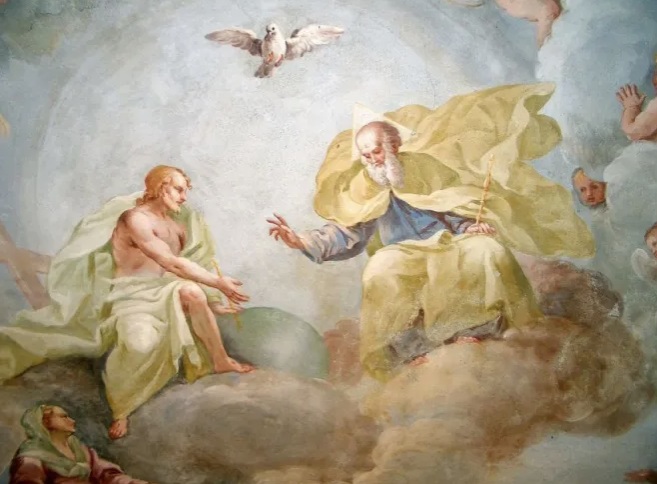
Islam vs. Christianity (and Judaism) on Divine Offspring: Quran 6:101 draws a sharp distinction between the Islamic understanding of God and the Christian idea of God having a son. In mainstream Christianity, God is believed to have an “only begotten Son” (Jesus Christ), but this sonship is understood as a spiritual, eternal relationship within the Godhead – not the result of God mating with a wife. The Quran, however, categorically rejects any notion of divine sonship, often addressing it in the language of physical offspring to drive the point home. “How could He have a son when He has no consort?” is a direct refutation of the idea of God fathering a child call-to-monotheism.com. From Islam’s perspective, calling Jesus “the Son of God” compromises God’s oneness, because it raises Jesus to a divine status. The Quran insists God is exalted above such concepts. It’s important to note a subtlety: Christians do not claim God took a wife, and they see Jesus’ sonship as metaphysical, not biological. The Quranic argument, however, exposes what Islam views as the inherent problem in any “son of God” claim – if taken literally, it would imply God had a partner or underwent a biological act, which is absurd; if taken metaphorically, Islam still sees it as an unnecessary and misleading analogy because God’s relationship to creation is fundamentally as Creator to created, not parent to child. In contrast, Judaism strongly resembles Islam on this point: Judaism has no doctrine of God having a literal son. Like Islam, it teaches that God is a single, indivisible being. The Hebrew Bible occasionally uses “children of God” in a metaphorical sense (e.g. Israelites as God’s children), but this is understood as figurative, just as the Quran calls righteous believers “God’s allies” or “servants” without literal familial implication. Thus, both Islam and Judaism would reject the idea of any being sharing God’s divinity by lineage – a core difference from Christian Trinitarian belief. Where Christianity uses the father-son relationship as part of the mystery of one God in three persons, Islam vehemently denies this, seeing it as a dilution of pure monotheism. The verse 6:101, together with many others (e.g. 19:88-92, 5:116), forms the basis of Islamic criticism of the Trinity and the concept of Jesus’ divinity. In summary, Islam maintains God has no family – neither sons nor daughters – whereas Christianity’s creed includes the Son and Holy Spirit within the Godhead, and Judaism aligns with Islam in affirming uncompromising oneness.
Islam vs. Ancient Mythologies: The verse also sets Islam apart from various polytheistic and mythological systems where creation is born out of divine procreation. In many ancient religions, gods have spouses and beget other gods or demigods. For example, in Egyptian mythology Isis and Osiris produce Horus; in certain Hindu traditions, deities have consorts and children; Greco-Roman gods famously have offspring (Zeus fathering Athena, Apollo, etc. through various consorts). Quran 6:101 pointedly rejects any such narrative for the true God. By saying God has no consort and thus no son, the Quran denies the kind of dynastic pantheon concept prevalent in multiple cultures islam.stackexchange.com. It is as if the Quran is drawing a clear line: the relationship between Allah and creation is not like Father Sky and Mother Earth producing baby gods or mortals. Rather, Allah is transcendent and singular, producing creation by command, not through sexual or familial relations. In the verse immediately before 6:101 (6:100), the Quran condemns those who “attribute sons and daughters to God without knowledge” – a reference to pagan Arabs who called angels “daughters of Allah,” and possibly other cultures’ beliefs in divine offspring. The Quran’s argument would apply universally: whether one speaks of Greek gods or Eastern deities, the idea of God literally fathering beings is categorically denied. This is a major theological departure. In Islam (and the Abrahamic faiths at large), God stands alone as Creator; in contrast, mythologies often have creation as a family affair among gods. Quran 6:101 serves as a critique of those mythologies, using simple logic: gods in those tales behave like biological beings, but the true God by definition has no peer to mate with and no need for children. This elevates the Islamic concept of God far above the anthropomorphic depictions elsewhere – God is not an old man in the sky with a wife and kids; He is the uncaused cause of all, fundamentally distinct from His creation.
Nature of Divine Creation – Direct vs. Mediated: Another comparative insight from this verse concerns how creation happens in different belief systems. Islam asserts that God directly created the universe (“Originator…He created all things”) by His will. There was no intermediary creator or demiurge – no subordinate entity through whom God had to work. In Christianity, creation is also from God, but the Gospel of John introduces the concept of the “Word” (Logos) through whom “all things were made.” Many Christian theologians identify this Logos as Christ (the Son) pre-existing with the Father. In essence, creation in Christian theology is sometimes described as mediated through the Son. By contrast, Quran 6:101 (and Quran 2:117, 16:40) emphasizes that God says “Be” and creation occurs, with no need of a mediating agent. This difference is nuanced (since Christians don’t see the Son as separate from God), but it reflects a divergence: Islam is extremely wary of inserting any entity between God and creation. The verse’s stress that God alone created everything can be seen as implicitly rejecting the idea of any “creative agent” alongside God, be it a son, wisdom personified, or nature itself. Similarly, in some strands of Jewish mysticism or philosophy, one finds concepts like the Logos, Sophia, or emanations through which God interacts with the material world – Islam tends not to adopt those ideas, preferring a more direct Creator-creation relationship. Philosophically, Islam’s view (inherited also by Kalam theologians) is closer to creation ex nihilo by a direct act, whereas some philosophical traditions (like Neoplatonism) envisioned a chain of emanations from the One down to the material world. Quran 6:101 stands firmly with the idea that the chain is short – indeed, nonexistent: God -> world, period. No emanation, no co-creator, no cosmic “mother” or “wisdom” birthing things. In practice, this means Islam and classical Christianity agree that God created the universe out of nothing, but Islam denies the Trinitarian mode of that creation. And Islam and polytheism differ completely: in polytheism creation is often procreation, whereas in Islam creation is volition.
Creation Narratives: In the Judeo-Christian Genesis account, “God created the heavens and the earth” in six days. This is very much in line with Badi‘ al-samāwāti wa-al-arḍ – God as sole creator of heaven and earth. So on the fundamental truth of one Creator, Judaism and Christianity concur with Islam. However, the Quranic narrative pointedly omits any suggestion that God “rested” or had fatigue after creation (unlike Genesis 2:2, which says God rested on the seventh day – something the Quran corrects in 50:38). This further cements the Islamic view of God’s absolute power and difference from created beings – He doesn’t tire, and He certainly doesn’t need to propagate Himself. Another contrast: while the Bible occasionally uses terms like “sons of God” for angels or for righteous humans, the Quran avoids such terminology for fear it could be misconstrued. For example, in the Bible, Israel is metaphorically called God’s firstborn (Exodus 4:22) and in the New Testament, believers are “children of God” by adoption. The Quran, sensitive to literal misunderstanding among its audience, prefers terms like “servants of God” (‘ibād Allāh) or “friends of God” (awliyā’), and reserves sonship language only to negate it in relation to God. The strong wording of 6:101 has an apologetic thrust: it guards the theological purity of calling God one. Early Muslims encountered Christian claims about Jesus, and the Quran responds by reasserting that God’s purity and unity allow no literal son – Jesus, in Islamic belief, is a noble prophet and Messiah, but a creation of God, not part of Him.
In summary, Quran 6:101 draws a theological line in the sand: unlike polytheistic myths, God in Islam did not engage in procreation to create the world; unlike Christian doctrine, God in Islam does not have an “eternal son” sharing His being. Islam shares with Judaism the strict monotheistic stance that God is a single entity with no literal offspring or consort. All Abrahamic faiths share the idea of creatio ex nihilo, but Islam emphasizes it in the service of Tawḥīd more explicitly. The result is a conception of God that is maximally transcendent and unique. He creates from nothing, by Himself, and nothing arises from Him except through His act of creation. This places Islam at odds with any religious or philosophical perspective that blurs the line between Creator and creation, whether by family relationships (sons/daughters of God), emanations, or subdivided divine roles. Quran 6:101, therefore, is a verse that crystallizes the Islamic view of God versus all others: one God, the Almighty Creator, with no peer, no partner, and no progeny.
5. Classical and Contemporary Tafsīr
Classical Exegesis: Early and medieval Qur’anic commentators treated 6:101 as a key verse to assert God’s transcendence and to refute wrong beliefs about Him. Ibn Jarīr al-Ṭabarī (d. 923), one of the earliest mufassirs, explained this verse by first connecting it to the previous verse (6:100). Verse 100 mentions people falsely attributing sons and daughters to God. Ṭabarī notes that 6:101 responds to those claims by demonstrating their absurdity – God created the very beings that pagans call His “sons and daughters,” so how could they literally be His offspring? He likely highlighted the phrase “He created all things” to show everything apart from God is created, so none can be His actual child. Although we don’t have Ṭabarī’s exact wording here, his style is to present consensus of understanding: that ṣāḥibah means “wife” and walad is impossible for God. Al-Qurṭubī (d. 1273) in his Jāmi‘ li-Aḥkām al-Qur’ān would typically delve into the Arabic, noting, for instance, that “annā yakūnu lahu walad” is a statement of impossibility and walad implies a new being of the same kind as the parent, which cannot apply to God. He might mention Christian beliefs in passing, but his main focus was likely on Arab polytheists and general principles of God’s oneness.
Ibn Kathīr (d. 1373), a widely read classical exegete, provides a clear and succinct explanation. He glosses Badi‘ as meaning originating and bringing into existence without precedent, citing early authorities Mujāhid and al-Suddī for that definition surahquran.com. Ibn Kathīr then says about “How can He have children when He has no wife”: “for the child is the offspring of two compatible spouses”. In other words, a walad (child) results only from a male-female pairing in creation, which by definition God does not partake in. He continues, “Allah does not have an equal; none of His creatures is similar to Him, for He alone created the entire creation.”
This underlines that God has no peer who could serve as the “other parent,” and that everything conceivable (including any putative son) is already His creation. Ibn Kathīr further connects the verse to other Quranic passages: he quotes 19:88-95, where the Quran condemns the claim “The Most Merciful has begotten a son” and states that on the Day of Judgment everyone will come to God alone. By referencing that, he shows the consistency of the Quran’s message – God has no son, and everyone (even Jesus or angels that people wrongly deified) are just servants who will stand before God, not His literal children. Ibn Kathīr ends his commentary on 6:101 by rhetorically asking (in paraphrase), “How could God have a wife from His creation suitable for His Majesty, when there is none like Him? How then could He have a child? Verily, Allah is glorified above having a son.”
This captures the essence of the classical stance: utterly impossible and unbecoming for God to have a son. The tone is one of declaring God’s transcendence (tanzīh) – removing any human-like attribution from Him.
Another great scholar, Fakhr al-Dīn al-Rāzī (d. 1210), in his commentary Mafātīḥ al-Ghayb, often engaged with philosophical questions. Regarding 6:101, Rāzī likely addressed the question of God’s omnipotence and the logical impossibility of offspring. Rāzī was known to pose hypothetical challenges (like “If someone says, could not God create a son without a consort since He’s all-powerful?”) and then answer them. We can infer from his theological leanings that he would answer: God’s power pertains to what is intrinsically possible; a “son” of God is not a thing that falls under divine power because it contradicts the very definition of God and son. He might also have discussed how the verse uses khalf (inversion) of argument: it’s not saying if God did have a consort He could have a son – rather, it’s a scornful rejection of the whole idea. He would underline God’s unity (perhaps referencing the concept of God being “wāḥid fī dhāt” – absolutely one in essence, allowing no multiplication). Rāzī often cited earlier scholars and philosophical principles, so he would likely concur with the reasoning that if God had an offspring, it would either mean dividing the divine essence or mating with another god, both of which are impossible. Thus, classical tafsīrs uniformly use 6:101 to educate the believer about God’s nature – emphasizing creation ex nihilo and refuting literal sonship.
Context of Polemics: Many classical commentators also identified who the “they” were who attributed sons and daughters to God. They mention groups like the pagan Arabs (who called angels God’s daughters), certain Jews (who said Ezra is the son of God, Quran 9:30) and Christians (who said Jesus is the Son of God). For example, the two Jalāls (al-Jalalayn Tafsīr, 15th c.) explicitly state: “How could He have a son when He has no consort?” as a rejection of the Christian claim that God has taken a son
. Yet they, like others, include all forms of that claim. The verse was understood broadly – not targeting only one group, but any notion of divine offspring, by any people, is invalid. As an Islam StackExchange summary aptly put: multiple cultures had savior-son myths (Horus, Krishna, etc.), and this verse knocks down the entire idea
islam.stackexchange.com. In doing so, classical scholars often praised the eloquence of the Quran’s argument – a simple, easy-to-grasp proof for a complex theological truth.
Modern and Contemporary Tafsīr: In the modern period, commentators continue to uphold the traditional understanding but also address new audiences and issues. Sayyid Abul A‘lā Maududi (d. 1979), for instance, in his Tafhīm al-Qur’ān (Towards Understanding the Qur’an), translates 6:101 in plain language: “How can He have a son when He has had no mate?” and then explains that the verse reasserts God’s oneness in the face of popular religious misconceptions myislam.org. Maududi’s commentary on this verse is brief because the point is straightforward, but elsewhere (in his introduction to Surah Maryam, for example) he engages with the Christian idea of sonship, arguing that calling Jesus “son” begot all kinds of confusion about God. In Tafhīm, he likely highlighted that Allah’s act of creation is an independent act of will, contrasting it with the reproductive processes of living beings. Modern South Asian scholars like Mufti Muhammad Shafi (author of Ma‘āriful Qur’ān) reiterate Ibn Kathīr’s points almost verbatim in this case surahquran.com, showing continuity – he even repeats that walad (child) would require a zaujah (spouse) and that Allah is above all that.
What modern commentators add, given contemporary knowledge, is often an emphasis on how reasonable and consistent with science this doctrine is. For example, they might mention that with our understanding of biology, it is clear offspring inherit traits from parents, etc., which would imply absurd things if applied to God. They underscore that calling God the Originator aligns with the idea of the Big Bang (as discussed earlier), reinforcing that the Quran was ahead of its time in dismissing eternal-universe ideas. Some 20th-century writers, facing a more skeptical audience, stress that the verse not only defends monotheism but also contains a logical proof within it. Rashid Rida (d. 1935) in his Tafsīr al-Manār was keen on such rational explanations. He likely pointed out that if the disbelievers themselves acknowledge that God created the heavens and earth (which many Arab pagans did believe), then logically He cannot be of the same species as other beings (since He made them all). Thus, God having a son is logically untenable. Rida and contemporaries also addressed misunderstandings – for instance, clarifying that the Quran’s polemic isn’t saying Christians believe God took a wife (something orientalists accused the Quran of misrepresenting). They explain that the Quran fully understands Christian doctrine but is refuting it in its own trenchant way by reducing “sonship” to its literal absurdity. In modern interfaith discussions, Muslim scholars use 6:101 to gently argue that terms like “father” and “son” for God carry misleading human connotations, which the Quranic language avoids in order to protect God’s dignity and oneness.
Differences in Emphasis: Classical tafsīrs were written in a context where polytheism and Christian theology were immediate concerns. Contemporary tafsīrs might also address modern philosophical issues – such as atheism or materialism. For instance, a modern scholar could use 6:101 to argue against the idea that the universe has no cause: Badi‘ al-samāwāt wal-arḍ implies a deliberate Creator, countering the notion that the universe popped into existence uncaused. They might engage with scientists or philosophers who say “Where did the universe come from?” by answering with this verse. In the age of science, phrases like “He created all things” take on apologetic importance to affirm that however far science goes in explaining how the universe developed, the Quran reminds us who ultimately brought it into being islamreligion.com.
Relevance in Modern Islamic Thought: Quran 6:101 remains highly relevant as Muslims articulate their faith today. It is frequently cited in dawah (outreach) materials to explain why Muslims do not accept terms like “God the Father” or “Son of God.” It provides a scriptural bedrock for the Muslim stance in dialogues with Christians: that worship is due to the Creator alone, who has no offspring. Meanwhile, in academic theology, this verse, among others, is used to elaborate the Islamic conception of God in contrast to the Trinitarian conception. Modern Muslim theologians like those of the Salafi orientation (e.g. on IslamQA or other platforms) invoke 6:101 when refuting any new sects or ideas that anthropomorphize God. They extend its principle to say God has no parents, children, spouse, siblings, or relatives – basically, God is totally unique (a point even some folk Muslim beliefs needed reminding of). For example, IslamQA, a contemporary fatwa site, uses this verse to discuss why it’s impossible for God to have a child and addresses the omnipotence question head-on, concluding that it’s a nonsensical scenario and praising Allah’s transcendence islamqa.info.
Additionally, with the rise of the Kalam Cosmological Argument in modern philosophy of religion (spearheaded by figures like William Lane Craig, which interestingly has Islamic roots), Muslim apologists often reference verses like 6:101. They argue that the Quran clearly states the universe began to exist and had a cause – something even philosophical arguments now aim to demonstrate logically. Thus, 6:101 is seen as in harmony with rational arguments for God’s existence and uniqueness.
In summary, both classical and contemporary exegesis agree on the fundamental meaning of Quran 6:101: God is the sole, incomparable Creator, and the idea of Him having a literal son or partner is nullified. Classical tafsīr provides the linguistic and contextual rationale, often engaging with biblical and pagan notions of sonship to negate them. Contemporary tafsīr upholds those interpretations and further shows how this verse speaks to modern minds – whether by aligning with scientific cosmology or by answering theological questions that arise today. The verse’s message is timeless in Islam: it guards the understanding of who God is – the Originator of all, unbound by human attributes – which is as crucial in the 21st century as it was in the 7th. Thus, Quran 6:101 continues to be a cornerstone in Muslim teachings about the oneness of God, studied in tafsīr circles and cited in debates, reminding believers and inquirers alike that the Creator of the universe stands alone in majesty, without need of wife or son, having created everything that exists surahquran.com.



 The Glorious Quran and Science
Leave a reply to Introduction to Surah Anaam – The Cattle – The Glorious Quran and Science Cancel reply