
Epigraph
Control of the heavens and earth belongs to God; God has power over everything. There truly are signs in the creation of the heavens and earth, and in the alternation of night and day, for those with understanding, who remember God standing, sitting, and lying down, who reflect on the creation of the heavens and earth: ‘Our Lord! You have not created all this without purpose –– You are far above that! –– so protect us from the torment of the Fire.’ (Al Quran 3:189-191)
Written and collected by Zia H Shah MD, Chief Editor of the Muslim Times
Introduction:
Why does the universe have the laws of nature that it does? This profound question has sparked debate between those who see a divine hand behind physical law and those who seek purely natural explanations. Atheists – who do not invoke a god – approach the origin of physical laws through science and philosophy. Many atheist scientists and philosophers argue that the laws of nature can arise without a supernatural lawgiver, either as natural consequences of deeper principles or even as brute facts of existence. This article will explore how atheist thinkers explain the emergence of physical laws, from scientific theories about the cosmos to philosophical stances on whether the laws require any explanation beyond their existence. Along the way, we’ll hear from prominent atheist voices like Richard Dawkins, Lawrence Krauss, Sean Carroll, and Stephen Hawking, and we’ll compare their views with theistic perspectives that argue the laws of nature imply a cosmic Designer or first cause. The goal is a clear and balanced exploration, accessible to general readers, of what atheists think about where nature’s laws come from.
Scientific Perspectives: Natural Origins of Physical Laws
Atheist scientists often contend that the universe’s physical laws emerged naturally and do not require an external supernatural creator. In physics and cosmology, several ideas illustrate how laws might arise on their own:
- A Universe from “Nothing”: Some physicists argue that given the right conditions, a universe can spontaneously come into being without violating known laws. For example, cosmologist Lawrence Krauss suggests that quantum physics allows the universe to originate from a state of no classical space or matter. In his book A Universe from Nothing, Krauss writes that “all signs suggest a universe that could and plausibly did arise from a deeper nothing… via processes that do not require any external control or direction.” In other words, the energy of empty space (the quantum vacuum) and the law of quantum mechanics could generate the Big Bang without a divine push. Stephen Hawking echoed this view, famously stating that “because there is a law such as gravity, the universe can and will create itself from nothing”, so “it is not necessary to invoke God to light the blue touch paper and set the universe going.” According to Hawking’s The Grand Design, the Big Bang was a natural consequence of physical laws like gravity, eliminating the need for a supernatural creator to spark the universe.
- The Multiverse Hypothesis: To explain why our universe’s laws are suitable for life (when they conceivably could have been different), atheist scientists often turn to the multiverse idea. The multiverse theory proposes that our universe might be just one of many universes, each with its own set of physical laws or constants. In a vast or infinite multiverse of varied laws, it’s not surprising that at least one universe (ours) ended up with life-friendly laws – by chance alone. This idea uses the anthropic principle, which notes that we observe this special set of laws because we exist in this universe; if the laws here didn’t allow stars, planets, and chemistry, we wouldn’t be around to notice. Thus, there’s no need to assume intentional design – it could be a cosmic “lottery” we happened to win. Some versions of the multiverse are grounded in modern cosmology: for instance, eternal inflation theory predicts bubble universes with different properties, and string theory has hinted at many possible universes with different constants. While the multiverse remains speculative (there’s no direct evidence for other universes yet), it offers a naturalistic explanation for the origin of our laws: they may be one random draw among countless possibilities. Biologist Richard Dawkins (though not a physicist himself) finds this idea appealing, noting that a multiverse with varied laws, combined with the anthropic principle, can “explain the appearance of design” in our universe without invoking God.
- Cosmic Evolution and Self-Organizing Systems: Another intriguing scientific perspective is that perhaps the laws of nature evolved or emerged through a natural process, analogous to biological evolution. Dawkins and others have speculated that a mechanism akin to natural selection might operate at the cosmic scale. One such proposal, by physicist Lee Smolin, is cosmological natural selection: new universes are born inside black holes, each with slightly different physical constants, and those universes that produce more black holes “reproduce” more often. Over many generations, this could favor universes with stable, structured laws (which incidentally might permit life) – all without any intelligent guidance. Although highly speculative, Dawkins “holds out hope” for ideas like this to naturally account for the laws of our universe. More generally, atheists point to the many examples of self-organization in nature. Complex, orderly systems can arise from simple rules: for instance, crystal structures form spontaneously from chemical laws, and snowflakes develop intricate patterns without a designer. Even life itself evolved from simple chemistry via natural selection. These cases show that order and complexity can emerge on their own, so atheists argue it’s plausible that the fundamental order of the universe – its laws – could also be a self-organizing outcome of an underlying simplicity. Some scientists suggest that deeper symmetries or principles in physics (like quantum mechanics or mathematical consistency) give rise to the specific laws we observe. Others, like Krauss, note that what once seemed like fine-tuned “magic numbers” often turn out to be explained by deeper physics. In short, the scientific naturalist view holds that the universe’s basic rules either had to be the way they are due to some underlying principle, or they came to be by a combination of chance and natural processes – but in neither case is a supernatural lawgiver required.
Philosophical Perspectives: Naturalism and the Necessity (or Bruteness) of Laws
Beyond physics laboratories and telescopes, atheists also tackle the origin of natural laws on a philosophical level. Atheist philosophers and philosophically-inclined scientists generally embrace naturalism – the idea that nature is all there is, and everything, including the laws of physics, must ultimately be understood in natural terms. From this perspective, the laws of nature are usually seen as either necessary truths of reality or “brute facts” that simply exist without further explanation.
One line of thought is that perhaps the laws of physics are necessary in some way. For example, some have wondered if there is only one internally consistent set of physical laws possible – that the universe could not have been otherwise. (Einstein once asked if “God had any choice in the creation of the universe,” by which he meant: are the laws of nature uniquely determined by logic or symmetry?). If only one self-consistent set of laws can exist, then our laws might be a logical or mathematical necessity, not needing an external reason. However, modern physics hasn’t found that unique Theory of Everything – in fact, as Krauss notes, physicists have been driven toward the opposite idea: perhaps the laws we see are “totally accidental, local to our environment… and by no means required” by any overarching principle. In that case, the laws could have been different, but we just happen to have this particular set. Even so, a philosophical naturalist may say: that’s just how it is – reality came out this way.
Many atheists are comfortable with the notion that the question “Why do these laws exist?” might not have an answer in the sense of a purposeful reason. The very concept of “laws” is a human description of how nature behaves; asking why those patterns exist could be seen as a category mistake if one is looking for intent or purpose. As physicist Lawrence Krauss wryly points out, in science “why questions” really boil down to “how” questions: we explain how the Earth orbits the Sun, but it may not make sense to ask why in terms of purpose. To an atheist, the universe doesn’t owe us an explanation or a purpose. The laws of nature might just be the fundamental given – the starting point beyond which no further “why” is needed or even meaningful. The famous British atheist philosopher Bertrand Russell took this stance in a 1948 debate, saying he would tell a questioner that “the universe is just there, and that’s all.” In other words, he regarded the existence of the universe and its basic laws as brute facts, not contingent on anything deeper.
Contemporary atheist thinkers echo this sentiment. Cosmologist Sean Carroll argues that we must be willing to accept the possibility that some things simply exist without cause or reason. In discussing why there is “something” rather than nothing, Carroll writes: “some things happen for ‘reasons,’ and some don’t, and you don’t get to demand that this or that thing must have a reason. Some things just are.”
From this viewpoint, it’s not a defect in our explanation to say the laws of nature just exist – it may simply be the way reality is. Carroll and others note that positing a God to explain the laws doesn’t actually answer the ultimate “why” question (since one can then ask “why does God exist?” or “who created God’s nature?”). Thus, the naturalist prefers to stop the chain of explanation at the simplest level – the universe’s basic structure – rather than introduce an even more complex entity. Accepting the laws of nature as a fundamental given can be seen as more parsimonious (following Occam’s razor) than inserting an unverifiable divine cause.
Of course, some atheist philosophers continue to explore whether the laws could be derivable from deeper logical principles or meta-laws, but until such an explanation is found, most are content with the assumption that nature is self-contained. In summary, the atheist philosophical perspective ranges from “the laws had to be this way” (a kind of necessity inherent in nature) to “the laws just are” (brute fact). In neither case is a supernatural explanation seen as needed. As far as the existence of the laws of nature is concerned, naturalists ask: why assume an unseen Creator when the laws we have might either be the only way things could work, or simply one random way things turned out? If we have no evidence of anything beyond nature, then it is intellectually honest, they argue, to treat nature’s laws as the final word – “the universe is just there, and that’s all.”
Insights from Major Atheist Thinkers
To further illustrate atheist views on the origin of nature’s laws, let’s look at what four prominent atheist thinkers have said in their own words:
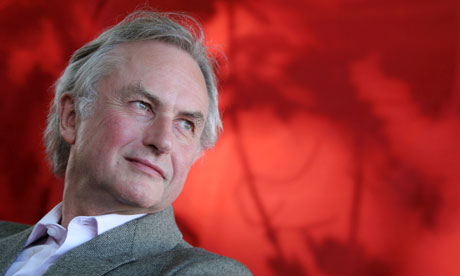
Richard Dawkins
Richard Dawkins, an evolutionary biologist famous for The God Delusion, has often addressed the argument that the universe’s orderly laws and “fine-tuned” constants point to a designer. Dawkins firmly rejects this notion. He acknowledges that the fine-tuning argument – the idea that only a very precise set of physical constants could produce a life-bearing universe – is “the most troubling argument” for atheists, and indeed “the best argument [for God] he has heard,” in that it appeals to a deistic Creator who set the laws just right. But Dawkins quickly adds that “It’s still a very, very bad argument, but it’s the best one going,” because it leaves an even bigger mystery: who designed the Designer?
In The God Delusion, he calls the appeal to God as an explanation for physical law “deeply unsatisfying”, since a God capable of fine-tuning the universe would be at least as complex and improbable as the universe itself. Instead of positing God, Dawkins favors scientific explanations like the multiverse or yet-undiscovered principles. He often invokes the anthropic principle – the universe’s laws seem special because we observe them as living beings – and suggests that even if we don’t currently know why the fundamental constants have the values they do, it’s better to remain curious and keep investigating than to plug the gap with God. In his view, invoking an unexplained creator “explains nothing.”
Thus, Dawkins champions the idea that the laws of nature either have a natural explanation or require no explanation beyond themselves, and that one should not leap to supernatural conclusions.

Lawrence Krauss
Lawrence M. Krauss is a theoretical physicist who explicitly grapples with the question “Why is there something rather than nothing?” – including the origin of physical laws – in his writings. Krauss argues that modern physics can demystify the origin of the universe. He points out that “nothing,” in physics terms, is unstable – even empty space can produce particles and energy due to quantum fluctuations. Therefore, a universe can arise naturally from a quantum vacuum state governed by the laws of physics. Crucially, Krauss emphasizes that this process does not require any divine intervention. As he writes, the universe “plausibly did arise from a deeper nothing… via processes that do not require any external control or direction.”
The laws of quantum mechanics themselves may drive the creation of universes. Critics have asked Krauss, “Where did the laws of physics come from, if the universe came from nothing?” – essentially, why is there a law like gravity or quantum mechanics in the first place? Krauss suggests that even this may someday be answered by physics, but he also notes that demanding an ultimate “why” might be misguided. In one interview he responded that people often confuse “why” with “how,” and that scientists seek the latter. His stance is that it’s possible no ultimate purpose exists for the laws of nature; they could simply be an emergent property of the “nothingness” that underlies reality. In line with this, Krauss has also discussed how some fundamental constants once thought to be inexplicable (a form of fine-tuning) became understood once we discovered deeper laws. He sees the apparent specialness of our universe’s laws as temporary puzzles that science can solve, not evidence of a creator. By showing a feasible natural mechanism for getting a universe, Krauss aims to remove the need to invoke God to explain why we have laws of nature at all. His catchphrase summary: “Forget Jesus, the stars died so that you could be here,” underlining that natural stellar processes (not a creator) made our existence possible. In short, Krauss’s work reinforces the atheist view that the universe’s existence – including its laws – can be explained by physics alone, arising naturally from “nothing” under the guidance of those very laws.
Sean Carroll

Sean Carroll is a cosmologist and philosopher of physics who has written extensively on cosmology and the philosophy of naturalism. Carroll is an outspoken atheist who argues that adding God to our explanations does not improve them. Regarding the origin of the laws of nature, Carroll leans on the concept of brute facts and the limits of explanation. He states plainly that not every “why” question has an answer in terms of an external reason. “Some things just are,” Carroll says – and the basic nature of reality might be one of those things. In a detailed essay titled “Does the Universe Need God?”, Carroll concludes the answer is no. He notes that natural theories (like eternal cosmologies or quantum origin models) can account for what we see, and even if there is currently no complete answer for why the laws are as they are, invoking God raises further questions rather than resolving anything. Carroll often addresses the common theistic challenge “Why is there something rather than nothing?” by suggesting it’s possible that nothingness is unstable, or that there is a natural realm of possibilities that must instantiate something. But even more, he argues that it’s a mistake to insist that the universe’s existence or its laws require a cause or reason. According to Carroll, saying “God did it” is not the logical default just because we don’t yet have a full scientific explanation. He flips the question and asks why we should expect a reason at all: if the universe just exists, that might be the end of the story – and that’s okay. As he succinctly put it, “you don’t get to demand that this or that thing must have a reason.” Some phenomena, possibly including the most basic laws of physics, “happen for no reason” in the sense of purpose. Carroll’s view aligns with a naturalistic worldview where the universe is self-contained. He also points out that any proposed God explanation would itself need explaining, so it doesn’t actually solve the mystery of the laws. In debates with theists, Carroll has defended the idea that cosmology can describe a universe with no beginning (or a self-contained beginning) and that appeals to God are unnecessary. Thus, Sean Carroll’s insight is that it’s entirely plausible and intellectually honest that the laws of nature exist just because – and our job as scientists is to describe them, not to find mystical reasons for them.
Stephen Hawking

The late Stephen Hawking, one of the world’s most renowned theoretical physicists, also weighed in on whether the laws of nature need a divine creator. In his later years, Hawking made headlines with his unequivocal statement that God is not needed to explain the universe. In the book The Grand Design (2010), Hawking wrote: “Because there is a law such as gravity, the universe can and will create itself from nothing.” He then explicitly concludes, “It is not necessary to invoke God to… set the universe going.”
Hawking’s reasoning was that if physical law allows for the spontaneous creation of universes (as some models of quantum cosmology suggest), then there is no gap for a deity to fill at the moment of the Big Bang. The “law such as gravity” he mentions refers to the known physics that in quantum theory, particles (and even tiny universes) can pop in and out of existence. Given that gravity can have negative energy that balances the positive energy of matter, the net energy of a universe could be zero, thus not violating conservation laws even if a whole universe appears. Hawking supported the idea that there could be many universes, spontaneously created, and we naturally find ourselves in one that permitted our existence (again invoking a kind of anthropic reasoning). Earlier in his career, Hawking had used the metaphor of “knowing the mind of God” to describe a complete theory of physics – but he later clarified this was metaphorical. By the end of his life, Hawking identified as an atheist and was straightforward that the laws of nature are enough: they alone can account for the creation and structure of the universe. If anything, Hawking saw the quest of physics as finding which laws (like a unified theory) underlie reality, not seeking who put them there. His stance represents the confidence many atheist scientists have that the laws of physics are self-sufficient. Rather than ask “why do the laws exist?”, Hawking’s focus – like that of science in general – was on how the laws operate and how they give rise to the phenomena around us. In summary, Stephen Hawking’s insight was that invoking God is an unnecessary addition: the existence of gravity and quantum mechanics provides a complete framework for the universe’s origin and behavior, making a creator redundant.
Comparison with Theistic Views: Designer or Brute Fact?
The atheist explanations above contrast sharply with the theistic view, which argues that the laws of nature point to a purposeful designer or a first cause. It’s useful to compare the two perspectives and the counterarguments each side raises:
- Theistic Perspective: Most theists contend that the order and precision of physical laws are not accidental. They argue that laws of nature require a transcendent source – essentially, an intelligent lawgiver (God). One common theistic argument is the argument from design or fine-tuning: the idea that the fundamental constants of the universe (the strength of gravity, the charges of particles, the speed of light, etc.) are set so precisely to allow life that it strains credulity to think this happened by chance. Theists like philosopher William Lane Craig point to fine-tuning as strong evidence for the existence of God or some form of intelligence that set the “dial” of physics to the right values. Similarly, the Anglican physicist-priest John Polkinghorne has said, “Anthropic fine tuning is too remarkable to be dismissed as just a happy accident.” From that standpoint, it’s far more plausible that a Creator intentionally crafted the laws of nature to be life-permitting. In addition to fine-tuning, theists often invoke the cosmological argument: everything that begins to exist has a cause, so if the universe (and its laws) had a beginning, the cause must be something beyond the universe – i.e. a first cause which itself has no cause (God). Classical theologians like Thomas Aquinas argued that the very existence of a lawlike, orderly universe points to an ordering Mind. Even modern thinkers like physicist-theologian Alister McGrath express awe that nature is intelligible at all; they interpret the mathematical elegance and harmony of the laws as reflections of a divine Creator’s rationality. In short, theists feel that the laws of nature cry out for an explanation, and that the best explanation is a supernatural Creator who chose those laws for a purpose.
- Atheist Counterarguments: Atheists respond to these theistic claims on several fronts. First, with regard to fine-tuning, atheists offer the multiverse and anthropic principle as a robust alternative explanation, as discussed earlier. If there are countless universes or if the laws could have varied, then it’s not surprising that some universe has the “winning combination” of constants – we happen to live in that one (otherwise we wouldn’t be here to notice). This weakens the force of the fine-tuning argument by showing that a designer is not the only way to account for our fortunate laws. Additionally, some atheists point out that fine-tuning is currently a mystery but not necessarily a miracle – future physics might uncover reasons why constants have the values they do (making them less “improbable” than we think). For example, what looks like an arbitrary constant may eventually be derived from a deeper theory. Thus, invoking God in a gap of scientific understanding is premature.
Secondly, atheists argue that positing God as the designer or first cause doesn’t truly solve the problem – it shifts it. Richard Dawkins and others famously ask, if one insists the universe’s laws must have had a designer, then who designed the designer? Any God capable of setting up a universe would presumably be an even more complex entity, and explaining His existence would be an equal if not greater puzzle. As Dawkins puts it, calling God a solution is “deeply unsatisfying” because it leaves the original issue (the origin of complexity) unanswered. Theists counter that God is an uncaused, necessary being, but atheists find this special pleading – essentially an arbitrary exemption. Why not simply consider the universe (or multiverse) itself to be the uncaused, self-existent thing? After all, saying “God just exists necessarily” isn’t fundamentally different from saying “the laws of nature just exist – period.” Atheist philosophers therefore often prefer to cut out the extra step and treat the universe as the ultimate brute fact. This ties back to Sean Carroll’s point that one cannot demand a reason for everything; maybe the chain of explanation stops at the natural laws themselves.
Another counterargument comes from pointing out the lack of evidence for a cosmic designer. Atheists often require positive evidence for a hypothesis. While theists see the existence of laws and fine-tuning as evidence in itself, atheists argue this is an argument from ignorance: just because we currently don’t have a complete natural explanation for the laws doesn’t mean we should insert a divine one. History has shown many “design” arguments retreat as science progresses (for instance, the complexity of life, once argued as proof of God, is now explained by evolution). Atheists extend this pattern to cosmology: just because we haven’t fully explained the constants or origin of the Big Bang yet doesn’t mean it won’t have a natural explanation. As one critic quipped, invoking God for the laws of nature is a “God of the gaps” move – using God to plug a gap in knowledge – which has a poor track record as a strategy.
Finally, atheists dispute the idea that the laws of nature need a purpose or must come from a mind. They note that we never observe disembodied “laws” being created – laws are descriptions of how reality consistently behaves. It’s entirely possible that consistency just exists. For a law to be “set,” one might imagine a moment when things could have been chaotic but then a law was imposed; atheists question if that scenario is even meaningful without time and space in place. Some propose that if you truly had “nothing” (no space, no time, no physics), that state might be inherently unstable, inevitably giving rise to something – in which case existence doesn’t need a push, it happens by default. In quantum cosmology, for example, the idea of a universe spontaneously nucleating from nothing is an active area of research, and it treats the “nothing” not as the absolute philosophical nothing, but as a quantum vacuum subject to quantum laws. Theists object that one is assuming laws of quantum physics exist in that “nothing,” but atheist thinkers like Krauss respond that what we call “nothing” might indeed have the potentiality of laws (or that the distinction between nothing and something gets fuzzy at that level). The upshot: atheists feel comfortable with the notion that the universe (and its law-like behavior) could exist without an external reason, whereas theists feel that our intuitions of causality and design demand an intelligent cause.
In summary, the theistic view sees the laws of nature as evidence of intentional design or a necessary creation by God, while the atheist view seeks to explain those same laws through natural mechanisms or accepts them as the final given. Theists argue that the existence and fine-tuning of laws point to God, whereas atheists argue that invoking God raises more questions than it answers and that natural explanations, however incomplete now, are more parsimonious. Both sides debate issues like whether a multiverse exists, whether the idea of an uncaused universe is coherent, and if it’s reasonable to accept “brute facts.” This philosophical tug-of-war over the laws of nature continues in modern discourse, with each side refining its arguments. Atheists like Dawkins, Krauss, Carroll, and Hawking have presented a case that the laws of nature originate from nature itself – through chance, necessity, or self-organization – and they maintain that we do not gain any extra predictive power or understanding by appending “…and God made it so” to our theories. Theists, on the other hand, maintain that the very existence of an orderly universe is a miracle needing a transcendent explanation, and they find it unsatisfying to call the most fundamental aspects of reality just a brute fact or accident.
Conclusion
The question of the origin of the laws of nature sits at the intersection of science, philosophy, and theology. Atheist thinkers approach the question by looking for impersonal, natural explanations. Some focus on scientific hypotheses like quantum cosmology and the multiverse to show how a life-permitting universe could appear without design. Others emphasize a philosophical stance that the universe just exists without requiring a further reason – a stance bolstered by the principle that not all “why” questions have answers in terms of purpose or intent. Major atheist figures provide a narrative in which invoking God is unnecessary: as Stephen Hawking succinctly put it, physical law alone can account for creation. On the flip side, theistic perspectives continue to argue that the astonishing fact that anything exists – let alone governed by elegant mathematical laws – is best explained by a creative intelligence. This article has shown both views in parallel: one sees the laws of nature as emerging from nothing naturally or simply existing, the other sees them as established by a divine mind.
For a general reader, the key takeaway is that atheists do think deeply about these ultimate questions – they don’t simply ignore the mystery of existence. Rather, they propose that answers can be found in the natural realm itself. Whether it’s through unifying physics under a single framework, positing many unseen universes, or reconsidering the need for an answer at all, atheist scientists and philosophers seek to demystify the laws of nature without recourse to the supernatural. This does not mean all answers are currently in hand – far from it. Atheist viewpoints acknowledge gaps in our knowledge (such as what caused the Big Bang or why quantum physics has the form it does), but they express confidence that “we don’t yet know” is a better response than “therefore God did it.” On the other hand, theists see that very confidence as misplaced, feeling that a purely naturalistic worldview cannot ultimately make sense of itself. The debate is an enduring one. Yet, as our scientific understanding has expanded, atheist explanations have grown more sophisticated and, in their view, more compelling. Whether one finds the naturalistic account or the theistic account more convincing will depend on how one weighs concepts like simplicity, sufficient reason, and personal intuition about existence.
What’s undeniable is that the origin of the laws of nature remains one of the greatest puzzles. Atheists will continue probing with telescopes, particle colliders, and logical arguments, operating under the premise that reality is a closed system amenable to understanding. Theists will continue to argue that our ability to probe and the order we find are signs of a higher order. In the spirit of accessible inquiry, this exploration shows that the atheist position is not nihilistic or dismissive of the wonder of natural law – rather, it is a perspective that finds the wonder in nature itself. As Sean Carroll wrote, we should “let the universe be the universe” – meaning we should try to understand the universe on its own terms, without assuming it was crafted to cater to us. In doing so, atheists believe we may eventually uncover why the laws are the way they are, or we may simply accept that they are and focus on discovering what they are. Either way, the inquiry continues, and it enriches our appreciation of this remarkable cosmos we inhabit – a cosmos ruled by laws that, perhaps, wrote themselves.
Atheists assume that we should find authorship of books within the printing press and never outside of it. If you find a computer doing something, always explain it from within the computer, never outside of that. If you find a television, limit yourself to it, and the same goes for the radio, and so on.
It is a matter of blind faith for them and they are not open to discussing this.
They rule out the possibility of transcendence in principle as a brute fact, an axiom, and their fundamental belief. Ontological naturalism is a belief system, not a scientific or philosophical theory. As a theist, I believe in methodological naturalism but not in ontological naturalism. This means that we can study the universe only as scientists looking at natural causes, as the transcendent is not available to our scientific methods but only through philosophical and theological inquiry. The article started with a Quranic verse and concludes with one:
God created all things and has full knowledge of all things. This is God, your Lord; there is no God but Him, the Creator of all things, so worship Him; He is in charge of everything. Eyes cannot reach Him, but He reaches human consciousness at His will. He is the All-Subtle, the All-Aware. (Al Quran 6:101-103)
Sources:
The arguments and quotes above were drawn from a variety of scientific and philosophical discussions. Key references include Richard Dawkins’ The God Delusion (which critiques the idea of a God-designed universe) en.wikipedia.org, Lawrence Krauss’s book A Universe from Nothing (arguing for a quantum origin of the universe) en.wikipedia.org, Sean Carroll’s writings such as “Does the Universe Need God?” on his blog (which emphasize naturalism and the possibility of brute facts) preposterousuniverse.com, and Stephen Hawking’s The Grand Design (which posits that physical laws suffice to create universes) reuters.com. These atheist views are contrasted with theistic perspectives like those of William Lane Craig en.wikipedia.org and John Polkinghorne en.wikipedia.org, who argue for a designer, as well as general explanations of the fine-tuning problem and multiverse hypothesis from cosmology literature en.wikipedia.org. Each viewpoint contributes to a rich dialogue about one of humanity’s oldest questions.







Leave a Reply