
Promoted post: The Quranic Verses about Math and How It Developed with Astronomy in the Islamic Civilization
Written and collected by Zia H Shah MD, Chief Editor of the Muslim Times
His Work and Contributions
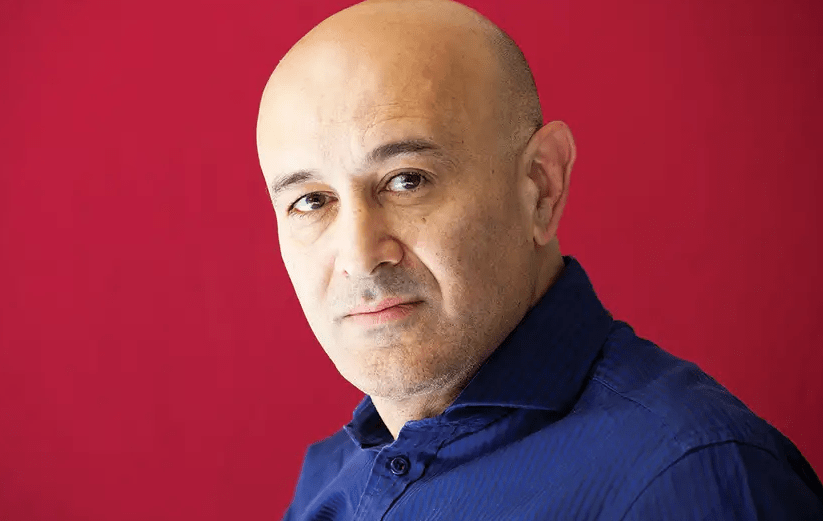
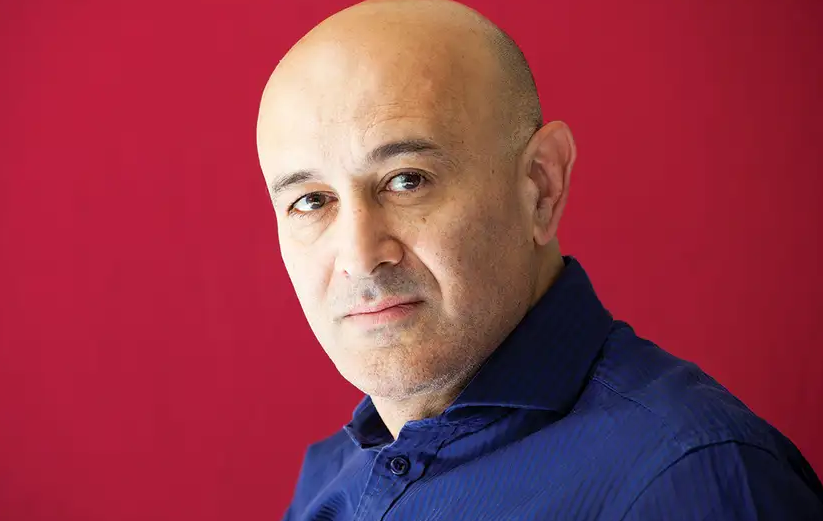
Jim Al-Khalili is an Iraqi-born British theoretical physicist and a prominent science communicator known for bringing history and science together. As a professor and author, he has devoted much of his public work to highlighting the often-overlooked contributions of medieval Muslim scientists. Through documentaries, books, and lectures, Al-Khalili showcases how for about 700 years the Islamic world led in fields like mathematics, astronomy, medicine, and engineering – a period often neglected in Western narratives of science. He emphasizes that between the 8th and 15th centuries, scholars under Islamic civilization not only preserved earlier knowledge but made original advances that paved the way for the Renaissance and modern science. Al-Khalili’s mission as a science communicator is to celebrate this “Golden Age” of Arabic science and to remind global audiences that science is a shared human heritage across cultures. By doing so, he provides a more inclusive story of science – one that acknowledges Muslim scholars’ role in shaping disciplines from algebra and optics to chemistry and medicine.
Documentaries, Books, and Lectures
One of Al-Khalili’s best-known projects is the BBC documentary series “Science and Islam” (2009). This three-part television series follows him on travels through the Middle East and North Africa, telling the story of the great leap in scientific knowledge that took place in the Islamic world between the 8th and 14th centuries. In the series, Al-Khalili visits historical sites in Syria, Iran, Tunisia, Spain and beyond, tracing how knowledge was gathered and advanced. Each episode focuses on a theme – “The Language of Science,” “The Empire of Reason,” and “The Power of Doubt” – exploring how terms like algebra, algorithm, and alkali (all Arabic in origin) became fundamental to modern science. For example, he recounts how the mathematician al-Khwarizmi laid the foundations of algebra and how physician Ibn Sina’s Canon of Medicine remained in use up to the 19th century. In another episode, he showcases the astronomer al-Biruni measuring Earth’s circumference to remarkable accuracy, and the physicist Ibn al-Haytham’s experiments proving that light travels in straight lines. Throughout the series, Al-Khalili argues that these medieval scholars were among the first to insist on empirical proof for scientific theories – bringing a rigor to science that predated the European Renaissance by centuries. The Science and Islam series (accompanied by a book of the same name by Ehsan Masood) had a strong impact by vividly introducing BBC audiences to the rich scientific legacy of the Muslim world, effectively “unearthing a buried history” and correcting misconceptions.
Al-Khalili expanded on this topic in his acclaimed book “Pathfinders: The Golden Age of Arabic Science” (2010). (The book was published in the US as The House of Wisdom.) In this work, he celebrates the forgotten pioneers of medieval Arabic science, blending rigorous history with engaging storytelling. Pathfinders is filled with examples of breakthroughs between the 8th and 15th centuries – from novel mathematical theories to new medical techniques – written in an accessible style that brings the era to life. Al-Khalili, who was born in Baghdad, interweaves his personal passion for his heritage with factual history, lending authority and enthusiasm to the narrative. Notably, he points out that for over seven centuries, Arabic was the international language of science, yet modern Western histories often leap from ancient Greek scholars straight to Copernicus and Galileo, bypassing the Islamic scholars in between. Pathfinders aims to set the record straight by profiling major figures like the polymath Ibn al-Haytham, the mathematician al-Khwarizmi, and the physician-philosopher Ibn Sina, among others. Al-Khalili carefully avoids exaggerated claims; for instance, he uses the term “Arabic science” (science written in Arabic under the Abbasid realm) rather than “Islamic science” to emphasize the scientific work itself was culturally diverse and not driven by religion. The book was widely praised for bringing alive “the bubbling invention and delighted curiosity of the Islamic world”, with reviewers noting that Al-Khalili’s command of both physics and Arabic history invests the story with sympathy and authority. Critics lauded it as “a user-friendly guide” to a neglected era and “an absorbing read” that powerfully reveals how the legacy of figures like Ibn Sina and Ibn al-Haytham belongs to all of us – just as much as the legacy of Copernicus or Darwin.
Al-Khalili has also reached out to Muslim audiences through media like Al Jazeera, further showcasing this heritage in an accessible way. In 2015 he hosted “Science in a Golden Age,” a six-part series on Al Jazeera English, which journeys back in time to link cutting-edge modern science with its roots in the medieval Islamic world. For instance, in the Astronomy episode he examines beautifully crafted astrolabes (such as the 18th-century Persian astrolabe pictured above) from museum collections and explains how they were used by Muslim astronomers. He recreates experiments and uncovers manuscripts to illustrate how scholars like Ibn al-Haytham (in the Optics episode) pioneered the understanding of light and vision – earning him the title “Father of Optics”. The series highlights that even iconic Western scientists like Newton, Galileo, and Copernicus built upon foundations laid by figures such as Al-Tusi, Al-Khwarizmi, and Al-Razi. Each episode (Optics, Astronomy, Mathematics, Engineering, Chemistry, and Medicine) connects a historical Muslim innovator to a modern scientific context. For example, Al-Khalili visits the SESAME particle accelerator in Jordan while discussing Ibn al-Haytham’s legacy in optics, and he links Al-Kindi’s 9th-century cryptographic work to today’s computer encryption in the mathematics episode. Through these documentaries – whether on the BBC or Al Jazeera – as well as numerous public talks, Al-Khalili has effectively become a bridge between the past and present. His 2014 Voltaire Lecture in London (titled “Lessons from the past: science and rationalism in medieval Islam”) explicitly drew lessons from the Golden Age for today’s world. In that lecture, he lauded medieval scientists like Ibn al-Haytham (whom he ranks alongside Archimedes and Newton as one of history’s greatest physicists) and argued that the scientific method itself was nurtured by Muslim scholars long before the Enlightenment. Across all these platforms – TV, print, and stage – Al-Khalili’s contributions center on illuminating the profound scientific heritage of the Muslim world and making it part of mainstream discourse.
Key Scientists and Discoveries Highlighted
Al-Khalili’s works shine a spotlight on many scholars of the Islamic Golden Age, often illustrating their contributions and why they matter. Some of the key scientists and discoveries he highlights include:
- Al-Khwarizmi (c. 780–850) – A pioneering Persian mathematician whose name gave us the word “algorithm.” Al-Khalili credits al-Khwarizmi as “the greatest mathematician of the medieval world,” noting that he essentially founded algebra (al-jabr) as a new discipline. In Science and Islam, Al-Khalili explains how terms like algebra and algorithm are of Arabic origin and fundamental to modern mathematics and computing. Al-Khwarizmi’s works on solving quadratic equations by completing the square provided a basis for mathematical problem-solving that is still taught today. Without his introduction of systematic algebraic methods, “there would be no modern mathematics or physics” as we know them. Al-Khalili often emphasizes how al-Khwarizmi’s legacy underlies everything from engineering to computer science.
- Ibn al-Haytham (Alhazen, 965–1040) – An Iraqi polymath renowned for his revolutionary work in optics. Al-Khalili frequently describes Ibn al-Haytham as the first true experimental scientist, highlighting that he practiced a form of the modern scientific method centuries before Francis Bacon and Galileo. In the Optics episode of Science in a Golden Age, Al-Khalili shows how Ibn al-Haytham’s Book of Optics elucidated vision and light. He recreates Ibn al-Haytham’s famous camera obscura experiment to demonstrate how this 10th-century scholar proved that light travels in straight lines and how lenses form images. Al-Khalili’s admiration for Ibn al-Haytham is evident – he even remarked that Ibn al-Haytham stands alongside Newton in the pantheon of great physicists. Often called the “Father of Optics,” Ibn al-Haytham laid the groundwork for the science of light and vision, and Al-Khalili credits him with establishing the principle that theories must be tested by experiments.
- Al-Razi (Rhazes, 854–925) – A Persian physician and chemist, celebrated as one of the greatest medics of the Islamic world. In Al-Khalili’s narratives, al-Razi exemplifies the advanced state of medicine and experimental chemistry in medieval Islam. Al-Razi wrote influential medical encyclopedias and was among the first to systematically classify substances by their chemical properties. Al-Khalili’s Science in a Golden Age series describes how al-Razi and others transformed the mystical practice of alchemy into the science of chemistry by emphasizing careful observation and experimentation. For instance, al-Razi distilled alcohol for use in medicine and identified substances like kerosene. He also famously differentiated smallpox from measles in clinical records – an early triumph of diagnostic medicine. By highlighting al-Razi’s work, Al-Khalili shows that hospital medicine and pharmacology were thriving in 9th-century Baghdad long before similar achievements in medieval Europe.
- Nasir al-Din al-Tusi (1201–1274) – A Persian astronomer and mathematician whose innovations prefigured the Copernican revolution. Al-Tusi developed the Tusi Couple (a mathematical device to produce linear motion from circular motions) and produced remarkably accurate planetary models. Al-Khalili often points out that Nicolaus Copernicus drew on Al-Tusi’s models when formulating heliocentric astronomy in the 16th century. In the Astronomy episodes of his documentaries, Al-Khalili visits observatory sites and discusses how scholars at observatories like Maragha (which al-Tusi directed) refined Ptolemaic models, setting the stage for the later work of Copernicus. He notes that Copernicus should be seen “as the last of the Maragha school of astronomers rather than the first modern one,” underlining the direct continuity from al-Tusi’s Islamic astronomy to the European Renaissance. By crediting al-Tusi’s role in influencing Western astronomy, Al-Khalili stresses the point that scientific progress is a global relay, not a single-civilization story.
- Other notable figures – In addition to the above, Al-Khalili’s presentations include many other luminaries of the Islamic Golden Age. He frequently cites Ibn Sina (Avicenna), whose writings in medicine and philosophy were core texts in East and West. He highlights Al-Biruni, a 10th-century polymath who measured Earth’s circumference to within 1% accuracy and championed a rigorous approach to science. Early engineers like the Banu Musa brothers and Al-Jazari appear in his discussions for their ingenious automatons and mechanical inventions. He also mentions thinkers like Al-Kindi, who wrote one of the earliest texts on cryptography, and Jabir ibn Hayyan (Geber), who pioneered experimental techniques in chemistry. By weaving these figures into his storytelling, Al-Khalili paints a broad picture of a vibrant scientific civilization. He notes that what truly distinguished these scholars was their scientific method – they valued empirical evidence and logic, exhibiting a spirit of inquiry “not limited by what they saw” and willing to question established authorities. In Al-Khalili’s view, this rational, experiment-driven approach was the greatest contribution of the Islamic Golden Age, predating and arguably seeding the later scientific revolution in Europe.
Reception and Impact
Jim Al-Khalili’s efforts to illuminate the Muslim world’s scientific heritage have been met with enthusiasm in both Western and Muslim contexts. In the West, his work has been widely praised for enriching the public’s understanding of the history of science. Reviews of Pathfinders in major outlets underlined its significance in correcting the Eurocentric narrative. The Guardian lauded the book for bringing alive the inventive spirit of the Islamic world and noted how Al-Khalili’s passion makes the story accessible and compelling. The Independent highlighted Al-Khalili’s mission of educating a wide audience about science and its history, observing that “just as the legacy of Copernicus and Darwin belongs to all of us, so does that of Ibn Sina and Ibn al-Haytham.” Such commentary underscores that Western readers and scholars have welcomed Al-Khalili’s work as a much-needed reminder of the global nature of scientific progress. His narratives have provided “ample evidence for the compatibility of Islam and science,” as one reviewer put it, countering the misconception that these might be at odds. In academic circles and science communication forums, Al-Khalili is credited with popularizing a more inclusive view of science history – one that acknowledges how deeply indebted the modern world is to Arab and Persian scholars. By presenting this knowledge on respected platforms (BBC, published by Penguin, etc.), he has helped integrate the achievements of the Islamic Golden Age into mainstream discussions of science history. Today, it is far more common to hear names like Al-Khwarizmi or Ibn al-Haytham mentioned alongside Newton or Galileo in popular science media, a change in which Al-Khalili’s influence is evident.
In the Muslim world, Al-Khalili’s work has resonated as a source of pride and a call to action. Many Muslim viewers and readers have embraced his documentaries and writings as a rediscovery of their own heritage. By reclaiming the “forgotten legacy of Arabic science,” he has helped younger generations of Muslims reconnect with a time when their civilization led the world in inquiry and innovation. This has important implications for cultural self-esteem and identity, as it challenges narratives of decline and encourages a revival of that innovative spirit. Al-Khalili himself often speaks to these audiences about learning from the past to inspire future progress. At the World Government Summit in Dubai (2016), for example, he delivered a talk urging the Arab world to “regain its past” and look toward a “new Golden Age” of science. He pointed out that the original Golden Age thrived on openness, tolerance, and a passion for knowledge – traits that attracted scholars from many cultures to Baghdad in the Abbasid era. He reminded listeners that Arabic science in that era was “curious, tolerant, inclusive and open to all ideas,” and that Western scholars once flocked to learn in places like the House of Wisdom. Highlighting figures like Al-Haytham, Al-Kindi, Al-Khwarizmi, and Al-Razi in that forum, he showed how those scholars influenced Western icons like Copernicus and Newton. This message reinforces a sense of shared history and encourages Muslims to take ownership of their scientific legacy. Al-Khalili has been optimistic about signs of renewal – noting emerging research institutions in the Middle East and urging greater investment in education and R&D. He often argues that science should once again become a source of unity across the Muslim world, crossing borders and sectarian lines just as it did in the past. The response among Muslim audiences has generally been positive: his works are seen as validating a rich cultural heritage and refuting the notion that modern science is exclusively Western. This has also fostered cross-cultural understanding; by emphasizing that the West borrowed and built upon Islamic-era discoveries, Al-Khalili’s narrative creates a bridge of respect between cultures. It reminds both Western and Muslim audiences that the pursuit of knowledge is a universal human endeavor, and that celebrating each other’s contributions can inspire mutual appreciation.
In summary, Jim Al-Khalili has played a pivotal role in illuminating the scientific heritage of the Muslim world. Through engaging storytelling and authoritative research, he has brought to life the achievements of scholars like al-Khwarizmi, Ibn al-Haytham, al-Razi, and al-Tusi for a global audience. His documentaries, books, and lectures serve not only as historical education but as a platform for dialogue between cultures. By showing how the Islamic Golden Age helped lay the foundations of modern science, Al-Khalili’s work fosters a greater understanding that science transcends borders and beliefs. The impact of his contributions is evident in the growing awareness and appreciation of medieval Muslim scientists in popular culture, and in the inspiration it has given to those in the Muslim world seeking to revive a proud tradition of inquiry. In bridging past and present, and East and West, Al-Khalili has successfully demonstrated that the story of science is a shared legacy – one that is richer and more accurate when it includes all of its brilliant pathfinders.
Sources:
Jim Al-Khalili’s Science and Islam BBC series islamicity.org
Pathfinders: The Golden Age of Arabic Science physicsworld.com penguin.co.uk; Physics World review of Pathfinders; Al Jazeera Science in a Golden Age press materials network.aljazeera.net; Humanists UK lecture summary humanists.uk; World Government Summit 2016 coverage worldgovernmentssummit.org.
 The Glorious Quran and Science
Leave a comment