
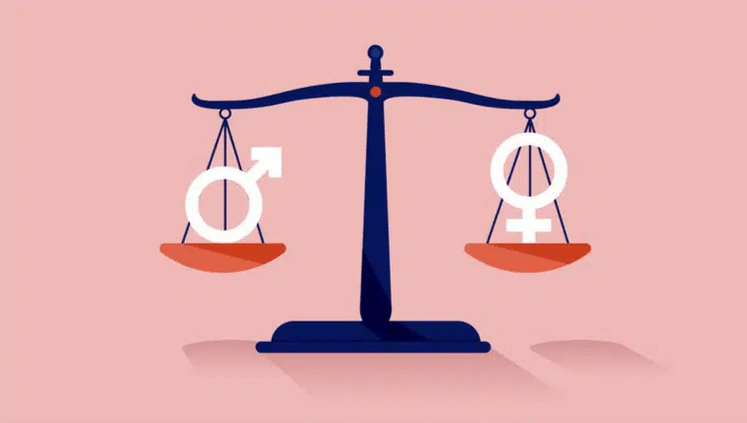
Epigraph
God commands justice, doing good, and generosity towards relatives and He forbids what is shameful, blameworthy, and oppressive. He teaches you, so that you may take heed. (Al Quran 16:90)
Written and collected by Zia H Shah MD, Chief Editor of the Muslim Times
Historical Jurisprudence
Sunni Traditions: In classical Sunni jurisprudence, all four major schools (Hanafi, Maliki, Shafiʿi, Hanbali) held that the blood money (diyah) for a woman is half that of a man’s. This was treated as a settled rule of law. Imām Al-Shāfiʿī, for example, stated in Al-Umm that he knew of no scholar, past or present, who disagreed that a woman’s diyah is half of a man’s islamweb.net. Medieval jurists cited early Islamic authority for this rule: it was reportedly established by the Prophet’s Companions. The second caliph ʿUmar ibn al-Khaṭṭāb is quoted saying “a woman’s blood money is half that of a man’s” islamweb.net, and the same ruling is transmitted from ʿAlī ibn Abī Ṭālib and ʿAbd Allāh ibn Masʿūd with sound chains. Some hadith compilations even attribute a saying to the Prophet Muʿādh ibn Jabal reported that “The woman’s blood money is half the man’s” fiqh.islamonline.net, though jurists placed greater weight on the ijmāʿ (consensus) of the Companions and early scholars affirming this principle islamweb.net. In practice, the classical law set the standard diyah for a free Muslim male as 100 camels (or its equivalent), while a woman’s diyah was fixed at 50 camels, i.e. half the male amount islamweb.net.
Shia (Jaʿfari) Traditions: Classical Jaʿfari (Twelver Shiʿa) jurisprudence arrived at the same substantive rule. Shia fuqahāʾ held that a female victim’s life is compensated at half the rate of a male’s. This is evident in authoritative Shia legal texts and modern codifications influenced by them. For example, Iran’s Islamic Penal Code (reflecting Jaʿfari fiqh) explicitly states: “The diyah (blood money) for murdering a woman is half that of a man.” iranhrdc.org. Like their Sunni counterparts, Shia jurists grounded this in scriptural and historical precedent. Many Shia scholars traced the rule back to narrations from the Imams (the Prophet’s family), who upheld the earlier Islamic practice. Notably, ʿAlī ibn Abī Ṭālib – revered as the first Imam in Shia Islam – is cited in Sunni and Shia sources as enforcing the half-diyah rule islamweb.net. Thus, both traditions converged on the principle that a woman’s life, in monetary terms of compensation, was valued at half the diyah of a man.
Reasoning and Rationale: Early jurists openly discussed why a woman’s diyah should be half. A key reasoning was that diyah is not a measure of a person’s spiritual worth or human dignity, but of the financial loss to the victim’s dependents fiqh.islamonline.net. Classical scholars viewed diyah as economic compensation to the deceased’s heirs, not a “price” on the person’s life. In a tribal society, a man was typically the primary breadwinner; his death caused greater material harm to his family than a woman’s death would. Therefore, jurists argued, the compensation should correspond to that expected financial harm islamquest.net. They noted that the inheritors are the ones who receive diyah, and generally “the material damage that befalls the inheritors by the death of a male – the main provider in most cases – is greater than the damage that befalls them by the death of a female” islamweb.net. In other words, a man’s earning capacity and public duties (financial maintenance of wife/children, military service, etc.) were seen as more critical, so his wrongful death merited a larger indemnity islamquest.net. By contrast, a woman’s role was often within the home and she was usually supported by a male guardian, so her death, it was assumed, did not impose the same economic burden on her heirs.
Jurists also drew analogies to other gender-differentiated rules. For instance, the Qur’ān prescribes that a son inherits twice the share of a daughter (2:11), reflecting the man’s financial responsibilities. They saw the half-diyah rule as consistent with this wider system. According to an orthodox Sunni fatwa, “Islamic law states that a woman’s blood money is half that of a man’s and her share in inheritance is half that of a man’s. The preference given to a man in these matters is in return for the many responsibilities he has to shoulder” islamweb.net. Medieval scholars like Ibn Qayyim and others stressed that men bear obligations from which women are exempt – such as providing nafaqah (financial support), participating in jihad, and paying for relatives’ infractions – and thus Islamic law compensated men with certain privileges in return. In their view, this trade-off upheld justice in a complementary (not identical) sense.
Key Textual Evidence: Importantly, the Qur’ān does not explicitly specify that a woman’s diyah is half. The primary Quranic verse on homicide (Q.4:92) requires diyah for accidental killing but makes no gender distinction en.wikipedia.org. Another verse (Q.2:178) establishes qiṣāṣ (retaliation) and mentions “the free for the free, the slave for the slave, and the female for the female,” which classical scholars understood to affirm that a woman’s life can demand retaliation (i.e. a male killer can be executed for murdering a female) iranhrdc.org. Thus, in retributive justice (qiṣāṣ), a woman’s life was equal to a man’s life – “the criminal is to be sentenced to death whether the victim is a man or a woman” as one modern scholar notes fiqh.islamonline.net. However, if the victim’s family forgave retaliation and accepted monetary compensation instead, the amount of that diyah was set at the lesser value for a female victim. Scholars bolstered this practice through hadiths and reports. Aside from the Companions’ rulings mentioned above, a well-known tradition from Saʿīd ibn al-Musayyib (a leading successor in Medina) stated: “The blood-money for a woman is the same as for a man up to one-third of the blood-money. … If [the amount owed] exceeds a third of a man’s blood-money, then she is given up to half of a man’s blood-money.” eshaykh.com. Imām Mālik included this report in his Muwaṭṭaʾ, indicating it was considered established practice in Medina. Al-Nasāʾī’s Sunan even contains a hadith of the Prophet echoing that “a woman’s blood damages (diya) are the same as a man’s up to a third of the value”, after which the payment caps at half of a man’s. Although some hadith scholars found the chain of this report weak sunnah.com, it corroborated the prevailing understanding. In sum, classical jurisprudence treated the half-diyah rule as confirmed by the Sunnah (Prophetic tradition or early Islamic precedent) and by consensus. As Ibn Qudāmah records in Al-Mughnī, leading authorities like Ibn al-Mundhir and Ibn ʿAbd al-Barr reported ijmāʿ that “all the jurists have agreed upon the fact that a woman’s blood money is half that of a man’s” islamweb.net.
It should be noted that this gendered valuation influenced other legal details. For example, many jurists held that if a male murdered a female intentionally, the woman’s family could demand qiṣāṣ (execution of the murderer) – but only on the condition that the woman’s heirs paid the murderer’s family half of the male diyah to account for the difference in value iranhrdc.org. This controversial rule (observed in both Sunni and Shia fiqh) was derived from the principle that retaliation is reciprocal; if the victim’s life was “worth” less in diyah terms, the killer’s kin had to be compensated for the higher value life being taken in retribution iranhrdc.org. Such nuances underscore that classical law explicitly treated the male as the normative standard (100% value) and the female as “half” in pecuniary terms iranhrdc.org. To the pre-modern jurists, this was an acceptable differentiation rooted in divine wisdom and societal roles, not an indictment of women’s moral worth fiqh.islamonline.net.
Comparative Analysis of Sunni and Shia Views
Core Ruling: Both Sunni and Shia legal schools historically reached the same core ruling – a woman’s diyah is ½ of a man’s. There was remarkable cross-sect consensus on this point, despite other theological differences. This consensus reflects a shared socio-legal outlook in the early Islamic era. Sunni scholarship uniformly upheld the half-value rule as early as the Companions’ generation islamweb.net. Shia scholarship likewise treated the rule as an established part of hudūd and qiṣāṣ laws; as one human rights analysis notes, Iran’s Shia-based code makes a Muslim man’s diyah “the standard against which all other categories of persons are measured” – and it then codifies that “the diya of a woman is half that of a man” iranhrdc.org. In essence, gender-based diyah disparity was a feature of orthodox Islamic law across Sunni and Shia traditions.
Justifications – Similarities: The underlying justifications offered by Sunni and Shia jurists were broadly similar. Both viewed diyah through an economic lens. Classical texts from both traditions emphasize that diyah is “financial compensation for the harm caused to the family” of the deceased fiqh.islamonline.net. Thus, the same reasoning – men’s greater financial/productive role – appears in Sunni and Shia explanations. For instance, a modern Shia response states: “In an ideal society which Islam attempts to create, most economic activity is carried out by men… Since men are more productive economically than women, their blood money is more than that of women.” islamquest.net. A Sunni fatwa likewise explains that “the inheritors usually experience greater loss at the death of their male provider…as it is in the case of a woman”, so the law bases compensation on the general rule, not the exceptional cases (e.g. a female breadwinner) islamweb.net. Both traditions stress that this is “not to belittle women” – it’s about typical roles, not intrinsic worth fiqh.islamonline.net. In fact, scholars from both sides argued that if diyah reflected personal worth, then pious or important men would have higher diyah than ordinary men – yet all free men are equal in diyah . This illustrates the shared viewpoint that diyah differentiations were a matter of public policy and pragmatism, not a spiritual ranking of value.
Justifications – Differences: While the economic rationale was common, Sunni and Shia jurists marshaled slightly different textual evidence. Sunni jurists leaned on hadith reports and the practice of the Rashidun caliphs. They pointed to traditions like the one from Muʿādh ibn Jabal or rulings of ʿUmar and ʿAlī islamweb.net fiqh.islamonline.net. They also performed qiyās (analogy) – for example, analogizing diyah to inheritance (where the Qur’an assigns daughters half the share of sons). Shia jurists, on the other hand, based their rulings on narrations from the Imams and their own juristic principles. Much of Jaʿfari law coincides with Sunni law on criminal matters, and in this case Shia imamic traditions affirmed the same rule. Early Shia authorities like al-Shaykh al-Mufīd and al-Ḥillī consistently held a woman’s diyah is nisf al-diyah (half) of a man’s, reflecting continuity with the broader Islamic juridical culture. One minor difference is that Shia scholars did not need to invoke the authority of Sunni Companions; instead, they cited sayings of figures like Imām Jaʿfar al-Ṣādiq or Imām al-Bāqir. For example, Jaʿfari hadith compilations record the rule in categorical terms (e.g. “the diyah of a woman is half of the diyah of a man”), aligning with the jurisprudence of Ahl al-Sunnah iranhrdc.org. In short, the scriptural basis differed in form (Companion hadiths vs. Imam narrations), but not in substance – both anchored the rule in perceived Prophetic authority.
Internal Diversity in Classical Opinions: Notably, all schools agreed on the final outcome (half diyah), but they differed on application in cases of partial injury. In Sunni fiqh, an interesting debate arose: Does the half-rule apply even to smaller injuries, or only once damages reach a certain threshold? The Hanafi school (and Kufan jurists like Sufyān al-Thawrī) held that any harm to a woman, great or small, is compensated at half the rate of an equivalent harm to a man eshaykh.com. In contrast, the Maliki and Hanbali schools followed the precedent of Saʿīd ibn al-Musayyib’s “one-third rule.” In their view, for injuries less than one-third of a full diyah, a woman would receive the same amount as a man. Only when the compensation exceeds one-third of a man’s diyah would the woman’s payout be halved. Malik ibn Anas reported this practice in Medina: “Her finger is like his finger, her tooth like his tooth… up to a third of the blood-money. If [the amount] exceeds a third of a man’s blood-money, she is given half of a man’s.” The Hanbali jurists concurred with this view, as did some early non-aligned jurists like al-Layth ibn Saʿd. Meanwhile, the Shafiʿi school initially leaned toward the Maliki view (Imām al-Shāfiʿī acknowledged that Imam Malik considered the “one-third” rule as established Sunnah. However, Shāfiʿī later concluded that clear textual evidence for the threshold was lacking, and he reverted to the apparent consensus of half in all cases sunnah.com. Thus, Hanafis and (eventually) Shafiʿis taught that even if a woman lost e.g. a finger, her compensation was half of a man’s for the same loss eshaykh.com, whereas Malikis and Hanbalis would award equal amounts to men and women for minor injuries until a certain cap. The Jaʿfari (Shia) school mirrors the Maliki/Hanbali position on this point. Under Jaʿfari law (and modern Iranian law), compensation for bodily injury is equal between men and women up to one-third of a full diyah, after which any amount beyond the one-third threshold is reduced to half iranhrdc.org. For example, the Iranian code specifies that the diyah for loss of a limb “up to one third of the full diyah is the same for man and woman; however, if it exceeds one-third, the woman’s diya shall be decreased to half.” In a practical sense, all schools agree that for a woman’s total life value (full diyah) the payout is half – but they differed on fractional injuries. These nuances aside, there was no fundamental dissent historically on the half-diyah rule for a woman’s death. Both Sunni and Shia jurists considered it the just and normatively correct implementation of God’s law in their time iranhrdc.org.
Dissenting Voices: Within the classical heritage, explicit dissent on this ruling was virtually nonexistent. The oft-cited consensus (ijmāʿ) on the matter meant that any outlier view was not recorded or was quickly absorbed. Sunni jurists like Ibn al-Mundhir could say “all scholars agreed” on the half rule islamweb.net, and Imām Shāfiʿī wrote he knew “of no disagreement” on it islamweb.net. This indicates that if any jurist in pre-modern times ever argued for equal diyah, their opinion did not gain traction. Even so, the internal debate over the one-third exception shows jurists were not monolithic in reasoning. Some Maliki jurists might have felt the need to mitigate the disparity for small harms (perhaps out of a sense of fairness), whereas others insisted on a consistent half ratio for any amount – reflecting a more literal adherence to the rule reported from ʿAlī and other authorities that “a woman’s blood-money is half a man’s, no matter how great or small” eshaykh.com. But this was a debate of scope, not a challenge to the principle of inequality.
In Shia history, likewise, there was no prominent Faqīh who diverged to say a woman’s diyah equals a man’s. The rule was embedded in Shia legal texts and was uncontroversial in pre-modern times. Notably, Shia jurisprudence emphasizes continual ijtihād, so in theory a mujtahid could reach a different conclusion – but classical consensus and the apparent indications of scripture discouraged any such break until the modern era.
Modern Reinterpretations: It was only in the 20th and 21st centuries that notable Muslim scholars began to publicly question or reinterpret the half-diyah rule. This has happened in both Sunni and Shia contexts, though it remains contentious. A famous example in the Sunni world is Shaykh Yūsuf al-Qaraḍāwī, a leading contemporary scholar, who in 2005 issued a fatwa asserting that the diyah for women should be equal to that of men ixtheo.de. This stance starkly contradicts the traditional ruling of all madhhabs. Qaradawi – employing what some describe as a “Modern-Salafi” juristic methodology – argued that the classical evidence was not definitive and that the objectives of Sharīʿa (maqāṣid) and changed social realities support treating male and female life compensation equally ixtheo.de. His fatwa triggered debate with more traditional scholars, who viewed it as an unjustified departure from consensus ixtheo.de. In the Shia realm, high-ranking jurists have been generally more conservative publicly, and none of the grand Ayatollahs has outright declared the rule void. However, there have been reformist voices and minor jurists who advocate revisiting such laws under the principle of maslaha (public interest) or due to the lack of clear Qur’anic text demanding the inequality. In Iran, pressure from reformist lawmakers and activists led to legal workaround (discussed below) effectively nullifying the practical effect of the half-diyah rule, suggesting that even within a Shia theocracy there are influential opinions that the disparity is no longer just. While not a direct fiqh fatwa, this policy shift indicates a de facto dissenting view among the political and scholarly elite that the rule should be adjusted for modern justice. Thus, within both traditions we see an emerging contrast: Traditionalists hold fast to the historic consensus as immutable, whereas reformists (including some classically trained scholars) propose alternative interpretations – either by re-reading the texts or limiting the rule’s applicability in light of current norms.
Contemporary Debates and Discourse
The question of unequal diyah for women has become a flashpoint in modern Islamic discourse, attracting scrutiny from scholars, legislators, and Muslim feminists alike. Debates today tend to center on whether this classical ruling should be maintained as part of divine law or reformed in light of justice and changing social roles.
Defenses of the Classical Ruling: Many contemporary scholars defend the half-diyah rule by reiterating the classical rationale and emphasizing submission to revealed law. They argue that Islam granted women many rights, but also established different rules in certain areas for wise reasons fiqh.islamonline.net. A common refrain is that diyah is not about human worth. Defenders stress that in cases of intentional murder, Islamic law makes no distinction – a murderer is subject to execution regardless of the victim’s gender fiqh.islamonline.net. This, they say, is the true measure of the value of life: a life for a life in qiṣāṣ, whether male or female fiqh.islamonline.net. Thus, they contend, it is false to claim Islam treats women as “half a human” – the equal retaliation in capital cases disproves that fiqh.islamonline.net. Instead, the diyah difference is portrayed as a deterrent-free, financial matter pertaining only to accidental killings or where compensation is mutually agreed. Scholars like the late Mustafā al-Zarqāʾ and others have published fatwas explaining that because men are typically responsible to earn income and support families, the financial harm of losing a man is usually greater. They also note that the diyah is often paid by the killer’s extended family (ʿāqilah) rather than the killer alone – a mechanism showing diyah isn’t a personal punishment but communal compensation. Traditionalists argue it would actually be unjust to ignore the usual difference in economic impact: “As long as this is the common phenomenon, the compensation is set based on what is generally practiced, and unusual cases are not considered in making laws.” islamweb.net. They maintain that even today, in many Muslim societies, men on average contribute more financially, and women are often financially supported, so the wisdom still holds. Crucially, conservative voices invoke religious obedience: “A Muslim must submit to the rulings of Islamic jurisprudence whether or not he perceives the wisdom.”
They cite the Quranic verse “It is not for a believing man or woman, when Allah and His Messenger have decided a matter, that they should thereafter have any choice in it” (Q.33:36) to discourage questioning a law established by prophetic authority. In sum, the pro-status-quo camp defends the half-diyah rule as God’s law with valid rationale, cautioning that abandoning it for modern notions of equality could undermine the sanctity of the divinely ordained differences between genders.
Challenges and Calls for Change: On the other side, women’s rights advocates, reformist scholars, and many ordinary Muslims have increasingly challenged this ruling as incompatible with justice today. They argue that the original socio-economic conditions have changed drastically: women now serve as doctors, engineers, heads of state, and yes, primary breadwinners for families – so the premise of greater “financial loss” in losing a man is no longer universally true. Even in traditional settings, the loss of a mother or wife can cause immense harm to a family (emotionally and economically), which a lesser diyah fails to address. Modern critics thus view the rule as an antiquated, patriarchal relic that conflicts with Islam’s spirit of equality and compassion. As one group of “liberals among ministers, lawmen, academics, and women in high positions” in Pakistan put it during a 1970s debate: the rule “is a degradation of women.” These critics ask pointed questions: “Are women considered half-human in Islam?”, and “How can such a law persist in the 21st century?” fiqh.islamonline.net. They often frame the issue as a human rights violation, noting that international norms require equal treatment of persons regardless of gender. For example, Iran’s laws explicitly valuing a woman’s life at half a man’s have been cited to demonstrate that “Iranian laws set a woman’s worth as half that of a man”, to the outcry of global human rights organizations msmagazine.com. Muslim feminists argue that this not only undermines women’s dignity but also contradicts Quranic ethos, since the Qur’an teaches the equal creation of men and women and addresses both with the same moral obligations ias.edu.
Some reformist ʿulamāʾ argue on hermeneutical grounds: since the Qur’an itself did not stipulate this rule, it was a product of ijtihād and societal context – meaning it can be re-evaluated without violating scripture. They also point out that the key hadiths used in support are at best ambiguous or weak in authenticity. The often-quoted tradition “the woman’s blood money is half the man’s” lacks a strong chain by some accounts (it’s not in the most authentic hadith collections). Thus, they contend, a shaky hadith and early juristic consensus (which was influenced by context) should not freeze Islamic law if it leads to injustice today. Instead, they appeal to higher principles: “If justice and fairness are inherent in Islam – as fuqaha claim and all Muslims believe – should they not be reflected in laws regulating relations between men and women?” zibamirhosseini.com. This sentiment drives a movement among Muslim thinkers to reconcile Islamic law with contemporary notions of gender justice.
Reformist Arguments: Those in favor of reform have marshaled several key arguments to justify revising the ruling within an Islamic framework. First, they emphasize the changed social reality – in many Muslim societies, women work outside the home and financially support families, so the original economic rationale no longer universally applies. Where it does not apply, clinging to the old rule creates injustice (for example, the family of a female doctor killed by accident receives half the compensation that the family of a male doctor would, despite equal loss of income and societal contribution). Second, they invoke the Maqāṣid al-Sharīʿa (objectives of Islamic law), particularly justice (ʿadl) and protection of life (ḥifẓ al-nafs). If those objectives are better served by equal diyah in today’s context, jurists should not hesitate to adopt it. A notable example of this approach is Shaykh Qaradawi’s fatwa, which directly argued that justice (`adl) in our era requires equalizing diyah, and that nothing in the Quran unequivocally opposes this ixtheo.de. Qaradawi reasoned that the venerable jurists of the past operated with the best knowledge of their time, but their consensus was not infallible or unchangeable if circumstances and collective human understanding of justice have evolved. Third, reformists often highlight that Islamic law has room for flexibility in muʿāmalāt (social transactions). They note that some early Muslims, like the scholars of Medina, showed partial flexibility (the one-third rule) which suggests the door was open to context-sensitivity eshaykh.com. If anything, these varied early practices imply that the half rule was not a matter of creedal belief, but practical judgment.
Finally, the issue of gender equality features prominently. While traditionalists claim Islamic justice is equity (giving each gender what befits their role) rather than equality, reformists respond that roles themselves have changed and that many Islamic principles support full equality in the value of life. They cite the Quranic declaration that men and women are “protecting friends of each other” and both enjoin justice and truth (Q.9:71), arguing that there is no hint that a woman’s life should be accorded lesser value. Ethically, they contend, the sanctity of life (ḥurmatu’l–nafs) in Islam does not differentiate male versus female. Therefore, any law that gives the impression that it does – as the diyah rule does – risks bringing Islamic law into disrepute and contradicting the broad Quranic statements of human equality (e.g. “And We have certainly honored the children of Adam…” without gender distinction).
The role of gender equality in these discussions is indeed central. Even scholars who ultimately uphold the traditional rule acknowledge the optics: they spend considerable effort insisting that half diyah “does not mean a woman’s status is less than a man’s in Islam” islamquest.net and that all humans are equal in the sight of God fiqh.islamonline.net. The need for such assurances shows an implicit recognition that the rule is hard to square with modern egalitarian values. On the other hand, for reformists and Muslim feminist thinkers, substantive equality in the law (not just spiritual equality) is a non-negotiable goal. They often draw inspiration from broader Islamic teachings of justice: for example, the Qur’an’s repeated emphasis that Allah does not allow the deeds of any man or woman to be lost, and that both genders are rewarded without discrimination (Q.3:195). Such verses underpin the argument that the spirit of the law should reflect equality, even if classical jurists in a different milieu saw fit to differentiate.
In contemporary Muslim societies, this debate is not merely academic – it has concrete implications for law and policy, as we will see in the next section. Courts, parliaments, and mufti councils have had to grapple with whether to enforce the traditional diyah rules or modify them to align with modern norms. The tension between upholding classical jurisprudence and advancing gender equality is a defining feature of the modern discourse on this issue.
Legal Implementation in Modern Muslim-Majority Countries
Approaches to the diyah rule for women today vary widely across the Muslim world, reflecting different legal systems and degrees of reform. Some countries retain the traditional rule in full, while others have modified or circumvented it. Below is a survey of how the principle “woman’s diyah = half of man’s” is implemented (or not) in various contexts, along with recent debates or reforms:
- Saudi Arabia: Saudi law, being heavily based on Hanbali Islamic jurisprudence, continues to enforce the classical diyah standards. The prescribed blood money for an accidental death of a Muslim man is typically set at 100 camels’ value, and for a Muslim woman at 50 camels’ value – exactly half islamweb.net. In Saudi courts, this rule is applied in both criminal reconciliation and insurance contexts, unless private parties agree on a different amount. Additionally, Saudi Arabia differentiates diyah by the religion of the victim (a separate issue): e.g. historically, a non-Muslim’s diyah might be half or less that of a Muslimen.wikipedia.org. However, regarding gender, there has been no move to legislatively equalize diyah. The rule is considered part of the Shariʿa-based tort law that the state upholds. That said, in practice many diyah payments in Saudi are resolved through negotiation or goodwill (sometimes the killer’s family will pay more as ṣulaḥ (settlement) if the victim was a woman breadwinner). But legally, the baseline remains unequal. Saudi Arabia’s adherence to this, alongside other gender-discriminatory rules (e.g. testimony weighting, inheritance, etc.), has made it a focal point in international critiques of Islamic law’s treatment of women msmagazine.com.
- Iran (Islamic Republic): Iran’s legal system is based on Jaʿfari Shia fiqh and for decades enshrined the half-diyah rule. Under the 1991 Islamic Penal Code, if a woman was killed or injured, the diyah payable was half the male rate. However, Iran has seen significant debate and piecemeal reform on this front. Notably, Iran in the 2000s moved to equalize diyah for non-Muslim citizens (recognizing that religious disparity was problematic), and more recently addressed the gender disparity. In July 2019, a news announcement in Iran declared that men and women had been made equal in blood money iranhumanrights.org, leading many to believe the law had changed. In reality, the underlying law remained discriminatory – the Guardian Council (Iran’s highest constitutional body of clerics) refused to outright abolish the half-diyah rule, since they deemed it rooted in fiqh and “Islamic theology”iranhumanrights.org. Instead, Iran adopted a clever workaround: the state will cover the difference to ensure victims’ families receive full compensation. The Iranian Supreme Court ruled that if someone must pay diyah for harming a woman, they still pay only half of what they would for a man, but the additional half is paid out from a public fund (the “Fund for Compensation of Bodily Harms”) iranhumanrights.org iranhrdc.org. In practice, this means a female victim’s heirs get the same amount as a male’s heirs would, with the government subsidizing the gap. Iranian officials were quick to clarify that this was an insurance measure, “not a change in Sharia law” – the law remains that a woman’s diyah is half, but contractual insurance policies ensure full payout iranhumanrights.org. Moreover, Iran’s new Islamic Penal Code of 2013 still explicitly states the half rule and the one-third threshold for injuries iranhrdc.orgiranhrdc.org. Article 554 of that code reads: “The diyah for [harm] up to one-third of the full diyah is the same for man and woman; if it exceeds one-third, the woman’s diyah shall be reduced to half.” iranhrdc.orgiranhrdc.org. This is applied for injuries; for death, by definition, the diyah exceeds one-third of full value, so the woman’s diyah is half. A concrete example in the legal commentary: if a person causes a man to lose both eyes, the man gets full diyah; if the victim is a woman who loses both eyes, she receives only half the full diyah (and notably, the Iranian fund would not cover that difference because the fund is designated for homicide cases) iranhrdc.org. This shows that despite reforms, Iran’s implementation remains complex – formally unequal but mitigated in certain cases by state intervention. The 2019 adjustment was considered a step to “alleviate the inequality” without overruling the Sharia-based statute iranhrdc.org. Debates in Iran continue, with activists and some politicians pushing for full legal equality, and conservative clerics pushing back. It’s a live example of how a Muslim-majority country attempts to balance religious law with modern concepts of justice, using creative legal tools.
- Pakistan: Pakistan inherited a British secular penal code, but under General Zia-ul-Haq in the 1980s, efforts were made to “Islamize” criminal law. This culminated in the enforcement of Qisas and Diyah law (through the Qisas and Diyat Ordinance, eventually passed in the 1990s). During the drafting, the provision that a woman’s diyah be half sparked heated debate in parliament islamweb.net. Women lawmakers (including Begum Liaquat Ali Khan, a prominent figure) protested that it would codify women’s inferior status islamweb.net. Zia’s government, however, was committed to classical Hanafi-based rules. Scholars like Dr. Muhammad Maʿrūf al-Dawalibī and Mufti Taqi Usmani were consulted to defend the law. As recounted by Mustafa al-Zarqāʾ (who was invited to help persuade the public), once the rationale was explained, the government claimed even the women opponents “became convinced of the wisdom and justice of the Islamic law in this respect” fiqh.islamonline.netfiqh.islamonline.net. Consequently, Pakistan’s law retained the gender distinction. Under the Enforcement of Shari’ah Act and the Qisas & Diyat provisions in the Penal Code, the diyah for unintended killing of a Muslim man was set at a certain value (e.g. 100 tola of silver or equivalent money), and for a woman at half that. In practice today, Pakistan’s courts do apply this rule in cases where diyah is payable. However, there have been some reforms: notably, in 2004, Pakistan’s parliament amended the law to make diyah equal for Muslims and non-Muslims, removing religious discrimination en.wikipedia.org. But the male-female disparity was left intact. This means a Christian or Hindu woman in Pakistan would also receive half the diyah of a man (Muslim or non-Muslim). The issue remains somewhat under the radar in Pakistan compared to debates on “honor killings” or rape laws, but it occasionally resurfaces. Progressive activists continue to call for eliminating the gender gap in diyah, arguing it violates the equality clause of Pakistan’s constitution and contributes to a mindset that women are worth less. As of now, however, Pakistan’s legal system still enforces the traditional rule for gender (while being progressive on equalizing religious minorities). It’s an example of a dual approach – partial reform (on religion) and partial retention (on gender) – likely reflecting what was politically feasible in the face of clerical influence.
- Other Countries (Middle East & Africa): Many Muslim-majority countries do not use diyah in their state criminal laws at all, instead following secular criminal codes. For instance, Turkey, Tunisia, Algeria, and many Central Asian states have no concept of private blood-money compensation; homicide is dealt with purely as a crime against the state, with standard damages or insurance handled through civil law that makes no gender distinction. In such countries, the classical diyah rule is effectively inoperative (except perhaps informally in tribal custom). Egypt, Morocco, Indonesia, Bangladesh and others similarly rely on civil law for homicide (with no reduced compensation for women). Thus, in these jurisdictions, a victim’s gender does not legally affect the compensation their family might get – either because compensation is standard (e.g. via court-ordered diya equivalent damages) or handled by insurance.
However, a number of countries retain elements of Sharia in criminal law, and their approaches to diyah vary:
- United Arab Emirates (UAE): The UAE’s law mandates a fixed diyah amount for accidental death (currently 200,000 dirhams) applicable in blood money cases, such as traffic fatalities. This amount is the same regardless of the victim’s gender – an example of modern legislation choosing not to discriminate. In fact, UAE law at one point explicitly stated the diyah for a woman is the same as for a man in these cases. This was done for simplicity and fairness in a modern legal context, even though UAE personal law is based on Maliki fiqh. Thus, the UAE quietly set aside the classical gender distinction in practice, a trend also seen in Qatar and Bahrain for pragmatic reasons (especially in regulating insurance and worker compensation) en.wikipedia.org. It’s worth noting that even in these Gulf states, the principle of half diyah might still be acknowledged in theory by religious scholars, but the state’s codified laws have moved toward uniformity in many scenarios.
- Jordan and Iraq: These countries largely use civil codes. Jordan’s penal code doesn’t implement diyah, and Iraq, despite being a Shia-majority country, has a penal code from the Ba’ath era with no gender-discriminatory diyah (and post-2003 Iraq has not instituted Sharia-based diyah laws nationally).
- Sudan and Northern Nigeria: Sudan Islamized its criminal law in 1983 under Nimeiri and retained the diyah rule. In Sudan’s Criminal Act, a woman’s diyah is half a man’s, consistent with classical law. Northern Nigeria’s state-level Sharia penal codes (enacted in the early 2000s in about 12 states) also codify the half diyah for women in hudud/qiṣāṣ cases. These jurisdictions have seen some debate, but the reforms there were more focused on introducing Sharia penalties than fine-tuning gender equality. As a result, these laws mirror classical fiqh almost verbatim.
In summary, modern legal implementations fall into three broad categories: (1) Those that fully retain the classical rule (e.g. Saudi Arabia, Sudan, Afghan Taliban-controlled areas), (2) Those that nominally retain it but have introduced compensatory mechanisms or partial reforms (e.g. Iran, Pakistan’s tweak for non-Muslims, etc.), and (3) Those that have replaced or overridden the rule with modern statutes that give no gender distinction (e.g. much of the Muslim world with secular codes, and countries like UAE for specific contexts). This patchwork means that the experience of “diyah for women” today can differ dramatically depending on jurisdiction.
Case Studies:
- Iran’s 2019 Development: As described, Iran chose a route of equalization via state payment. The new Iranian Penal Code specifically added a note to ensure that “in all cases of homicide where the victim is not a man, the difference between [her] diyah and the diyah of a man shall be paid from the Fund for Compensation of Bodily Harms.” iranhrdc.org. This creative solution was essentially a government-funded gender equality measure, while doctrinally still affirming the Sharia rule. It represents an attempt to satisfy both the religious establishment (by not formally changing God’s law as they see it) and the public demand for fairness (by guaranteeing equal compensation in outcome) iranhumanrights.org. Iran’s case has been closely watched in the Muslim world as a potential model for compromise.
- Pakistan’s Parliamentary Debate: When Pakistan’s Federal Shariat Court and parliament were considering the Qisas & Diyat law, there was intense public discourse. The fact that General Zia felt the need to bring in scholars to lecture and convince opponents shows that even 40 years ago, Muslim women in high positions challenged the traditional rule as unjust fiqh.islamonline.netfiqh.islamonline.net. While the law passed with the half-diyah intact, the debate planted seeds for future questioning. Today, Pakistan’s judiciary occasionally faces hard questions, for example: if a working woman is killed and her dependents suffer, is it constitutional to deny them the same restitution a man’s dependents would get? Such questions hint that the legal status quo could be revisited in the future through courts or legislation, especially as Pakistan has constitutional commitments to gender equality (albeit with an override for Islamic provisions).
- Arab Gulf States: In practice, the need for uniform insurance and traffic regulations pushed Gulf states to standardize diyah amounts for practical reasons. In the UAE and Kuwait, for instance, it became untenable to have insurance companies pay half for female accident victims – so regulations now mandate equal payouts. This was done quietly, through executive regulations, to avoid drawing religious backlash. Essentially, economic modernization and the development of state welfare/insurance have forced a move towards equality in many places, regardless of what classical fiqh says.
Overall, the trend in legal implementation is that where Sharia-based criminal law is strong (as in Saudi or Iran’s core fiqh texts), the half-diyah rule persists, but there is growing pressure or subtle change toward equality. Countries with mixed or secular systems have largely abandoned the rule, often without much fanfare, simply by not using religious law for those matters.
Philosophical and Ethical Considerations
The question of a woman’s diyah being half that of a man’s raises deep philosophical and ethical issues about gender justice in Islam. It forces a confrontation between traditional interpretations and contemporary notions of equality and human rights. Key considerations include:
Gender Justice vs. Historical Context: Critics argue that the half-diyah rule conflicts with basic principles of gender justice. By assigning a lower monetary value to a woman’s life, it seems to institutionalize the idea that a woman is “worth less” than a man. From a human rights perspective, this is a clear-cut case of discrimination. Modern notions of justice demand that men and women be treated equally before the law, especially in the valuation of life and limb. The classical justification – that it’s about financial loss – is seen as a contextual rationale that does not justify perpetuating inequality today. As one reformist writer put it, “sex should not determine the size of the blood money” and there is “no divine sanctity” mandating such a detailed differentiation newageislam.com. The argument here is that justice (al-ʿadl) as a universal value must trump historical juristic norms when the two are in tension. Opponents of the rule often invoke the Quranic verse “Whoever kills a soul – it is as if he killed all mankind” (Q.5:32) to illustrate that the sanctity of life is the same regardless of whose life it is – there is no hint that killing a woman is a lesser crime than killing a man. They contend that sticking to the half-diyah rule in modern times undermines the moral credibility of Islamic law, portraying it as unjustly biased. In philosophical terms, this debate touches on whether Islamic law is meant to be static (with rules valid for all times regardless of social change) or dynamic (with room to adapt in pursuit of the higher aims of justice and mercy). Those who favor change often argue that the essence or spirit of the law (rūḥ al-sharīʿa) supports full equality – since the original law was trying to be fair in its context, being fair today might entail a different rule.
Human Rights and International Perspective: In the court of global public opinion, the half-diyah rule has been routinely cited as an example of legal discrimination against women in Islamic law. Human rights organizations and documents (like CEDAW – Convention on the Elimination of All Forms of Discrimination Against Women, which many Muslim nations have signed with reservations) call for the elimination of such gender disparities. From a human rights viewpoint, a life is a life, and giving lesser compensation or requiring extra hurdles (such as paying half diyah to execute a male killer of a female) is abhorrent. For instance, international reports on Iran frequently highlight that “the value of a woman’s life is set at half that of a man’s” in law msmagazine.com, as part of broader criticism of gender inequality. This external pressure often galvanizes internal reformers but can also trigger defensive reactions from conservative factions who resent foreign interference. Ethically, Muslims who engage with human rights discourse often feel a tension: on one hand, their faith teaches that justice is a supreme value and that “Allah wrongs not even the weight of an atom” (Q.4:40), but on the other hand, a plainly unequal rule is part of traditional law. This has led many to conclude that the rule as applied today is a zulm (injustice) that Islam itself would not condone if properly understood. They see revising it as not westernizing Islam, but rather fulfilling Islam’s true commitment to justice in the current context.
Intrinsic Value of Persons: A philosophical question arises: does diyah amount reflect the value of a person? Classical scholars said no – it’s about economic loss, not human value fiqh.islamonline.net islamquest.net. They gave the example that a great scholar and a simple laborer have equal diyah, yet the scholar’s “value” to society might be greater. Thus, diyah was never a direct measure of a person’s merit or humanity. However, despite this reasoning, the symbolic effect of the rule is hard to escape – it feels like it quantifies a woman’s worth at 50% of a man’s. Philosophically, one could argue this contradicts the Islamic view of human life’s sanctity. If men and women are both inviolable human beings made by God, one might expect the law to protect their lives equally. Defenders retort that inviolability is equal (it’s equally forbidden to murder a man or a woman – both are capital crimes), but the financial aftermath is a different matter. Ethical critiques question whether it is ever just to let financial considerations (like who was breadwinner) affect the moral restitution for a wrongful death. Normally, tort law in many systems does account for lost earnings etc. – so one could argue Islamic diyah was an early form of that, not a statement of intrinsic worth. Yet modern ethics would say the right to equal protection and remedy shouldn’t depend on gender roles.
Islamic Principles of Justice and Mercy: Within the Islamic tradition, two oft-cited higher intents are justice (al-ʿadl) and mercy/compassion (al-raḥma). How do these apply here? Those defending the status quo claim it is just – it is an equitable law fitting each gender’s typical situation, and it is merciful in that it doesn’t overburden the offender’s family when the victim is female (since they pay less). They further argue that women are given mercy by being exempt from obligations like military service or financial duties, and conversely men are shown mercy in certain legal liabilities (like paying less diyah) to balance their heavier burdens. However, reform-oriented scholars argue that justice is not being served when innocent victims’ families (often including other women and children) receive less compensation purely due to the victim’s gender. They see that as an affront to ʿadl. They also point out that one of Sharīʿa’s aims is to protect nasl (lineage/family) and māl (property/wealth) – denying a family half the compensation could harm surviving dependents (e.g., children of a deceased mother) and thus undermine those aims. In terms of mercy, reformists ask: where is the mercy for the grieving family of a woman who are told her life financially counts for less? Mercy in Islam is generally directed towards the vulnerable and aggrieved; in modern eyes, the family that lost a mother or daughter is more in need of mercy (through full compensation) than the male offender is in need of a break on payment.
Dynamic Ijtihad and Morality: Some contemporary Shia thinkers emphasize the concept of “dynamic fiqh” – that jurists can and should use ijtihad to update laws in light of changed circumstances while remaining within Islamic paradigms. This concept is ethically significant: it posits that sticking rigidly to past rulings when conditions have changed can itself be unjust. In Iran, for example, reformist clerics have argued that since the state now provides social security and women contribute economically, the original rationale for the law is outdated – and justice (ʿadl) as a fundamental Quranic value demands reconsideration. They often quote Imam ʿAlī’s famous saying, “Do not stop understanding the religion correctly when it comes to a matter of justice.” Thus, from within Islamic thought, there is precedent for overturning juristic consensus if it clearly conflicts with justice – historically rare, but not impossible. Absent clear Qur’anic text, they view this as a matter of maslaha (public interest) and ʿurf (custom) – and today’s custom in much of the world is to treat men and women equally under law. In this view, applying the half-diyah rule in the 21st century could actually violate the Quranic injunction to “stand out firmly for justice” (Q.4:135), because what was once just in context may become injustice in a new context.
On the other hand, conservative ethicists caution against letting modern ideology alone drive changes in Islamic law. They argue that doing so could set a precedent of subordinating divine law to human desires or social pressure. They maintain that ultimate wisdom lies with God, and even if a ruling seems unequal, a believer trusts that God’s law has benefits we may not fully perceive. Indeed, some hold that adhering to such laws tests the faith and submission of a Muslim. They also worry that equalizing diyah might have unintended consequences – for example, could it lead to arguments for equalizing inheritance shares, which in their view would upset the Islamic economic balance? These slippery-slope concerns make them resist change on ethical grounds of maintaining fidelity to revelation and the integrity of the Sharīʿa. For them, procedural justice (obeying the lawgiver) is more important than outcome justice as defined by contemporary norms.
Mercy and Leniency: Another ethical dimension is how mercy (raḥma) might be applied. In classical practice, if a woman was killed, sometimes the guardians would forgive and take diyah instead of demanding qisas, especially since they would only get half the diyah if they insisted on execution (having to pay back half to the killer’s family) iranhrdc.org. One could see this as encouraging mercy and forgiveness in cases involving female victims – though critics would say it’s forced mercy due to a flawed premise. In modern times, one could argue that showing mercy to victims’ families (who have already suffered a loss) is more ethical than showing mercy to perpetrators via discounted payments. Balancing mercy between offender and victim is a challenge – Islamic law tried to mediate that by communal payment of diyah (spreading the burden) and by recommending pardon as a virtue. But when the law itself differentiates based on gender, it skews where mercy is applied. Feminist ethicists would say the law is merciful to the wrong party (the one who caused harm) at the expense of the wronged party.
Conclusion of Ethical Perspective: The continued enforcement of the half-diyah rule sits at the intersection of loyalty to tradition and the demand for gender egalitarian ethics. Many Muslims today feel that the higher principles of their faith – justice (ʿadl), equity (qisṭ), compassion (raḥma), and human dignity (karāma) – are better served by treating men and women equally in blood compensation. They argue this is not a rejection of Islam, but a fulfillment of its true ethos, since Islam’s foundational texts do not explicitly mandate this inequality. Meanwhile, traditionalists worry that altering this rule undermines the coherence of divine law and may be influenced more by secular liberalism than by Islamic deliberation. The ethical debate, therefore, is not just about the rule itself, but about how Islamic law should respond to modern values: through gradual reinterpretation from within, or by holding the line and trusting God’s wisdom over human ideas of progress.
In weighing these perspectives, some suggest a middle path rooted in maqāṣid: that the objective (maqṣid) of diyah was to provide just compensation to the aggrieved, and if that objective is no longer met by the old rule, then changing the rule is in line with Islamic justice. This approach tries to stay true to Islamic principles while acknowledging the validity of contemporary ethical insights. Indeed, some jurists use the maxim “Wherever there is genuine benefit (maṣlaḥa), there lies God’s law” – implying that if equal diyah better serves societal benefit and justice today, it can be seen as more “Islamic” in purpose than the historical rule.
Ultimately, the issue of blood money for women illustrates the broader tension in Islamic law between text and context, letter and spirit, tradition and reform. It compels a re-examination of how unchanging principles (like justice and mercy) can be applied to changing social realities. Whether one leans toward upholding the classical fiqh or advocating reform, the discussion itself has prompted a healthy engagement with foundational Islamic values. All sides invoke Islamic concepts of justice to support their stance – a testament to the fact that equality and fairness are now central to the Muslim moral discourse. The trajectory in many places seems to be bending toward egalitarian reform (even if slowly), suggesting that the ethical momentum is on the side of reconciling this law with contemporary standards of gender equality – an outcome many argue is not only a modern necessity but also an authentically Islamic one, in line with the Qur’an’s insistence in the verse that is always recited in Friday sermons throughout the world: “God commands justice, doing good, and generosity towards relatives and He forbids what is shameful, blameworthy, and oppressive. He teaches you, so that you may take heed.” (16:90).
Sources
- Classical consensus and hadith evidence for half-diyah islamweb.netfiqh.islamonline.net
- Traditional rationale by jurists (financial harm to heirs) islamweb.netislamquest.net
- Maliki/Medinan “one-third rule” for injuries eshaykh.comeshaykh.com
- Contemporary defense of the rule (Mustafa Zarqa’s fatwa)fiqh.islamonline.netfiqh.islamonline.net
- Modern critique and reformist stance (Qaradawi, etc.) ixtheo.denewageislam.com
- Iran’s legal modifications and continued inequality in code iranhrdc.orgiranhrdc.org
- Debate in Pakistan’s parliament under Zia islamweb.netfiqh.islamonline.net
- Human rights and equality perspectives msmagazine.comiranhrdc.org





 The Glorious Quran and Science
Leave a reply to Sunni Ismaili Podcast | History of ismailia | Mufti Fazal Hamdard | Faqeer Muhammad Hunzai – The Glorious Quran and Science Cancel reply