

Written and collected by Zia H Shah MD, Chief Editor of the Muslim Times
Introduction
Shi’a Islam (specifically the Twelver or Ja’fari tradition) understands the essence of religion through a set of core theological principles (Usul al-Din) that frame its worldview. These include the oneness of God (tawhid), prophecy (nubuwwah), resurrection and afterlife (ma’ad or qiyamah), divine justice (‘adl), and the Imamate (spiritual leadership). While Shiite Muslims share many foundational beliefs with Sunnis – such as belief in one God and the prophethood of Muhammad – they differ in the emphasis and interpretation of certain concepts, notably the Imamate and divine justice. Historically, Shi’a theology developed in dialogue with broader Islamic thought and under unique circumstances: the succession crises after Prophet Muhammad’s death, the martyrdom of Imam Husayn at Karbala, and the occultation of the Twelfth Imam deeply shaped Shiite religious identity and doctrine. In what follows, we undertake a comprehensive theological and philosophical analysis of these principles in Shiite Islam – exploring how Shi’a Muslims conceive of God’s oneness, justice, prophecy, and leadership – and contrast them with Sunni perspectives. We will also examine the role of reason and revelation in Shi’a thought, the doctrine of Imamate and its impact on Shiite spirituality and community, and the Shi’a ethos of justice, martyrdom, and devotion to the Prophet’s family (Ahl al-Bayt).
Core Theological Principles in Shiite Islam
Tawhid (Divine Oneness)
Tawhid, the absolute oneness and unity of God, is the bedrock of all Islamic theology. Shiite theologians affirm with Sunnis that God is one and incomparable, but Shi’a thought often delves into nuanced philosophical exposition of divine unity. Twelver Shi’a teachings distinguish levels of tawhid: the unity of God’s essence, attributes, creatorship, and lordship. In Shi’a understanding, God’s essence is utterly singular and indivisible, without any internal multiplicity. Any attributes of God (such as knowledge, power, life) are considered identical to His essence, not independent qualities. This preserves God’s unity by avoiding the implication that eternal attributes exist apart from God – a point Shi’a theologians stress to guard against shirk (association of partners with God). Imam ‘Ali is cited as teaching that “nothing is similar to Him and He is One in meaning,” and that attributing distinct qualities to God as if they were separate from His essence introduces plurality incompatible with true oneness. By saying God’s attributes are “not separate from His essence,” Shi’a theology aligns with a more transcendental monotheism, influenced historically by the Mu‘tazilite insistence on God’s simplicity.
Sunni theologians also uphold divine unity, but different schools approach God’s attributes with varying emphases. For instance, Sunni Ash‘ari theologians affirmed the reality of God’s attributes (knowledge, will, seeing, etc.) as eternal qualities, though “without how” (bila kayf), whereas Mu‘tazilites (and implicitly many Shi’a) viewed attributes as expressions of the essence rather than additional entities. Shi’a scholars tended to side with the idea that God’s attributes are not independent of Him, avoiding any notion that might compromise pure monotheism. Both communities reject anthropomorphism, yet Shi’a tradition especially, under thinkers like al-Shaykh al-Mufid, explicitly countered literalist readings of Quranic descriptions of God. In the 10th-century Baghdad School, Shi’a theologians like Abu Sahl al-Nawbakhti fused Mu‘tazilite ideas about God’s transcendence with Imami teachings, while also responding to criticisms regarding anthropomorphism. The result was a theology that stridently maintains God has no likeness and no partner, and that every phenomenon in creation ultimately traces back to the one divine source.
Shi’i tawhid is not merely theoretical; it has spiritual implications for worship and ethics. To recognize God’s oneness means that all devotion (‘ibadah) and trust is directed to God alone. Any act venerating something independently of God (for example, seeking help from an Imam or shrine with the belief that it has power on its own) would violate practical tawhid. Instead, such veneration is acceptable only if seen as a means “from Him-ness” (billah) – a route to God, not a goal beside God. The Shi’a veneration of the Prophet’s family and saints, often misconstrued by outsiders, is understood within this framework: they are honored because of their closeness to God, not as deities. Thus, Shi’a theologians define strict criteria to distinguish reverence from worship, ensuring that the unity of worship remains intact.
Nubuwwah (Prophethood)
Prophethood in Shiite Islam closely mirrors the Sunni understanding in its essentials: God sent prophets and messengers to guide humanity, with Muhammad as the final Prophet (Seal of the Prophets). Shi’a Muslims revere all Quranic prophets and affirm that revelation ended with Prophet Muhammad (peace be upon him). However, Shi’a theology places an added emphasis on the infallibility (‘ismah) of prophets and their supreme status as the best of creation – a notion Sunnis generally agree with, though some early Sunni opinions allowed the possibility of minor errors by prophets. For Shi’a, prophets are free from sin and error in conveying God’s message and in character, as anything less would undermine the trustworthiness of divine guidance.
Importantly, Twelver Shi’ism introduces the concept of Imamate as a complement to final prophethood. Since Muhammad delivered the last revelation, the question arises: who safeguards this revelation’s correct interpretation after him? Shi’a answer with the doctrine of Imamate: God appoints Imams (from the Prophet’s lineage) to preserve and explain the prophetic message after the Prophet’s death. In Shi’a thought, the Imam is not a prophet – he brings no new scripture or law – but he is the guardian of the final law. As one Shi’a source puts it, “Prophets are appointed to bring God’s message… Imams are appointed to protect that message since ordinary people will fail to do so.”
If humanity were left without divinely guided leadership after the last Prophet, the true message of Islam would dissipate or become distorted over time. Thus, just as Moses had Joshua, and Jesus (in Islamic tradition) had disciples, Muhammad, according to Shi’a belief, designated successors by God’s command. This interpretation differs from the predominant Sunni view that after Muhammad’s death the community was to manage its affairs, choosing leaders through consultation (shura) or consensus. Sunnis revere the “Rightly Guided Caliphs” but do not attribute to them prophetic-level infallibility or divine appointment. Shi’a, by contrast, hold that nubuwwah (prophethood) and Imamah are interlinked: God would not leave the prophetic mission without continuing guidance. The Hadith of Thaqalayn, widely cited in Shi’a sources, encapsulates this by quoting Muhammad: “I leave behind me two weighty things: the Book of God and my Ahl al-Bayt. If you hold onto both, you will not go astray.” The implication for Shi’a is that fidelity to Islam requires adherence to the Prophet’s family (Imams) alongside the Qur’an.
Aside from succession, Shi’a and Sunnis largely agree on the lives and missions of the prophets, the miracles they performed, and their messages of monotheism. Both affirm that no prophet will come after Muhammad. Differences are more about authority and interpretation after the Prophet. For example, stories like Ghadir Khumm (where the Prophet purportedly declared Ali as “mawla” – a term meaning leader or friend) carry a special weight in Shi’a tradition as proof of Ali’s divine appointment, whereas Sunnis might interpret them differently (e.g. as a statement of esteem rather than formal succession). In essence, Shiism extends the logic of prophethood into the post-prophetic age via Imamate, thereby ensuring the perpetuity of guidance. This brings us to the doctrine of Imamate itself, a defining feature of Shi’a theology.
Imamate (Divinely Guided Leadership)
For Twelver Shi’a, Imamate is a cornerstone of faith on par with belief in God’s oneness and the Prophet’s mission. The Imams are seen as the legitimate successors of Muhammad in both spiritual and temporal authority, designated by God to lead the Muslim community. Unlike the Sunni concept of the caliphate – a political leadership elected or agreed upon by the community – the Shi’a concept of Imamate is explicitly spiritual and divinely ordained. Shi’a theology holds that each Imam is appointed through nass (divine designation, usually announced by the previous Imam under God’s command). This means legitimacy comes from above, not from community selection. As one analysis explains, “for the Shi’a, the doctrine of Imamah stems from… ‘nass’, namely divine designation. However, for other schools, Imamate is based on shura (consultation).”
This difference in appointment leads to a markedly different understanding of the leader’s nature. In Shiism, because God chooses the Imam, the Imam must be the most excellent of people in all qualities. God’s justice (‘adl) plays a role here: it would contradict divine justice for God to appoint someone less virtuous or less knowledgeable when someone better is available. Therefore, Shi’a doctrine ascribes certain attributes to the Imams: they are the most knowledgeable in religious matters, the bravest, the most pious, and – critically – they are believed to be infallible (ma‘sum). Infallibility, in this context, means an Imam is protected by God from sin and error, so that he can serve as an impeccable role model and guide for the community. Shi’a scholars argue that if an Imam could sin or err in teaching, it would undermine the purpose of divinely guided leadership: “If Allah would have allowed Imams to sin, detractors could argue the Imam himself was not fit to teach others, being subject to the same desires and shortcomings”. Hence, the Imam, like the Prophet, must be a trustworthy source of guidance in both word and deed.
Another key quality is the Imam’s comprehensive knowledge of religion (‘ilm). Shi’a belief holds that Imams inherit the Prophet’s knowledge and possess God-given understanding of the Qur’an’s inner meanings and the Prophet’s teachings. They are not prophets, as they receive no new revelation, but they are the repositories of prophetic wisdom and the authentic interpreters of revelation. Practically, this means Shi’a Islam relies on the teachings and sayings of the Imams (such as Ali, Zayn al-Abidin, Ja’far al-Sadiq, etc.) as a primary source of guidance, second only to the Qur’an and the Prophet’s own hadith. In Twelver Shi’ism, a vast corpus of hadith literature comes from the Imams, and these are used in theology, law, and ethics.
Sunni Islam, in contrast, venerates the early caliphs (Abu Bakr, Umar, Uthman, Ali) and respects many subsequent rulers, but it does not attribute infallibility or guaranteed divine guidance to them. The Sunni caliph was historically a guardian of the shari‘a and a political leader, but religious authority in Sunni Islam was more diffuse – vested in the scholarly class (ulema) and no single figure after the Prophet had universal authority on doctrinal matters. The Sunni concept of ijma (community consensus) partly filled the role of safeguarding doctrine, whereas Shi’a looked to a living Imam for certainty. This difference is vividly illustrated in early Islamic history: Sunnis hold that Muhammad did not explicitly appoint a successor, leaving it to the Muslim community to decide (hence the election of Abu Bakr as first caliph), while Shi’a maintain that Ali ibn Abi Talib was appointed by Muhammad at God’s behest (for example, at Ghadir Khumm) as the first Imam. The subsequent schism and conflicts (e.g., the battles involving Ali, the tragedy of Karbala) entrenched these differing views on legitimate leadership.
Shi’a Imamate is not only a political or legal concept but also a spiritual one. The Imams are seen as spiritual guides and intercessors for mankind. They are the Waliyyul Amr (custodians of the faith) and possess a spiritual authority (wilaya) that enables them to lead believers towards God. Devout Shi’a develop a deep personal devotion to the Imams, visiting their shrines and invoking their names in prayer as a means of seeking closeness to God (with the understanding that any help comes through the Imam by God’s permission). The Prophet’s family (Ahl al-Bayt) thus assumes a central role in Shi’a piety – an aspect we will discuss in more detail later.
Historically, Twelver Shi’a recognize twelve Imams in lineal succession from Ali down to Muhammad al-Mahdi. By the end of the 9th century, the twelfth Imam is believed to have entered a state of occultation (ghaybah). Shi’a doctrine holds that this Imam (the Mahdi) remains alive but hidden until God wills his return to establish justice on earth. During the Minor Occultation (874–941 CE), the Imam communicated through appointed deputies, and thereafter the Major Occultation continues to this day, with no direct communication. In the Imam’s absence, Shi’a communities have relied on learned scholars to guide them, developing the institution of the marja‘ (highest authority in jurisprudence) as a sort of steward of the Imam’s authority. Some Shi’a political theory, notably Ayatollah Khomeini’s doctrine of Wilayat al-Faqih (Guardianship of the Jurist), even posits that the religious jurist can assume certain leadership roles on the Imam’s behalf until the Mahdi returns. Still, the longing for the Imam’s return is an ever-present part of Shi’a consciousness – a hope for the ultimate triumph of justice and truth. Shi’a eschatology is thus closely tied to the Imamate: the Mahdi’s reappearance will fulfill God’s promise of a just world, and Shi’a often end prayers with the plea for the Mahdi to return soon.
Divine Justice (‘Adl)
Justice is so pivotal in Shi’a theology that it is counted as a separate principle of faith (whereas Sunni creed subsumes it under God’s attributes). Belief in ‘adl means conviction that God is perfectly just and cannot do wrong to His creatures. In rational-theological terms, Shi’a (like the Mu‘tazilites) assert that good and evil have an objective reality that reason can partially discern – and that God, being all-perfect, must do what is good and right. God never acts unjustly, because injustice would imply a flaw (ignorance, need, or malice) which cannot be ascribed to a perfect being. As one Shi’a writer summarizes: “since Allah is the greatest conceivable perfect being, and since justice is an attribute of perfection, Allah must, by definition, always act justly”. Several Quranic verses are cited in this regard: “Verily Allah does not wrong mankind in anything” (Qur’an 10:44), “God does not wrong even the weight of an atom” (4:40), etc., to affirm that any perceived injustice is on the part of humans, not God.
This view contrasts with the classical Ash‘ari Sunni position on divine justice. Ash‘ari theologians, emphasizing God’s absolute sovereignty, argued that whatever God does defines justice (since nothing binds God) – even if, hypothetically, God were to punish an innocent, it would not be “unjust” from God’s perspective, because injustice is acting against one’s own right, and everything is God’s dominion. Sunni theologians like al-Ghazali thus concluded God is not obliged to reward the obedient or punish the sinner – He does so out of promise and mercy, not because of any intrinsic moral necessity. Shi’a theologians vehemently reject the idea that God could act with caprice or cruelty. For the Shi’a, ‘adl is a pillar precisely to underscore that God’s actions are consistent with wisdom and goodness. God does not command evil, nor create people just to damn them with no recourse. If He tests or allows suffering, it is ultimately meaningful and just, even if we do not fully grasp the reasons. Human free will is a necessary corollary: if God is just, He must allow humans the genuine freedom to choose good or evil, so that moral responsibility is real. It would violate justice to predetermine someone to evil and then punish them for it. Thus, Shi’a theology tends toward a middle position on free will known as “amr bayn al-amrayn” (a matter between two matters): humans are neither completely compelled (fatalism) nor completely independent of God (absolute free will), but God grants a sphere of freedom within His overall will. This idea, taught by the Imams like Ja’far al-Sadiq, attempts to balance God’s providence with human accountability.
The belief in intrinsic good and evil also means that, for Shi’a, reason (‘aql) plays a role in ethical understanding. Shi’a scholars classically taught that even if no scripture had come, certain things (like justice, truthfulness) would be recognized by sound intellect as good, and others (oppression, lying) as evil. Revelation then confirms and details these morals. In contrast, strict scripturalists in Sunni tradition (and Ash‘arites) argued that without revelation, one cannot know moral truths – something is only good or evil because God declared it so. The Shi’a stance (in line with the Mu‘tazilite) gives the intellect a dignified place in discerning God’s justice and moral law, which again ties into the next topic, the role of reason.
Eschatology (Resurrection and the Hereafter)
Belief in Yawm al-Qiyamah (the Day of Resurrection and Judgment) is a fundamental tenet for all Muslims. Shi’a Muslims fully affirm the Quranic teachings on the afterlife: that every individual will be resurrected, judged by God, and recompensed with reward or punishment in the hereafter. Heaven (Paradise) and Hell are real, and one’s actions and faith ultimately determine one’s fate by God’s justice and mercy. In these respects, there is no major divergence between Shi’a and Sunni views of the afterlife – both uphold the orthodox doctrines of bodily resurrection, judgment, the Sirat bridge, intercession by Prophet Muhammad, etc. However, Shi’a eschatology includes a few unique nuances:
One is the concept of Raj‘a (the return). Twelver Shi’a tradition holds that upon the Mahdi’s appearance and near the end of time, God will permit certain selected individuals (especially righteous figures and arch-villains) to return to life temporarily before the final resurrection. The purpose is seen as establishing ultimate justice – for example, the oppressors who killed Imam Husayn may be resurrected to face punishment or witness the triumph of the truth, and the Imams or great believers may return to experience vindication on earth. This is a distinctly Shi’a notion not found in Sunni creed. It stems from reports attributed to the Imams and is tied to the messianic expectations around the Mahdi’s mission.
Another aspect is the role of the Imams in intercession (shafa‘a). While Sunnis also believe the Prophet can intercede for believers on Judgment Day by God’s permission, Shi’a extend this to the Prophet’s purified family. The Imams, being the Friends of God, are believed to intercede on behalf of their devotees. A famous Shi’a supplication is asking for shafa‘at al-Husayn (Husayn’s intercession) or that of the rest of Ahl al-Bayt. This is not to suggest anyone can override God’s judgment, but within Shi’a theology, loving and following the Imams is a means to earn God’s grace. Sunnis might be cautious about this idea, emphasizing that intercession is solely in God’s hands and only for whom He wills, though Sufi-influenced Sunnis do believe in saintly intercession as well.
Finally, the Mahdi doctrine is highly developed in Shi’ism. Both Sunnis and Shi’a believe in the coming of the Mahdi (a guided one from the Prophet’s lineage who will revive Islam). But Sunnis usually consider him a future reformer whose identity is known only when he comes, whereas Twelver Shi’a identify the Mahdi as their 12th Imam, Muhammad al-Mahdi, born in 868 CE, who is alive in occultation. His re-emergence is a cornerstone of Shi’a eschatological hope. Shi’a communities cultivate an ethos of awaiting (intizar) the Mahdi’s return, which encourages patience in the face of injustice and a continual striving for righteousness so as to be ready for his arrival. When the Mahdi returns, along with Prophet Jesus according to hadiths, he will fill the world with justice as it was filled with oppression. This vision of an eschatological savior is shared broadly across Islam, but felt more viscerally in Shi’ism due to the personal connection to the hidden Imam.
In sum, Shi’a theological principles encompass the same broad spectrum as Sunni Islam – God’s oneness, prophethood, scripture, afterlife – but add Imamate and justice as defining pillars. These additions arose from early theological debates and the historical experiences of the Shi’a. Next, we will explore how Shi’a Islam engages reason and philosophical inquiry in articulating these principles, and how law (fiqh) and theology (kalam) develop in the Shi’a milieu.
Reason and Revelation in Shiite Thought: Kalām, Metaphysics, and Fiqh
Shiite Islam traditionally upholds a positive view of human reason (aql) as a God-given tool to understand religious truth. In fact, Twelver Shi’a jurisprudence recognizes four sources of the law: **Qur’an, Sunna (traditions of Prophet and Imams), Ijma‘ (consensus), and Aql (intellect).** The inclusion of aql as a source is a distinctive feature of Ja’fari fiqh, reflecting the Shi’a belief that sound reasoning can infer certain rulings or theological truths when scriptural texts are not explicit. For example, if a new situation arises with no clear precedent, a Shi’a mujtahid (jurist) employs analogical and rational deduction grounded in principles of justice and public interest – similar to Sunni *qiyas* but with more openness to rationalist principles. As early as the 11th-12th centuries, scholars of the *School of Hillah* like Ibn Idris al-Hilli explicitly stated *“the rational faculty (aql) as the fourth source of law”* and separated weak hadith from sound, giving preference to reason when reports were dubious. This rationalist approach in jurisprudence is called Usuli, which eventually triumphed over the Akhbari (traditionist) approach by the 18th century. The Akhbaris had argued that all we need are the Imams’ hadith and the Quran, rejecting the use of ijtihad and `aql. But the Usuli victory cemented the role of reason and ijtihad in Shiism – allowing Shi’a law to remain dynamic and responsive, guided by principles and careful reasoning under the supervision of senior jurists (maraji‘).
In theology (‘ilm al-kalām), Shi’a thinkers historically showed an inclination to engage with philosophical arguments and the rational sciences. During the Buyid dynasty in Baghdad (10th century), Shi’a theologians interacted heavily with Mu‘tazilite scholars. The Banu Nawbakht family and scholars like al-Shaykh al-Mufid (d. 1022) adopted Mu‘tazili-influenced positions on God’s justice and unity. Al-Mufid and his disciple al-Sharif al-Murtada, while integrating reason, also distinguished Shi’a theology by insisting that reason operates best with the aid of revelation. They argued that pure rationalism of the Mu‘tazila needed the illuminating context of the Imams’ teachings. This led to a theology that is rational and textual – taking philosophical arguments about God’s attributes, free will, etc., but rooting them in the authoritative interpretations passed down from the Imams. A historical example is the discussion on the createdness of the Qur’an: many early Shi’a sided with the Mu‘tazili view that the Qur’an is created (not co-eternal with God’s essence) because only God is beginningless – a stance consistent with their strict tawhid, and opposed by Sunni Ash‘arism. Likewise, on free will and predestination, Shi’a theology hewed closely to the Mu‘tazili idea of human freedom to uphold God’s justice, albeit with the nuanced “between two extremes” doctrine mentioned earlier.
The engagement with metaphysics and philosophy reached a zenith in the Safavid era (16th-17th centuries) with the School of Isfahan. Philosophers like Mir Damad and the illustrious Mulla Sadra (d. 1640) were devout Shi’a who wove together Qur’anic insights, Aristotelian and Neoplatonic philosophy, and Sufi mysticism into a grand synthesis known as hikmat-ilahi (Divine Wisdom). Mulla Sadra, especially, revolutionized Islamic metaphysics with concepts like the primacy of existence (asalat al-wujud) and the unity of being – ideas that resonated well with Shi’a mystical theology. He produced a synthesis of theology (kalam), philosophy (falsafa), and spiritual gnosis (‘irfan). The Shi’a scholarly tradition proved hospitable to such intellectual explorations; unlike some Sunni climates where philosophy was eyed with suspicion (notably after al-Ghazali’s critiques), Shi’a seminaries continued to teach and develop philosophy. To this day, the seminaries in Qom and Najaf include logic and philosophy in their curricula, alongside Quran, hadith, and jurisprudence. Prominent 20th-century Shi’a scholars like Allamah Tabataba’i and Murtada Mutahhari wrote extensively on philosophical theology, ethics, and the harmony of reason and faith.
Reason (‘aql) and revelation (naql) are often described in Shi’a thought as two complementary “proofs” from God. A famous saying in Shi’a sources (attributed to Imam Jafar al-Sadiq or other Imams) is: “Indeed, God has two hujjahs (proofs) over mankind: the external proof which is the prophets and Imams, and the internal proof which is the intellect.”
This encapsulates the Shi’a view that God-given intellect is a guide – albeit one that must be oriented by the prophetic teachings for full illumination. Shi’a scholars often emphasize that Islam is a religion in accord with sound reason; if a particular interpretation of scripture clashes with clear rational principles (for example, an interpretation suggesting God is unjust or has physical form), then that interpretation must be reconsidered, because truth cannot contradict truth. This principle was used to reject hadith that were deemed irrational or morally unacceptable, on the premise that the infallible Imams would not teach something contrary to reason. Sunnis also use reason to interpret texts, of course, but Shi’a theology structurally gives `aql a more formal role in deriving religious understanding.
One area where the role of reason shows strongly is in legal theory (usul al-fiqh). As mentioned, after the occultation of the Imam, Shi’a jurists had to exert independent reasoning (ijtihad) to apply broad principles to new cases. By the 11th century, Shaykh al-Tusi in Baghdad laid down systematic methods for reasoning in Shari’ah and was “the first to establish the bases of reasoning in Shia jurisprudence.” He recognized that the community’s needs evolve, and legal reasoning must account for that while preserving the divine principles. Over time, Shi’a ijtihad developed tools similar to Sunni usul (analogy, consideration of public interest, etc.), but always subject to the condition that any rational inference cannot contradict an authentic text from Quran or the Imams. The balance of textual evidence (often sparse on certain modern issues) and rational extrapolation is an ongoing exercise for Shi’a jurists. It’s noteworthy that Shi’a law has certain flexibility – for instance, concepts like maslaha (welfare) and ‘urf (custom) are considered by Shi’a jurists in their rulings, akin to Sunnis, but with the framework of ‘adl guiding them to ensure laws meet the standards of justice and reasonableness, as these are intrinsic values in Shi’a theology.
In summary, Shiite Islam historically embraces intellectual inquiry. Far from seeing faith and reason in tension, Shi’a tradition views reason as a gift from God that, when rightly used, bolsters faith. This attitude produced a rich scholarly legacy: theological works that argue for God’s existence and justice logically, philosophical treatises on the nature of being and soul, and sophisticated legal theories. The Shi’a reliance on the Imams’ teachings provided a vast textual heritage, but also a confidence to use one’s mind in understanding that heritage. Indeed, Shi’a identity often prides itself on being the Madhhab of Ahl al-Bayt, who encouraged reflection: Imam Ali, in Nahj al-Balagha, extols the intellect and knowledge; Imam Jafar al-Sadiq ran a famous academy in Medina where reasoning in law and theology was cultivated (many early Sunni jurists like Abu Hanifa studied under him). This rational spirit, combined with deep reverence for revelation, defines much of Shiite thought.
We now turn to a closer look at the doctrine of Imamate, already touched on above, to understand how it differs from the Sunni caliphate concept and how it shapes Shi’a spirituality and community life in practice.
The Doctrine of Imamate vs. the Sunni Caliphate
Divine Appointment vs. Communal Selection
At the heart of the Sunni-Shi’a divide is the question of who holds authority to lead the Muslim community after Prophet Muhammad. Sunnis resolved this through the caliphate – historically, the caliph was selected by consensus of the notable companions or later, by dynastic succession (Umayyads, Abbasids, etc.), functioning primarily as a political leader and guardian of religion. Shi’a, however, invested authority in a line of Imams from the Prophet’s family, each appointed by the previous one under divine guidance. This leads to fundamentally different leadership models. Sunnism emphasizes the community’s role in choosing a qualified leader (hence shura). The first caliph, Abu Bakr, was elected in a gathering at Saqifa, and later caliphs were chosen in various ways, but the legitimacy ultimately came from the acceptance by the Muslim community (ijma). In contrast, Shi’ism posits that God Himself chooses the Imam, similar to how He chooses prophets. The Imam, like a prophet, is bestowed authority without need for the people’s appointment – the people’s role is merely to recognize and follow the Imam. This concept is reinforced by Shi’a interpretation of Quranic narratives (for example, God appointing Aaron as Moses’ assistant, or choosing leaders for the Israelites), and by hadith where the Prophet is believed to have explicitly designated Ali as his successor.
A concrete difference: For Sunnis, Abu Bakr, Umar, Uthman, and Ali are all rightly guided caliphs (the Rashidun) and esteemed companions, but none of them (including Ali) are considered infallible or divinely protected from error. For Shi’a, Ali is the first Imam, infallible and pre-eminent, and Abu Bakr, Umar, Uthman’s leadership is not recognized as legitimate appointment (most Twelver Shi’a view those caliphates as de facto historical realities but not divinely sanctioned, while maintaining respect toward the companions to varying degrees). The martyrdom of Ali’s son Husayn at Karbala in 680 CE, at the hands of the Umayyad caliph Yazid, is seen by Shi’a as the ultimate example of an illegitimate tyrant persecuting the rightful divinely-chosen leader. This historic injustice is a defining moment – it crystallized the Shi’a ethos of siding with legitimate, God-fearing leadership against worldly usurpers who lacked divine approval.
Qualities and Roles of the Imam
Because of their belief in nass (divine designation), Shi’a developed a detailed doctrine of the Imams’ qualities, as discussed. The Imam must be the best of humans in knowledge and virtue, and must be protected from sin (infallible). Sunnis did not attribute these qualities to their caliphs – indeed, Sunni history acknowledges that caliphs could be tyrannical or sinful (like Yazid or later sultans), yet still valid rulers by political authority. Sunni political theory often preferred a sinful ruler over anarchy, emphasizing stability of the community over the ruler’s personal piety. Shi’a, on the other hand, dissociated themselves from impious rulers and often lived in opposition or aloofness from Sunni states, precisely because they did not invest legitimacy in those regimes. The true leadership in Shiism remained with the underground line of Imams. Each Imam, in Shi’a belief, also had a teaching role – they were the source of hadith and exegesis. This is why Twelver Shi’a have collections of hadith named after Imams (e.g., Usul al-Kafi by al-Kulayni compiles reports from the Imams on various topics). The Imams are seen as continuing the Prophet’s teaching mission by elucidating Islamic doctrine and law for their times. For example, the sixth Imam, Ja’far al-Sadiq, taught many students and much of Ja’fari jurisprudence is traced back to his explanations. Sunnis respect Ja’far (some Sunni fiqh scholars like Abu Hanifa studied with him briefly), but they do not consider his words automatically binding; for Shi’a, Ja’far’s word carries the authority of an infallible guide.
Another difference is the number and identity of leaders: Sunnis have a concept of a single caliph at a time (in theory) and historically a sequence of caliphates, but no fixed number. Twelver Shi’a believe exactly twelve Imams were designated in advance. This notion is supported in Shi’a lore by a hadith (also found in Sunni collections) where the Prophet allegedly said there would be “twelve successors from Quraysh.” Shi’a interpret that as the Twelve Imams. When the twelfth disappeared (circa 874 CE), it signaled a new era of occultation.
During the occultation, leadership in Shi’a communities shifted to the religious scholars. But notably, no new Imam is recognized in this period – scholars are caretakers, not replacements. They wield influence through their learning and piety, not through divine appointment (with the contentious exception of the Wilayat al-Faqih theory in modern Iran, which still doesn’t claim the jurist is an Imam, only that he can assume certain duties of governance in the Imam’s stead). Shi’a theology thus has a built-in openness to being leaderless for a time (at least in the visible sense) as a trial from God, whereas Sunni theology traditionally emphasizes the necessity to pledge allegiance to some caliph or sultan to avoid division. This has made Shi’a communities historically more willing to exist as oppositional or underground movements awaiting relief, which indeed was their reality for centuries under often-hostile Sunni caliphates.
Shiite Spirituality and Communal Identity Under the Imamate
The doctrine of Imamate profoundly shapes Shi’a spirituality. Devotion to the Imams is a hallmark of Shi’ism. Daily prayers include salutations to Ali and his sons; poetry and prayers (such as Dua Tawassul) call on God by the mediation of Muhammad and his family. Far from seeing this as shirk (as long as one understands the Imams intercede by God’s will), Shi’a see love of the Imams as a way to love God. In Shi’a belief, the Prophet’s family are the “Ahl al-Kisa” (People of the Cloak) purified by God (a reference to Quran 33:33) and the ones about whom the Prophet said, “whoever loves them loves me, and whoever hates them hates me.”
Thus, loving the Imams is inseparable from loving the Prophet and, by extension, loving God. This love is not merely emotional but translates into emulation: the Imams are ethical exemplars. The Ahl al-Bayt are regarded as ethical and spiritual role models of the highest caliber. Their patience, knowledge, courage, charity, and devotion are legendary. Imam Ali’s sermons and letters (compiled in Nahj al-Balagha) teach about justice, governance, piety, and the ephemeral nature of dunya (worldly life). Imam Zayn al-Abidin’s Sahifa al-Sajjadiya is a collection of heartfelt supplications that guide Shi’a in cultivating sincerity and humility before God. The Imams also provided practical guidance – for instance, Imam al-Sadiq’s directives shaped Islamic law, and Imam al-Baqir’s insights clarified theology and Qur’anic interpretation. In short, the Imams are the lens through which Shi’a understand Islam’s spiritual and ethical demands. The Shi’a community (ummah) is often referred to as the “Shi‘at Ali” (the party of Ali) since its earliest formation, and this identity is reinforced in communal practices that constantly remember Ali and his descendants.
A major component of Shi’a communal identity forged by the Imamate doctrine is the martyrdom of Imams, especially Husayn. Imam Husayn’s stand and sacrifice at Karbala (680 CE) against an unjust ruler (Yazid) became the defining symbol of Shi’a identity. His martyrdom is commemorated every year during Muharram, particularly on Ashura (the 10th day), with passion plays, processions, lamentation poetry (marsiya, noha), and many tears. This is not a mere memorial; it is an annual re-affirmation of Shi’a core values: standing for justice even against overwhelming odds, willingness to sacrifice everything for truth, siding with the oppressed against tyranny. “Husayn’s suffering and martyrdom became a symbol of sacrifice in the struggle for right against wrong, and for justice and truth against injustice and falsehood,” as historians note. It provides Shi’a with a “catalog of heroic norms” – patience in adversity, refusing to bow to falsehood, and offering one’s life for God’s cause. Shi’a piety often expresses itself in the phrase: “Every day is Ashura, every land is Karbala,” meaning the fight for justice and righteousness is ongoing and universal. This ethos has made Shi’a communities resilient and resistant, turning a tragedy into spiritual strength. The imagery of Karbala fueled later Shi’a movements as well, from Zayd’s rebellion in 8th century to the Iranian Revolution in 1979 – revolutionaries likened the Shah to Yazid and themselves to Husayn, ready to die rather than accept oppression. Even in personal devotion, when a Shi’a faces hardship, he or she might remember the trials of the Imams (poisoning, imprisonment, exile) and gain fortitude. Martyrdom (shahada) is thus glorified in Shi’a lore, not for its own sake, but because martyrdom in the cause of justice is seen as the ultimate proof of one’s faith. The term shahid (martyr) is applied foremost to the Imams like Husayn, but also to ordinary believers who die for the faith.
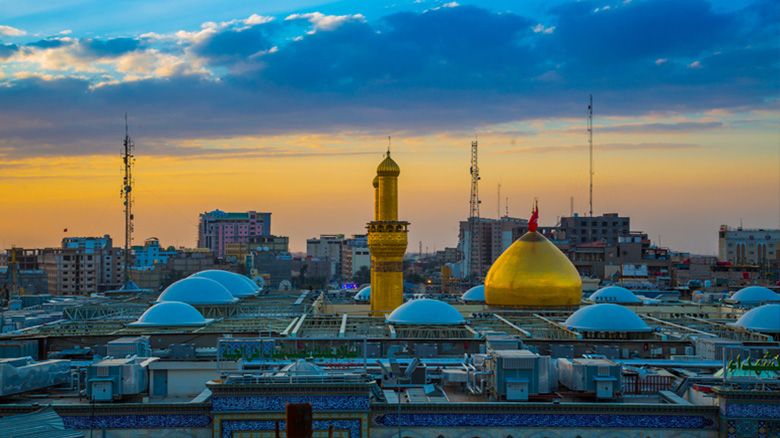
Shi’a communal life also centers on the shrines of the Imams and their family. Pilgrimage (ziyarat) to the tombs of Ali (in Najaf, Iraq), Husayn (Karbala, Iraq), the other Imams in Iraq and Iran, and even to the Prophet and Fatima in Medina, is a major spiritual practice. These shrine-cities (Najaf, Karbala, Kazimayn, Samarra, Mashhad, etc.) are both religious and social hubs – places for learning, places where prayers are believed especially likely to be answered, and places that physically manifest Shi’a history and identity. Karbala in particular is considered a most sacred site – many devout Shi’a ask to be buried there, near Husayn’s resting place. During Arba‘een (the 40th day after Ashura), millions of pilgrims march to Karbala, making it one of the largest annual peaceful gatherings in the world. At the shrines, one finds inscribed elegies and Quranic verses about patience and victory of truth. For example, above Imam Husayn’s grave is often inscribed “Ya laytana kunna ma’ak” (“Would that we had been with you [at Karbala]”), expressing the devotee’s solidarity with the Imam. Such practices reinforce a collective memory and bond centered on the Imams.
The sites associated with Ahl al-Bayt are focal points of Shi’i devotion and identity. Shi’a tradition holds that Ahl al-Bayt are the rightful leaders and sources of guidance; they are considered infallible and superior in virtue to all others. Love and loyalty to them is a religious obligation for Shi’a Muslims. Visiting their shrines, honoring their memory, and following their teachings are all seen as extensions of worshiping God and adhering to Islam as taught by the Prophet. In Najaf, the shrine of Ali (as seen above) is not only a beautiful mausoleum but also the site of a great seminary and a symbol of Shi’a heritage. Similarly, in Karbala, the shrines of Imam Husayn and his half-brother Abbas stand facing each other, connected by the avenue of Bayn al-Haramayn, where so many heartfelt rituals unfold during Muharram. These sacred geographies tie the Shi’a community worldwide to the narrative of Ahl al-Bayt – a narrative of devotion, sacrifice, knowledge, and justice.
The Imams also guide daily ethical life. Shi’a often ask in a moral quandary: “What would Imam Ali (or any Imam) do?” For instance, Imam Ali’s stern sense of justice as Caliph – illustrated by him not differentiating between his brother’s son and a stranger when distributing public charity – is a model for governance. His letter to Malik al-Ashtar (appointed governor of Egypt) is frequently quoted as an ideal charter of just leadership, stressing mercy for the subjects and honesty. The passion for justice (‘adl) in Shiism is therefore not only a theological abstraction about God, but a mandate for human behavior, exemplified by Ali and Husayn in particular. In Shi’a thought, a ruler or any person who forsakes justice has departed from the path of Ahl al-Bayt. This has kept concepts of social justice at the forefront of Shi’a activism and jurisprudence. In modern times, Shi’a clerics were involved in movements against colonialism (e.g., the Tobacco Protest in Iran, 1891 led by Mirza Shirazi, or the call of Sayyid al-Sadr in Iraq for the rights of the oppressed). They draw explicitly on Shi’a teachings that “tyranny (zulm) is an evil to be opposed” and on the inspirational memory of the Imams who opposed the tyrants of their day.
Communal ceremonies like majlis (gatherings) during Muharram serve not only to mourn the martyrs but to reinforce morals. Speeches often connect the historic events to contemporary issues – urging believers to speak truth to power, to uphold integrity, to have patience in suffering, and to never abandon one’s principles even under pressure, just as Husayn did. The ethic of martyrdom (shahada) thus becomes intertwined with justice (‘adl): dying for justice is honorable, and living unjustly is shameful. This is a powerful motivator in Shi’a communities to engage in charitable works, to form strong communal bonds (the concept of umma in Shiism is often centered around the Imam of the time – currently the hidden Imam – thus all Shi’a see themselves as one community under him). The charitable endowments (waqf) for Imam’s shrines, free meals (niyaz) given in Imam’s name, and volunteer services during pilgrimages or Ashura are expressions of ethical life guided by love of Ahl al-Bayt.
The Ahl al-Bayt also strongly influence Shi’a code of ethics in personal virtues: their emphasis on honesty, hospitality, compassion, and worship set standards. For example, Imam Zayn al-Abidin’s title was “Sajjad” (one who constantly prostrates) for his devotion to prayer, inspiring Shi’a to value lengthy prostration and personal du’a. Lady Fatima al-Zahra, the Prophet’s daughter, is an ideal of modesty, piety, and charity – her sermon against injustice after the Prophet’s death is studied as a testament to speaking truth. The Arba‘een pilgrimage where people serve millions of walking pilgrims in Iraq with food and rest, free of charge, is often justified by saying “this is how Abbas (Imam Husayn’s brother famed for his altruism) would have served” – linking everyday good deeds to the ethos of Ahl al-Bayt.
In summary, the doctrine of Imamate permeates Shiite Islam not just as a theological point about who leads, but as the heartbeat of Shi’a religious culture. It provides models of sanctity, knowledge, and resistance that shape Shi’a religious practice, community structure (with clerical leadership stepping in as caretakers for the absent Imam), and the collective memory of the Shi’a through rituals and pilgrimages.
Justice, Martyrdom, and the Ahl al-Bayt: The Shiite Ethos
Shiite Islam’s emphasis on justice (‘adl) is both theological and practical. As discussed, Shi’a theology elevates justice as an attribute of God and a principle that underlies all divine actions. This doctrinal stance fosters an ethical outlook where justice is the measure of human actions too. Shi’a jurists and ethicists often frame moral obligations in terms of upholding ‘adl and forbidding zulm (injustice). The famous injunction “enjoin the good and forbid the evil” is taken very seriously; many Shi’a movements through history, such as the Tabligh (propagation) efforts or political activism, are justified by the duty to promote justice on earth as a reflection of God’s justice. The early Shi’a were frequently dissidents against what they saw as unjust rule (the Umayyads were critiqued for nepotism and tyranny, etc.). Imam Ali’s sermons in Nahj al-Balagha frequently decry social injustices and misuse of wealth by elites, establishing an ideal of equity and concern for the poor that Shi’a thinkers hold onto.
The concept of justice also plays a key role in Shi’a jurisprudence. For instance, Twelver Shi’a law traditionally gave more leeway to the idea of ijtihad in pursuit of justice: if a literal application of a law would lead to obvious injustice or harm, Shi’a jurists might use principles like “no harm, no harassment” (la darar wa la dirar, a hadith the Imams emphasized) to mitigate it – e.g. in rules of qisas (retribution) or divorce. In the modern era, Shi’a-majority nations like Iran incorporate the value of ‘adl in their constitutions and legal interpretations (at least in theory – practice can differ, of course). The concept of social justice resonates strongly; figures like Imam Khomeini preached that protecting the oppressed (mustad‘afin) is an Islamic duty and cited Imam Ali’s governance as the example. Ali’s statement “If a person goes to bed satiated while his neighbor is hungry, he is not a true believer” is often quoted in Shi’a sermons, underlining communal responsibility and justice.
Martyrdom (shahada) has a distinctive prominence in Shi’a Islam due to the Karbala paradigm. While martyrdom for the sake of God is esteemed in all Islam, Shi’a ritualize and internalize it through the remembrance of Imam Husayn and others. Every year, Shi’a communities worldwide partake in mourning ceremonies during the first ten days of Muharram, where the story of Husayn’s stand is retold in graphic detail to evoke empathy and commitment. The blood of the martyrs is seen as the seed of the faith – “Islam lives on through Muhammad’s preaching and Husayn’s martyrdom,” as a popular saying goes. The tears shed for Husayn are believed to have spiritual merit; a hadith states that “he who cries for Husayn or even makes himself appear to cry, Paradise is assured for him.” The idea is that mourning Husayn connects the believer to Husayn’s cause (upholding true Islam against corruption) and to Husayn’s intercession on Judgment Day. There is a deep culture of emulation of martyrs – not that Shi’a seek death, but they seek the qualities of selflessness and courage epitomized by the martyrs. It’s taught that “Every land is Karbala” – meaning wherever there is injustice, it is as if the battle of Karbala is happening again, and one must choose to be with Husayn (justice) or with Yazid (injustice). Thus, martyrdom becomes a template for living with honor. A peaceful example of this ethos is during the Iran-Iraq war (1980-88), Iranian Shi’a soldiers often marched into battle chanting “Ya Husayn!” believing their sacrifice would be a continuation of Husayn’s stand. Even outside of war, the willingness to face death rather than compromise faith was seen in Shi’a uprisings in history (many Imams themselves were poisoned for refusing to endorse tyrants). The Arbaeen pilgrimage, in which devotees walk for days to Karbala often facing threats, is considered a small imitation of Husayn’s journey and suffering, demonstrating devotion and resilience.
One should note, however, that Shi’a scholars also temper the zeal for martyrdom with the principle of wisdom: not every sacrifice is required if it won’t serve a purpose. Imam Hasan (Husayn’s elder brother) signed a peace treaty with Mu’awiya to save lives, teaching that sometimes patience is better than futile resistance. Shi’a thought vacillates between Hijra (withdrawing to preserve oneself) and Ashura (fighting oppression head-on) depending on circumstances. But the honor of martyrdom is never denied – those who die for truth are remembered eternally (as Husayn is), while those who live as oppressors are cursed by history. This sentiment is reinforced by the Quranic view that “do not consider those who died in the way of God as dead; rather they are alive, sustained by their Lord” (3:169). To Shi’a, Imam Husayn and the martyrs of Karbala are indeed “alive” in the sense that their example continually inspires and “sustains” the spirit of the community.
Finally, the role of Ahl al-Bayt in guiding ethical and spiritual life is paramount in Shi’ism. The Prophet’s family (primarily Ali, Fatima, Hasan, Husayn and the nine Imams from Husayn’s line) are regarded not just as historical figures, but as ongoing spiritual presences. Twelver Shi’a often refer to the “Fourteen Infallibles” (the Prophet, Fatima, and the Twelve Imams) as models of perfection. It is taught that they were purified by God (Qur’an 33:33) and thus they exemplify all virtues. In Shi’a piety, when making important decisions or seeking spiritual insight, one might perform istikhara (seeking guidance) asking God through the Imam’s name. Many supplications and poems implore the Ahl al-Bayt for guidance or help, always with the understanding that Ahl al-Bayt are the guides who lead one to Allah. The concept of Wilayah (spiritual authority/saintship) of the Imams means that the Imams have a subtle governing role over believers’ hearts. In Shi’a mysticism, Ali is often seen as the spiritual pole (qutb) after the Prophet, and all Sufi orders trace their lineage of initiation back to Ali (even non-Shi’a Sufis do this). That reflects the belief that Ali and his descendants are the channels of divine grace and knowledge in the world.
Ethically, Ahl al-Bayt’s lives provide case studies: For honesty, they cite Ali’s behavior in the caliphate (such as him refusing to use state funds for personal needs). For generosity, they cite an incident where Ali, Fatima, Hasan, and Husayn gave away their only food to beggars three nights in a row, for which Qur’an 76 was revealed in their praise according to Shi’a exegesis. For humility, they cite how the Imams lived simply despite being revered (many Imams worked manual labor or wore coarse clothes, avoiding luxury). For forgiveness, they recount how Imam Hasan endured great personal wrongs and still forgave his enemies, etc. Each Imam has many such stories that form a rich ethical hagiography for Shi’a to learn from.
The Ahl al-Bayt also influence Shi’a spirituality through rituals and practices unique to Shi’ism. For example, the celebration of Eid al-Ghadir (commemorating the Prophet’s appointment of Ali at Ghadir Khumm) each year reinforces allegiance to Ali’s example of leadership. The remembrance (mawlid) of each Imam’s birth and the commemoration (wafat) of their death are occasions to recall their teachings. Shi’a gatherings might read the Ziyara texts – salutations to the Imams – which often enumerate their virtues and contributions. One famous line in the Ziyarat Ashura (addressed to Husayn) is: “I bear witness that you established prayer, gave charity, enjoined good and forbade evil, and strove in God’s way truly”. Such lines tie devotion to concrete virtuous action. The Ziyarat Jami’a, a comprehensive salutation to all Imams attributed to Imam al-Hadi, is essentially an article of Shi’a faith about Ahl al-Bayt, proclaiming them the “leaders of the pious, signs for the guides, firm handle of Islam, and guardians of God’s blessing.” Reciting these is a way Shi’a renew their commitment to living by the values of Ahl al-Bayt.
To encapsulate, Shiite Islam presents a vision of Islam colored by the experiences and teachings of the Prophet’s holy family. It is a tradition that prizes justice as a reflection of God’s nature and a mandate for human society, that sanctifies martyrdom as the ultimate testimony of faith and righteousness, and that follows the Ahl al-Bayt as the guiding lights in both temporal and spiritual matters. The historical struggles of the Shi’a – often a persecuted minority – reinforced these values: justice because they faced injustice, martyrdom because they lost many heroes, and Ahl al-Bayt because those were the leaders who gave them hope and identity. In contemporary times, whether in majority settings (like Iran, Iraq, Lebanon) or minority diasporas, these core ethos elements remain potent. Shi’a communities build mosques and centers named after Imams, organize charitable and educational initiatives inspired by Imam Ali’s charity or Fatima’s compassion, and maintain a transnational sense of brotherhood, often referring to fellow Shi’a as mu’minin (believers) emphasizing the shared bond of loyalty to Ahl al-Bayt.
Conclusion
In the Shiite tradition, the essence of Islam is distilled through the lens of tawhid deeply understood, nubuwwah continued through Imamah, ‘adl uncompromised, and ma’ad awaited with hope and the assurance of God’s justice. Shi’a theology is both a faith of the heart and a philosophy of the intellect: it demands love and devotion to God and His chosen ones, yet encourages intellectual reasoning and inquiry under the guidance of revelation. The Shi’a vision of Islam is profoundly shaped by historical memory – the Prophet’s designation of Ali, the tragedy of Karbala, the imamate of the Twelve and the occultation of the last – and this memory infuses its theology with passion and purpose.
Shi’a Muslims see the Oneness of God affirmed not only in abstract theology but in the singular devotion to Him exemplified by the Imams. They see prophecy as culminating in a scripture and example that require living interpreters to prevent deviation, hence the Imams. They regard God’s justice as a call to establish justice on earth, as Imam Husayn did with his own sacrifice. Their eschatological hope in the Mahdi gives patience in suffering and motivation to improve their communities in preparation for his return. The dynamic interplay of reason and revelation in Shi’ism produced a rich intellectual heritage and a legal system capable of adaptation, while remaining rooted in the spiritual authority of the Imams.
Shi’ism’s differences with Sunnism – on leadership, free will, or approach to theology – emerged from sincere attempts to preserve Islamic authenticity and justice as understood by the Shi’a pioneers. These differences, while sometimes a source of conflict, also contributed diverse perspectives to the tapestry of Islamic civilization. Today, Shi’a and Sunni scholars often find more in common than in conflict on basic tenets; yet the Shi’a continue to cherish their unique practices and heroes that keep alive the flame of Karbala and Ghadir. In the Shi’a view, the Ahl al-Bayt remain the soul of the ummah – their teachings a corrective against literalism or extremism, their lives a commentary on the Qur’an in action, and their love a unifying spiritual force. As a Shi’i saying goes, “True Islam is Muhammad’s teachings as preserved by Ali and his sons.” Thus, the essence of Islam in Shiite tradition is an Islam profoundly monotheistic, passionately just, and intimately connected to the family of the Prophet as models and mediators of divine guidance.
In conclusion, Shiite Islam presents a comprehensive theological and philosophical system that integrates doctrine and devotion. It is a tradition that appeals to the mind through theology and philosophy – arguing for God’s unity and justice and the necessity of divinely guided leadership – and equally appeals to the soul through love of the Prophet’s family and the ennobling power of sacrifice and steadfastness. In both its historical journey and contemporary expression, Shiism exemplifies how a religious community can uphold core universal principles of Islam while cultivating its own distinct spiritual culture. The thread that weaves through it all is the conviction that God’s truth and justice were embodied in the Prophet and his progeny, and that following their path is the surest way to understand and live the essence of Islam.
Sources: Shi‘a scholarly writings and classical texts as cited – including Wikishia entries on the principles of faith, analyses of Shi‘a-Sunni theological differences, historical accounts from Twelver Shi‘ism and Wikipedia on Imamate and Ashura, and academic discussions on Shi‘a use of reason in theology and law, among others. These illustrate the development and nuances of Shiite thought, highlighting its commitment to monotheism, justice, guided leadership, and pious devotion to Ahl al-Bayt.

 The Glorious Quran and Science
Leave a comment