
Written and collected by Zia H Shah MD, Chief Editor of the Muslim Times
In Twelver Shiʿa Islam, a marjaʿ (plural: marājiʿ) is a top-ranking cleric and “source of emulation” for believers en.wikipedia.org. Each marjaʿ is authorized to derive legal and theological rulings from the Quran and other sacred sources for their followers. Crucially, there is no single, centralized authority on Quranic interpretation in the Shiʿa tradition during the Imam’s occultation. Instead, there are often numerous concurrently living marājiʿ – as of recent years over fifty worldwide en.wikipedia.org – each with their own interpretative conclusions. On only a few occasions has one marjaʿ been nearly undisputed; most of the time several esteemed marājiʿ operate in parallel, although one may be informally regarded as al-Marjaʿ al-Aʿlā (the highest-ranking marjaʿ) due to scholarly prestige and following atlanticcouncil.org. For example, Grand Ayatollah Ali Sistani is widely viewed as the preeminent marjaʿ today, commanding great influence, but this is an informal precedence and does not nullify the legitimacy of other marājiʿ atlanticcouncil.org. In practice, no marjaʿ’s Quranic interpretation is considered automatically superior for all Shiʿa; each believer defers to the interpretations of the marjaʿ they personally follow in taqlīd (emulation) norwich.edu. Shiʿa jurists acknowledge that any qualified mujtahid’s understanding could be correct or mistaken – hence multiple opinions are expected. As one Shiʿa commentator explains, “the sharia is based on interpretation of laws by fallible scholars… so these laws can be reviewed, annulled or adjusted” nairaland.com. The Quran itself remains the ultimate holy text, but its practical rulings as understood by marājiʿ can legitimately differ among these top scholars.
Ijtihad and Multiple Quranic Interpretations
Shiʿa Islam’s reliance on ijtihād (independent legal reasoning) ensures a pluralism of Quranic interpretation. Unlike some Sunni contexts where legal interpretation became bound to four classical schools, the Shiʿa Usuli tradition kept ijtihad open and dynamic nairaland.com. All Shiʿa marājiʿ are mujtahids who continually re-interpret Quranic verses and hadith evidence to address new questions. Consequently, it is normal for two marājiʿ to offer different understandings of a Quranic injunction or its application. This diversity is not seen as a weakness but as a strength of the Shiʿa scholarly tradition, keeping the religion “fresh [and] dynamic, for all times” by permitting top scholars to hold different views nairaland.com. No marjaʿ is regarded as infallible; even the rulings of a revered authority like Ayatollah Khomeini “can be wrong” in the Shiʿa view nairaland.com. For example, one marjaʿ may interpret a Quranic principle about justice to conclude a certain modern practice is forbidden, while another equally learned marjaʿ permits it – both using valid ijtihad. Ordinary Shiʿa Muslims choose which marjaʿ to follow, typically the one they deem most knowledgeable or pious, and they adhere to that marjaʿ’s interpretations of the Quran and Islamic law nairaland.com. Importantly, a fatwa (religious ruling) given by a mujtahid is not a new divine law but that scholar’s opinion on God’s law norwich.edu. Thus, different mujtahids can and do have varying fatwas on the same Quranic issue norwich.edu. A contemporary example is the matter of diya (blood money): for centuries Shiʿa jurists held that a woman’s blood money is half that of a man based on inherited interpretations of scripture, but Grand Ayatollah Yousef Saanei issued a fatwa asserting there should be no difference – a novel interpretation he justified through fresh Quranic reasoning norwich.edu. Such differences are tolerated within the seminary, even if one view is considered shādhdh (rare); it underscores that multiple Quranic understandings can coexist under the umbrella of ijtihad.
Authority of the Supreme Marjaʿ vs. Other Marājiʿ
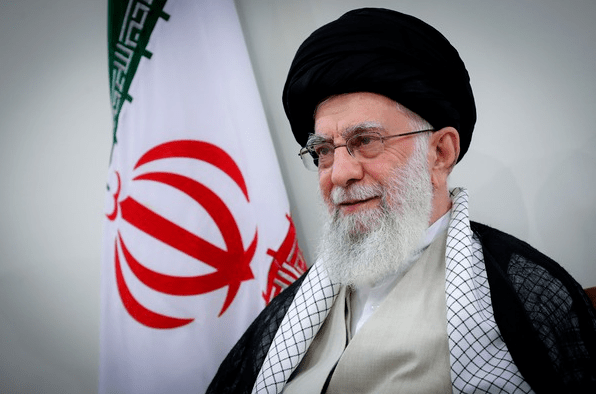
In Shiʿa jurisprudence, the authority of any marjaʿ’s Quranic interpretation is essentially limited to his own followers. A marjaʿ’s fatwas and Quranic exegesis are binding only on those who recognize him as their marjaʿ norwich.edu. They are not universally binding for all Shiʿa Muslims, in contrast to, say, an official church doctrine in a centralized religion. This means that the “Supreme Marjaʿ” – in today’s context, often a reference to Ayatollah Ali Hosseini Khamenei, who is both a marjaʿ and the political Supreme Leader of Iran – does not wield a blanket authority over the interpretations of other marājiʿ. His rulings based on the Quran carry weight for those who do his taqlīd, but other Shia who follow different marājiʿ (such as Ayatollah Sistani, Ayatollah Makarem Shirazi, etc.) are not religiously obligated to accept Khamenei’s interpretations in personal or ritual matters norwich.edu. Indeed, many Iranian Shiʿa themselves follow other grand ayatollahs; as one analysis notes, “Khamenei’s ruling is applicable solely to those who recognize him as their marjaʿ. Many Iranians do not follow him religiously” norwich.edu.
From a theological standpoint, all marājiʿ subscribe to the same core tenets of Twelver Shiʿism drawn from the Quran (e.g. belief in Tawhid, Nubuwwa, Imamate, and Qiyama). Differences in “Quranic understanding” among them usually revolve around jurisprudential nuances or the application of principles, rather than divergent creeds. For example, one marjaʿ might stress a more literal Quranic approach in certain social rulings while another employs a broader interpretive lens, but both remain within orthodox Shiʿa methodology. No marjaʿ can outright declare another’s interpretation illegitimate unless it clearly violates well-established Quranic meanings or consensus; open debate and scholarly critique are possible, but outright hierarchy is absent. Historically, Shiʿa scholars developed the principle of following al-aʿlam (the most learned), encouraging laypeople to seek out the marjaʿ deemed most knowledgeable. In practice this sometimes elevates one marjaʿ’s status, but it is a matter of reputation and expertise, not an institutionalized supremacy atlanticcouncil.org. For instance, during the 20th century, Ayatollah Abu al-Qasim al-Khoei was a foremost marjaʿ in the Shiʿa world, yet contemporaries like Ayatollah Khomeini or Ayatollah Golpaygani also had their own followings and interpretations. Likewise today, Ayatollah Khamenei’s Quranic interpretations guide his own followers and influence Iranian state discourse, but they do not override the interpretations of other grand ayatollahs on purely religious matters. All marājiʿ, Khamenei included, are ultimately accountable to the same sources (Quran, Prophet’s Sunnah, Imams’ teachings) and the judgment of the scholarly community. In Shiʿa doctrine, only an infallible Imam could claim definitive understanding of the Quran; all other scholars exercise ẓann (informed conjecture) and thus retain mutual humility in the face of possible error nairaland.com.
Wilāyat al-Faqīh and Deference to the Supreme Leader’s Interpretation
Ayatollah Khamenei’s position as Walī al-Faqīh (Guardian Jurist) or Supreme Leader of Iran adds a complex political dimension to his authority. The doctrine of Wilāyat al-Faqīh, as implemented in Iran, means that Khamenei not only issues religious guidance but also has constitutional power to govern. This political status does affect how his interpretations are treated within his jurisdiction. In the Islamic Republic of Iran, the Supreme Leader’s pronouncements (backed by his understanding of Islamic texts) can become state policy or law. In fact, Shiʿa political theory under Wilāyat al-Faqīh holds that a ruling (ḥukm) by the Supreme Leader is binding on all those under his governance – including other jurists – regardless of whether they are his personal followers shiastudies.com shiastudies.com. For example, if Ayatollah Khamenei issues a governmental order derived from his reading of Islamic requirements, Iranian officials and citizens must comply even if their individual marjaʿ might interpret the Quranic basis of that issue differently. This was seen when Imam Khomeini (the first Supreme Leader) temporarily suspended the Hajj pilgrimage in 1988 for safety reasons – a Quranically mandated duty was put on hold by his order, and all Iranians had to obey, even those who were followers of other marājiʿ norwich.edu. In such governance matters, the Supreme Leader’s edict (hukm) takes precedence as a matter of public law.
Outside the domain of state orders, however, other marājiʿ remain free to maintain their interpretations. The political authority of the Supreme Leader does not automatically confer upon him the status of sole spiritual authority over all Shiʿa elsewhere. Indeed, beyond Iran’s borders (and even within, in private religious practice) many Shiʿa defer to different marājiʿ without seeing a need to adopt Khamenei’s every Quranic interpretation. In places like Iraq, the Shiʿa religious establishment (the hawza of Najaf) operates on a principle of separation between spiritual authority and state authority. Grand Ayatollah Sistani, for instance, has enormous religious authority in Iraq and intentionally limits direct political involvement, advocating a form of quietist or semi-quietist leadership. His approach “stands in stark contrast to the most powerful Shiite clerics in Iran: Where Iran’s clerics believe in direct clerical rule and often push for muscular interventions, Sistani has championed people power and stability” newlinesmag.com. This difference in political theology means that Shiʿa outside Iran do not automatically defer to the Supreme Leader’s views, especially if their own marjaʿ holds a different understanding of what Islamic governance requires.
That said, Khamenei’s dual role has led some to accord him a special reverence: groups aligned with Iran’s ideology (like Hezbollah in Lebanon or certain seminarians in Qom) may voluntarily give extra weight to his Quranic interpretations on sociopolitical issues. The Iranian state also actively promotes Khamenei’s religious writings and opinions, sometimes referring to him with titles like “Imam Khamenei” to bolster his spiritual prestige english.kadivar.com. There have been efforts by his supporters to fuse the political leadership with marjaʿiyyat – notably, in the late 1990s Iranian clerical bodies declared Khamenei the “unique and supreme Marjaʿ”, aiming to concentrate Shiʿa authority in him english.kadivar.com. These moves illustrate that the political status of the Supreme Leader can influence how deference is directed: within Iran’s official circles, his Quranic understanding is often treated as paramount. However, such deference is not absolute in the broader Shiʿa world. Other senior scholars did not dissolve their own marjaʿ positions, and many Shiʿa continued to follow those other authorities. In sum, Wilāyat al-Faqīh creates a hierarchy in the political sphere (where Khamenei’s decisions are final), but in the realm of scholarly Quranic interpretation, it remains one voice among several. The relationship between marjaʿiyyat and Wilāyat al-Faqīh has been debated extensively ijtihadnet.com shiastudies.com. Proponents argue that when a jurist assumes governance, his decrees must be obeyed by all, even if one’s personal marjaʿ differs shiastudies.com. Detractors (including some marājiʿ) contend that a jurist’s political authority should not invalidate the plurality of religious opinions shiastudies.com. This ongoing debate shows that political leadership does encourage greater deference to the Leader’s interpretations in practice, but it has not eliminated the normative commitment in Shiʿism to scholarly diversity.
Historical Instances of Divergent Interpretations and Resolutions
Throughout Shiʿa history, scholars have indeed differed in their understanding of Quranic teachings, and the community has developed ways to handle such disagreements. Below are a few notable instances and how they were resolved or managed:
- The Akhbārī–Usūlī Debates (17th–18th centuries): Shiʿa scholars split over interpretive methodology – the Akhbārīs argued that jurists should stick strictly to Quran and hadith texts, while Usūlīs advocated the use of ijtihad (reasoning) and principles of jurisprudence. This wasn’t a dispute over a single Quranic verse but over how to derive rulings from the Quran. It led to intense scholarly debates. Ultimately, the Usūlī approach prevailed by the early 19th century, championed by scholars like Wahid Behbahani, and it became the dominant paradigm nairaland.com. The resolution came through intellectual persuasion and seminary consensus rather than a formal council – the Shiʿa scholarly community gradually agreed that ongoing ijtihad was necessary, allowing for multiple interpretations within a disciplined framework. This victory of Usūlīs institutionalized the system of multiple marājiʿ and ongoing reinterpretation that characterizes Shiʿa Islam today.
- Ayatollah Khomeini vs. Ayatollah Khoei (1980s): During the Iran–Iraq War (1980–88), a clear example of differing Quranic/jurisprudential stances emerged. Ayatollah Ruhollah Khomeini, as Iran’s Supreme Leader and a marjaʿ, framed the war effort in quasi-jihad terms and blessed the Iranian army to fight, based on his interpretation that defending Islam and the Islamic Republic was a duty mei.edu. In neighboring Iraq, Grand Ayatollah Abu al-Qasim al-Khoei, the leading marjaʿ in Najaf, was pressed by Saddam Hussein’s regime to endorse the war from the Iraqi side. Al-Khoei refused to issue any fatwa supporting the secular Ba’athist regime’s war, choosing a position of quietism mei.edu. His Quranic understanding of the situation differed: Khoei did not see religious merit in backing Saddam’s campaign, whereas Khomeini saw the Iranian struggle as defending Islam. This difference was never “resolved” in a debate; rather, each cleric acted according to his context. The result was a strain in Najaf-Qom relations – Tehran and Najaf effectively went separate ways on political matters, and Saddam’s government harassed Khoei and other Iraqi marājiʿ once it realized Najaf would not toe Baghdad’s line mei.edu. This episode shows that when marājiʿ in different political contexts diverged, they each maintained their stance. The Shiʿa laity under each marjaʿ followed their respective guidance. There was no mechanism to force unity, and the divergence was “resolved” only by the end of the war and changing political circumstances (the fall of Saddam years later re-opened the space for Najaf’s influence without conflict).
- Khamenei’s Nomination as Sole Marjaʿ (1990s): After the death of Ayatollah Araki in 1994, the Iranian religious establishment faced a question of succession in marjaʿiyyat. Rather than allow a purely organic emergence of multiple new marājiʿ, supporters of Ayatollah Ali Khamenei – who was already Supreme Leader – pushed for him to be elevated as the singular highest marjaʿ. In 1997, a plan was set in motion to declare “the supreme leader as the unique and supreme Marjaʿ”, arguing it was improper to have many marājiʿenglish.kadivar.com. Khamenei’s own statement around that time suggested “it is incorrect to have seven marja’s… only one person should take on marja’iyyat”, after which his allies in Qom formally introduced him as that sole marjaʿ english.kadivar.com. This was a striking attempt to resolve differences by effectively eliminating them under one authority. However, it did not fully succeed beyond official circles. While Iranian state media and institutions began referring to “Imam Khamenei” as the supreme religious authority english.kadivar.com, other senior ayatollahs like Grand Ayatollah Sistani, Sheikh Lutfullah Safi Golpaygani, and others continued to be followed by thousands of Shiʿa. In practice, Khamenei did gain a larger following (especially outside Iran, where he claimed marjaʿ status for expatriates), but the plurality of marājiʿ persisted. The attempt at unification through hierarchy was met quietly by scholars who simply maintained their independent positions. Essentially, the diversity of interpretation was preserved by the community’s freedom to choose: many Shiʿa, especially in Iraq and other countries, simply did not switch to Khamenei, instead staying with or turning to other Grand Ayatollahs. Thus, this instance shows a top-down push for a single marjaʿ was only partially effective; the traditional system of multiple authorities remained, especially in transnational Shiʿism.
- Montazeri’s Challenge to Khamenei (2000s): A dramatic instance of intra-Shiʿa dispute was between Grand Ayatollah Hossein Ali Montazeri and Ayatollah Khamenei. Montazeri had been a student of Khomeini and was once designated to succeed him, but by 1989 he fell out with Khomeini’s circle over issues of justice and governance. In the 2000s, Montazeri emerged as a vocal critic of Khamenei’s leadership. He offered a radically different interpretation of what Islamic authority requires: citing Quranic principles of justice, Montazeri declared that a tyrannical or unjust ruler cannot be valid in Islam. In July 2009, Montazeri issued a fatwa implicitly against Khamenei, stating that an unfair or unjust Supreme Leader is illegitimate and even that such a leader was working “against religion” irandataportal.syr.edu. He went so far as to call on people to oppose injustice in governance, effectively using his standing as a marjaʿ to denounce the ruling interpretation in Iran irandataportal.syr.edu. This was an open theological-political conflict: Montazeri derived from Quranic values the necessity to remove an oppressive leader, clashing directly with Khamenei’s Quranic justification for his rule (which emphasizes obedience to the Guardian Jurist). How was this resolved? In a formal sense, it wasn’t – there is no higher earthly arbiter between two grand ayatollahs. Instead, the resolution was de facto and political: Montazeri’s opinions were suppressed (he had already been under house arrest in the late 1990s), and the Iranian establishment simply refused to acknowledge the dissent. Montazeri’s followers continued to revere him until his death later in 2009, but he was isolated from the institutions of power. This episode highlighted that even the Supreme Leader’s interpretations could be contested by another marjaʿ on Quranic grounds; however, the state’s backing allowed one view to dominate public life while the other remained influential only in private or dissenting circles.
- Najaf (Sistani) vs. Qom (Khamenei) – Contemporary Example: Differences in Quranic understanding also appeared in responses to crises. A notable case was the 2006 Askari shrine bombing and the 2014 ISIS onslaught in Iraq. Grand Ayatollah Sistani’s approach was cautious and rooted in preserving peace: after the 2006 attack on a Shiʿa shrine in Samarra, some Iran-backed militia leaders in Iraq urged Sistani to sanction armed retaliation. They even hinted that if Sistani demurred, they might seek a fatwa from Ayatollah Khamenei to justify mobilization newlinesmag.comnewlinesmag.com. Sistani, whose authority in Iraq was unrivaled, viewed the Quranic mandate as one of restraint and protection of life – he initially refused to issue a call to arms that could spark sectarian war. Concerned by the “veiled threat” that Tehran’s religious authority might override Najaf, Sistani convened the other senior ayatollahs of Najaf. Those peers, like Ayatollah Mohammad Ishaq Fayyad, Ayatollah Bashir Najafi, and Ayatollah Muhammad Saeed al-Hakim, agreed to stand united behind Sistani as “first among equals” in Iraq newlinesmag.com. They collectively decided none of them would undercut Sistani by issuing conflicting fatwas. This united front ensured that “Najaf was united and that it – and not Tehran – would provide leadership to Iraq’s Shiʿites” newlinesmag.com. Ultimately, when ISIS later captured large swathes of Iraq in 2014, Sistani did issue a famous fatwa of defensive jihad – but on his terms, emphasizing national unity and the constitutional government’s role, rather than a sectarian or extraterritorial framing atlanticcouncil.orgatlanticcouncil.org. The outcome was that Iraqi Shiʿa followed Sistani’s Quranic understanding, and Iranian religious influence had to respect Najaf’s primacy in that context. This instance shows how differences in interpretation (e.g. how to respond to aggression, how to apply Quranic concepts of jihad or “ulul amr” obedience to authority) were resolved through dialogue and mutual respect among marājiʿ. By acting in concert, the Najaf scholars prevented a split and quietly rebuffed the idea that Khamenei’s view should trump theirs in Iraqi affairs. It underscores the model of resolving interpretive disputes by consultation and the seniority principle (the more locally legitimate marjaʿ takes lead) rather than confrontation.
These examples illustrate a few patterns. First, Shiʿa scholars have at times arrived at divergent Quranic interpretations on legal or political matters – this is a built-in feature of a tradition that values ijtihad. Second, resolutions to such divergences have varied: some were settled through scholarly discourse and the gradual formation of consensus (as in the Usuli victory over Akhbari literalism), while others have simply been managed by a de facto separation of spheres (each marjaʿ guiding his own community, as with Khomeini and Khoei), or by mutual agreements to avoid conflict (as with Sistani and his peers presenting a united stance). In a few cases, political power forced a one-sided resolution (Montazeri’s censure). Importantly, there is no centralized “church” mechanism in Shiʿism to dictate a single Quranic interpretation and eliminate others. Even the Iranian attempt to consolidate marjaʿiyyat under the Supreme Leader shows that as soon as one steps outside the political realm, plurality resumes. Scholarly disagreements are generally resolved through respectful debate, ijtihad-based rebuttals in written treatises, or the community’s choice of which opinion to follow. Over time, some interpretations gain wider acceptance and others fade, but this is an organic process. As one Shiʿa scholar put it, “our scholars are not infallible and we accept criticism and improvement [of their views]… as far as the criticism is of their legal opinion and interpretation and not of the fundamentals of the religion” nairaland.com. This attitude allows Shiʿa Islam to accommodate differences in Quranic understanding under the overarching unity of foundational beliefs.
References
The analysis above draws on Shiʿa theological literature, fatwa compilations, and contemporary scholarly discussions. Key sources include discussions on the institution of marjaʿiyyat atlanticcouncil.org english.kadivar.com, explanations of ijtihad and its necessity for ongoing interpretation nairaland.com norwich.edu, and case studies of how leading marājiʿ have interacted or conflicted mei.edu irandataportal.syr.edu newlinesmag.com newlinesmag.com. These examples underscore that while a “Supreme Marjaʿ” like Ayatollah Khamenei holds a unique blend of religious and political authority, Shiʿa Islam as a whole maintains a decentralized and pluralistic approach to Quranic exegesis and law. The deference given to any one marjaʿ’s understanding is ultimately circumscribed by the principles of ijtihad, the consent of his followers, and the broader Shiʿa ethos of scholarly humility before the Quran.


 The Glorious Quran and Science
Leave a reply to Sunni Ismaili Podcast | History of ismailia | Mufti Fazal Hamdard | Faqeer Muhammad Hunzai – The Glorious Quran and Science Cancel reply