
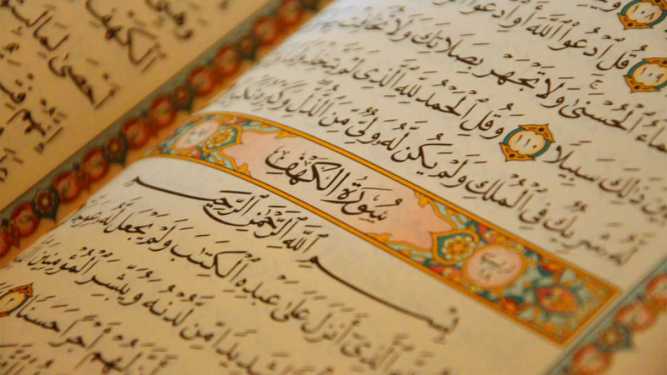
Epigraph
If We had sent down this Qur’an on a mountain, thou wouldst certainly have seen it humbled and rent asunder for fear of Allah. And these are similitude that We set forth for mankind that they may reflect. (Al Quran 59:21)
Written and collected by Zia H Shah MD, Chief Editor of the Muslim Times
The Quran, Islam’s holy scripture, offers profound insights into its own nature and purpose. Through various verses, it delineates its role as a comprehensive guide for humanity, a source of clear evidence, and a criterion for moral discernment.
A Guidance for Humanity
The Quran positions itself as a universal guide, aiming to lead individuals towards righteousness and spiritual fulfillment. It emphasizes its role in providing direction to all of humanity:
This is the Book about which there is no doubt, a guidance for those conscious of Allah. (Al Quran 2:2)
This verse underscores the Quran’s function as a definitive source of guidance, free from any ambiguity.
Clear Evidence and Light
The Quran describes itself as a source of enlightenment, offering clarity to those who seek understanding:
O mankind, there has come to you a conclusive proof from your Lord, and We have sent down to you a clear light. (Al Quran 4:174)
Here, the Quran is portrayed as a “clear light,” illuminating the path for believers and dispelling the darkness of ignorance.
A Scripture that Guides from Darkness to Light
Surah Ibraheem opens up with these verses:
This is a Scripture which We have sent down to you [Prophet] so that, with their Lord’s permission, you may bring people from the depths of darkness into light, to the path of the Almighty, the Praiseworthy One, 2 God, to whom everything in the heavens and earth belongs. (Al Quran: 14:1-2)
A Detailed Explanation
The scripture asserts that it provides comprehensive explanations for various aspects of life, serving as a complete code of conduct:
And We have sent down to you the Book as clarification for all things and as guidance and mercy and good tidings for the Muslims. (Al Quran 16:89)
This highlights the Quran’s role in elucidating matters of faith, law, and personal conduct, offering guidance and mercy to its followers.
A Criterion for Judgment
Serving as a Furqan (criterion), the Quran distinguishes between right and wrong, guiding believers in making moral and ethical decisions:
Blessed is He who sent down the Criterion upon His Servant that he may be to the worlds a warner. (Al Quran 25:1)
This signifies the Qur’an’s function as a standard against which actions and beliefs are measured.
Revealed by the One, Who knows Every Secret of the Heaven and Earth
In Surah Furqan, the Quran calls itself the Furqan or the criterion and also makes another very profound claim:
The disbelievers say: This Quran is naught but a lie that Muhammad has fabricated, and other people have helped him with it. They have, thereby, perpetrated an injustice and an untruth. They also say: These are fables of the ancients which he has got someone to write down for him and they are recited to him morning and evening. Say to them: The Quran has been revealed by Him Who knows every secret that is in the heavens and the earth. Indeed, He is Most Forgiving, Ever Merciful. (Al Quran 25:5-7)
A Reminder and Admonition
The Qur’an frequently refers to itself as a reminder, urging individuals to reflect upon their actions and the transient nature of worldly life:
Indeed, it is We who sent down the Quran, and indeed, We will be its guardian. (Al Quran 15:9)
This verse not only emphasizes the Qur’an’s role as a reminder but also assures its preservation and protection from corruption.
A Mercy and Healing for the Believers
There is a long passage in Surah Bani Israel, where the Quran describes itself:
We send down the Quran as healing and mercy to those who believe; as for those who disbelieve, it only increases their loss. When We favor man he turns arrogantly to one side, but when harm touches him, he falls into despair. Say, ‘Everyone does things their own way, but your Lord is fully aware of who follows the best-guided path.’
[Prophet], they ask you about the Spirit. Say, ‘The Spirit is part of my Lord’s domain. You have only been given a little knowledge.’ If We pleased, We could take away what We have revealed to you –– then you would find no one to plead for you against Us –– if it were not for your Lord’s mercy: His favor to you has been truly great.Say, ‘Even if all mankind and jinn came together to produce something like this Quran, they could not produce anything like it, however much they helped each other.’ In this Quran, We have set out all kinds of examples for people, yet most of them persist in disbelieving. (Al Quran 17:82-89)
The Quran Moves the Hearts of Unbiased
Again in Surah Bani Israel:
We sent down the Quran with the truth, and with the truth it has come down –– [Prophet], We sent you only to give good news and warning –– it is a recitation that We have revealed in parts, so that you can recite it to people at intervals; We have sent it down little by little. Say, ‘Whether you believe it or not, those who were given knowledge earlier fall down on their faces when it is recited to them, and say, ‘Glory to our Lord! Our Lord’s promise has been fulfilled.’ They fall down on their faces, weeping, and [the Quran] increases their humility.’ (Al Quran 17:105-109)
The Quran Explains Itself
The Qur’an emphasizes its role as a comprehensive and self-explanatory guide for humanity. It asserts that it provides clear guidance, detailed explanations, and serves as a criterion for moral discernment.
The Qur’an describes itself as a text that offers detailed explanations for all matters:
And We have sent down to you the Book as clarification for all things and as guidance and mercy and good tidings for the Muslims. (Al Quran 16:89)
This verse highlights the Quran’s function as a comprehensive source of guidance, elucidating various aspects of life for believers.
The scripture emphasizes that it provides clear signs and guidance for those who seek to understand:
A Book whose verses are explained in detail—a Qur’an in Arabic for people who know. (Al Quran 41:3)
This indicates that the Quran’s verses are meticulously detailed to facilitate comprehension and reflection.
In Surah Zumar we read:
In this Quran, We have put forward all kinds of illustration for people, so that they may take heed –– an Arabic Quran, free from any distortion –– so that people may be mindful. (Al Quran 38:27-28)
The Quran also conveys that the responsibility of its explanation rests with Allah:
[Prophet], do not rush your tongue in an attempt to hasten [your memorization of] the Revelation: We shall make sure of its safe collection and recitation. When We have recited it, repeat the recitation and We shall make it clear. (Al Quran 75:16-19)
This underscores the belief that Allah ensures the clarity and understanding of the Qur’anic message.
Through these verses, the Quran presents itself as a self-explanatory and detailed guide, intended to lead humanity towards righteousness and understanding. Its emphasis on clarity and divine elucidation reassures believers of its comprehensiveness and accessibility.
Conclusion
Through its self-descriptive verses, the Quran presents itself as a multifaceted guide, offering clarity, comprehensive instruction, and a moral framework for believers. Its emphasis on guidance, enlightenment, and discernment underscores its central role in the spiritual and practical lives of Muslims.
It convinces the believers of its truth and then guides them towards a moral and a spiritual life.





Leave a Reply