
Epigraph
What is the matter with you? Why will you not fear God’s majesty, when He has created you stage by stage? Have you ever wondered how God created seven heavens, one above the other, placed the moon as a light in them and the sun as a lamp, how God made you spring forth from the earth like a plant, how He will return you into it and then bring you out again, and how He has spread the Earth out for you to walk along its spacious paths? (Al Quran 71:13-20)
I call to witness the post-sunset glow, and the night and all that it envelops, and the moon when it becomes full, that you shall assuredly ascend from stage to stage. (Al Quran 84:16-19)
Man, what has emboldened you against your Gracious Lord, who created you, then perfected you, then proportioned you right? He fashioned you in whatever form He pleased. (Al Quran 82:6-8)

Written and collected by Zia H Shah MD, Chief Editor of the Muslim Times
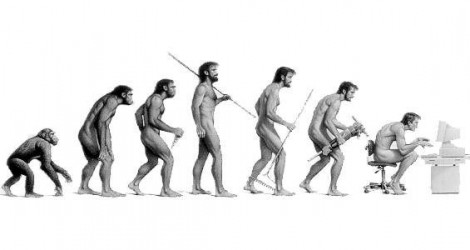
It is estimated that there are 9 million living or extant species on planet Earth. There now seems to be a consensus among the academic biologists in the Western world that they all share a common ancestry. The humans have come down from chimpanzee like animals. Our family tree meets chimpanzees some 5-6 million years ago. Walk some more and our tree joins that of gorillas and then orangutans.
Majority of the Muslim scholars still insist on spontaneous creation for humanity, even though the scientific community and half of the learned Muslim population has moved on.[1]
I am going to lay out evidence for this under several headings. I will save the best for the last, which is molecular biology, and that evidence has almost reached to the level of certainty, or at least the best that humans can empirically have.
Biological evolution, the process through which species change over time, is supported by extensive evidence from various scientific disciplines. Key among these are the fossil record, biogeography, comparative anatomy, and embryology. Each provides compelling insights into the shared ancestry and diversification of life on Earth.
Fossil Record
Fossils are the preserved remains or traces of organisms from the past, typically found in sedimentary rocks. The fossil record offers a chronological account of life’s history, demonstrating a progression from simple to more complex forms. Transitional fossils, which exhibit traits common to both ancestral and derived groups, are particularly illustrative of evolutionary change.
For instance, the evolution of whales from land-dwelling mammals is well-documented through fossils. Early cetaceans like Pakicetus had limb structures suitable for walking, while later forms such as Ambulocetus show adaptations for swimming. This sequence of fossils traces the gradual transition from terrestrial to fully aquatic lifestyles.
Biogeography
Biogeography examines the distribution of species across geographical areas and through geological time. Patterns of species distribution provide evidence for evolution, especially when considering the movement of tectonic plates and the historical connectivity of landmasses.
The unique fauna of Australia, including marsupials like kangaroos and koalas, exemplifies this. These species are found nowhere else on Earth, suggesting that they evolved in isolation after the continent separated from other landmasses. Similarly, the diverse finch species on the Galápagos Islands, known as Darwin’s finches, have evolved distinct beak shapes adapted to specific diets, indicating adaptive radiation from a common ancestor.
Comparative Anatomy
Comparative anatomy involves studying the similarities and differences in the anatomical structures of different organisms. Homologous structures—body parts that share a common origin despite serving different functions—provide evidence of shared ancestry.
The forelimbs of vertebrates, for example, exhibit a common structural framework. Humans, whales, bats, and birds all possess a similar arrangement of bones (humerus, radius, ulna, carpals, metacarpals, and phalanges) in their forelimbs, despite these limbs being adapted for diverse functions such as grasping, swimming, or flying. This structural similarity points to a common evolutionary origin.
Embryology
Embryology, the study of the development of embryos, reveals that closely related organisms often exhibit similar developmental stages, suggesting a shared ancestry.
For instance, vertebrate embryos, including those of fish, reptiles, birds, and mammals, display pharyngeal pouches and tail structures during certain developmental stages. In fish, these pouches develop into gills, while in humans, they form parts of the ear and throat. The presence of these common embryonic features indicates a shared evolutionary heritage.
Molecular Biology
The best evidence for evolution does not come from fossils or other disciplines mentioned above, rather from molecular biology. Each and every gene of our body and each and every protein is actually an exhibit for the truth of the statement that our bodies have evolved from ape like animals. We have some thirty thousand genes and the human body contains between 80,000 and 400,000 proteins, but the exact number is difficult to determine. No wonder today biologists cannot make sense of biology without the evolutionary connection between all life forms.
Molecular biology provides compelling evidence for evolution by revealing the genetic and biochemical similarities among diverse species, indicating common ancestry and the mechanisms driving evolutionary change. Here are specific examples illustrating this evidence:
1. Universality of the Genetic Code
All known organisms utilize DNA as their genetic material, and the genetic code—how nucleotide sequences are translated into proteins—is nearly universal. This universality suggests a common origin for all life forms. For instance, the codon sequences that specify amino acids are remarkably consistent across species, from bacteria to humans, highlighting shared evolutionary roots. LibreTexts Bio
2. Homologous Genes and Proteins
Many genes and proteins are conserved across species, reflecting descent from a common ancestor. For example, the protein cytochrome c, essential for cellular respiration, exhibits similar amino acid sequences in both humans and chimpanzees, indicating a close evolutionary relationship. Even in more distantly related organisms, like humans and yeast, cytochrome c retains significant sequence similarity, underscoring the deep evolutionary connections among diverse life forms. LibreTexts Bio
3. Pseudogenes as Evolutionary Markers
Pseudogenes are non-functional remnants of once-active genes. Their presence and sequence similarities across different species serve as molecular evidence of shared ancestry. For instance, humans and other primates possess similar pseudogenes, such as the GULO gene involved in vitamin C synthesis, which is inactive in these species but functional in others like rodents. This shared genetic “fossil” points to a common ancestor in which the gene became inactive.
4. Molecular Clocks and Evolutionary Timelines
By comparing DNA sequences, scientists can estimate the time since two species diverged from a common ancestor. This method, known as the molecular clock, relies on the relatively constant rate of genetic mutations over time. For example, molecular clock analyses have been used to estimate the divergence time between humans and chimpanzees, providing insights into human evolutionary history.
5. Gene Duplication and Functional Diversification
Gene duplication events allow one copy of a gene to acquire mutations and potentially develop new functions, while the other copy maintains the original function. This process contributes to evolutionary innovation. For instance, the globin gene family, responsible for oxygen transport in blood, arose through multiple gene duplications, leading to hemoglobin and myoglobin with distinct yet related functions. Open Oregon
These molecular findings, among others, provide robust evidence for the theory of evolution, demonstrating how genetic material changes over time and leads to the diversity of life observed today.
I believe over time this case could be supported by thirty thousand homologous genes and up to 400,000 homologous proteins.
Conclusion
In summary, the fossil record, biogeography, comparative anatomy, and embryology collectively provide robust evidence for biological evolution. These disciplines, through their independent lines of inquiry, converge on the conclusion that all life on Earth shares a common ancestry and has diversified over time through evolutionary processes.
I do not deny influence of God in orchestrating the process and also not the gift of language and revelation that God honored humanity with, however He did it. But denying that we are related to monkeys and apes and ultimately even unicellular organisms is not possible any more.




 The Glorious Quran and Science
Leave a reply to Why Javed Ahmad Ghamidi’s Literal Reading and Commentary of the Glorious 32:7 is Not Coherent? – The Glorious Quran and Science Cancel reply