
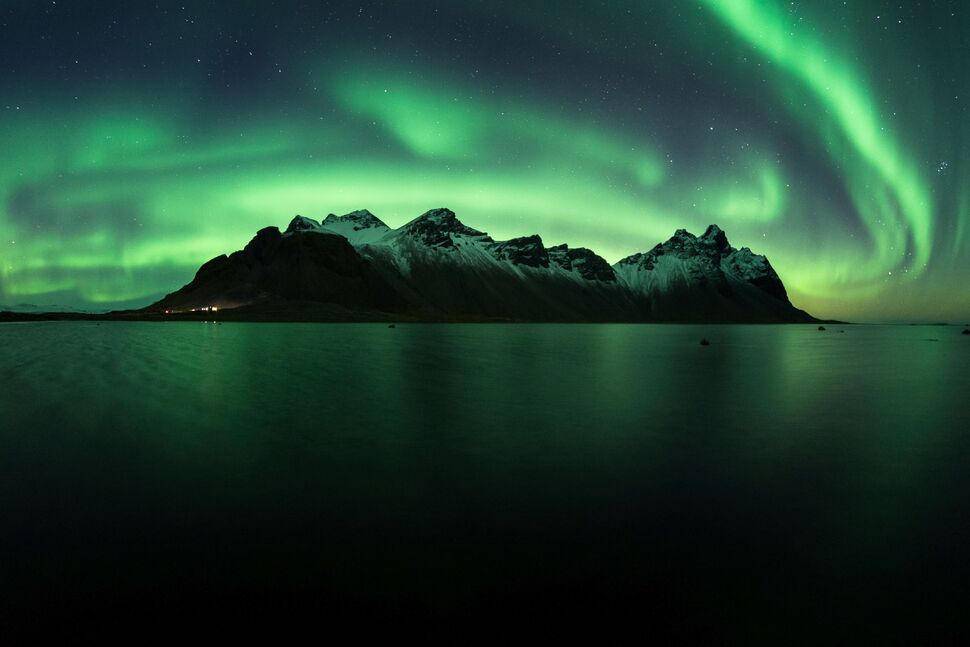
Epigraph:
وَجَعَلْنَا السَّمَآءَ سَقْفًا مَّحْفُوْظًا وَّهُمْ عَنْ اٰيٰتِهَا مُعْرِضُوْنَ
And We (Allah) have made the heaven a roof, well protected; yet they turn away from its Signs. (Al Quran 21:32)
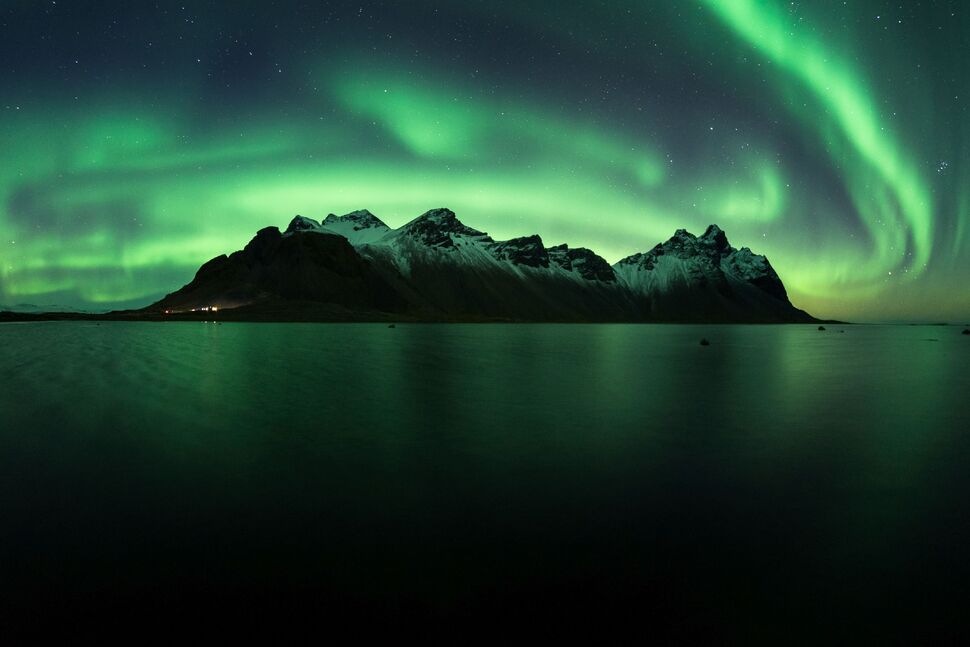
Written and collected by Zia H Shah MD, Chief Editor of the Muslim Times
The Aurora Borealis, commonly known as the Northern Lights in the northern hemisphere and Southern Lights in the southern hemisphere, in countries like Australia, is a captivating natural light display predominantly observed in high-latitude regions near the Arctic. This phenomenon manifests as dynamic patterns of luminous colors—ranging from greens and yellows to reds and purples—dancing across the night sky.
In 2024, my wife and I had the opportunity to see them in our hometown in upstate New York. We enjoyed the dramatic scenery and decided to knock Iceland off our bucket list.
Northern Lights have been visible at unusually low latitudes due to heightened solar activity associated with the solar maximum. Notably, during a geomagnetic storm in May 2024, the aurora was observed as far south as Hawaii.
Additionally, in early January 2025, a G3 (Strong) geomagnetic storm allowed sightings of the aurora in northern parts of the United States, including New York and Idaho.
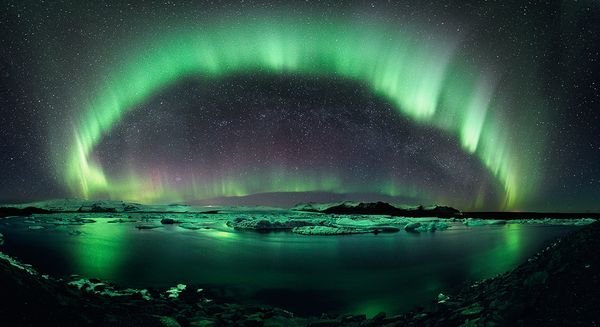
These occurrences are linked to the solar maximum, a period of peak solar activity in the Sun’s 11-year cycle, which is expected to continue through 2025. During this time, increased solar flares and coronal mass ejections enhance the frequency and intensity of geomagnetic storms, expanding the auroral oval and making the Northern Lights visible in regions that rarely experience them.
For those interested in witnessing the aurora, monitoring space weather forecasts and geomagnetic activity is advisable, as these phenomena can lead to auroral displays at lower latitudes than typically expected. Northern Lights present a beautiful show in the sky and in the past people traveled long distances during the winter to Iceland to witness them, but they represent an underlying harsh reality.
Causes of the Aurora Borealis
The Northern Lights result from complex interactions between solar activity and Earth’s magnetic field:
- Solar Emissions: The Sun continuously emits a stream of charged particles, known as the solar wind, composed mainly of electrons and protons. During periods of heightened solar activity, such as solar flares or coronal mass ejections, the intensity and speed of these particles increase.
- Interaction with Earth’s Magnetosphere: When these charged particles reach Earth, they encounter the planet’s magnetosphere—a protective magnetic field that deflects most solar wind particles. However, some particles become trapped and are funneled towards the polar regions by the magnetic field lines.
- Atmospheric Collisions: As these particles descend into the upper atmosphere, they collide with gas molecules, primarily oxygen and nitrogen. These collisions excite the gas molecules, causing them to emit photons—particles of light—which we perceive as the shimmering lights of the aurora.
Earth’s atmosphere is mostly made up of nitrogen and oxygen. Once the solar particles reach Earth’s atmosphere, they collide with atoms of nitrogen and oxygen, stripping away their electrons to leave ions in excited states. These ions emit radiation at various wavelengths, creating the characteristic colors. Collisions of solar particles with oxygen produce red or green light; collisions with nitrogen produce green and purple light.
Optimal Viewing Conditions
To observe the Aurora Borealis, consider the following factors:
- Geographical Location: High-latitude regions, such as Norway, Greenland, and Iceland, offer the best viewing opportunities. The Times
- Season and Time: The aurora is most visible during the winter months when nights are longest and skies are darkest.
- Solar Activity: Periods of increased solar activity enhance the intensity and frequency of auroral displays.
Understanding the science behind the Aurora Borealis not only deepens our appreciation of this natural spectacle but also underscores the dynamic relationship between our planet and the Sun, to truly understand how they are a display of how we have been saved from the lethal consequences of solar winds.
Enveloping our planet and protecting us from the fury of the Sun is a giant bubble of magnetism called the magnetosphere. It deflects most of the solar material sweeping towards us from our star at 1 million miles per hour or more. Without the magnetosphere, the relentless action of these solar particles could strip the Earth of its protective layers, which shield us from the Sun’s ultraviolet radiation. This magnetic bubble was key to helping Earth develop into a habitable planet.
Loss of Magnetic Field in mars
Our neighboring planet Mars, once a planet with a thicker atmosphere capable of supporting liquid water, has transformed into the cold, arid world we observe today. This significant atmospheric loss is attributed to several interrelated factors:
In its early history, Mars possessed a global magnetic field similar to Earth’s, generated by a dynamo effect within its molten core. However, as the planet cooled, this dynamo effect diminished, leading to the collapse of its magnetic field. Without this protective shield, Mars became vulnerable to the solar wind—a stream of charged particles emitted by the Sun—which began to erode its atmosphere. Home | University of Arizona News
Solar Wind Stripping in mars
The absence of a magnetic field allowed the solar wind to directly interact with the Martian atmosphere. This interaction led to the gradual stripping away of atmospheric particles into space, a process confirmed by NASA’s MAVEN (Mars Atmosphere and Volatile Evolution) mission. MAVEN’s findings indicate that solar wind and radiation were responsible for most of the atmospheric loss on Mars, significantly altering its climate.
Magnetosphere of earth
Unlike mars, earth has been blessed with a magnetosphere.
Earth’s magnetosphere is a vast, comet-shaped region dominated by the planet’s magnetic field, which plays a crucial role in protecting the planet from solar and cosmic radiation. NASA Science
Formation of Earth’s Magnetic Field
The generation of Earth’s magnetic field occurs deep within its interior, specifically in the liquid outer core composed primarily of molten iron and nickel. Here, convective movements—driven by heat escaping from the inner core—create electric currents. These currents give rise to a magnetic field through a process known as the geodynamo. The geodynamo operates as a feedback loop: electric currents generate magnetic fields, and changing magnetic fields induce electric currents, sustaining the magnetic field over geological timescales. Wikipedia
Role of the Magnetosphere
The magnetosphere serves as Earth’s shield against the solar wind—a continuous stream of charged particles emitted by the Sun. It deflects most of the solar material sweeping towards us from our star at 1 million miles per hour or more. Without the magnetosphere, the relentless action of these solar particles could strip the atmosphere and expose the surface to harmful radiation, compromising the planet’s habitability. NASA Science
Structure of the Magnetosphere
The magnetosphere is not a uniform bubble; its shape and size are influenced by solar wind pressure. On the side facing the Sun, the magnetosphere is compressed, while on the opposite side, it extends into a long tail known as the magnetotail. This dynamic structure allows the magnetosphere to effectively manage the constant bombardment of solar particles, maintaining a balance that protects Earth’s environment. NASA
In summary, Earth’s magnetosphere is a product of the planet’s internal geodynamo, creating a magnetic field that extends into space and forms a protective barrier against solar and cosmic radiation. This natural shield is essential for preserving Earth’s atmosphere and supporting life.
The Van Allen radiation belts
James Van Allen’s discovery of the radiation belts encircling Earth marked a pivotal moment in space science, unveiling the planet’s natural defense against cosmic and solar radiation. This breakthrough was the culmination of years of innovative experimentation and collaboration.
After World War II, Van Allen led high-altitude experiments at Johns Hopkins University using V-2 rockets to study cosmic radiation. Recognizing the need for dedicated research tools, he contributed to the development of the Aerobee sounding rocket, which achieved significant altitudes for scientific measurements. In 1949, Van Allen and his colleagues introduced the “Rockoon,” a hybrid of a balloon and rocket, enabling cost-effective exploration of the upper atmosphere. By 1953, Rockoons launched off Newfoundland provided initial indications of radiation belts surrounding Earth.
The Van Allen radiation belts are two concentric, doughnut-shaped regions encircling Earth, filled with high-energy charged particles—primarily electrons and protons—trapped by Earth’s magnetic field. Discovered in 1958 by physicist James Van Allen, these belts play a crucial role in shielding our planet from harmful solar and cosmic radiation. Wikipedia
Structure and Composition
The Van Allen belts consist of two primary layers:
- Inner Belt: Extending from about 650 to 9,650 kilometers above Earth’s surface, the inner belt contains high-energy protons resulting from cosmic ray interactions with the upper atmosphere. Wikipedia
- Outer Belt: Located approximately 13,500 to 58,000 kilometers above the surface, the outer belt is dominated by high-energy electrons. This region is more dynamic, influenced by solar activity and geomagnetic storms. Wikipedia
Protective Role
The Van Allen belts serve as a vital component of Earth’s defense against space radiation:
- Shielding from Solar Particles: By trapping and containing high-energy particles from the solar wind, the belts prevent a significant amount of this radiation from reaching Earth’s atmosphere, thereby protecting living organisms and technological systems. Wikipedia
- Mitigating Cosmic Rays: The belts also capture and deflect cosmic rays—high-energy particles originating from outside the solar system—further reducing the radiation exposure on Earth’s surface. Wikipedia
Implications for Space Exploration
While the Van Allen belts protect Earth, they pose challenges for space missions:
- Radiation Exposure: Spacecraft and satellites passing through the belts are subjected to intense radiation, which can damage electronic components and pose health risks to astronauts. To mitigate these effects, engineers design spacecraft with adequate shielding and plan trajectories that minimize time spent within these regions. Wikipedia
- Satellite Operations: Satellites operating in or near the belts require robust radiation protection to ensure functionality and longevity. Understanding the dynamics of the belts is essential for developing effective shielding and operational strategies. Wikipedia
In summary, the Van Allen radiation belts are integral to Earth’s natural defense system, safeguarding the planet from harmful space radiation. Their discovery has significantly advanced our understanding of space weather and its interaction with Earth’s magnetosphere, informing both scientific research and the practical aspects of space exploration.
The Quranic verse highlighting the protective nature of the sky or heaven
This has been quoted as epigraph as well: And We (Allah) have made the heaven a roof, well protected; yet they turn away from its Signs. (Al Quran 21:32)
The fuller context of this verse is:
Do not the disbelievers see that the heavens and the earth were a closed-up mass, then We opened them out? And We made from water every living thing. Will they not then believe? And We have made in the earth firm mountains lest it should quake with them, and We have made therein wide pathways, that they may be rightly guided. And We have made the heaven a roof, well protected; yet they turn away from its Signs. (Al Quran 21:30-32)
This verse underscores the sky’s role as a safeguard for earth, a concept that aligns with modern scientific understanding of the atmosphere’s protective functions.
The Atmosphere as a Protective Canopy
The Earth’s atmosphere serves as a shield, preserving life by performing several critical functions:
- Magnetosphere: As discussed above.
- Filtering Harmful Radiation: The ozone layer within the stratosphere absorbs and blocks the majority of the sun’s harmful ultraviolet (UV) radiation, preventing it from reaching the Earth’s surface. Islamweb
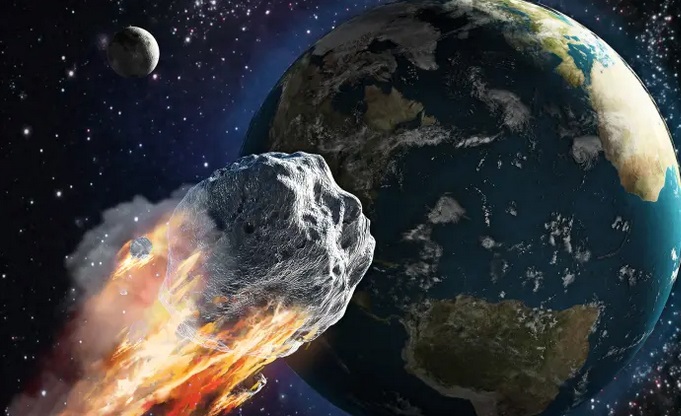
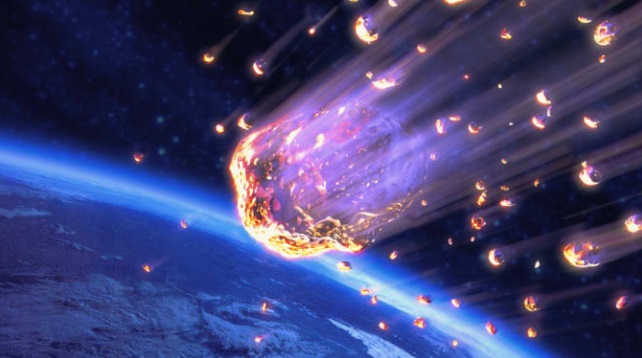
- Burning Up Meteoroids: As meteoroids enter the Earth’s atmosphere, they encounter friction and burn up, reducing the likelihood of significant impacts on the surface. Questions on Islam
- Maintaining Temperature Balance: The atmosphere traps heat through the greenhouse effect, ensuring the planet maintains a temperature range conducive to sustaining life.
Quranic Insight and Modern Science
The description of the sky as a “protected ceiling” in the Quran reflects an understanding of the atmosphere’s essential protective roles, which have been confirmed by contemporary scientific research.
Today we have studied only one aspect of it in some detail.
This alignment between scripture and science highlights the profound nature of the Quranic verse, which then becomes an indirect reference to the Northern and Southern Lights. The last part of this verse also jolts our consciousness that when we see this and other signs of God the Creator, we cannot ignore them and continue to live in oblivion of Him.


 The Glorious Quran and Science
Leave a reply to Celestial Canopy of Light and Life: Northern Lights through Science, Philosophy, and Scripture – The Glorious Quran and Science Cancel reply