
Epigraph:
Do not the disbelievers see that the heavens and the earth were once a singularity, then We parted them asunder? And We made from water every living thing. Will they not then believe? (Al Quran 21:30)

Written and collected by Zia H Shah MD, Chief Editor of the Muslim Times
Water, a transparent and nearly colorless chemical substance, is the foundation of all known forms of life. Comprising about 71% of Earth’s surface, it is vital for various biological, ecological, and industrial processes. But, most of the time we find water so common place that we fail to ponder over it, as to what an amazing gift and miracle it is.
We could think and talk about water cycle, the necessary role of water in biology, in meteorology, in geology, in theology and even in eschatology. But, today I want to only applaud its chemical nature and its bearing on life and be grateful for only one aspect of the miracle of water.
The amazing properties of water arising from hydrogen bonding has created life on our planet and possibly on other planets. When we talk about extraterrestrial life on any planet, the first question is does the planet has water? No wonder the holy Quran describes water as the most fundamental ingredient for life. One of the verses is quoted above as the epigraph and the other verse is:
And He it is Who has created man from water, and has made for him kindred by descent and kindred by marriage; and your Lord is All-Powerful. (Al Quran 25:54)
A hydrogen bond in water is a weak electrostatic attraction between a hydrogen atom covalently bonded to an electronegative atom (such as oxygen or nitrogen) and another electronegative atom in a nearby molecule. In water (H2OH_2OH2O), this interaction occurs between the hydrogen atoms of one water molecule and the oxygen atom of another.
The Structure of Water
- Each water molecule has a bent shape due to the two lone pairs on oxygen.
- The oxygen atom is highly electronegative, creating a partial negative charge (δ−\delta^-δ−) near the oxygen and partial positive charges (δ+\delta^+δ+) near the hydrogen atoms.
- This polarity enables water molecules to form hydrogen bonds, with each molecule potentially forming up to four hydrogen bonds.
Unique Properties of Water Due to Hydrogen Bonding
- High Specific Heat Capacity
- Water’s hydrogen bonds require significant energy to break. This results in a high specific heat capacity, enabling water to moderate temperature changes and maintain stable environments, crucial for life.
- High Boiling and Melting Points
- Compared to other molecules of similar size, water’s boiling and melting points are exceptionally high due to the energy needed to disrupt hydrogen bonds.
- Cohesion and Adhesion
- Cohesion (water molecules sticking to each other) results from hydrogen bonding and contributes to phenomena like surface tension.
- Adhesion (water sticking to other materials) allows water to climb against gravity in plant capillaries, essential for nutrient transport.
- Density Anomaly of Ice
- In its solid state, water forms a crystalline structure stabilized by hydrogen bonds. This makes ice less dense than liquid water, allowing it to float and insulate aquatic ecosystems.
- Universal Solvent
- The polarity and hydrogen bonding capacity of water allow it to dissolve various substances, facilitating chemical reactions in biological systems.

Now let us dwell on density anomaly of ice. Water exhibits a unique behavior known as anomalous expansion, where it expands upon freezing, contrary to most substances that contract when transitioning from liquid to solid. This phenomenon has significant implications for both the natural world and human infrastructure.
At temperatures above 4°C, water behaves conventionally, expanding when heated and contracting when cooled. However, as water cools below 4°C, it begins to expand. This expansion becomes more pronounced as it approaches 0°C and transitions into ice. The underlying cause of this behavior lies in water’s molecular structure. Water molecules form hydrogen bonds, creating a hexagonal lattice in the solid state. This open arrangement occupies more space than in the liquid state, leading to a decrease in density. Consequently, ice is less dense than liquid water, which is why it floats.
The anomalous expansion of water plays a crucial role in sustaining aquatic ecosystems, especially in cold climates. As temperatures drop, water at 4°C sinks to the bottom due to its higher density, while colder, less dense water remains near the surface. When surface water reaches 0°C, it freezes, forming an insulating ice layer. This layer prevents the entire body of water from freezing solid, maintaining a habitable environment for aquatic organisms beneath the ice. Life could evolve and develop on our planet only if aquatic life could survive annual harsh winters.
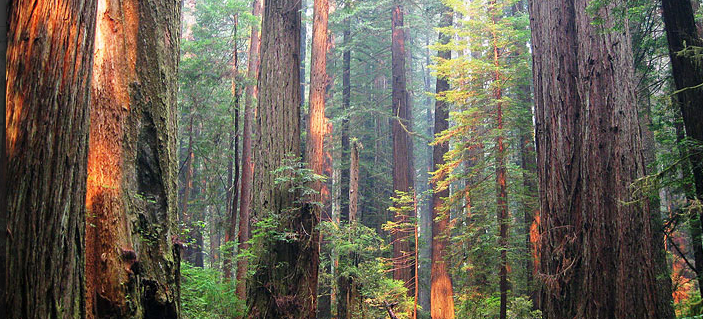
The world’s tallest trees are awe-inspiring giants that have adapted remarkable mechanisms to transport water from their roots to their towering canopies. Understanding these mechanisms, particularly capillary action, sheds light on the intricate processes sustaining these natural wonders.
In trees, capillary action works by utilizing the attractive forces between water molecules (cohesion) and the walls of the xylem tubes (adhesion), allowing water to rise from the roots up through the stem and into the leaves, essentially “pulling” the water column upwards against gravity through tiny, narrow channels within the tree’s vascular system.
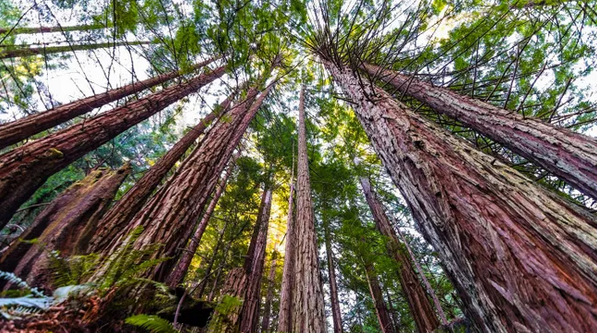
Transporting water to such heights presents significant challenges, imagine man made pumps to pump water through such heights. There are three different mechanisms that contribute to this amazing feat. These primary mechanisms involved include:
- Capillary Action: This process involves the movement of water within narrow tubes (xylem vessels) due to adhesive and cohesive forces. Capillary action relies on cohesion (attraction between water molecules), adhesion (attraction between water and solid surfaces), and surface tension. It explains how water rises in narrow tubes or spaces due to the interplay of these forces. However, in tall trees, the diameter of xylem vessels limits the effectiveness of capillary action, as it can only raise water to a certain height. While capillary action contributes to water movement, it alone cannot account for the ascent in these towering trees. UCF Pressbooks
- Root Pressure: Roots can generate positive pressure by actively transporting ions into the xylem, drawing water in osmotically. While this aids in water movement, especially in shorter plants, it is insufficient to push water to the tops of the tallest trees. Appalachian State University
- Transpirational Pull: The most significant force in tall trees is generated by transpiration—the evaporation of water from leaf surfaces. This creates a negative pressure (tension) within the xylem, effectively pulling water upward through the cohesive properties of water molecules. This cohesion-tension mechanism allows water to travel from roots to leaves, even in the tallest trees. The Environmental Literacy Council
Next time you look at a tree in neighborhood try to imagine its height and imagine how water is being sucked up to the highest leaves on it.
From its formula weight –18 — one would predict that water would be a gas at ordinary temperatures and pressures. Ammonia — with a formula weight of –17– is a gas at temperatures as low as minus 33° C. at atmospheric pressure. Hydrogen sulfide, closely related to water by position in the periodic table and with a formula weight of 34, is a gas at temperatures down to minus 59° C. The fact that water exists as a liquid at all, at ordinary temperatures, is something to make one stop and think.
This is not an exhaustive article on the chemical beauty of water. I have highlighted the most well known aspects briefly.
The Quranic verse I used as the title of this article is chapter 56, verse 68.
Conclusion
I go back to the verse that we started with as the epigraph of this article:
أَوَلَمْ يَرَ الَّذِينَ كَفَرُوا أَنَّ السَّمَاوَاتِ وَالْأَرْضَ كَانَتَا رَتْقًا فَفَتَقْنَاهُمَا ۖ وَجَعَلْنَا مِنَ الْمَاءِ كُلَّ شَيْءٍ حَيٍّ ۖ أَفَلَا يُؤْمِنُونَ
Do not the disbelievers see that the heavens and the earth were once a singularity, then We parted them asunder? And We made from water every living thing. Will they not then believe? (Al Quran 21:30)
This verse talks about the Big Bang and then life contributing properties of water. We have here examined a few of them. A lot more will be written about water cycle and role of water in biology and meteorology. The Quran then asks a rhetorical question from the agnostics and atheists, when they see all this awe-inspiring creativity of God, why do they choose to attribute this to merely an accident and not look beyond the apparent or under the surface, to the Most Merciful, the All-Knowing and the All-Powerful, yet the Most Subtle Being, behind the scenes?




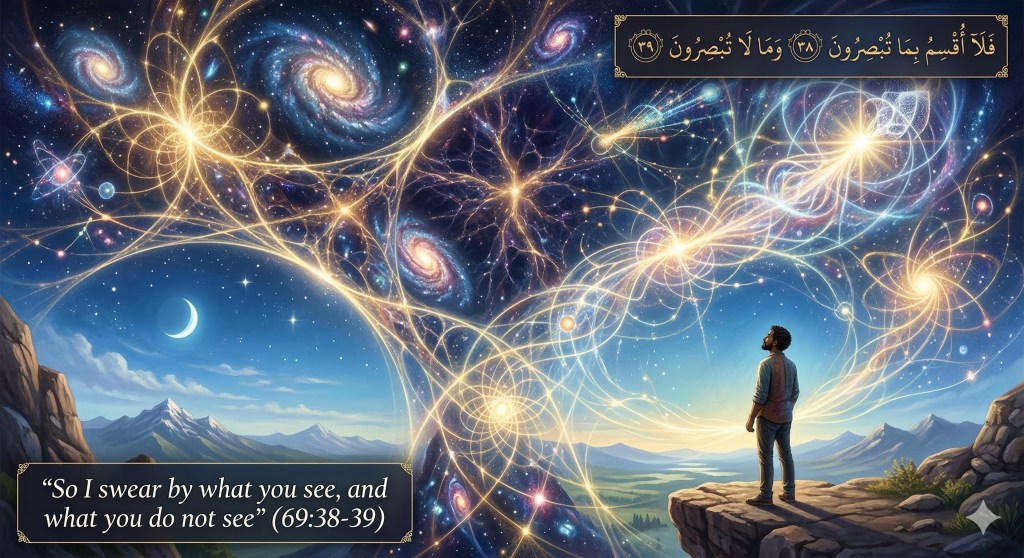
 The Glorious Quran and Science
Leave a reply to The Glorious Qur’an 21:30–33 – Scientific and Theological Insights – The Glorious Quran and Science Cancel reply