
Epigraph:
It is God who created seven heavens and a similar numbers of earths. His command descends throughout them. So you should realize that He has power over all things and that His knowledge encompasses everything. (Al Quran 65:12)
Written and collected by Zia H Shah MD, Chief Editor of the Muslim Times
At the time of the Hajj, believers are supposed to circumnavigate the Kaaba seven times to completely and holistically direct their attention to God. Then, they run between Safa and Marwa in remembrance of the struggle of mother Hajira, who ran back and forth between the two hillocks in search of water for her young son Ishmael some eighteen hundred years before the common era.
The number seven has symbolic importance in Arabic language, signifying many or a sizeable innumerable number. The Quran mentions seven heavens on several occasions, for example, in the verses that highlight the awe-inspiring creativity of God:
He is the Mighty, the Forgiving; Who created the seven heavens, in harmony. You will not see any flaw in what the Lord of Mercy creates. Look again! Can you see any flaws? Look again! And again! Your sight will turn back to you, weak and defeated. (Al Quran 67:2-4)
Other verses that talk about seven heavens are 2:29, 17:44, 23:17, 23:86, 41:12, 65:12, 71:15 and 78:12. However, seven earths are mentioned only once in the Quran in the verse quoted as epigraph from Surah Talaq. This contrast is indeed Divine wisdom that He has drawn our attention to the numerous earths in our universe without making the pre-scientific generations or the first addressee of the Quran, the seventh-century Arabs, worry about this reality, which would not advance their understanding of the mundane and the spiritual.
The quest to determine the number of galaxies in the observable universe has been a central focus in cosmology in recent decades, with estimates evolving significantly as observational technologies advance. Based on observations from the Hubble Space Telescope in the 1990s and early 2000s, initial assessments suggested that the observable universe contained approximately 100 to 200 billion galaxies. These figures were derived from deep-field images capturing thousands of galaxies in narrow sky regions, which were then extrapolated to the entire sky.[i]
In 2016, a study led by Christopher Conselice utilized deep-space images and new mathematical models to infer that the observable universe might contain up to two trillion galaxies. This substantial increase accounted for galaxies too faint or distant to be detected by current telescopes.[ii]
In the seventh century seven heavens meant whatever the early Arab Muslims understood it to be. For us seven heavens mean the two trillion galaxies.
The Search for Extraterrestrial Intelligence (SETI) is a scientific endeavor dedicated to detecting signs of intelligent life beyond Earth. A key aspect of SETI’s mission involves identifying potentially habitable exoplanets—planets orbiting stars outside our solar system that may support life.
Surah Ash-Shuraa (42:29) of the holy Quran states: “And among His signs is the creation of the heavens and the earth and the living creatures that He has dispersed throughout them. And He has the power to gather them together when He wills.” The use of da’bbah (living creatures that move along the surface) indicates physical beings, not spiritual entities, suggesting the presence of life forms in both the heavens and the earth. This verse not only hints at existence of intelligent life in other planets, but also prophesies their meeting.
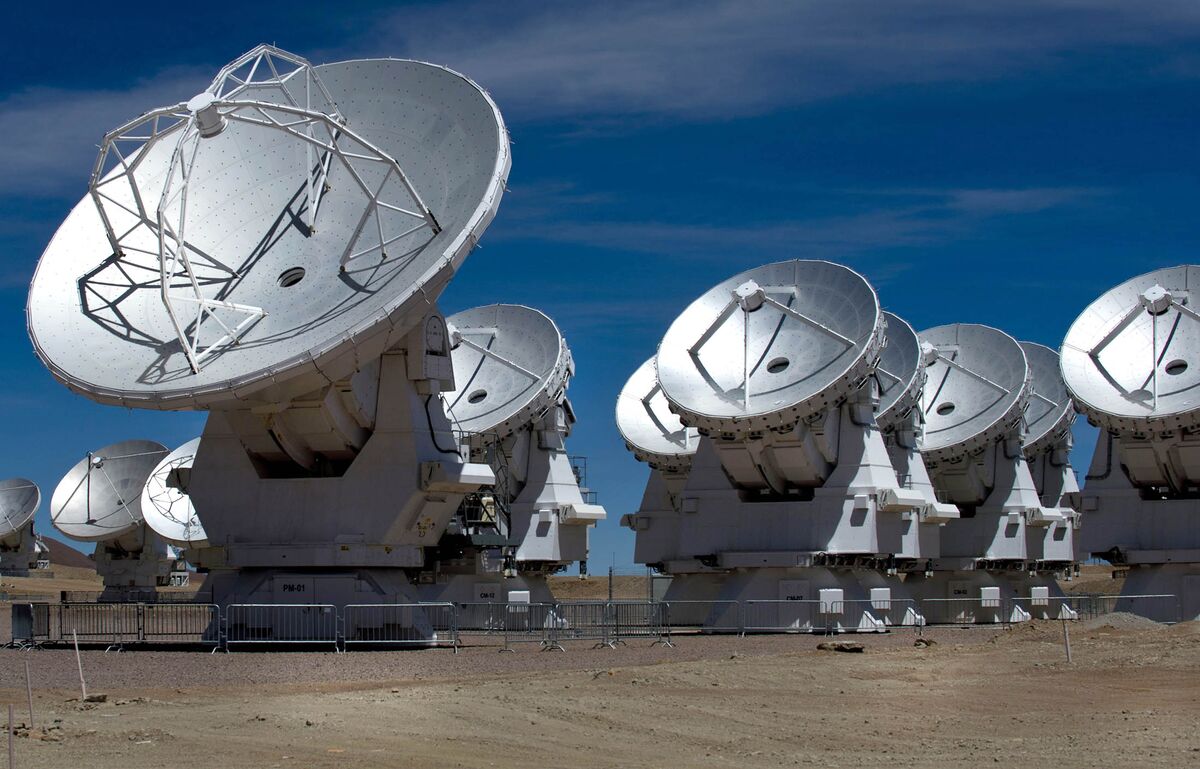
SETI researchers collaborate with various astronomical projects to discover and study exoplanets, focusing on those within the habitable zones of their parent stars, where conditions might allow liquid water to exist. Instruments like the Gemini Planet Imager (GPI) have been utilized to directly image and characterize young Jupiter-sized exoplanets around nearby stars.
Until 1995, planets around other ordinary stars were no more than a conjecture. But in that year, two Swiss astronomers measured the slight wobble of the star 51 Pegasi, and opened up what is today one of the most energetic research disciplines in astrobiology: the hunt for, and quest to characterize, extrasolar planets (exoplanets). Given its interest in life beyond Earth, it’s hardly surprising that the SETI Institute is part of this effort. In the two decades since the discovery of the world around 51 Pegasi, thousands of exoplanets have been uncovered using the Kepler space telescope. Many Institute scientists are part of the Kepler research team, and others participate in the Kepler outreach program. While the first discovered exoplanets were bloated gas giants (Jupiter-size or larger), often orbiting very close to their home stars, the increasing sensitivity of exoplanet experiments has caused a shift in the type of planets being found. They are now predominately smaller worlds, comparable or somewhat larger than Earth. This augurs well for the existence of large numbers of habitable worlds in the cosmos, and tentative estimates suggest that as many as one-in-five or one-in-ten stars will harbor such bio-friendly planets. In addition to Kepler, SETI Institute researchers have been using the Gemini Planet Imager (GPI), a state-ofthe-art instrument in Chile that is able to directly photograph and characterize young Jupiter-size worlds around nearby stars. Some of the newly discovered exoplanets have become priority targets for the Institute’s SETI experiments.[iii]
Thanks to new research using data from the Kepler space telescope, it’s estimated that there could be as many as 300 million potentially habitable planets in our galaxy. Some could even be pretty close, with several likely within 30 light-years of our Sun. The findings will be published in The Astronomical Journal, and research was a collaboration of scientists from NASA, the SETI Institute, and other organizations worldwide.
“This is the first time that all of the pieces have been put together to provide a reliable measurement of the number of potentially habitable planets in the galaxy,” said co-author Jeff Coughlin, an exoplanet researcher at the SETI Institute and Director of Kepler’s Science Office. “This is a key term of the Drake Equation, used to estimate the number of communicable civilizations — we’re one step closer on the long road to finding out if we’re alone in the cosmos.”
The Drake Equation is a probabilistic argument that details the factors to consider when estimating the potential number of technologically advanced civilizations in the galaxy that could be detected. The Drake Equation is also often considered to be a roadmap for astrobiology and guides much of the research at the SETI Institute.
To develop a reasonable estimate, the researchers looked at exoplanets similar in size to Earth and thus most likely to be rocky planets. They also looked at so-called Sun-like stars, around the same age as our Sun and approximately the same temperature. Another consideration for habitability is whether the planet could have the conditions necessary to support liquid water.[iv]
What was the early Muslims’ understanding of the seven earths in the Quran? Seyyed Hossein Nasr writes in his recent multi-editors commentary of the verse 65:12, quoting a distinguished companion of the prophet Muhammad:
“Ibn ʿAbbās reportedly said regarding this verse, ‘Were I to tell you of the interpretation of it, you would disbelieve, and your disbelief would be your denial of it.’ He is also reported to have said, ‘Seven lands: in each land there is a prophet like your prophet, and an Adam like Adam, and a Noah like Noah, and an Abraham like Abraham, and a Jesus like Jesus.’”
For modern man, the seven earths mean as many as 300 million earth-like planets in the Milky Way and many more in the two trillion galaxies.
In summary, SETI’s integration of exoplanet research into its search strategies underscores the importance of identifying potentially habitable worlds. The increasing number of known exoplanets within habitable zones bolsters the possibility that intelligent life may exist elsewhere in the universe, guiding SETI’s ongoing efforts to detect extraterrestrial civilizations.
Not only the above two quotes from the holy Quran, 65:12 and 41:29 talk about extraterrestrial life, but in the very first chapter, Surah Al-Fatiha, Allah is described as the “Lord of all worlds” (Rabb al-‘Alamin), implying the existence of multiple realms or worlds under divine lordship. The term ‘Alamin can refer to various worlds or universes, suggesting that life may exist beyond our planet.
The morale of SETI may wax and wane after seventy years of their search and counting, but I feel very confident, based on my reading of the Qur’an, that one-day humanity will meet intelligent aliens, as prophesied more than 1400 years ago.
References
[i] https://www.space.com/25303-how-many-galaxies-are-in-the-universe.html
[ii] https://science.nasa.gov/missions/hubble/hubble-reveals-observable-universe-contains-10-times-more-galaxies-than-previously-thought
[iii] https://www.seti.org/research/Exoplanets
[iv] https://www.seti.org/press-release/how-many-habitable-planets-are-out-there




 The Glorious Quran and Science
Leave a comment