
Epigraph:
Blessed is He in Whose hand is the kingdom, and He has power over all things; Who has created death and life that He might try you — which of you is best in deeds; and He is the Mighty, the Most Forgiving. (Al Quran 67:1-2)
Written and collected by Zia H Shah MD, Chief Editor of the Muslim Times
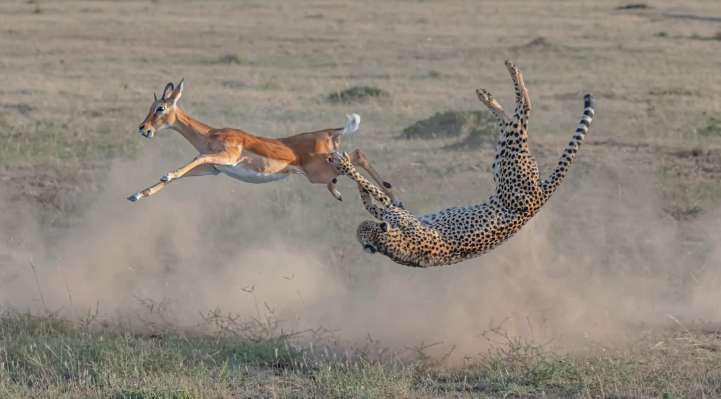
“Survival of the fittest” is a phrase often associated with Charles Darwin’s theory of evolution, though it was actually coined by philosopher Herbert Spencer in his 1864 work Principles of Biology. Spencer used the term to draw parallels between his economic theories and Darwin’s biological concepts, describing how individuals or species best adapted to their environment are more likely to survive and reproduce. Wikipedia
Darwin later adopted the phrase in the fifth edition of his On the Origin of Species (1869) to describe the process of natural selection. In this context, “fitness” refers not to physical strength but to an organism’s ability to survive and reproduce in its specific environment. Thus, “survival of the fittest” implies that those organisms most suited to their environments are more likely to pass on their genes to the next generation. Encyclopedia Britannica
It’s important to note that “survival of the fittest” can be misleading if interpreted too literally. In evolutionary biology, “fitness” is about reproductive success rather than mere survival or physical prowess. Additionally, survival is only one aspect of selection, and not always the most important. Another problem is that the word “fit” is frequently confused with a state of physical fitness. In the evolutionary meaning, “fitness” is the rate of reproductive output among a class of genetic variants. Wikipedia
Over time, the phrase has been applied beyond biology, sometimes controversially. In social and economic contexts, it has been used to justify certain ideologies, often referred to as “social Darwinism,” which suggests that in human society, as in nature, competition leads to the success of the strongest individuals or groups. However, such interpretations are widely criticized for misapplying biological concepts to justify social inequalities. Wikipedia
In summary, “survival of the fittest” encapsulates the mechanism of natural selection, where organisms best adapted to their environments have higher reproductive success. While the phrase has permeated various aspects of discourse, its scientific meaning is specific to evolutionary biology and should be understood within that context to avoid misconceptions.
The verses that I quoted as epigraphs discuss the struggle between life and death. The amazing thing is that the Quran mentions the creation of death before life to shake our expectations and hint that this alludes to the creative process of evolution as best highlighted by Charles Darwin.
In the concluding paragraph of his seminal work On the Origin of Species, Charles Darwin reflects on the complexity and beauty of life. This statement encapsulates Darwin’s awe at the natural world and the intricate processes that have led to the diversity of life observed today. In the first edition of On the Origin of Species (1859), Darwin concluded with the phrase:
There is grandeur in this view of life, with its several powers, having been originally breathed into a few forms or into one; and that, whilst this planet has gone cycling on according to the fixed law of gravity, from so simple a beginning endless forms most beautiful and most wonderful have been, and are being, evolved.
However, in subsequent editions, Darwin added the phrase “by the Creator” to the sentence, reflecting his evolving views on the role of a creator in the process of evolution. Now, let me quote here the concluding paragraph, with some additional details, in the later editions of the legendary book of Charles Darwin, on the Origin of Species that can make one quickly conceptualize the role of suffering in the grand scheme of things:
From the war of nature, from famine and death, the most exalted object which we are capable of conceiving, namely, the production of the higher animals, directly follows. There is grandeur in this view of life, with its several powers, having been breathed, by the Creator, into a few forms or into one; and that, whilst this planet has gone cycling on according to the fixed law of gravity, from so simple a beginning endless forms most beautiful and most wonderful have been, and are being, evolved.
This addition suggests that Darwin saw the process of evolution as a natural mechanism, potentially set in motion by a creator, leading to the vast diversity of life through natural laws. This nuanced perspective highlights the complexity of Darwin’s views on the interplay between natural processes and the possibility of a creator’s influence in the development of life.
Holmes Rolston III, a prominent environmental philosopher, has extensively explored the interplay between suffering and creativity within the evolutionary process. He posits that the challenges and adversities inherent in evolution are not merely obstacles but serve as catalysts for the development of complex life forms and behaviors.
Suffering as a Catalyst for Evolutionary Creativity
Rolston suggests that the natural world’s inherent struggles—predation, competition, and environmental pressures—drive evolutionary innovation. These challenges compel organisms to adapt, leading to the emergence of new traits and species. In this context, suffering is integral to the creative processes that generate biodiversity.
The Interplay of Life and Death
In his reflections, Rolston notes that life’s persistence is marked by a continuous cycle of perishing and renewal. He observes that “life persists in the midst of its perpetual perishing,” indicating that the very processes causing individual suffering and death contribute to the resilience and continuity of life as a whole. College of Liberal Arts
Evolution as a Narrative of Suffering and Caring
Rolston characterizes natural history as an “evolution of suffering,” where the development of life is intertwined with pain and adversity. However, he also emphasizes that this narrative includes the evolution of caring behaviors, such as parental investment and social cooperation, which mitigate suffering and enhance survival. College of Liberal Arts
Philosophical Implications
Rolston’s perspective challenges the view that suffering is inherently negative, proposing instead that it plays a crucial role in the creative unfolding of life. This viewpoint invites a reevaluation of the ethical and philosophical significance of pain and adversity in the natural world.
Holmes Rolston III’s insights into the creative power of suffering in evolution highlight the complex relationship between adversity and innovation in the natural world. By recognizing suffering as a driving force behind evolutionary creativity, Rolston offers a nuanced understanding of the processes that have shaped life’s diversity on Earth.
Conclusion
The best proof of evolution and common ancestry of all life forms, comes from molecular biology and is discussed in a separate article: Javed Ahmed Ghamidi and Me: Human Evolution and the Quran.
If one believes in the common ancestry of all life forms and the process of evolution spread over billions of years and the Quran to be the literal word of All-Knowing God, then the verses quoted as epigraph, offer an amazing bridge to the verses that follow:
Who created the seven heavens, one above the other. You will not see any flaw in what the Lord of Mercy creates. Look again! Can you see any flaws? Look again! And again! Your sight will turn back to you, weak and defeated. (Al Quran 67:3-4)
These verses then represent not only God’s amazing creation of the universe, possibly the multiverse, Einstein’s space-time, the quantum mysteries of Niels Bohr, Christian Heisenberg, and Erwin Schrodinger, but also all the 9 million extant species on our planet Earth.


 The Glorious Quran and Science
Leave a reply to Table of Contents – The Quranic Compassion Cancel reply