
Epigraph:
When God says, ‘Jesus, son of Mary, did you say to people, “Take me and my mother as two gods alongside God”?’ he will say, ‘May You be exalted! I would never say what I had no right to say –– if I had said such a thing You would have known it: You know all that is within me, though I do not know what is within You, You alone have full knowledge of things unseen –– I told them only what You commanded me to: “Worship God, my Lord and your Lord.” I was a witness over them during my time among them. Ever since You took my soul, You alone have been the watcher over them: You are witness to all things and if You punish them, they are Your servants; if You forgive them, You are the Almighty, the Wise.’ (Al Quran 5:116-118)

Written and collected by Zia H Shah MD, Chief Editor of the Muslim Times
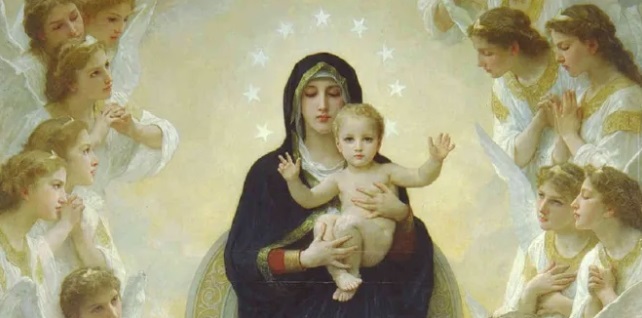
In the diverse landscape of early Christianity, various sects and movements emerged, each with unique theological perspectives. One such group was the Collyridians, an alleged sect that elevated the Virgin Mary to divine status, worshipping her as a goddess.
Collyridianism: Worship of Mary as a Goddess
Collyridianism was an early Christian movement in Arabia whose adherents worshipped the Virgin Mary as a goddess, possibly even considering her a member of the Trinity. This practice involved offering bread sacrifices to Mary, a ritual led predominantly by women. The primary source of information about this sect comes from the writings of St. Epiphanius of Salamis in his work Panarion, where he critiques their practices as heretical.
Historical Context and Practices
The Collyridians are believed to have been active during the 4th century in regions of Arabia. Their rituals, which included offering a type of bread called “collyris” to Mary, were seen as a significant departure from orthodox Christian practices. This form of Marian devotion was considered excessive and idolatrous by mainstream Christian leaders of the time.
Critique and Condemnation
St. Epiphanius, a 4th-century bishop and heresiologist, documented the practices of the Collyridians in his comprehensive work Panarion, which aimed to identify and refute various heresies. He condemned the Collyridians for elevating Mary to divine status, arguing that while Mary should be honored as the Mother of God (Theotokos), worship should be reserved for God alone. Epiphanius emphasized that venerating Mary as a goddess was a misinterpretation of her role within the Christian faith.
Scholarly Debate on the Existence of Collyridians
The existence of the Collyridian sect is subject to some dispute among scholars, as the only contemporary source to describe it is the Panarion of St. Epiphanius. Some scholars question the accuracy of Epiphanius’s accounts, suggesting that he may have exaggerated or misinterpreted certain practices. Others propose that references to groups like the Collyridians may have influenced later religious texts, such as certain verses in the Qur’an.
Conclusion
The account of the Collyridians highlights the diversity of early Christian thought and the challenges the early Church faced in defining orthodoxy. While honoring Mary has been a longstanding tradition in Christianity, the Collyridians’ elevation of her to divine status was deemed heretical, underscoring the early Church’s efforts to delineate appropriate forms of veneration and worship.
For further reading, you may consult the following sources:


 The Glorious Quran and Science
Leave a reply to Qur’an 5:116–118 – A Scholarly Commentary on Divine Unity and Theotokos – The Glorious Quran and Science Cancel reply