
Epigraph:
اللَّهُ الَّذِي خَلَقَ السَّمَاوَاتِ وَالْأَرْضَ وَمَا بَيْنَهُمَا فِي سِتَّةِ أَيَّامٍ ثُمَّ اسْتَوَىٰ عَلَى الْعَرْشِ
…
ذَٰلِكَ عَالِمُ الْغَيْبِ وَالشَّهَادَةِ الْعَزِيزُ الرَّحِيمُ
الَّذِي أَحْسَنَ كُلَّ شَيْءٍ خَلَقَهُ ۖ وَبَدَأَ خَلْقَ الْإِنسَانِ مِن طِينٍ
ثُمَّ جَعَلَ نَسْلَهُ مِن سُلَالَةٍ مِّن مَّاءٍ مَّهِينٍ
ثُمَّ سَوَّاهُ وَنَفَخَ فِيهِ مِن رُّوحِهِ ۖ وَجَعَلَ لَكُمُ السَّمْعَ وَالْأَبْصَارَ وَالْأَفْئِدَةَ ۚ قَلِيلًا مَّا تَشْكُرُونَ
It is God who created the heavens and the earth and everything between them in six Days. Then He established Himself on the Throne. … Such is He who knows all that is unseen as well as what is seen, the Almighty, the Merciful, who gave everything its perfect form. He started the creation of man from clay, then made his descendants from an extract of underrated fluid. Then He molded him; He breathed from His Spirit into him; He gave you hearing, sight, and minds. How seldom you are grateful! (Al Quran 32:4-9)

Written and collected by Zia H Shah MD, Chief Editor of the Muslim Times
Muslim perspectives on human origins encompass a spectrum of views, primarily centered around two interpretations: the special creation of Adam and guided evolution.
Traditional Islamic teachings assert that Prophet Adam was directly created by Allah from clay, marking the inception of humanity. This viewpoint is rooted in the Quran and Hadith, which describe Adam as the first human and prophet, fashioned uniquely by divine command. For instance, the Quran states:
“He created him from dust, then said to him, ‘Be,’ and he was.” (Al Quran 3:59) Wikipedia
This narrative underscores the belief in a distinct and miraculous creation, setting humans apart from other creatures.
In contrast, some contemporary Muslim scholars and thinkers propose that evolutionary processes could be part of Allah’s method of creation. This perspective, known as theistic evolution or guided evolution, suggests that divine guidance orchestrated the development of life, including humans, through evolutionary stages. Proponents argue that this view does not conflict with Islamic teachings, as it acknowledges Allah’s sovereignty over all processes. Yaqeen Institute
Traditionally, majority of the Muslims have believed in special creation of Adam. But, in recent decades more and more of them are moving towards guided evolution:
According to a Pew Research Center poll, among the Muslims in Southern and Eastern Europe, a majority of Muslims in Albania (62%) and Russia (58%) believe in evolution. In Tajikistan and Turkey, the predominant view is that humans have remained in their present form since the beginning of time, 55% and 49%, respectively.

At least six-in-ten Muslims in Lebanon (78%), the Palestinian territories (67%) and Morocco (63%) think humans and other living things have evolved over time, but Jordanian and Tunisian Muslims are more divided on the issue. About half in Jordan (52%) believe in evolution, while 47% say humans have always existed in their present form. And in Tunisia, 45% say humans have evolved, 36% say they have always existed in their present form, and 19% are unsure. Iraq is the only country surveyed in the Middle East-North Africa region where a majority rejects the theory of evolution (67%).
Now, the discourse among Muslims regarding human origins is diverse:
- Literalists: Adhere strictly to scriptural accounts, rejecting evolutionary theory as incompatible with the Quranic narrative.
- Reconciliatory Approaches: Seek harmony between scientific findings and religious texts, interpreting Quranic verses in ways that accommodate evolutionary concepts.
- Allegorical Interpretations: View the story of Adam as symbolic, representing deeper truths about human nature and morality rather than a literal historical account.
This diversity reflects the broader Islamic engagement with science and theology, aiming to understand the natural world while upholding faith principles.
Eyes do not see when the mind does not know. But, now when I read the Quran with my belief in guided evolution, I see more and more verses of the Quran alluding to it. In this article I want to opine on the verses quoted as epigraph:
اللَّهُ الَّذِي خَلَقَ السَّمَاوَاتِ وَالْأَرْضَ وَمَا بَيْنَهُمَا فِي سِتَّةِ أَيَّامٍ ثُمَّ اسْتَوَىٰ عَلَى الْعَرْشِ
…
ذَٰلِكَ عَالِمُ الْغَيْبِ وَالشَّهَادَةِ الْعَزِيزُ الرَّحِيمُ
الَّذِي أَحْسَنَ كُلَّ شَيْءٍ خَلَقَهُ ۖ وَبَدَأَ خَلْقَ الْإِنسَانِ مِن طِينٍ
ثُمَّ جَعَلَ نَسْلَهُ مِن سُلَالَةٍ مِّن مَّاءٍ مَّهِينٍ
ثُمَّ سَوَّاهُ وَنَفَخَ فِيهِ مِن رُّوحِهِ ۖ وَجَعَلَ لَكُمُ السَّمْعَ وَالْأَبْصَارَ وَالْأَفْئِدَةَ ۚ قَلِيلًا مَّا تَشْكُرُونَ
It is God who created the heavens and the earth and everything between them in six Days. Then He established Himself on the Throne. … Such is He who knows all that is unseen as well as what is seen, the Almighty, the Merciful, who gave everything its perfect form. He started the creation of man from clay, then made his descendants from an extract of underrated fluid. Then He molded him; He breathed from His Spirit into him; He gave you hearing, sight, and minds. How seldom you are grateful! (Al Quran 32:4-9)
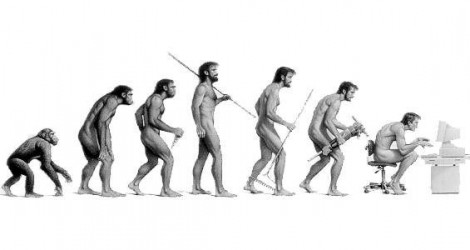
The narrative in this Surah starts with the Big Bang some 13.5 billion years ago. Then Allah does not say that He created man from clay, rather He started the creation from clay. Then He created from seminal fluid, which came even before He says: “Then He molded him; He breathed from His Spirit into him.” Here, Allah is not talking about the seminal fluid of humans but rather highlighting the sexual multiplication in animals that preceded mammals and humans.
The Arabic word سَوَّاهُ used for molding him also implies embellished him, another clue for evolution.
As the last stage in human development at some suitable point Allah breathed His spirit into him. This may signify the development of enhanced consciousness, conscience, or language in hominid species.
The way the holy Quran describes the chronology the conclusion is inescapable that Allah is leading us towards guided evolution, but, in somewhat subtle language, so that in the 12-13 centuries preceding Darwin, the Quran does not become confusing to the believers and remains a message for every century till the Day of Judgment.
I will keep bringing other verses on similar themes in a series of articles.
Additional reading:



 The Glorious Quran and Science
Leave a comment