
Epigraph
Surely, the Believers, and the Jews, and the Christians and the Sabians — whichever party from among these truly believes in Allah and the Last Day and does good deeds — shall have their reward with their Lord, and no fear shall come upon them, nor shall they grieve. (Al Quran 2:62)
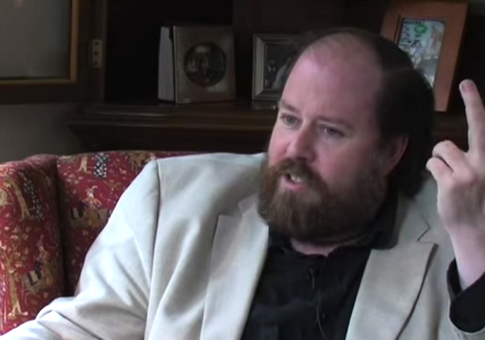
The above is audio of David Bentley Hart. Hart (born February 1965) is an American writer, philosopher, religious studies scholar, critic, and theologian. Reviewers have commented on Hart’s baroque prose and provocative rhetoric in over one thousand essays, reviews, and papers as well as nineteen books (including translations). From a predominantly Anglican family background, Hart became Eastern Orthodox when he was twenty-one. His academic works focus on Christian metaphysics, philosophy of mind, Indian and East Asian religion, Asian languages, classics, and literature as well as a New Testament translation. Books with wider audiences include The Doors of the Sea, Atheist Delusions, That All Shall Be Saved, and Roland in Moonlight.
The above audio is of William Lane Craig. He is the Christian scholar that I have picked, because of his otherwise good success, but he does not believe in universalism.
Craig (born August 23, 1949) is an American analytic philosopher, Christian apologist, author, and Wesleyan theologian who upholds the view of Molinism and neo-Apollinarianism.[2][3] He is a professor of philosophy at Houston Christian University and at the Talbot School of Theology of Biola University.[4]
Craig has updated and defended the Kalam cosmological argument for the existence of God.[5][6][7][8][9] He has also published work where he argues in favor of the historical plausibility of the resurrection of Jesus.[10] His study of divine aseity and Platonism culminated with his book God Over All.[11][12]
The above audio is a refutation of William Lane Craig.
The above is audio of Mirza Tahir Ahmad.
Ahmad (مرزا طاہر احمد; 18 December 1928 – 19 April 2003) was the fourth caliph (Arabic: خليفة المسيح الرابع, khalīfatul masīh al-rābi) and the head of the worldwide Ahmadiyya Muslim Community. He was elected as the fourth successor of the founder of the community, Mirza Ghulam Ahmad. He was elected on 10 June 1982, the day after the death of his predecessor, Mirza Nasir Ahmad.
Following the Ordinance XX that was promulgated by the government of Pakistan in 1984, which prohibited Ahmadi Muslims from any public expression of the Islamic faith, Tahir Ahmad left Pakistan and migrated to London, England, provisionally moving the headquarters of the community to the Fazl Mosque in London.[1] He is noted particularly for his question and answer sessions which he held regularly with people from around the world and for his Quranic discourses. Under his leadership, there was an acceleration in the number of Quran translations produced by the Community; and during his caliphate, the Community experienced structural and financial growth on an international level, including the launch of the first Muslim satellite television network, Muslim Television Ahmadiyya in 1994.
Now, an article by me on the same theme: We are all living in the Womb of God-the-Mother, 13.8 billion Years Pregnancy.


 The Glorious Quran and Science
Leave a comment