
Epigraph:
He created the heavens and earth for a true purpose; He wraps the night around the day and the day around the night; He has subjected the sun and moon to run their courses for an appointed time; He is truly the Mighty, the Forgiving. He created you all from a single being, from which He made its mate; He gave you four kinds of livestock in pairs; He creates you in your mothers’ wombs, in one stage after another, in threefold depths of darkness. Such is God, your Lord; He holds control, there is no god but Him. How can you turn away? (Al Quran 39:5-6)
Written and collected by Zia H Shah MD
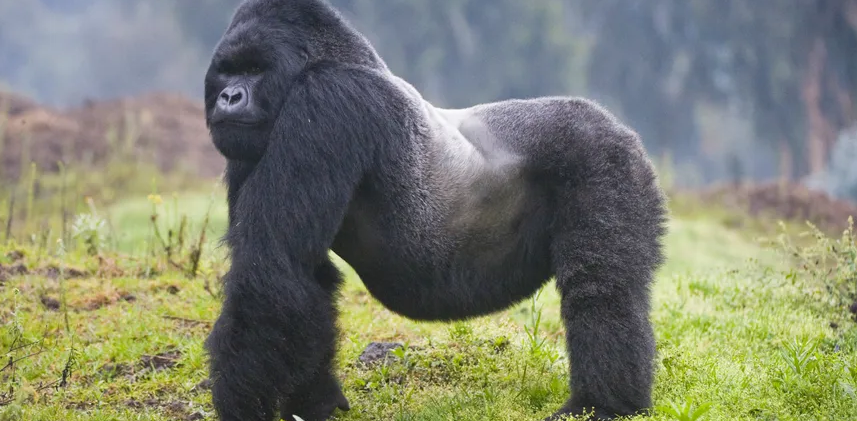
Embryology or the study of embryos as they develop in the uterus today can be very revealing of what happened millions of years ago. Human and other apes begin to have a tail in the very early stages but it never materializes. While all the other primates like monkeys are blessed with a long tail. This small fact has a lot to reveal about us.
Our very ancient animal ancestors like monkeys had tails. Why don’t we have them now?
Somewhere around 20 million or 25 million years ago, we lost our tail. That was the time apes, the group of animals humans are part of, split from another animal group, monkeys. During that split, our branch of the tree of life lost its tail.
The quickest way to tell the difference between a monkey and an ape is by the presence or absence of a tail. Almost all monkeys have tails; apes do not. Their bodies are different in other ways too: monkeys are generally smaller and narrow-chested, while apes are larger and have broad chests and shoulder joints that allow them to swing through trees (while some monkeys also have this ability, most of them are built for running across branches rather than swinging). Although you can’t recognize this difference on sight, apes have an appendix and monkeys do not. Apes are generally more intelligent than monkeys, and most species of apes exhibit some use of tools. While both monkeys and apes can use sounds and gestures to communicate, apes have demonstrated higher ability with language, and some individual apes have been trained to learn human sign languages.
Now, scientists have identified at least one of the genetic differences that led to absence of our tail.
“We found a single mutation in a very important gene,” said Bo Xia. He is a geneticist at the Broad Institute and helped write the study recently released in the publication Nature.
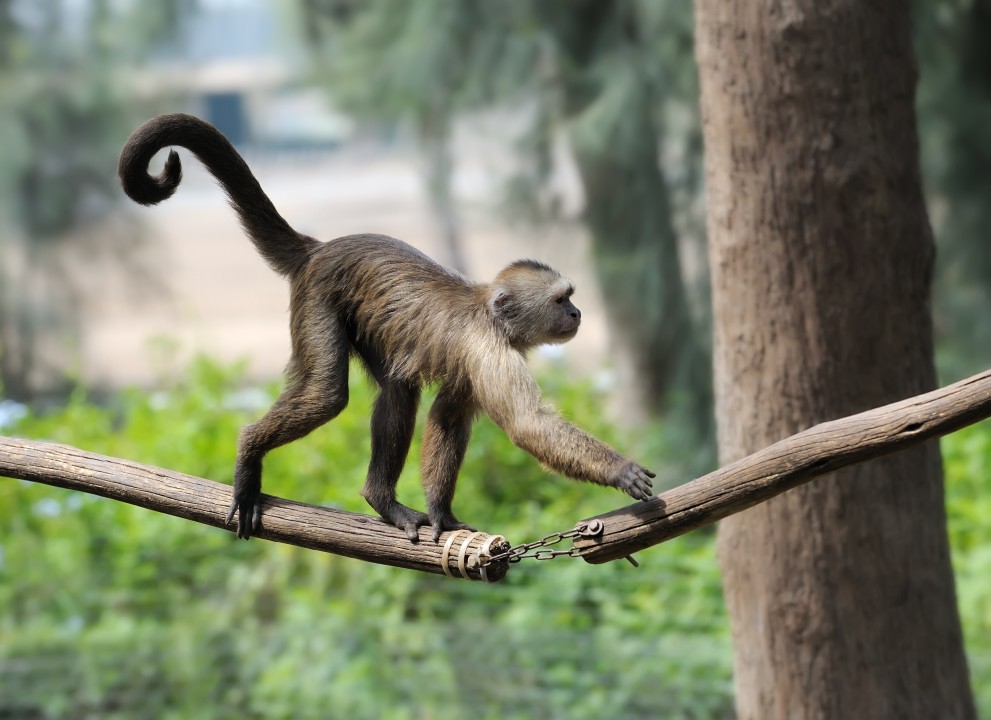
The researchers compared the genomes of six kinds of apes, including humans, and 15 kinds of monkeys with tails to find important differences between the groups. Once they identified an important mutation, they tested their theory by using the gene-editing tool CRISPR. They used it to change the same place in embryos of an animal often used in laboratories, mice. Those mice were born without tails.
Orangutans and gibbons are tailless apes that still live in trees. But Potts notes that they move very differently than monkeys, who move along the tops of branches, using their tails for balance. Those apes hang below branches, holding onto the branches with their arms while hanging largely upright.
Now geneticists have found the exact mutation that prevents apes like us growing tails – and if they are right, this loss happened suddenly rather than tails gradually shrinking.
“You lose the tail in one fell swoop,” says Itai Yanai at NYU Langone Health in New York.
His colleague Bo Xia says he used to wonder as a child why people didn’t have tails like other animals. “This question was in my head when I was a little kid,” he says. “I was asking, ‘Where is my tail?’.”
More recently, Xia’s coccyx – a small bit of bone at the base of the spine that is a vestige of mammalian tails – was injured in a car accident. “It was really painful,” he says. “It kept reminding me about the tail part of our body.”
That led Xia to investigate the genetic basis of tail loss. Any mutations involved in tail loss should be present in apes but not monkeys. He and his colleagues compared ape and monkey versions of 31 genes involved in tail development.
Among all the mutations found, the scientists examined a very interesting mutation in a gene named TBXT. Unlike most mutations which happen from a small change to one’s DNA, this mutation was caused by a parasitic chunk of DNA that can copy and paste itself into new spots in the genome, and it turned out to have a pretty drastic impact on TBXT and tails.
In a previous article, I have examined the different Quranic verses about embryology. In that article we studied baleen whales, how their embryology has a lot to tell us about evolution: The Grand Show on Earth: From Embryology to Evolution to Afterlife. In this article we have studied how embryology and genetics of primates in just one gene gives us so much evidence for the big picture of evolution.


 The Glorious Quran and Science
Leave a reply to Table of Contents – The Quranic Compassion Cancel reply