
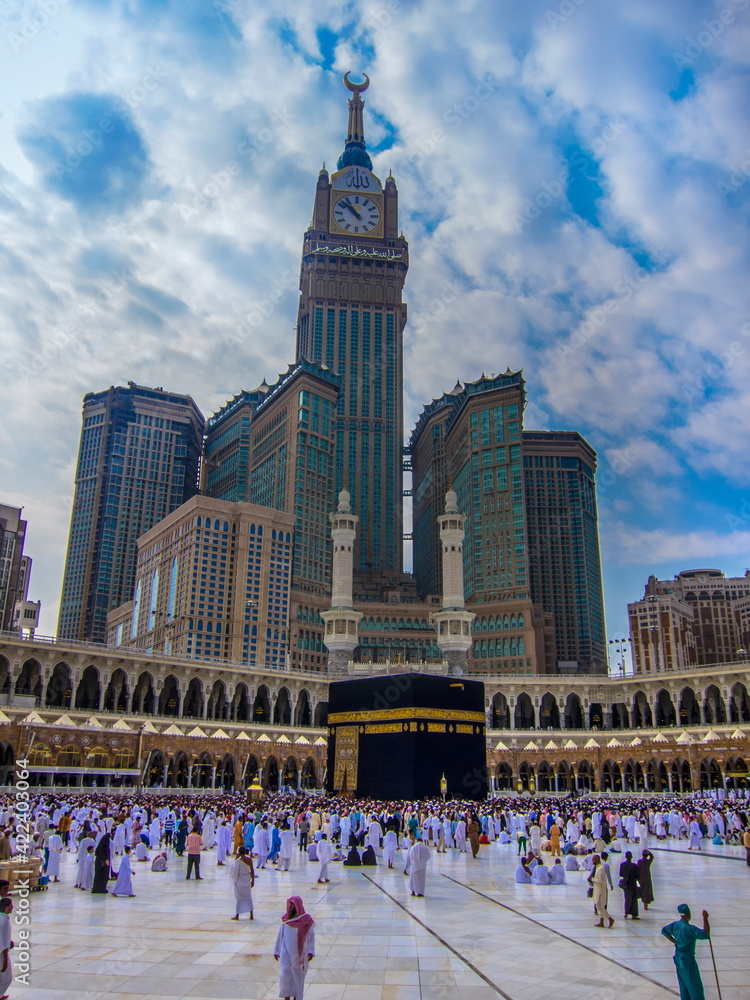
The Sanctuary of the Divine Axis: A Historical and Theological Commentary on Quran 27:91 and the Sacred Geography of the Kaaba
Presented by Zia H Shah MD
Audio teaser:
Abstract
The sanctity of the Kaaba and the city of Mecca constitutes a foundational pillar of the Islamic worldview, representing not only a physical destination for pilgrimage but also a metaphysical center of primordial monotheism. This report provides an exhaustive theological and historical commentary on Quran 27:91, situating it within the broader Quranic discourse on sacred space. By synthesizing classical exegesis from authorities such as Al-Tabari, Al-Qurtubi, and Ibn Kathir with contemporary insights from researchers like Zia H. Shah, MD, the analysis demonstrates the continuity of the Kaaba’s role as an “eternal sanctuary.” The report explores the transition of Mecca from an “uncultivated valley” inhabited by the Prophet Abraham to a high-tech global hub for millions of believers. Central to this study is the integration of all major Quranic references to Mecca, Bakkah, and the Kaaba—including passages from Surah Al-Baqarah, Surah Ale Imran, Surah Ibrahim, Surah Al-Ma’idah, Surah Al-Hajj, Surah Al-Fil, Surah Quraish, and Surah Al-Balad. Through a meticulous examination of Arabic script and the translations of M.A.S. Abdel Haleem, the report elucidates the prophetic success of the Hajj, the miraculous preservation of the sanctuary, and the theological implications of the “Lord of this City” for a modern, globalized audience.
The Command of the Sanctuary: An Exegesis of Quran 27:91-93
At the conclusion of Surah An-Naml (The Ant), the Prophet Muhammad is instructed to articulate the essence of his mission and the nature of his devotion. This declaration serves as a definitive statement on the relationship between the Messenger, the Creator, and the sacred geography of Mecca.
Arabic Text of Quran 27:91-93:
إِنَّمَا أُمِرْتُ أَنْ أَعْبُدَ رَبَّ هَذِهِ الْبَلْدَةِ الَّذِي حَرَّمَهَا وَلَهُ كُلُّ شَيْءٍ وَأُمِرْتُ أَنْ أَكُونَ مِنَ الْمُسْلِمِينَ ﴿٩١﴾ وَأَنْ أَتْلُوَ الْقُرْآنَ فَمَنِ اهْتَدَى فَإِنَّمَا يَهْتَدِي لِنَفْسِهِ وَمَنْ ضَلَّ فَقُلْ إِنَّمَا أَنَا مِنَ الْمُنْذِرِينَ ﴿٩٢﴾ وَقُلِ الْحَمْدُ لِلَّهِ سَيُرِيكُمْ آيَاتِهِ فَتَعْرِفُونَهَا وَمَا رَبُّكَ بِغَافِلٍ عَمَّا تَعْمَلُونَ ﴿٩٣﴾
Translation (M.A.S. Abdel Haleem):
“, ‘What I am commanded to do is to serve the Sustainer of this town, which He has made inviolable. Everything belongs to Him; I am commanded to be one of those devoted to Him; and to recite the Quran. Whoever seeks guidance will find it for his own soul. Say to whoever goes astray, “I am only a warner.” And say, “Praise belongs to Allah. He will show you His signs, then you will recognize them.” And your Lord is not unaware of what you do.’”
Classical Exegesis: The Lord of the Inviolable City
The phrase “Lord of this city” (Rabb hadhihi al-baldah) creates a profound ontological link between the Divine and a specific terrestrial location. Classical commentators such as Ibn Kathir and Al-Qurtubi emphasize that the demonstrative pronoun hadhihi (this) specifically identifies Mecca, the site of the Prophet’s birth and the location of the House of God. The designation of Mecca as al-baldah (the city/town) signifies its status as the archetypal urban center of the Arabian Peninsula, a status derived not from its military or economic might, but from its divine sanctification.
The term harramaha (He has made it sacred/inviolable) refers to the primordial decree established by God “the day He created the heavens and the earth”. In the classical legal framework, this sanctity implies that Mecca is a Haram—a sanctuary where the shedding of blood is prohibited, where no person may be wronged, and where even the natural environment is protected under divine law. Trees may not be felled, and the game may not be hunted within its boundaries. This inviolability was granted by God’s decree, ensuring that the city remained a haven of peace in a region often characterized by tribal strife.
Ibn Kathir notes that the subsequent phrase “Everything belongs to Him” (wa lahu kullu shay-in) serves as a universalizing corrective. While God is specifically the “Lord of this city,” His sovereignty is by no means localized. This transition from the specific to the general reinforces the concept of Tawhid (Divine Unity), asserting that the Creator of the sanctuary is the Sovereign of the entire universe.
Contemporary Perspectives: The Warning to the Ungrateful
Contemporary scholars such as Syed Abu-al-A’la Maududi argue that 27:91 carries a pointed warning to the Quraysh. The Meccan aristocracy based their social and commercial supremacy on their guardianship of the sanctuary. However, they were worshipping idols within the very House that God had made sacred for His own worship. By commanding the Prophet to say, “I am but ordered to worship the Lord of this city,” God was exposing the hypocrisy of the Quraysh. They enjoyed the fruits of the sanctuary’s peace while denying the oneness of the One who provided that peace.
Zia H. Shah, MD, expands on this by noting that the “Lord of this City” refers to the Sustainer whose care has allowed Mecca to survive for millennia in a “barren valley”. The persistence of the city is itself a sign (ayah) of divine governance. Furthermore, the command to “be of the Muslims” (an akuna min al-muslimin) is interpreted in modern thought as a conscious surrender to the natural and moral laws of the universe. Just as the celestial bodies and biological organs follow the laws of God—and are thus “Muslim” in their nature—the Prophet is commanded to bring his rational will into alignment with this universal submission.
The Primordial Axis: Surah Ale Imran and the Origins of Bakkah
To understand the full depth of Quran 27:91, one must reference the foundational declaration in Surah Ale Imran regarding the historical priority of the Meccan sanctuary.
Arabic Text of Quran 3:96-97:
إِنَّ أَوَّلَ بَيْتٍ وُضِعَ لِلنَّاسِ لَلَّذِي بِبَكَّةَ مُبَارَكًا وَهُدًى لِلْعَالَمِينَ ﴿٩٦﴾ فِيهِ آيَاتٌ بَيِّنَاتٌ مَقَامُ إِبْرَاهِيمَ ۖ وَمَنْ دَخَلَهُ كَانَ آمِنًا ۗ وَلِلَّهِ عَلَى النَّاسِ حِجُّ الْبَيْتِ مَنِ اسْتَطَاعَ إِلَيْهِ سَبِيلاً ۚ وَمَنْ كَفَرَ فَإِنَّ اللَّهَ غَنِيٌّ عَنِ الْعَالَمِينَ ﴿٩٧﴾
Translation (M.A.S. Abdel Haleem):
“The first House [of worship] to be established for people was the one at Mecca. It is a blessed place; a source of guidance for all people; there are clear signs in it; it is the place where Abraham stood to pray; whoever enters it is safe. Pilgrimage to the House is a duty owed to God by people who are able to undertake it. Those who reject this [should know that] God has no need of anyone.”
Bakkah: The Gathering and the Tears
The use of the name “Bakkah” in verse 96 is of significant interest to linguists and historians. Classical exegetes offer several interpretations for this term. One view holds that Bakkah is an ancient name for Mecca, derived from the root B-K-K, which signifies “crowding” or “gathering.” This reflects the reality of the sanctuary as a site where people from all directions converge for circumambulation (tawaf).
Another tradition, cited by Al-Qurtubi and Ibn Kathir, connects Bakkah to the word buka’ (weeping). It is said the city was named Bakkah because it “brings tears” to the eyes of the tyrannical and the arrogant, who find themselves humbled in the presence of the divine House. Alternatively, it refers to the spiritual weeping of the believers who gather around the Kaaba in devotion.
The First House and Global Guidance
The Quranic claim that the Kaaba was the “first House” established for humanity has profound implications. Research by Zia H. Shah suggests that Islamic tradition traces the foundations of the site back to the era of Adam. While the structure may have fallen into ruin during the cataclysmic flood of Noah, the “standing place” remained a spiritual marker until its restoration by Abraham and Ishmael.
This status as the “first House” establishes the Kaaba as the universal center of monotheism, a point of guidance (huda) not just for a specific tribe or nation, but for “all worlds” (al-‘alamin). Unlike other ancient temples that were geographically or ethnically restricted, the Kaaba was “established for mankind” as a whole, providing a template for human unity under the worship of the One God.
| Name of the Site | Arabic Term | Quranic Reference | Semantic Significance |
| Bakkah | بِبَكَّةَ | 3:96 | Place of crowding, gathering, or humbling tears |
| Mecca | مَكَّةَ | 48:24 | The “Belly” or center of the region |
| The House | الْبَيْتَ | 2:125 | The archetypal residence of worship |
| Ancient House | الْبَيْتِ الْعَتِيقِ | 22:33 | Prehistoric, primordial, or liberated |
| Sacred House | الْبَيْتَ الْحَرَامَ | 5:97 | Sanctified, forbidden for bloodshed |
| The City | الْبَلَدِ | 90:1 | The definitive urban sanctuary |
Table 1: Quranic designations for the sanctuary and their theological weight.
The Abrahamic Restoration: Surah Al-Baqarah and the Ethics of the House
The theological commentary on 27:91 is enriched by the detailed narratives in Surah Al-Baqarah concerning the Prophet Abraham’s role as the restorer of the sanctuary. These verses define the purpose of the House and the requirements for its maintenance.
The Sanctuary and the Station of Prayer
Arabic Text of Quran 2:125-126:
وَإِذْ جَعَلْنَا الْبَيْتَ مَثَابَةً لِلنَّاسِ وَأَمْنًا وَاتَّخِذُوا مِنْ مَقَامِ إِبْرَاهِيمَ مُصَلًّى ۖ وَعَهِدْنَا إِلَىٰ إِبْرَاهِيمَ وَإِسْمَاعِيلَ أَنْ طَهِّرَا بَيْتِيَ لِلطَّائِفِينَ وَالْعَاكِفِينَ وَالرُّكَّعِ السُّجُودِ ﴿١٢٥﴾ وَإِذْ قَالَ إِبْرَاهِيمُ رَبِّ اجْعَلْ هَذَا بَلَدًا آمِنًا وَارْزُقْ أَهْلَهُ مِنَ الثَّمَرَاتِ مَنْ آمَنَ مِنْهُمْ بِاللَّهِ وَالْيَوْمِ الْآخِرِ ۖ… ﴿١٢٦﴾
Translation (M.A.S. Abdel Haleem):
“We made the House a resort and a sanctuary for people, saying, ‘Take the spot where Abraham stood as your place of prayer.’ We commanded Abraham and Ishmael: ‘Purify My House for those who walk round it, those who stay there, and those who bow and prostrate themselves in worship.’ Abraham said, ‘My Lord, make this city secure and provide fruits to its people—those among them who believe in Allah and the Last Day.’”
The House is described here as a mathaba—a place of return. Commentators explain that the souls of the believers never tire of visiting the Kaaba; rather, they are drawn back to it repeatedly, finding in it a sense of spiritual homecoming. The command to “take the spot where Abraham stood” (Maqam Ibrahim) refers to the stone upon which Abraham stood while building the upper walls of the Kaaba. This physical relic serves as a “clear sign” (ayah bayyinah) of the prophetic lineage and the human effort involved in establishing the sanctuary.
The Requirement of Purity
The covenant with Abraham and Ishmael to “purify My House” (tahhira baytiya) establishes the fundamental ethos of the sanctuary. Classical scholars interpret this purification as having three dimensions:
- Physical Purity: Keeping the site clean from waste and filth.
- Ritual Purity: Cleansing the site from idols and graven images.
- Moral Purity: Protecting the sanctuary from spiritual defilements and the association of partners with God (shirk).
Modern reflections on this verse emphasize that the sanctity of the “Lord of this City” mentioned in 27:91 is contingent upon this perpetual state of purification. The House is not a private tribal possession but a space dedicated to “those who walk round it, those who stay there, and those who bow and prostrate”. This inclusive list identifies the varied modes of worship—active circumambulation, quiet meditation (i’tikaf), and the formal prayers (salat)—that define the sanctuary’s life.
Raising the Foundations and the Prayer for Submission
Arabic Text of Quran 2:127-129:
وَإِذْ يَرْفَعُ إِبْرَاهِيمُ الْقَوَاعِدَ مِنَ الْبَيْتِ وَإِسْمَاعِيلُ رَبَّنَا تَقَبَّلْ مِنَّا ۖ إِنَّكَ أَنْتَ السَّمِيعُ الْعَلِيمُ ﴿١٢٧﴾ رَبَّنَا وَاجْعَلْنَا مُسْلِمَيْنِ لَكَ وَمِنْ ذُرِّيَّتِنَا أُمَّةً مُسْلِمَةً لَكَ وَأَرِنَا مَنَاسِكَنَا وَتُبْ عَلَيْنَا ۖ إِنَّكَ أَنْتَ التَّوَّابُ الرَّحِيمُ ﴿١٢٨﴾ رَبَّنَا وَابْعَثْ فِيهِمْ رَسُولًا مِنْهُمْ يَتْلُو عَلَيْهِمْ آيَاتِكَ وَيُعَلِّمُهُمُ الْكِتَابَ وَالْحِكْمَةَ وَيُقَهِّرُهُمْ ۚ إِنَّكَ أَنْتَ الْعَزِيزُ الْحَكِيمُ ﴿١٢٩﴾
Translation (M.A.S. Abdel Haleem):
“As Abraham and Ishmael built up the foundations of the House [they prayed], ‘Our Lord, accept this from us: You are the All Hearing, the All Knowing. Our Lord, make us both devoted to You; make our descendants a community devoted to You. Show us our rites of worship and accept our repentance: You are the Ever Relenting, the Most Merciful. Our Lord, send a messenger from among them to recite Your revelations to them, teach them the Scripture and wisdom, and purify them: You are the Mighty, the Wise One.’”
This passage records the architectural and spiritual labor involved in the sanctuary’s restoration. The “foundations” (al-qawa’id) were being raised, suggesting a structure that had been obscured or leveled by time. Abraham’s prayer for a “community devoted to You” (ummatan muslimatan laka) and a messenger from among them was fulfilled centuries later in the person of Muhammad and the emergence of the global Muslim Ummah. This historical continuity is essential to the “Lord of this City” narrative, as it frames the sanctuary not as a new invention of the 7th century, but as the fulfillment of a prayer made in deep antiquity.
The Geography of Trial: Surah Al-Balad and the Oath of the City
While Quran 27:91 highlights the sanctity of the city, Surah Al-Balad contextualizes this sanctity within the broader human condition of struggle and trial.
Arabic Text of Quran 90:1-4:
لَا أُقْسِمُ بِهَذَا الْبَلَدِ ﴿١﴾ وَأَنْتَ حِلٌّ بِهَذَا الْبَلَدِ ﴿٢﴾ وَوَالِدٍ وَمَا وَلَدَ ﴿٣﴾ لَقَدْ خَلَقْنَا الْإِنْسَانَ فِي كَبَدٍ ﴿٤﴾
Translation (M.A.S. Abdel Haleem):
“I swear by this city—and you [Prophet] are an inhabitant of this city—[I swear] by parent and offspring, that We have created man for toil and trial.”
The Dweller and the Sanctuary
The oath taken by “this city” (Mecca) serves to highlight its extraordinary importance. In classical tafsir, the spiritual value of a land is often tied to the value of those who dwell within it. God’s oath to the city is thus seen as a tribute to the “blessed existence” of the Prophet Muhammad. However, the phrase “and you are an inhabitant” (wa anta hillum) carries a secondary, darker meaning in the context of the Prophet’s early ministry.
Some scholars, including Al-Maududi and Imam Sadiq, interpret hill to mean “violable” or “permissible”. This provides a stinging critique of the Quraysh: they considered the city so sacred that a murderer could walk free within its limits, yet they treated the Prophet’s life and honor as “permissible” for abuse and persecution. This irony underscores the “toil and trial” (kabad) mentioned in verse 4. The sanctuary of the “Lord of this City” is not a place of effortless luxury; it is a location where the human spirit is tested through hardship and struggle.
The Archetype of Parent and Offspring
The oath to “parent and offspring” (wa walidin wa ma walad) is frequently interpreted as a reference to Abraham and Ishmael, the founders of the city’s monotheistic tradition. This interpretation links Surah Al-Balad back to the Abrahamic narratives of Surah Al-Baqarah and Surah Ale Imran, reinforcing the idea that the city’s sanctity is a legacy of familial devotion and prophetic sacrifice.
The Uncultivated Valley: Surah Ibrahim and the Economic Miracle
The physical reality of Mecca—a “barren valley” without agriculture—is central to the Quranic narrative of divine provision. This is most explicitly articulated in the prayer of Abraham recorded in Surah Ibrahim.
Arabic Text of Quran 14:35-37:
وَإِذْ قَالَ إِبْرَاهِيمُ رَبِّ اجْعَلْ هَذَا الْبَلَدَ آمِنًا وَاجْنُبْنِي وَبَنِيَّ أَنْ نَعْبُدَ الْأَصْنَامَ ﴿٣٥﴾… رَبَّنَا إِنِّي أَسْكَنْتُ مِنْ ذُرِّيَّتِي بِوَادٍ غَيْرِ ذِي زَرْعٍ عِنْدَ بَيْتِكَ الْمُحَرَّمِ رَبَّنَا لِيُقِيمُوا الصَّلَاةَ فَاجْعَلْ أَفْئِدَةً مِنَ النَّاسِ تَهْوِي إِلَيْهِمْ وَارْزُقْهُمْ مِنَ الثَّمَرَاتِ لَعَلَّهُمْ يَشْكُرُونَ ﴿٣٧﴾
Translation (M.A.S. Abdel Haleem):
“Remember when Abraham said, ‘My Lord, make this city secure and keep me and my children away from worshipping idols… Our Lord, I have established some of my offspring in an uncultivated valley, close to Your Sacred House, Lord, so that they may keep up the prayer. Make people’s hearts turn to them, and provide them with fruit, so that they may be thankful.’”
The Strategic Isolation of the House
The description of Mecca as an “uncultivated valley” (wadin ghayri dhi zar’in) highlights the deliberate choice of the site. Research by Zia H. Shah notes that Abraham settled his family in this desert wilderness to ensure that their survival and the city’s growth would be seen as a direct act of divine grace. This isolation served to purify the purpose of the inhabitants; they were there not for agricultural wealth or political power, but “so that they may keep up the prayer”.
Abraham’s petition—”Make people’s hearts turn to them”—was a prophecy of the city’s future as a global spiritual magnet. This was fulfilled through the development of the Hajj pilgrimage and the city’s eventual emergence as the “Mother of Cities” (Umm al-Qura), supported by the “fruits” brought from across the world.
Divine Protection and the Year of the Elephant: Surah Al-Fil
The sanctuary’s survival in the pre-Islamic era is memorialized in Surah Al-Fil, which records the miraculous defeat of an external military threat.
Arabic Text of Quran 105:1-5:
أَلَمْ تَرَ كَيْفَ فَعَلَ رَبُّكَ بِأَصْحَابِ الْفِيلِ ﴿١﴾ أَلَمْ يَجْعَلْ كَيْدَهُمْ فِي تَضْلِيلٍ ﴿٢﴾ وَأَرْسَلَ عَلَيْهِمْ طَيْرًا أَبَابِيلَ ﴿٣﴾ تَرْمِيهِمْ بِحِجَارَةٍ مِنْ سِجِّيلٍ ﴿٤﴾ فَجَعَلَهُمْ كَعَصْفٍ مَأْكُولٍ ﴿٥﴾
Translation (M.A.S. Abdel Haleem):
“Have you not seen how your Lord dealt with the people of the Elephant? Did He not frustrate their scheme? For He sent against them flocks of birds that pelted them with stones of baked clay, leaving them like chewed-up straw.”
The Failure of the Pre-Prophetic Crusade
Historically, this surah refers to the campaign of Abraha, a Christian ruler of Yemen, who marched toward Mecca in 570 CE with an army that included war elephants. His objective was to destroy the Kaaba to divert the Arab pilgrimage trade to his own cathedral in Sana’a. Islamic tradition states that when the army reached the outskirts of Mecca, the lead elephant, Mahmud, refused to advance toward the sanctuary. Subsequently, flocks of birds (ababil) dropped stones of baked clay on the invading force, devastating them and killing Abraha.
Zia H. Shah, MD, interprets this event as a definitive instance of “sacred protection”. The intervention occurred in the same year as the Prophet Muhammad’s birth, an event Muslims see as a divine act to clear the way for the final Messenger and to preserve the…source “chosen men of God” in the eyes of the Arabs, a status that would eventually facilitate the spread of the Islamic message.
The Economic Covenant: Surah Quraish and the Fruits of Security
Surah Quraish serves as a companion piece to Surah Al-Fil, explaining the social and economic benefits that flowed from the sanctuary’s protection.
Arabic Text of Quran 106:1-4:
لِإِيلَافِ قُرَيْشٍ ﴿١﴾ إِيلَافِهِمْ رِحْلَةَ الشِّتَاءِ وَالصَّيْفِ ﴿٢﴾ فَلْيَعْبُدُوا رَبَّ هَذَا الْبَيْتِ ﴿٣﴾ الَّذِي أَطْعَمَهُم مِّن جُوعٍ وَآمَنَهُم مِّنْ خَوْفٍ ﴿٤﴾
Translation (M.A.S. Abdel Haleem):
“At least for the favour of making Quraysh habitually secure—secure in their trading caravan to Yemen in the winter and Syria in the summer—let them worship the Lord of this House, who has fed them against hunger and made them secure against fear.”
The Lord of the House and the Dual Provision
The command in verse 3—”let them worship the Lord of this House”—is the theological sibling of the command in 27:91 to “worship the Lord of this city”. This surah highlights that the Quraysh’s economic success, specifically their secure trade caravans during winter (to Yemen) and summer (to Syria), was a direct consequence of the House’s sanctity.
The dual blessing of being “fed against hunger” and “secured against fear” identifies the two fundamental requirements for human flourishing. Because they were the custodians of the Haram, the Quraysh enjoyed safe passage through the lawless environs of Arabia, where other tribes were constantly under threat of robbery or murder. The surah argues that this unearned favor should naturally lead to the worship of the “Lord of this House” alone, rather than the various idols they had introduced.
The Sanctuary as a Universal Symbol: Surah Al-Ma’idah
Surah Al-Ma’idah further articulates the role of the Kaaba as a stabilizing force for human collective life.
Arabic Text of Quran 5:97:
جَعَلَ اللَّهُ الْكَعْبَةَ الْبَيْتَ الْحَرَامَ قِيَامًا لِلنَّاسِ وَالشَّهْرَ الْحَرَامَ وَالْهَدْيَ وَالْقَلَائِدَ ۚ ذَلِكَ لِتَعْلَمُوا أَنَّ اللَّهَ يَعْلَمُ مَا فِي السَّمَاوَاتِ وَمَا فِي الْأَرْضِ وَأَنَّ اللَّهَ بِكُلِّ شَيْءٍ عَلِيمٌ ﴿٩٧﴾
Translation (M.A.S. Abdel Haleem):
“God has made the Kaaba—the Sacred House—a means of support for people, and the Sacred Months, the animals for sacrifice and their garlands: all this so that you may know that God has knowledge of all that is in the heavens and earth and that He is fully aware of all things.”
The Kaaba as Qiyam: A Pillar of Civilisation
The term qiyaman (a means of support/mainstay) is of critical importance. Classical commentators like Al-Razi define qiyam as a standard by which men’s affairs are made sound or improved. Modern scholars, including Al-Maududi, interpret this as the Kaaba being a “means of support for the collective life of men”.
The pilgrimage, the sacred months (during which war was forbidden), and the marked sacrificial animals created a seasonal ecosystem of peace and commerce. This system allowed strangers from different lands to interact in safety, sharing culture, information, and goods. The Quran presents this social engineering as a proof of divine knowledge; God established these rituals because He “knows what is in the heavens and what is in the earth” and understands exactly what humanity needs to maintain social order and peace.
The Universal Call: Surah Al-Hajj and the Prophecy of Success
Quran 22:26-33 provides the liturgical and prophetic framework for the Hajj, expanding on the command to Abraham and the eventual global reach of the sanctuary.
Arabic Text of Quran 22:26-27:
وَإِذْ بَوَّأْنَا لِإِبْرَاهِيمَ مَكَانَ الْبَيْتِ أَنْ لَا تُشْرِكْ بِي شَيْئًا وَطَهِّرْ بَيْتِيَ لِلطَّائِفِينَ وَالْقَائِمِينَ وَالرُّكَّعِ السُّجُودِ ﴿٢٦﴾ وَأَذِّنْ فِي النَّاسِ بِالْحَجِّ يَأْتُوكَ رِجَالاً وَعَلَى كُلِّ ضَامِرٍ يَأْتِينَ مِنْ كُلِّ فَجٍّ عَمِيقٍ ﴿٢٧﴾
Translation (M.A.S. Abdel Haleem):
“We assigned to Abraham the site of the House, saying, ‘Do not associate anything with…sourceThey will come to you on foot and on every lean camel from every distant path.’”
The 4,000-Year-Old Prophecy
Zia H. Shah, MD, identifies verse 27 as one of the most striking prophecies in religious literature. When Abraham was commanded to “proclaim the pilgrimage to all people,” he was standing in a remote, desolate valley with no residents other than his small family. According to tradition recorded by Ibn Kathir, Abraham asked, “O Lord, how can I convey this to people when my voice will not reach them?” God replied, “Call them and We will convey it”.
The prophecy detailed that pilgrims would arrive on “lean camels” (‘ala kulli damirin)—camels made thin and frail by the immense distance of the journey—and “from every distant path” (min kulli fajjin ‘amiq). Today, the scale of the Hajj, with over 2.5 million people arriving by air, land, and sea, is seen by believers as the ongoing fulfillment of this ancient command.
The Benefits of the Gathering
Arabic Text of Quran 22:28-29:
لِيَشْهَدُوا مَنَافِعَ لَهُمْ وَيَذْكُرُوا اسْمَ اللَّهِ فِي أَيَّامٍ مَعْلُومَاتٍ عَلَى مَا رَزَقَهُمْ مِنْ بَهِيمَةِ الْأَنْعَامِ ۖ فَكُلُوا مِنْهَا وَأَطْعِمُوا الْبَائِسَ الْفَقِيرَ ﴿٢٨﴾ ثُمَّ لْيَقْضُوا تَفَثَهُمْ وَلْيُوفُوا نُذُورَهُمْ وَلْيَطَّوَّفُوا بِالْبَيْتِ الْعَتِيقِ ﴿٢٩﴾
Translation (M.A.S. Abdel Haleem):
“…so they may obtain the benefits [in store] for them, and pronounce the Name of Allah on appointed days over the sacrificial animals He has provided for them. So eat from their meat and feed the desperately poor. Then let them groom themselves, fulfil their vows, and circle the Ancient House.”
The “benefits” (manafi’) mentioned in verse 28 are both spiritual and material. Historically, the Hajj allowed the Arabs—and later the global Muslim community—to exchange views, transmit cultural mores, and maintain absolute peace for four months each year. The sacrifice of animals is framed as an act of gratitude and social welfare, ensuring that the “desperately poor” are fed during the festivities. The term “Ancient House” (al-bayt al-‘atiq) used here emphasizes the prehistoric and liberated nature of the Kaaba, asserting its continuity across the ages.
The Turning of the Axis: The Qibla Change in Surah Al-Baqarah
The transformation of Mecca into the definitive axis of Islam was finalized with the change of the direction of prayer (Qibla), a moment recorded in Surah Al-Baqarah.
Arabic Text of Quran 2:144:
قَدْ نَرَىٰ تَقَلُّبَ وَجْهِكَ فِي السَّمَاءِ ۖ فَلَنُوَلِّيَنَّكَ قِبْلَةً تَرْضَاهَا ۚ فَوَلِّ وَجْهَكَ شَطْرَ الْمَسْجِدِ الْحَرَامِ ۚ وَحَيْثُ مَا كُنْتُمْ فَوَلُّوا وُجُوهَكُمْ شَطْرَهُ ۗ وَإِنَّ الَّذِينَ أُوتُوا الْكِتَابَ لَيَعْلَمُونَ أَنَّهُ الْحَقُّ مِنْ رَبِّهِمْ ۗ وَمَا اللَّهُ بِغَافِلٍ عَمَّا يَعْمَلُونَ ﴿١٤٤﴾
Translation (M.A.S. Abdel Haleem):
“We see you oft turning your face towards heaven. Now We will make you turn towards a direction of prayer that will please you. So turn your face towards the Sacred Mosque—wherever you are, turn your faces towards it. Those who were given the Scripture certainly know this to be the truth from their Lord. And Allah is never unaware of what they do.”
The Theology of Alignment
The change of the Qibla from Jerusalem to Mecca (approximately 16-17 months after the Hijra) was a signal of Islam’s distinct identity and its return to the “Religion of Abraham”. The Prophet’s frequent turning of his face toward the sky indicated his internal longing for this redirection to the “Ancient House”.
This alignment was further reinforced in verses 149 and 150:
Arabic Text of Quran 2:149-150:
وَمِنْ حَيْثُ خَرَجْتَ فَوَلِّ وَجْهَكَ شَطْرَ الْمَسْجِدِ الْحَرَامِ ۖ وَإِنَّهُ لَلْحَقُّ مِنْ رَبِّكَ ۗ وَمَا اللَّهُ بِغَافِلٍ عَمَّا تَعْمَلُونَ ﴿١٤٩﴾ وَمِنْ حَيْثُ خَرَجْتَ فَوَلِّ وَجْهَكَ شَطْرَ الْمَسْجِدِ الْحَرَامِ ۚ وَحَيْثُ مَا كُنْتُمْ فَوَلُّوا وُجُوهَكُمْ شَطْرَهُ لِئَلَّا يَكُونَ لِلنَّاسِ عَلَيْكُمْ حُجَّةٌ… ﴿١٥٠﴾
Translation (M.A.S. Abdel Haleem):
“So from wherever you go out [for prayer, O Muhammad] turn your face toward al-Masjid al-Haram, and indeed, it is the truth from your Lord… And wherever you [believers] may be, turn your faces toward it in order that the people will not have any argument against you…”
By establishing a single point of orientation, the “Lord of this City” unified the diverse and expanding Muslim community. The Qibla became a physical manifestation of the Tawhid that Abraham sought to establish 4,000 years prior.
Historical Resilience and Modern Evolution of the Kaaba
The history of the Kaaba is a narrative of persistence, surviving physical damage and political turmoil to remain a global spiritual center. Zia H. Shah’s research provides a “double reading” of this history—one of sacred meaning and one of industrial-scale governance.
Rebuilding Through the Ages
Tradition suggests that while the Kaaba’s foundations are primordial, the structure has been rebuilt multiple times. Significant historical moments include:
- The Pre-Islamic Rebuilding: Shortly before Muhammad’s prophethood, the Kaaba was rebuilt following a fire. Muhammad himself participated in the project, famously resolving a dispute over the placement of the Black Stone.
- The Ottoman Restoration: Under Sultan Murad IV in the 17th century, the Kaaba was substantially rebuilt following a devastating flood.
- The 1996 Restoration: Under King Fahd, a comprehensive restoration involved inspecting exterior walls and addressing structural damage using modern materials while preserving the sanctuary’s material identity.
The Eternal Sanctuary in Conflict
Zia H. Shah contrasts the Kaaba with other historical temples, noting that despite regional hostilities in Iraq, Syria, Yemen, and Gaza, the Kaaba has remained largely insulated from military spillover. It serves as a unique space where political hostilities are transcended. Pilgrims from nations in active conflict pray side-by-side, embodying the sanctuary’s role as a “resort and sanctuary for people” (2:125).
The High-Tech Era: The Smart Haram
The management of the sanctuary has transformed to accommodate massive demographic shifts. With over 1.8 million Hajj pilgrims in 2024 and nearly 20 million Umrah performers annually, the “Lord of this City” is now served by high-tech systems.
| High-Tech Initiative | Purpose and Mechanism | Reference |
| Smart Haram Project | AI-driven crowd control utilizing smart cameras at Grand Mosque gates to prevent congestion. | |
| Manarat Al-Haramain Robots | AI-powered robots offering religious guidance and multi-lingual video calls with muftis. | |
| 3D Informational Mapping | Digital spatial guidance for pilgrims navigating the massive expanded complex. | |
| Digital Health Governance | Post-COVIDpermit systems and digital health clearance to manage public health risks. | |
| Makkah Route Initiative | Pre-clearance of pilgrims in seven countries (e.g., Pakistan, Indonesia) to streamline arrivals. |
Table 2: Modern operational modernization of the sanctuary management.
Divine Preservation: The Sanctuary and the Scripture
The theological significance of the Kaaba is inextricably linked to the preservation of the Quranic text. Zia H. Shah argues that the “divine preservation” promised in verse 15:9 is manifested in two ways: the message (Quran) and the house (Kaaba).
Manuscript Evidence and Oral Transmission
The integrity of the Quran is supported by 7th-century manuscripts, such as those at the University of Birmingham, which are identical to present-day copies. This textual consistency is mirrored in the liturgical consistency of the Kaaba’s rituals. The tawaf, the sa’y between Safa and Marwa (2:158), and the stand at Arafat have remained unchanged for over 1,400 years.
The Integrity of the Path
Arabic Text of Quran 2:158:
إِنَّ الصَّفَا وَالْمَرْوَةَ مِنْ شَعَائِرِ اللَّهِ ۖ فَمَنْ حَجَّ الْبَيْتَ أَوِ اعْتَمَرَ فَلَا جُنَاحَ عَلَيْهِ أَنْ يَطَّوَّفَ بِهِمَا ۚ وَمَنْ تَطَوَّعَ خَيْرًا فَإِنَّ اللَّهَ شَاكِرٌ عَلِيمٌ ﴿١٥٨﴾
Translation (M.A.S. Abdel Haleem):
“Safa and Marwa are among the rites of God, so for those who make major or minor pilgrimage to the House it is no offence to circulate between the two. Anyone who does good of his own accord will find that God is appreciative, All Knowing.”
The preservation of these “rites of God” (sha’air Allah) ensures that the sanctuary remains a living link to the Prophetic past. The “unity of message” read by Muslims in Indonesia and Nigeria—the same Arabic verses—is physically manifested in the “unity of direction” as they all face the “Lord of this City”.
The Victory and the Return: Surah Al-Fath and Surah Al-Ma’idah
The final Quranic context for the Kaaba concerns the triumphant return of the Prophet and the purification of the sanctuary from its final vestiges of polytheism.
Arabic Text of Quran 48:24-25:
وَهُوَ الَّذِي كَفَّ أَيْدِيَهُمْ عَنْكُمْ وَأَيْدِيَكُمْ عَنْهُمْ بِبَطْنِ مَكَّةَ مِنْ بَعْدِ أَنْ أَظْفَرَكُمْ عَلَيْهِمْ ۚ وَكَانَ اللَّهُ بِمَا تَعْمَلُونَ بَصِيرًا ﴿٢٤﴾ هُمُ الَّذِينَ كَفَرُوا وَصَدُّوكُمْ عَنِ الْمَسْجِدِ الْحَرَامِ وَالْهَدْيَ مَعْكُوفًا أَنْ يَبْلُغَ مَحِلَّهُ ۚ… ﴿٢٥﴾
Translation (M.A.S. Abdel Haleem):
“In the valley of Mecca it was He who held their hands back from you and your hands back from them after He gave you the advantage over them—God sees all that you do. They are the ones who persisted in disbelief and hindered you from the Sacred Mosque, preventing the sacrificial animals from reaching their destination.”
The Bloodless Conquest and Purification
This passage refers to the events surrounding the Pact of Hudaybiyyah and the eventual bloodless conquest of Mecca in 630 CE. The “Lord of this City” granted a clear victory (fathan mubina) not through slaughter, but through the triumph of the monotheistic truth. Upon entering the city, Muhammad destroyed 360 idols within the sanctuary, rededicating the House to the One God of Abraham.
This victory was followed by the proclamation in Surah Al-Tawbah (9:28) and Surah Al-Ma’idah (5:3) regarding the perfection of the faith and the final regulation of the sanctuary:
Arabic Text of Quran 5:3 (partial):
… الْيَوْمَ أَكْمَلْتُ لَكُمْ دِينَكُمْ وَأَتْمَمْتُ عَلَيْكُمْ نِعْمَتِي وَرَضِيتُ لَكُمُ الْإِسْلَامَ دِينًا ۚ…
Translation (M.A.S. Abdel Haleem):
“…Today I have perfected your faith for you, completed My favour upon you, and chosen Islam as your way.”
With this declaration, the sanctuary of the “Lord of this City” reached its ultimate theological maturity. The city was no longer just a regional center for the Quraysh, but the spiritual capital of a global faith.
Thematic Epilogue: The Kaaba as the Pulse of the Global Ummah
The commentary on Quran 27:91 and its companion verses reveals a profound synthesis of historical contingency and eternal truth. The command to “worship the Lord of this city” was not a local instruction for a 7th-century audience alone, but the initiation of a global movement toward the “Ancient House.”
Historically, the Kaaba stands as a monument to resilience. From the primordial foundations of Adam to the restoration by Abraham, and from the miraculous defense against Abraha to the bloodless purification by Muhammad, the sanctuary has been repeatedly preserved by divine decree. This history is not merely a record of the past but a promise for the future. As Zia H. Shah, MD, suggests, the sanctuary’s persistence through regional turmoil and its adaptation into the high-tech “Smart Haram” demonstrate that the “Lord of this City” continues to provide a “means of support” for all people.
Theologically, the Kaaba serves as the Axis Mundi of the Islamic faith. It is the point where the terrestrial meets the celestial, where the “uncultivated valley” is made fruitful through the “prayers of the believers.” The success of the Hajj—prophesied 4,000 years ago—testifies to the universal appeal of the Abrahamic call. In a world of increasing fragmentation, the sanctuary provides a singular point of unity, an “oasis of safety” where the human spirit can return to its original state of submission (Islam).
The “Lord of this City” is thus the Sovereign of the heart. By turning their faces toward the Kaaba five times a day, millions of believers enact the submission first articulated by Abraham and Ishmael as they raised the foundations of the House. The sanctuary remains a blessed place, a source of guidance, and a reminder that while cities may rise and fall, the “Ancient House” and the Message it represents are divinely built to endure for the benefit of all humanity.

 The Glorious Quran and Science
Leave a comment