
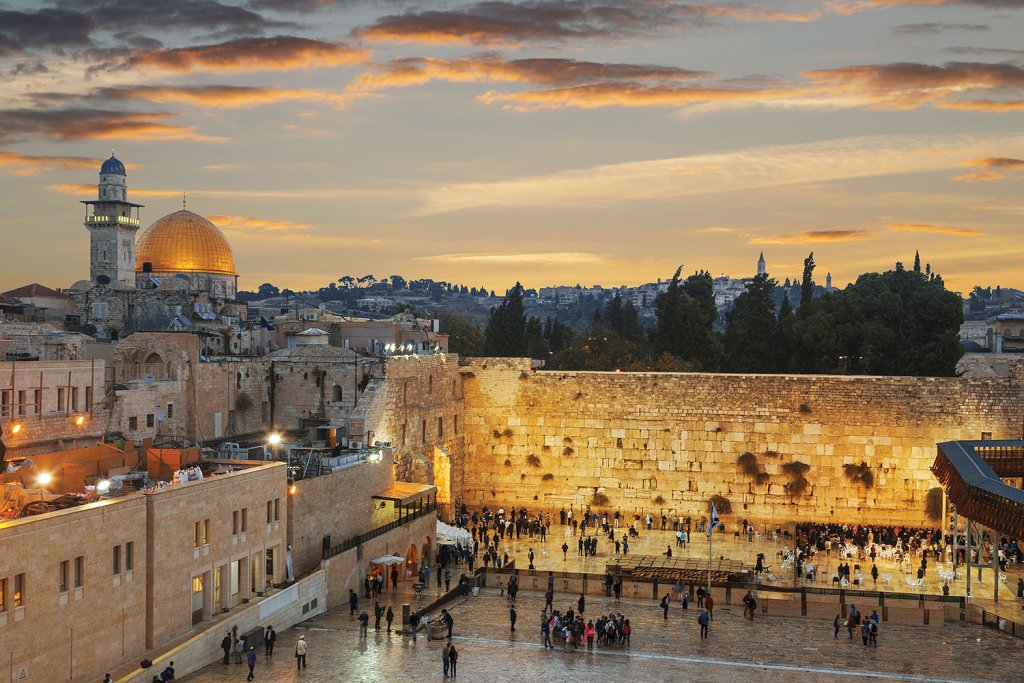
The Umarian Transition: A Historico-Political Analysis of the Seventh-Century Conquest of Jerusalem
Presented by Zia H Shah MD
The conquest of Jerusalem in 637-638 CE by the Rashidun Caliphate remains one of the most significant events in the history of the Near East, representing a paradigmatic shift in the administration of the Levant. Under the leadership of Caliph Umar ibn al-Khattab, the city—then known as Aelia—transitioned from Byzantine Christian hegemony to a nascent Islamic governance that institutionalized a revolutionary model of religious pluralism. This report provides a comprehensive analysis of the historical circumstances leading to the surrender of Jerusalem, the philosophical foundations of the Umarian administration, and the specific diplomatic instruments, such as the Al-Uhda al-Umariyya (Umar’s Assurance), that guaranteed the rights of the “People of the Book.” Central to this examination is the conduct of Caliph Umar himself, whose refusal to pray within the Church of the Holy Sepulcher, personal involvement in the purification of the Temple Mount, and the readmission of the Jewish population after half a millennium of exclusion, established a legacy of coexistence previously unknown in the late antique world. By contrasting the exclusionary policies of the Byzantine Empire with the inclusive mandates of the Rashidun Caliphate, this study elucidates how the Umarian transition reshaped the religious and social fabric of Jerusalem, creating a model of interfaith harmony that would serve as a benchmark for subsequent centuries of Islamic rule.
The Geopolitical Crucible of the Seventh Century
To understand the fall of Jerusalem to the Rashidun armies, one must first examine the systemic exhaustion of the two great powers of Late Antiquity: the Byzantine (Eastern Roman) and Sassanid (Persian) Empires. For the better part of the late sixth and early seventh centuries, these two titans were locked in a series of “Last Great Wars” that decimated the economic and demographic resources of the Levant, Mesopotamia, and Egypt. In 614 CE, the Sassanid King Chosroes II captured Jerusalem, an event marked by the wholesale destruction of churches and the seizure of the True Cross, which was carried off to Ctesiphon. The Jewish population, who had suffered under Byzantine oppression, initially allied with the Persians, but this alliance was short-lived, and the city fell into a state of neglect.
The Byzantine Emperor Heraclius launched a miraculous counter-offensive, eventually defeating the Sassanids and returning the True Cross to Jerusalem in 628 CE. However, this restoration was accompanied by a harsh program of religious uniformity. Heraclius sought to consolidate the empire by enforcing Chalcedonian Christianity, which led to the severe persecution of Monophysite (Jacobite, Coptic, and Armenian) sects and the renewed expulsion and massacre of Jews. The fiscal burden of these wars necessitated heavy taxation of the Levantine provinces, alienating the Semitic-speaking populations from the Greek-speaking imperial center in Constantinople.
The Rise of the Rashidun and the Collapse of Byzantine Syria
Following the death of the Prophet Muhammad in 632 CE, the first Caliph, Abu Bakr, stabilized the Arabian Peninsula during the Ridda Wars and launched the initial incursions into the Palestinian and Syrian frontiers. Under the second Caliph, Umar ibn al-Khattab, these incursions transformed into a full-scale conquest. The decisive turning point occurred at the Battle of Yarmuk in August 636 CE, where the Muslim forces, led by Khalid ibn al-Walid, utilized the desert terrain and superior mobility to destroy the Byzantine field army.
The defeat at Yarmuk effectively shattered Byzantine military presence in the Levant. Heraclius, realizing the province was lost, reportedly retreated to Constantinople with the lament, “Farewell, O Syria, what a good country this is for the enemy!”. Major urban centers like Damascus, Homs, and Baalbek fell in rapid succession, often through negotiated surrenders that offered the local populace better terms than the Byzantine administration. Jerusalem, however, remained a formidable prize, protected by its massive walls and the religious resolve of its Patriarch, Sophronius.
Strategic Overview of the Levantine Campaigns (634–638 CE)
The following table summarizes the primary military engagements and diplomatic transitions leading up to the siege of Jerusalem.
| Year (CE) | Event | Strategic Significance | Result |
| 629 | Battle of Mu’ta | First Muslim-Byzantine encounter; tactical withdrawal. | Byzantine Victory |
| 634 | Battle of Ajnadayn | First major clash during Abu Bakr’s reign. | Rashidun Victory |
| 636 | Battle of Yarmuk | Decisive collapse of Byzantine imperial power in Syria. | Rashidun Victory |
| 636 (Nov) | Siege of Jerusalem | Arrival of Muslim forces under Amr ibn al-As and Abu Ubaidah. | Prolonged Siege |
| 637/638 | Fall of Jerusalem | Surrender of Sophronius to Caliph Umar personally. | Negotiated Transfer |
The Siege of Aelia and the Diplomacy of Sophronius
By November 636 CE, the Rashidun army, commanded by Amr ibn al-As and later reinforced by Abu Ubaidah ibn al-Jarrah, surrounded the city of Jerusalem. The city, which Muslims called Bayt al-Maqdis or Aelia (reflecting the Roman name Aelia Capitolina), was of immense spiritual importance to the conquerors. It had served as the first Qibla (direction of prayer) for the Muslim community for eighteen months and was the site of the Prophet’s Night Journey (Isra and Mi’raj).
The siege lasted for several months—estimates range from four to six—but it was characterized by a relative lack of violence. The Muslim leadership preferred a bloodless surrender, adhering to the ethical guidelines established by the Prophet regarding the sanctity of Jerusalem and the treatment of civilians. Inside the city, Patriarch Sophronius, a sophisticated theologian and astute diplomat, realized that no imperial relief was coming. He observed the conduct of the Muslim forces, who maintained their discipline and did not launch the kind of destructive assaults common in the era’s warfare.
The Condition of the Caliph’s Presence
Sophronius eventually offered to surrender the city on the condition that he hand over the keys and sign the treaty only with the Caliph himself. This was an extraordinary request. Sophronius likely believed that a treaty signed by the highest authority in the Islamic state would carry greater weight and provide more durable protections for the Christian holy sites and the city’s inhabitants. Furthermore, the Patriarch may have been influenced by local prophecies or traditions suggesting that a humble conqueror from the desert would eventually take the city.
When Abu Ubaidah wrote to Umar in Medina to convey this condition, the Caliph consulted with his senior advisors. Ali ibn Abi Talib encouraged Umar to make the journey, arguing that the religious and strategic value of Jerusalem justified the trip. Umar’s subsequent departure for Jerusalem marked a rare occasion where a reigning Caliph left the capital to accept a surrender in person, underscoring the city’s unique status in the Islamic worldview.
The Philosophy of Simplicity: Umar’s Entry into Jerusalem
The journey of Umar ibn al-Khattab from Medina to Jerusalem has been preserved in historical chronicles as a masterclass in humility and the rejection of imperial pomp. Traveling with only one servant and a single camel, the Caliph insisted on sharing the mount. They established a rotation: for one-third of the journey, Umar would ride; for another third, the servant would ride; and for the final third, both would walk alongside the camel to let it rest.
When the pair reached the outskirts of Jerusalem, it reportedly coincided with the servant’s turn to ride. Umar, the leader of a state that had just humbled the two greatest empires of the world, walked on foot, leading the camel by its reins, his garments stained with the dust of the desert and mended in several places. This image of the “Caliph in rags” stood in stark contrast to the Byzantine and Sassanid traditions of absolute monarchy, where rulers were seldom seen and always appeared in jewels and silk.
The Meeting of Two Worlds
As Umar approached the city, he was met by his generals, who were dressed in fine silks they had acquired from the spoils of the Syrian campaign. Umar was reportedly incensed by this display of luxury, rebuking them for abandoning the ascetic discipline that had defined the early Muslim community. He insisted that their strength came from their faith and their justice, not their external appearances.
Patriarch Sophronius, watching from the city walls or waiting at the gates, was astonished. He saw a man who was indistinguishable from his servant, dressed in a simple tunic mended with seventeen patches. Sophronius reportedly remarked that the city’s surrender was inevitable because these were “a people who love death as we love life” and whose leader lived as a servant. This psychological victory established the foundation for the subsequent negotiations, as the local Christian leadership realized they were dealing with a ruler whose primary concern was not wealth or personal glory, but the implementation of a divine mandate.
The Uhda al-Umariyya: A Charter of Pluralism
The surrender of Jerusalem was formalized through the Uhda al-Umariyya, or the “Covenant of Umar”. This document is widely regarded by historians and legal scholars as one of the first and most significant formal guarantees of religious freedom in history. Unlike previous treaties of the era, which often mandated the conversion of the conquered or the confiscation of their temples, the Umarian Covenant recognized the inherent right of the “People of the Book” to maintain their faith, property, and community structures.
Key Provisions of the Covenant
The text, as recorded by the historian al-Tabari (though he wrote centuries later, he drew upon earlier accounts), provides a detailed list of the protections granted to the inhabitants of Aelia. The core of the agreement included:
- Security of Person and Property: The lives and possessions of all residents were declared inviolable.
- Protection of Religious Sites: Churches, monasteries, and crosses were guaranteed safety from destruction, occupation, or conversion into mosques.
- No Compulsion in Religion: The inhabitants were not to be forcibly converted to Islam or harmed in any way for their beliefs.
- Autonomy for Different Sects: The covenant extended these protections to various Christian denominations, including those previously persecuted by the Byzantines, such as the Monophysites.
| Provision | Detail | Source Basis |
| Life & Property | Safety for “themselves, their property, their churches, and their crosses” | |
| Religious Sites | “Churches will not be inhabited [by Muslims] and will not be destroyed” | |
| Religious Freedom | “They will not be forcibly converted” | |
| Jizya Obligation | “Must pay the poll tax like the people of the [other] cities” | |
| Freedom of Movement | Safe passage for those who wished to leave with the Byzantines |
The Paradox of the Jewish Clause
One of the most debated aspects of the Tabari version of the Uhda is the inclusion of the sentence: “No Jew will live with them in Jerusalem”. This clause is a significant historical anomaly because Umar’s actual conduct immediately following the surrender involved the active readmission of Jews to the city. Scholars suggest several theories for this discrepancy. Some argue that Sophronius, representing the Byzantine order that had banned Jews for 500 years, insisted on the clause’s inclusion, but Umar—recognizing the Quranic mandate of pluralism—either ignored it in practice or interpreted it as applying only to the immediate period of the military transfer. Others suggest that the clause may be a later interpolation reflecting the sectarian tensions of the ninth century, when the Tabari chronicle was compiled. Regardless of the text’s specific phrasing, the historical consensus is that the Umarian administration reversed the exclusionary policy of Rome.
The Sacred Topography: The Church of the Holy Sepulcher
Upon entering the city, Umar was taken on a tour of the sacred sites by Patriarch Sophronius. The centerpiece of this tour was the Church of the Holy Sepulcher, built in the fourth century by Constantine the Great over the site believed to be the tomb of Jesus. This site represented the pinnacle of Christian devotion, and Sophronius was undoubtedly anxious about its fate under Muslim rule.
The moment of greatest symbolic tension occurred when the time for the Zuhr (afternoon) prayer arrived while the Caliph was inside the church. Sophronius, in a gesture of profound hospitality and recognition of the common monotheistic heritage of the two faiths, invited Umar to pray inside the cathedral.
The Act of Preservation through Refusal
Umar’s response was a defining moment in the history of religious tolerance. He declined the invitation. He explained to the Patriarch: “If I were to pray here, future generations of Muslims would say ‘Umar prayed here’ and they would use it as a pretext to take this church from you and turn it into a mosque”.
To safeguard the church’s status as a Christian site in perpetuity, Umar stepped outside and offered his prayers on the eastern steps of the courtyard. This decision was not an act of religious segregation but a deliberate legal maneuver to protect the rights of the Christian community under Islamic law. By refusing to establish an Islamic presence within the church, he effectively “saved it for the Christians” by removing any future legal justification for its conversion. The spot where he eventually prayed became the site of the first mosque in Jerusalem, which exists to this day as the Mosque of Omar, situated directly opposite the Church of the Holy Sepulcher.
The Restoration of the Temple Mount (Haram al-Sharif)
After ensuring the safety of the Christian churches, Umar asked to be shown the site of the Temple of Solomon—the Haram al-Sharif or Temple Mount. This site was of dual significance: it was the location of the Jewish Temple and the place from which the Prophet Muhammad had ascended to heaven during the Night Journey.
However, the Byzantines, who viewed the destruction of the Temple in 70 CE as a fulfillment of prophecy and a sign of their own religious supremacy, had intentionally treated the site with contempt. For centuries, the Temple Mount had been used as the city’s primary garbage dump. Refuse, rotting corpses, and household waste had been piled high over the site of the Second Temple to offend the Jewish population and to demonstrate that the old covenant had been superseded.
The Caliph’s Cloak and the Purification of the Rock
Umar was reportedly horrified by the state of the holy site. He immediately began the task of purification. In a move that shocked both the Byzantine onlookers and his own army, the Caliph—one of the most powerful men in the world—dropped to his knees and began clearing the trash with his own hands. He used his cloak to carry away the debris, exclaiming at the lack of respect shown to a place venerated by the prophets.
His companions and the soldiers of the Rashidun army, seeing their leader engaged in manual labor, rushed to join him. They were assisted by members of the local Jewish community, who were overwhelmed to see their sacred site being restored after centuries of desecration. This collective effort cleared the Mount and eventually revealed the Sakhra (the Foundation Stone).
The Dialogue with Ka’b al-Ahbar and the Founding of the Mosque
Once the site was cleared, Umar sought advice on where to build a mosque on the platform. He turned to Ka’b al-Ahbar, a former rabbi who had converted to Islam and served as one of Umar’s most trusted advisors. Ka’b suggested building the mosque to the north of the Rock, so that when Muslims prayed, they would face both the Foundation Stone and the Kaaba in Mecca.
Umar, ever vigilant about maintaining the distinct identity of Islamic practice and avoiding the “Judaization” of the faith, famously rebuked him: “O Abu Ishaq, you have emulated Judaism! The best mosques are in the front [towards Mecca]”. Instead, Umar ordered the construction of a simple, wooden mosque at the southern end of the mount—the site that would later be rebuilt as the Al-Aqsa Mosque. This decision ensured that the Foundation Stone remained a respected relic but was not integrated into the primary ritual of the prayer direction, preserving the theological boundaries between the faiths while honoring their shared history.
The Readmission of the Jewish Population
The most significant reversal of imperial policy under Umar was the lifting of the 500-year ban on Jewish residency in Jerusalem. Since the destruction of the city by Titus in 70 CE and its subsequent transformation into Aelia Capitolina by Hadrian in 136 CE, Jews had been forbidden from entering the city on pain of death. This ban had been strictly maintained by the Byzantine Empire for three centuries, with the exception of the brief Persian occupation in 614 CE.
Umar’s policy of pluralism recognized that a city of such spiritual importance could not be truly at peace while excluding one of its foundational faith communities. He saw the Byzantine policy as a historical injustice that contradicted the Islamic mandate to protect the “People of the Book”.
The Settlement of the Seventy Families
Historical records, supported by documents found in the Cairo Geniza, indicate that Umar initially allowed seventy Jewish families to return to Jerusalem. These families were brought from Tiberias and the surrounding Galilee region. After consulting with their leaders, Umar granted them a residential quarter in the southern part of the city, near the Silwan spring and the gates of the Temple Mount.
This resettlement was not merely a matter of residency; the Jewish community was integrated into the maintenance and protection of the newly purified Temple Mount. Jewish workers were tasked with cleaning the site, guarding the mosques, and producing glass and wicks for the oil lamps. In recognition of this service, Umar granted them significant privileges, including exemptions from the jizya tax for themselves and their descendants. This marked the beginning of a vibrant Jewish presence in the city that would flourish for centuries under Islamic rule until the arrival of the Crusaders in 1099 CE.
Religious Freedom and the Status of the Monophysites
One of the less-discussed but equally vital aspects of the Umarian transition was the restoration of religious freedom for non-Chalcedonian Christian sects. Under Byzantine rule, the Melkite (Orthodox) Church was the state religion, and emperors like Heraclius used the state’s power to enforce theological uniformity. Monophysite Christians, including the Copts, Jacobites, and Armenians, were viewed as heretics and subjected to systematic persecution, torture, and the seizure of their properties.
The arrival of the Rashidun Caliphate fundamentally changed this dynamic. The Uhda al-Umariyya applied to all inhabitants, not just the Melkite hierarchy. For the first time in centuries, the “heterodox” Christian sects were granted the right to maintain their own churches and practice their specific rites without fear of imperial interference. In many cases, these communities welcomed the Muslim conquest as a liberation from Byzantine tyranny.
The Impact of Islamic Rule on Christian Denominations
The following table contrasts the treatment of Christian sects under Byzantine and Umarian Rashidun rule.
| Feature | Byzantine Imperial Rule (Pre-638 CE) | Umarian Rashidun Rule (Post-638 CE) |
| State Religion | Chalcedonian (Melkite) Orthodoxy | Islam (Administration) |
| Treatment of Heterodoxy | Persecution, confiscation of property. | Protection under Dhimmi status. |
| Legal Autonomy | Centralized under the Byzantine Code | Communal autonomy for religious courts. |
| Church Property | Melkite monopoly on major sites | Recognition of diverse denominational rights. |
| Forced Conversion | Common against non-conformists and Jews. | Strictly prohibited by the Covenant. |
The Jizya System: A Social Contract for Protection
The implementation of the jizya tax under Umar’s administration was a cornerstone of the new social contract. While often misunderstood in modern discourse as a “tax on faith,” in the seventh century it functioned as a substitute for military service and a guarantee of the state’s obligation to protect its non-Muslim subjects.
Umar was reportedly very scrupulous about the fair collection of this tax. Historical anecdotes describe him rebuking tax collectors who were too aggressive or who burdened the poor. He established the principle that the jizya should only be taken from the “surplus and lawful” wealth of the people, and that those who were elderly, disabled, or impoverished should be exempt. In some instances, Umar even ordered that the Bayt al-Mal (the public treasury) pay a stipend to elderly Jews and Christians to ensure they did not fall into poverty. This level of social welfare for non-Muslim subjects was unprecedented in an era where conquered peoples were typically enslaved or subjected to predatory taxation.
Historiographical Debates: The Authentic Umar vs. Later Accretions
A significant portion of modern scholarship on this period focuses on the authenticity of the “Pact of Umar” (Shurut al-Umariyya). It is essential to distinguish between the original 638 CE Uhda (Covenant), which was a brief and highly protective treaty, and the much longer, more restrictive “Pact” found in later medieval legal texts.
The later “Pact” contains conditions that reflect a much more established and rigid Islamic state, such as prohibitions on dhimmis riding horses, wearing certain colors, or building new houses of worship. Scholars like Bernard Lewis and Moshe Gil argue that these restrictive clauses were likely added during the Abbasid period (8th-9th centuries) to reflect the political anxieties of that time, and were retroactively attributed to the second Caliph to give them legal weight. The historical Umar, as seen in the earliest chronicles and evidenced by his actions in Jerusalem, was a ruler defined by “kindly consideration” and a commitment to the “Assurance of Safety” (Aman) rather than humiliation.
Thematic Epilogue: The Birth of a Shared Sanctity
The Umarian transition of Jerusalem represents more than just a military conquest; it was the birth of a model of “shared sanctity” that would define the city’s identity for over a thousand years. In a world characterized by zero-sum religious conflict, Umar ibn al-Khattab introduced a system where the triumph of one faith did not necessitate the eradication of others.
The legacy of Umar’s conduct—his refusal to pray in the Church of the Holy Sepulcher to preserve its Christian character, his physical labor in purifying the Temple Mount, and his readmission of the Jewish community—established a foundational precedent for Islamic governance. It demonstrated that pluralism was not merely a matter of political expediency but a theological imperative rooted in the Quranic command to uphold justice and fulfill contracts.
This Umarian model transformed Jerusalem from a site of exclusive imperial triumph into a city of multiple religious layers. It created a social framework where Muslims, Christians, and Jews could live, worship, and interact within a structured system of mutual respect and legal autonomy. While subsequent centuries would bring periods of tension and conflict, the standard set by Umar in 638 CE remained the moral and legal benchmark to which all later rulers were compared. As Jerusalem continues to be a city of profound global significance, the example of Umar’s peaceful entry and his commitment to the rights of the “other” remains a poignant reminder of the possibility of coexistence through humility, justice, and the scrupulous protection of the sacred.

 The Glorious Quran and Science
Leave a comment