
The Linguistic-Genomic Thesis: A Multidisciplinary Commentary on Quranic Revelation and the Architecture of Guided Evolution
Presented by Zia H Shah MD
Audio teaser: Arabic Roots and the DNA Code
Abstract
The origin of human language and the biological complexity of the species represent two of the most significant intellectual frontiers in contemporary science, philosophy, and theology. This research report evaluates the structural and ontological parallels between the biological mechanisms of the human genome and the linguistic architecture of the Arabic language, proposing a “Linguistic-Genomic Thesis” grounded in the framework of Guided Evolution. Central to this analysis is a multidisciplinary commentary on Quranic verses 2:30-33 and 55:3-4, which describe the divine bestowal of the names and the capacity for expression (bayan) upon humanity as the defining markers of the Adamic state. By examining the trilateral root system (jadhr) of Classical Arabic—a non-concatenative morphological structure characterized by extreme mathematical precision and semantic stability—the analysis argues that such organization reveals a prior divine consciousness rather than a product of random, blind processes. This architectural systematicity mirrors the triplet codon system of DNA, where a finite set of combinatorial units generates vast biological and semantic complexity. Furthermore, the report explores the historical development of Arabic grammar by early Muslim scholars not as an invention, but as a systematic uncovering of a pre-existing structural order that facilitated the preservation of the Quranic text and reveals an All-Knowing Teacher. The findings suggest that language serves as one of the most compelling proofs for Guided Evolution, pointing toward a “God of the Mechanisms” who orchestrated the transition from simple signaling to the recursive, abstract faculty of human speech.
The Theological Foundation: Human Vicegerency and the Primacy of Knowledge
The Quranic narrative regarding the emergence of the first human, Adam, is fundamentally a discourse on the acquisition of knowledge through the medium of language. In the verses of Surah Al-Baqarah (2:30-33), the text depicts a celestial council where the Creator announces the appointment of a Khalifa (vicegerent) on Earth. The response of the angels is one of profound existential concern; they observe the potential for disorder and bloodshed inherent in a being endowed with free will and material needs. The divine rebuttal to this angelic skepticism is not a denial of human fallibility, but a demonstration of a unique human capacity that transcends the ontological limitations of the angels: the capacity for naming and categorization.
The pivotal verse, “And He taught Adam the names of all things” (2:31), establishes language as the primary instrument of human vicegerency. Traditional exegesis, particularly the narrations of Ibn Abbas, suggests that these “names” were not merely labels but represented the quintessential properties, characteristics, and ontological definitions of all existents—from the mundane tools of daily life to the celestial bodies. This teaching represents the divine bestowal of the capacity for abstraction, symbol grounding, and conceptual mapping, which are the prerequisites for any form of advanced civilization or scientific inquiry.
The failure of the angels to identify the objects presented to them highlights that their knowledge is restricted to the direct commands they receive, whereas the human mind was gifted with a generative linguistic software. Adam’s superiority was established through this faculty, which allowed him to “inform” the angels of the names, thereby revealing a depth of knowledge that resided within the human potential by divine grace. This scriptural event signifies that the defining characteristic of humanity is not merely biological survival, but the possession of a cognitive blueprint for language that was revealed “piece meal” or incrementally to the first human community.
| Quranic Verse | Key Linguistic/Theological Concept | Implied Cognitive Capacity |
| 2:30 | Khalifa (Vicegerent) | Moral agency, planetary stewardship, and judicial authority. |
| 2:31 | ‘Allama (He taught) | The transmission of a pre-existing symbolic system to the human mind. |
| 2:31 | Al-Asma’a Kullaha (All the names) | Universal categorization, ontological mapping, and semantic breadth. |
| 2:32 | La ‘ilma lana (No knowledge for us) | Recognition of the limits of direct angelic vs. generative human knowledge. |
| 2:33 | Anbi’hum (Inform them) | Recursive communication, knowledge sharing, and social teaching. |
The theological implication is that the “names” were not invented by Adam in a vacuum but were taught to him, implying a prior divine consciousness that structured the very categories of reality. While the Quran does not specify the exact timeframe or the speed of this initial revelation, it emphasizes the results: a being capable of speech, reason, and moral discernment.
The Gift of Articulate Speech and the Cosmic Balance
In Surah Ar-Rahman (55:3-4), the sequence of divine favors begins with the creation of man and immediately proceeds to the teaching of bayan (eloquence or articulate speech). This term bayan encompasses both the internal capacity for reasoning and the external ability to communicate one’s thoughts and intentions with clarity. It is the distinctive quality that separates humans from the rest of the animal kingdom, serving as an express symbol of an intelligent being endowed with freedom.
The context of Surah Ar-Rahman is one of “precise calculation” (husban) and “balance” (mizan). The sun, the moon, and the stars follow laws that maintain the equilibrium of the cosmos; similarly, the gift of bayan is presented as a system that allows humans to recognize and maintain this balance in their own social and moral lives. The theological commentary suggests that the mode of instruction for humans—through messengers and books—is a direct result of being taught bayan. Creatures that lack articulate speech are guided by innate instincts, whereas the human being is educated through a sophisticated linguistic medium that mirrors the mathematical order of the universe.
This “mizan” of language is particularly manifest in the structure of the Arabic language itself. The organization of the Arabic lexicon, with its roots and patterns, functions as a linguistic software that resists the entropy and degradation common to evolved languages. It is a system characterized by “precognition” and “prior consciousness,” where every word is tethered to a meaningful core, suggesting that the Architect of the tongue is the same as the Architect of the stars.
The Scientific Crisis: The Continuity Paradox and Language Origins
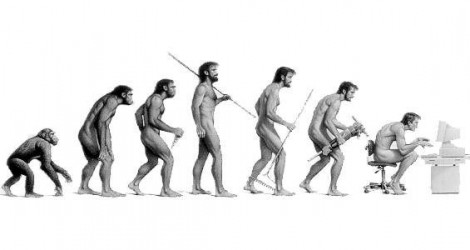
From a strictly secular evolutionary perspective, the origin of human language remains the most significant unresolved challenge in biology. Secular models rely on a narrative of blind, incremental development, assuming that human speech evolved from simpler animal vocalizations through random mutations and natural selection. However, modern linguistic and biological evidence complicates this narrative, presenting what researchers term the “Continuity Paradox”.
The Continuity Paradox refers to the total absence of an identifiable biological or evolutionary bridge between animal communication systems and the recursive, abstract faculty of human language. While bees, birds, and primates possess complex signaling methods, these systems provide virtually no relevant parallels to the underlying biological capacity for human speech. Animal communication is largely linear, context-bound, and non-recursive, whereas human language allows for the limitless production of information and the expression of abstract, displaced concepts (past, future, and the metaphysical).
| Feature | Animal Signaling | Human Language |
| Generative Productivity | Fixed set of signals; no novelty. | Infinite combinations from finite units. |
| Recursion | Absent; signals do not nest. | Present; allows for complex hierarchy. |
| Symbolic Abstraction | Limited to immediate stimuli. | Unlimited; words as arbitrary symbols. |
| Structural Regularity | Low; mostly instinctual. | High; governed by rigid grammatical code. |
| Evolutionary Evidence | Poverty of evidence for transition. | Sudden appearance in the human lineage. |
The “poverty of evidence” in the fossil and archaeological records further undermines the secular model of blind, incremental evolution. Rather than showing a slow progression toward higher linguistic organization, empirical data often reveals “devolution”—the loss of structural complexity in languages over time—suggesting that the initial state of human language was one of high order and complexity. This disconnect suggests that language did not emerge through random drift but as a “cognitive singularity” or a “purposeful leap” divinely orchestrated within the human lineage.
The Linguistic-Genomic Thesis: DNA Codons and Arabic Roots
A cornerstone of the argument for Guided Evolution, as proposed by Zia H Shah MD, is the profound structural parallel between the biological code of life and the linguistic code of the Arabic language. This “Linguistic-Genomic Thesis” posits that the same divine Designer who authored the genomic hardware of life also revealed the linguistic software of the Arabic tongue.
Structural Parallels and Information Encoding
The biological substrate of life is governed by a four-lettered chemical code (A, T, G, C) in the DNA molecule. These letters are read in sequences of three, known as “triplet codons,” which encode the twenty amino acids that form the building blocks of all proteins. This three-letter system is mathematically optimal for generating the necessary complexity of life.
Remarkably, the Arabic language is structurally unique due to its triconsonantal root system, known as the jadhr. Nearly the entire Arabic lexicon is derived from a finite set of three-letter cores that encode an abstract semantic essence. From these roots, an expansive variety of words are derived through the application of vocalic patterns (awzān) and morphemic increments, creating a semantic network where every noun, verb, and adjective is logically connected to a central thematic anchor.
| Property | Genomic Hardware (DNA) | Linguistic Software (Arabic) |
| Alphabet Size | 4 Nucleotides | 28 Consonants |
| Primary Code Unit | Triplet Codon (3 letters) | Trilateral Root (3 letters) |
| Generative Standard | Fixed mathematical combinations | Morphological “Forms” (I-X) |
| Semantic Integrity | Conserved genetic function | Conserved root meaning |
| Information Density | High; maximal output/minimal input | High; 77k words from ∼2k roots |
| Regulatory Mechanism | Gene promoters and switches | Vowel patterns and prefixes |
This parallel is interpreted not as an accident but as a “non-accidental” design principle. Both systems exhibit an economy of design and systematic generativity, where small combinatorial units produce vast, functional complexity. Just as different gene regulatory signals produce different proteins from the same DNA template, different vowel patterns applied to the same trilateral root produce families of related but distinct words.
The Mathematical Logic of Derivation
The process of Arabic derivation can be modeled as a system of linear functions where the trilateral root serves as the constant and the added morphological patterns act as independent variables. This follows a consistent mathematical standard:
f(x)=ax+b
In this formula, x represents the root consonants (the semantic constant), while a and b represent the vocalic templates and additional morphemes that determine the word’s functional application. This degree of algebraic organization is not seen in any other natural language and strongly resembles “engineered code” designed by a prior consciousness. The “intersection law” of set theory reveals that every word derived from a specific root belongs to a set defined by those core consonants, ensuring that meanings remain tethered to their ontological anchors despite thousands of years of linguistic change.
Morphological Productivity and Semantic Versatility in the Quran
The richness and complexity of the Arabic language are best demonstrated through a statistical analysis of its productivity within the Quranic corpus. Research evaluating the relationship between the approximately 78,000 words of the Quran and its foundational matrix of roughly 2,000 roots reveals a system optimized for communicative efficiency and semantic preservation.
Statistical Landscape of the Quranic Corpus
The total number of words in the Quran is consistently tallied between 77,429 and 77,915. These words are generated from a compact foundation of only 1,850 to 2,000 unique trilateral roots. This discrepancy highlights an extraordinary degree of lexical efficiency, where a small set of roots generates the entire meaning of a diverse and complex sacred text.
| Statistical Category | Estimated Count | Source Reference |
| Total Quranic Words | 77,797 – 77,880 | |
| Unique Trilateral Roots | ∼2,000 | |
| Unique Lexical Entries | 5,277 – 18,994 | |
| Average Word Length | 4.23 – 4.25 letters | |
| Potential Pure Roots | 283=21,952 |
A critical claim regarding this architecture is the “economy of revelation”: approximately 125 words cover 50% of the corpus, and 500 high-frequency words account for nearly 75% of the total text. This optimization maximizes accessibility for the learner without sacrificing the depth of the message. The consistency in average word length and phonetic rhythm aids in “cognitive chunking,” where the brain identifies the root consonants first and then fits them into a known pattern, facilitating the memorization of the entire text by millions of non-native speakers (Huffaz).
Case Study: The Root ʿayn-nūn-qāf ({ʿ-n-q})
The semantic versatility of the trilateral root is clearly seen in the root {ʿ-n-q}, which is fundamentally associated with the “neck” (ʿunuq). In the Quran, this root appears nine times, primarily as a noun describing physical necks or symbolic shackles. However, the broader Arabic language reveals how this single semantic core generates a “new world” of verbs through different morphological forms :
- Form I (ʿanaqa): To seize by the neck or to hasten (a horse stretching its neck forward).
- Form III (ʿānaqa): To embrace or hug someone closely around the neck.
- Form VI (taʿānaqa): Reciprocal embracing between two or more people.
- Form VIII (iʿtanaqa): To metaphorically “embrace” a religion or an idea.
This degree of organization—where thousands of diverse meanings and parts of speech are systematically derived from a single anatomical anchor—serves as evidence that Arabic is a revealed language. The morphological cohesion prevents “semantic drift,” a common occurrence in evolved languages where words lose their logical connection to their roots over time. In Arabic, the semantic anchor remains intact, pointing toward a system designed for maximum communicative efficiency and theological precision.
The Prolific Roots and Verbal Frequency
The statistical analysis of the Quranic verbal system highlights the importance of specific high-frequency roots. For instance, the triliteral root qāf-wāw-lām ({q-w-l}), associated with “saying” or “speaking,” occurs 1,722 times in the Quran in six derived forms, predominantly as the Form I verb qāla. Another example is the Form X verb is’taṭāʿa (“to be able” or “to be capable”), which appears 42 times, illustrating the sophisticated nature of the augmented verb forms in conveying nuanced agency and potentiality.
| Root/Verb Form | Frequency in Quran | Semantic Core |
| {q-w-l} (qāla) | 1,722 times | Saying, speaking, communication. |
| {k-w-n} (kāna) | High frequency | Being, existence, becoming. |
| Form X (istaṭāʿa) | 42 times | Capability, seeking ability. |
| Form II (‘allama) | Significant frequency | Teaching, causing to know. |
The “Enhanced Verb System” allows a single root to be transformed through ten standard augmented forms to add nuanced layers of meaning, such as intensity, causation, reciprocity, or request. Form I (‘Alima – to know) becomes Form II (‘Allama – to teach), reflecting the transition from individual possession of knowledge to the causative act of instruction. This systematicity allows for nuanced theological concepts to be explained with unparalleled clarity, reinforcing the Quranic claim that it is a “clear” (mubin) book.
Guided Evolution: A Synthesis of Science and Revelation
The concept of Guided Evolution represents a “middle path” in contemporary discourse, reconciling the scientific consensus on common ancestry with the core tenets of monotheism. Championed by Zia H Shah MD, this model posits that evolution is the “method by which a wise Creator unfolds life’s tapestry”—gradually, majestically, and with purposeful intent.
The Mechanism of Guidance
Rather than viewing natural selection as a blind, random process, Guided Evolution frames it as the “Habit of God” (Sunnat Allah), where the laws of nature act as instruments of divine will. Evidence for this guidance is found in the “molecular signature” of the Creator. For example, the presence of human endogenous retroviruses (HERVs) in the genome, which comprise roughly 8% of human DNA, is not viewed as “junk” but as vital components co-opted for human development.
Zia H Shah MD highlights that these ancient viral sequences have been repurposed for critical functions, such as the formation of the human placenta (via syncytin proteins) and the development of the human brain. Furthermore, the fusion of chromosome 2 in humans—a clear marker of common ancestry with other primates—is seen as an elegant mechanism of divine creativity rather than an accidental mutation. In this framework, scientific explanations of how life evolved are descriptions of how God works.
The Biological Grounding of Language
Language is positioned as the “primary sign” of this guided process. The transition from primate vocalization to the abstract symbolic faculty of humans required not just a larger brain, but a specific “linguistic software” designed to run on the biological “genomic hardware”. This software—the Arabic root system and its mathematical grid—functions as an information-encoding, generative code that processes meaning through algorithmic-like operations.
| Feature | Secular Evolution | Guided Evolution |
| Driving Force | Random mutation and blind selection. | Divine intent through natural mechanisms. |
| Language Origin | Accidental byproduct of brain growth. | Revealed software for the human community. |
| Complexity | Emergent from chaos over time. | Engineered code with prior consciousness. |
| Molecular Markers | Scars of a blind past. | Signatures of a premeditated design. |
| Human Uniqueness | Difference in degree from animals. | Difference in kind via bayan (speech). |
The argument is that the complexity of the Arabic language, which became visible to the human community after the Quranic revelation, serves as a “fool proof argument” that it did not evolve randomly. The speed and exact timeframe of this linguistic bestowal are not mentioned in the Quran, allowing for a model where the capacity for language was unfolded incrementally and “piece meal” as humanity developed.
The Historical Revelation of the Divine Grid
The organization and systematic nature of the Arabic language were present at the moment of the Quran’s revelation, but their formal codification required the dedicated efforts of early Muslim scholars. This historical process was not the creation of a language but the scientific discovery of its internal rules and pre-existing architecture.
The Emergence of Arabic Grammar
The science of Arabic grammar (Nahwu) and morphology (Sarf) emerged in the 1st century of the Islamic calendar to preserve the structural purity of the language and to prevent the distortion of the Quranic text as Islam spread to non-Arab regions.
The movement began when the leader of the believers, Ali ibn Abi Talib (r.a.), commissioned his student Abu al-Aswad al-Du’ali to systemize the language’s rules. They recognized that the “pure, unadulterated language” of the Bedouins, which the Quran utilized, was a system of extreme precision that non-native speakers were beginning to mispronounce. Following them, scholars like Khalil ibn Ahmad compiled the first complete dictionary (Kitab al-‘Ayn) based on the trilateral root system, identifying the “mathematical grid” of the language.
The Persian scholar Sibawayh produced Al-Kitab, a definitive four-volume treatment of the language that is considered the “Big Bang” of Arabic scholarship. This codification revealed that Arabic was not just a collection of sounds but a “sophisticated linguistic software” characterized by:
- Systematic Codification: Rules that could be applied across thousands of roots.
- Generative Depth: The ability to synthesize complex scientific and philosophical ideas using finite roots.
- Resistance to Entropy: A structure that remained stable for over 1,400 years, preserving the semantic core of the revelation.
Nomenclature and Consensus as Technology
Across chemistry, biology, and psychiatry, “nomenclature” is a collectively governed technology—a system of organized naming that experts argue over and standardize. Zia H Shah MD observes that while human nomenclature is a product of social consensus, the root-and-pattern morphology of Arabic offers a different lens: it is an “organized naming” system that appears to be “engineered” from its inception.
The debate in medieval Islamic scholarship between Tawqīf (divine bestowal) and Iṣṭilāḥ (human convention) is resolved through a layered approach: while humans build conventions over generations, the “cognitive blueprint” for language—abstraction, symbol grounding, and the trilateral grid—was ultimately bestowed by the All-Knowing Creator. This bestowal provided the first human community with the necessary tools to navigate the “Names” and fulfill their role as vicegerents.
Philosophical and Theological Implications of the Arabic Root System
The architectural systematicity of Arabic has profound implications for how we understand revelation and the nature of God. The “Arabic Root Architecture and the Case for Premeditated Revelation” argues that the language was providentially designed before the Quran descended into it. The language’s suitability for encoding multivalent divine meaning is itself evidence of “forward planning” by God.
Premeditated Revelation and Semantic Depth
In many natural languages, meaning is largely arbitrary and subject to the whims of cultural drift. In Arabic, however, the meaning is “tethered” to the root. This allows the Quran to maximize “accessibility without sacrificing depth,” as high-frequency words constitute the majority of the text while their roots allow for endless theological exploration.
For example, the root {k-f-r} originally meant “to cover” (like a farmer burying seeds), but the Quran repurposes it so that the kāfir (disbeliever) is one who “covers” or “conceals” the innate truth of existence. This semantic continuity between physical and spiritual realities reveals a “prior consciousness” that structured the language to be a vehicle for divine signs.
The “Two Books” Paradigm
The synthesis of linguistics and genomics leads to a “Two Books” paradigm, where the harmony of Scripture (the Quran) and Nature (science) is recognized. Scientific inquiry is viewed as a form of exegesis—a systematic “reading” of the divine signs present in the structure of an atom, the expansion of the universe, or the complexity of the genetic code. In this view, the Arabic language is not merely a vehicle for communication but a primary exhibit of divine guidance, optimized for human cognition and resistant to time.
| Dimension | Sign in Nature | Sign in Scripture |
| Information | DNA triplet code (biological) | Arabic trilateral root (linguistic) |
| Guidance | Natural laws and evolution | Revelation and grammar |
| Structure | Cosmic balance (mizan) | Moral and linguistic balance |
| Origin | Common ancestry (Guided) | Bestowal of bayan and names |
This paradigm avoids the “God of the Gaps” by asserting that the “God of the Mechanisms” is revealed through the very laws that science discovers. The systematic organization of the Quranic Arabic corpus—revealed through modern computational linguistics—becomes a modern “miracle” that speaks to a scientifically literate age, demonstrating that the scripture did not evolve randomly but was revealed by an All-Knowing Teacher.
Epilogue: The Thematic Synthesis of Word and World
The comprehensive analysis of Quranic verses 2:30-33 and 55:3-4, alongside the linguistic and genomic insights of Zia H Shah MD, reveals a universe where language and life are two manifestations of the same divine order. The bestowal of the “Names” upon Adam was not a superficial labeling exercise but the gift of a sophisticated cognitive software that allowed the first human community to bridge the gap between material existence and spiritual awareness.
This research highlights that language is indeed one of the best proofs for Guided Evolution. The organization, complexity, and richness of the Arabic language—characterized by a trilateral root system that mirrors the triplet codon architecture of DNA—provide a compelling argument against the sufficiency of random, blind processes to account for the human linguistic faculty. The mathematical regularity of Arabic morphology, codified by early Muslim scholars in their quest to understand the scripture, reveals a pre-existing “divine grid” that was revealed “piece meal” to humanity.
The “Continuity Paradox” and the “poverty of evidence” for secular models of language origin suggest that human speech was a “cognitive singularity”—a purposeful leap divinely orchestrated to enable the emergence of a being capable of receiving revelation. This revelation was not a sudden rupture in the natural order but a fulfillment of it, utilizing the “genomic hardware” prepared over millions of years through guided common ancestry to run the “linguistic software” of articulate speech.
Ultimately, the Quranic Arabic language serves as a “fool proof argument” for the reality of an All-Knowing Teacher. The statistics of its morphological productivity, the algebraic logic of its derivations, and the semantic versatility of its roots all point toward a prior consciousness that structurally structured the categories of our experience. As we recognize the “balance” in the stars and the “balance” in the tongue, we are brought closer to the realization that the Most Compassionate (Ar-Rahman) has indeed made the Quran easy to understand and remember for those who reflect upon its signs. The synthesis of word and world provides a unified vision of reality, where science and religion are not rivals but two necessary paths toward the same ultimate Truth.


 The Glorious Quran and Science
Leave a comment