
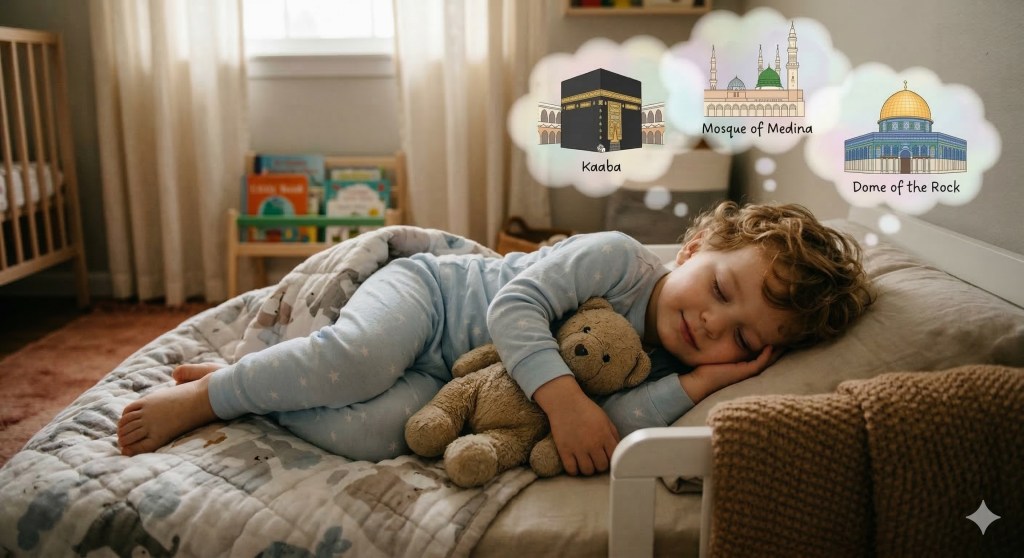

Sleep as a Whole-Person Regulator of Memory, Mental Health, Personality, Morality, and Spirituality
Presented by Zia H Shah MD
Abstract
Sleep is not merely “rest”; it is a set of biologically distinct brain states (wake, NREM, REM) that repeatedly reconfigure neural plasticity, affective regulation, stress physiology, and social cognition—processes that plausibly scale from next-day learning and mood to longer-horizon personality trajectories, moral behavior, and spiritual/meaning-making experiences. Mechanistically, converging human and animal evidence supports a central role for NREM slow oscillations, spindles, and hippocampal ripples in systems-level memory consolidation and selective remodeling of synapses, with causal leverage demonstrated by stimulation and targeted memory reactivation paradigms. REM sleep, meanwhile, appears especially relevant to affective recalibration and fear-extinction learning, consistent with human neuroimaging and translational fear-learning literatures (though effects are sometimes mixed and moderated by anxiety/trauma). Beyond cognition and mood, longitudinal cohort work links sleep difficulties to later changes in Big Five traits (e.g., steeper declines in conscientiousness/agreeableness/extraversion, and altered neuroticism trajectories), and another life-course cohort suggests adolescent sleep-onset problems predict elevated midlife neuroticism, supporting the idea that chronic sleep patterns can become “trait-shaping exposures.” Moral and prosocial capacities—empathy, helping, trust, moral awareness, and complex moral reasoning—show measurable decrements after sleep loss in laboratory, field, and quasi-experimental designs, including large-scale societal signals around daylight saving time. Finally, spirituality is the least settled domain scientifically, but emerging longitudinal dream/sleep work (including REM%-linked next-day “closeness-to-God” ratings), and cross-cultural evidence that religious/spiritual waking life strongly shapes dream content and interpretations of sleep phenomena (e.g., sleep paralysis) suggest that sleep is a culturally scaffolded theatre for meaning, moral narratives, and “the sacred.” Taken together, the evidence supports a strong claim about sleep’s holistic importance—while demanding epistemic humility about causality, mechanisms, and generalizability in the more distal outcomes (personality, morality, spirituality).
Executive summary
Sleep’s “major, holistic role” is easiest to defend when the claim is grounded in (a) stage-specific physiology, (b) causal interventions, and (c) longitudinal designs that show directionality over time. The current evidence base meets those standards most convincingly for learning/memory and mental health risk, and increasingly (but less definitively) for personality development and moral/prosocial functioning; spirituality remains emergent, culturally entangled, and methodologically heterogeneous.
First, NREM sleep (especially deeper NREM) provides a biologically plausible and empirically supported substrate for memory consolidation through the coordinated coupling of slow oscillations, thalamocortical spindles, and hippocampal ripples—an interaction repeatedly implicated in transferring and reorganizing new memories across hippocampal–neocortical systems. Causal leverage comes from slow-oscillation stimulation studies and targeted memory reactivation during NREM/SWS, which can selectively enhance later recall and reveal mechanistic intermediates (e.g., spindles mediating selective gains).
Second, sleep is a clinically meaningful lever for emotional regulation and psychiatric prevention. Meta-analyses show insomnia predicts later onset of depression and anxiety (odds ratios commonly around ~2–3, depending on inclusion criteria), and randomized trials show that treating insomnia (e.g., CBT-I, including digital delivery) can reduce incident/recurrent depression over long follow-up horizons. This is among the strongest “sleep → mental health” causal cases currently available.
Third, the “sleep → personality” claim is plausible and partially supported: multiple large prospective samples indicate that baseline sleep difficulties predict later personality trait change (not merely cross-sectional correlations), and life-course data suggest adolescent sleep-onset problems can forecast higher midlife neuroticism. Yet bidirectionality is real: traits also predict later insomnia, implying feedback loops rather than one-way causation.
Fourth, sleep loss measurably affects moral cognition and prosociality in ways that matter ethically and socially: experimental sleep deprivation or partial restriction can impair the integration of emotion and cognition during moral judgment, shift moral reasoning toward less mature schemas in field-like conditions, reduce moral awareness, and increase cheating/unethical behavior in some paradigms and populations. In parallel, poor sleep causally blunts empathy and reduces helping at individual, within-person (micro-longitudinal), and societal scales, with implicated neural mechanisms in social cognition networks.
Fifth, spirituality is best framed as a domain where sleep supplies regular experiential raw material (dreams, REM mentation, liminal phenomena like sleep paralysis) that is then interpreted through psychological traits and cultural models. Quantitative longitudinal work suggests dream content and REM physiology can predict next-day religiosity/spirituality metrics, and cross-cultural evidence shows religious intensity in waking life strongly shifts dream imagery. But broad claims that sleep “causes spirituality” should be treated as hypotheses with partial evidence, not settled fact.
Stage-specific mechanisms for learning, memory, and emotion
Sleep architecture as a biological “switchyard”
Standard clinical sleep scoring distinguishes wake (W), NREM stages N1–N3, and REM (R), based on electrophysiological features (EEG/EOG/EMG) codified by the American Academy of Sleep Medicine. This staging matters because the brain’s oscillatory patterns, neuromodulatory tone, and inter-regional connectivity differ substantially across NREM and REM—so “sleep” is not one mechanism but a sequence of interacting mechanisms.
NREM: systems consolidation, selective stabilization, and synaptic renormalization
A dominant contemporary account of NREM’s cognitive role is that memory consolidation involves coordinated replay and communication across hippocampus, thalamus, and neocortex—timed by nested sleep rhythms. Reviews emphasize a canonical triad: cortical slow oscillations (global excitability windows), spindles (thalamocortical bursts supporting communication and plasticity), and hippocampal ripples (high-frequency events linked to replay and pattern completion).
Several lines of evidence establish that this coupling is not mere correlation:
- Stage timing dissociations: a classic split-night design showed declarative paired-associate recall benefits more from early-night sleep (SWS-rich) and procedural mirror tracing benefits more from late-night sleep (REM-rich), suggesting stage-weighted consolidation.
- Causal manipulation of NREM rhythms: inducing/enhancing slow oscillations via transcranial stimulation during sleep improves subsequent declarative memory, and effects appear frequency-specific (with non-matching frequencies not producing the same benefit).
- Targeted memory reactivation (TMR): replaying learning-associated cues during NREM/SWS can selectively strengthen cued memories; in emotional memory paradigms, spindle activity has been implicated as a mediator of selective strengthening.
- Human electrophysiology bridging mechanism: intracranial/scalp work shows spindles mediating hippocampal–neocortical coupling during long-duration ripples, aligning with “reactivation loop” models.
A complementary—and sometimes competing—view is synaptic homeostasis, which argues that wake tends to potentiate synapses broadly, while sleep (especially slow-wave activity) supports global downscaling/renormalization that preserves relative differences (important memories) while restoring efficiency and signal-to-noise. This framework contributes to “holistic” significance because it posits sleep as a daily regulator of the brain’s plastic capacity—not just a memory buffer.
REM: affective recalibration, fear extinction, and associative recombination
REM sleep is often characterized by a distinctive neuromodulatory environment (e.g., reduced noradrenergic tone) and heightened limbic activity relative to some prefrontal control regions—features that motivate hypotheses about overnight emotional processing. Reviews synthesize evidence that sleep loss amplifies emotional reactivity and disrupts top-down emotion regulation circuitry, while REM-specific physiology may contribute to next-day affective attenuation.
A well-cited human neuroimaging result links REM physiology to reduced next-day amygdala reactivity to previously experienced emotional stimuli, alongside altered functional connectivity and reduced subjective emotionality—consistent with the idea of REM as affective “depotentiation” or recalibration.
REM also appears important in fear-learning domains that bridge directly to anxiety and trauma:
- Reviews of trauma-related fear learning emphasize that REM and SWS have both been associated with processing fear and extinction memories, and that sleep deprivation or selective REM disruption can impair extinction recall in some paradigms.
- Animal and translational work indicates REM after conditioning can facilitate fear extinction, with recent mechanistic studies implicating prefrontal/infralimbic circuit excitability during REM as a causal contributor.
Finally, REM (and sleep more broadly) can support insight and creative recombination, which becomes relevant later when discussing meaning-making and spirituality. Experimental work suggests sleep increases the probability of discovering hidden rules (insight), and REM can preferentially enhance integration of weakly related associations, beyond effects of quiet rest or NREM.
Longitudinal and clinical evidence for mental health prevention and personality development
Sleep disturbance as a prospective risk factor for depression and anxiety
A large epidemiologic literature supports sleep disturbance—especially insomnia—as a predictor (not merely a symptom) of later psychopathology. Meta-analytic evidence indicates insomnia increases risk of future depression and anxiety, with effect sizes often in the “clinically meaningful” range (e.g., odds ratios commonly around ~2–3 depending on methods, baseline exclusion criteria, and follow-up durations). These findings are consistent with modern models in which sleep disruption amplifies emotional reactivity, degrades emotion regulation, and dysregulates stress systems—mechanisms that can plausibly increase vulnerability to internalizing disorders.
Importantly, the best evidence for “prevention” is not just observational—it is interventional.
Insomnia treatment as depression prevention
A major randomized clinical trial in older adults (60+ with insomnia disorder) found that CBT-I reduced the likelihood of incident and recurrent depression during 36 months of follow-up compared with an active control (sleep education therapy), with sustained insomnia remission tracking reduced depression risk. More recently, a large youth RCT (N=708, insomnia disorder + subclinical depression) found app-based CBT-I improved insomnia outcomes and reduced/prevented depression at symptom and disorder levels, with insomnia mediating effects on depression. Reviews focused on prevention converge on a cautiously affirmative stance while noting heterogeneity across populations and trial designs.
Taken together, these trials strongly support the claim that sleep is not only associated with depression/anxiety but can be a modifiable upstream target for prevention in at least some populations.
From chronic sleep patterns to trait development: what the data actually show
The “sleep shapes personality” claim is scientifically plausible because personality traits partly reflect stable patterns of emotion regulation, reward sensitivity, stress reactivity, and self-control—capacities known to be sleep-sensitive. But plausibility is not proof. The key question is whether sleep predicts trait change over time (beyond baseline trait levels), and whether effects hold across samples/cultures.
A notable multi-sample prospective analysis found that baseline sleep difficulties predicted subsequent changes in Big Five traits across multiple large cohorts (with replication variability): more sleep difficulties were associated with steeper declines in conscientiousness/agreeableness/extraversion and altered neuroticism trajectories over 4–10 year windows in several samples. Crucially, these models adjusted for baseline personality (and other demographics), which strengthens the interpretation that sleep quality is not purely an epiphenomenon of personality.
Life-course evidence pushes the timeline earlier: a Swedish longitudinal cohort following individuals from birth to midlife reported that sleep-onset problems in adolescence/young adulthood predicted higher neuroticism at age 37, while adolescent neuroticism did not predict later sleep-onset problems—supporting a directional “sleep → later neuroticism” pathway in that cohort.
However, bidirectionality and feedback are real. A prospective cohort study using cross-lagged analyses found neuroticism and extraversion showed bidirectional relationships with insomnia across time; insomnia also predicted later agreeableness, while conscientiousness predicted later insomnia (and openness links were less consistent). This pattern suggests sleep can be both a cause and consequence of trait-relevant processes, making simplistic one-way claims scientifically inaccurate.
What “personality development via sleep” most defensibly means
Based on available longitudinal evidence, a rigorous claim would be:
Chronic sleep quality and insomnia symptoms can contribute to personality trait trajectories—especially through pathways involving negative affectivity (neuroticism-related processes) and self-regulation/goal maintenance (conscientiousness-related processes)—but effects are modest, sample-dependent, and intertwined with reciprocal causation.
That is still a bold claim, but it is one that fits the data rather than outrunning it.
Longitudinal/clinical evidence table
| Outcome domain | Study (type) | Design | Sample | Sleep measures | Outcome measures | Key finding | Interpretation strength | Key limitations | Source |
|---|---|---|---|---|---|---|---|---|---|
| Depression prevention | CBT-I in older adults | RCT; active comparator; 36-month follow-up | 291 adults ≥60 with insomnia disorder | Insomnia remission; clinical outcomes | Incident/recurrent depression | CBT-I reduced likelihood of depression vs sleep education; remission linked to lower depression risk | Strong causal evidence in that population | Age-specific; insomnia-focused; implementation variability | |
| Depression prevention | App-based CBT-I in youth | RCT; 12-month follow-up | 708 youth (mean ~22), insomnia disorder + subclinical depression | Insomnia remission; symptom change | MDD onset + depressive symptoms | App CBT-I improved insomnia and prevented/reduced depression; insomnia mediated effects | Strong causal evidence; scalable delivery | Mix of prior depression histories; adolescent subgroup small | |
| Depression risk | Insomnia → depression | Meta-analysis of longitudinal studies | Multiple cohorts | Baseline insomnia | Later depression onset | Non-depressed people with insomnia have ~twofold risk of later depression | Strong prospective association | Confounding; intervening variables vary | |
| Anxiety/mental disorders risk | Insomnia → multiple disorders | Systematic review/meta-analysis (≥12 mo follow-up) | 13 studies | Baseline insomnia | Later depression/anxiety/etc | Insomnia predicts later depression and anxiety, among other outcomes | Strong prospective association | Moderate bias risk; disorder definitions vary | |
| Big Five trait change | Sleep quality ↔ personality | 4 prospective cohorts; 4–10 years | N≈2,444–7,403 per cohort (plus MIDJA N=640) | Sleep difficulties index | Big Five traits | Sleep difficulties predict later trait trajectories (esp. declines in conscientiousness/agreeableness/extraversion) in several cohorts | Moderate evidence for “sleep → trait change” | Not all cohorts replicate; self-report sleep | |
| Neuroticism life-course | Sleep-onset problems → midlife neuroticism | Longitudinal cohort from birth to age 37 | 212 | Sleep-onset problems at 15–17, 25, 37 | Neuroticism at 16 and 37 | Adolescent sleep-onset problems predict midlife neuroticism; adolescent neuroticism did not predict later sleep-onset problems | Moderately strong directionality in cohort | Specific measures; cultural context; attrition risk | |
| Bidirectionality | Big Five ↔ insomnia | Prospective cohort; cross-lagged panel | Community residents; multi-year follow-up | Insomnia (+ trait predictors) | Big Five traits | Neuroticism & extraversion bidirectional with insomnia; insomnia predicts later agreeableness | Supports feedback-loop model | Causal inference limited; measurement choices matter |
Sleep, morality, empathy, and prosocial behavior
Moral cognition under sleep loss: integrating emotion and control
Moral judgment is often modeled as requiring coordination between affective responses (e.g., aversion, empathy, guilt) and cognitive control/deliberation. Sleep loss reliably impairs executive functions and emotion regulation circuitry, so moral cognition is a theoretically “high-risk” target.
Experimental evidence supports selective impairments: after ~53 hours of wakefulness, participants showed longer response latencies specifically for emotionally evocative “personal” moral dilemmas, consistent with reduced capacity to integrate emotion and cognition under sleep deprivation; susceptibility was moderated by emotional intelligence. Field-like partial sleep deprivation in Norwegian military officer cadets impaired mature, principle-oriented moral reasoning and increased reliance on more rules-oriented schemas, suggesting not just slower responding but qualitative shifts in moral processing under sustained sleep restriction.
Not all moral outcomes shift in the same direction across paradigms. For example, some studies find limited changes in moral appropriateness judgments but changes in reaction times or decision dynamics; other work suggests sleep across a week modulates utilitarian choices in repeated-testing contexts, possibly via consolidation or affective recalibration processes. This heterogeneity is not a weakness to hide; it is a sign that “morality” is multi-component and sleep may affect components differently.
Moral awareness and unethical behavior: the self-regulation pathway
A distinct line of research emphasizes moral awareness—noticing the moral dimension of situations—and proposes that low sleep reduces the cognitive resources required to appraise moral content. A multi-method set of studies reported: (1) experimental sleep manipulation in a lab sample showed lower moral awareness when sleep-deprived, (2) archival evidence showed a national dip in web searches for moral topics after the spring daylight saving time change, and (3) daily diary data linked worse sleep to next-day lower moral awareness within individuals.
In organizational and behavioral ethics paradigms, sleep loss has been linked to unethical conduct via cognitive fatigue and depleted self-control resources, including field and experience sampling designs. A more recent experimental study reported that sleep-restricted participants cheated more in honesty tasks, while some antisocial choices were not affected—again underscoring component-specific effects rather than a single “sleep makes you immoral” switch.
Empathy and helping: convergent multi-scale evidence
The evidence for sleep influencing empathy and helping is unusually convergent across measurement scales:
- Empathy: a multi-study paper reported that worse habitual sleep quality is associated with lower empathic traits, and experimentally induced sleep disruption (fragmenting sleep across a single night) causally reduces empathic sensitivity and prosocial decision-making the next morning.
- Helping behavior across scales: a three-part study tested (i) within-person experimental sleep deprivation with fMRI, (ii) a micro-longitudinal daily diary design, and (iii) a large-scale natural experiment around daylight saving time with >3 million charitable donations. It found sleep loss reduced helping desire and real-world donation behavior, with reduced activity in social cognition networks implicated as a neural mechanism in the lab component.
- Deep sleep and prosocial preference: without experimental deprivation, higher slow-wave activity over regions linked to social cognition (e.g., temporoparietal junction) predicted greater prosocial preferences in an incentivized public goods game, suggesting that stable features of sleep depth may index dispositional social-cognitive capacity relevant to prosociality.
These strands matter for the user’s “holistic” claim because they connect sleep physiology not only to internal emotion regulation but to outward-facing social and ethical behavior.
Moral/prosocial evidence table
| Construct | Study (type) | Design | Sample | Sleep measures | Key measures | Result summary | Implication | Important caveats | Source |
|---|---|---|---|---|---|---|---|---|---|
| Moral judgment integration | Total sleep deprivation | Pre/post after 53h wakefulness | 26 healthy adults | Experimental deprivation | Moral dilemma RTs & judgments; emotional intelligence | Longer RTs for moral-personal dilemmas; moderation by emotional intelligence | Sleep loss impairs emotion–cognition integration in moral judgment | Domain/task specificity; extreme deprivation | |
| Moral reasoning maturity | Partial sleep deprivation in field-like setting | Counterbalanced; real-world training context | 71 officer cadets | Sustained partial deprivation | Moral justice schema activation | Reduced principled reasoning; increased rule-based reasoning | Chronic restriction can shift moral reasoning style | Circadian confounds possible; specific population | |
| Moral utilitarian change over time | Natural sleep patterns | Repeated testing over 1 week; actigraphy | 35 young adults | Actigraphy | Utilitarian choices; acceptability ratings | Utilitarian choices reduced on retest; sleep patterns tracked | Sleep may modulate moral decision dynamics over time | Small; repeated-testing effects | |
| Moral awareness | Lab + archival + diary | Mixed methods (incl. DST archival) | 90 lab; 127 diary; national archive | Sleep manipulation; sleep self-report; DST proxy | Moral awareness + web search behavior | Less sleep → lower moral awareness (multi-method) | Sleep affects noticing moral content, not just choosing | Measures indirect; DST is noisy proxy | |
| Unethical conduct | Work/field + experience sampling | Multimethod | Workers; repeated measures | Sleep quantity/quality | Supervisor-rated unethical behavior; cognitive fatigue | Low sleep linked to more unethical behavior via fatigue/self-control | Self-regulation pathway | Construct validity; context dependence | |
| Cheating | Sleep restriction experiment | Experimental restriction | Humans | Sleep restriction | Honesty tasks | Sleep restriction increased cheating in honesty tasks | Ethical risk from restriction | Anti-social choices not always changed | |
| Empathy | Habitual + causal disruption | Multi-study (trait + experimental disruption) | 155 + 347 | Sleep diaries/quality + induced awakenings | Empathic caring; perspective taking; prosocial intentions | Poor sleep correlates with lower empathy; fragmentation causally reduces empathy/prosocial decisions | Strong evidence for empathy sensitivity to sleep | Single-night manipulation; lab ecology | |
| Helping | Lab + micro-longitudinal + societal | Cross-over + diaries + DST donation database | 24 + 136 + >3M donations | Deprivation; sleep diaries; DST | Helping desire; fMRI social cognition network; donations | Sleep loss reduces helping; neural mechanism implicated; societal dip after DST | Multi-scale convergence on prosocial impact | Donation dataset context-specific | |
| Prosocial preference (trait-like) | Deep sleep marker | PSG/EEG + incentivized game | 54 | High-density EEG SWA | Public goods game | Higher SWA over right TPJ predicts more prosocial preference | Sleep physiology relates to social cognition dispositions | Correlational; young sample |
Sleep and spirituality, meaning-making, and cultural moral development
A rigorous way to define the claim
“Spirituality” spans constructs from religious practice and belief, to self-transcendence, to perceived connection with a higher power, to existential meaning. The scientific question is not whether sleep is “spiritual,” but whether sleep contributes to (1) experiences interpreted as spiritual, (2) cognitive and emotional processes that foster meaning, and (3) social/cultural transmission of sacred narratives and moral norms.
A defensible working model is: sleep supplies vivid simulation (dreaming), boundary experiences (e.g., sleep paralysis), and affectively charged memory recombination; culture supplies interpretation; chronic sleep patterns shape the emotional/self-regulatory capacities that stabilize moral-spiritual identities over time.
Dreams as a meaning-making technology: recombination, autobiography, and salience
Sleep (including REM) supports associative recombination and insight, which are canonical meaning-making processes—making novel links, extracting gist, reorganizing narratives. Dream cognition is often discussed as drawing on autobiographical memory and salient emotional concerns, which offers a plausible route by which sleep mentation could interact with identity and existential narrative.
Quantitative longitudinal evidence: dream content and next-day spirituality
A recent intensive longitudinal study (N=124 over two weeks; N=61 with wearable EEG-derived sleep architecture) evaluated dream reports, supernatural-agent content, and daily spirituality measures (e.g., closeness-to-God ratings). Dream affect and REM percentage predicted next-day spirituality-related ratings even when controlling for trait spirituality, and lagged (multi-day) effects were also reported.
This is notable in the spirituality literature because it moves beyond purely retrospective self-report and uses within-person temporal modeling, including physiological sleep architecture measurement—still not definitive proof of “spiritual development,” but stronger than most prior evidence.
Cross-cultural evidence: dreams reflect religious life—and potentially reinforce it
A cross-cultural dream content analysis compared female university students in Canada vs the United Arab Emirates (N=100 per group) and found dramatically higher frequency of religious/spiritual imagery in UAE dream reports; religiosity rates also differed sharply between samples, consistent with a continuity model where culturally salient waking beliefs shape dream mentation.
This kind of cross-cultural result does not prove that dreams cause religiosity; it does show that both (a) dreams are a natural medium where cultural religious concepts are re-instantiated and emotionally elaborated, and (b) the sleeping mind is not culturally neutral—so any spirituality/sleep theory must be cultural as well as neurobiological.
Liminal sleep phenomena and spiritual interpretation: sleep paralysis as a case study
Sleep paralysis provides a vivid example of how sleep physiology can generate experiences that are frequently interpreted spiritually across societies: sensed presence, chest pressure, terrifying figures, and partial dream–wake blending. A review documents culturally specific interpretations (e.g., “Old Hag,” jinn, ghosts, pressing spirits), illustrating how a shared neurophysiological event can become embedded in moral-spiritual cosmologies.
From a developmental and ethical standpoint, such interpretations can shape fear, practices of protection, community narratives, and sometimes moral explanations (e.g., punishment, spiritual warfare, impurity). The causal arrow is plausibly bidirectional: culture shapes interpretation, but recurrent physiological events can also sustain or intensify belief and practice.
Where the evidence is weakest—and what would strengthen it
Compared with memory or depression prevention, spirituality research faces steeper challenges: construct ambiguity, denominational/cultural diversity, self-selection, and the difficulty of separating sleep’s effects from social support, stress, and community belonging. For instance, cross-sectional healthcare-worker research links sleep quality and spiritual health measures, but cannot resolve directionality.
Stronger future evidence would require: multi-site cross-cultural longitudinal cohorts, preregistered causal designs manipulating sleep timing/quality ethically, objective sleep measurement (actigraphy/PSG), and domain-specific outcomes (e.g., validated meaning-making processes, religious coping, moral identity development) rather than broad “spirituality” composites.
This model is not a claim that sleep alone determines morality or spirituality. It is a claim that sleep repeatedly tunes the cognitive-affective capacities (memory integration, affect regulation, self-control, social cognition) that moral agency and spiritual meaning-making depend on, and that chronic sleep patterns can therefore accumulate into long-term psychosocial outcomes. The model is strongly supported up to E-level nodes (learning/emotion/self-regulation), moderately supported for many F/G nodes (empathy/helping/moral awareness), and emerging for I/J nodes (spirituality and personality change).
Public health: sleep as societal infrastructure, not private “self-care”
Major public health bodies increasingly frame insufficient sleep as a significant health issue linked to chronic disease and mental health, emphasizing mechanistic disruptions in neural regulation and cognitive function when sleep is inadequate. The Centers for Disease Control and Prevention highlights that inadequate sleep disrupts critical neural processes and provides mechanistic links to mental health and chronic disease. Economic analyses and public health commentary also argue that sleep loss carries population-level costs (healthcare burden, productivity loss, safety).
A key ethical implication follows: if sleep causally influences empathy, helping, honesty, and moral awareness—even modestly—then chronic sleep deprivation is not just a wellness problem, but a “moral externality” problem: one person’s (or one institution’s) sleep practices can shape the social fabric around them.
Cross-cultural work also cautions against one-size norms: sleep duration and patterns vary across societies and ecologies (including small-scale societies), and health may depend partly on alignment with cultural norms and environmental constraints. A nuanced public health approach should therefore target sleep health (regularity, quality, opportunity, safety, and circadian alignment) rather than a single universal hour-count.
Education: sleep as learning policy
Later school start times are among the clearest education-relevant sleep policies. Reviews of the literature find that delaying school start times generally increases weeknight sleep duration and is often associated with better attendance, reduced sleepiness, and improved academic and safety outcomes. Even if academic achievement effects are heterogeneous across contexts, the mechanistic link—sleep supports learning and memory consolidation—is robust, and the developmental mismatch between adolescent circadian timing and early starts creates predictable sleep restriction.
Given that sleep also influences emotional regulation and social function, sleep-friendly school policy plausibly affects not only grades but classroom climate, conflict, bullying dynamics, and moral-social development—outcomes that schools explicitly care about but rarely frame as sleep-mediated.
Ethics: organizational responsibility, high-stakes decisions, and “sleep justice”
Organizational and professional ethics should treat sleep loss as a risk factor for impaired judgment and increased unethical behavior. Evidence links sleep loss to lower moral awareness, greater cheating/deception in some paradigms, altered moral reasoning styles under sustained restriction, and reduced prosociality.
In high-stakes domains (healthcare, military, transport, finance), the ethical duty is not only to individual workers but to those affected by their decisions; designing schedules that chronically erode sleep may amount to knowingly degrading moral and cognitive performance. Natural experiments around circadian disruptions (e.g., daylight saving transitions) show measurable safety and societal behavior effects at scale, reinforcing that small sleep losses can matter.
A “sleep justice” lens adds that sleep opportunity is socially patterned: housing instability, neighborhood noise, shift work, caregiving burdens, and socioeconomic constraints shape who can reliably access high-quality sleep. Thus, treating sleep as a moral capacity also implies treating sleep opportunity as an equity issue.
Counterarguments and limitations
The holistic claim must confront several serious limitations:
Causality weakens with outcome distance. For memory consolidation and insomnia-as-prevention, causal evidence is strong (stimulation/TMR; CBT-I trials). For personality trait change and spirituality, causal pathways are harder to establish; many findings are longitudinal but still vulnerable to confounding (stress exposure, health, socioeconomic factors) and bidirectionality.
Stage-function mapping is not absolute. Early findings like “SWS for declarative, REM for procedural” are useful but simplified; contemporary work shows complex interactions, task dependence, and the importance of rhythmic coupling rather than coarse stage labels alone.
Not all effects replicate uniformly. Personality change predictions from sleep difficulties replicate in several cohorts but not all; moral judgment findings vary by task type, deprivation dose, and whether outcomes are choices versus response dynamics.
Cultural generalization is nontrivial. Spiritual experiences and dream interpretation are deeply culture-bound; even objective sleep patterns vary across societies and ecologies. Any universalizing narrative about “sleep and spirituality” risks ignoring that culture partly determines what counts as spiritual, which sleep phenomena are salient, and how they are integrated into moral development.
Even with these caveats, the weight of evidence still supports the “unapologetic” core: sleep is a primary biological regulator of the machinery through which humans learn, stabilize mood, relate to others, and build the narratives (moral and spiritual) that organize a life.
Epilogue
A human life is not only a chain of waking choices; it is also a rhythm of nightly brain states that quietly calibrate what choices are even possible tomorrow.
In NREM, the brain appears to rehearse, compress, and rebalance—binding new experiences into knowledge while restoring the capacity to learn again. In REM, affect can be revisited in a different chemical climate, fear can soften into safety learning, and unusual associations can be forged—raw materials for resilience and for meaning. Over months and years, these nightly reconfigurations can tilt personality trajectories, not by magic, but by cumulative tuning of self-regulation and emotional stability.
And then there is the social world: empathy, helping, honesty, moral awareness—capacities that look like virtue from the outside but depend on fragile, fatigue-sensitive circuitry on the inside. When sleep is stripped away, the evidence suggests we do not merely feel worse; we become less socially available, less empathically responsive, and less reliably prosocial.
Spirituality is where science must speak most carefully—yet it is also where sleep’s relevance is hardest to deny experientially. Dreams and liminal sleep states generate striking encounters; culture gives them names; and repeated nights give them narrative gravity. Quantitative work now hints that dream content and REM physiology can shape next-day spiritual experience, while cross-cultural evidence shows that the sacred readily enters sleep mentation when it is central in waking life.
If morality is, in part, the skilled governance of emotion and attention in the presence of other minds, and spirituality is, in part, the skilled construction of meaning in the presence of mystery, then sleep is not peripheral. It is one of the hidden craftspeople of the self—working nightly, across cultures, shaping the materials from which character and conscience are made.
For references please go to Microsoft file:



 The Glorious Quran and Science
Leave a comment