

The Architecture of Empathy: Transcending Sectarianism and National Identity in the Global Muslim Ummah
Presented by Zia H Shah MD
Audio teaser:
Abstract
The global Muslim community, exceeding two billion adherents in 2026, stands at a transformative historical juncture characterized by simultaneous crises in the Levant and the Iranian plateau. This report examines the profound emotional and spiritual bonds that unite the Ummah, transcending the 1,400-year-old Sunni-Shiite schism and the parochial boundaries of modern nation-states. By analyzing the current humanitarian distress in Palestine and the military escalation in Iran—a Shiite-majority state of 90 million—the analysis demonstrates a burgeoning trans-sectarian empathy rooted in the Prophetic metaphor of the “single body.” Through an exhaustive review of theological foundations, including the Amman Message and the Mecca Declaration, alongside contemporary psychological frameworks of collective resilience, the report argues that the shared experience of suffering has catalyzed a realization of familial connection. It advocates for a permanent structural unity that persists beyond periods of crisis, urging a rejection of historical grievances and the “divide and rule” legacies of colonial-era geopolitics. The report concludes with a thematic call for the realization of a common brotherhood and sisterhood that prioritizes religious and spiritual commonalities over political and national divisions.
The Ontological Reality of the Global Ummah
The concept of the Ummah represents more than a mere demographic aggregation of two billion people; it is a spiritual and social organism defined by a shared lineage of faith and a collective moral responsibility. In the contemporary era, this community spans the globe, with the fastest growth rates of any major religious group, expanding by 21% between 2010 and 2020 to reach its current staggering presence. This growth is not merely numerical but signifies a widening network of potential solidarity.
| Region/Characteristic | Statistic (2025-2026) | Global Significance |
| Total Global Muslim Population | Over 2.18 Billion | Approx. 26.3% of humanity |
| Largest Muslim Population | Indonesia (242.7 Million) | 12.27% of the Ummah |
| Secondary Hubs | Pakistan, India, Bangladesh | Each over 150-240 Million |
| Annual Growth Rate | 2.1% (Est.) | Twice the global average |
This vast demographic reality, however, is often obscured by internal divisions. The Ummah is currently bifurcated by a complex interplay of national interests and the ancient Sunni-Shiite divide, yet the foundational doctrine of Tawheed (the Oneness of God) continues to serve as a unifying gravitational center. The realization of this unity is described by scholars as a “religious obligation central to the survival and identity of the Ummah”.
The Prophetic Blueprint: The Single Body Metaphor
The primary theological and psychological framework for understanding Muslim unity is the “Single Body” Hadith. This tradition provides a biological metaphor for the systemic interconnectedness of the believers, suggesting that the suffering of one is an ailment for all.
Arabic Text with Tashkeel: عَنِ النُّعْمَانِ بْنِ بَشِيرٍ رَضِيَ اللَّهُ عَنْهُمَا قَالَ: قَالَ رَسُولُ اللَّهِ صَلَّى اللَّهُ عَلَيْهِ وَسَلَّمَ: “مَثَلُ الْمُؤْمِنِينَ فِي تَوَادِّهِمْ وَتَرَاحُمِهِمْ وَتَعَاطُفِهِمْ مَثَلُ الْجَسَدِ إِذَا اشْتَكَى مِنْهُ عُضْوٌ تَدَاعَى لَهُ سَائِرُ الْجَسَدِ بِالسَّهَرِ وَالْحُمَّى.”
English Translation: Nu’man ibn Bashir (may Allah be pleased with him) reported that the Messenger of Allah (peace and blessings be upon him) said: “The believers in their mutual kindness, compassion, and sympathy are just like one body. When any of the limbs suffers, the whole body responds to it with wakefulness and fever.” Reference: Sahih al-Bukhari 6011; Sahih Muslim 2586.
Linguistic analysis of this tradition reveals a nuanced hierarchy of empathy. The term Mawaddah (kindness) refers to drawing closer through affection; Rahmah (compassion) signifies the mercy born of religious bonding; and Ataf (sympathy) suggests a supportive wrapping, much like a garment protecting the body. The “fever” and “wakefulness” described by the Prophet are interpreted by modern Islamic psychology as vicarious trauma—a state where the pain of the collective is processed by the individual brain as a direct, lived experience.
The Crucible of Iranian Distress: 2025–2026
The Islamic Republic of Iran, a theocratic state of approximately 90 million people, serves as a significant focal point for the current study of trans-sectarian empathy. Iran’s demographic composition is uniquely structured: an estimated 90–95% identify as Shiite, while Sunnis and other Muslim sects comprise 5–10% of the population. Non-Muslim minorities, including Baha’is, Christians, Zoroastrians, and Jews, make up less than 1% of the citizenry.
The Humanitarian Toll of the “War of Redemption”
By March 2026, Iran has been embroiled in what observers term a “long war” against U.S. and Israeli military forces. This conflict, characterized by high-intensity strikes and economic blockades, reached a catastrophic peak with the killing of Supreme Leader Ali Khamenei on February 26, 2026.
The military campaign, described by U.S. Central Command (CENTCOM) as involving approximately 6,000 strikes by March 12, 2026, has devastated Iranian infrastructure. Reports from Tehran indicate a mounting human cost that has resonated across the Sunni world, despite political differences.
| Metric | Conflict Statistics (Jan-March 2026) | Source |
| Civilian/Military Deaths | Approximately 1,350 killed (Est.) | |
| Injuries | Approximately 17,000 wounded | |
| Child Casualties | 180 children killed in initial escalation | |
| Infrastructure Damage | 20 schools and 10 hospitals damaged | |
| Naval Loss | 60+ ships destroyed in Strait of Hormuz |
The killing of Khamenei and members of his family was perceived by many across the Ummah as a breach of the sanctity of Muslim life. Friday sermons in various countries, including those by Sunni leaders, noted that even individuals who were previously critical of Iran’s regional policies felt a surge of “respect and martyrdom” for the fallen leader. This phenomenon illustrates the “Single Body” Hadith in action: when the “Shiite limb” of the Ummah suffers an existential blow, the “Sunni limb” responds with spiritual fever and political solidarity.
The Geopolitical Context of Solidarity
The war in Iran has metastasized into a regional crisis, affecting the Strait of Hormuz and sparking retaliatory drone strikes in the UAE, Oman, and Saudi Arabia. Despite these intra-Muslim tensions, there is a visible trend toward de-escalatory diplomacy among Sunni actors. Turkey, Qatar, and Saudi Arabia have engaged in intensive diplomatic efforts in Oman to pressure international powers for a negotiated settlement.
This “unusual and strategically significant geopolitical dynamic” suggests that the threat of regime decapitation and the sight of civilian suffering are forcing a rethink of the Sunni-Shiite rivalry. The narrative of “us versus them” is being replaced by a realization that the destabilization of a major Muslim power poses a collective threat to the dignity and sovereignty of the entire Ummah.
The Palestinian Mirror: A Shared Legacy of Suffering
The empathy Muslims feel for Iranians in 2026 is inextricably linked to the long-standing distress felt for the Palestinian people. The crisis in Gaza, which escalated in October 2023 and has continued through the 2025–2026 period, serves as a primary emotional anchor for the global community.
Humanitarian Crisis and Famine Projections
By March 2026, the situation in the Gaza Strip has reached “Catastrophic” levels of food insecurity (IPC Phase 5). The entire 2.1 million population faces prolonged shortages, with specific statistics highlighting the vulnerability of the youngest members of the Ummah.
| Group Affected | Projected Cases (April 2025 – March 2026) | Health Implication |
| Children < 5 Years | 71,000 Acute Malnutrition cases | Wasting, stunted growth |
| Severe Cases | 14,100 Severe Acute Malnutrition | Immediate risk of death |
| Mothers | 17,000 Pregnant/Breastfeeding women | Inability to produce milk |
| Fatalities (Malnutrition) | 57 children died since March 2, 2025 | Underestimated due to blockade |
The suffering in Palestine is not viewed by the Ummah as a distant geopolitical event but as a family tragedy. The psychological concept of Sumood (steadfastness) allows Muslims in Jakarta, Lagos, and London to draw spiritual strength from the resilience of Gazans, while simultaneously experiencing “secondary trauma” from the images of devastation. This shared identity ensures that the Palestinian cause remains the “main issue on the international agenda” for the Muslim world, as noted by the Intifada and Quds Day Headquarters in early 2026.
Trans-Sectarian Alignment for Palestine
One of the most significant shifts in the last few years has been the occupation of the “rhetorical and symbolic space” of Palestinian defense by Shiite actors, specifically Iran and Hezbollah. Historically, Sunni regimes were the primary defenders of the Palestinian cause; however, the “Axis of Resistance” has successfully leveraged its Shiite identity to assert moral and political leadership over this Sunni-majority cause.
This has resulted in a unique “unity of the arenas,” where Hamas and Palestinian Islamic Jihad (Sunni) operate in strategic alignment with Iran (Shiite). For the ordinary Muslim, these alliances signal that when the goal is the liberation of sacred land and the protection of fellow believers, sectarian labels are secondary to the common goal of justice.
Deconstructing the Schism: Commonality vs. Divergence
To move toward the “common brotherhood and sisterhood” requested by the global community, it is necessary to deeply analyze what joins the Ummah versus what divides it. The Sunni-Shiite split, while historically rooted in the 7th-century dispute over succession to the Prophet, has often been exaggerated for political gain.
Spiritual and Jurisprudential Common Ground
Sunnis and Shiites share the same foundational lifeblood. Both traditions recognize the Quran as the final, immutable revelation, and the text used in Tehran is identical to the one used in Makkah. They both adhere to the Five Pillars: the Shahada (faith), Salat (prayer), Zakat (charity), Sawm (fasting), and Hajj (pilgrimage).
| Spiritual Element | Points of Absolute Convergence | Minor Branches of Difference |
| The Quran | 114 Surahs, identical Arabic text | Interpretive methodologies |
| Prophethood | Muhammad as the final Messenger | Status of the Imams/Companions |
| Ethics | Piety, social justice, and kindness | Specific legal rulings (Fiqh) |
| Eschatology | Belief in the Day of Judgment | Nature of the Mahdi |
| Worship | Prostration to the one God | Positioning of hands during prayer |
The commonalities extend to the deep love for the Ahl al-Bayt (the Family of the Prophet). While Shiites afford unique leadership status to Ali and his descendants, Sunnis also hold them in high esteem, recognizing Ali as the fourth of the “Rightly Guided” Caliphs. The realization that both groups revere the same spiritual heroes—such as Imam Hussein, whom both see as a martyr against tyranny—provides a potent bridge for reconciliation.
The Danger of Political Instrumentalization
Division within the Ummah is frequently a product of “instrumentalization,” where state actors exploit religious identity to achieve regional hegemony. The current war in Iran has been framed by some observers as a clash of sects, with critics labeling Shiites as “heretics” and Sunnis as “usurpers”. However, these narratives are often promoted by those seeking to maintain power or by external “divide and rule” strategies inherited from the colonial era.
A “reasonably informed” Muslim can name the differences between the two sects, but often struggles to name the similarities. Reclaiming the narrative requires focusing on the “Two Banks of One River” metaphor, acknowledging that while the banks are distinct, they both direct the same water toward the same divine ocean.
The Roadmap to Reconciliation: Theological and Practical Steps
Realizing the deep emotional bonds that exist between two billion Muslims requires moving beyond sentimentality toward concrete, institutionalized steps for unity. Several landmark initiatives provide the necessary framework for this transition.
The Amman Message and Mecca Declaration
The Amman Message (2004) and the Mecca Declaration (2006) represent the most significant scholarly efforts to codify Muslim unity in the modern age. These documents established several non-negotiable principles:
- Validity of the Schools: Formally recognized the validity of all eight traditional schools of Islamic jurisprudence, including the Sunni Madhahib, the Shiite Ja’fari and Zaidi schools, and the Ibadi school.
- Prohibition of Takfir: Explicitly forbade the practice of takfir (excommunicating fellow Muslims). It established that anyone who professes the Shahada and adheres to the pillars is a Muslim whose blood and property are inviolable.
- Essence vs. Opinion: Declared that differences between the schools are “merely differences of opinion” and do not constitute essential differences of faith.
The roadmap for 2026 suggests that these principles must be “popularized at every level,” taught in schools, and mentioned in Friday sermons to ensure that the rhetoric of hate loses all legitimacy.
Practical Implementation in Daily Life
For unity to be felt “in time of peace and prosperity,” it must be practiced regularly. Scholars recommend several practical measures:
- Rotating Sermons: Encouraging Sunni and Shiite Ulama to deliver Friday Khutbahs in each other’s congregations, respectfully addressing contentious topics through a scholarly lens.
- Joint Social Projects: Mosques from different sectarian neighborhoods should partner for disaster relief, poverty alleviation, and youth sports tournaments, demonstrating the “Single Body” in action.
- Educational Exchange: Major seminaries should include introductions to the other sect’s jurisprudence to correct misconceptions and counter demonizing propaganda.
- A Unified Media Narrative: Establishing a dedicated “Ummah Unity” digital platform to broadcast content that celebrates diversity while affirming core commonalities.
Turkish President Erdogan’s 2026 call to parliament emphasized this practical vision: “We have a single religion, and that is Islam.” By referencing historical figures like Hazrat Omar, Hazrat Ali, and Hazrat Aisha as heroes of the entire Muslim world, he provided a model for moving beyond the “fetna” (discord) of the past.
The Digital Ummah: Social Media and Global Empathy
The emotional bonds between Muslims in 2026 are amplified by digital technology. Social media has become a “potent force for change,” allowing the grassroots Ummah to bypass state-controlled narratives and connect directly with the suffering of their brothers and sisters.
Narrative Reframing and Activism
Activists in Gaza and Iran have used platforms like TikTok and Instagram to “reframe the narrative” from a geopolitical conflict to a human rights struggle. The use of hashtags such as #SaveSheikhJarrah and #FreePalestine has created a “transnational, independent, grassroots movement” that connects young Muslims across borders.
This digital solidarity is not restricted to the online domain. It has triggered wide-scale mobilization, with “hundreds of thousands of likes” translating into “thousands of protesters in major world capitals”. For the modern Muslim, the ability to see the “graphic truth of horrific suffering” on their phones has made the “Single Body” Hadith a daily, visual reality.
Building Bridges with Universal Struggles
The Ummah has also successfully built solidarity with other movements fighting marginalization, such as Black Lives Matter. By using the hashtag #PalestinianLivesMatter, Muslim activists have illustrated that their concern for their “spiritual family” is part of a broader commitment to universal justice and the “inherent dignity of the human being”. This engagement demonstrates that Muslim unity does not mean isolation from the world, but rather a collective effort to “repair what’s broken around us”.
The Psychological Basis of Collective Resilience
The “deep sympathy and empathy” mentioned by the global community is supported by an Islamic psychological framework that builds resilience through community and faith.
Vicarious Trauma and Shared Identity
When Muslims in non-conflict zones see their brothers in Iran or Palestine suffering, they experience “sleeplessness and fever” because their brains process the shared religious identity as a personal bond. Islamic psychology interprets this not as a pathology, but as a sign of spiritual health—a manifestation of the “Ukhuwah” (brotherhood) that the Prophet established in Madinah.
Theological Resilience (Sabr and Tawakkul)
Resilience is fostered through specific theological concepts that help the Ummah process tragedy:
- Amaanah (Trust): The belief that we are responsible for one another’s welfare.
- Qadr (Divine Decree): Understanding that while we strive for justice, the ultimate outcome is in the hands of Allah, which prevents despair.
- Sumood (Steadfastness): Remaining firm against erasure or uprooting, rooted in the belief that those with Allah on their side will eventually see justice.
Community-based healing is also essential. The Prophet taught that “believers are like a building, each supporting the other”. During times of crisis, acts of kindness—volunteering, providing meals, or offering emotional support—become the “cement” that holds the building of the Ummah together.
Navigating Future Challenges: From Crisis to Prosperity
The challenge for the two billion Muslims is to maintain this spirit of brotherhood during “time of peace and prosperity”. It is easy to unite when the “limbs” are being struck by bombs, but much harder to remain a “single body” when the immediate threat recedes and nationalistic or political interests re-emerge.
Avoiding Common Mistakes in Crisis Management
A study of the Ummah’s response to crises identifies several mistakes that must be avoided to maintain long-term unity:
- Trusting Dubious Sources: Muslims often rely on external, sometimes biased, media narratives that portray fellow Muslims as “lawless bandits” or “terrorists” to justify aggression.
- Generalizing About Populations: Applying the actions of a small minority to an entire nation or sect leads to “discord and unrest”.
- Mistaking Success for Defeat: Focusing only on physical losses while ignoring the “spiritual lessons” and “strategic brilliance” of resilience found in Islamic history.
The Role of Leadership and Governance
Revitalizing the Ummah requires leadership that prioritizes “accountability, justice, and the populace’s well-being”. Institutions like the Organization of Islamic Cooperation (OIC) must undergo reforms to become genuine forums for discussing the Ummah’s problems and unifying all nations on a “common agenda”. This includes establishing military and economic frameworks that allow Muslims to act “jointly against existential threats” rather than remaining dependent on foreign military bases that often stir discord.
Thematic Epilogue: Rising to the Common Brotherhood
As we deeply analyze the emotions stirred by the suffering in Iran and Palestine, we must realize that these are not merely reactive feelings, but the reawakening of a dormant spiritual reality. The two billion Muslims of the world are a family, and like any family, they have suffered from the “mistakes of the past”—from the ancient sectarian disputes that turned brothers into enemies to the modern political rivalries that have seen Muslim nations at each other’s throats.
In this time of great distress, the Ummah has seen that the bombs falling on Tehran and the hunger stalking Gaza do not distinguish between Sunni and Shiite. They strike at the body of the believer. The Prophet’s metaphor of the “Single Body” is not a poetic suggestion; it is a diagnosis of our systemic reality. If the eye is sore, the whole body aches; if the head is struck, the feet feel the tremor.
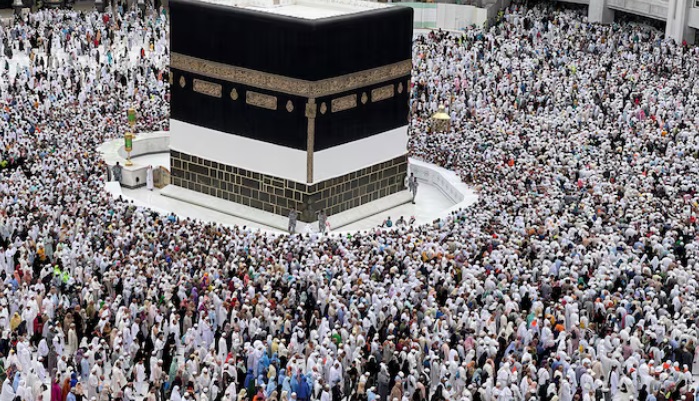
We must rise above the national, political, and even the spiritual nuances that have been used to divide us. This is not a call to ignore where we differ or to erase the rich diversity of our legal and historical traditions. Rather, it is an invitation to “fully experience and grasp what joins us.” We are joined by a common Qiblah, a common Book, and a common Prophet who transformed a fractured, tribal society into a global civilization of peace and knowledge.
In times of peace and prosperity, the temptation to “walk away from what joins us” will be strong. We will be tempted to return to the comfort of our national flags and the safety of our sectarian labels. But we must remember that our strength lies in our “Universal Brotherhood” and our “Sisterhood in Islam”. We must “forget the past mistakes” of those who sought to use our faith for personal or dynastic gain.
Let us commit to a future where we celebrate each other’s joys and share each other’s sorrows. Let the “fever” we feel for Gaza and the “wakefulness” we feel for Iran become a permanent state of alertness—a “daily routine of prayer” and a “consistent small deed” that builds a more harmonious and caring community. When we seek the “blessed countenance of our Lord,” let us do so as a single, unified body, standing together in righteousness and piety, for it is only in our unity that we find our true dignity and our lasting peace.
 The Glorious Quran and Science
Leave a comment