
Presented by Zia H Shah MD with help of ChatGPT
Abstract
This report identifies every Qur’anic occurrence of the motif السَّمَاوَاتِ وَالْأَرْضِ وَمَا بَيْنَهُمَا (“the heavens, the earth, and whatever lies between them”), including close variants where “heaven/sky” appears in the singular (السَّمَاء) but the same conceptual triad is preserved. Using a concordance approach (notably The Quranic Arabic Corpus) alongside verse pages that provide the Arabic text and the English rendering of M. A. S. Abdel Haleem, a complete set of 20 verses is presented with the Arabic text and Abdel Haleem translation. The verses occur in polemical, devotional, cosmological, and eschatological contexts and repeatedly assert three interlocking claims: (i) God’s exclusive sovereignty over total reality, (ii) the purposiveness (non-play, non-vanity) of the cosmos, and (iii) the moral–eschatological horizon (appointed term, the Hour, return, accountability). The report also integrates a contemporary “Quran & science” reading that interprets “what lies between” as potentially encompassing meteors/comets and cosmic matter, while situating such readings within modern scholarly critiques of “scientific miracles” discourse and within mainstream scientific descriptions of meteors and the interstellar medium.
Linguistic and conceptual notes on “what lies between”
The Arabic construction ما بينهما (“whatever is between the two”) functions as a deliberately totalizing bridge-term: it closes any imagined gap between “higher” and “lower” realms by naming an intermediate domain that, rhetorically, prevents a listener from partitioning reality into “God’s” and “not God’s.” Across these verses, “between” performs at least four overlapping roles:
First, it is a semantic seal of completeness: the triad “heavens + earth + between” approximates “all that exists,” leaving no ontological remainder. This is especially clear in sovereignty statements (“to Him belongs control…”) and in challenges to opponents (“do they control…?”).
Second, it is a theological deterrent against local divinities or semi-divine intermediaries: if God owns the “between,” then no “middle” zone (celestial mechanics, fate, spirits, powers) can be carved out as autonomous. This logic is explicit in polemical contexts against deifying a creature.
Third, it is a teleological marker: several verses deny that creation was “play” (لَاعِبِينَ) or “in vain/without purpose” (بَاطِلًا) and instead affirm “truth/purpose” (بِالْحَقِّ) and/or a fixed term (أَجَلٍ مُسَمًّى). The “between” is included in that purposiveness, meaning that not only “big things” (heavens/earth) but also the intermediate realm participates in meaningful order.
Fourth, it is conceptually hospitable to layered readings: classical exegesis commonly treats “between” as whatever God created in the expanse between heaven(s) and earth, while contemporary scientific readers sometimes map it (speculatively) onto atmospheric and cosmic “in-between” domains (e.g., meteoric phenomena; cosmic dust/gas). This report integrates such readings but distinguishes disciplined inference from overconfident “proof” claims.
Occurrences with Arabic text and Abdel Haleem translation, with commentary
5:17
Arabic: لَّقَدۡ كَفَرَ ٱلَّذِينَ قَالُوٓاْ إِنَّ ٱللَّهَ هُوَ ٱلۡمَسِيحُ ٱبۡنُ مَرۡيَمَۚ قُلۡ فَمَن يَمۡلِكُ مِنَ ٱللَّهِ شَيۡـًٔا إِنۡ أَرَادَ أَن يُهۡلِكَ ٱلۡمَسِيحَ ٱبۡنَ مَرۡيَمَ وَأُمَّهُۥ وَمَن فِي ٱلۡأَرۡضِ جَمِيعٗاۗ وَلِلَّهِ مُلۡكُ ٱلسَّمَٰوَٰتِ وَٱلۡأَرۡضِ وَمَا بَيۡنَهُمَاۚ يَخۡلُقُ مَا يَشَآءُۚ وَٱللَّهُ عَلَىٰ كُلِّ شَيۡءٖ قَدِيرٞ
Abdel Haleem: “Those who say, ‘God is the Messiah, the son of Mary,’ are defying the truth. Say, ‘If it had been God’s will, could anyone have prevented Him from destroying the Messiah, son of Mary, together with his mother and everyone else on earth? Control of the heavens and earth and all that is between them belongs to God: He creates whatever He will. God has power over everything.’”
Commentary: The “between” here is embedded in a polemical syllogism: if the Messiah is destroyable, he cannot be God; and if God owns not only heaven and earth but also what lies between, then divinity cannot be localized in any creature situated “within” that total domain. Theologically, the verse presses tawḥīd through a sovereignty claim (mulk) rather than an abstract definition. Philosophically, it targets a category error: confusing an extraordinary instance within the cosmos (miracles, moral excellence) with the Ground of the cosmos. Scientifically, the verse is not offering cosmography, but its “total domain” framing resists any dualistic picture in which nature (including the “in-between” realm of causes) runs independently of divine creative power.
5:18
Arabic: وَقَالَتِ ٱلۡيَهُودُ وَٱلنَّصَٰرَىٰ نَحۡنُ أَبۡنَٰٓؤُاْ ٱللَّهِ وَأَحِبَّٰٓؤُهُۥۚ قُلۡ فَلِمَ يُعَذِّبُكُم بِذُنُوبِكُمۖ بَلۡ أَنتُم بَشَرٞ مِّمَّنۡ خَلَقَۚ يَغۡفِرُ لِمَن يَشَآءُ وَيُعَذِّبُ مَن يَشَآءُۚ وَلِلَّهِ مُلۡكُ ٱلسَّمَٰوَٰتِ وَٱلۡأَرۡضِ وَمَا بَيۡنَهُمَاۖ وَإِلَيۡهِ ٱلۡمَصِيرُ
Abdel Haleem: “The Jews and the Christians say, ‘We are the children of God and His beloved ones.’ Say, ‘Then why does He punish you for your sins? You are merely human beings, part of His creation: He forgives whoever He will and punishes whoever He will. Control of the heavens and earth and all that is between them belongs to Him: all journeys lead to Him.’”
Commentary: The “between” motif functions here as an anti-tribalist universalizer. If God’s dominion includes the whole, then no ethnic–religious group can claim privileged ontological status (“children”) that immunizes them from moral accountability. Philosophically, the verse links identity claims to ethical consequences: if your doctrine implies exemption from justice, it is self-refuting. Theologically, the return (المصير) ties cosmic scope to eschatological evaluation: the same Lord who owns all realms also judges all persons.
15:85
Arabic: وَمَا خَلَقۡنَا ٱلسَّمَٰوَٰتِ وَٱلۡأَرۡضَ وَمَا بَيۡنَهُمَآ إِلَّا بِٱلۡحَقِّۗ وَإِنَّ ٱلسَّاعَةَ لَـَٔاتِيَةٞۖ فَٱصۡفَحِ ٱلصَّفۡحَ ٱلۡجَمِيلَ
Abdel Haleem: “We did not create the heavens and the earth and everything between them without a true purpose: the Hour will certainly come, so [Prophet] bear with them graciously.”
Commentary: This verse is a compact metaphysical argument: if the whole system is “in truth” (بالحق) rather than arbitrary, then the moral order cannot end in injustice; hence the Hour. The “between” is included in “truth,” which blocks a common evasive move: admitting “purpose” in grand design while treating intermediate historical processes as meaningless noise. A classical tafsīr voice (here represented via tafsīr excerpts hosted on Quran.com) reads “truth” as wisdom and justice, connecting cosmos to recompense.
Philosophically, the verse anchors forbearance in cosmic teleology: patience is rational if reality is not absurd. Theologically, it frames prophetic ethics as a participation in divine wisdom.
19:65
Arabic: رَبُّ ٱلسَّمَٰوَٰتِ وَٱلۡأَرۡضِ وَمَا بَيۡنَهُمَا فَٱعۡبُدۡهُ وَٱصۡطَبِرۡ لِعِبَادَتِهِۦۚ هَلۡ تَعۡلَمُ لَهُۥ سَمِيّٗا
Abdel Haleem: “He is Lord of the heavens and earth and everything in between so worship Him: be steadfast in worshipping Him. Do you know of anyone equal to Him?’”
Commentary: The move is from cosmology to liturgy: because God is Lord of the whole, worship is not parochial but the fitting response to reality-as-such. “Between” matters devotionally: it includes the ordinary world of life where worship is practiced—work, weather, time, struggle—so worship is not an escapist leap beyond “earth” nor a purely “spiritual” flight into “heaven,” but a stance inside the complete domain God governs. Philosophically, the question “anyone equal?” is a challenge to rival ultimacies—anything you treat as ultimate must match the scope of ultimate reality, which nothing within the heavens/earth/between can do.
20:6
Arabic: لَهُۥ مَا فِي ٱلسَّمَٰوَٰتِ وَمَا فِي ٱلۡأَرۡضِ وَمَا بَيۡنَهُمَا وَمَا تَحۡتَ ٱلثَّرَىٰ
Abdel Haleem: “Everything in the heavens and on earth, everything between them, everything beneath the soil, belongs to Him.”
Commentary: Here the “between” is placed within a fourfold totality: above, on, between, and beneath—closing the map in every principal direction. Theologically, it intensifies divine ownership as the backdrop for revelation and guidance: if all belongs to Him, then His speech is not an external imposition but the rightful direction of His domain. A classical-ish moral-ontological reading (as in exegetical notes hosted on Quran.com) expands “between” to include all creatures in that expanse (human, jinn, and the non-sentient world).
Scientifically, this verse naturally accommodates a layered cosmos: subterranean geology and deep time, atmospheric processes, and celestial mechanics all fall within “belongs to Him,” not as competing explanations but as levels of description.
21:16
Arabic: وَمَا خَلَقۡنَا ٱلسَّمَآءَ وَٱلۡأَرۡضَ وَمَا بَيۡنَهُمَا لَٰعِبِينَ
Abdel Haleem: “We did not create the heavens and the earth and everything between them playfully.”
Commentary: This is one of the Qur’an’s clearest anti-absurdist statements. The “between” again refuses any attempt to exile “meaning” to the endpoints (heaven as spiritual, earth as material) while treating the middle—history, contingency, suffering—as mere play. Philosophically, the verse asserts a strong form of cosmic intelligibility: reality is structured toward wisdom rather than entertainment. Theologically, it denies that divine action is capricious; divine creativity is purposeful.
25:59
Arabic: ٱلَّذِي خَلَقَ ٱلسَّمَٰوَٰتِ وَٱلۡأَرۡضَ وَمَا بَيۡنَهُمَا فِي سِتَّةِ أَيَّامٖ ثُمَّ ٱسۡتَوَىٰ عَلَى ٱلۡعَرۡشِۚ ٱلرَّحۡمَٰنُ فَسۡـَٔلۡ بِهِۦ خَبِيرٗا
Abdel Haleem: “it is He who created the heavens and earth and what is between them in six Days, and then established Himself on the throne- He is the Lord of Mercy; He is the Best Informed.”
Commentary: The verse fuses three registers: creation (cosmic origin), governance (the Throne image), and mercy (al-Raḥmān). The “between” is created and governed, implying that intermediate realities—space, air, time, causality, life—are neither random nor self-grounding. Philosophically, “six Days” functions less as a laboratory chronology than as a structured-order claim: creation is not chaotic. Theologically, the directive “ask one who is informed” points to epistemic humility: the most important knowledge is not exhaustive cosmographic detail but recognition of the Merciful Lordship that creation signifies.
26:24
Arabic: قَالَ رَبُّ ٱلسَّمَٰوَٰتِ وَٱلۡأَرۡضِ وَمَا بَيۡنَهُمَآ إِن كُنتُم مُّوقِنِينَ
Abdel Haleem: “He said, ‘The Lord of the heavens and earth and everything between them, if you would be convinced.’”
Commentary: In this dialogue setting, “between” is deployed rhetorically as evidence for conviction: if you want certainty, look at the whole—above, below, and the lived-in middle—and infer the Lordship that unifies it. A Kais Dukes–hosted corpus also preserves a classical exegesis passage (attributed to al-Ṭabarī on Quran.com) reading the phrase as “Owner of what is between,” pressing the inference from observed reality to rightful worship.
Philosophically, this is a natural-theology move: not “God-of-the-gaps,” but God as the best explanation of the coherent totality that includes the “gapless” middle.
30:8
Arabic: أَوَلَمۡ يَتَفَكَّرُوا۟ فِيٓ أَنفُسِهِمۗ مَّا خَلَقَ ٱللَّهُ ٱلسَّمَٰوَٰتِ وَٱلۡأَرۡضَ وَمَا بَيۡنَهُمَآ إِلَّا بِٱلۡحَقِّ وَأَجَلٖ مُّسَمًّىۗ وَإِنَّ كَثِيرٗا مِّنَ ٱلنَّاسِ بِلِقَآءِ رَبِّهِمۡ لَكَٰفِرُونَ
Abdel Haleem: “Have they not thought about their own selves? God did not create the heavens and earth and everything between them without a serious purpose and an appointed time, yet many people deny that they will meet their Lord.”
Commentary: The verse explicitly ties cosmic purpose (bil-ḥaqq) to finitude (appointed time) and then to eschatological denial (meeting the Lord). The “between” matters existentially: the intermediate realm is where a human self thinks, where time is experienced, where mortality is faced. Philosophically, the verse suggests that denial of accountability is not merely an intellectual mistake but a refusal to “think about the self” properly—i.e., to read one’s finitude as a sign. Theologically, it grounds the “meeting” in cosmic structure: the universe is a moral arena, not an accidental stage.
32:4
Arabic: ٱللَّهُ ٱلَّذِي خَلَقَ ٱلسَّمَٰوَٰتِ وَٱلۡأَرۡضَ وَمَا بَيۡنَهُمَا فِي سِتَّةِ أَيَّامٖ ثُمَّ ٱسۡتَوَىٰ عَلَى ٱلۡعَرۡشِۖ مَا لَكُم مِّن دُونِهِۦ مِن وَلِيّٖ وَلَا شَفِيعٍۚ أَفَلَا تَتَذَكَّرُونَ
Abdel Haleem: “It is God who created the heavens and the earth and everything between them in six Days. Then He established Himself on the Throne. You [people] have no one but Him to protect you and no one to intercede for you, so why do you not take heed?”
Commentary: This verse turns cosmic scope into ethical urgency: if God alone governs the whole “totality,” then ultimate reliance on any protector-intercessor besides Him is misplaced. The “between” includes the social and political domain where humans seek patrons, and so it carries an implicit critique of misplaced dependence. Philosophically, it asserts a hierarchy of causation: proximate causes exist, but they are not ultimate protectors. Theologically, it folds metaphysics into admonition: remembrance is the rational posture once the structure of reality is seen.
37:5
Arabic: رَّبُّ ٱلسَّمَٰوَٰتِ وَٱلۡأَرۡضِ وَمَا بَيۡنَهُمَا وَرَبُّ ٱلۡمَشَٰرِقِ
Abdel Haleem: “Lord of the heavens and earth and everything between them, Lord of every sunrise.”
Commentary: Here “between” is paired with the multiplicity of “sunrises,” a subtle cosmological gesture: reality contains patterned repetition and plurality (days, seasons, horizons). Theologically, this is an anti-idolatry move: the repeated, dependable order of the cosmos is not itself divine but a sign of the Lord. Philosophically, it resonates with a “law-like” universe: regularity invites intelligibility. Scientifically, the “sunrises” image fits the observable effects of a rotating earth under a consistent celestial order; the verse’s point, however, is not astronomy but a moral recognition: regularity can awaken gratitude rather than complacency.
38:10
Arabic: أَمۡ لَهُم مُّلۡكُ ٱلسَّمَٰوَٰتِ وَٱلۡأَرۡضِ وَمَا بَيۡنَهُمَاۖ فَلۡيَرۡتَقُواْ فِي ٱلۡأَسۡبَٰبِ
Abdel Haleem: “Do they control the heavens and earth and everything between? Let them climb their ropes:”
Commentary: This is the motif in interrogative mode: the “between” is invoked to expose pretension. If opponents claim epistemic or moral authority to dictate who may receive revelation, the Qur’an replies: do you own the total domain? If not, your claim is groundless. Philosophically, the verse is a critique of illegitimate authority: control over truth requires control over the conditions of truth, which finite agents lack. The “climb their ropes” challenge is a rhetorical experiment: if you think you have cosmic-level agency, try to transcend your limits.
38:27
Arabic: وَمَا خَلَقۡنَا ٱلسَّمَآءَ وَٱلۡأَرۡضَ وَمَا بَيۡنَهُمَا بَٰطِلٗاۚ ذَٰلِكَ ظَنُّ ٱلَّذِينَ كَفَرُواۚ فَوَيۡلٞ لِّلَّذِينَ كَفَرُواْ مِنَ ٱلنَّارِ
Abdel Haleem: “It was not without purpose that We created the heavens and the earth and everything in between. That may be what the disbelievers assume- how they will suffer from the Fire!-”
Commentary: This verse explicitly diagnoses the opposite worldview: to assume purposelessness is characterized as the disbelievers’ conjecture. The “between” is crucial because nihilism is most tempting precisely in the middle region—within history, tragedy, randomness, and apparent moral imbalance. Theologically, the Fire is presented not as a divine tantrum but as the ethical consequence of reading reality falsely and living accordingly. Philosophically, the verse supports moral realism: if creation is not vanity, then values are not mere projections.
38:66
Arabic: رَبُّ ٱلسَّمَٰوَٰتِ وَٱلۡأَرۡضِ وَمَا بَيۡنَهُمَا ٱلۡعَزِيزُ ٱلۡغَفَّارُ
Abdel Haleem: “Lord of the heavens and earth and everything between, the Almighty, the Most Forgiving.’”
Commentary: The pairing “Almighty–Most Forgiving” is ethically the important part: cosmic sovereignty is not cold power; it is power that can forgive. The “between” is where forgiveness is needed—human life, wrongdoing, reconciliation—so the verse binds cosmology to moral psychology. Philosophically, it resists the idea that ultimate reality is indifferent: the ultimate is characterized by moral attributes, not only metaphysical force.
43:85
Arabic: وَتَبَارَكَ ٱلَّذِي لَهُۥ مُلۡكُ ٱلسَّمَٰوَٰتِ وَٱلۡأَرۡضِ وَمَا بَيۡنَهُمَا وَعِندَهُۥ عِلۡمُ ٱلسَّاعَةِ وَإِلَيۡهِ تُرۡجَعُونَ
Abdel Haleem: “Blessed is He to whom belongs control of the heavens and earth and everything between; He has knowledge of the Hour; you will all be returned to Him.”
Commentary: The “between” is again placed inside a sovereignty + eschatology frame. The verse adds a critical epistemic boundary: knowledge of the Hour belongs to God. Philosophically, the message is not that humans cannot know anything, but that ultimate temporal finality is not ours to schedule; this disciplines apocalyptic speculation. Theologically, blessing (tabāraka) suggests that recognizing divine dominion is not merely true but life-giving—it orients human action toward the return.
44:7
Arabic: رَبِّ ٱلسَّمَٰوَٰتِ وَٱلۡأَرۡضِ وَمَا بَيۡنَهُمَآۖ إِن كُنتُم مُّوقِنِينَ
Abdel Haleem: “Lord of the heavens and the earth and everything between––if only you people were firm believers––”
Commentary: The conditional “if you were certain” returns us to the epistemic theme: certainty is invited by contemplating the whole. The “between” includes the ambiguous zone where people vacillate—half-belief, inherited slogans, social pressure. Philosophically, the verse treats certainty not as blind insistence but as an inference responsive to evidence: the evidence is the structured totality of reality.
44:38
Arabic: وَمَا خَلَقۡنَا ٱلسَّمَٰوَٰتِ وَٱلۡأَرۡضَ وَمَا بَيۡنَهُمَا لَٰعِبِينَ
Abdel Haleem: “We were not playing a pointless game when We created the heavens and earth and everything in between;”
Commentary: Together with 21:16, this verse forms a Qur’anic “anti-play” refrain. The “between” is a deliberate inclusion of what humans may be tempted to treat as “mere” (dust, wind, chance encounters), insisting that the seemingly marginal belongs to the sphere of purpose. This is not a claim that humans can always decode the purpose of each event; it is the stronger claim that purposelessness is not the right metaphysical default.
46:3
Arabic: مَا خَلَقۡنَا ٱلسَّمَٰوَٰتِ وَٱلۡأَرۡضَ وَمَا بَيۡنَهُمَآ إِلَّا بِٱلۡحَقِّ وَأَجَلٖ مُّسَمًّىۚ وَٱلَّذِينَ كَفَرُوا عَمَّآ أُنذِرُوا مُعۡرِضُونَ
Abdel Haleem: “It was for a true purpose and a specific term that We created heaven and earth and everything in between, yet those who deny the truth ignore the warning they have been given.”
Commentary: This verse is structurally similar to 30:8 but sharper in moral diagnosis: denial is portrayed as turning away from warning. The “between” is again inside truth + term, which implies that intermediate reality is not an eternal cycle but a finite moral project. This framing has philosophical consequences: it rejects both nihilism (no purpose) and eternalism (no end), installing instead a meaningful finitude.
50:38
Arabic: وَلَقَدۡ خَلَقۡنَا ٱلسَّمَٰوَٰتِ وَٱلۡأَرۡضَ وَمَا بَيۡنَهُمَا فِي سِتَّةِ أَيَّامٖ وَمَا مَسَّنَا مِن لُّغُوبٖ
Abdel Haleem: “We created the heavens, the earth, and everything between, in six Days without tiring.”
Commentary: The explicit denial of fatigue blocks anthropomorphic projections of divinity. Theologically, God’s creative act is not constrained by depletion; creation is an expression of power that does not diminish. Philosophically, this underwrites a distinctive view of dependence: the cosmos depends on God, but God does not “depend” on the cosmos for completion. In dialogue with scriptural traditions that ascribe divine “rest,” the verse is also a corrective claim about transcendence (without requiring that the Qur’an be read as a science manual).
78:37
Arabic: رَبِّ ٱلسَّمَٰوَٰتِ وَٱلۡأَرۡضِ وَمَا بَيۡنَهُمَا ٱلرَّحۡمَٰنِۖ لَا يَمۡلِكُونَ مِنۡهُ خِطَابٗا
Abdel Haleem: “from the Lord of the heavens and earth and everything between, the Lord of Mercy. They will have no authority from Him to speak.”
Commentary: The eschatological climax: the One who owns the total domain is also the One before whom speech itself becomes permissioned. The “between” here includes not only physical realms but the intermediate authority structures humans rely on—status, rhetoric, patronage—which collapse at judgment. Philosophically, the verse suggests that ultimate discourse is not democratic debate but accountable speech under truth. Theologically, mercy is foregrounded precisely at the moment of maximal awe, preventing despair: the Judge is the Merciful.
Scientific and philosophical integration
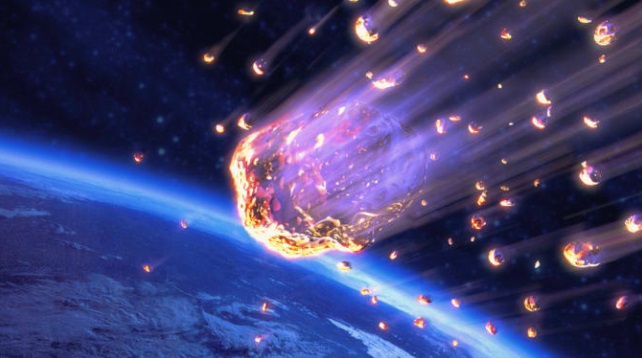
The article you provided from Zia H Shah argues that Qur’anic references to “what is between the heaven and the earth” can be read as gesturing toward meteors, comets, and interstellar gas/dust, and it presents this as evidence for Qur’anic truth. It explicitly proposes that “all that is between” may “imply meteors, comets and the interstellar gas,” and it extends that interpretive move as a hallmark of scriptural “precision.”
A scientifically literate mapping of “between” can indeed be sketched, but it must be framed as interpretive possibility, not forced equivalence. On the “meteor” side, modern astronomy distinguishes meteoroids (space rocks while still in space) from meteors (the light phenomenon as they enter the atmosphere) and meteorites (material that reaches the ground). Most visible meteors occur in the upper atmosphere—often cited roughly between ~80 km and 120 km altitude—precisely an “in-between” region between Earth’s surface and outer space. On the “cosmic matter” side, contemporary astrophysics recognizes that the space “between stars” is not an absolute void but contains the interstellar medium—diffuse gas and dust.
The philosophical value of these scientific notes is not that they “prove” revelation, but that they illuminate how the Qur’anic phrasing encourages an expansive imagination of the ‘middle’: the atmosphere, near‑Earth space, and cosmic material fields are genuinely “between” in a way that pre-modern everyday experience could easily deem “empty.” That said, modern scholarship on “scientific miracles” in scripture warns that apologetic eagerness can overreach—by reading transient scientific theories back into polyvalent religious language, or by arguing that divine authorship depends on modern scientific alignment. Nidhal Guessoum argues that certain “scientific miraculousness” approaches rest on problematic principles and can become methodologically risky. Stefano Bigliardi similarly analyzes the modern “scientific miracle” discourse as a recognizable genre with its own rhetorical logic and vulnerabilities. A journalistic critique by Ziauddin Sardar also challenges the cultural tendency to claim that “everything” is encoded as modern science in the Qur’an, warning against scientistic readings that miss scripture’s primary guidance-function.
A balanced integration therefore looks like this: the Qur’an’s repeated inclusion of “what lies between” is theologically and philosophically powerful because it refuses to carve reality into sacred and profane zones; scientifically, it resonates with the modern realization that “between” regions are structured and populated (atmospheric layers; cosmic dust/gas), but that resonance should be presented as conceptual consonance, not as a fragile one-to-one prediction.
Thematic epilogue
Across all occurrences, the Qur’anic phrase “the heavens, the earth, and whatever lies between them” is not merely poetic scenery. It is a worldview instrument—a compact doctrine of totality that repeatedly accomplishes five thematic tasks.
It totalizes sovereignty: whether confronting divinization of a creature (5:17), communal exceptionalism (5:18), or human arrogance (38:10), the triad insists that no domain—upper, lower, or “middle”—escapes God’s ownership.
It totalizes purpose: in the anti-play and anti-vanity refrain (21:16; 44:38; 38:27), the “between” is where meaning is most contested, and precisely there the Qur’an refuses absurdity.
It totalizes moral time: verses that pair “between” with truth and an appointed term (30:8; 46:3; 15:85) portray the cosmos—including the intermediate realm—as a finite moral journey rather than an eternal cycle or a meaningless accident.
It totalizes worship: the logic of Lordship in 19:65 and 26:24 does not merely inform; it demands a fitting posture—worship, steadfastness, conviction.
And it totalizes eschatological humility: “knowledge of the Hour” (43:85) and the constraint on speech before the Merciful (78:37) place human beings back inside the “between”—finite knowers, accountable speakers—without collapsing into despair, because the final horizon is framed by mercy.
The deepest coherence is that the Qur’an makes the “in-between” a spiritual frontier: the space where humans actually live—between sky and soil, between origin and return, between power and forgiveness, between mystery and meaning. In that frontier, the repeated refrain is not “escape the world,” but “recognize the whole” and then live in the middle with remembrance, patience, and worship.



 The Glorious Quran and Science
Leave a comment