
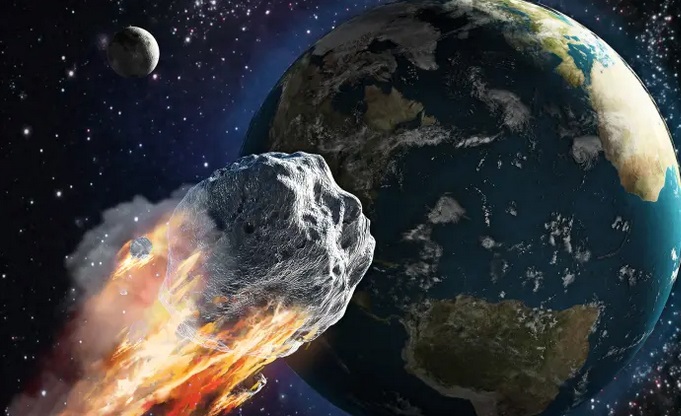
Presented by Zia H Shah MD, with the help of Gemini
Abstract
The Quranic cosmological framework is frequently articulated through a tripartite structure: the heavens (al-samāwāt), the earth (al-arḍ), and the intermediary space described as “whatever is between them” (mā baynahumā). This research report provides a comprehensive analysis of the eighteen occurrences of this specific triad within the Quranic text, integrating scientific, philosophical, and theological perspectives. Theologically, the phrase serves to establish the absolute sovereignty (Mulk) and lordship (Rubūbiyyah) of Allah, refuting polytheistic claims and emphasizing that no part of the existential spectrum lies outside Divine control. Philosophically, the report examines the teleological implications of creation “in truth” (bi-l-haqq), contrasting it with the rejection of cosmic vanity or “play” (laʿibīn). This analysis positions the Quran as an anti-nihilistic text that demands a recognition of purpose in every aspect of the natural world. Scientifically, the commentary maps the “intermediary space” onto modern astrophysical concepts, specifically the Interstellar Medium (ISM), meteors, comets, and interstellar gas. By examining insights from contemporary research, the report argues that the Quranic identification of this space as a site of active creation and purposeful matter represents a significant departure from the Aristotelian vacuum models prevalent during the seventh century. The report concludes that these verses offer a unified worldview where physical phenomena—such as meteoric impacts and interstellar chemistry—serve as both biological drivers for life and spiritual signs of an intentionally governed and temporally bounded universe.
Introduction: The Tripartite Structure of Reality
The Glorious Quran presents a cosmology that is both exhaustive and integrated. While many ancient traditions focused on the dichotomy of the celestial and the terrestrial, the Quran consistently introduces a third category: the space “between” them. This phrase, al-samāwāt wa-l-arḍ wa-mā baynahumā, appears in various contexts ranging from the refutation of theological errors in Surah Al-Ma’idah to the announcement of the Day of Judgment in Surah An-Naba’.
The inclusion of the intermediary space is not merely a linguistic flourish but a deliberate ontological claim. In the seventh-century Arabian context, the “heavens” were often viewed as a remote, immutable vault, while the “earth” was the immediate, tangible environment of man. By explicitly naming the space between them, the Quran directs the human intellect toward the invisible but material realities that bridge the cosmic and the local. Modern science now identifies this space as a vibrant arena filled with interstellar gas, dust, plasma, and high-energy particles—components that were essential for the formation of our solar system and the origin of life on Earth.
This report examines these verses through a multidisciplinary lens. Theologically, we explore how this triad reinforces the Unity of God (Tawhīd). Philosophically, we investigate the rejection of existential absurdism. Scientifically, we analyze the resonance between scriptural descriptions and modern astrophysical data regarding the Interstellar Medium and meteoric phenomena.
Chapter I: Philological and Linguistic Foundations
To understand the depth of the phrase “whatever is between them,” one must first analyze the Arabic terms that constitute the triad.
The Heavens (al-samāwāt)
The term samā’ linguistically refers to everything that is above, encompassing the sky, the atmosphere, and the wider universe. The plural form samāwāt often indicates a multiplicity of cosmic systems or layers, which some contemporary commentators relate to the concept of a multiverse or nested galactic structures. In the context of the triad, the heavens represent the macroscopic order of the cosmos, governed by precise physical laws.
The Earth (al-arḍ)
Arḍ denotes the terrestrial world, the habitable dwelling for humanity. It is presented as a “resting place” and a site of trial. In the Quranic triad, the earth is the point of observation from which the heavens and the intermediary space are perceived as signs of the Creator’s power.
The Intermediary (mā baynahumā)
The phrase mā baynahumā (whatsoever is between the two) is perhaps the most unique aspect of Quranic cosmology. It refers to the “gap” that was historically thought to be empty. The Quranic insistence that there is “something” between the heavens and the earth that is created, owned, and governed by God serves as a foundational argument for the totality of Divine sovereignty.
Table 1: Philological Core Themes of the Cosmological Triad
| Term | Root Meanings | Philosophical/Theological Implication |
| Samāwāt | Height, expansion, covering | Transcendence and infinite order |
| Arḍ | Base, firmament, spread | Immanence and human accountability |
| Mā Baynahumā | Middle, connection, gap | Totality of Divine control and material continuity |
Chapter II: Theological Commentary – Dominion, Lordship, and the Refutation of Shirk
The primary theological function of the triad in the Quran is the establishment of Tawhīd al-Rubūbiyyah (Unity of Lordship) and Tawhīd al-Ulūhiyyah (Unity of Divinity). By asserting ownership over the heavens, the earth, and the intermediary space, the Quran leaves no ontological “room” for other deities or mediators.
The Totality of Mulk (Dominion)
In Surah Al-Ma’idah (5:17 and 5:18), the phrase is used specifically to challenge the deification of created beings.
Quran 5:17
لَّقَدْ كَفَرَ الَّذِينَ قَالُوا إِنَّ اللَّهَ هُوَ الْمَسِيحُ ابْنُ مَرْيَمَ ۚ قُلْ فَمَن يَمْلِكُ مِنَ اللَّهِ شَيْئًا إِنْ أَرَادَ أَن يُهْلِكَ الْمَسِيحَ ابْنَ مَرْيَمَ وَأُمَّهُ وَمَن فِي الْأَرْضِ جَمِيعًا ۗ وَلِلَّهِ مُلْكُ السَّمَاوَاتِ وَالْأَرْضِ وَمَا بَيْنَهُمَا ۚ يَخْلُقُ مَا يَشَاءُ ۚ وَاللَّهُ عَلَىٰ كُلِّ شَيْءٍ قَدِيرٌ
“Those who say, ‘God is the Messiah, the son of Mary,’ are defying the truth. Say, ‘If it had been God’s will, who could have prevented Him from destroying the Messiah, son of Mary, together with his mother and everyone else on earth? Control of the heavens and earth and all that is between them belongs to God: He creates whatever He will and God has power over everything.’”
The inclusion of “what is between them” in this verse is a rhetorical masterstroke. It argues that if the Messiah (Jesus) were indeed Divine, he would share in the ownership and sustainment of the entire cosmological triad. Since he and his mother were part of the terrestrial creation, and were themselves subject to the laws of the universe, they cannot be the Source of that universe. The “between” here refers to the very medium that allows for earthly existence—the atmosphere, the light from the stars, and the clouds—all of which are under the exclusive authority of Allah.
Lordship of the Intermediary Space
In Surah Maryam (19:65) and Surah Taha (20:6), the emphasis shifts from ownership (Mulk) to active Lordship (Rubūbiyyah).
Quran 19:65
رَّبُّ السَّمَاوَاتِ وَالْأَرْضِ وَمَا بَيْنَهُمَا فَاعْبُدْهُ وَاصْطَبِرْ لِعِبَادَتِهِ ۚ هَلْ تَعْلَمُ لَهُ سَمِيًّا
“He is Lord of the heavens and earth and everything in between so worship Him: be steadfast in worshipping Him. Do you know of anyone equal to Him?”
Theological discourse suggests that Rabb implies one who nourishes, sustains, and evolves things from one state to another. By claiming Lordship over “everything in between,” the Quran asserts that the processes of star formation, atmospheric regulation, and even the paths of meteors are not random but divinely curated. The question “Do you know of anyone equal to Him?” challenges the listener to identify any other entity that can manage the complex interdependencies of the heavens and the earth.
Quran 20:6
لَهُ مَا فِي السَّمَاوَاتِ وَمَا فِي الْأَرْضِ وَمَا بَيْنَهُمَا وَمَا تَحْتَ الثَّرَىٰ
“To Him belongs what is in the heavens and what is on the Earth, and what is between them, and what is below the soil.”
This verse provides an exhaustive spatial mapping of the Divine domain. By adding mā taḥta al-tharā (what is below the moist soil), the Quran completes the existential verticality. The “between” serves as the vital connective tissue. Theologically, this implies that God’s knowledge and power are not just focused on the obvious (the sky and the land) but penetrate the subtle and the hidden.
Authority and Intercession
Surah As-Sajdah (32:4) and Surah Az-Zukhruf (43:85) link the creation of the triad to the concept of ultimate return and authority.
Quran 32:4
اللَّهُ الَّذِي خَلَقَ السَّمَاوَاتِ وَالْأَرْضِ وَمَا بَيْنَهُمَا فِي سِتَّةِ أَيَّامٍ ثُمَّ اسْتَوَىٰ عَلَى الْعَرْشِ ۖ مَا لَكُم مِّن دُونِهِ مِن وَلِيٍّ وَلَا شَفِيعٍ ۚ أَفَلَا تَتَذَكَّرُونَ
“It is God who created the heavens and the earth and everything between them in six periods. Then He established Himself on the Throne. You have no one but Him to protect you and no one to intercede for you, so why do you not take heed?”
The establishment on the “Throne” (al-Arsh) symbolizes the administration of the universe’s laws. If a person recognizes that the intermediary space is designed and managed by God, it becomes logically impossible to seek “protectors” or “intercessors” outside of His permission. The triad acts as a witness to the unity of authority; since there is no “gap” in the creation where God is not present, there is no place for a secondary power to reside.
Chapter III: Philosophical Commentary – Teleology and the Anti-Vanity Principle
The Quranic cosmological verses are deeply concerned with the “why” of existence. The recurring triad is used to establish a philosophical framework of universal purposefulness.
The Rejection of Play (al-Laʿib)
The Quran emphatically denies that the universe is a result of Divine amusement or a pointless game.
Quran 21:16 and 44:38
وَمَا خَلَقْنَا السَّمَاءَ وَالْأَرْضَ وَمَا بَيْنَهُمَا لَاعِبِينَ
“We did not create the heavens and the earth and everything in between for sport.”
Philosophically, this rejection of laʿib (sport/play) is a rejection of nihilism and the “brute fact” theory of the universe. If the universe were “play,” it would lack an ultimate ground of meaning, and human moral actions would have no consequence. By including “everything in between,” the Quran extends this purpose to the seemingly insignificant or chaotic elements of space—meteors, interstellar dust, and cosmic debris. Every particle in the “between” is part of a “detailed plan” and an “enduring purpose”.
Creation “In Truth” (bi-l-Haqq)
The counterpart to “play” is “truth” (al-Haqq).
Quran 15:85, 30:8, 44:39, and 46:3
مَا خَلَقْنَا السَّمَاوَاتِ وَالْأَرْضِ وَمَا بَيْنَهُمَا إِلَّا بِالْحَقِّ
“We created the heavens and the earth and everything between them only in truth…”
Bi-l-Haqq implies that the universe is rooted in absolute reality and governed by rational laws. Philosophically, this means that nature is “intelligible” and therefore “meaningful”. This lawfulness is what makes the universe a “Cosmic Book” that testifies to the “Written Book” (revelation). If the heavens and the earth were not created “in truth,” the scientific method itself would be impossible, as there would be no stable regularities to discover.
The Rejection of Vanity (al-Bāṭil)
Quran 38:27
وَمَا خَلَقْنَا السَّمَاءَ وَالْأَرْضَ وَمَا بَيْنَهُمَا بَاطِلًا ۚ ذَٰلِكَ ظَنُّ الَّذِينَ كَفَرُوا ۚ فَوَيْلٌ لِّلَّذِينَ كَفَرُوا مِنَ النَّارِ
“It was not without purpose that We created the heavens and the earth and everything in between. That may be what the disbelievers assume- how they will suffer from the Fire!”
The term bāṭil refers to that which is void, false, or without a valid aim. The philosophical implication is that any worldview characterizing the cosmos as aimless is not merely an intellectual error but a spiritual delusion (zann). The “between” is once again emphasized to show that purposefulness is not localized to the earth or the stars but is a pervasive quality of the entire existential fabric.
Table 2: Philosophical Antonyms in Quranic Cosmology
| Term for “Purposeful” | Term for “Purposeless” | Existential Implication |
| Al-Haqq (Truth/Reality) | Bāṭil (Vanity/Void) | Nature is structured by law vs. nature is an accident |
| Hikmah (Wisdom) | Laʿib (Play/Sport) | Every detail has a function vs. creation is for amusement |
| Ajalun Musammā (Term) | Abathan (Aimlessness) | History has a direction vs. existence is a cycle of nothingness |
Chapter IV: Scientific Commentary – Interstellar Medium and Meteors
Modern astrophysics provides a rich context for understanding the “intermediary space” described in the Quran. While seventh-century audiences might have perceived the space between the earth and the heavens as a void, contemporary science reveals a highly complex medium.
The Materiality of the “Between”
The article “Meteors Establish the Truth of the Holy Quran” asserts that the phrase mā baynahumā refers precisely to the materials found in the Interstellar Medium (ISM). These include:
- Interstellar Gas and Dust: Galaxies contain massive clouds of gas (mostly hydrogen and helium) and dust particles. These are not “empty space” but the raw materials for future stars and planetary systems.
- Meteors, Comets, and Asteroids: Solid debris from the early solar system constantly traverses the space between planets. The Quranic expression “what is between them” appears more than a dozen times, matching the ubiquitous presence of these bodies.
- Molecular Clouds: Astronomers have identified over one hundred chemical species in interstellar clouds, including water, ammonia, and organic molecules like formaldehyde and alcohol.
Biogenesis and Cosmic Protection
The “between” space is not merely filled with matter; it is the laboratory where life begins.
- Origin of Water: It is widely theorized that Earth’s water was delivered by comets and meteors from the intermediary space during the “Late Heavy Bombardment”.
- The “Unwitting Chemists”: Tiny grains of interstellar dust act as surfaces for complex chemical reactions. Chemicals attach to these grains, react under ultraviolet radiation and shock waves, and form the building blocks of life.
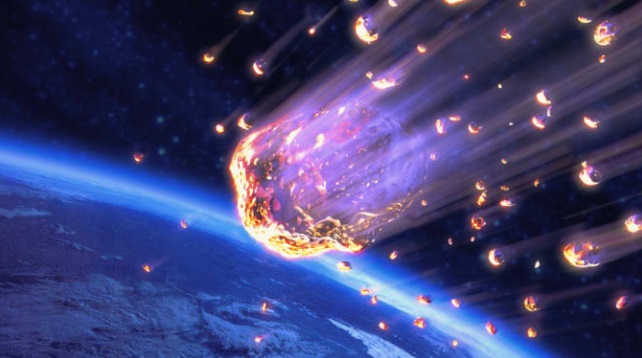
- Evolutionary Drivers: Meteoric impacts from the “between” space have fundamentally altered biological history. The extinction of the dinosaurs 65 million years ago—evidenced by the iridium layer in clay—cleared the way for the rise of mammals.
Refutation of Ancient Vacuum Theory
Aristotle and the philosophers of late antiquity believed that the space between celestial spheres was either a vacuum or filled with an unchanging “ether” or “quintessence”. The Quran, by contrast, identifies this space as “created” and “owned,” implying its material nature. This scientific resonance—describing a filled, active, and purposeful space—was centuries ahead of the scientific revolution.
Chapter V: Detailed Verse-by-Verse Commentary
In this section, we provide the Arabic text and M.A.S. Abdel Haleem translation for all identified occurrences, followed by a multi-disciplinary analysis of each.
1. Surah Al-Ma’idah (5:17)
Arabic Text:
لَّقَدْ كَفَرَ الَّذِينَ قَالُوا إِنَّ اللَّهَ هُوَ الْمَسِيحُ ابْنُ مَرْيَمَ ۚ قُلْ فَمَن يَمْلِكُ مِنَ اللَّهِ شَيْئًا إِنْ أَرَادَ أَن يُهْلِكَ الْمَسِيحَ ابْنَ مَرْيَمَ وَأُمَّهُ وَمَن فِي الْأَرْضِ جَمِيعًا ۗ وَلِلَّهِ مُلْكُ السَّمَاوَاتِ وَالْأَرْضِ وَمَا بَيْنَهُمَا ۚ يَخْلُقُ مَا يَشَاءُ ۚ وَاللَّهُ عَلَىٰ كُلِّ شَيْءٍ قَدِيرٌ
Translation:
“Those who say, ‘God is the Messiah, the son of Mary,’ are defying the truth. Say, ‘If it had been God’s will, who could have prevented Him from destroying the Messiah, son of Mary, together with his mother and everyone else on earth? Control of the heavens and earth and all that is between them belongs to God: He creates whatever He will and God has power over everything.’”
Commentary:
- Theology: This verse uses the triad to define the limits of divinity. By placing the heavens, earth, and the “between” under God’s exclusive Mulk, it argues that no inhabitant of the earth (such as Jesus) or the heavens (such as angels) can share in Divine essence.
- Philosophy: The phrase “He creates what He wills” reinforces the concept of Divine Voluntarism over ancient Greek notions of a deterministic or eternal universe.
- Science: The mention of “all that is between them” alongside “everyone else on earth” suggests a biological and physical continuity. All entities, whether terrestrial or interstellar, are subject to the same laws of entropy and mortality (“He could destroy…”).
2. Surah Al-Ma’idah (5:18)
Arabic Text:
وَقَالَتِ الْيَهُودُ وَالنَّصَارَىٰ نَحْنُ أَبْنَاءُ اللَّهِ وَأَحِبَّاؤُهُ ۚ قُلْ فَلِمَ يُعَذِّبُكُم بِذُنُوبِكُم ۖ بَلْ أَنتُم بَشَرٌ مِّمَّنْ خَلَقَ ۚ يَغْفِرُ لِمَن يَشَاءُ وَيُعَذِّبُ مَن يَشَاءُ ۚ وَلِلَّهِ مُلْكُ السَّمَاوَاتِ وَالْأَرْضِ وَمَا بَيْنَهُمَا ۖ وَإِلَيْهِ الْمَصِيرُ
Translation:
“The Jews and the Christians say, ‘We are the children of God and His beloved ones.’ Say, ‘Then why does He punish you for your sins? You are merely human beings, part of His creation: He forgives whoever He will and punishes whoever He will. Control of the heavens and earth and all that is between them belongs to Him: all journeys lead to Him.’”
Commentary:
- Theology: The triad here serves as a leveler. If the entire cosmological structure belongs to God, then all people are merely “humans among others He has created”.
- Philosophy: The “ultimate destination” (al-masīr) is applied to the entire triad. This implies a teleological end for the physical universe, including the matter between the stars.
- Science: The universe is described as a closed system where “all journeys lead to Him.” In physical terms, this mirrors the inescapable nature of universal gravity and the unified timeline of cosmic expansion and contraction.
3. Surah Al-Hijr (15:85)
Arabic Text:
وَمَا خَلَقْنَا السَّمَاوَاتِ وَالْأَرْضِ وَمَا بَيْنَهُمَا إِلَّا بِالْحَقِّ ۗ وَإِنَّ السَّاعَةَ لَآتِيَةٌ ۖ فَاصْفَحِ الصَّفْحَ الْجَمِيلَ
Translation:
“We did not create the heavens and the earth and everything between them without a true purpose: the Hour will certainly come, so [Prophet] bear with them graciously.”
Commentary:
- Philosophy: This is a foundational verse for Quranic teleology. The creation “in truth” (bi-l-haqq) is the metaphysical guarantee that history is moving toward a meaningful conclusion (the Hour).
- Theology: It provides reassurance to the Prophet that despite the apparent success of falsehood, the very fabric of the universe (including the “between”) is aligned with Truth and Justice.
- Science: The pairing of the “between” with a “true purpose” aligns with the scientific discovery that cosmic impacts and interstellar molecules were not random noise but essential precursors for the emergence of complex life.
4. Surah Maryam (19:65)
Arabic Text:
رَّبُّ السَّمَاوَاتِ وَالْأَرْضِ وَمَا بَيْنَهُمَا فَاعْبُدْهُ وَاصْطَبِرْ لِعِبَادَتِهِ ۚ هَلْ تَعْلَمُ لَهُ سَمِيًّا
Translation:
“He is Lord of the heavens and earth and everything in between so worship Him: be steadfast in worshipping Him. Do you know of anyone equal to Him?”
Commentary:
- Theology: This verse defines Rubūbiyyah as encompassing the intermediary states of existence. It demands “patience in worship” (istabir) because the Creator’s governance of the “between” is often invisible and slow-acting.
- Philosophy: The concept of Samiya (namesake/equal) argues for the radical uniqueness of the Source. If no other being can sustain the space between the stars, no other being deserves worship.
- Science: “Everything in between” can be seen as the Interstellar Medium that protects and nourishes planetary systems. The unique properties of this medium—such as its role in star formation—are signs of a specific, non-accidental Design.
5. Surah Taha (20:6)
Arabic Text:
لَهُ مَا فِي السَّمَاوَاتِ وَمَا فِي الْأَرْضِ وَمَا بَيْنَهُمَا وَمَا تَحْتَ الثَّرَىٰ
Translation:
“To Him belongs what is in the heavens and what is on the Earth, and what is between them, and what is below the soil.”
Commentary:
- Theology: This verse emphasizes the verticality of Divine knowledge. From the “heavens” down to the “moist soil,” everything is “His”.
- Philosophy: It asserts a holistic reality. There is no “secular” space or “natural” world that is independent of Divine ownership.
- Science: By naming the space “between” and “under the soil,” the Quran anticipates the discovery of the atmosphere, the interstellar medium, and the complex subterranean ecosystems.
6. Surah Al-Anbiya (21:16)
Arabic Text:
وَمَا خَلَقْنَا السَّمَاءَ وَالْأَرْضَ وَمَا بَيْنَهُمَا لَاعِبِينَ
Translation:
“We did not create the heavens and the earth and everything in between for sport.”
Commentary:
- Philosophy: This verse serves as a direct rebuke to existential absurdism. If the “between” were for sport, the universe would be an aimless spectacle rather than a morally charged theater of action.
- Theology: It links the physical stability of the cosmos to Divine Wisdom (Hikmah). Creation is a serious undertaking with a moral goal.
- Science: The rejection of “play” implies that physical laws (the “between”) are stable and predictable. This lawfulness is the prerequisite for all scientific investigation.
7. Surah Al-Furqan (25:59)
Arabic Text:
الَّذِي خَلَقَ السَّمَاوَاتِ وَالْأَرْضَ وَمَا بَيْنَهُمَا فِي سِتَّةِ أَيَّامٍ ثُمَّ اسْتَوَىٰ عَلَى الْعَرْشِ ۚ الرَّحْمَٰنُ فَاسْأَلْ بِهِ خَبِيرًا
Translation:
“It is He who created the heavens and earth and what is between them in six Days, and then established Himself on the throne- He is the Lord of Mercy; He is the Best Informed.”
Commentary:
- Science: The “six days” are interpreted as six vast periods or aeons of cosmic evolution. The creation of the “between” suggests that the formation of interstellar matter was a distinct phase in the chronological development of the universe.
- Theology: The title Al-Raḥmān (The Lord of Mercy) is paired with the creation of the triad. This implies that the entire cosmological structure—including the harsh intermediary space of radiation and debris—is ultimately an act of benevolence.
- Philosophy: The “Throne” represents the unified control system of the universe. Being “established” on it indicates that the laws governing the heavens, earth, and the gap between them are consistently enforced.
8. Surah Ar-Rum (30:8)
Arabic Text:
أَوَلَمْ يَتَفَكَّرُوا فِي أَنفُسِهِم ۗ مَّا خَلَقَ اللَّهُ السَّمَاوَاتِ وَالْأَرْضَ وَمَا بَيْنَهُمَا إِلَّا بِالْحَقِّ وَأَجَلٍ مُّسَمًّى ۗ وَإِنَّ كَثِيرًا مِّنَ النَّاسِ بِلِقَاءِ رَبِّهِمْ لَكَافِرُونَ
Translation:
“Do they not reflect (reckon) in regards to their own souls? Allah created the heavens and the earth and what is between them two but with the truth and for an appointed term.”
Commentary:
- Philosophy: This verse creates a link between the macrocosm (the triad) and the microcosm (the soul). Reflection on the “truth” and the “term” of the universe should lead to the realization of the soul’s own immortality and accountability.
- Theology: The “appointed term” (ajalun musammā) indicates that the current physical order is not eternal. The “between” will eventually be rolled up along with the heavens.
- Science: The universe has a beginning and an end. Scientific concepts like entropy and the finite life cycle of stars resonate with this scriptural “term”.
9. Surah As-Sajdah (32:4)
Arabic Text:
اللَّهُ الَّذِي خَلَقَ السَّمَاوَاتِ وَالْأَرْضَ وَمَا بَيْنَهُمَا فِي سِتَّةِ أَيَّامٍ ثُمَّ اسْتَوَىٰ عَلَى الْعَرْشِ ۖ مَا لَكُم مِّن دُونِهِ مِن وَلِيٍّ وَلَا شَفِيعٍ ۚ أَفَلَا تَتَذَكَّرُونَ
Translation:
“It is Allah Who has created the heavens and the earth and everything in between in six Days, then established Himself on the Throne. You have no protector or intercessor besides Him. Will you not then be mindful?”
Commentary:
- Theology: The verse asserts that if God is the unique Creator of the triad, He is also the unique Protector (Walī). It rejects the idea of semi-divine beings inhabiting the intermediary space.
- Philosophy: The invitation to “be mindful” (afalā tatadhakkarūn) suggests that the purpose of the universe is to be a reminder of the Divine Reality.
- Science: The “between” space acts as the conduit for the “affair” (Amr) that descends from heaven to earth. This can be viewed as the flow of information and energy that sustains terrestrial life.
10. Surah Sad (38:10)
Arabic Text:
أَمْ لَهُم مُّلْكُ السَّمَاوَاتِ وَالْأَرْضِ وَمَا بَيْنَهُمَا ۖ فَلْيَرْتَقُوا فِي الْأَسْبَابِ
Translation:
“Or ˹is it because˺ the kingdom of the heavens and the earth and everything in between belongs to them? Let them then climb their way ˹to heaven, if their claim is true˺.”
Commentary:
- Philosophy: This is a rhetorical challenge to human arrogance. By claiming ownership of their lives, men implicitly claim ownership of the cosmological triad that sustains them. The challenge to “climb the means” (asbāb) highlights the futility of human control over the heavens.
- Theology: It emphasizes that Mulk is an attribute of the Creator alone. Humans are “intellectually destitute” if they believe they are autonomous from the Lord of the triad.
- Science: The “means” (asbāb) can be understood as the physical laws and chains of causality in the atmosphere and space. Humans can study these laws but they did not originate them.
11. Surah As-Saffat (37:5)
Arabic Text:
رَّبُّ السَّمَاوَاتِ وَالْأَرْضِ وَمَا بَيْنَهُمَا وَرَبُّ الْمَشَارِقِ
Translation:
“He is the Lord of the heavens and the earth and everything in between, and the Lord of all points of sunrise.”
Commentary:
- Theology: The grouping of the triad with the “Lord of all points of sunrise” (Rabb al-Mashāriq) highlights God’s authority over time and direction.
- Philosophy: It suggests that Lordship is active in every state of transition (the sunrises). The “between” is the site of these transitions.
- Science: On a rotating, spherical earth, there are infinite sunrises. The “between” is the atmosphere through which the light of these sunrises travels to reach the earth.
12. Surah Ad-Dukhan (44:7)
Arabic Text:
رَبِّ السَّمَاوَاتِ وَالْأَرْضِ وَمَا بَيْنَهُمَا ۖ إِن كُنتُم مُّوقِنِينَ
Translation:
“Lord of the heavens and the earth and everything between—if only you people were firm believers—”
Commentary:
- Theology: This verse ties Lordship over the triad to certainty (Yaqīn). True faith is the result of reflecting on the sustainment of the heavens, earth, and the intermediary space.
- Science: The Surah is named after “The Smoke” (Ad-Dukhān), which modern science links to the gaseous, smoke-like state of the early universe. The “between” here refers to the residual gases that still fill the space between celestial bodies.
- Philosophy: Certainty is not a passive state but an active outcome of “reading” the cosmic book.
13. Surah Ad-Dukhan (44:38)
Arabic Text:
وَمَا خَلَقْنَا السَّمَاوَاتِ وَالْأَرْضَ وَمَا بَيْنَهُمَا لَاعِبِينَ
Translation:
“We were not playing a pointless game when We created the heavens and earth and everything in between.”
Commentary:
- Philosophy: This is the second mention in Surah Ad-Dukhan, reinforcing the anti-frivolity principle. The universe’s complexity is evidence of a serious, enduring goal.
- Theology: It frames the Day of Judgment (the “Day of Decision” in 44:40) as the logical result of a purposeful creation. If the “between” were for play, there would be no reckoning.
- Science: The specific mention of “the heavens, earth, and the between” in the context of “smoke” (44:10) suggests a unified material origin for all three components.
14. Surah Qaf (50:38)
Arabic Text:
وَلَقَدْ خَلَقْنَا السَّمَاوَاتِ وَالْأَرْضَ وَمَا بَيْنَهُمَا فِي سِتَّةِ أَيَّامٍ وَمَا مَسَّنَا مِن لُّغُوبٍ
Translation:
“We created the heavens, the earth, and everything in between, in six Days without tiring.”
Commentary:
- Theology: This verse serves as a polemic against anthropomorphic conceptions of God. Unlike the Biblical narrative where God “rested” on the seventh day, the Quranic God experiences no Lughūb (fatigue/weariness).
- Philosophy: The continuous maintenance of the heavens, earth, and the “between” is effortless. This implies a “Source-Centric” reality where existence is a continuous projection of Divine Will.
- Science: The active preservation of the triad aligns with the concept of “Information Preservation” and the active “Holding” of the universe against gravitational collapse or entropic disintegration.
15. Surah Az-Zukhruf (43:85)
Arabic Text:
وَتَبَارَكَ الَّذِي لَهُ مُلْكُ السَّمَاوَاتِ وَالْأَرْضِ وَمَا بَيْنَهُمَا وَعِندَهُ عِلْمُ السَّاعَةِ وَإِلَيْهِ تُرْجَعُونَ
Translation:
“And blessed is He to whom belongs the dominion of the heavens and the earth and whatever is between them and with whom is knowledge of the Hour and to whom you will be returned.”
Commentary:
- Theology: The term Tabāraka (Blessed/Exalted) is associated with the ownership of the triad. It indicates an abundance of goodness that flows from the heavens through the “between” to the earth.
- Philosophy: Knowledge of the “Hour” (the end of the universe) is reserved for the Owner of the triad. Since He created the “between,” He alone knows when its “appointed term” will expire.
- Science: The “between” space—containing meteors and comets—acts as a clock. The frequency of impacts and the decay of interstellar matter are physical indicators of the universe’s temporal nature.
16. Surah An-Naba’ (78:37)
Arabic Text:
رَّبِّ السَّمَاوَاتِ وَالْأَرْضِ وَمَا بَيْنَهُمَا الرَّحْمَٰنِ ۖ لَا يَمْلِكُونَ مِنْهُ خِطَابًا
Translation:
“Lord of the heavens and earth and everything between, the Lord of Mercy. They will have no authority from Him to speak.”
Commentary:
- Theology: The triad is presented here in the context of the “Momentous News” (An-Nabā’ al-ʿAẓīm), which is the Resurrection. The Lord of the physical “between” is the same Lord who will oversee the metaphysical transition to the Hereafter.
- Philosophy: The inability to “speak” (lā yamlikūna minhu khiṭābā) before the Lord of the triad emphasizes the total submission of all created things—from the dust of space to the souls of men.
- Science: The Surah points to the “flat bed” of the earth and the “stakes” of the mountains (78:6-7) as evidence for the stability required for life. This stability is maintained by the larger cosmological framework of the heavens and the intermediary space.
17. Surah Sad (38:27) –
Arabic Text:
وَمَا خَلَقْنَا السَّمَاءَ وَالْأَرْضَ وَمَا بَيْنَهُمَا بَاطِلًا ۚ ذَٰلِكَ ظَنُّ الَّذِينَ كَفَرُوا ۚ فَوَيْلٌ لِّلَّذِينَ كَفَرُوا مِنَ النَّارِ
Translation:
“It was not without purpose that We created the heavens and the earth and everything in between. That may be what the disbelievers assume- how they will suffer from the Fire!”
Commentary:
- Philosophy: This verse highlights the “Assumption” (Zann) of purposelessness. To believe the universe is a “brute fact” without a ground of truth is to misread the evidence of the heavens, earth, and the “between”.
- Theology: Woe is promised to those who deny the teleological structure of the cosmos, as this denial is often a precursor to moral nihilism.
- Science: The universe’s lawfulness (creation not in vain) is the foundation of the scientific enterprise. Nihilism is logically inconsistent with a universe that exhibits deep mathematical order.
18. Surah Al-Ahqaf (46:3) –
Arabic Text:
مَا خَلَقْنَا السَّمَاوَاتِ وَالْأَرْضَ وَمَا بَيْنَهُمَا إِلَّا بِالْحَقِّ وَأَجَلٍ مُّسَمًّى ۚ وَالَّذِينَ كَفَرُوا عَمَّا أُنذِرُوا مُعْرِضُونَ
Translation:
“It was for a true purpose and a specific term that We created heaven and earth and everything in between, yet those who deny the truth ignore the warning they have been given.”
Commentary:
- Philosophy: The pairing of Al-Haqq (Truth) with Ajalun Musammā (Appointed Term) defines the universe as a temporary but meaningful structure.
- Theology: The “warning” (unzirū) is encoded into the physical reality of the triad. The “between” space—with its transient meteors—is a constant visual reminder of transience and mortality.
- Science: The universe has a finite age. The creation of the heavens, earth, and the gap between them follows a specific timeline that will eventually reach its terminal state.
Chapter VI: Scientific Synthesis – The “Between” as the Crucial Catalyst
The recurring mention of the space between the heavens and the earth has profound scientific implications when viewed through the lens of modern astrophysics and biogenesis.
Interstellar Gas and the Formation of Stars
Astronomers have confirmed that the “between” space is home to giant molecular clouds. These clouds, which can be light-years in diameter, are composed of hydrogen, helium, and over a hundred complex organic chemicals. The Quranic claim in Surah Al-Furqan (25:59) and Surah As-Sajdah (32:4) that this space was “created” matches the scientific reality that these gases were a necessary intermediary step between the Big Bang and the formation of organized stellar systems.
The Meteorite Mystery
The author of “Meteors Establish the Truth of the Holy Quran” highlights that the Quran mentions meteorites more than a dozen times via the expression “what is between the heaven and the earth”. These objects, formerly thought to be “shooting stars” or atmospheric illusions, are now known to be solid bodies originating from the interplanetary gap.
| Scientific Fact | Quranic Statement | Relevance |
| Meteors altered evolution | Created “in truth” and “for purpose” | Impacts are drivers of biological change, not random accidents. |
| Meteors brought water to Earth | Lord of the heavens, earth, and “between” | The “between” space provided the catalysts for terrestrial life. |
| Space is filled with dust and gas | Ownership of “whatever is between” | Rejects ancient theories of empty space/ether. |
| Dinosaur extinction by meteor | Power to “destroy” residents of earth | Demonstrates the vulnerability of the terrestrial home to the cosmic triad. |
The “Between” as an Information Medium
The research into Quran 35:41 and 6:59 suggests that the universe is an information-preserving system. The “between” space—the vacuum that isn’t a vacuum—acts as the medium for this information. Photons and particles traversing the gap between the stars encode the history of the cosmos. The Quranic “Clear Record” (Kitābun Mubīn) can be seen as the sum total of this informational integrity, maintained by the Divine “Grip” to prevent the heavens and earth from “falling apart”.
Chapter VII: Philosophical Synthesis – The Rejection of Nihilism
The philosophical weight of the tripartite cosmology lies in its rejection of existential vanity.
The Problem of Existential Absurdism
If the space between the stars were truly empty and the earth were an accidental speck in a purposeless void, nihilism would be the logical conclusion. The Quranic triad, however, asserts that the “between” is a site of creation and purpose. This transforms the “silence” of space into a “testimony” of Divine intent.
Objective Purpose vs. Emergent Order
Modern philosophical debates (e.g., the 2010 Ciudad de las Ideas debate) often pit “pre-ordained purpose” against “emergent order”. The Quranic verses, particularly 21:16 and 38:27, argue that purpose is a fundamental property discovered within the fabric of the universe, not a human projection onto a blank canvas. The “between” is cited as evidence; the precise mathematical laws that allow a meteor to strike or a cloud to form are indicators of an underlying Haqq.
Table 3: Teleological Implications of the Cosmological Triad
| Quranic Perspective | Philosophical Stance | Outcome |
| Not in play (La’ib) | Anti-Nihilism | Human life is meaningful and morally charged. |
| In truth (Bi-l-Haqq) | Rationalism | The universe is intelligible and scientific study is a form of worship. |
| Appointed Term (Ajal) | Finalism | Accountability is inevitable; history is moving toward requital. |
Chapter VIII: Theological Synthesis – The Sovereignty of the Connective
The intermediary space acts as a theological bridge between the Transcendent (Heavens) and the Immanent (Earth).
The Erasure of Secondary Causes
By claiming Lordship over the “between,” the Quran erases the perceived autonomy of natural forces. Rain is not merely an atmospheric cycle; it is a “command” descending from the heavens through the “between” to the earth. This “Unity of Lordship” prevents the believer from deifying the sun, the moon, or the laws of physics themselves, as all are subsumed under the single Lord of the triad.
Intercession and Permission
The verses in Surah As-Sajdah (32:4) and Surah Az-Zukhruf (43:85) link the ownership of the triad to the exclusive right of intercession. In many ancient religions, the “between” was thought to be populated by minor gods or spirits who could influence fate. The Quranic cosmology “clears” the intermediary space of these autonomous agents, asserting that only those “to whom the Lord of Mercy gives permission” may speak (78:38).
Epilogue: Thematic Synthesis and the Call to Reflection
The phrase al-samāwāt wa-l-arḍ wa-mā baynahumā constitutes a comprehensive and unified Quranic worldview. The eighteen occurrences of this phrase across the text are not redundant repetitions but are strategic thematic markers.
Theologically, they affirm the absolute and exclusive sovereignty of Allah. By including the “between,” the Quran leaves no ontological gaps, establishing that every cubic centimeter of the cosmos is under Divine property and sustainment. This refutes polytheistic claims and dismantles the deification of created beings, whether they reside on earth or in the heavens.
Philosophically, these verses provide an unwavering foundation for teleology. The rejection of “play,” “vanity,” and “aimlessness” frames the universe as a meaningful, morally charged, and rational system. The “truth” of the universe is its lawfulness, which demands a corresponding truthfulness in human behavior and accountability.
Scientifically, the Quranic triad resonates with modern astrophysics with a degree of precision that was unknown in the seventh century. The identification of the intermediary space as a site of creation filled with “something”—namely interstellar gas, dust, and meteors—contradicts ancient vacuum theories and aligns with the modern discovery that this medium was essential for star formation and the biogenesis of life on Earth.
Ultimately, the triad serves as a call to reflection (Tafakkur). The heavens represent the infinite, the earth represents the immediate, and the “between” represents the connective. By observing the meteors that strike the earth, the clouds that bring rain, and the light that descends from the stars, humanity is invited to recognize that “all journeys lead to Him.” The cosmological triad is the physical proof of a metaphysical reality: a universe designed with wisdom, sustained with mercy, and moving toward an appointed term of judgment and renewal.

 The Glorious Quran and Science
Leave a comment