
Presented by Zia H Shah MD
The pervasive beauty of the universe — from firefly bioluminescence to the fine-tuning of cosmic constants — constitutes a powerful cumulative argument for a purposeful Creator. This is the central thesis unifying Dr. Zia H Shah MD’s extensive body of work on thequran.love, where over two dozen articles build an interconnected case that beauty in nature is not an accident of blind evolution but an intentional divine “signature.” Anchored in Qur’an 32:7 (“He made beautiful all that He created”) and Qur’an 59:24 (God as “the Creator, the Maker, the Fashioner”), thequran +2 Shah weaves together Islamic theology, Western philosophy, modern science, and interfaith perspectives Thequran to argue that a truly blind and random world should be “tasteless” — yet ours overflows with aesthetic splendor at every scale. ThequranThequran Below is a detailed extraction and synthesis of all key arguments, evidence, and rhetorical strategies across the six requested articles.
Article 1: “He made beautiful all that He created” — a lyrical panorama of cosmic beauty
Central thesis: Qur’an 32:7’s declaration that God “perfected everything which He created” is confirmed by modern science Thequran across cosmology, geology, biology, and anthropology. Thequranthequran Pervasive beauty, order, and purpose at every level of creation are intentional signs (āyāt) of a purposeful Creator, not products of chance.
Scientific examples span four domains. In cosmology, Shah cites the fine-tuning of physical constants (gravity, electron charge, speed of light), the cosmic web of galaxy filaments, the Milky Way’s near-symmetric spiral arms, and planetary orbital precision described as “clockwork regularity.” Thequran In geology, he highlights plate tectonics as Earth’s life-support system, mountains as stabilizing “pegs” (paralleling Qur’an 78:7), Earth’s magnetic field shielding from solar radiation, crystal structures (quartz, snowflakes’ six-fold symmetry, diamonds, geodes), and fractal coastlines. In biology, examples include fern fronds’ fractal self-similarity, sunflower seed spirals, Romanesco broccoli’s logarithmic spirals, giraffe skin lattice patterns, butterfly wing symmetry, Thequran DNA’s double helix, peacock tail displays, and the synchronous flashing of fireflies. In human biology, Shah points to erect stature, opposable thumbs, Thequran cross-cultural preference for symmetry, and the universal human production of art and music.
The philosophical architecture rests on “aesthetic surplus.” Shah argues that beauty in nature consistently exceeds what survival requires Thequran — utility and splendor “walk hand in hand” throughout life’s design, Thequran suggesting an “Artist who loves beauty.” Thequran He invokes Einstein’s comprehensibility argument (the universe’s intelligibility itself requires explanation), the anthropic principle (laws set up to produce conscious observers), and the fractal beauty argument (mathematical elegance in nature “suggests an underlying order and intentionality”). Thequran A recurring metaphor positions the universe as “a sacred book written in the language of beauty, order, and purpose,” parallel to revealed scripture. Thequran
Theologically, the article cites over 20 Qur’anic verses. Key among them: Qur’an 67:3-4 (the bold challenge to find any flaw in creation — “your vision will return humbled and exhausted”); Qur’an 95:4 (“We created man in the best of forms” — ahsan taqwīm); ThequranThequran Qur’an 55:5-7 (sun and moon moving by precise calculation); Qur’an 3:191 (“Our Lord, You have not created this in vain!”); Thequran and Qur’an 16:6 (“In them there is beauty for you”). thequranThequran God’s names Al-Muṣawwir (The Fashioner), Al-Jamīl (The Most Beautiful), and Al-Ḥakīm (The All-Wise) are presented as manifested through creation. Thequran
Notable quotes include: Paul Davies — “The impression of design is overwhelming”; Sir Fred Hoyle — “A super-intellect has monkeyed with physics”; thequran Einstein — “The most incomprehensible thing about the universe is that it is comprehensible at all”; Thequran Rumi — “Each and every part of the world is a letter of the Beloved’s love-letter.” The article’s explicit disclaimer — “This article is not written to silence a critic but to inspire and guide one who is inclined to believe” Thequran — reveals its pastoral rather than purely polemical intent. Thequran
Article 2: Fireflies and guided evolution as case study for divine artistry
Central thesis: The aesthetic richness of nature — exemplified by firefly bioluminescence — is best explained not by blind chance but by “guided evolution,” a theistic framework in which God works through evolutionary processes to produce beauty as signs pointing to His existence. Thequran
The firefly serves as the article’s scientific centerpiece. Shah details how fireflies mix luciferin with oxygen and the enzyme luciferase to produce light that is almost 100% efficient — generating virtually no heat, compared to an incandescent bulb’s ~10% light efficiency. thequranThequran Each of the 2,000+ firefly species has a unique flash pattern functioning as species-specific “Morse code.” The synchronous fireflies (Photinus carolinus) of Great Smoky Mountains, Tennessee, pulse an entire woodland in unison — a phenomenon managed by the National Park Service through a lottery viewing system. thequran A pivotal 2024 genomic analysis (Chengqi Zhu et al., PNAS Nexus) found that the light trait appeared before chemical toxins, upending the hypothesis that luminescence evolved solely for warning. The original function may have been oxidative stress management, later co-opted for communication — a beautiful example of evolutionary repurposing. thequran
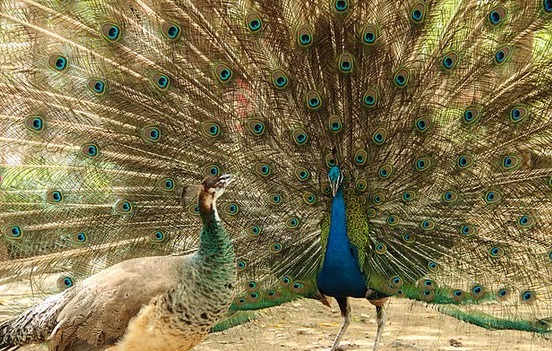
Beyond fireflies, Shah deploys parallel cases: the peacock’s lavish tail (Darwin’s puzzle of features excessive for survival), Thequran male bowerbirds spending hours arranging colorful materials to build elaborate displays one scientist called “nothing less than art,” thequranThequran and the “startling bias towards simple structural symmetry” in protein structures Thequran documented by Ard A. Louis et al. at Oxford. thequranThequran
The “guided evolution” concept is Shah’s distinctive theological contribution. He writes: “The natural mechanisms of mutation, selection, and so forth are real, but they are ultimately steered by a divine intelligence toward ordained outcomes.” thequranThequran Qur’an 71:14 (“He created you in stages”) and 71:17 (“God germinated you from the earth like a plant”) dovetail with biological gradualism. Thequran The framework positions evolution as “God’s method of creation,” resolving the perceived tension between faith and science. The central rhetorical question — “Did blind evolution ‘accidentally’ stumble on this beauty, or is there a deeper reason behind it?” — anchors the argument. Thequran
Steven Weinberg (Nobel laureate) is quoted: “Life as we know it would be impossible if any one of several physical quantities had slightly different values.” thequran Ferris Jabr (New York Times) is cited: “The extravagant splendor of the animal kingdom can’t be explained by natural selection alone.” thequran +2 The Hadith “God is Beautiful and loves beauty” serves as the theological anchor Understanding Islam linking aesthetic appreciation to spiritual instinct. Thequran
Article 3: Scientific, philosophical, and theological reflections on Qur’an 59:24
Central thesis: The cumulative case from beauty — spanning mathematical elegance, biological forms, and aesthetic principles — provides one of the most powerful and enduring arguments for God’s existence, Thequran compatible with “creation through evolution” guided by divine wisdom. Thequran
This is the most scientifically technical of the six articles. It references the Cosmic Cliffs of the Carina Nebula revealed by the James Webb Space Telescope, Thequran Einstein’s E=mc² as beauty in simplicity, Maxwell’s four equations unifying electricity and magnetism, Thequran Eugene Wigner’s “unreasonable effectiveness of mathematics,” Thequran the cosmological constant fine-tuned to approximately 10⁻¹²² in Planck units, Thequranthequran cryo-electron microscopy revealing molecular choreography (2017 Nobel Prize), David Baker’s novel protein design (2024 Nobel Prize), and AlphaFold AI predicting protein structures. The Fibonacci sequence appears in sunflower seeds (spirals of 21, 34, 55, or 89), pinecones, and flower petals. DNA’s structure embodies the golden ratio (φ ≈ 1.618): each complete cycle is 34 angstroms long, 21 angstroms wide — both Fibonacci numbers. thequran
The philosophical engagement is the most rigorous of the six. Shah surveys William Paley’s aesthetic dimensions of the watchmaker argument (“the beautiful hinge of a bivalve shell”), Thomas Aquinas’s Fifth Way (nature achieves “elegant solutions”), David Hume’s skepticism reframed through “inference to the best explanation,” Thequran Robin Collins’s fine-tuning argument, and Richard Swinburne’s Bayesian formulation: P(beautiful world|God) > P(beautiful world|naturalism). Thequran +2 C.S. Lewis’s concept of Sehnsucht — a longing evoked by beauty that no earthly experience satisfies — is developed as evidence that aesthetic desire points beyond immediate objects toward transcendent Beauty. Thequran Alvin Plantinga’s properly basic beliefs framework suggests aesthetic experiences may provide “immediate, non-inferential awareness of divine reality.” thequran
The interfaith theological breadth is notable. Beyond Qur’anic verses (32:7, 59:24, 67:2-4, 50:7-8), Shah quotes Psalm 19 (“The heavens declare the glory of God”), Romans 1:20 (God’s attributes “clearly perceived” through creation), Thequran Al-Ghazali (distinguishing sensible from intelligible beauty — “knowledge of God is the perfect perception of beauty”), thequran Maimonides (beauty linked to necessary existence), Abraham Joshua Heschel (“I asked for wonder and He gave it to me”), Thequran Hans Urs von Balthasar (beauty as “the last thing which the thinking intellect dares to approach”), Thequran Jonathan Edwards (beauty constitutes the very structure of being), Thequran and Arthur Peacocke (“creation through evolution”). Thequranthequran The article credits AI assistance (“with help of Claude AI”).
Article 4: “A blind and random world should be tasteless”
Central thesis: If nature were truly blind and random, it “should be tasteless — devoid of the patterns, colors, and joys that we call beautiful.” Yet our world is saturated with beauty at all levels. ThequranThequran This contrast invites the inference that the world is the work of an Artist, not an accident. thequran +2
The title metaphor — synesthesia linking blindness/randomness to tastelessness — is the article’s most powerful rhetorical device. Shah builds an ascending philosophical ladder from Plato (the “ladder of love” in the Symposium, ascending from love of a single beautiful body to Beauty itself), Thequran through Plotinus (all worldly beauty emanates from “the One”), Augustine (“Late have I loved You, O Beauty ever ancient, ever new”), Aquinas (God is Beauty itself; beauty is one of the transcendentals alongside truth and goodness), Thequran Kant (beauty carries “universal validity”; “The beautiful is the symbol of the morally good”; the sublime makes us aware of our rational-spiritual nature), to C.S. Lewis (“If I find in myself desires which nothing in this world can satisfy, the only logical explanation is that I was made for another world”). thequran
This article has the broadest interfaith scope. Beyond Islamic and Christian sources, Shah draws from Hindu theology: the Bhagavad Gita (“Wherever you see something splendid, wealthy or powerful, know that it springs from but a spark of My splendor”), Thequran the concept of Satyam, Shivam, Sundaram (Truth, Goodness, Beauty as aspects of Brahman), Krishna’s divine beauty eliciting spiritual ecstasy, and Ananda (bliss) in worship understood as bliss of Brahman. thequran Sufi mysticism contributes through Rumi: beloved faces and lovely forms are mirrors reflecting the Beloved.
The anti-materialist argument has three prongs. First, the “surplus beauty” argument: sunsets, the night sky, classical music, and higher mathematics have no survival benefit — “unneeded beauty” is lavishly poured out, like an artist embellishing beyond function. thequranThequran Second, the “scope” argument: sexual selection explains only one kind of beauty (“Oh, he’s hot!”) but not appreciation for mathematical equations, distant nebulas, or fluid dynamics. thequran Third, Frank Wilczek’s observation (Nobel laureate) that the simplest, most beautiful equations turn out to be true — the universe’s laws are guided by aesthetic intuition that materialism cannot explain. thequranThequran
Article 5: Aesthetic transcendence — beauty as bridge between material and spiritual
Central thesis: Beauty is not an incidental by-product of a cold universe but a deliberate “signpost to the divine” — a universal phenomenon that lifts the human soul toward higher truth Thequran and serves as a bridge between material and spiritual realms. Thequranthequran
This article functions as the philosophical capstone of Shah’s project. It systematically surveys Western philosophy (Plato, Plotinus, Aquinas, Augustine, Kant), Islamic thought (the Hadith “God is beautiful and loves beauty,” divine names Al-Musawwir and Al-Jamīl, Sufi aesthetics), Christian theology (transcendentals, sacramental worldview, icons as “windows to heaven,” Dostoevsky’s “Beauty will save the world”), and Hindu perspectives (Satyam Shivam Sundaram, Krishna’s beauty, Ananda). Three arenas of beauty are analyzed: nature, artistic creativity, and moral action — each serving as a distinct pathway to transcendence.
The argument’s structure is cumulative rather than deductive. Shah acknowledges beauty is “not mathematical proof but a cumulative impression” complementing other lines of reasoning. Thequran He quotes Pope John Paul II to artists: by crafting beauty, they “sense in it some echo of the mystery of creation with which God has wished to associate you.” thequran St. John of the Cross referred to God as “silent music” and “sounding solitude.” Thequran The unnamed physicist studying swimming starfish larvae who asked “Why is there so much beauty?” serves as the article’s driving question. thequranThequran
The Islamic art section provides extended analysis of arabesque, geometric design, calligraphy, and mosque architecture as spiritual expressions — material forms directing the mind to the “Great Geometer.” thequranThequran Inner beauty (virtues) parallels outer beauty: Islam calls humans to “beautify ourselves inwardly” with moral excellence, Thequran and the Prophet Muhammad’s character (uswa ḥasana — “excellent model”) is itself presented as aesthetic evidence of prophethood. thequran
Article 6: Redirecting the atheist gaze from suffering to splendor
Central thesis: Atheists who focus on suffering as evidence against God are looking at only one side of the ledger. Thequran When the gaze is redirected to the universe’s overwhelming beauty and order, the evidence for a purposeful Creator far outweighs the objection from suffering — which itself serves as a necessary “tool for evolution.”
Sir David Attenborough’s agnosticism serves as the article’s central interlocutor. Shah argues that Attenborough’s focus on parasites and predation reflects selective attention. Thequran He counters with Darwin’s own concluding paragraph from The Origin of Species: “From the war of nature, from famine and death, the most exalted object which we are capable of conceiving, namely, the production of the higher animals, directly follows. There is grandeur in this view of life.” Islamforwest Suffering, Shah argues, is the mechanism through which evolution generates extraordinary beauty and complexity ThequranThequran — the net balance favors purposeful design. Thequran
The scientific evidence is deployed specifically against the “problem of evil.” Oxford research (Ard A. Louis et al.) finding a “startling bias towards simple structural symmetry” in protein structures demonstrates that “Mother Nature plays favorites and believes in the elegance of simplicity.” Thequran +2 The spider’s orb web exhibits nearly perfect geometric symmetry that is not more efficient at catching prey than irregular webs — beauty exceeding function. ThequranThequran Honeycomb hexagons represent “the perfect shape to store the largest possible amount of honey while using the least amount of wax.” thequran +2 Pew Research is cited: 93% of Americans report a sense of awe in nature at least a few times per year — described as an “epistemic emotion” that challenges existing understanding and motivates searching for explanations.
Classical Islamic exegesis is uniquely prominent here. Ibn Kathīr states the observer will find “no discrepancy or disproportion in the creation of Allah — no cracks or splits, only a perfect, masterful creation.” Imām al-Ṭabarī reads the sky’s perfection as God’s “flawless craftsmanship.” Fakhr al-Dīn al-Rāzī argues the absence of inconsistency manifests underlying order and wisdom. Thequran Al-Qurṭubī explains that when God perfected everything (32:7), each creature was given suitable form and symmetry. thequran Seyyed Hossein Nasr provides the mystical frame: “The whole universe is nothing but the interplay of the reflections of God’s Names and Qualities.” Thequran Allan Sandage (astronomer) is quoted: “It was my science that drove me to the conclusion that the world is much more complicated than can be explained by science.”
The concept of “anesthesia of familiarity” — the numbing effect of taking beauty for granted — is used as both diagnosis and cure: the article aims to reawaken the reader’s perception, Thequran redirecting the gaze from suffering to splendor.
The unified architecture across all six essays
Across these six articles, Shah constructs an interlocking argumentative edifice with remarkable consistency. Several elements recur in every piece:
Three Qur’anic verses form the project’s foundation. Qur’an 32:7 (“He made beautiful all that He created”) establishes beauty as intentional. ThequranThequran Qur’an 67:3-4 (the challenge to find any flaw — “your vision will return humbled”) frames creation’s perfection as an empirical invitation. ThequranThequran Qur’an 59:24 (God as Creator, Maker, Fashioner with “the most beautiful names”) identifies beauty’s source. Thequran +2 These three verses appear in all six articles without exception.
The “aesthetic surplus” concept is the philosophical engine. The argument recurs in every article: beauty in nature consistently exceeds what survival or function requires. Thequran Fireflies didn’t need bioluminescence. Spider webs don’t need geometric perfection. The night sky doesn’t need to be beautiful. Equations don’t need to be elegant. This surplus — beauty poured out beyond necessity — is the datum that materialism struggles to explain and theism naturally predicts. ThequranThequran
The Hadith “God is Beautiful and loves beauty” serves as the theological anchor in all six pieces, linking the aesthetic argument directly to prophetic authority IslamiCity and framing beauty appreciation as a form of dhikr (remembrance of God). Thequran
Six key quotes recur across multiple articles: Einstein on comprehensibility, Thequran Paul Davies on the “overwhelming impression of design,” Fred Hoyle on the “super-intellect,” thequran Swinburne’s Bayesian probability, Thequran C.S. Lewis’s Sehnsucht, Thequran and Augustine’s “O Beauty ever ancient, ever new.” Thequran These function as a stable intellectual coalition drawn from physics, philosophy, and theology.
The dominant metaphors — the universe as sacred book, Thequran beauty as divine signature, Thequran nature as mirror reflecting God’s attributes, ThequranThequran and beauty as “lamps along a trail leading to the Source of all light” Thequran — create a coherent poetic framework across the corpus.
Beyond these six: a broader catalog of 29 related articles
The blog contains at least 29 articles directly or closely related to the beauty-nature-God theme. Beyond the six analyzed above, notable additional pieces include: “Beauty in Nature as a Path to God: An Islamic Perspective” (April 2025 and September 2025 versions); “The Testimony of Beauty: How Natural Aesthetics Points Toward Divine Design” (May 2025); “Beauty in Flowers as a Sign of the Divine” (June 2025); “Guided Evolution and the Beauty of Butterflies: A Commentary on Qur’an 32:7” (October 2025); Thequran “The Convergence of Aesthetic Intuition and Mathematical Order” (February 2026); “Quran 50:6: Built, Adorned, and Without Rifts” (February 2026); “Celestial Signs in the Qur’an” (April 2025); “The Marvel of Avian Acrobats: An Integrated Study of Hummingbird Flight” (December 2025); and comparative articles including “Biological Origins and Divine Intent: A Comparative Synthesis” and “Zakir Naik Versus Zia H Shah.” This body of work constitutes one of the most sustained and comprehensive explorations of the “argument from beauty” in contemporary Islamic apologetics. Thequran
Conclusion: a cumulative case built on convergence
Shah’s project is distinctive for three reasons. First, it refuses the science-faith dichotomy: guided evolution is presented not as a compromise but as the most intellectually honest reading of both scripture and evidence. ThequranThequran Second, the interfaith breadth — drawing seriously from Plato, Aquinas, Kant, Lewis, Hindu scripture, and Sufi mysticism alongside Qur’anic exegesis Thequran — positions the aesthetic argument as universal rather than sectarian. Third, the cumulative methodology — Shah explicitly states that beauty is “not mathematical proof but a cumulative impression” ThequranThequran — represents an epistemologically modest yet persuasive approach. The six articles together demonstrate that whether one looks at firefly biochemistry, protein symmetry, cosmic fine-tuning, or the golden ratio in DNA, the same pattern emerges: a universe that is not merely functional but extravagantly beautiful, ThequranThequran pointing — in Shah’s reading — to a Creator who is Himself “the Most Beautiful.” thequranThequran



 The Glorious Quran and Science
Leave a comment