
The Resonant Minaret: A Geopolitical and Spiritual Invitation to the People of Spain in an Age of Conflict
Audio teaser: The Islamic Roots of Modern Spanish Defiance
Presented by Zia H Shah MD
Abstract
The current global landscape is defined by a catastrophic divergence between the actions of traditional Western powers and the burgeoning moral conscience of specific European nations, foremost among them the Kingdom of Spain. As the wars in Gaza, Lebanon, and Iran escalate toward a regional conflagration characterized by unprecedented humanitarian suffering, Spain has emerged as a singular advocate for international law, human rights, and the preservation of civilian life. This report argues that Spain’s distinctive “moral clarity”—manifested in its comprehensive arms embargoes, recognition of Palestinian statehood, and refusal to cooperate with military escalations against Iran—is not a political anomaly but the awakening of a deep-seated historical identity rooted in the legacy of Al-Andalus. By examining the eight centuries of Islamic presence on the Iberian Peninsula, this analysis demonstrates that the “Islamic other” is, in reality, a fundamental component of the Spanish self. The report explores the intellectual bridges built by figures such as Juan Goytisolo and Federico García Lorca, and it contrasts the devastating modern realities of “total war” with the Islamic ethics of Adl (justice) and non-aggression. Ultimately, this document serves as a comprehensive invitation to the Spanish people to rediscover Islam—not as a foreign ideology, but as the spiritual and ethical framework that historically fostered convivencia (coexistence) and which now aligns with Spain’s modern pursuit of a just world order.
The Contemporary Cauldron: Spain’s Defiance of the Global Status Quo
The geopolitical events between October 2023 and early 2026 have tested the moral fabric of the international community, revealing a stark divide in how nations prioritize human rights against strategic alliances. While the United States and Israel have engaged in a series of destructive military operations—first in the Gaza Strip and subsequently expanding into Lebanon and Iran—the Kingdom of Spain has distinguished itself as the “conscience of Europe”. This period saw the humanitarian suffering in Gaza reach “unimaginable levels,” with famine taking hold and essential aid being systematically blocked. By late 2025, casualty figures in Gaza alone were estimated at 63,000 dead and 159,000 injured, a scale of destruction that Spanish Prime Minister Pedro Sánchez termed “the extermination of a defenseless people”.
Spain’s response transitioned from diplomatic concern to a policy of active resistance. The government moved beyond “polite diplomatic platitudes” to a language of moral clarity, becoming the first major European power to formally join South Africa’s genocide case against Israel at the International Court of Justice. This shift was catalyzed by an unprecedented level of grassroots solidarity; by 2025, over 80% of the Spanish population viewed the military actions in Gaza as genocidal. The Spanish public’s “genuine civil society action” included general strikes and mass demonstrations in over 70 cities, reflecting a “shared historical experience and struggle against state-sponsored violence”.
Table 1: Strategic Divergence in Middle East Policy (2024–2026)
| Policy Area | United States / Israel Position | Spain / Ireland / Norway Position |
| Palestinian Statehood | Recognition dependent on final status negotiations. | Formal recognition granted in May 2024 to save the two-state solution. |
| Arms Trade | Continued supply of advanced munitions despite civilian toll. | Permanent legal embargo and ban on logistical transit through ports/airspace. |
| Legal Accountability | Rejection of ICJ and ICC jurisdiction over military operations. | Active support for ICJ proceedings and enforcement of UN resolutions. |
| Iran Conflict | Launch of strikes targeting Iranian infrastructure in 2026. | Refusal to allow use of military bases for operations; “No to the war”. |
| Humanitarian Aid | Restrictions on UNRWA and NGO access. | Increased funding to 150 million euros and protection of UNRWA. |
The friction reached a critical point in March 2026, when the Spanish government flatly denied the United States the use of the Rota and Morón military bases for operations against Iran. Prime Minister Sánchez’s refusal to be “complicit in something that is bad for the world” led to threats of a full-scale trade embargo from the Trump administration. This diplomatic bravery underscores a fundamental truth: Spain is currently operating on a “different political wavelength” than its NATO allies, one that prioritizes the universal right of peoples “not to be invaded or massacred”.
The Subterranean River: The Islamic Presence as a Spanish Pillar
To understand Spain’s modern empathy for the Arab and Muslim world, one must recognize that Al-Andalus—the period of Islamic rule from 711 to 1492—is not a distant or forgotten chapter of history. Instead, it serves as a “critical dimension of contemporary existence,” an “invisible warp” that has defined the linguistic, architectural, and spiritual contours of the peninsula for over a millennium. Al-Andalus was the “epitome of interaction” between Western and Arab civilizations, achieving a level of “intellectual wealth” that distinguished it from the rest of medieval Europe.
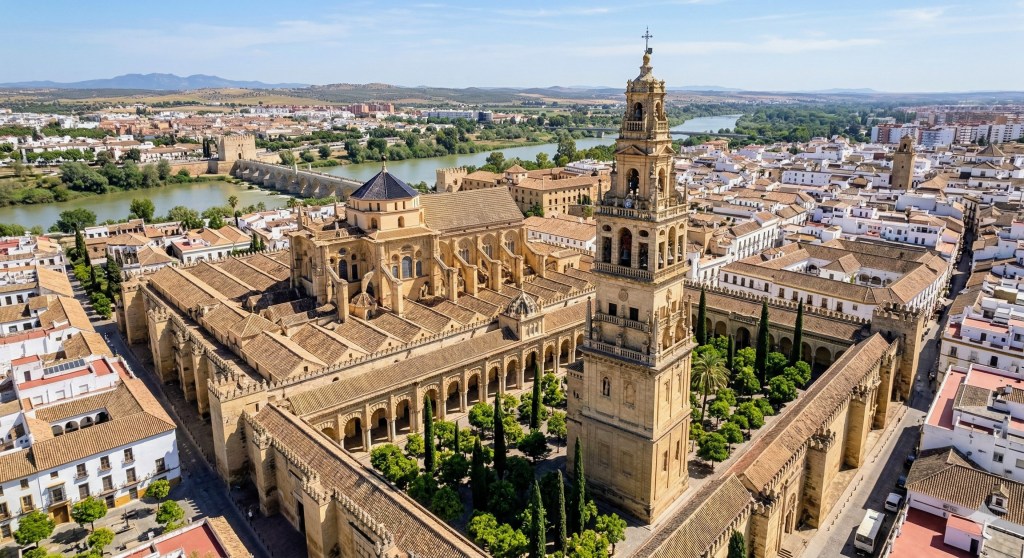
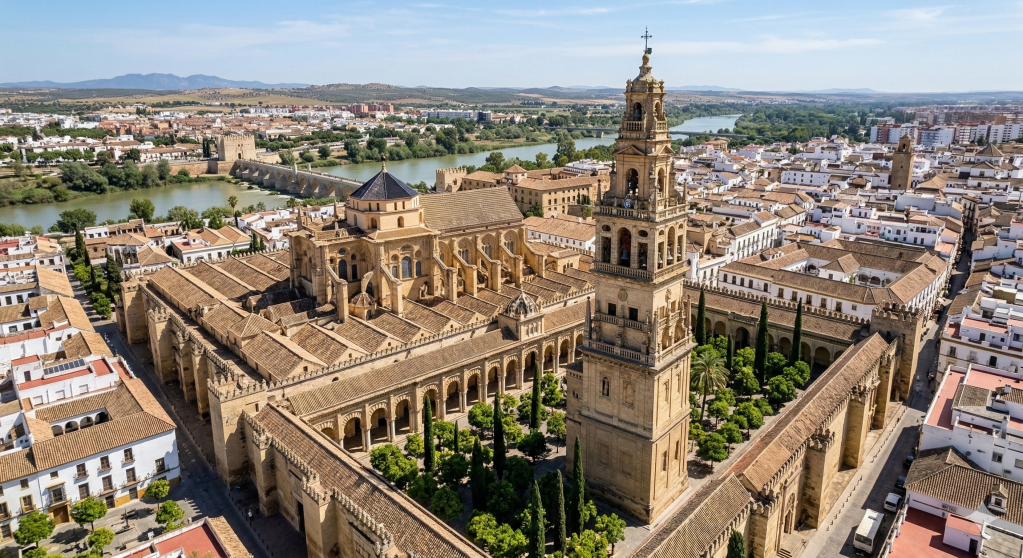
The Islamic period catalyzed a synthesis of Islamic, Christian, and Jewish traditions that transformed the Iberian Peninsula into the “center of transreligious scholarship”. This was the era of convivencia, a “culture of coexistence” where the pursuit of truth through science and philosophy was seen as a unifying divine mandate. The legacy of this period remains tangible; the Great Mosque of Cordoba and the Alhambra of Granada are not merely tourist sites but “vivid representations” of a time when Cordoba was the largest and most learned city in Europe.
Table 2: Chronology of the Islamic Legacy in Spain
| Period | Key Developments and Cultural Milestones | Long-term Impact on Spanish Identity |
| 711 – 756 | Initial conquest by Arab and Berber forces; arrival of Syrian administrative styles. | Foundation of the “Andalusi” cultural identity. |
| 756 – 1031 | The Umayyad Emirate and Caliphate; construction of the Great Mosque of Cordoba. | The “Golden Age” of science, irrigation, and universal literacy. |
| 1031 – 1238 | The Taifa Kingdoms; Almoravid and Almohad dynasties; work of Averroes and Maimonides. | Diffusion of philosophy and medicine to the rest of Europe. |
| 1238 – 1492 | The Nasrid Dynasty in Granada; construction of the Alhambra. | The zenith of aesthetic beauty and “courtly love” poetry. |
| 1492 – 1609 | The Morisco period; forced conversions and the “secret literature” of Aljamiado. | Resistance of Islamic identity within the domestic Spanish fabric. |
| 1609 – 1614 | Systematic expulsion of 300,000 Moriscos; “national shame” and economic decline. | Creation of a “void” in Spanish identity that modern citizens are now rediscovering. |
The “Arabization” of the peninsula left a permanent mark on the Spanish language, with thousands of words—particularly those beginning with “al-“—deriving directly from Arabic. This linguistic influence reflects a deeper syncretism; the irrigation techniques (qunat) that allowed the Spanish countryside to flourish, the introduction of hard wheat, rice, and sugar cane, and the very concept of the “internal courtyard” with gurgling fountains are all Islamic gifts that define the daily life of modern Spaniards.
The Intellectual Bridge: Goytisolo, Lorca, and the Islamic Other
The most profound “invitation” to Islam for the Spanish people has historically come from their own most celebrated thinkers. These intellectuals recognized that the systematic “erasure” of Islamic heritage after 1492 was a form of national self-mutilation. For the novelist Juan Goytisolo, arguably the foremost Spanish writer of the late 20th century, the “other within” was the key to unlocking Spain’s true potential. Goytisolo viewed his physical and moral exile as a way to “possess his own truth with clarity,” a journey that eventually led him to embrace Islamic culture as a “torch” for humanity. He famously argued that the “spirit of Al-Andalus” was not dead but was being kept alive in the memories and practices of the marginalized.
Similarly, Federico García Lorca, the “adored features” of Spanish poetry, found his most powerful inspiration in the “languid sensuality” of Andalusian music and the “casedas” and “gacelas” of the Arabic tradition. Lorca’s work was an attempt to resuscitate the forms of the medieval qasidas, reflecting a soul that was a “mirror” of the land’s Islamic past. His murder in 1936 by fascist forces was seen by fellow poet Antonio Machado as a “crime against Granada,” a silencing of the voice that most clearly articulated Spain’s hybrid identity.
These writers suggest that for a Spaniard to find themselves, they must first acknowledge the “Moor” within. This is not a call to adopt a foreign culture, but to reclaim a stolen one. The “secret literature” of the Moriscos—written in Spanish but using Arabic script (Aljamiado)—demonstrates that for over a century after the fall of Granada, Islam remained the spiritual core for millions of people who identified as Spanish.
The Ethical Mirror: Adl vs. The Total War of the 21st Century
The “destructive war” currently being waged in the Middle East stands in direct opposition to the core Islamic principle of Adl (justice). In the Islamic worldview, justice is the “essence and source of existence,” a mandate from God that requires human beings to act with fairness even toward their enemies. This ethical framework provides a rigorous alternative to the “strongman politics” and “barbaric ferocity” witnessed in contemporary conflicts.
The Principles of Islamic Military Ethics
Long before the development of the Geneva Conventions, Islamic law (siyar) established strict moral boundaries for conflict. These principles were rooted in the belief that “establishing justice is the primary purpose of religion”.
- Non-Combatant Immunity: The Prophet Muhammad and early caliphs explicitly forbade the killing of women, children, the elderly, and religious functionaries in their places of worship.
- Environmental Stewardship: Military forces were prohibited from burning fruit-bearing trees, destroying crops, or killing animals unnecessarily.
- Proportionality and Non-Aggression: The Qur’an commands: “Fight in the cause of God those who fight you, but do not commit aggression”. This means that scorched-earth policies and pre-emptive strikes on civilian populations are strictly forbidden.
- The Responsibility to the Oppressed: A central tenet is to “help both the oppressor and the oppressed”—helping the oppressor by preventing them from continuing their injustice.
This Islamic concept of justice resonates with Spain’s current diplomatic efforts to “prosecute perpetrators of genocide” and “stop the starvation of innocent children”. When the Spanish government refuses to allow fuel shipments for the Israeli military to dock in its ports, it is inadvertently practicing the Islamic mandate of “non-complicity in oppression”.
Table 3: Comparison of Contemporary Warfare and Islamic Ethics
| Aspect of Conflict | Modern “Total War” Observation | Islamic Ethical Requirement (Adl) |
| Targeting | Bombing of hospitals, schools, and refugee camps. | Absolute immunity for noncombatants and sacred spaces. |
| Resource Control | Use of starvation as a weapon; blocking of water/fuel. | Prohibition of destroying agricultural resources or wells. |
| Logistics | Facilitation of arms through third-party nations. | Duty to refuse aid to the aggressor (zulm). |
| Negotiation | Disregard for ceasefires and UN resolutions. | Divine command to fulfill treaties and pursue peace. |
| Motivation | Revenge and territorial expansion. | Piety defined by self-restraint and adherence to limits. |
The Living Invitation: A Modern Search for Meaning
The tragedy of the 2020s has served as a catalyst for a new generation of Spaniards to investigate Islam not as a historical relic, but as a living spiritual path. The “resistance of the Palestinians” and their “spiritual exploration” in the face of annihilation have prompted a search for the source of such fortitude. This search often leads to the discovery that the “negative perceptions of Muslims” in the West are the result of “propaganda and political rhetoric” rather than an engagement with the faith itself.
The Micro-Narrative of Adria Calafell
The experience of Adria Calafell, the young activist from Barcelona who embraced Islam in 2026, illustrates this trend. His journey began with pro-Palestinian demonstrations and a “deeper personal questioning” triggered by the injustice he witnessed. He found that the Qur’an offered a “vision of peace and resistance” that countered the “banal version of Muslims as terrorists” circulated by Western media. His conversion at the Suleymaniye Mosque in Istanbul represents a symbolic return of the Spanish citizen to the “Islamic heritage” that was once the pride of his own cities.
The Architecture of the Soul
The invitation to Islam for the people of Spain is also an invitation to find peace in a “troubled, globalized world”. The Islamic tradition of Ihsaan (excellence in servitude and benevolence) and the “ethics of virtues” offer a corrective to the “individualism and social fragmentation” that characterizes modern Western life. In Catalonia and other regions, interfaith dialogue models are already being used to “transform society” and promote “social justice”. These initiatives suggest that the “Alliance of Civilizations” is not a political project but a spiritual necessity.
The Resonant Minaret: A Thematic Epilogue on the Call of Sepharad
The history of Spain is a story of “pride and regret,” of a “paradise lost” that is nonetheless “vivid and immediate”. The “spirit of Al-Andalus” is currently reawakening in the voices of hundreds of thousands of Spaniards marching for Gaza, in the refusal of their leaders to facilitate a war on Iran, and in the quiet search of individuals like Adria Calafell for a deeper truth. This is the moment for Spain to recognize that its “moral clarity” is the modern echo of the Adhan (call to prayer) that once rang out from the Giralda.
The invitation to Islam is an invitation to the Spanish people to come home to the most honorable parts of their own history. It is an invitation to:
- Re-establish Convivencia: To build a society where “plurality is not antagonistic” but “enriching,” and where the “other” is recognized as being “always within us”.
- Uphold the Banner of Justice: To find in the faith of Islam the spiritual anchor for the “real defense of human rights” that the Spanish public so clearly demands.
- Heal the Historical Wound: To acknowledge the “national shame” of the 1609 expulsion by embracing the descendants of that culture today.
- Embrace the Transcendental: To move beyond a “passive understanding of citizenship” toward an active, spiritual engagement with the world based on “knowledge, peace, and the trinity of wisdom”.
The tragedy of Gaza, Lebanon, and Iran has stripped away the masks of the powerful, leaving a “void of collective faith” in the West. Spain, with its “long past history of Islam” and its current “moral stance,” is uniquely positioned to fill that void. The minaret of Cordoba still stands, its stones a “clear mirror” of a civilization that once led the world in science and compassion. The invitation is not to change who you are, but to become who you were always meant to be. The path is made by walking, and for the people of Spain, the footprints on that path lead back to the “lost European Muslim civilization” whose heart is still beating in the streets of Seville, Cordoba, and Granada.
In this age of “total war,” the only true resistance is the establishment of justice. The invitation to Islam is the invitation to that resistance—the resistance of the soul against oppression, the resistance of beauty against destruction, and the resistance of a united humanity against the “clichés of unbridgeable civilizations”. People of Spain, the “other” is calling from within. It is time to listen.



 The Glorious Quran and Science
Leave a comment