
An Invitation to Return: Islam and the Soul of Spain
Presented by Zia H Shah MD
Abstract
This letter is addressed to the people of Spain — a nation whose soil was once the garden of civilizations, where Muslim, Christian, and Jew lived beneath the same Andalusian sky and together produced the most luminous chapter in medieval human thought. Today, as the world witnesses wars that test every conscience, Spain has distinguished itself among nations by standing on the side of justice. This is no accident of politics. It is the stirring of something deep — a moral memory embedded in the very stones of Granada, Córdoba, and Seville. This invitation is not a call to abandon what is good in you, but a call to recognize what you already carry: a tradition of mercy, of reason, of beauty, and of God. It is a call home.
I. The World Is Burning — And Spain Has Seen Clearly
The smoke over Gaza does not dissipate. It rises day after day, carrying with it the names of children — Mariam, Yusuf, Adam, Fatima — names that echo in the minarets of a faith the world is watching be bombed into rubble. The hospitals struck. The schools leveled. The refugees told again and again that there is nowhere left to go. And now Lebanon, and now Iran — the arc of destruction widens, drawing lines of fire across the map of the Muslim world while much of the West averts its gaze or signs the ammunition contracts.
But Spain did not avert its gaze.
Spain — almost alone among the nations of Western Europe — looked upon what was happening in Gaza and called it by its name. The Spanish government recognized the State of Palestine. Spanish dockworkers refused to load arms shipments bound for the killing. Spanish streets filled with hundreds of thousands of citizens who said, with their bodies and their voices: not in our name. Prime Minister Sánchez stood in international forums and said what others were paid to silence.
Why? One may ask why Spain, of all countries, felt this so viscerally.
Perhaps because Spain has not forgotten. Perhaps because somewhere beneath the centuries, beneath the Reconquista and the Inquisition and the long amnesia of empire, Spain remembers what it was like to be on the other side of the sword. Spain remembers Al-Andalus.
II. What Was Lost: The Memory of Al-Andalus
For nearly eight centuries — from 711 to 1492 — the Iberian Peninsula was home to one of the most extraordinary civilizations the world has ever known. The Muslims who arrived were not conquerors in the modern sense; they were builders. They built Córdoba into the largest and most sophisticated city in all of Europe — a city of 500,000 souls, with 700 mosques, 300 public baths, and a library containing over 400,000 volumes at a time when the largest library in Christian Europe held perhaps 400 manuscripts.
They named the rivers. Guadalquivir — Wādī al-Kabīr, the Great River. Guadalajara — Wādī al-Ḥijāra, the Valley of Stones. Gibraltar — Jabal Ṭāriq, the Mountain of Tariq. Walk across Spain today and you are walking across the map of Islam, renamed but never erased.
The scholars of Al-Andalus — Ibn Rushd (Averroes), Ibn Ṭufayl, Ibn Ḥazm, Maimonides (who wrote in Arabic), Alfonso X who translated their works into Castilian — created the intellectual bridge across which Greek philosophy passed into the European Renaissance. Without the scholars of Córdoba and Toledo, there is no Thomas Aquinas. Without Al-Andalus, the European Enlightenment loses its foundations. The debt is extraordinary and largely unacknowledged.
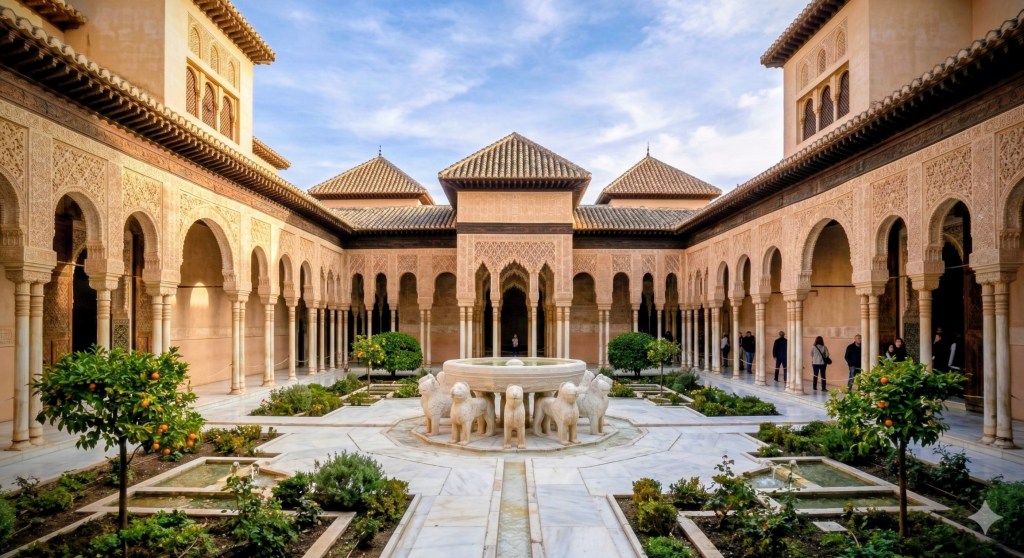
And beneath the scholarship: the poetry. The music. The architecture. Walk into the Alhambra in Granada and you step into a dream of God rendered in stone and water and light. The Nasrid architects wrote prayers into every wall. Wa lā ghālib illā Allah — “There is no victor but God” — inscribed in ten thousand places, as if the very palace were one continuous act of remembrance.
This is what was lost in 1492. Not only by the Muslims expelled or forced to convert, but by Spain itself — by Europe itself. The expulsion of the Moors and Jews in the same year Columbus sailed west was not only a moral catastrophe; it was a civilizational wound that bled for centuries.
Spain, more than any other European nation, carries this wound. And wounds, when they are not healed, become doors.
III. What Islam Is: Beyond the Noise of War
We must speak plainly here, because the noise of geopolitics has distorted nearly everything.
Islam is not what bombs do in its name. Islam is not what authoritarian governments claim when they invoke it to justify their power. Islam is not the caricature constructed over decades of media designed to make you afraid.
Islam — the word itself — means peace through surrender to God. Not submission to a man, or a state, or a clergy, but to the One who created the galaxies and the grape and the human heart with its astonishing capacity for love.
The Prophet Muhammad ﷺ, peace be upon him, was an orphan who became a shepherd, a merchant, a husband — a man who mended his own sandals and swept his own home and wept openly at the death of a child. He declared that “none of you truly believes until he loves for his brother what he loves for himself.” He said that “the best among you are those who are best to their families.” He told his companions that a woman who gave water to a dying dog entered Paradise for it. He forbade the cutting of trees in war. He released prisoners. He forgave his enemies at the conquest of Mecca — a forgiveness so total that the conquered could not believe it.
This is the man whose tradition the weapons manufacturers have tried to make you fear. This is the prophet whose Qur’an was recited in the courts of Córdoba while the rest of Europe was in darkness.
The Qur’an itself — read it without the filter of politics and you encounter a text of staggering literary power and spiritual depth. It speaks of the mercy of God in terms that return again and again like a refrain: Al-Raḥmān, Al-Raḥīm — the Infinitely Merciful, the Abundantly Compassionate. These two names of God open every chapter of the Qur’an. Every one. Before anything else — before law, before prophecy, before history — mercy.
The Qur’an speaks to the conscience directly. It asks:
“Have you seen the one who denies the faith? It is he who turns away the orphan, and does not encourage feeding the poor.” (107:1-3)
In Islam, faith without justice is not faith. Prayer without mercy is hollow ritual. The deen — the way of life — is not a Sunday obligation but a continuous orientation of the heart toward what is true, what is beautiful, what is just.
IV. The Five Pillars as a Human Architecture
Consider what Islam asks of those who embrace it:
The Shahada — the declaration of faith: Lā ilāha illā Allāh, Muḥammadun rasūlu Allāh — “There is no god but God, and Muhammad is His messenger.” This is not a formula. It is a liberation. It means that no human being, no government, no ideology, no fear owns you. Only God. And God, in Islam, is not a tyrant but the ground of all love and all being.
Salah — prayer, five times each day. Not as burden but as rhythm. As return. As the bird returns to the branch, as the tide returns to the shore, the human being turns, five times each day, toward the Source. In a world that makes us strangers to our own souls, prayer is the insistence that we have souls at all.
Zakat — obligatory giving, a fixed portion of one’s wealth distributed to the poor. Not charity in the sense of condescension, but purification — the acknowledgment that wealth is a trust, not a possession. The word zakat means both “purification” and “growth.” What you give away, grows. What you hoard, rots.
Sawm — fasting during Ramadan. Thirty days of hunger and thirst, yes — but also of poetry and prayer and breaking bread together at sunset, of solidarity with the hungry who have no iftar waiting, of the discovery that the body is not the master of the self.
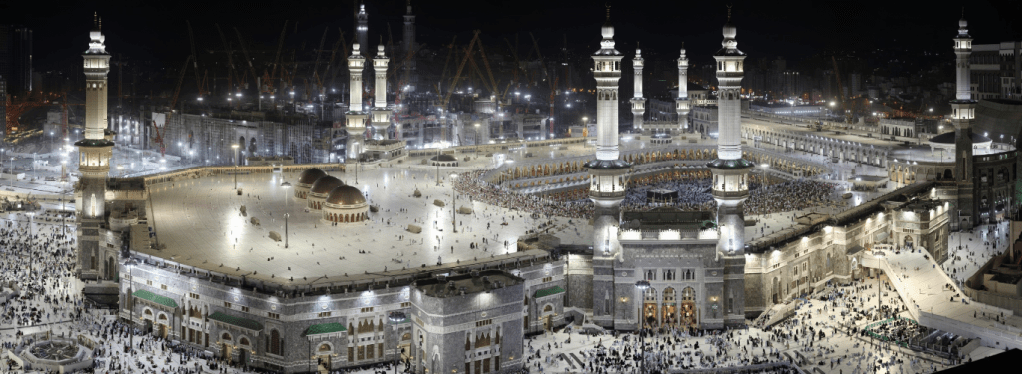
Hajj — the pilgrimage to Mecca. Every Muslim who is able stands on the plain of Arafat — Arab and African and Asian and European — in the same white cloth, with no mark of rank or wealth or race. The king and the beggar stand as equals before God. This is not metaphor. It is one of the most powerful enacted realities in human civilization.
This is the architecture of a human life ordered toward God. It is not oppression. It is orientation.
V. Spain, Justice, and the Islamic Heart
There is a concept in Islam: ‘adl — justice. It is one of the names of God. And it is not peripheral but central: the Qur’an returns to justice as obsessively as it returns to mercy, because in God these two are not in tension but identical.
When Spain’s citizens flooded the streets for Gaza, they were acting from ‘adl. When Spanish dockworkers refused to arm the killing, they acted from ‘adl. When Spain recognized Palestinian statehood and stood against the consensus of imperial convenience, it acted from ‘adl.
The people of Spain do not need to be taught justice. They are already practicing something that Islam names and sanctifies.
What Islam offers is not a replacement for what is good in Spain, but a home for it — a theological grounding, a community of practice, a tradition of 1,400 years that has grappled honestly with the questions of power, mercy, war, peace, beauty, and death. Islam says: your outrage at the bombing of children is not merely political. It is sacred. Your refusal to normalize atrocity is not mere sentiment. It is faith.
And faith, in Islam, does not ask you to turn away from the world. It asks you to face it — fully, honestly, with God at your back.
VI. Returning, Not Converting
We do not ask the people of Spain to become strangers to themselves. We ask something more interesting: to remember.
The Spanish language carries Islam within it — ojalá from in shā’ Allāh, “if God wills.” Hasta from ḥattā, “until.” Aldea from al-day’a, “the village.” Azul from lāzaward, blue. Arroz, aceite, azafrán — rice, oil, saffron — the table of Spain is an Arabic table. The very spices of the Spanish kitchen arrived through Muslim hands.
The great mystics of Christianity who shaped Spanish spiritual life — Ramón Llull, John of the Cross, Teresa of Ávila — wrote in a spiritual vocabulary saturated with Islamic Sufi thought. The concept of the nada in John of the Cross mirrors the Sufi concept of fanāʾ, annihilation of the ego in God. The fire of divine love that burns through Teresa’s Interior Castle burns in the same furnace as Rumi’s Masnavi.
You are not strangers to this. It is in your rivers. It is in your food. It is in your poetry and your mysticism and your moral instincts. Embracing Islam is not departure. For Spain, more than almost any other European nation, it is return.
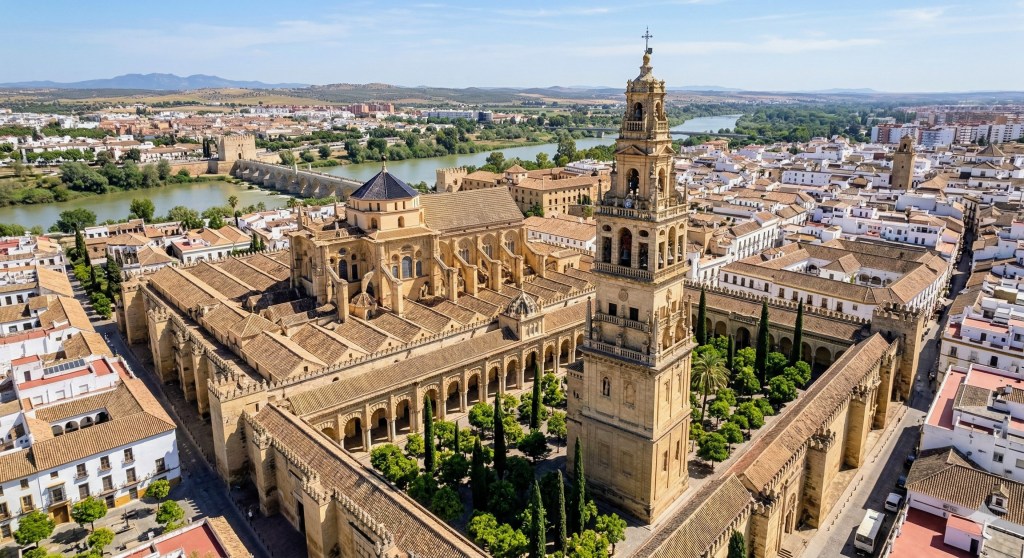
Come home to Córdoba — not the city of stone, but the civilization of the soul that Córdoba represented: reason and faith together, beauty as a form of worship, justice as the name of God, the human being as God’s khalīfa — trustee — on a fragile and sacred earth.
VII. A Direct Invitation
To you, reading this — wherever you are in Spain, whether in Madrid or Málaga, Barcelona or Bilbao, Sevilla or the village your family has held for generations:
You have already shown the world what your moral conscience looks like. You have already refused to look away when others looked away. You carry something that the world needs desperately — and Islam recognizes it, names it, shelters it, and deepens it.
If you have ever looked at the sky and felt something vast that language almost reaches. If you have ever wept at an injustice you could not fix and felt that the weeping itself was important. If you have ever given without expecting return and felt, in that moment, more fully yourself than at any other time — then you have already touched what Islam calls fitra: the original human nature, the factory setting of the soul, its orientation toward God.
All Islam asks is that you name what you already sense. That you bow — not to a man or a church or a state — but to the Ground of Being itself, and rise from that bowing more free, more clear, more fully you.
The door of Islam is open. It has always been open. It requires no intermediary, no confession to a priest, no baptism, no lengthy initiation. A sincere utterance of the heart: There is no god but God — and the door opens.
The Qur’an says:
“Remember Me, and I will remember you.” (2:152)
This is the whole invitation. This is the whole religion.
Remember. Be remembered. Return.
Epilogue: What the Alhambra Remembers
There is a room in the Alhambra where the light changes every hour. The geometry of the muqarnas ceiling breaks the afternoon sun into a hundred fragments, and the fragments move like living things across the walls. Tourists pass through this room in minutes. But if you sit in it long enough, something happens. The noise of the world grows distant. The body grows still. And in the stillness, you hear something — not exactly a sound — more like a frequency the ordinary day drowns out.
The architects of the Alhambra built this on purpose. They understood that beauty is not decoration. Beauty is dhikr — remembrance. It points. Every pattern, every arch, every fractal tile says the same thing, in the language of form: there is a source to all this, and the source is good.
Spain still has this. The buildings remain, even when the faith that built them was expelled. And in the DNA of Spain’s culture — in its insistence on dignity, in its music that carries grief and joy without separating them, in its art that faces darkness without flinching, in its streets that filled for Gaza when the rest of Europe was silent — the frequency is still there.
Islam did not end in 1492. It went underground. It became rivers and spices and words and moral instincts and the particular way Spaniards speak about honor and family and the obligation of the living to the dead.
The wars being waged today against Muslim peoples are not only atrocities against those peoples. They are a test — for the whole world — of whether conscience still functions, whether human beings can still tell the difference between power and right. Spain, remarkably, in this hour, has not failed the test.
Now the question is deeper. Now the question is: will you go further? Will you trace this moral fire back to its source? Will you pick up the thread that was cut in 1492 and follow it forward — not back to the past, but forward, into a future that desperately needs what Al-Andalus once showed the world was possible?
The Alhambra is patient. The inscription on its walls has not changed:
Wa lā ghālib illā Allāh.
There is no victor but God.
Not America. Not Israel. Not empire. Not fear. Not death itself.
God — merciful, just, near, remembering every name that was ever erased — is the only victor.
And to that God, the door of return is always, always open.
Allāhu Akbar — God is greater. Greater than the bombs. Greater than the propaganda. Greater than the silence of the powerful. Greater than history’s cruelties. Greater than your doubts, your distance, your forgetting.
Come. The light in that room in the Alhambra is still moving.
And it is moving toward you.
This invitation is offered in the spirit of Al-Andalus — that Spain that proved, for eight centuries, that civilization is most luminous when it holds reason and faith, justice and beauty, together. It is offered to a free people, to be received or declined freely. Only God compels nothing. Only love invites.

 The Glorious Quran and Science
Leave a comment