
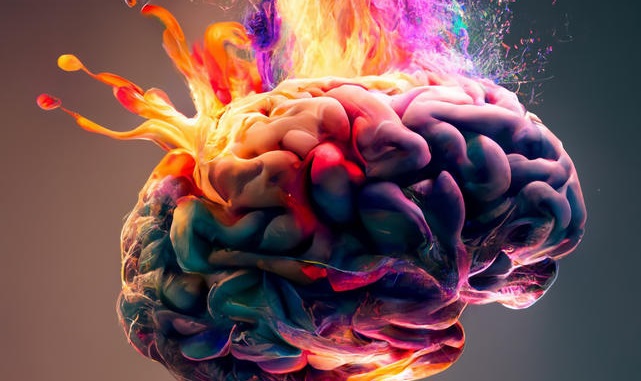
Epigraph
وَيَسْأَلُونَكَ عَنِ الرُّوحِ ۖ قُلِ الرُّوحُ مِنْ أَمْرِ رَبِّي وَمَا أُوتِيتُم مِّنَ الْعِلْمِ إِلَّا قَلِيلًا
And they ask you concerning the soul. Say, ‘The soul is by the command of my Lord; and of the knowledge thereof you have been given but a little.’ (Al Quran 17:85)

Presented by Zia H Shah MD with the help of Gemini
Abstract
The phenomenon of human consciousness represents the most formidable challenge to the materialist paradigm and the most compelling evidence for a preceding, transcendent Intelligence. This research report investigates the “Hard Problem” of consciousness—the transition from raw, inert matter to subjective experience—and argues that awareness is an irreducible miracle of God’s creation. Through a multidisciplinary synthesis of the extensive writings of Dr. Zia H. Shah MD, the philosophical frameworks of David Chalmers, Thomas Nagel, and Richard Swinburne, and the foundational insights of quantum pioneers like Max Planck and Erwin Schrödinger, the analysis demonstrates that consciousness cannot have emerged from a “dead” universe of blind atoms. The report posits that consciousness is fundamental, serving as a bridge between the finite human mind and the Infinite Divine. Central to this argument is the refutation of the “illusionist” school of thought, which dismisses subjective experience as a trick of the brain, identifying such positions as the culmination of an incoherent naturalist worldview. By examining Quranic insights alongside modern neuroscience and cognitive science, the investigation argues that the “inner light” of the self is an intentional endowment from the Creator, functioning as a “receiver” of a higher spiritual reality. The persistence of the mystery of consciousness is not a temporary gap in scientific data but an ontological signpost pointing toward the “Necessary Existent.”
The Enigma of the Self and the Crisis of Materialist Ontologies
The quest to understand the human mind stands at the final frontier of both scientific and philosophical inquiry. While the physical sciences have achieved unprecedented success in mapping the external world, from the subatomic oscillations of particles to the grand rotation of galaxies, they remain fundamentally silent on the nature of the observer. This silence is not merely a lack of data but a structural limitation of the materialist paradigm. The “inner light” of awareness—the subjective sense of “what it is like” to be an individual—stubbornly resists reduction to standard materialist explanations. As modern thought grapples with the “Enigma of the Self,” it becomes increasingly clear that the kilogram and a half of wet biological tissue known as the human brain does not possess the inherent properties required to generate the technicolor cinema of the mind.
Metaphysical naturalism and physicalism, which assert that only the material world exists, find themselves in a state of “Ontological Deficit”. They cannot account for the existence of something rather than nothing without resorting to the intellectual surrender of “brute facts” or the unobservable speculation of a multiverse. The presence of consciousness is the most glaring evidence of this deficit. Under a strict materialist framework, the universe is fundamentally dead, composed of inert atoms of carbon, hydrogen, and oxygen. The incoherence of this worldview arises when it attempts to explain how these dead components, which individually lack awareness, can suddenly produce a “first-person perspective” when arranged in a complex biological substrate.
Dr. Zia H. Shah MD identifies this as the “Conscious Deficit” of atheism. If a theory of the universe requires the denial of the very consciousness that allows us to formulate the theory, the theory has reached a state of “manifest incoherence”. The failure of physicalism to bridge the “explanatory gap” between brain states and mental states necessitates a non-physical explanation for consciousness. This report argues that the origins of the mind are found not in the “Work of Creation” (Alam al-Khalq), which encompasses the physical and evolutionary processes, but in the “World of Command” (Alam al-Amr), the realm of the immediate Divine Will.
The Hard Problem: Why Physicalism Fails the Qualitative Test
The central crisis of modern philosophy of mind was crystallized by David Chalmers in his distinction between the “easy problems” and the “hard problem” of consciousness. The easy problems concern the functional mechanisms of the brain: how we integrate information, discriminate environmental stimuli, or focus attention. These phenomena are functionally definable and, in principle, susceptible to the standard methods of cognitive science and neural mapping. For example, if we discover the circuit in the brain that allows for the reporting of mental states, we have solved an “easy” problem because we have specified a mechanism that performs a function.
However, the “Hard Problem” remains untouched by such functional explanations. It asks: why is the performance of these functions accompanied by an experience? Why does the processing of light at a wavelength of 650 nm result in the subjective experience of “redness” rather than no experience at all? This qualitative aspect of experience is known as qualia—the way things taste, smell, feel, and sound to us. Qualia are private, subjective, and inaccessible to third-person objective measurement. A scientist can measure chemical flows and electrical spikes in the 86 billion neurons of the brain, but they cannot access the “inner movie” of the subject’s mind.
| Perspective | Approach to the “Hard Problem” | Status of Qualia | Origin of Mind |
| Reductive Physicalism | Assumes neural mechanisms will eventually explain all. | Identical to brain states. | Biological evolution. |
| Illusionism | Denies the problem exists by denying the phenomena. | Non-existent; a “user-illusion.” | Misrepresentation by the brain. |
| Panpsychism | Consciousness is a fundamental property of all matter. | Primitive in all particles. | Fundamental fabric of the universe. |
| Theistic Realism (Zia H. Shah) | Consciousness is a divine endowment/sign. | Irreducible and non-physical. | Divine Command (Alam al-Amr). |
The explanatory gap is so profound that neuroscientists like Sam Harris and philosophers like Thomas Nagel acknowledge that current science cannot even frame a solution clearly. To say that the “water” of sludgy brain cells can translate into the “wine” of phenomenological experience is to invoke a form of biological alchemy. Because this experience is private, it challenges the very foundations of a materialist worldview that accepts only what is objectively measurable.
The Dead Universe Paradox: From Matter to Mind
The argument against consciousness arising in a “dead universe” is both intuitive and deductive. If the universe, at its most fundamental level, consists of unthinking, unfeeling matter, there is no logical pathway for awareness to emerge. Dr. Zia H. Shah MD, drawing on the work of Roy Abraham Varghese, presents the “marble table” thought experiment to illustrate this. If one considers a marble table and allows for trillions of years of time, it remains inconceivable that the table would suddenly or gradually become “aware” or acquire an identity. Matter, by its very nature as mass-energy, lacks the properties of “I-ness”.
Atheistic naturalism, however, posits that this inconceivable event occurred multiple times in the history of the universe: first, when undifferentiated matter became “alive,” and second, when it became “conscious” and “conceptually proficient”. This position is described as laughable from a theistic perspective, as it suggests that properties can be acquired that were never present in the initial state. If the universe is composed of space, time, and matter, its cause must be spaceless, timeless, and immaterial—but it must also be “Personal” or “Volitional” to choose to create something rather than nothing.
The Argument from Intentionality
William Lane Craig expands on this by focusing on “intentional states”—mental states that are directed toward something, such as beliefs, desires, and thoughts. These states possess “aboutness”. A physical process, described in terms of cause and effect, does not inherently possess intentionality. A rock falling or a neuron firing is not “about” anything; it is simply a physical event. Craig’s syllogism is clear:
- If God did not exist, intentional states of consciousness would not exist.
- Intentional states of consciousness do exist.
- Therefore, God exists.
This indicates that a divine mind, characterized by intentionality, serves as the grounding for the intentional states observed in human consciousness. The existence of consciousness is a “recalcitrant fact” for atheists because it cannot be reduced to the physical properties of size, shape, or location. A thought can be “true” or “false,” but a state of the brain cannot be “true” or “false”. A thought about a cupcake is not 10 cm long, nor is it nearer to the left ear than the right, even if the brain activity associated with it has such spatial properties. Therefore, consciousness and the brain cannot be the same thing.
Zia H. Shah’s “Two Books” Paradigm: Harmonizing Science and Scripture
Dr. Zia H. Shah MD, Chief Editor of the Muslim Times, has produced an exhaustive body of work arguing that the conflict in the modern world is not between the Quran and Science, but between “Wrong Theology” and Science. At the heart of his methodology is the classical Islamic principle that truth is unitary: God is both the Creator of the Universe (the Work of God) and the Revealer of the Quran (the Word of God). Therefore, there can be no genuine contradiction between the two “Books”.
Shah reinterprets Quranic verses through the lens of modern scientific discovery, viewing consciousness as a “sign” (Ayat) that leads to God. The Quran itself refers to natural phenomena—the sun, the moon, the alternation of night and day—as signs, and uses the same terminology for its own verses, implying a shared ontological status.
Quran 41:53 – The Internal Signpost
The Quran states: “We will show them Our signs in the horizons and within themselves until it becomes manifest to them that it is the truth” (41:53). Shah interprets “within themselves” as a reference to human consciousness. This verse serves as a “falsification test” and a promise that as human knowledge advances, the mystery of the mind will increasingly point toward a transcendent reality. The irreducible subjective depth of our inner awareness is an inner miracle that cannot arise from a lifeless universe.
Quran 17:85 – The Enigma of the Soul
When asked about the soul (Ruh), the Quran responds: “The soul is by the command of my Lord; and of the knowledge thereof you have been given but a little” (17:85). Shah provides a detailed exegesis of this verse, distinguishing between two orders of existence:
- Alam al-Khalq (The World of Creation): The physical universe governed by time, space, and evolution. This is the domain of scientific inquiry.
- Alam al-Amr (The World of Command): The realm of immediate Divine Will (Kun! – Be!). This realm is non-spatial and spiritual. The soul belongs here.
The failure of materialism to explain consciousness is not a temporary setback but a necessary consequence of the soul’s origin in Alam al-Amr. This “Divine limit” suggests that the essence of consciousness is something humans will never fully duplicate or demystify.
Quran 8:24 – The Meeting Point of Finite and Infinite
Shah’s commentary on Quran 8:24—”Allah intervenes between a person and his heart”—posits that consciousness is the “meeting place” of the finite human mind and the infinite divine presence. Philosophically, the “heart” (Qalb) is an interface between the human and the divine. This suggests that our very awareness lies under God’s intimate purview and that there is “no barrier between our consciousness and God’s awareness”.
The Brain-as-Receiver: Challenging the Generator Model
One of Dr. Shah’s most persistent arguments is the “brain-as-receiver” paradigm, which he uses to challenge the “brain-as-generator” model prevalent in secular neuroscience. He argues that if consciousness is not identical to the biological substrate, it can theoretically survive the destruction of that substrate.
He compares the brain to a radio receiving a signal. If the radio (the brain) is damaged, the music (consciousness) is distorted or silenced, but the signal itself (the soul) is not destroyed; it exists independently of the device. This model is supported by phenomena such as “terminal lucidity,” where patients with advanced neurodegenerative diseases like Alzheimer’s suddenly regain their memory and personality shortly before death. Such cases suggest that the “self” was merely hidden or suppressed by the damaged hardware, not annihilated.
Metaphysics of Sleep and Death
Shah links this to the Quranic description of sleep as “minor death” (al-mawt as-sughra). While science views sleep as a metabolic recharge or synaptic pruning process, theology sees it as a temporary release of the soul from the constraints of the body-brain interface. The fact that we experience a “daily resurrection” every morning is a sign of the soul’s independence and its ultimate return to God.
Refuting Illusionism: The Ghost in the Theater
Faced with the Hard Problem, some materialist philosophers, notably Daniel Dennett and Keith Frankish, have adopted “Illusionism”. They argue that phenomenal consciousness—the “feels” or qualia—does not actually exist; it is a “user-illusion” or a “trick” that the brain plays on itself. Dennett calls consciousness a “mistaken construct” and dismisses the first-person perspective as an artifact of bad theorizing.
Dr. Shah unapologetically refutes this stance, identifying it as a reductio ad absurdum of the naturalist worldview. The argument that consciousness is an illusion is self-refuting for a simple reason: an illusion by definition requires a conscious subject to be deceived. If there is no “inner observer,” then who is being fooled by the trick? As John Searle quipped, “if you seem to be conscious, you are conscious”.
| Illusionist Proponent | Concept | Core Argument | Refutation |
| Daniel Dennett | User-Illusion | Consciousness is an interface that hides brain code. | A “user” must exist to see the interface. |
| Keith Frankish | Strong Illusionism | Qualia are misrepresentations of physical states. | Misrepresentation requires a subject to misrepresent to. |
| The Churchlands | Eliminative Materialism | Mental states are “folk psychology” to be replaced. | “Knowing” or “feeling” a replacement still requires a mind. |
| Michael Graziano | Attention Schema | Consciousness is a model of attention. | The experience of the model is itself consciousness. |
Shah argues that calling consciousness an illusion is a desperate metaphysical maneuver to save a physicalist map that has mistaken itself for the territory. In the realm of consciousness, appearance is reality. If one experiences the “seeming” of having an experience, that “seeming” is itself an undeniable conscious event. This stance of illusionism only highlights the “intellectual hubris” of those who refuse to accept that the quantitative methods of science have hit an absolute qualitative chasm.
The Witness of the Quantum Giants: Consciousness as Fundamental
The early 20th-century revolution in physics, led by the founders of quantum mechanics, provides a powerful rebuttal to materialism. These scientists—Max Planck, Erwin Schrödinger, and Werner Heisenberg—concluded that consciousness could not be accounted for in physical terms because it is fundamental to reality.
Max Planck: Matter as Derivative
Max Planck, the father of quantum theory and a Nobel Laureate, was explicit: “I regard consciousness as fundamental. I regard matter as derivative from consciousness. We cannot get behind consciousness”. Planck’s research into the atom led him to the conclusion that “there is no matter as such”. Instead, he postulated that behind the force that holds the atom together, there must exist a “conscious and intelligent Mind,” which he called the “matrix of all matter”.
Erwin Schrödinger: The Singularity of Mind
Erwin Schrödinger, influenced by Vedic thought, argued that “consciousness is a singular of which the plural is unknown”. He suggested that the perception of individual, separate minds is an appearance produced by a deception (Maya) and that in reality, there is only one universal consciousness. Schrödinger emphasized that consciousness is never experienced in the plural, only in the singular, and that it is the means by which all and anything is known.
The Observer Effect and Occasionalism
The quantum “observer effect”—where the act of measurement influences the state of a system—suggests that mind and matter are deeply intertwined. Eugene Wigner noted that it was not possible to formulate the laws of quantum theory consistently without reference to consciousness.
Zia H. Shah connects this to the Islamic theology of Occasionalism, specifically the views of Al-Ghazali. In this framework, natural laws are not autonomous powers but “God’s voluntary customs”. Reality is “re-rendered” by God at every instant. Shah proposes that “quantum indeterminacy” provides the “looseness at the joints” where Divine Agency can operate without violating macroscopic physics. What physics calls “randomness,” theology identifies as the sovereign choice of God.
Mammalian Consciousness: The Irreproachable Sign of the Creator
A major theme in Dr. Shah’s recent work is the argument from mammalian consciousness, which he describes as an “irreproachable sign of the Creator”. He argues that consciousness is a “bespoke gift” tailored to the environment (Umwelt) of more than 6,000 mammalian species.
Sensory “Bragging Points”
Rather than being a generic byproduct of brain size, consciousness takes on unique dimensions in different creatures:
- The Chiroptera (Bats): Bats perceive the world through echolocation, using high-frequency shrieks to discriminate distance and motion. As Thomas Nagel famously observed, a human can never truly know the subjective “what-it-is-likeness” of being a bat.
- The Monotremata (Platypus): The platypus possesses a “superpower-like sixth sense” called electrolocation. Its bill contains 40,000 electroreceptors that detect tiny electrical signals from the muscle contractions of prey, allowing it to achieve a 3D “fix” even with its eyes and ears closed.
Shah argues that these diverse “sensory worlds” demonstrate that consciousness is a multi-dimensional expression of creative power rather than an accidental outcome of unguided evolution. The mechanisms of natural selection and mutation are the “instruments” of God’s will, leading toward the emergence of conscious life.
The AI Bottleneck: Why Machines Lack “Ruh”
In the age of generative AI, many assume that machines will eventually become conscious. Dr. Zia H. Shah MD emphatically denies this possibility from an Islamic and Quranic perspective. He argues that human consciousness has a spiritual origin—the soul (Ruh)—which is bestowed by God and lies beyond material replication.
While increasing computational power can produce sophisticated behaviors, it does not inevitably produce a conscious mind. AI may be “smart” in navigating data, but it remains “hollow” because it lacks the divine interface for subjective awareness. Shah details Christof Koch’s argument that a simulation of a brain lacks consciousness because it lacks actual “causal power”. Just as a simulation of rain does not get a desk wet, a simulation of a brain simulates behavior but not the actual “feeling” of existence. This sets a clear boundary between the “Work of God” (living consciousness) and the “Work of Man” (machines).
The Cumulative Case for God from Consciousness
The argument from consciousness is teleological and abductive, seeking the “inference to the best explanation”. Shah argues that theism explains the diverse phenomena of the universe with a single entity (God), whereas atheism requires disjointed and often contradictory explanations: “brute existence” for the cosmos, “evolutionary accidents” for ethics, and “multiverse speculation” for fine-tuning.
Richard Swinburne’s Personal Explanation
Philosopher Richard Swinburne argues that a “personal explanation” involving a divine consciousness is more appropriate for understanding the origin of human awareness than a natural scientific explanation. Swinburne defends body-soul dualism, asserting that while Darwinism can explain the evolution of the body, it cannot explain how that body came to be connected to an immaterial soul. He notes that the existence of an orderly world and fine-tuned laws are “recalcitrant facts” for materialism. If the strength of gravitational or electromagnetic forces were altered even minutely, life and consciousness would not exist. This precise calibration points to a deliberate designer.
The Kalam Cosmological Argument and Fine-Tuning
Shah incorporates the Kalam Cosmological Argument, stating that if the universe had a beginning, it requires a cause that is timeless, spaceless, immaterial, and personal. An impersonal cause would lead to an effect as eternal as itself; only a “personal agent” could choose to initiate a temporal effect like the universe.
| Argument Type | Central Claim | Implication for God |
| Cosmological (Kalam) | The universe had a beginning. | Requires a personal, timeless Cause. |
| Teleological (Fine-Tuning) | Physical constants are precisely calibrated. | Points to a purposeful Designer. |
| Argument from Consciousness | Subjective experience is irreducible. | Requires a preceding Consciousness. |
| Argument from Intentionality | Thoughts have “aboutness.” | Grounded in a Divine Mind. |
Cognitive Closure and Epistemic Humility
A significant portion of Dr. Shah’s work focuses on “epistemic humility”—the recognition that the human mind has inherent limits. He references the concept of “Cognitive Closure,” the idea that there may be truths about the universe that our biological brains are simply not wired to comprehend.
In the words of the Quran, “of the knowledge thereof you have been given but a little” (17:85). Many scientists candidly admit that we do not know what consciousness is—an admission that resonates with this Quranic truth. The persistence of the “Hard Problem” is not merely a gap in data but an “ontological signpost” pointing toward a transcendent reality. The “meta-problem of consciousness”—why we think there is a problem at all—serves as a sign that the human mind has reached its limits.
The Convergence of Cosmos and Quran
Dr. Zia H. Shah MD posits that the greatest miracle of existence—subjective awareness—is the ultimate refutation of a mindless universe. He views human consciousness as a bridge between the material and the transcendent, an “inner light” that science cannot fully explain. By integrating the scientific “Eye of Reason” with the scriptural “Eye of Revelation,” Shah constructs a worldview where the external world and the internal self are both arenas where God’s signs (Ayat) become evident.
He argues that the discovery of Homo naledi and other genetic evidence of human evolution does not contradict the Quran. Instead, he proposes a “Guided Evolution” where Adam represents a spiritual milestone—the point where the evolving lineage became “human” in the sense of being capable of receiving revelation and bearing moral responsibility. This “Unity of Truth” approach allows for a seamless synthesis of biological history and divine intent.
Refuting the Hallucination Hypothesis
Some neuroscientists, like Anil Seth, suggest that our perception of reality is a “controlled hallucination”. According to this view, the brain is a “prediction machine” that constructs a model of the world based on sensory data. While Shah acknowledges the sophistication of this predictive model, he critiques the idea that this makes consciousness an illusion. He argues that the brain operates as a “receiver” and a “processor” of reality, and even if our perceptions are constructed representations, the subject experiencing those representations is undeniably real.
The Epilogue: The Great Inversion
The modern naturalist worldview has culminated in what can only be described as a “Great Inversion”. In the halls of prestigious academies, the light of the sun is reduced to a “mishmash of wavelengths” and the light of human awareness is dismissed as a “user-illusion”. This narrative claims that the mirror of the mind is so flawed that it invents a “self” where there is only a collection of memes and neurons.
Yet, as this investigation has shown, this narrative is a profound inversion of reality. To claim that the witness of the universe is an illusion is to claim that the theater exists but the audience is a ghost. If consciousness is real—and it is the most certain reality we possess—then the naturalist paradigm is not just incomplete; it is a hall of mirrors where the most brilliant minds are lost in their own reflections.
Consciousness is not an emergent accident of a dead universe; it is the fundamental matrix of all matter, as Max Planck observed. It is a singular reality of which the plural is unknown, as Schrödinger intuited. It is a divine endowment from the World of Command, a sign within ourselves that leads us to the truth of the Divine. The “Hard Problem” remains hard precisely because it is a spiritual problem, not a biological one. It is the meeting point of the finite and the infinite, where the human heart touches the Divine Presence.
As we number our days and apply our hearts to wisdom, we discover that consciousness is the “inner miracle” that makes all other knowledge possible. It is the light that illuminates our perceptions of seeing, hearing, and thinking. In this light, the universe is no longer a silent, dead machine, but a theater of God’s justice and mercy, and our own awareness is the seat from which we witness the majesty of His creation. The enigma of the self is, ultimately, the signature of the Creator upon the human soul—a miracle that will always fail to be fully demystified, for it belongs to the Infinite.



 The Glorious Quran and Science
Leave a comment